Friday, August 25, 2017

Antoine-Louis Barye

Salvete omnes,

back to some fabulous sculpture works and other treasures of the 'decadent' XIx century academic art (just joking).


 Antoine-Louis Barye (archive.org books), student of nature, painter and  animalier, was privileged to live during the times when France was the cultural epicenter of the Western world. He studied the ancient sculpture in the French collections (some taken from other countries by Napoleon ), then the real-life human and animal form until he was able to achieve  skill level and ability to portray humans and animals on the level unseen since the Antiquity.


This was also the time of great upheavals, and solidifying of the  rule of the middle class, thus he was able to create sumptuous art for various clients, be it the middle class or nobility and soon governments.  He worked in clay,  stone, in wax and had  his sculptures cast at a foundry run by the Honore Gonon family :


So although there are plenty of pages devoted to his art and there is a Wiki entry about his art and he, I would like to add a blog entry to monsieur Barye.


MET has a page containing his work in their collection, large files worth studying.


enjoy

Thursday, August 24, 2017

Palcaty - Old Poland's stick fighting drills

Salvete omnes,
I do little fencing, well sort of, - mostly with my son, who has had several years of fencing, including  2 years in Colorado with  Maciej Czyzowicz.
We use and practice with the palcaty-sabres from a GoNow, there is always lots of fun and plenty of exercise - video example of these palcaty-sabres in action.
Palcaty dueling by young noble boys in the Field of Wola, detail of the AD1697 painting

 In the XVII and XVIII centuries Palcaty or wooden stick fighting was  the favorite pastime, while sword training, of the Polish nobility young sons and schoolboys in Rzeczpospolita (Commonwealth), and according to our XVIII century historian and diarist father Jedrzej Kitowicz students at the Piarists and Jesuit schools practiced this art in schools, often before a class started, often the younger professors and older students who being masters themselves were also teaching the art to the younger ones, while the student who was too timid and too afraid to practice palcaty and duel with them  was bullied and had to withstand many insults from the entire school:
 Drugą zabawą podczas rekreacyi były kije, zwane palcatami, w które pojedynkowali studenci dwaj a dwaj z sobą. Ten sposób wielce był potrzebny dla stanu osobliwie szlacheckiego, jako wprawiający młódź do zręcznego w swoim czasie użycia szabli, którą nasi przodkowie na wojnach najwięcéj dokazywali. Jakoż było się czemu przypatrzyć, kiedy się dwaj dobrali do palcatów, bili się aż do zmordowania, a tak sztucznie każdy się palcatem swoim układał zastawiając się ze wszelkich stron, a oraz wzajemnie adwersarza swoim przycięciem sięgając, że żaden żadnego ani w gębę, ani w głowę, ani po bokach nie mógł dosiągnąć. 
I tacy byli to już jak metrowie do wprawiania i uczenia drugich. Co się trafiało i między professorami młodszemi, tak Jezuitami jak Pijarami, że się w kije arcyprzednio bili. Te tedy palcaty u studentów były w najczęstszym używaniu, nie tylko na rekreacyach, ale nawet i w samych szkołach, nim nastąpiła godzina lekcyi. Jeżeli był który student bojaźliwy, że nieśmiał z drugim stanąć do palcata; musiał taki wiele wycierpieć prześladowania, i urągania od całéj szkoły.
  Kajetan Kozmian, in his Diaries, wrote that palcaty were perhaps more honorable form of fighting amongst the young, instead of the vulgar fist-fighting, but many  boys received black and blues and bloody noses after palcaty duel; while the masters of palcaty could have become bullies and rouges etc, eventually could became problem makers at the sejmiki(county diets) and other public gatherings, thus making a living from swordfighting for hire.
Adam Mickiewicz in Pan Tadeusz, Book II, wrote about palcaty training for the youth

Henryk Rzewuski, in his Pamiatki Soplicy, wrote that it was the Jesuits who promoted palcaty drills in their schools as  one of the games suitable to the Polish tastes and spirit.
Henryk Sienkiewicz put palcaty drills in this Trilogy, eg Jan Skrzetuski practiced palcaty drills with pan Michal Wolodyjowski in With Fire and Sword.
Palcaty stayed popular as Polish schoolboys and university students sport until the tragedy of World War II. The Communists did not revive this art after the Holocaust.
Presently Signum Polonicum fencing & reenactment group has been doing work to revive Old Polish fencing, including palcaty drills, and they have a book and videos about the Old Polish fencing, including palcaty - here more info.

Blood and Iron HEMA group put a video up showing an example of the Palcaty game.
Julian Maszynski painting from the XIX century
 so not only kendo is out there for you to practice - :)
enjoy

Wednesday, August 23, 2017

ancient Persia - Wiesehofer and other scholars' works

Salvete omnes,
summer in its foulness thus while you are on the beach or in front of your computer, it perhaps pays to visit the archive.org library, where there are treasures to be had.
I have not visited ancient Persia in a long time, therefore I would like to share with you some fine articles that you can read off the Archive library or download and read later on, whatever tickles your fancy.

from the Metropolitan Museum collection in NYC
Let me start with Josef Wiesehofer from Kiel University and his studies of the Achaemenid Persia - I like especially the one titled The Achaemenid Empire in the Forth Century B.C.E. - but there are a few more there and all are worth your while.
Nota bene I have finished listening, while driving, to a whole set of lectures by prof. K.w. Harl on the rise of the Kingdom of Macedon and Alexander's conquest of the known world - it was quite enjoyable and with plenty of newer scholarship( perhaps a bit too much about the otherness of the Macedonians when compared with the ancient alias  'poleis' Hellenes, and the way good professor pronounced the ancient Greek personal names was a bit tricky). However, I think the military information was too general, at times too vague and too short. On youtube there are other lectures by the good professor, search away.
harness ornament - MET, NYC

Maria Brosius, New out of old? Court and court ceremonies in Achaemenid Persia (2007)- you can listen to an intro to the Near East ancient history - lecture given by the very professor. 
Loyd Lewellyn-Jones,  King and Court in Ancient Persia 559 to 331 B.C. -  2013 [sic!]

a compilation of articles edited by Niels Nielding et al, Achaemenid Impact In The Black Sea. Communication Of Powers. 2010 - in that book dealing with northern and north-western reaches of the Achaemenids' empire, there is one by prof. Tuplin about the infamous expedition against the Pontic Scythians


and little Parthia, my favorite ancient Persian empire to study
pillar of Persian studies A.D.H. Bivar - Political History of Iran under the Arsacids - 1983 

fantastic Mary Boyce, Parthian Writings and  Literature, 1983,  and very interesting history of the Zaroastrian religion and its peoples  - Zaroastrians, 1979.


Archive Library's works of Marek J. Olbrycht will come in the future installment, in one of these linked articles chain, so to speak.
...
as per my sketches, these are my older sketches, but  I have been reworking them  be it in the 'libre' Krita, GIMP and MyPaint software.
enjoy

Saturday, August 19, 2017

Wordpress.com - blog

Salvete omnes,

some years ago I registered my blog on wordpress.com, and today i decided to post a little entry https://dariuszacaballeros.wordpress.com/ , as I may move blogging to wordpress.com or share blogs between wordpress and google.
just sketching 

we shall see
ps
Shulga P. I. Saddle Horse Gear in Mountain Altai and Upper Ob Area ( B.C. period) [in Russian]

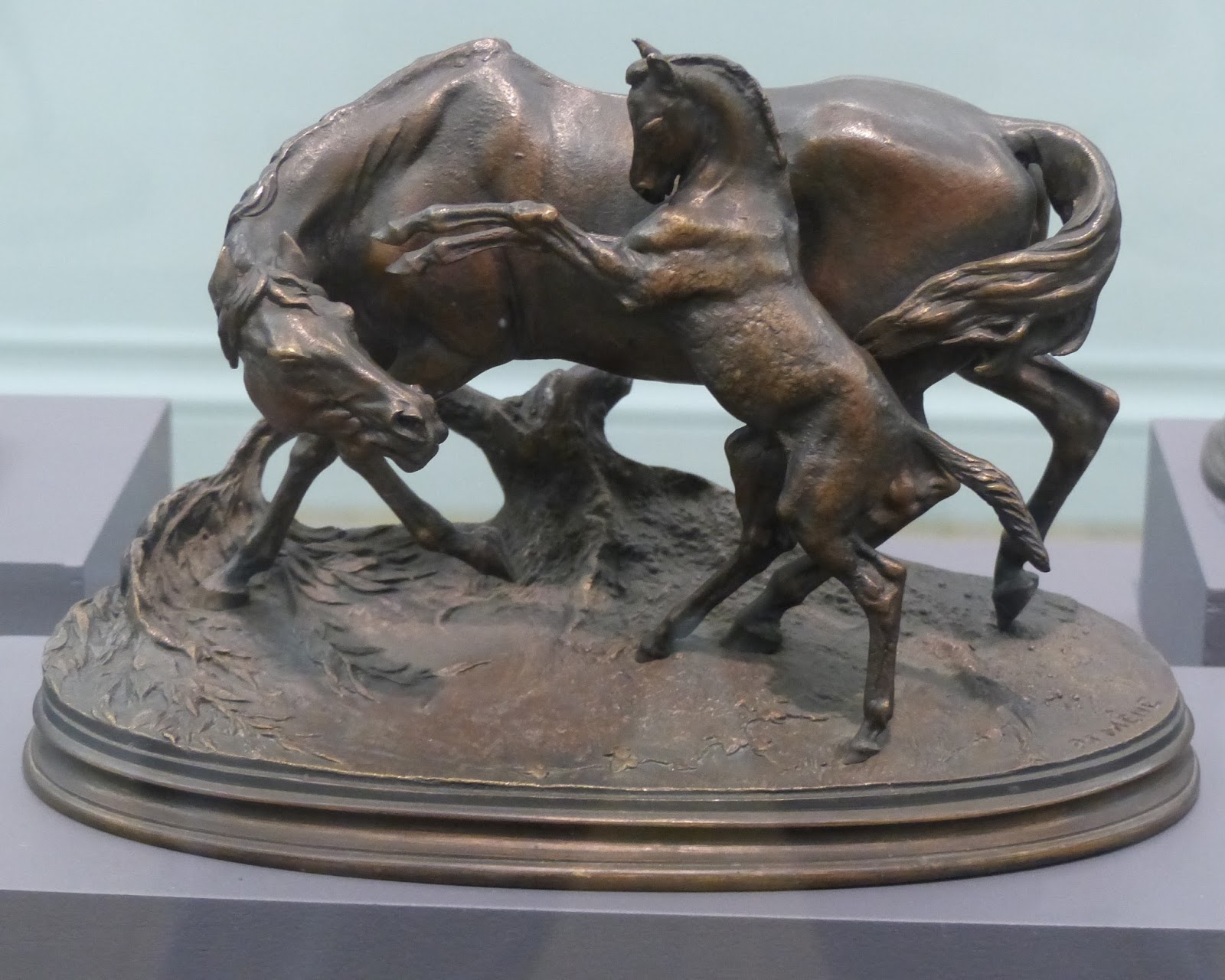
Pierre-Jules Mêne - horse sculpture

Salvete omnes,
the wide world around us spins and spins with ugliness and idiocy (the so called federal educational reforms in the US produced more ignorance then ever since the 1960s), perhaps in its usual fashion, so there is some beauty to be found in the bronze works of Frenchman Pierre-Jules Mene.
From time to time I do some equine sculpture (in plastiline and in Aves Apoxie clays ), I find it to be a great exercise for the eye, mind and hands, and moreover definitely increases my knowledge of the horse anatomy, movement and  beauty.


enjoy
ps
interesting article about the City Beautiful Movement in the late XIX- early XX century America and its impact on Virginia's Charlottsville.

Tuesday, August 15, 2017

'Miracle' on the Vistula River & Polish Army Day


Salve,
today in Polish Republic or Rzeczpospolita Polska they celebrate the Polish Army Day, including the military parade in Warsaw. also, this the Feast of Assumption - Hail Mary, Queen of Poland!
The date commemorates the victory secured by the Polish armed forces over the invading Communist Russian Red Army 13th-25th August, 1920. So called Mircale on the Vistula or the battle of Warsaw along with the defeat of the Budyonny's Horsearmy at Komarów  and the battle of Niemen River

constitute the triple victories that led to the establishment of the post-Versailles borders for the newly independent Poland.
I must stress that thanks to the work by the Polish politicians like Roman Dmowski and Wincenty Witos and countless others the most numerous group of the Polish society, the peasants, joined en masse the Polish armed forces and thus won Poland's independence. They say the peasants feed you and defend you. 
 Some photos from the battle of Warsaw
order nr. 71 by general Rozwadowski


general Haller and Jozef Pilsudski

captured Red Army standards


Vivat Polonia, vivat milites Poloni! - including Polish-Americans, Polish-French and Polish-Brazilians - the Blue Army!
...but also vivat Poland's Ukrainian & Belorussian brethren, as the officers and soldiers from these two nations fought on the side of Polish soldiers in the war! Also I salute the White Russians  and the Cossacks from Don and other hosts who fought as allies for humanity during the 1920.
Vivat 'foreign volunteer' soldiers - especially from France, including future President Charles de Gaulle , but perhaps more important was the military material aid received by Poland that arrived from France along with the Blue Army. Here should mention the Hungary sent munitions in the most critical time to Poland ( eg about 80 rail freight-carts arrived at the Skierniewice train station full of ammunition from Manfred Weiss factory in Hungary on August 12, 1920). Romania also lent Poland a helping hand in this war, allowing war material trains from Hungary to pass on their way to Poland. Unfortunately, newly established Czechoslovakia was Poland's most active enemy, including armed annexation of the Polish Cieszyn Śląsk.

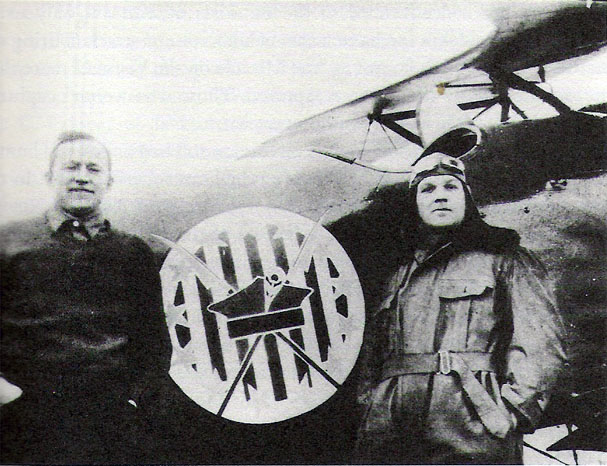
the pilots (7th Air Escadrille) from the United States under Merian C. Cooper

(later producer of King Kong).

And Duma Rycerska - my favorite soldier song from the XVI century, performed by prof. Jacek Kowalski - by pan Adam z Czahrowa Czahrowski poet and  a winged hussar.

Monday, August 14, 2017

Hunting bison - bison jump

Salve,
we are going to return to the bison hunting in North America.
The story of Lewis and Clark Expedition provides the reader with many glimpses into the life of the Great Plains peoples, including the hunting methods and customs.
Today I would like to point you to the part where they describe the method of killing bison by stampeding them down a cliff - or so called bison jump - famous Head-Smashed-In Buffalo site in Alberta, Canada, and many others in the US. The method, if successful resulted in huge number of killed animals and many wounded and led to the extermination of the entire stampeded herd. In the days before the coming of the horse this was probably the most common technique used to secure large kills, perhaps the summer-autumn hunts when bison was in its peak condition.
In his paintings Alfred Jacob Miller gives us examples of this hunting technique - one here, and one below. He, however, left no written description of such event, only painting the scenes.
Interestingly the hunters are mounted in his works, whereas in the Lewis & Clark description the horses are not mentioned at all. It does not appear from the description that the expedition members witnessed such hunt themselves.


Lewis & Clark
chapter - UP THE MISSOURI
[p307-308] Near this spot are a few trees of the ash, the first we have seen for a great distance, and from which we named the place Ash Rapids [Drowned Man’s rapids]*. On these hills there is but little timber, but the salts, coal, and other mineral appearances continue.
On the north we passed a precipice about one hundred and twenty feet high, under which lay scattered the fragments of at least one hundred carcases of buffaloes, although the water which had washed away the lower part of the hill must have carried off many of the dead. These buffaloes had been chased down the precipice in a way very common on the Missouri, and by which vast herds are destroyed in a moment. 
The mode of hunting is to select one of the most active and fleet young men, who is disguised by a buffalo skin round his body; the skin of the head with the ears and horns fastened on his own head in such a way as to deceive the buffalo; thus dressed, he fixes himself at a convenient distance between a herd of buffalo and any of the river precipices, which sometimes extend for some miles.
His companions in the meantime get in the rear and side of the herd, and at a given signal show themselves, and advance towards the buffalo; they instantly take the alarm, and finding the hunters beside them, they run towards the disguised Indian or decoy, who leads them on at full speed towards the river, when suddenly securing himself in some crevice of the cliff which he had previously fixed on, the herd is left on the brink of the precipice; it is then in vain for the foremost to retreat or even to stop; they are pressed on by the hindmost rank, who, seeing no danger but from the hunters, goad on those before them till the whole are precipitated and the shore is strewed with their dead bodies. 

Sometimes in this perilous seduction the Indian is himself either trodden underfoot by the rapid movements of the buffalo, or missing his footing in the cliff is urged down the precipice by the falling herd. The Indians then select as much meat as they wish, and the rest is abandoned to the wolves, and creates a most dreadful stench.

The wolves who had been feasting on these car- cases were very fat, and so gentle that one of them was killed with a spontoon.


*originally the place was called Rapids of the Drowned by the French-Canadian voyageurs but when translated into English, it erroneously became Drowned Man’s Rapids, despite numerous deaths, L. Wischmann, Frontier Diplomat, Alexander Culbertson and Natoyist-Siksina’ among the Blacfeet, p 71

enjoy

Saturday, August 5, 2017

Roman white teeth & Johnny Shumate work

Salvete omnes,
a Canicula post - :)
I admire the historic illustrations by Johnny Shumate - his blog here.
looking yesterday at the one of his newest creations titled Caesar's Centurions I recalled some of my reading about  the Roman daily life, including their health and hygiene, and wondered whether their teeth were really white as seen in many modern illustrations.
I rememberer when reading about Rome that the Romans cleaned their teeth daily, and  at the same time remembered the Egyptian mummies (of the elite Egyptians one must add) and their rather decayed teeth and gums. Images of the skulls with the worn and decayed teeth figure prominently in my mind - scholarly article on the state of ancient Egyptian dental health here. In both civilizations they ate grains, bread and cakes, and used millstone to grind their grains into flour. - an article about Roman milling (part of a large project exploring Roman food etc).
  Thus we know, from the historical sources etc, that the ancient Romans, heavy bread eaters, cleaned their teeth  and in order to do so they used urine. They did is so well that the Roman period jaws and teeth found in the excavated graves show only 5% of periodontitis while modern UK population sports up to 30% and the US population up to 38.8%.
Moreover they did not fluoridate the water, did not floss and did not brush their teeth at all. They used chewing sticks of various trees and also toothpicks and rags to clean the teeth.
They cleaned their teeth with urine passed in the morning, the wealthy women were said to import special urine from what is today Portugal and so on - more about their dental practices in this article, actually that webpage  contains plethora of information on the ancient Roman daily life and more(another article here).

Finally, in addition please find attached one of my Roman horses, a sketch I played around reworking some old pen and ink plus watercolor sketch
there is a new book by dr. Rafaelle D'Amato on the army of  the Roman Eastern Provinces  - :)
enjoy
ps
you could look at and enjoy the wonderful brushwork by Sabine Ott - Sabine paints Akhal-Tekes.