Wednesday, February 11, 2015

'Husaria Rzeczpospolitej'


Salve amici,
 yesterday I wrote this short 'review of sorts' - a brand new coffee table book on the Polish winged  hussars, book published by the Instytut Wydawniczy ERICA from Poland. For now the review is in Polish.
                                                    ***

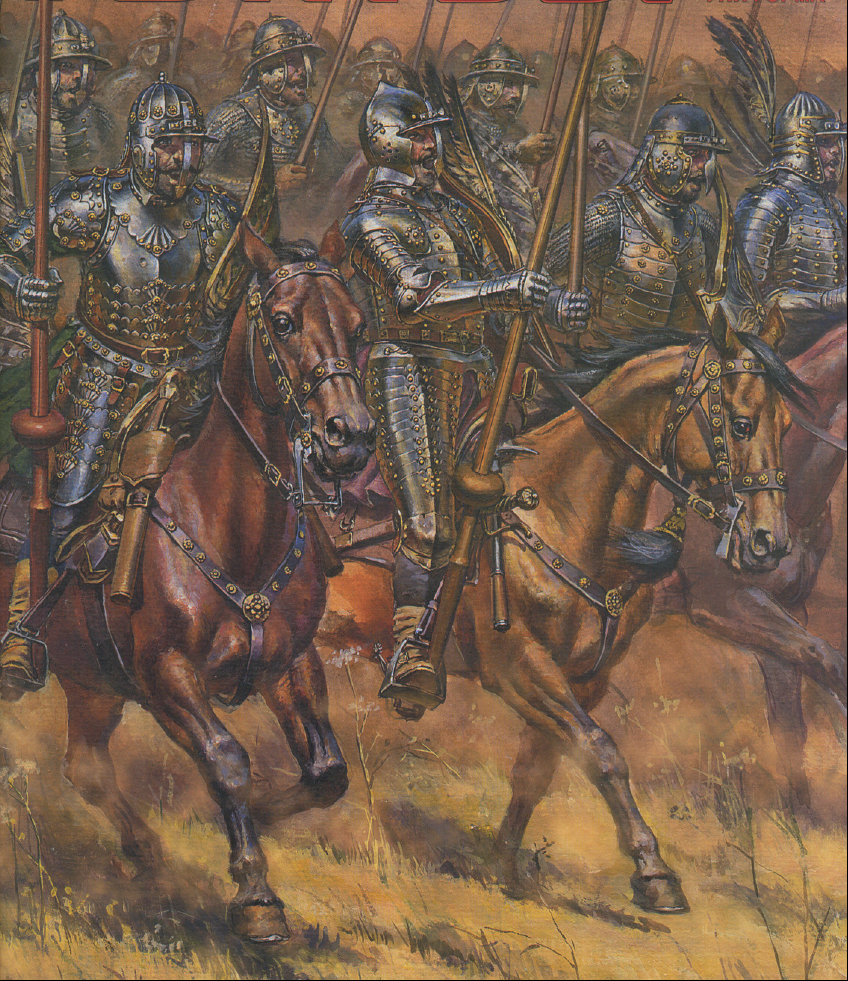
  Pozwolę sobie dodać 'króciutką' ''recenzyję'' albumu ostatnio wydanego w kraju pt : 'Husaria Rzeczpospolitej' autorstwa mośćów Radosławów -  Sikory et Szleszyńskiego. 
Link do przykładowej księgarni, choć mój egzemplarz przybył via EMPIK
http://tetraerica.home.pl/pl/p/Husaria-Rzeczpospolitej-/277

    Ad rem, mam przed sobą przepiękny album, ciężki zawartością i pachnący dobrym papierem, materiałami źródłowymi et chwała husarii w relacjach pisanych et ikonografii z epoki tejże najpiękniejszej jazdy świata - choć od strony obróbki części plików zdjęciowych pozostawia coś tam do życzenia (zwłaszcza fragmenty Certamen Equestre) - z tej samej francuskiej biblioteki internetowej 'Gallica' mam dużo, dużo lepsze skany tych koni 'piórnych' niźli panowie autorzy zamieścili, mogli byli się do mnie zwrócić, jako że się znamy.. a szkoda...


Tedy o zawartości - przy pierwszym przeglądaniu pominąłem teksty źródłowe, i od razu rzuciłem się na genialne zdjęcia z Pelplina (Bazylika Katedralna), i nie zawiodły moich oczekiwań;  ponadto, idąc chronologicznie, znajdujemy dużo dobrych zdjęć słynnego obrazu bitwy pod Orsza, jest oblężenie Połocka AD 1579,  Rolka, Kircholm, trochę dziwnie 'pocięta' i zaprezentowana  husaria z Kielc (plafony na Zamku Biskupim), Tczew AD 1627 (choć odwrócony), Smoleńsk (z Kornika i rycina) różnoraki Wiedeń AD1683, Kalisz AD 1706, są grafiki, freski i rzeźby nagrobne etc - miodzio waszmość państwo, miodzio całkiem, choć jest i trochę piołunu. 
Zanim przejdę do piołunu to może trochę jeszcze  o nagrobnych rzezbach aka pomnikach nagrobnych, które chyba po raz pierwszy doczekały się pokazania w kontekście husarzy w polskojęzycznej publikacji. Nie jest to oczywiście wyczerpujące zestawienie tychże dziel sztuki sarmackiej, ale dość pionierskie - ok, może nie do końca, bo w 'Polish Winged Hussar ' (z Osprey'a) mości Richarda Brzezińskiego znajduje się świetna płaskorzeźba nagrobna z kościoła  w  Suchej  kolo Strzelec Opolskich przedstawiająca skrzydlatego husarza imci pana Piotra Strzele, Morawianina, który zmarł był AD 1600 - niestety, tej płaskorzeźby nie ma w albumie.

Bo ze złych wieści to nie ma w albumie ani Kluszyna 1610! ani Chocimia 1673! ani okuć z trumny HWK Żółkiewskiego! ??? brak husarii i koni z tablicy Gołuchowskiej! i parunastu innych sławnych które winny były się tam znalesc a ich nie ma, za to zamieścili obrazy Bacciarelliego nasi kochani autorzy choć równie dobrze mogli Orlowskiego i Norblina czy Smuglewicza etc. 


  Jeśli chodzi o 'kopiaście' zamieszczone materiały źródłowe to chyba jest to dobre i godne pochwały podejście do prezentacji źródeł, wydaje mi się, w tym kontekście, choć nie bardzo rozumiem te dwojga języków tłumaczenia, skoro brak omówienia  i samej husarii jak, i tejże ikonografii w owych językach. Gwoli tłumaczeń tych zamieszczonych źródeł to dobre, moim zdaniem, jest tłumaczenie francuskie! Jednakże angielskie wyraźnie odstaje - cóż, wydaje się, ze tłumacz musi się jeszcze wiele nauczyć,  ale nie jest łatwo tłumaczyć teksty historyczne z polskiego na angielski oj nie... Może także szkoda, że zamiast 'anachronicznego' już dzisiaj francuskiego nie ma tłumaczenia na ukraiński? Na stronie 15 jest i moje tłumaczenie ze staro-hiszpańskiego na język polski - ku chwale Ojczyzny :)

  Może trochę o wstępie - cóż, wstęp jest zgrabnym esejem o husarii, i zawiera, naturalnie, wiele poglądów głoszonych w książkach R. Sikory et jego artykułach, min mamy listę 10 'najciekawszych dokonań husarii miedzy AD 1574 a AD 1694 ( tak, tak, 'nieszczęsny' Hodów się załapał z owym 100 liczniejszym przeciwnikiem 400 husarii-pancernych).. Mamy tam także o piórach a skrzydłach co to konie straszyły, o kozłach hiszpańskich a innych ciekawostkach i poglądach autora - razem zgrabnie i po husarsku. Przy pierwszym przeglądaniu dziwnym wydało mi się,  ze  tego eseju autorzy nie zdecydowali się przetłumaczyć na francuski i angielski, ale jak się okazało przy gruntownym czytaniu tekstu w pierwszej części albumu esej jest przetłumaczony na obydwa języki (Wersja angielska wstępu jest na s. 45 - 47. A francuska na s. 77 - 80) , ergo wniosek, ze pewnie przydałby się spis treści do wszystkich tekstów zawartych w albumie, jak i spis ilustracji, byłoby łatwo i przejrzyście dla czytelnika i kolekcjonera. 

Jak już rzekłem brak mi spojrzenia na ikonografie naszej skrzydlatej jazdy zaprezentowanej w albumie - tj jakieś nawet bardzo 'cieniutkiej' analizy materiału ikonograficznego od strony przedstawienia rzeczywistego wizerunku husarza - być może zamiast zamieszczać materiały źródłowe pisane i ich tłumaczenia w 2 językach, czy nie lepiej byłoby omówić zamieszczona ikonografie? Coż, na to już za późno, ale pozostaje luka, i dla użytkownika bez wstępnej wiedzy o husarii ta ikonografia pozostanie li tylko obrazkami, i tedy chybiony będzie cel czyli wyjaśnienie na czym polegała owa fałszywość wizerunku husarzy w malarstwie XIX wieku. 

'Wychowałem' się na twórczości XIX-wiecznych polskich malarzy, i jakoś nie wydaje mi się, żeby zafałszowali wizerunek husarii mościpanowie Orłowski, Suchodolski, Kossakowie, Brandt, Pawliszczak, czy Grottger a Rozwadowski etc, bo przecież takiej glorii husarii jaką oni malowali czy rysowali nikt inny nie namalował . Po prostu mieli swa wizje na podstawie zachowanych po zamkach, pałacach i dworkach eksponatów, opowieści rodzinnych, powstającej historiografii polskiej trzech zaborów, jak  i kultury a naleciałości klasy szlacheckiej a bogatego mieszczaństwa, arystokracji, wciąż żyjących wyznawców Sarmatyzmu, czyli dla tych wszystkich z których się wywodzili lub dla których malowali etc, a nie byli przecież historykami wojskowości tylko malarzami rodzajowymi.. ergo, nie zgadzam się z takim 'ostrym' stawianiem rzeczy jak podają autorzy. 
Muzealnictwo wojskowe i rekonstrukcja naukowa husarii to dopiero lata 1930te, a jak widać po nielicznych filmach, ilustracjach czy obrazach  a także, a może niestety, dzisiejszych  rekonstruktorach husarii większość nie otarła się o rekonstrukcję naukowa, a ogląda li tylko 'Pana Wołodyjowskiego', 'Potop' czy 'Ogniem i Mieczem'.. 


Finałowo  dodam, że moim zdaniem jest to wielka szkoda, że nie podzielili mospanowie koledzy materiału na, powiedzmy,  wiek XVI do AD1648, i tom II od wojen kozackich do końca istnienia husarii - idąc może metodologicznie okresami panowań naszych monarchów. Uważam, że wtedy byłoby klarowniej i przejrzyściej, a przede wszystkim  łatwiej i dla specjalisty jak, i dla czytelnika-amatora historii husarii...

Ergo czekając na album numer II, który zapowiadają we wstępie I albumu sami autorzy, ten dzisiaj  oceniam na '4' całościowo, choć jeśli chodzi o jakość wydania definitywnie dam '6'. 

Co by nie rzec jest to przepiękna, jedyna jak do tej pory,  książka-album tego formatu dla miłośników husarii... którą szczerze polecam.

finis

Sunday, February 8, 2015

Lars Andersen - archery and some

Salve,
the internet world has been swept by a debate caused by the video of master archer Lars Andersen.  - what a skill on this archer! But... there are problems with his historical claims and mysterious pronouncements.

There have been some level-headed, informed responses, eg by Mike Loades,[1] or by schola gladiatoria, and this one is a 'nice' critique so I am sharing it with you.

so do ponder while watching and perhaps eventually do go & get a bow and some arrows and then  go practicing away - it is great, I assure you- :)


[1]
Mike Loades  - I enjoyed  his book on the English  Long Bow and the documentary on the Egyptian New Kingdom chariotry.

Ps.
per archery  I own a 55 pound horse Korean bow and enjoy my archery whenever I can, including 'hunting' animal-shape targets with it.

Battle of Eylau AD 1807 anniversary


Salve,
 today we have the anniversary of the battle of Eylau AD 1807,  one of the bloodiest battles of the Napoleonic Wars - article at Wikipedia.
Napoleon's Campaing in Poland, 1806-7 - an entire book from archive.org

This two-day battle, without a clear winner, is famous for the huge charge of the French cavalry. However, it saw a large number of most unhappy blunders and loss of life, due to the cold and a frightful blizzard, so as a result of the terrain and climate conditions the struggle at Pruessisch  Eylau or Bagrationovsk  saw an appalling carnage of French and Russian infantry (much less on the Prussian side), acts of heroism and bravery, and numerous charges of cavalry on both sides, especially during the second day of the engagement, obviously resulting in a tremendous loss of horses. 
Cavalry charge at Eylau - ''The 10,700 men of the Reserve Cavalry and the Guard Cavalry stepped off into the driving snow.''
Eylau Campaign - translated by Greg Gorsuch
Cavalry remounts of the French Army 1806-7
Order of battle of the Russian and allied Prussians
Cavalry lessons - Eylau and Friendland - 1st Polish Campaign


 Battle as seen from the saddle on the Russian side - excerpt from Denis Davidov's Memoirs - - original Russian

Anatoly Telenik also painted episodes from this battle, and you can find some examples below:


During this battle 7 French eagles or regimental battle standards were captured by the Russians.
For the Polish readers - good albeit quite general book -  Tomasz Rogacki, Pruska Iława 1807 (Bellona)
Enjoy

Thursday, January 29, 2015

Just sketching in Outremer

Salve,
inspired by great art of Mr Telenik I did some sketching  towards my project of the horses of Outremer , but there is little flow as I am battling  awful midwinter flue or cold etc.

As usual a mixture of 'watercolor' brushes in MyPaint and Krita, while GIMP for editing.

...several days ago I discovered this blog  - Defending crusader kingdoms- by historian and writer Helena Schrader and I strongly encourage you to visit and peruse (articles and book reviews, ability to comment etc) .

I am going to get Ms Schrader's book about Balian d'Ibelin. (Balian of Ibelin), one of my favorite subjects of the crusades. By the way, I accidentally encountered and read Marcin Mortka's trilogy 'Miecz i kwiaty' ('The Sword and the Roses') about Outremer during the III Crusade and I mostly enjoyed his book, while  Balian was described there as well, albeit a post-modern portrayal of a Medieval knight, nobleman and commander.


Nota bene a very useful book to have in terms of the medieval horse - The Medieval Horse and Its Equipment, c.1150-c.1450 (although its scope's limited to England ) while I do need an article or a book, or two about the southern Italian stock breeding under the Byzantines and Siculo-Normans. I am currently rereading Ms Hyland's Medieval Warhorse and Mr Gladtiz' Horse Breeding in the Medieval World.
enjoy


Monday, January 26, 2015

Anatoly Telenik - paintings & sketches

Salve,
this year is still new -:) so I am planning to start a new theme - contemporary painters and illustrators , in whose art horses and history are featured.
I am going to start this theme with Anatoly F. Telenik (А. Ф. Теленик), Ukrainian painter who lives and works in the south of Ukraine, near the Black Sea. We should remember and reflect that presently in the south eastern Ukraine there is war,  this bloody awful, needless, foreign-influenced and terrible war  that is wrecking lives, causing death, havoc and misery in peoples' lives as we speak.
                     Let us not forget Ukraine in our prayers for peace.

    Mr. Telenik kindly allowed me to show some of his sketches and details of his larger paintings.
Anatoly is very prolific, paints, usually in oil, many historical subjects ranging from Medieval, Early Modern and Napoleonic periods, as well as still lives, landscapes, figurative art and any other subject he sees fit to touch his brushes to, as long as there is time to do it. His historical paintings, especially related to the Napoleonic Wars figure prominently in many collections, while they have been reproduced in numerous books (eg 1812 war  as in this publication) and magazines in Ukraine, Russia etc.
Below details from anatoly's Napoleonic paintings, battles of Eylau and Borodino.


I love this art related to our common history - the Polish-Lithuanian Commonwealth, - for we, Poles and Ukrainians share some proud history together, and hopefully will share some more in the future :)


So then more  winged hussars and Zaporozhian Cossacks.


In my opinion Mr. Telenik's art rightfully falls within the greatest of this genre - Juliusz and Wojciech Kossak, Jozef Brandt, and Józef Chełmoński etc.

enjoy

Ps
today I read that Demis Roussos died on Sunday (25.01.2015) - pacem aeternam, great artist.

Friday, January 16, 2015

Bucephalus

Salve,
today I found on Wikipedia this French artist - André Castaigne, and in 'his' Wikipedia Commons gallery there was an image of the most famous horse of the Antiquity - Bucephalus, and his most famous rider, Alexander the Great

From this edition of Quintus Curtius Rufus ''Historiae Alexandri Magni'' comes 'A supplement to Q. Curtius Rufus' (for the first 2 books are lost)  and there we have a following story of the meeting between Alexander and his four-legged friend.
                                                    ***

THE TAMING OF BUCEPHALUS.
* Suplement to Quintus Curtius Rufus: Book I, ch. IV (vol. I. London 1809)
The young prince astonished his father and the court, by his dexterity in managing the horse Bucephalus, a name given to the animal from his being marked with the figure of an ox's head. Thessaly was then famous for its breed of fine horses, yet none of that country could be compared to Bucephalus for beauty or vigor; 
Philonicus, a Pharsalian, considering the noble animal to deserve an illustrious master, brought him to Philip, and offered to sell him for sixteen talents. When the parties had reached a plain where the horse's speed and temper were to be tried; and one of the king's grooms attempted to mount him, the animal, refusing to be touched, reared and plunged violently; and his fierceness made each of the officers and servants who approached to mount him, relinquish the attempt. 
Philip regarding so wild and unmanageable an animal as useless, desired that he might be led away. Alexander, however, on hearing this order, cried out: "What an excellent horse are we "going to lose, for want of address and boldness to mount him!" The king at first considered this exclamation to proceed from juvenile rashness; but on Alexander's insisting that it was practicable to ride the horse, permitted him to make the experiment, on condition that he should forfeit the price demanded for it if he failed.
The young prince, exulting, advanced to Bucephalus,and seized his bridle; he had observed that the animal had started at the motion of his own shadow, he therefore turned his head toward the sun. Still the horse's fury is not much abated; Alexander strokes his mane, and speaks to him in a soothing voice. Still the horse foams with rage; but the prince, having gently thrown aside his cloak, vaults into the saddle. Bucephalus, unused to obey, plunges, rears, strikes up his hind-feet, tosses his neck and head, and struggles to overcome the controul of the bit, in order that he may dart away ungoverned. Alexander relaxes the forward rein, at the same moment spurring the horse, and with cheering tones animating him to exert all his swiftness. After flying over a long space, the wearied animal showed an inclination to stop; the prince, again spurring him, kept him at his full speed till his spirit was entirely subdued. After which, he returned with the horse gentle and tractable.
When the prince alighted, his father, embracing him with tears of joy and kissing him, said, "My son, seek out a larger" empire, for Macedon is too small "for so vast a spirit."
Bucephalus ever afterwards obeyed Alexander with uniform submission, while he maintained his original fierceness towards other persons. The noble animal accompanied his master through successive labours and dangers, till he was killed in the battle against Porus.
                                                                   ***
(this account was taken from  Plutarch, Life of Alexander,  6, vol. VII)
ps 
explanation about the supplement as can be found in the volume's preface:

*original spelling and grammar*


Thursday, January 15, 2015

Mikhail V. Gorelik - pacem aeternam


Salve,
My heart is heavy with sadness and sorrow as I must share with you this really sad announcement:
 on January 12, 20015 in Moscow, Russia died don* Mikhail Viktorovich Gorelik (Михаил Викторович Горе́лик) , one of the greatest specialists of pre-modern military history, the history of material culture of the Central Asia nomadic peoples, historical illustrator, academician, archaeologist, educator and prolific writer.
From all the modern military artists and historical reconstructors Mr. Gorelik's work has been the greatest influence and i will sorely miss His wonderful
I see that there is no curriculum vitae Mr Gorelik in English so I sort of took this description of His life from this site and made it into English:

'Mr. Gorelik was born on October 2, 1946 in the city of Narva. But since 1947 he lived in Moscow. Since 1960, he became engaged in the archaeological 'circle' at the State Historical Museum (GIM). In 1961, for the first time he worked in archaeological expedition. In 1964 he graduated from an art high school, specialty graphic designer. In the same year he entered the evening division of the Department of Art History and Theory of historical faculty of Moscow State University and a job in GIM. In 1965 he transferred to the full-time department, from which he graduated in 1969 with a degree in "History of Foreign Art", defended thesis on "Artworks of Behzad." In the same year he entered graduate school at the Department of Art History and Theory of historical faculty of Moscow State University.
In 1973 he defended his thesis on "The Mesopotamian miniature school of the second half of XII - the first half of the XIII century.", Received the degree of candidate of art. In the same year he entered the Institute of Oriental Studies of the Academy of Sciences, where he worked until death. Author of over 100 scientific papers. The main topics of scientific interest - the arms and armour of the eastern and southern Eurasia peoples,costume of the Eurasian peoples, the history of the military affairs of the Eurasian peoples, the art of the people of the Orient.
For 15 seasons, participated in archaeological expeditions (around Moscow, Crimea, Khakassia, Tajikistan, Lower Dnieper region).
While still a student began studying graphic reconstructions of weapons and costume. In 1979, in preparation for the celebration of the 600th anniversary of the Battle of Kulikovo suggested, developed and implemented on the basis of the material reconstruction GIM series sets of weapons of old Rus warriors and the Golden Horde warriors of  XIV century  for the Museum of Kulikovo and GIM. In subsequent years, developed and managed the production of the material reconstruction of weapons, costumes, equipment for exhibitions at the Museum of History of the Don Cossacks (Starocherkasskaya stanitza/village), in the Vladimir-Suzdal Museum-Reserve, the 'Slovo o Igor's Pulk'( The Tale of Igor's Campaign) Museum (Yaroslavl), the Museum on the Khortisa Island. Khortytsya, Museum of the History of Ukrainian Literature (Kiev), the Regional Museum of Arkalyk in Kazakhstan, the Regional Museum in the city of Novgorod-Seversky, the United Museum-Reserve (Stavropol), the State Museum of the Republic of Tatarstan, the Royal Arsenal (Royal Armouries) (Leeds, England), and for private collections.
Since 1964 (the film "Passion According to Andrei") he had worked as a consultant for more than 20 films. He worked as a costume designer for the film "Nizami" (1980-81, Azerbaijanfilm) and the movie "Ermak" (1991 - 1996, Mosfilm). For the last scene of the craftsmen led M.V.Gorelikom firm "Yarrist" produced weapons of the main characters. In 1997, the MV Gorelik was awarded the National Film Award "Nika" in the category "Best Costume Design" for his film "Ermak". MV Gorelik was an academician of the Russian Academy of Motion Picture Arts.
Recent years, being the president of the cultural and historical Fund "PARK HISTORY" and author of the concept, M.V. Gorelik developed projects for the recreational and educational tourism centers - Parks Stories on historical themes, with a maximum immersion visitors authentic, scientifically credible historical atmosphere.
Died three days ago of heat attack.'

below, some of his numerous works  - mind you Mr Gorelik was the artist-designer behind the famous Osprey book on the Scythians (Mr McBride painted the plates), and cooperated   with David Nicolle, Ph.D. while his articles, eg on the Saka and Samaritan arms and armour, on the Mongols, on the medieval Circassians, on the Kushan arms and armour should be translated into English

  Абрамзон И. Я., Горелик М. В. Научная реконструкция комплекса вооружения русского воина XIV в. и его использование в музейных экспозициях // Куликовская битва в истории нашей Родины (материалы юбилейной научной конференции). М.: Изд.-во Московского университета, 1983. — С. 238—244.  
 М. В. Горелик, Н. М. Фомичев.Рыцарские доспехи XIV века из Азова, Северное Причерноморье и Поволжье во взаимоотношениях Востока и Запада в XII—XVI веках. Ростов-на-Дону, 1989
Горелик М. В. Монголо-татарское оборонительное вооружение второй половины XIV — начала XV в. // Куликовская битва в истории нашей Родины (материалы юбилейной научной конференции). М.: Изд.-во Московского университета, 1983. — С. 244—269
Горелик М. В. Кушанский доспех // Древняя Индия. М.: Наука, 1982, с. 85-89. 
Горелик М. В. Скифский мужской костюм в системе костюма ираноязычных народов древней Евразии // Базы данных по истории Евразии в Средние века. — Вып. 3. — М., 1997.

Monographs

  • Горелик М. В. Оружие Древнего Востока. IV тысячелетие — IV век до н. э. — М.: Наука-Восточная литература, 1993.
  • Горелик М. В. Оружие Древнего Востока. IV тысячелетие — IV век до н. э. Издание второе, дополненное. — СПб: Атлант, 2003
  • Горелик М. В. Армии монголо-татар X—XIV вв. Воинское искусство, оружие, снаряжение. М.: Издательский дом «Техника-молодежи» и ООО «Восточный горизонт», 2002.


Farewell Maestro, my condolences to your family. Pacem Aeternam
Ps
I attached some of his wonderful reconstructions, I do not own nor have any rights to them, so please respect those.  
Ps*
* I used honorific Spanish and Italian title 'don' - just because I respect and cherish Mr. Gorelik's work and research, unfortunately never had the pleasure to meet him in person.

Wednesday, January 14, 2015

Crusaders' horse - Outremer

Salve,
back to horses and away from the madness of our world...

...perhaps the time is ripe to take a look at the Crusades and Outremer (Crusader states in the Levant/Near East ), and by Jove, I will try to do some this year (fingers crossed :) ).

Basically, I have been skipping the Middle Ages (and by that therm I mean the European history between the Muslim conquests of 630sAD and discovery of the Americas), but for several on the Medieval warhorses, saddles etc.

Thanks God, we can use images from the period - great depositories at  Wiki Commons and other fine 'open' websites offer us plenty of opportunities -
so in this spirit several images from the Siculo-Norman cultural area, i.e., the Kingdom of Sicily ruled already then by the Holy Roman Emperor Henry VI  and drawn by Petrus de Ebulo (Pietro or Peter of Eboli) around 1196 AD. The work comes from a manuscript ''Liber ad honorem Augusti'' (held presently in Bern, Switzerland) but published and available here with Italian commentary.
Roger II of Sicily 


The conqueror of the Siculo-Normans - emperor Henry VI

Constance of Sicily, clearly riding a palfrey while seating a side-saddle.

Note that all riders use a form of curb-bit and riding holding reins in one hand.. queen's horse tack is especially rich and beautiful, while her horse seems to be a dapple-grey one.

Dr. David Nicolle and his prodigious amount of work will probably figure strongly in this thread - his two-volume set ''Arms and Armour of the Crusading Era 1050-1350'' is a must here.

enjoy
ps
It is a great pity to us readers that the American historical fiction writers always and constantly write about the English Medieval history & characters, when there is this great and unploughed field of the continental Medieval history, while,mind you, most of the Americans are either German, French or Spanish in their descent. Seems like the British royals conquered the US popular culture without firing a single shot (after having lost the two wars 200 years ago - 1776-83, and the War of 1812). Cecelia Holland is a notable exception with her many novels, eg the novel 'Antichrist' telling the story of Frederick II, son of said emperor Henry VI, most successful crusade since the creation of Outremer.

Wednesday, January 7, 2015

Act of terror against 'free expression' in Paris


Salve,
January 7th should be a joyous day for today's day when the Eastern Orthodox Church celebrates Christmas (due to their use of Julian calendar), and yesterday the Western Christianity, especially the Catholics around the world celebrated the Feast of Epiphany. (also the Day of Trzech Króli [Three Kings] in Poland).

Yet my heart is filled with heavy sadness, due to the terror attack in central Paris, France; the attack on the notoriously rag-gish French satirical weekly magazine titled ''Charlie Hebdo.'' 

Their art was entirely not 'up my alley,' (being vulgar, profane and often insulting religious believes) nor were to my liking their political statements & views made in their publications etc. 

But by God and our traditions and laws, they had (and we all have) the right to draw and publish our views and ideas, for this is our Western Way of life


    Amongst 12 innocent people killed today in Paris, including 2 policemen,  there were 4 rather famous and well established French artists: Charb ( publishing director of 'Charile Hebdo' ), Cabu, Wolinski & Tignous (staff artists) - all murdered by three black-clad assassins allegedly screaming 'God is Great' in Arabic.
In the past century, the most horrifying XX century, it was the Nazis and Communists who easilyand methodically exterminated millions of people for their believes and opinions held....


Pacem Aeternam  masters of brush and inks... 

Ps
I know a little about acts of terror having experienced some ETA attacks in Madrid, Spain then when living in NYC experienced the first attack on the World Trade Center, later on the gym at the WTC, the restaurant & cafe,  and the Borders bookstore at the street level were some of my favorites in that part of Lower Manhattan. On 9-11from the window at my workplace I saw the second airplane hit the South Tower of the World Trade Center in New York, and then drove my car to Greenpoint/Williamsburg trying to cross over to Manhattan. You know, when the Soviet Union collapsed I did expect a happier, better and peaceful New World...
ps
a look by Forbes at the media (AP, NYTimes et al) and Charlie Hebdo tragedy. 

obvious  question remains 'cui bono' - so  opinions (some extreme) away from the mainstream Western media: Cockburn, old Reaganite  Roberts, Ertem, by Spengler   and Escobar from Asia Times- (9 Jan 2015) - perhaps I will add more in time.