Wednesday, March 25, 2020

Siodlo niegdys Stanislawa Koniecpolskiego

Salvete omnes,
[in Polish]
w Tygodniku Ilustrowanym z 1881 roku okazywały się artykuły polskiego etnografa Edwarda Chłopickiego pt Wędrówka po Guberni Kijowskiej.
 W Trojanowie, na Żytomierskim Wołyniu miała swoja stadninę koni arabskich Ludwika Działyńska (podaje Witold Pruski w swej pracy o hodowli konia arabskiego w Polsce), a Słownik geograficzny Królestwa Polskiego i innych krajów słowiańskich, Tom XII podaje,iż stadnina miała tam istnieć od 1717 roku. Słynny pułk piechoty Królestwa Polskiego tj 10 Regiment Pieszy Szefostwa Działyńskich był dowodzony przez szefa Ignacy Józef Działyński , który był właścicielem min Trojanowa, i od niego pochodziła wołyńska linia Działyńskich.
Wracając do drugiej polowy XIX wieku, to nasz pan Chłopicki wybrał się z wizyta do Trojanowa, miasteczka w guberni, w odwiedziny do tego starego siedliska Woroniczów, które to dobra w XVIII wieku  w wyniku małżeństwa z dziedziczką fortuny Szczęsną Woroniczówna  przeszły w ręce roku Działyńskich.

Edward Chłopicki wybrał się w odwiedziny do ostatnich członków wołyńskiej linii  Działyńskich, tj hrabiny Marii Stadnickiej z domu Działyńskich, min z powodu niezwykłych pamiątek zgromadzonych we dworze trojanowskim i .

Wśród pamiątek było siodło z rzędem przypisywane hetmanowi wielkiemu koronnemu Stanisławowi Koniecpolskiemu, i  tak oto nasz etnograf opisał to siodło i rzad do niego:
 - Siodło amarantowe aksamitne, haftowane srebrem, oraz wysadzane drogiemi kamieniami, jako też calu na wierzchowca rynsztunek, z prześlicznie odlewanemi srebrnemi orlami, własności niegdyś Stanisława Koniecpolskiego, po którym drogą spadku pamiątki te  przeszły do Sieniawskich i Komorowskich.

Wyjazd do majątków trojanowskich był końcem 2 miesięcznej podróży po gubernii kijowskiej, a w czasie tych 3 dni u hrabiny Stadnickiej mości Chłopicki odbył także krotka podroż nad rzeki:
 Hnylopiat
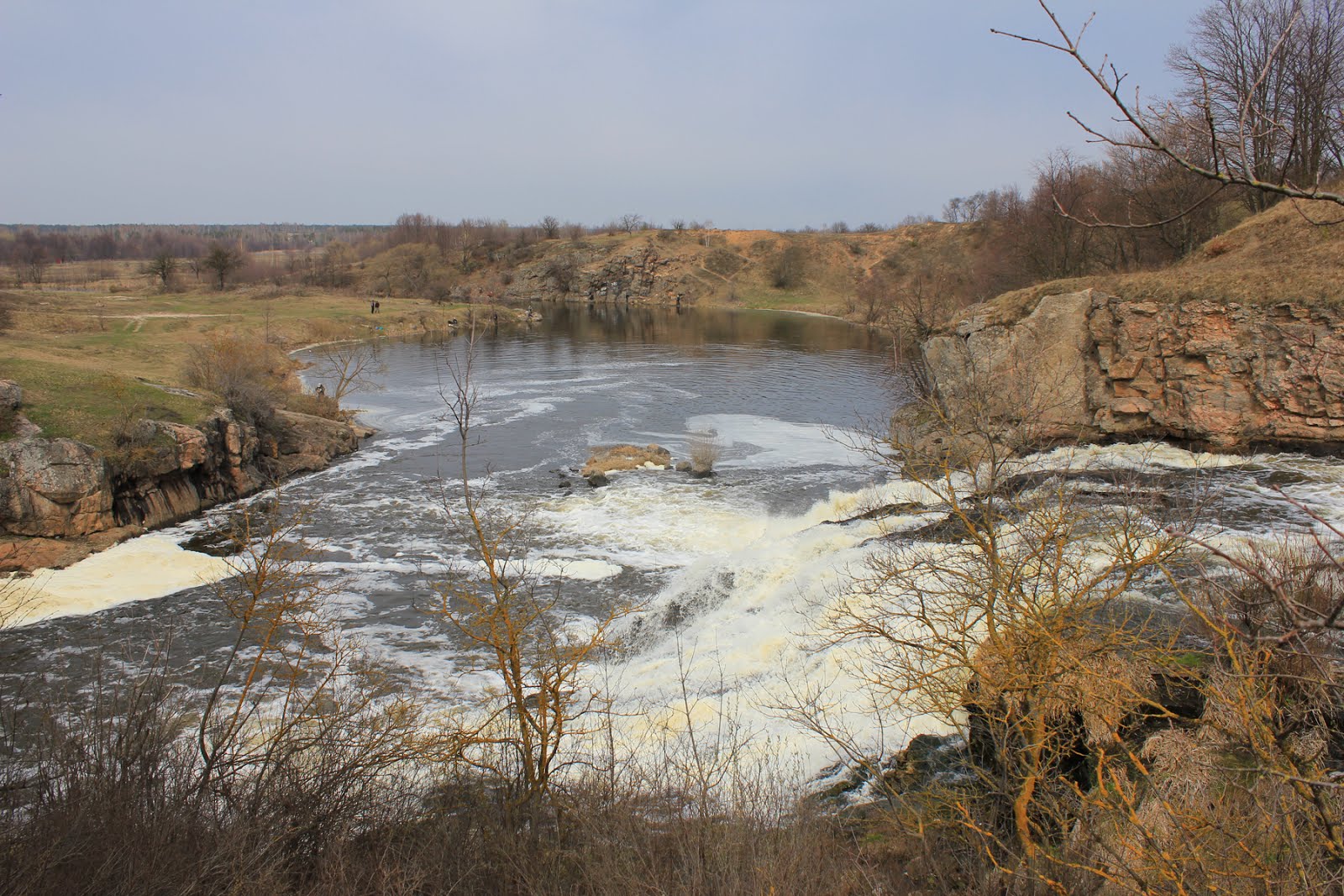
 
i

 Teterów,
 
  i zwiedzał takze  zakłady hutnicze w Deneszach, które założył Konstanty Bieliński.
Valete

Monday, March 23, 2020

Le chic à cheval : histoire pittoresque de l'équitation by L. Vallet - Gallica

Salvete Omnes,
 
Spring is here, at least nominally, and there are the dark times. So perhaps the equestrian history blog may be required to do some cheering up
 
So here we go: the French National Library contains this work by maestro Louis Vallet Le chic à cheval : histoire pittoresque de l'équitation (1891) . - horse history in France with some additional topics and themes -
and here there are some of the plates for enjoyment and perhaps sketch-studies - nota bene the hand of this master of equestrian art  is fantastic and his presentations are cheerful, expertly done and just beautiful - I think.


more at the website - enjoy
 
Valete

ps
perhaps  my only complaint is that there are no Polish uhlans and Polish themes, but the 1890s were the time when France and Russian empire were very good friends, and Poland was partitioned between the German Empire, Austro-Hungarian Empire and Tsarist Russia..
fast forward to 1918 and Poland was restored, and in 1920 Polish armies 'pogromily' (utterly defeated ) Red Army of the Bolshevik regime. this Ausgust there will be the 100th anniversary of the famous battles of Warszawa, Komarow and Niemen etc.

Sunday, March 22, 2020

Testament Tobiasza Morstina, lowczego koronnego

Salvete Omnes,
[in Polish]
parę ciekawostek 'końsko-militarnych' z testamentu imć pana Tobiasza Morstina (Morsztyna) herbu Leliwa, sporządzony 15 X 1664, wkrótce po tym akcie pan łowczy wielki koronny odszedł był z tego świata.
Młodszy brat słynnego poety Jana Andrzeja Morsztyna, tenże pan Tobiasz jako poseł królewski był wysłany do Danii w 1657, i tamże pan Morsztyn, wówczas stolnik sandomierski,  wynegocjował z królem Danii przymierze przeciwko Szwecji, co się skończyło słynną wyprawą duńską dywizji Stefana Czarnieckiego, opisaną przez imć pana Jana Chryzostoma Paska.

ad rem, oto lista niektórych ruchomosci dla mnie ciekawych z Regestru rzeczy po rozdaniu ex pesto:

Kulbaka axamitna Karmazynowa nowa haftowana kapturki do niey.
Siodło Francuskie nowe karmazynowe Axamitne
Kapturki od Siodła Frnacuskiego nowego safianowe Czerwone
Rządzik Kosciany uzdeczka y podpierscień
Rządzik blachmalowy ze wszystkim
Rządzik biały kozacki

Rząd Usarski złocisty
Strzemiona srebrne, w tey skrzyni co w Piwnicy
Prześcieradeł na konie szytych dwie
Kareta Francuska
Rydwon pokoiowy
Wózek Kuchenny
Koni cugow dwa
Rumaków dwa
y podiezdek y klacz
Szory wszystkie z siodłami
Szor na parę koni Moszadzony
Szory Hollenderski nowy nietykany
Kutasy do szoru dwanaście [sztuk]
Opona Czerwona od Rydwona
Tłumok skórzany od Juków
Wiader do Sudni miedzianych dwie z kołem okowanych y Łańcuchem
Drągów zelaznych Kuchennych trzy

Pendent losi ze srebrem przy kotrym sztuk trzy
Pendent skorzany czarny srebra sztuk przy nim ośm
Prochownic dwie wielkich
Pałasz Usarski oprawny
Strzaly z Puzdrem
Szefelin nabijany
Pochwy oprawne z paskami od Szable Kozackiey
Szpada czarna Szmelcowana
Pistoletow par dwie w Szarey jedne. drugie w Czarney oprawie
Srebro od Szable
Rapir stary

Wór do pływania[sic!]

Kolet Losi z pludrami
 ....
pisownia jak w orginale

Valete

Pacem Aeternam - all victims of the Wuhan Covid-19

Thursday, March 19, 2020

the tilt at Quintain in the early modern England

Salvete Omnes,
a short post or perhaps not so short - :)
one of the great and rather fundamental exercise to learn and to hone one's  skills with a lance while on horseback was the tilt at the 'quitain.'
Samuel Johnson (1805) in his A Dictionary of the English Language has this definition -
Quintain - a post with a turning top, and the he tells us to look up a Quintin -
An upright post, on the top of which a cross post turned upon a pin; at one end of the cross post was a broad board, and at the other a heavy sand bag: the play was to ride against the broad end with a lance, and pass by before the sand bag, coming round, should strike the tilter on the back.
 
I have been perusing the Wiki Commons collections and came across this image of a quintain:

Apparently this Kentish village's quintain is quite old, as the ancient   lance exercise - tilting at the quintain - had been alive into the early modern or even post-Puritan revolution (aka English Civil War) period. 
well, I say that because it appears that during the later part of  XVII century there was still some practice with lances (ok, strong poles or staves) in the countryside.

For evidence we have this interesting description taken from 'The Natural History of Oxfordshire' (Robert Plot, 1677):
''They first set a post perpendicularly into the ground, and then place a slender piece of timber on the top of it on a spindle, with a board nailed to it on one end, and a bag of sand hanging at the other; against this board they antiently rode with spears. Now, as I saw it at Deddington on this county, only with strong staves, which violently bring about the bag of sand, if they make not good speed away, it strikes them in the neck or shoulders, and sometimes knocks them off their horses; the great design of this sport being to try the agility both of horse and man, and to break the board, which whoever does is for that time accounted princeps juventutis. It is now only in request at marriages, and set up in the way for young men to ride at as they carry home the bride, he that breaks the board being counted the best man.''

In 1813 J.N. Brewer (Topography of Oxfordshire) remarked that ''the sport is now  entirely disused, and the oldest man in the town does not remember to have heard his father mention the custom in any other than a traditional way.''

Curiously, during the Peninsular War the British and Spanish forces were truncated more than a dozen times by the Polish lancers in the French service.
In 1816 some of the British cavalry regiments (eg 12th  Royal Lancers, 16th Queen's Lancers  ) became lancer regiments, and tilting must have resumed as part of the training.

a photo of modern reenactment from the famous Malbork castle in Poland (naturally famous for the Teutonic Kinghts, but also the seat of the Malbork voivodeship in the Polish Kingdom AD1466-1772)

Valete

Friday, March 13, 2020

Wespazjan Kochowski - Nagrobek Koniowi

Salvete omne,
[in Polish]
Wespazjan Kochowski herbu Nieczuja gościł już na moim blogu -

a dzisiaj krótki wiersz mistrza barokowego pióra, który przecież był walecznym rycerzem sarmackim i obrońcą Ojczyzny epoki rebelii Chmielnickiego i Potopu a także stronnikiem marszałka Lubomirskiego stając min w bitwie pod Mątwami, który w tym wierszu nieco naśladuje mistrza Jana Kochanowskiego.


Nagrobek koniowi
J.m. panu Mikołaja Raszkowskiego*

Tu pod tym słupem leży koń  łysocisawy
Jeżeli który zgodny do Marsowej sprawy.
Za fraszkę Bellerofont i Pegazus lotny,
Przeszedł  ich dzielny rumak, rączy i obrotny.
Namniej mu bieg, i praca, trudy nie szkodziły,
W potrzebach szczęścia pełen, na podjazdach siły.
Nakoniec tu dla pana swej miłości
Ochwatem zamorzony, martwe złożył kości.

Nota bene 'łysina' to albo łysina podługowata (ang. Blaze) - odmiana na głowie końskiej, która jest podłużną białą plamą idącą od czoła aż pomiędzy nozdrza, albo idąc definicją Wincentego Pola  zwana łysina szeroką(ang. Bald face)- plama mogła sięgać i przechodzić za oczy czy brwi etc (  ta ostatnia nie była pochwalana przez autora Hippiki Dorohostajskiego ani przez piszącego ponad dwa wieki później Pola).

ze zbioru - Epigramata Polskie, czyli po naszemu fraszki.
przy okazji piękna ilustracja do wydania poezji mości Wespazjana (z FBC Polona) u stop poety grającego na lutni kirys i kopia husarska z proporcem, koncerz, sajdak i łubie oraz tarcza.


 *zdaje sie, ze herbu Sas

Valete
ps
zdrowia życzę wszystkim podróżnikom netowym i czytelnikom mojego bloga

Wednesday, March 4, 2020

Viking and Slavic Ornamental Design vol. 3 from WHP & Triglav

Salvete Omnes,
 
Winged Hussar Publishing LLC in cooperation with Triglav from Szczecin, Poland, publish the 3rd volume of the Viking and Slavic Ornamental Design - fantastic reference material and study of the designs obtained from archaeological artefacts and iconographic materials, collected during research trips to museums and sites ranging from Ireland to the eastern Slavic lands of Belarus, Ukraine and Russia.
 
 
Written by Igor Gorewicz,
 here at the 2018 Wolin Slav and Viking Festival

and illustrated by Marek Piłaszewicz, it is a treasure of imagery from the Viking and Pagan Slav period - be it for a reenactor costumes and equipment, tattoo idea or drawing exercise etc.
there are some sample pages kindly provided by the publishers


 Slavic horseman reconstructed - Wolin Festival 2019


photos from the various Wolin S&V Festival taken from Wiki Commons - here-
nota bene Slavic music bands at the festival- eg Javaryna & Dziwoludy.


Valete

Hayes on Horse Breaking

Salvete Omnes,
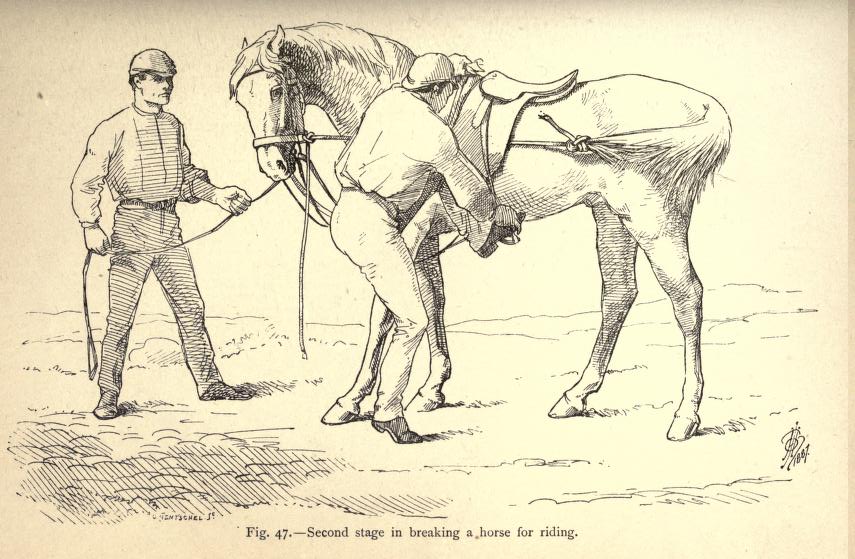
so it is March - a brand new month -  and we are back to Cpt. M. Horace Hayes' books and late XIX  century British approach to riding horses and their training and management.
I like to read and learn or even ponder about the ideas collected within his writings, with the hindsight that Hayes was a true example of XIX century horseman, with their vast experiences, practices and not  a few limitations - so today I will invite you to take a closer look at this book -  Illustrated Horse Breaking.
 
I selected these fragments from the text - the full text can be found on the Archive world library.


Necessity for obtaining control over the Horse.
In order to fulfil the necessary conditions of safety for himself, the breaker should be able, by the system under which he works to quote the words of that admirable horse-master, Professor Sample to make the animal rideable and driveable before he is either ridden or driven. The breaker who employs the ordinary methods, is not alone exposed to danger when mounting, or even driving his pupils' for the first few times; but also in the preliminary handling, unless, indeed, in the case of young foals. The advice to go boldly up to the horse and show him that you are not afraid of him, so freely tendered on such occasions, should be treated by its recipient as a piece of "cheap swagger," or the outcome of pretentious ignorance; for, even granted that such a demeanour would efficiently soothe a terrified animal, or cow a treacherously-disposed one suppositions that are altogether absurd such counsel would in no way supply the necessary foolhardiness for such an undertaking. My advice to either amateur or professional is, never to give a horse a chance of doing wrong; so, in order to be consistent after having said this, I shall endeavour to describe a method by which any horse, unsecured, say, in a yard or loose box, can be brought under complete control with, practically speaking, no risk to the operator. 
On the nature of the coercion to be applied to unruly Horses. 
The only risk run in enforcing the obedience which it is absolutely necessary to exact from unruly horses, is that of spoiling the animal's pluck and spirit a contingency that can be incurred only when the fractiousness arises from "nervousness," or from want of comprehension; for what we term pluck and spirit in the horse should have no taint of stubbornness. The coercion employed should, naturally, be limited to what would be sufficient to overcome the wilfulness; for we should never employ a general effect, when a particular one will answer our purpose. Thus, suppose we had a high-couraged, generous animal, that had been made difficult to mount by a bad. rider, on various occasions, prodding the horse in the side with his toe, when attempting to get into the saddle, we might get control over the animal by Pratt's twitch (see page 113), or by tying him head and tail, and then prove to him that we would not touch him with our toe, when mounting. The Rareyfying of such an animal for this or any similar fault, would be injudicious in the extreme ; as it would, almost to a certainty, injuriously affect one of his most valuable qualities, namely, his pluck. As a sulky animal has little or no pluck to lose ; we may well content ourselves in gaining his obedience without troubling ourselves much about any possible deterioration of his courage.


Breaking by kindness alone. 
While fully admiring the kindness of heart of those enthusiasts who regard a horse as a friend to be won by affection, I must say that the better plan for making him a useful member of society, is to treat him as a servant who has to be taught his work, and from whom implicit obedience has to be demanded. Until he does his work honestly and well, the less petting he gets the better; for he is an animal that is very apt to become headstrong and fractious, by a small amount of indulgence in his own way. I entirely deprecate any fighting with the horse, or punishment with whip and spur, which he can resist; but I insist on the necessity after proving to the horse that he has nothing to fear, and after teaching him to understand one's wishes of shewing that he must obey. I shall endeavour, in due course, to explain to the reader how such obedience can be peremptorily enforced. 


The rough and ready style of breaking.
The method of reducing a horse to discipline, by forcibly securing him, getting on his back, and sticking on until he bucks himself to a standstill, is applicable only to unbroken animals of a more or less mature age, whose owners demand nothing further, than to have them made "quiet to ride." The objections to this method, as far as I can see, are : that it is not always possible to obtain the services of a rider of sufficient pluck and adhesiveness; that some horses, by " throwing themselves over," can get rid of any man off their back; that if the horse wins the fight, the victory will have the effect of making him much worse than he was before ; that the mastery, even if the process be repeated, is, often, not permanent, especially with a new rider ; that it is apt to spoil the horse's mouth ; and that, in the case of nervous or sulky animals, it is liable to increase their particular faults. The buckjumping style of breaking is, of course, only good as far as it goes, and has no just claim to teach the manners that make the horse, as assuredly as they do the man. 


Summary of the principles of the art of rendering Horses docile may be summed up as follows :
1. To obtain control over the animal.
2. To prove to him that he has nothing to fear from us, or from the surroundings in which we place him: in other words, to give him " confidence " and cure him of " nervousness."
3. To teach him to understand the meaning of the indications by which we desire to convey our orders to him.
4. To make him obey our orders in the most implicit manner, in the event of his offering deliberate resistance to them.
5. T o instruct him how to use his powers to the best advantage.
6. To make, by repetition, these acts of obedience and " cleverness " thus taught, into confirmed habits; so that the horse, who is, essentially, an animal of habit, may become a permanently useful servant. As an illustration, I may say that we should conduct the education of a colt or filly, according to the principles we should adopt with a recently- caught young savage whom we desired to make a useful servant. While shewing him that we had complete control over him, we should prove to him that he had nothing to fear from us, and, in doing so, would gain his confidence and affection. We should teach him our language, and, according as he understood our words, so should we demand implicit obedience to our orders, and would, thus, quickly establish the desired habit.

 
Valete