Sunday, February 2, 2020

Roman chariots and chariot racing etc

Salvete Omnes,

and since yesteryear  we have had the brand new month of February, and new post in the older theme - the ancient Roman vehicles etc.
This time a few images showing the Roman quadriga or 4-horse chariot - the most extreme of the Roman vehicle use for the specator show and pleasure - Academia article on the topic here - with the driver or charioteer having a short but perhaps if victorious then almost very celebrity-like moment in time.
Rome's Circus Maximus was the most famous ancient Roman chariot racing stadium.

Let us start with some of the Roman mosaics-
Barcelona, Spain - circus 
 

 Villa Roman del Casale

Lugdunum - musée gallo-romain de Fourvière - in Lyon


stone relieves and  funerary monuments - sarcophagi etc


Napoli, Italy Museum


Finally, some modern connections and reconstructions  have been developed for the film - mostly due to the amazing popularity of the American Christian novel titled Ben-Hur, A Tale of The Christ by Lew Wallace, the most popular novel of the XIX century .
there has been attempts at reconstruction of the Roman chariot racing - in the feature movies like Ben Hur (3 version - 1925,1959 & 2016, all spectacular and ahistorical but I do prefer the Charlton Heston's version, there was a short film made in 1907, can be viewed here) -  and in more documentary fashion lately the Timelines' production on the  Chariot Racing.

Also, last year  the author and equestrian reenactor Mike Loades  developed his new video production  on the Roman circus chariots and it can watched here. I am yet to watch it ..

Valete
ps
all images are from Wiki Commons

Friday, January 31, 2020

Witwicki - poematy z konmi et 157 rocznica Powstania Styczniowego

Salvete Omnes,
[in Polish]
 
na koniec pierwszego miesiąca 2020 roku  daję parę przykładów poezyj' z tematyka końsko-wojenna piorą Stefana Witwickiego (1801-47), absolwenta Liceum w Krzemieńcu, poety epoki rozbiorów i członka Wielkiej Emigracji. Z wydania dziel autora pt Zbiór Pism Pomniejszych.
Wrzucam tę kolekcję trochę ku pamięci kolejnej, 157-mej rocznicy wybuchu Powstania Styczniowego, która minęła w tym odchodzącym miesiącu. Choć sam poeta zmarł długo przed wybuchem powstania, a z powodów zdrowotnych nie brał udziału w walkach powstania listopadowego, to wydają mi się te poematy odpowiednie dla przypomnienia  tragedii jaki i heroizmu powstańców styczniowych i całego Narodu.
 
Pamiętajmy - Vae Victis!


 WOJAK .


Rży mój gniady, ziemię grzebie,

 Puśćcie, czas już, czas! —
Ciebie, ojcze! matko, ciebie!  

Siostry, żegnam was!..


Dumnie patrzysz tam po błoniu,  

Z złością wstrząsasz grzbiet —
Śpieszę, śpieszę, luby koniu,  

Skaczę, lecim wnet.


Z wiatrem, z wiatrem! Niech drzą wrogi,  

Krwawy stoczym bój!
Raźni, zdrowi wrócim z drogi —  

Z wiatrem koniu mój!


Tak, tak, dobrze! na w zawody!  

Jeźli poledz mam —
Sam tu koniu do zagrody  

Wolny wróć tu sam..


Słyszę jeszcze sióstr wołanie,  

Zwróć się koniu, stój!..
Nie chcesz? — Lećże! — Niech się stanie!  

Leć na krwawy bój!


UCIECZKA

Sen ladaco! Świta, dnieje,
  Gasną gwiazdy, kur już pieje:
A tam koń mój oczy mruży,
  Ani myśli o podróży.

Szabli w izbie nie przepaszę,
  Ojca, matki nie przestraszę,
W rękę wezmę i ostrogi,
  Byle wykraść się do drogi...


Rzuć już, porzuć koniu siano!
  Świta, dnieje, już nie rano...
Rzuć już, porzuć koniu studnię,
  Musim stanąć na południe.

Na południe tam staniemy,
  W wieczór walkę odbędziemy;
Że nie minie jeszcze doba,
  Wrócisz sam, lub wrócim oba.
 

KON GRABARZ

Już cię więcej nie utrudzę,
Pójdziesz sobie sam po błoniu;
Ku ostatniej dziś posłudze,
Wygrzeb jeszcze dol mi koniu!

Spiesz się póki z rany mojej
Krew do reszty nie ubierzy,
Póki nie odejmę zbroi
I nie skończę mych pancerzy.

Spiesz się, pracuj całą siłą,
Głębiej, koniu, głębiej jeszcze,
By mnie słońce nie paliło,
By nie doszły do mnie deszcze.

Gasną oczy, duch się ziębi...
Ach, żal braci, żal mi chatki!
Głębiej, proszę, jeszcze głębiej,
By nie zbudził płacz mię matki.
Dość, dość, koniu! Jak zawoła
Wszystkich zmarłych Bóg do siebie;
Bym mógł usłyszeć głos anioła
I co prędzej stanął w niebie!


TRZY PLAMY.  

Biegnie biały koń przez pole,
   A krew błyszczy mu na czole;  
Biegnie biały koń po niwie, 
   A krew błyszczy mu na grzywie;  
Biegnie biały koń po drodze,
   A krew błyszczy mu na nodze.
 Aż już zarżał, jest u bramy, 
   A trzy na nim krwawe plamy. 
 ''Witaj, witaj, koniu biały!  
Czemuś drżący i spotniały? 
  Gdzież twój pan? 
Czy tam w pobliżu  
 Zmówić pacierz kląkł przy Krzyżu?  
Czy u studni odpoczywa,  
 A z kurzawy twarz obmywa?  
Prędkoż wyjdzie już na wzgórek, 
  Do synka, do dwóch swych córek?))  
Starsza córka wnet wybiegła.  
  Krwi na czole nie postrzegła;  
Młodsza konia pogłaskała. 
  Krwi na grzywie nie dojrzała;  
Ale synek puścił z ręki  
  Swe zabawki, kląkł maleńki,  
Konia w nogę pocałował,  
  Krwi się ojca użałował.

 
Valete
ps
parę linków do prac dostępnych via FBC. archive etc -
 Deskur, Bronisław (1830-1895) - Dla moich wnuków
 Pamięci bohatera powstania x. Stanisława Brzóski : w 65 rocznicę męczeńskiej śmierci 1865 -1930
W 130 rocznicę powstania styczniowego -
Bitwy i potyczki 1863-1864; na podstawie materyałów drukowanych i rękopiśmiennych Muzeum Narodowego w Rapperswilu
Zarys historii militarnej powstania styczniowego - Józefa Piłsudskiego
Spis chronologiczny i alfabetyczny bitew i potyczek 1863-1864
Mapa bitew i potyczek 1863-1864 w Królestwie Kongresowem z datami starć
Powstanie Styczniowe - Artura Sliwinskiego
przykładowy zbiór pamiętników dotyczących powstania na wyszukiwarce FBC
Zbiór dokumentów, ikonografii et publikacji związanych z Powstaniem na stronie Biblioteki Narodowej Polona.

Thursday, January 30, 2020

Shota Rustavelli - Knight in Panther's Skin in Georgian XVIIc miniatures

 Salvete Omnes,
it has been some time since  I read Shota Rustavelli's Vephkhistqaosani (English- The Knight in the Panther's Skin; in Polish the title is translated beautifully as 'Witeź w tygrysiej skórze' ) and looking at the Wiki Commons I find a nice gallery of different illustrations to the Georgian XII century epic.
Below poet Shota Rustavelli as imagined by the artist 
-
I have never been to Georgia in the Caucasus, perhaps one day, but I like their national epic, and the music of various Georgian Karvelian ethnic groups (nota bene there is the Kartvelian Laz - albeit Muslim - population in Turkey, but they mostly lost their language and culture during the last century).
The epic is still important for the Georgians, as some of the articles on academia seem to suggest and underline. 

 The XVII century artist Mamuka Tavaqarashvili painted illustrations for a copy of manuscript in AD 1646, when he was at the court of mtavri  Levan II Dadiani, ruler of Mingrelia ( Christian Georgian principality).
the illuminations show accurate weaponry, armor, and horse tack and many other aspects of the Georgian life during the XVII century.
You can read the epic work directly from the net - eg  here.
 
This 1912 translation was done by Marjory Scott Wardrop.
some of the plates showing horses and warriors


Valete,

ps
There is a very important academic researcher from the present Georgia Mamuka Tsutsurmia, whose research  on the Medieval warfare in context of Georgia etc can be read on academia. eg the articles on the so called Krakow Wawel Castle helmet (first & second).


Tuesday, January 28, 2020

Ancient Roman carriages etc

Salvete Omnes,
we will travel to the ancient Rome and the wider Mediterranean world and will take a look at the Roman vehicle traveling on the famous Roman roads

 So this is this rather  short entry on the vast and interesting subject of the  ancient Roman vehicle and its types and varieties -  here the excellent article (and much more in other chapters) by Dr Judith A. Weller titled Roman Traction Systems.
Below various images on Wiki Commons -

 Roman carriage
 
 (replica, more photos here)
 
Some o the vehicles - carts, chariots, wagons and carriages listed below:
horse, mule or oxen oxen carried litter known as 
-basterna

I . Singel axle vehicles

-biga
-birota
-essedum
-cisium (fast traveling 2 person vehicle)
-covinnus
-carpentum
-plaustrum (two wheels)

- quadriga


II .   the second category was the  2 axles (four wheels) vehicles, drawn by horses, mules or oxen:
 

-plaustrum(4 wheels)

-sarracum (serracum)
-carrus
 -carrus arcuatus
 -carrus triumphalis
 -carrus falcatus
-carruca (dormitoria)
-petorrium
-pilentum


Post and mail carriage
-rheda
-angaria
 
and some other types or Roman vehicles
-arcera
-capsum
-benna
-labula (military wagon)

-labularium (military wagon)

-tensae/thensae

Carpentum (Eon Images)


 Nota bene the town dwellers who had money to rent a vehicle they could do it from a cisiarius.
they were slaves or free men who would be driving the hired vehicle, and they were notorious for driving very fast the cisium, covinnus or even rheda carriages.
Those cisiarii (banded into a profession) located at the livery stables  at the town gates, although perhaps also having offices at the mansio (inn) - there were more or less 1 mansio  per 4 mutationes (mutatio or hostel), were spread out in towns along the Roman roads or cursus publicus, and for example Julius Caesar hired a carriage to travel from Rome to Rhone and allegedly his hired coach traveled the distance of some 1,200 kilometers in just 8 days .
 another example or Roman travel - in 38 or37 BC poet Horace traveled along with Octavian's envoy Maecenas  from Rome to Brindisi and wrote about this,  in his poem Sermones or Satirae 1.5.

Valete

ps
A Dictionary of Greek and Roman Antiquities John Murray, London, 1875. - web version. - where many of the named vehicles are listed and explained with the primary literary and iconographic sources.

Sunday, January 26, 2020

White Bull, Miniconjou Lakota warrior - book

Salvete Omnes,
just a little news
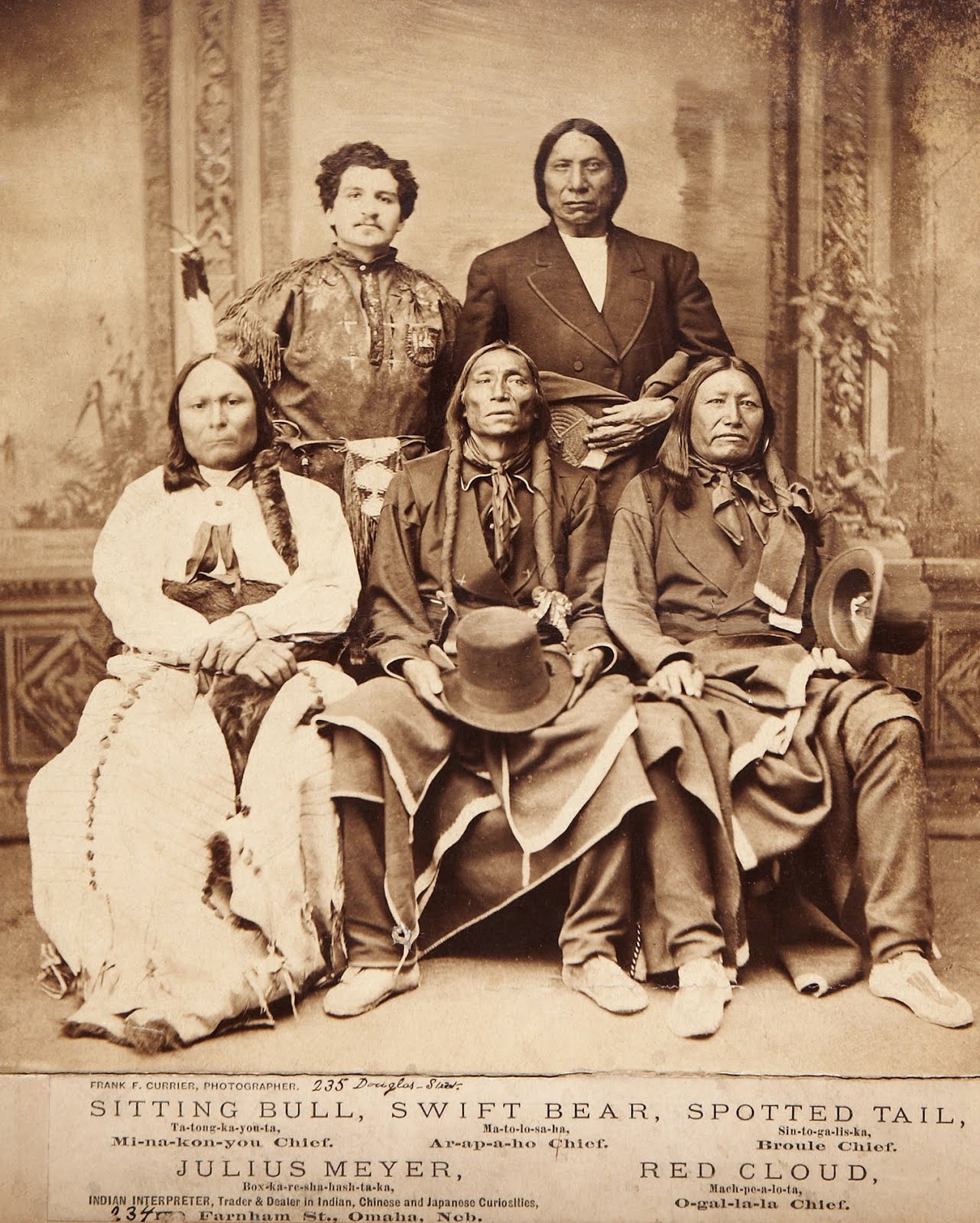
I finally received the Bison Book edition of the Ledger Book of Chief Joseph White Bull (1849-1947) - eg the NPS Little Bighorn Battlefield entry devoted to the great warrior and storyteller (unfortunately a very small photo of our chief). The 1968 edition, published by the University of Nebraska Press , also appears to have been available on Amazon etc.

Pte San Hunka  or White Bull, a nephew of Sitting Bull,  had a very long life, adding Joseph to his name  during the reservation life. During the 1932 his stories were told in the series of interviews to a historian and writer Stanley Vestal (nota bene Oklahoma Historical Society entry on the author is easy and quite informative and has a photo of Stanley Vestal with White Bull), then who worked them over a bit (or so they say) and in 1948 published White Bull's  lifestory in a book titled Warpath : the true story of the fighting Sioux told in a biography of Chief White Bull , that you can borrow the later edition from Archive, upon registration etc.

So I am looking forward to read this autobiography,  meantime you can read the Stanley Vestal's article from 1957- The Man Who Killed Custer - at the American Heritage website.
 
this event - meeting between general Miles and Sitting Bull - was described by White Bull in his recollections.


Valete

ps
the photo of various 'Big men' of the Lakota just for illustration purposes

Friday, January 24, 2020

Rustam and Rakhsh - epic poetry


Salvete Omnes,

today let us read, in verse, from the Ferdowsi Tusi's Shahnameh about  the  truly epic hero Rustam/Rostem and his equally epic stallion Rakhsh - and how they came about to be together. The book of Kings or Shahnameh is like the Iliad of Homer - perhaps sung in the Achaemenid Empire (some book of kings was allegedly  already  in existence  according to the now lost works of Ctesias - V century BC Greek writer) and then  composed and written down by the poet from Tus almost 2000 years after the Homer's epic.

This epic English translations was done by the Warner brothers (Arthur George and Edmond) -  volumes available on archive.


and some Islamic miniatures from archive and the Wiki Commons about this warlike pair


 to be continued
Valete