Salvete Omnes,
it is 4th of July again - happy and joyful -


Enjoy your barbecue- and remember all the wars and US veterans
 |
| US Constitution destroys a British ship - War of 1812 |
and some more


Valete
Salvete Omnes,
it is 4th of July again - happy and joyful -
Enjoy your barbecue- and remember all the wars and US veterans
|
| US Constitution destroys a British ship - War of 1812 |
Valete
Salve,
[Polish]
następna, w tabunie mego bloga, pozycja polska z XIX wieku w temacie kupowania koni jak interesujące a praktyczne dzieło o budowie konia dla jeźdźców i miłośników hipologii. Pisane to dzieło także ku przestrodze dla kupujących konie, jako ze byla to epoka rostrucharzy- czyli handlarzy koni.

Przewodnik dla kupujących konie : czyli zbiór zasad do ocenienia zalet, wad, oraz wieku konia z cech jego zewnętrznych, dla
uniknienia strat i zawodów z nadużyć nierzetelnych handlarzy
pochodzących.''
Na tę pracę natrafiłem poprzez książkę Maji Łozińskiej pt ''W ziemianskim dworze, Codziennosc, obyczaje, swieta, zabawy.'' Warszawa 2011 (PWN), gdzie na stronach 167-172 podejmuje autorka tematykę koni wśród mieszkańców dworków, dworów i pałaców jak dawna, podzielona zaborami Polska czy w II Rzeczpospolitej długa i szeroka.'
Książkę-przewodnik z poradami dla kupujących konie napisał warszawski magister nauk weterynaryjnych i praktyk weterynarii imć Piotr Seifmann a wydal ja księgarz Aleksander Nowolecki w 1858 roku. Książkę można ściągnąć ze strony Centralnej Biblioteki Rolniczej.
Myślę, ze jeszcze będę do niej wracał.
 |
| Ciekawostka, maleńki konik ciągnący wózek |
w swej książce, pani Maja cytuje,strony 168-9, relacje Mariana Rosco-Bogadanowicza o trzydniowych targach końskich w Tarnopolu(wtedy zabór austriacki) ogromnego spotkania kupców i kupujących zaczynającego się w czwartą niedziele Wielkiego Postu, relacja pochodzi z lat 80tych XIX wiecznej Polski pod zaborami:
''Bliskość granicy rosyjskiej sprawiała, że przybywali kupcy rosyjscy i przyprowadzali, jeśli już nie pełnej krwi rysaki ze stad Orlowow, to przynajmniej tak zwane 'rysiaste' (półkrwi), mało co ustępujące tamtym z prezencji jak tez typowego długiego kłusa.[..]

Na [..] olbrzymim targowisku rozkładali się kupcy z pośledniejszymi końmi, reklamujący swój towar od samego rana głośnym pokrzykiwaniem i przepędzaniem po wąskiej, a tłokiem jeszcze zawężonej drodze wokol placu.
Arystokracja końska tymczasem nie opuszczała stajen i robiła staranna do późniejszej prezentacji tualete[1]. Konie te - zaprzęgowe w wózkach, a wierzchowce pod chłopcami stajennymi - ukazywały się dopiero kolo południa, gdy już co dystyngowansi koniarze pojawili się przed Puntschertem[2]''
[1] orginalna pisownia
[2] hotel w Tarnopolu

a na koniec monumentalny pomnik Józefa Piłsudskiego w Tarnopolu, zniszczony przez sowieckie władze jesienią AD 1939 (co w dobie niszczenia pomników na dzikim Zachodzie to nas już nie zadziwi)

valete
Salvete Omnes,
another anniversary this month - the gargantuan battle of Beresteczko 28-30th of June 1651 - 370th anniversary of the Polish-Lithuanian(Ruthenian) victory over the rebellious Cossacks and their allies - the Tatars.
Huge victory for the Polish-Lithuanian Commonwealth, and like Grunwald Ad 1410, this victory in the field was not persecuted to the fullest in the subsequent campaigning, thus allowing the rebellious Cossacks and their Tatar allies to regroup and return to fighting during the autumn of the same year during the so called Biala Cerkiew campaign. C'est la vie -


Prince Jeremi or Jarema Wisniowiecki, Korybut coat of arms, already famous for the Zbaraz defense and his other actions during this terrible war, this time proved his martial prowess again and again, and he gained more fame for his actions during this battle. But he was not in favor with king Jan II, and nothing good came out of it.
Hail the victorious, memento mori to the fallen.

In the coming weeks or even months I will collect and write down some of the army lists and some other interesting materials related to the battle, like the color of a Tatar horse price Boguslaw Radziwill, Traby coat of arms, captured during the third day of this herculean battle.

Valete
Salvete Omnes,

a quick gallop in search of artefacts and imagery related to the famous Polish cavalry of the early modern period aka winged hussars.
Biecz is a very old town in southern Poland, in the Little Poland historic province. It has been mentioned already in the early XI century, and circa 1257Ad became a town founded based on the German law town privileges. Under king Kazimierz Wielki town became a seat of a royal starost, and the capital of Biecz county (abolished by the Austrian overlords following the First Partition of Poland and annexation of Biecz county in 1780s).

One of the most important monuments and active Roman Catholic church is the Corpus Christi Collegiate church in Biecz.


the Latin sentence is carved onto the beam - Christvs Dominnvs Factvs est pro nobis obediens vsqve AD Mortem MDC XXXIX - which could mean that the figures of this Passion scene were placed there around 1639AD?
One of the sculpted figures of this Passion scene portrays a Roman soldier aka Saint Longinus.
but this is a XVII century Saint and hence he is dressed and armed like a winged hussar?
His kopia or lance with which is is piercing Christ's chest is very much like the winged hussar lance of the period - very long and 'slender' looking, with the galka or apple/pomme ball-like handguard very close to the butt end


unfortunately I have no good modern photo of this figure of Saint Longinus as winged hussar

I have no information if this kopia/lance has been studied by any Polish historians. Anybody knows?
valete
Salvete Omnes,
galloping easily from the northern Great Plains of America to the Polish-Lithuanian southern lands and the sadness of Batoh 1652 disaster - continuing with Polish Crown Army Ordre de Bataille or OdeB.

so these are the mounted harquebusier companies within the army of field hetman Marcin Kalinowski-
1- Stanislaw Pogórski company -- 94 horse
Stanislaw Pogórski, Ogończyk coat of arms - I have not yet found detailed info on this commander
1-Franciszek Mycielski company - 98 horse
Mycielski, Dolega coat of arms, - yet to find more info on this commander
and two Pigłowski brothers, in the sources they appear as active cavalry commanders from the beginning of the Chmielnicki rebellion, and their separate mounted harquebusier companies :
1-Krzysztof Pigłowski company - 90 horse
1-Jarosz Pigłowski company -- 77 horse
In total 4 companies, 359 horse and portions


Valete
Salvete Omnes,
on June 17, but 145 years ago in the Montana Territory a battle was fought between the Plains warriors representing Lakota Sioux and Northern Cheyenne bands on one side against general George Crook commanding the so called Big Horn & Yellowstone expedition consisted of detachments of the US Cavalry and infantry aided by other Plains warriors of the Shoshone and Crow tribal bands. eg wiki page.
This battle is known as the battle of Rosebud or Rosebud Creek, but it is also known as the battle 'where the girl saved her brother.'
 |
| Northern Cheyenne Buffalo Calf Road Woman rescues her brother |
Among the Cheyennes in this battle was Chief Comes in Sight, a brave man and a good fighter. His sister had followed him out to the battle. At the beginning of the fight he had charged the soldiers many times, and when they were fighting the upper group of soldiers, as he was riding up and down in front of the line, his horse was killed under him.White Elk was also riding up and down the line, but was going in the oppositedirection from Chief Comes in Sight, and it was just after they had passedeach other that Chief Comes in Sight was dismounted. Suddenly White Elk sawa person riding down from where the Indians were toward the soldiers,pass by Chief Comes in Sight, turn the horse and ride up by him, when Comes in Sight jumped on behind and they rode off.
This was the sister of Chief Comes in Sight, Buffalo Calf Road Woman (Muts i mi'u na')-
The Cheyennes have always spoken of this battle by this name :
"Where the girl saved her brother —
Kse e' se wo is tan'i we i tat'an e."
Young girl saved his life brother.
[..] It was near where Comes in Sight was unhorsed that the
Shoshoni with a spotted war bonnet was killed.
THE FIGHTING CHEYENNES, p 323-4.
on May 31, 1876 Crook's command consisted of -
Captain John V. Furey - chief quartermaster
Captain W.S. Stanton - the engineer officer for the expedition
dr. Albert Harstuff, assistant surgeon
15 companies of the 2nd and 3rd US Cavalry regiments - commanded by Colonel W. B. Royal
5 companies of the 4th and 9th Us Infantry regiments - Major Chambers commanding
there were 106 US Army wagons driven by teamsters and additional 600 mules led by packers also carrying supplies.
on June 14 some 261 Plains warriors joined the army command, that is this was a contingent of the Shoshone, brought to the camp by Tom Cosgrove as US Army guide to the Shoshone and led by their chief Old Washakie with his 85 warriors, and the 175 Crow warriors under various war-chief -including Plenty Coups, thus assembled to join the Crook's column in march, scout and fight.
There were scouts who communicated between general Crook and the native allied warriors: Frank Gruard, Louis Richaud,, and Big Bat.
The entire Crook's command counted some 1,300 soldiers and warriors.


there are various native accounts of this battle - eg Wooden leg - Cheyenne champion, who might have discovered the invading column, and whose report lead to the first real scrimmage between a Cheyenne party under Little Hawk and the entire encamped column on June 9th.
Anyway, here you can have readily available accounts of the battle made by its participants, both US Army and native.

Famous Lakota warrior champion White Bull thus described, to Stanley Vestal, his attire that day:
'[..]a pair of dark blue woolen leggins decorated with broad stripes of blue and white beads, beaded moccasins, a long red flannel breech-cloth reaching his ankles, tucked under his belt over his regular loin-cloth, a shirt, over the right shoulder he had a thong supporting a small rawhide loop (there were four small leather pouches of different kinds of earth medicine, a buffalo tail and an eagle feather) . around his waist he placed his folded black blanket and belted it with his cartridge belt with a hundred cartridges. He borrowed a war bonnet from his brother in law, Bad Lake, it had a long tail of eagle feathers, while there were no feathers around the head of this bonnet. The bonnet had no protective powers and White Bull took it for its beauty. He was armed with his 17-shot repeating rifle. He selected and saddled his fast horse, on its forelock and tail he tied an eagle feather, while the bridle-bit was adorned with an imitation scalp made from a woman's hair. Only horses which had been used to ride down an enemy could be adorned as such. Then he rode to his uncle Sitting Bull tent where the warriors were gathered.''*
White Bull sang a song -
''Friends, try your best
I do not wish my father to be made ashamed.
Because he is a chief''*
White Bull told a story of his personal encounter with a Shoshone warrior champion - 'he rode a fast bald-faced sorrel with white stockings, his horse tail was tied up in red flannel and a red flannel strip was tied about its neck. The Shoshone warrior had a cartridge belt and a repeating rifle' White Bull killed the Shoshone's horse and counted a coup on the Shoshone warrior whom he lamed in the right leg, but this enemy survived the battle*
Valete
* Stanley Vestal, Warpath: The True Story of the Fighting Sioux Told in a Biography of Chief White Bull - can be borrowed from archive.org library
Salvete Omnes,
continuing with Batoh battle and massacre topic
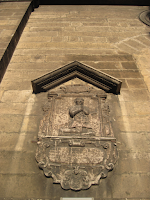
I am going to provide the list of known Polish banners and regiments at Batoh wilds May 31-June 2nd, 1652.
(compiled by Polish historian Wojciech Jacek Dlugolecki in his book Batoh 1652) -
Commander-in-chief - Crown Field hetman Marcin Kalinowski
today the heavy cavalry and our winged hussar banners and their commanders and/or owners:
1.Crown Quartermaster (Obozny koronnyy) Samuel Kalinowski's banner, commanded by 'porucznik'?(lieutenant) Sokolnicki - 116 horses and portions
2.Crown Field Hetman Marcin Kalinowski banner - 150 horses
Stanislaw Zygmunt Druszkiewicz , Bozawola coat of arms, was a hussar companion in this unit and he survived this battle to have an illustrious career as ...a light cavalry commander during the later years well into the reign of our king Jan III Sobieski. Druszkiewicz wrote a diary published
3. Crown Standard-bearer Aleksander Koniecpolski's banner, commanded by Stanislaw Wyzycki - 150 horsess
 |
| Stanislaw Wyzycki |
then a podstarosci perejaslawski (substarost of Perejaslaw) Stanislaw Wyzycki, Gieralt coat of arms, survived this rout and massacre, and later commanded as a porucznik (lieutenant) winged hussar banners during the later wars eg at the great victory at Cudnow (1660), rising to a rank of regimentarz (Deputy Hetman) in a Crown Army. He was an elector of our king Michal Korybut Wisniowiecki, and then of Jan III Sobieski. A member of Sejm in 1676, died in 1680.
4.Crown Grand Marshal Jerzy Lubomirski's banner - 123 horses
5.Starost of Krasnystaw Marek Sobieski's banner - 85 horses
6.Starost of Sokal Zygmunt Dynhof(Denhoff)'s banner - 111 horses
7.Tobiasz Minor's banner - 75 horses
Tobiasz Minor of Przybyslawice, Polkozic coat of arms - pan Tobiasz might have been present at Batoh, and certainly his winged hussar banner, that he had lead since 1649, was annihilated there, but he survived, along with his much reduced cossack banner, and fought on at least until 1653, while his sons Aleksander and Jan continued military careers.
He was a seasoned soldier, fought at Orynin (1618), was not present at Cecora 1620 and Chocim 1621, but took part in the victorious battle of Uscie 1629, where under the command of castellan and future field hetman Stanislaw Lancoronski, Zadora coat of arms, Crown forces defeated Tatars. During the Chmielnicki Rebellion he was active from the very beginning, and fought with distinction and bravery.
8.Castellan of Chernigov Jan Odrzywolski's banner - 63 horses
Jan Odrzywolski (1590-1652),Nalecz coat of arms, was a famous Polish raider and cavalry commander of the Crown army, especially during the 1618-1625 period, eg he led a successful Crown army raid against the Tatars dwelling the Pontic shore, in the Akkerman and Ochakov shore area.
He was a cossack banner commander during Stanislaw Zolkiewski's Cecora campaign of 1620, and during the inconclusive battle he was on the right wing of the Crown army. Then when in the fighting withdrawal he, along with famous raider Stefan Chmielecki and , abandoned Zolkiewski's war laager, broke through the Tatar encirclement and thus was saved, but it was not a honorable action on their part, and he might have lost his Crown Guard position as a result of his avtions. Historians are not certain if he was present at the battle of Chocim (1621), and perhaps he might have provided, again along Chmielecki, services as a commander of the smaller forces screening and deterring Tatars from raiding deeper into the Crown lands.
During the battle of Martynow (1624) fought with bravery and distinction against Kantemir mirza , leading special advance units into the fray, and after the battle he, along with Chmielecki, commanded the special group organized by hetman Koniecpolski that kept pursing the defeated Tatars, inflicting serious casualties upon this elusive enemy.
Later being a professional soldier he also became a politician and a magnate, and eventually a senior army commander. Twice he was a Sejm representative from Braclaw voivodeship in 1639 and 1642, became a senator (a castellan) and important southern Polish Crown personage, both in politics and military areas.
His command suffered a defeat inflicted on them by the Tatars during the victorious battle of Kamieniec (22nd October 1633), battle won by hetman Koniecpolski . Working with the grand hetman he was trusted and often carried important tasks and duties, eg he organized hetman Koniecpolski's war laager marching towards Ochmatow 1644, and during that battle he commanded the forward units that defeated the Tatars and then pursued the Tatars all the way to their camp there, making important addition to the total victory there.
During the Chmielnicki Rebellion he was a senior officer of the crown armies. eg fought at Korsun battle (1648),and during tactical Korsun withdrawal commanded the center of Polish war laager where he was taken prisoner by the Tatars. During the great battle of Beresteczko (28-30th June 1651) he commanded his own 'division' on the left wing of the Commonwealth army. Starting in 1637 he was the owner of one pancerny cossack banner and one winged hussar banner.
During the battle of Batoh (1-2nd June 1652) he commanded, along with Marek Sobieski, the cavalry formations against the Tatars.
He was murdered on June 3, 1652 at Batoh.
 |
| Stanislaw Wyzycki - epitaph at the Bernardine church in Lviv |
to be continued
valete
Salvete Omnes,
a quick post - the Anne S.K. Brown Military Collection (Brown Digital Repository. Brown University Library) contains a vast number of military-related images from various periods.
In this 13 print collection by Johann Georg Hertel and Carl August Grossman we can 'corral' 5 prints that may show the Polish cavalrymen (Lithuanian Tatars et al) in the service of the -Polish-Saxon kings up until 1763 (when Augustus III died and uhlan regiments were recalled). The date - 1765 - is approximately one year after for these cavalry units to have been returned to Polish-Lithuanian Commonwealth, where they were re-incorporated into the army.
these three are the most telling as to a hypothesis that they show Polish uhlans from the Saxon royal army:


Nota bene according to the sources the first time these Polish-Lithuanian Tatar lance cavalry banner were called uhlan cavalry occured in 1735. Upon capitulation of the Saxon army at Pirna in 1754 our king had three uhlan regiments - Rudnicki (fully Czymbaj Murza Rudnicki), Renard (who replaced Bronikowski) and Wilczewski - in Polish Crown territory. In 1756 two regiments - Rudnicki and Renard - marched to join the Saxon corps in the Hapsburg Austrian army (they participated in the famous raid on Berlin under general Hadik) , while Wilczewski's regiment stayed in Poland. During the war additional uhlan regiment was created and by the winter 1762 there were four royal uhlan regiments - the commander of one, count Renard, returned with the Saxon royal troops to Saxony, and those four uhlan regiments were led by four commanders - Jozef Bielak, Mustafa Korycki, Jozef Chojecki and Ahmed Skirmott.*
Thus in the early Spring of 1763 the story of Polish-Lithuanian uhlans on the Saxon royal kings service ended, and they rejoined the Polish-Lithuanian armies.
valete
*article by Grzegorz Szymborski, Jak Tatarzy ulanow stworzyli-historia polskiej fromacji wojskowej - many thanks Grzegorz.
Borawski Piotr, Tatarzy w dawnej Rzeczpospolitej, Warszawa 1986
Borawski&Dubinski, Tatarzy polscy. Dzieje , obrzedy, legendy, Warszawa 1986
Ciesielski Tomasz, Armia koronna w czasach Augusta III, Warszawa 2009
Kryczynski Stanislaw, Tatarzy Litewscy, Rocznik Tatarski, vol.III, 1938
Trabski Maciej, Pulki przedniej strazy wojska koronnego w latach 1768-94. Chorzow 2012
Salve,
the very first days of June always bring to my memory some unhappy recollections about one of the most tragic and terrible military debacles in our Old Polish military history.


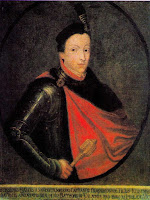


I may write more about the sources describing this battle, some of them were written by winged hussar participants (8 banners of Crown winged hussars were destroyed in this debacle) or pancerny-cossack cavalry companions (many more pancerny Crown banners were annihilated in this battle).
Batoh massacre of 1652 AD sadly was not the last event of mass murder of the Polish military elites in our history, the most infamous being the series of massacres collectively known as the Katyn Forest Massacre of 1941AD.
Valete
Salvete Omnes,
today, new month of June, I would like to bring to your attention the brushwork et al. of Alexander Sauerweid, (1783-1844), a prolific European artist from Kurland (Baltic vassal state of Polish-Lithuanian Commonwealth 1561-1795AD, and then annexed by Russian Empire and nowadays is part of Latvia). Alexander, disciple of the famous Dresden Academy of Fine Arts, made a trek around Napoleonic Age Europe and upon the invitation of tsar Alexander I of Russia became an instructor at the Saint Petersburg Academy of Arts.
Alexander painted portraits of Napoleon's horses - the French emperor had more than a hundred horses at his disposal when on war footing.
eg


In 1810 he drew soldiers and uniforms of various armies - made available on line via the Napoleon Series archive:
- the Westphalian Kingdom army eg lancer

- the army of Kingdom of Saxony (then in union with Duchy of Warsaw), at that moment in its swan song, soon to be 'dismembered and swallowed' by Prussia.

cuirassiers

horses and officers of the Russian army eg
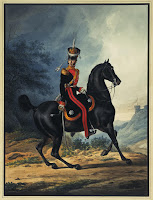


Battle of Leipzig 1813

