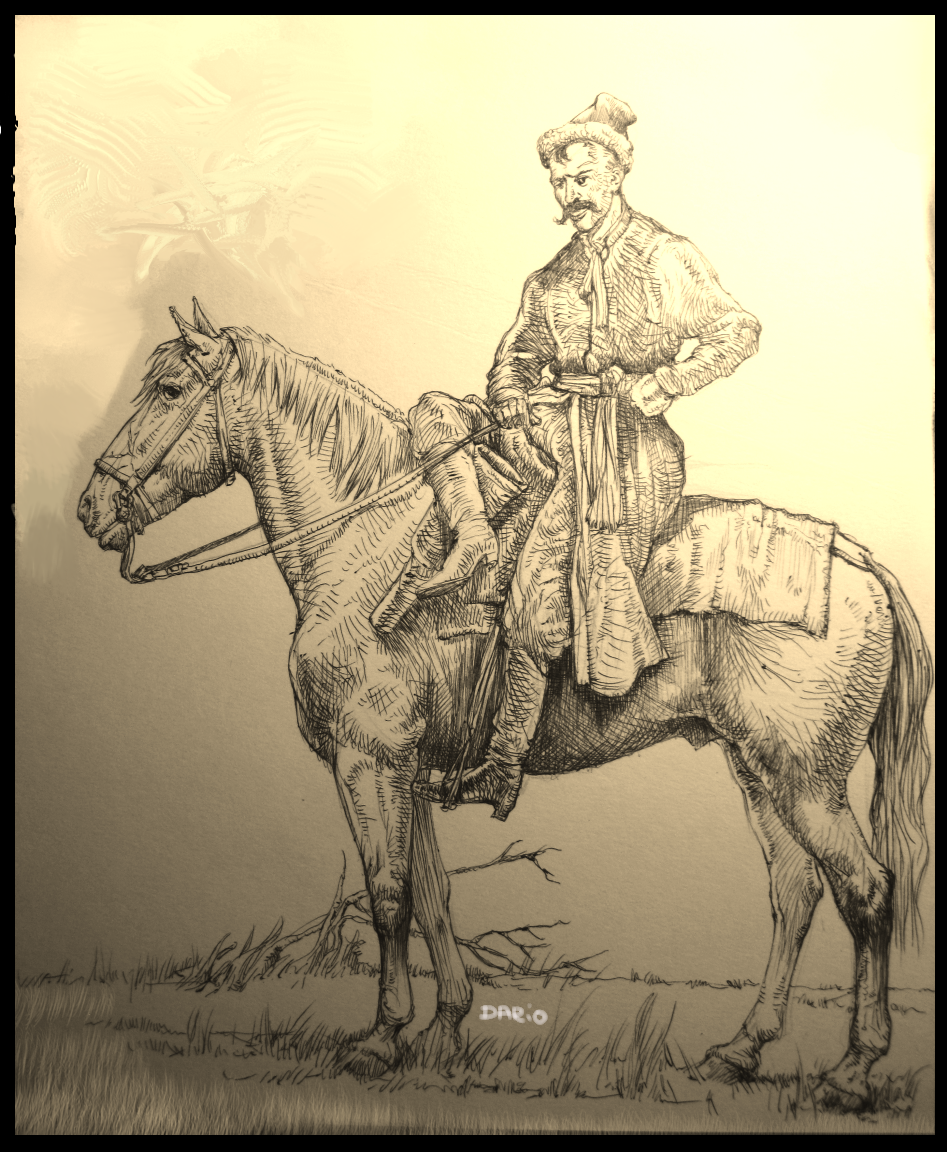
Showing posts sorted by relevance for query helena schrader. Sort by date Show all posts

Friday, April 27, 2018

Helena Schrader's Historical Fiction - a gateway to the ancient and medieval world

Salvete Omnes,
April is winding down fast, the lovely Primavera has  finally arrived to stay, so perhaps the time has come to do some work outside, weather permitting - :)


I have endorsed some writers of historical fiction on this blog - like Christian Cameron, Jacek Komuda or Harry Sidebottom, and I have already mentioned dr Helena Schrader.
Since 2015 I have been following her blogs etc  and I strongly urge you,  if you like historical fiction and learning about ancient and medieval history while surfing the net, to visit her sites and read some of the articles and fragments of her novels. I purchased all three of her novels on Balian of Ibelin and one titled St. Louis Knight, enjoyed them immensely
 Recently I have enjoyed the series titled Women in the Middle Ages (4 articles)   and Myths of the Middle Ages (6 articles), as well as the ones about the Crusader Kingdom and its society etc.
 I have not read any on Sparta and Leonidas but I will get to that part, God willing .
today dr Schrader published this entry- Physical Factors in Historical Fiction: Distance by Land - it is brief enough to occupy many a short-tempered reader of history, and very informative.

a kicking palfrey or a warhorse in training
Valete

Wednesday, January 21, 2026

Crusader states XIII century history by Helena Schrader

 Salvete Omnes,


As Syria is back in the news this year - the Syrian defense forces, augmented by former ISIS fighters and pro-Turkey militias, from the official Syrian goverment in Damascus are fighting the Kurds in Kobane and north-east Syria, while the Druze minority  enjoys their Israeli protection in the south.

 
From time to time I check the website of the formidable researcher, historian and storyteller Dr Helena P. Schrader. 


This month dr Schrader already posted two interesting articles on the crusades, dealing with the 


Mongols and Mamluks: The Changing Face of the Middle East. - the XIII century conflict between these two great powers, leading to the Syrian wars between the rulers of Mamluks sultanate and the western Mongolian armies, whereas the Mamluk sultans went on to obliterate  the remainder of the Crusader kingdom and knightly strongholds in the Holy Land - like Latakia,  Crac de Chevaliers and Montfort. Cyprus is part of the Crusader myriad but the mainland is in trouble.

fall of Trpioli Ad 1289

Freer Gallery - a glass beaker Mamluk period


The Loss of Latin Syria - 

detail from a basin with Christian and Islamic symbols, Freer Gallery

the story of internal rot of the Crusader statesmen and Italian trading states (Pisa; Venice was in conflict with Genoa),  that led to development of  multiple conflicting interests and infighting, in face of growing overwhelming powers of the Mamluk state.  If finally leads to the tragic siege of Acre - the infamous execution of the Templar marshal by the Mamluk sultan Al-Ashraf Khalil in 1291. Followed by the evacuation of Tyre, capture of Sidon, loss of Beirut, and final evacuation of Tortosa and Athlit. End of Latin Syria. 

The Mamluk sultanate carried a rather successful eradication of the Crusader material culture and high arts, as almost nothing have survived from the 200 years of Latin rule in Syria, but for some ruins and architectural elements.  


The Latin Crusader kingdom survived in Cyprus, where port of Famagusta  became the Frankish commerce center in the East... Cilician Armenia survived as a vassal of the Mamluk sultanate, and then was annexed by the Ottomans, when they conquered the Mamluks. The various Christians of the Holy Land had to return to their pre-Crusading Age status and situation within the Muslim world. 


enjoy

Valete

Wednesday, January 2, 2019

Sparta of Helena Schrader

Salvete Omnes,
my old acrylic illustration of a Spartan - published by Infort Editions in Poland

Dr. Helena Scharder's works figure often in this blog - Kiria (Greek for Mrs) Helena published several articles on Sparta on her blog, including one today - Removing the Roman Mask.
Leonidas?

I grew up learning and reading about the famous Spartan king and Spartan values. I used to have a friend in college who is a Spartan Greek (modern).
I made my 'pilgrimage' to Thermopylae in Greece and visited the site of ancient Sparta in modern Peloponnese, Greece.


 So I wholeheartedly welcome Mrs Schrader's research and work, and as it seems usual with her research and analysis she stands against the popular knowledge and opinion, i.e, on the ancient Spartans of the archaic and classical ears.


  Finally I purchased and have started reading her novels devoted to Leonidas (from Amazon). Volume 1 is currently on my reading device - :), while vol. 2 is in the kindle storage, so to speak.
In the past I read not a few novels on the ancient Sparta, some of the written by Polish writers (I used to like the cycle about Agis III to Cleomenes III and the end of the independent Sparta during the Macedonian hegemony of Hellas). Also, if you have not read I strongly encourage you to read the series of historical novels written by Christian Cameron, centered on the Persian Wars - under the title Killer of Men, the story of Arimnestos of Platea.

And always one can read or listen to the Grandfather of History - Herodotos.

Valete!


Thursday, January 29, 2015

Just sketching in Outremer

Salve,
inspired by great art of Mr Telenik I did some sketching  towards my project of the horses of Outremer , but there is little flow as I am battling  awful midwinter flue or cold etc.

As usual a mixture of 'watercolor' brushes in MyPaint and Krita, while GIMP for editing.

...several days ago I discovered this blog  - Defending crusader kingdoms- by historian and writer Helena Schrader and I strongly encourage you to visit and peruse (articles and book reviews, ability to comment etc) .

I am going to get Ms Schrader's book about Balian d'Ibelin. (Balian of Ibelin), one of my favorite subjects of the crusades. By the way, I accidentally encountered and read Marcin Mortka's trilogy 'Miecz i kwiaty' ('The Sword and the Roses') about Outremer during the III Crusade and I mostly enjoyed his book, while  Balian was described there as well, albeit a post-modern portrayal of a Medieval knight, nobleman and commander.


Nota bene a very useful book to have in terms of the medieval horse - The Medieval Horse and Its Equipment, c.1150-c.1450 (although its scope's limited to England ) while I do need an article or a book, or two about the southern Italian stock breeding under the Byzantines and Siculo-Normans. I am currently rereading Ms Hyland's Medieval Warhorse and Mr Gladtiz' Horse Breeding in the Medieval World.
enjoy


Saturday, September 2, 2017

Saladin et al

Salve,
I have been doing some reading into the Crusades, mostly about the second half of the XII century- reading books and blog by Helena Schrader helps a lot ( also the Real Crusades History podcasts are very interesting) - when the Latin East  stopped growing in territory and begun to shrink due to their Islamic neighbors pressures, their most dangerous foes sultan Saladin was creating a new Muslim empire in the Near East, while the Christian Armenians forged their homeland in Cilicia.

In 2011 Osprey Military Publishing produced a book devoted exclusively to Salah Ad-Din Yusuf ibn Ayyub, the famous Kurdish ruler of the period, known in the West as Saladin.
It was authored by dr David Nicolle, Ospreys' most prominent Islamic military historian and scholar, and a prolific writer in his own right.
Dr Nicolle is as usually a bit biased towards his subject matter, or perhaps he has allowed his likes and dislikes to overshadow some of the issues presented and factual events described. But it is not a bad entry into the subject, i.e., the military deeds of Saladin
I must add that the illustration plates painted by Peter Dennis are very fine and actually make this little book much more interesting to peruse and Saladin and his court to imagine.
Osprey @ - detail of Dennis' plate showing an attempt on Saladinis life

'De re militari' website has a very interesting and comprehensive review of this book - I strongly encourage you to read it.
enjoy

Thursday, November 30, 2023

Napoleon- the 2023 movie by R.Scott - 2 reviews in English & Polish etc

 Salvete Omnes,


today a little about the new Napoleon-themed film production directed by Ridley Scott.
so we waited for this latest attempt at the famous French Corsican who waged war, was a law giver and modernized the world around him.
For us, Polish people around the world, Napoleon also may represent our forlorn hope of restoring the Polish statehood - paradoxically this hope was realized by his enemy, tsar Alexander of Russia, who in fact created the Polish state, the so called Congress Kingdom of Poland, and crowned himself as our king  in 1815, in spite of the resistance from our friends -  Great Britain, Prussia and Austrian Empire. 


Ad rem, Mr. Scott directed a feature film, supposedly based on Napoleon's life and times, bu this motion picture is a real biopic? 

So I offer you two reviews for your pleasure:
First review is in English - from HistoryLegends of Yt channel of the same name. Among many things,  the author, History Legends, analyzes the historic battles, from Toulon to Waterloo,  allegedly 'portrayed' in this feature film.


The second one is the more scholarly review, via interview, by prof. Dariusz Nawrot of Silesian University,  a Polish professional historian and Napoleonic period reencator, author of many scholarly articles and books. The review was done for the Polish National Radio. You can translate the review via Google translate, which does quite decent translating job from English to Polish et vice versa. 

Like other historians eg  Helena Schrader et al in their learned opinions about the other film by Mr. Scott,  Kingdom of Heaven via Real Crusade History-YT (part 1-one & 2-two on R C H  channel ) ,  here prof. Nawrot is informed, critical and precise in his review.


so could a horse laugh here - it does seem so... 
ps, 


now, if you wanna see & read an interesting take on the Napoleonic wars you could obtain a French comic novel - The Battle (eg from Amazon) which is a story drawn by Spanish artist Gill after being adapted from a novel by Rambaud.

Napoleonic soldier and author of this painting, the battle of Pyramids, Louis-Francois Lejeune is the protagonist of the mentioned French comics 

enjoy

Valete

Friday, January 11, 2019

The New Achilles - a new novel

Salvete Omnes,
I have been reading novels by Christian Cameron for a while now.
In the past I enjoyed his series Tyrant (Scythia and wars of diadochoi, and I do hope for more books in the series) and the Killer of Man series(Persian Wars).
I read yesterday that pan Christian is about to publish a new novel taking place in ancient Hellas - The New Achilles.


This is going to be the story of well forgotten Hellenic commander Philopoemen.
 I am looking forward to read this novel - it is not typical to see Hellenistic Greece in the English language novel -  even if our esteemed author is 'furiously anit-Spartan.' We have novels of Mrs Helena Schrader to give us a different view of ancient Sparta.
I expect good storytelling, plenty of adventure and a feel of ancient warriorship all by  Christian's skilled pen work.
Being in my usual critical mode, I just wish that they cover would reflect the ancient pottery techniques - red-figure, black-figure or white-ground ones. 
Here is link to Plutarch on this great warrior -
His skill as warrior, horseman, cavalry armament and actual fighting as described by Plutarch(6.3) during a battle under king Antigonus III Doson of Macedon against Spartan Cleomenes III (one of my favorite ancient heroic and tragic figures) :

Philopoemen was stationed among the Macedonian cavalry with his own fellow-citizens […] 
he took matters into his own hands, formed his fellow-citizens into a wedge, and 
charged upon the enemy. [4] At first the light-armed troops were thrown into confusion, 
then put to rout with great slaughter. And now Philopoemen, wishing to encourage 
still further the king's troops and bring them swiftly upon the enemy thus thrown into 
disorder, quitted his horse, and with grievous difficulty forced his way along on foot, 
in his horseman's breastplate and heavy equipment, towards ground that was irregular and 
full of water-courses and ravines. Here he had both his thighs pierced through by 
a thonged javelin. The wound was not fatal, though severe, and the head of the weapon 
came out on the other side. [5] At first, then, he was held fast as by a fetter, and was
 altogether helpless; for the fastening of the thong made it difficult to draw the weapon
back through the wound. But since those about him hesitated to attempt this, and since,
 now that the battle was at its hottest, the ardour of his ambition made him 
impatient to join in the struggle, by moving his legs backward and forward he broke 
the shaft of the weapon in two in the middle, and then ordered each fragment 
to be drawn out separately. [6] Thus set free, he drew his sword and made 
his way through the front ranks against the enemy, thereby greatly animating 
the combatants and inspiring them with a desire to emulate his valour. 
After his victory, therefore, Antigonus put his Macedonians to the question, 
and asked them why, without his orders, they had brought the cavalry into action. [7] 
They defended themselves by saying that they had been forced against their will 
to attack the enemy, because a young man of Megalopolis had first led a charge against
 them.
 At this, Antigonus gave a laugh and said: ‘Well, then, that young man behaved
 like a great commander.’

XIX century sculpture
Nota bene Polybius on this battle and Philopoemen.
and Pausanias giving a bit about Philopoemen.

And from Pausanias description, from the linked page above, comes another interesting story of Philopoemen as cavalry commander and horseman:

Going back to Megalopolis, he was at once chosen by the Achaeans to 
command the cavalry, and he turned them into the finest cavalry in Greece.
 In the battle at the river Larisus between the Achaeans with their allies
and the Eleans with the Aetolians,2 who were helping the Eleans on 
grounds of kinship, Philopoemen first killed with his own hand 
Demophantus, the leader of the opposing cavalry, and then turned to 
flight all the mounted troops of Aetolia and Elis.

Valete!
Friday, December 7, 2018

December sketches

Salvete Omnes,
some sketches, perhaps it will be mostly sketches this month -  Christmas and holiday season coming fast this month of December 2018.
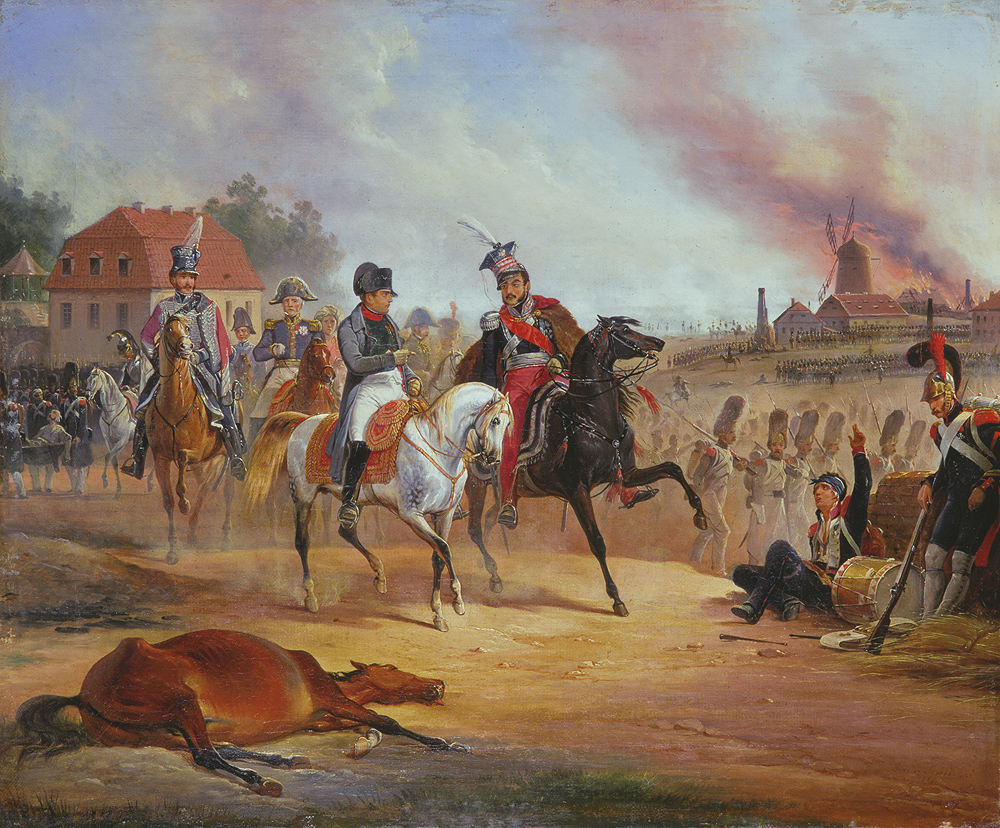
so here are some ballpen digitally-manipulated sketched of horses of Old Poland


I may, time permitting, add some daily sketches

Valete!
ps
Novelist Helena Schrader wrote this very interesting article about Spartan sexuality before the Persian Wars. - I enjoyed and perhaps could suggest it as a must read  if you are into the ancient history, especially the ancient Greek state. 

Tuesday, March 8, 2016

Chaucer Awards and knightly tournaments

Salve,
it is starting to look that I will have to buy a new computer, most likely a desktop with some fine mate monitor - my old equipment is not good anymore (being a converted to Linux IMac ) ... and I want to explore the amazing possibilities of the Linux system, especially  with the upgraded digital drawing and painting programs like Krita, MyPaint and GIMP.
   Ad rem, I do read a lot of historical fiction - especially taking place in the ancient and medieval periods, but will not skip a good American Civil War novel, a tale of the Wild West or other XIX century stories.
 So I just have learned  that the Chaucer Awards for Historical Fiction have been announced and one of my favorite bloggers on the subject of Crusades history and a fine historical fiction writer dr Helena Schrader won one for her 2nd novel on Balian of Ibelin titled 'Defender of Jerusalem' -  interviews with the writer here or here. Congrats!
Also, I am very surprised to have found out that another finalist is James Conroyd Martin with his novel The Warsaw Conspiracy, a 3rd  one from his series. Our XIX century Polish history written in English and in a finely crafted storyline! Hurray!

I have not read this one - Spoils of Olympus: By the Sword by Christian Kache. I am interested and will have to get this one. As you know I am a great fan of the ancient Greek history novels by Christian Cameron, so naturally I am really curious about this new writer.

The other novels , I am sure are great et al., I am not very interested in them at the moment, perhpas but for the Medieval Scottish history one.
    ***
Reenactment season is approaching fast, horses will be shedding their winter coats soon in Central and Eastern Europe, while the Royal Armouries in Leeds, UK will hold their 20th Easter Tournament from Good Friday 'till Easter Monday or the last weekend of March, and our Polish knights Jan Gradon and Jarek Struczyński  will be fighting there too - Gods speed.

Finally - if you have not found this podcast yet - there is a great podcast of the history of the Crusades - title aptly Real Crusades History, and it features a very lively discussion and presentation of the Crusder history, without mythology and 'balck' legend.  It can be found here or on youtube.
I like it very much ..

...and finally today in Poland was a Women's Day and it is quite a tradition to present your women friends with a flower or two, hence this little flower with my horsey:
 for all you women out there :)

Enjoy