Sunday, December 1, 2019

Jan Kazimierz II Vasa in armor - winged hussar armor?

Salvete Omnes,
and here we go - December and ever so close to Christmas and winter time, perhaps with snow this time, as we seem to have local cooling and not warming..
ad rem, I would like to share with you several images of Jan Kazimierz Vasa, the third and last Vasa king on Polish throne during the Polish-Lithuanian Commonwealth.

He, among our XVII century kings,  is perhaps the most difficult to asses, as under his rule the Commonwealth almost disintegrated and them came together again loosing huge parts and vital areas, large number of population and wealth in process, his armies lost and then won amazing victories, and he allowed for Ducal Prussia to become the separate state and led the nation into the civil war (the tragic Lubomirski's 'rokosz') in order to fulfill his (an his French wife's) absolutists designs and plans.
His reign ended in a complete disgrace, broken and with many problems he abdicated the throne (went to live his life at Louis XIV's France), without bringing the peace among his subjects and citizenry as the fumes of discontent, division and anarchy smoldering and weakening the country.
He abdicated even though the war with the Ottoman Empire and their allies was commencing (the famous reversal of alliances, the Zaporozhian Cossacks and Tatars again being allies in their war against the Commonwealth) and would continue until the end of the century.
Jan Kazimierz Vasa upon leaving Poland illegally took with him to France certain royal jewels and symbols (some were destroyed by the French revolutionaries during the 1790s)- I wrote about them in context of the Notre Dame Cathedral fire. Perhaps it is time France returned this treasures to Poland. It is our heirloom and national treasure.

 But he did have several grand moments - one of them was the great victory against the rebellious Zaporozhian Cossacks and their Crimean Tatar allies at Beresteczko (today Berestechko,, Ukraine)- probably the largest land battle of the XVII century in Europe.
In 1656 during the holy mass at the Lwów (Lviv) Cathedral Jan Kazmierz II crowned Blessed Virgin Mary as the Queen of Poland, and the official titulature became as follows - The Most Holy Virgin Mary, Queen of Poland. And we have been venerating Her and blessed with Her protection ever since, the most holy site for our Queen has been the Holy Black Madonna of Jasna Gora  abbey in Czestochowa.

there is this bronze plaque (a detail below) commemorating the Beresteczko victory, located in Franch church  where the Jan Kazimierz's heart was buried upon his death (he died in France, but his body was returned and then ceremoniously  interned at the Wawel Cathedral in Krakow, where it remains today). He was known for many lovers but had no official surviving heir as his children died in infancy.


and there are many portraits of our king in armor, and I wonder if this was the type of armor used by the winged hussars of the period?


..
there is also famous chain-mail armor and portraits in that armor showing our king, but these will be subject of another post.
                      ***
When German Kingdom of Prusia army occupied Krakow and Wawel Royal Castle complex (upon the defeat of the Kosciuszko Insurrection forces in the south  in  June of 1794), and in October of 1795 under the most secret command of their king they broke in and took the royal treasure (Thesaurus Regni) stored at the Wavel, that contained the rich, splendorous and millennial treasures of Polish Kingdom, and took it to Berlin.
The Crowns and regalia that were used by the Primate of Poland to crown Jan Kazimierz II as our king were taken illegally and in contradiction to moral and ethical principles of the time by the House of Hohenzollern, and their king Frederick Wilhelm III had them taken apart and melted (most likely in 18109-11) to finance their war effort against Napoleon in 1813 (they also got plenty of money from United Kingdom). The official heir to the Polish throne and Polish king since 1815, tzar Alexander of Russia and his brother Nicolas (since 1826) demanded these regalia back from Prussian Kingdom's rulers, not knowing that these treasures were illegally destroyed.

maps how the Commonwealth shrunk under his rule, especially the geopolitically strategic and vital region of Smolensk
Ad 1648 - 


Ad 1667


Valete

Saturday, November 30, 2019

Somosierra - Puzyrewski cz.II

Salvete Omnes,
[in Polish]
dokończenie - cześć II fragmentów z pracy generała Armii Cesarskiej (carskiej) Aleksandra Puzyrewskiego o szarży polskiej jazdy w służbie Napoleona pod Somosierra, w dzień rocznicy bitwy.
 
Uwagi o bitwie rosyjskiego generała a:


 vivat lekkokonni - vae victis.
Valete

Somosierra - Puzyrewski cz.I

Salvete Omnes,
[in Polish]
czas plynie bezustanku i nie wejsc nam do tej samej rzeki dwa razy, ale jak co roku 30 listopada mamy rocznicę wielkiego wyczynu kawaleryjskiego Polakow w sluzbie cesarza Napoleona czyli 211-tą rocznicę niezwyklej szarzy szwadronów szwoleżerów gwardii na pozycje hiszpańskie broniące przełęczy Somosierra AD1808.
na stronie Polona- Bilbioteka Narodowa - znajdując się skany pracy generała infanterii Cesarstwa Rosyjskiego Aleksandra Kazimierowicza Puzyrewskiego (  Александр Казимирович Пузыревский) o szarzy Polaków na sławnej dziś przełęczy, wersja polska wydana w Warszawie w AD 1899, gdyż ta książka była także wydana po rosyjsku.
Szarża jazdy pod Somo-Sierra w Hiszpanji - piękny album i krotka analiza działań napisana przez stratega  armii carskiej (nota bene autora 'Wojny Polsko-Rosyjskiej 1830-31').

W tej części zamieszczam opis bitwy piórem generała  plus ilustracja z albumu


Valete
ps
a przy okazji to dzisiaj mamy dzień świętego Andrzeja - Wiki Commons ma super ciekawą galerie sztuki związaną z kultem tego świętego Kościoła.

Friday, November 29, 2019

Jan Nepomucen Bobrowicz - napoleoniki w wigilie Somosierry

Salvete Omnes,
 
[in Polish]
zbliża się rocznica Somosierry i 'surfując' zbiory  Biblioteki Narodowej Polona (Federacja Bibliotek Cyfrowych)  natrafiłem na luksusową publikację, którą firmował  weteran Powstania Listopadowego Jan Nepomucen Bobrowicz, emigrant pracujący nad wydawanymi  dziełami polskimi we wciąż przyjaznej Polakom i Polsce, choć ledwie niezależnej od Prus, Saksonii.
Bobrowicz pracował dla wydawnictwa Breitkopf & Haertel z Lipska (wciąż istniejące), i tamże w 1838 roku wydano po polsku pracę  poniższą:
Napoleon Bonaparte czyli Obrazy bitew i czynów wojennych bohatera : 90 rycin na stali podług malowideł w Muzeum Wersalskiem i innych pomników z dodatkiem historycznych objaśnień podług pp. Bourienne [et al.]
..

Prawie kompletne dzieło jest dostępne w Bibliotece Narodowej -a poniżej zamieszczam niektóre z rycin (oprócz 2 reszta z polskimi motywami):


Pan Bobrowicz, żołnierz artylerii konnej Powstania Listopadowego i odznaczony krzyzem Orderu Virtuti Militari, był słynnym muzykiem gitarowy, a jako wydawca zasłynął wydaniem 10-tomowego Herbarza Kacpra Niesieckiego, dzieła monumentalnego.

Valete

Wednesday, November 27, 2019

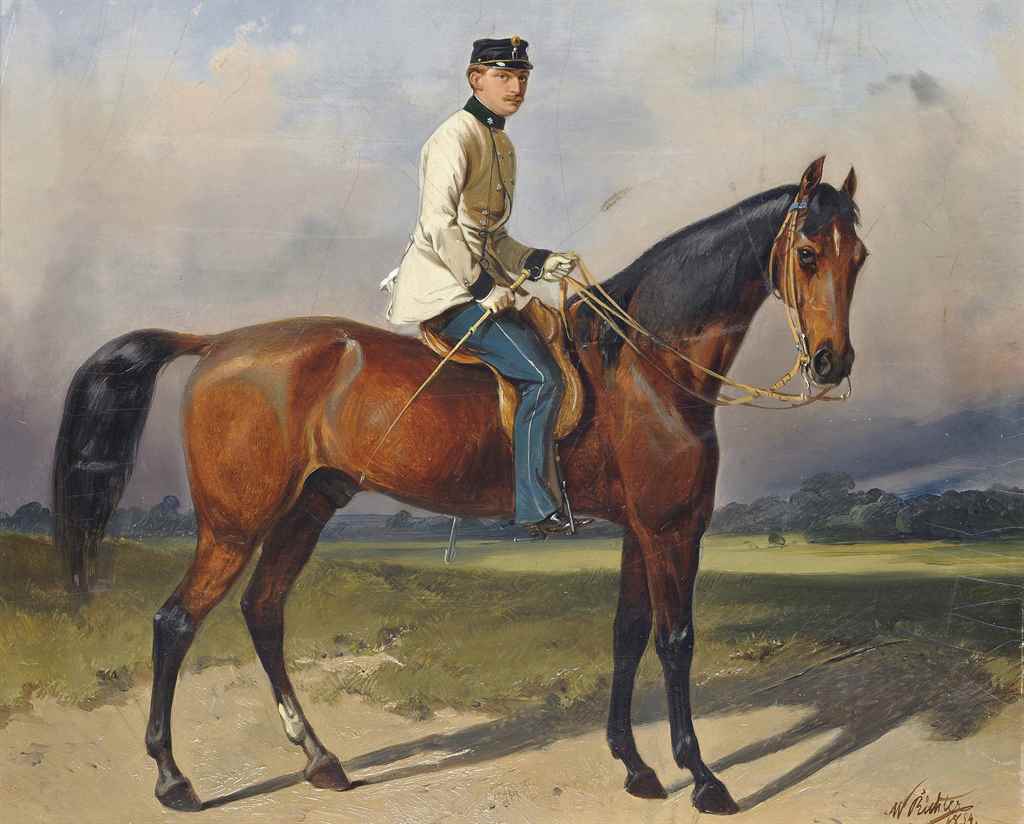
Wilhelm Richter - miltiary & equestrian painter

Salvete Omnes,

today another quick post -

among the vastness of Wiki Commons galleries there are countless works of art, and especially works devoted to the equestrian subject are of great interest to me.
One of such searches ended with the discovery of the equestrian art of Wilhelm Richter, of Vienna and official painter of the Austro-Hungarian army during the later XIX century.

Wiki gallery contains mostly  paintings od racing horses and military-related works,so allow me to insert some of them here - and more in great detail can be enjoyed from the gallery itself -

.

.

.

.
this painting  includes the figures of Austrian or Imperial & King's uhlans, in the right lower corner  - these are in the Italian Wars of Independence period uniforms

.

Richter's painting offered for sale at Christies...

Valete

Tuesday, November 26, 2019

Art from the Polish-Saxon kings treasury in Dresden stolen

Salvete Omnes,
sad moment for the Polish-Saxon kings collection held at the Dresden Castle, state of Saxony, German Federal Republic - yesterday, circa 5AM there was  a robbery in there.
Das Grünes Gewölbe or Zielone Sklepienie (the Green  Vault)  - started in AD 1723 by our king Augustus II the Strong(and Unlucky should be added too) - was robbed in a daring or astonishing act of thievery.
As usually when comes to reporting crime in Germany very little is known, but it appears that two men broke into the Green Vault and took what they came for. An inside job?
There is no precise info what and how much was stolen. It appears that he protections at the vault were more or less laughable considering the treasures it held.
The famous green diamond, the largest in the world and originally bought by our king Augustus III,  was away at the MET, in NYC - thank God
The artwork stolen is priceless, but broken into pieces is worth millions or even billions of dollars.


 now, one more matter:
I would like to point to you that the reporting in many English language worldwide media outlets (eg here, or here- BBC no less-, or here - CNN the friends of Poland ,   or here they say that he was 'later a king of Poland') indicate that the collection was started by Augustus II the Strong, elector of Saxony, and they do not mention that he was first and foremost the king of Polish-Lithuanian Commonwealth and that he draw his wealth from his kingship, and that when he started the collection he had been already more than 20 years the ruler of our Polish state.
a little chronology of  Augustus II der Starke reign:
1694 - elector of Saxony
1697 - elected by the Polish nobles as the king of Polish-Lithuanian commonwealth
1733 - died in Warsaw, Polish-Lithuanian Commonwealth


Is this English language world media  willful, orchestrated omission of Polish history and heritage or a simple case of ignorance and lack of education?

 one must ponder - IMHO this is the very failure of the Polish institutions and scholars to educate the world, in spite of the Polish history foundations at many of the American, British and Canadian universities - perhaps wrong people sit there; time to change the appointments.

valete

[in Polish]
Zielone Sklepienie okradzione - artykul z Deutsche Welle.

Monday, November 25, 2019

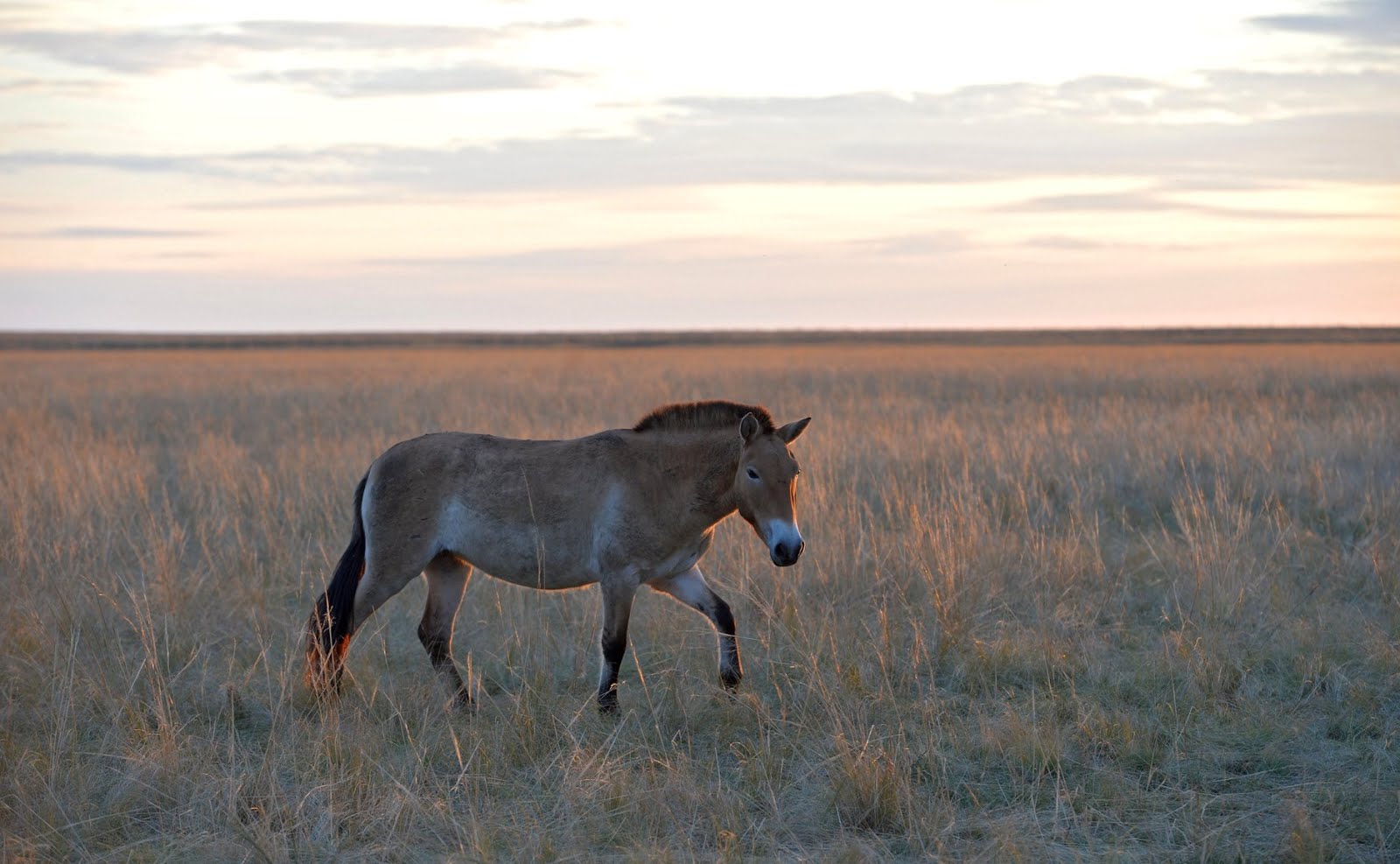
Xsiadz Jundzill - opisanie 'dzikiego konia' z Azji Centralnej circa AD 1807

 
Salvete Omnes,
[in Polish]
 

Krótki wypis acz niecodzienny, bowiem znalazłem  opisanie koniowatego zwanego przez autora Czygietay'em albo 'dzikim koniem'.
Ksiadz Stanisław Bonifacy Jundziłł, herbu Łabędź, polski przyrodnik, opisał był onagra ze stepów Azji Centralnej, w dziele 'Zoologia krótko zebrana, cz. 1: Zwierzęta ssące' (w linku wydanie z 1824 r) pierwszy raz wydanym w Wilnie AD 1807.

W nazwie używa terminu tatarskiego - Czygietay - na określenie tego scigłego koniowatego dziś zwanego kułanem czy onagrem,  i w Azji Centralnej żyjącego w środowisku naturalnym wraz z koniem Przewalskiego czy antylopami saiga etc.
 
Używa nasz badacz juz istniejacego określenia łacińskiego Equus Hemionus Pall.

opis


Valete
ps
zdjęcia kułanow i koni Przewalskiego z Wiki - z Mongolii i południowych stepów Rosji oraz pustyni Negew.