Sunday, January 29, 2017

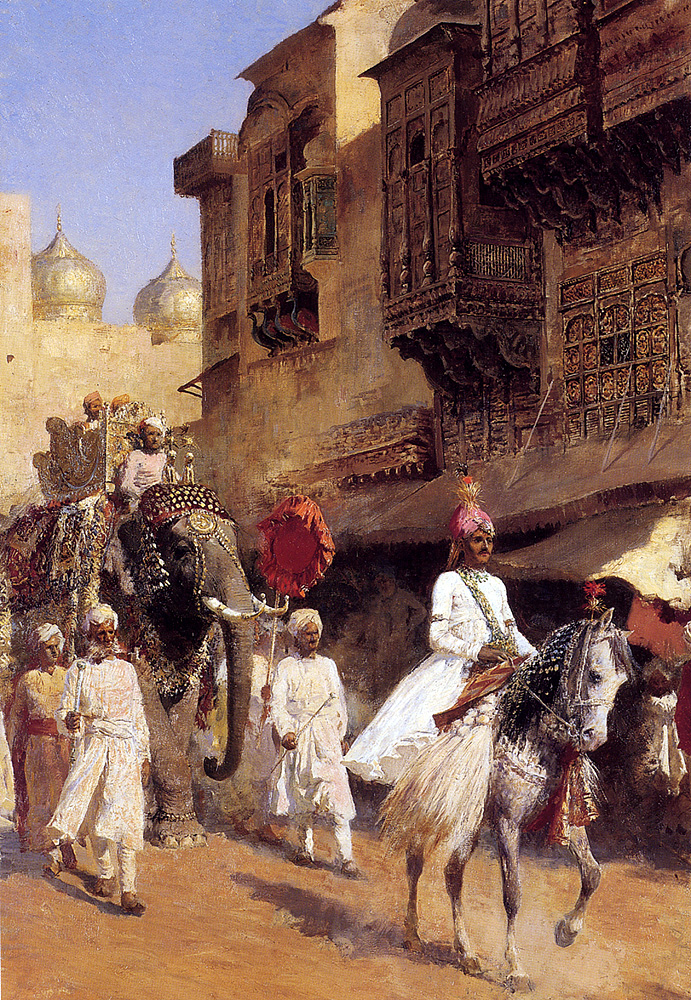
Splendors of India - Edwin Lord Weeks


Salve,
beautiful equestrian cultures of India in the art of Bostonian Edwin Lord Weeks


much in common with the Old Poland equestrian culture I dare say 


enjoy
ps
all images are from wiki commons

Tuesday, January 24, 2017

Winged Hussar companion - circa 1697


Salve,
it has been a while since I posted any winged hussars done by my real or digital brushes.
well,
this is my illustration I painted for the publication titled 'The Great Northern War Compendium' (vol. I & II ) published in 2015, Steven L. Kling jr. editor et al.
free election at Wola

It is after an image of a winged hussar companion  painted most likely by the Italian artist Marcin(Martino) Altomonte, the king Jan Sobieski's court painter and alter active in Vienna.

This rider was painted as one of the figures within Altomonte's large canvas showing the Polish king's free election by the Commonwealth nobility at the village of Wola near Warsaw in AD 1697 - the painting was painted most likely between 1697-98? or so ...
I actually  painted two images, the first one, above, has his lance much shorter but the lance is more or less of the length shown in the original painting 


enjoy

Monday, January 23, 2017

23rd of January 1793 - 2nd Partition of Poland

Salve,
sad anniversary today -  of the 2nd Partition of Poland - when Russian Empire and Prussia agreed to take by annexing  substantial parts of the Polish Kingdom. The Prussian land grab was especially painful, since they took  the most populous and productive lands of the Kingdom.

The situation was dire in that January 1793, since after the Polish-Russian War ended in a defeat for the Polish Kingdom in the summer of 1792, where our very inexperienced army stood up to the Russian Imperial army for a little over than 2 months,

only to be abandoned by their commander in chief, their King, who in fact betrayed the army and his subjects (including the field commander-in-chief his nephew prince Jozef), surrendering unconditionally to his former lover and patroness Katherine the Great.

I hold the view that that particular king of Rzeczpospolita, the last of the elected kings of the Respublica, was particularly inept in all affairs of the state, the exception being  his lavish spending on art, palaces and women, and actually quite disgusting and weak character man, among others taking pay from the Empress of Russia, and who eventually sold his kingdom for a payment of sum certain in 1795.  The rule of Stanislaw August has been subject to a minutely detailed study by great Tadeusz Korzon in his  6volumes work titled ''Wewnętrzne dzieje Polski za Stanisława Augusta (1764 - 1794) badania historyczne ze stanowiska ekonomicznego i administracyjnego'' -  available here.
He was elected by the Russian bayonets and was removed by the Russians as well.
Unfortunately he was not tried for treason by the Kosciuszko Insurrection courts in Warsaw, mostly because Kosciuszko refused to do so, in 1794. He could have been hung says one Polish writer, Jaroslaw Marek Rimkiewicz's book 'Wieszanie' - The Hanging.
His major political reform known as the May Constitution was in fact the final nail into the coffin of Poland, Prussia and Russia using it as the excuse for action, pillage and partition. 
Moreover, his legacy has had many defenders and followers in Poland, especially during the Communist Republic and even today.  Jerzy Łojek  in his modern treatment of the May Constitution and the Republica's downfall, ''Geneza i obalenie Konstytucji 3 Maja Lublin 1986,'' examines that interesting aspect of post-1945 historiography.
It was especially insidious that Prussia's Frederic Wilhelm II, the de jure military ally of the Polish  king and Rzeczpospolita since March 1790, broke that defensive treaty and turned into a land grabber and thus instigator of this partition. Prussian army marched into northern and Western Polish Kingdom and occupied the regions of Greater Poland, Kujawy, and Pomerania, annexing them de jure after the treaty of Grodno 1793.
Like in the 1939 when German and Soviet Russia partitioned Polish Republic between themselves

.
And our kings had had so many ample opportunities to erase this vipers' nest in the past.- Sigismund Augustus, Stefan Bathory, Sigismund III Vasa and his son Wladyslaw IV (with his most pompous chancellor Ossolinski) all could have ended the Ducal Prussia with a stroke of their plume, and thus most likely would have caused the downfall of the Electorate of Brandenburg... Nemesis.

An archive.org book on the subject of the Polish-Prussian alliance and its role in the 2nd Partition - by the great Polish historian Szymon Askenazy, where pan Szymon charged that it was the inept Polish diplomacy that had too great expectations and little understanding of the international situation and thus fell prey to the sly Prussian ministers and diplomats' real politik.
ps
In English the Polish army of the period has been treated to a small book by Osprey, written by Vincent Rospond. and there are 2reprints:
of the Gabriel Raspe book from 1776 (or Stanislaw Gepner's copy here)
and the Polish Regiments 1727-1794 by colonel Bronislaw Gembarzewski-
both by Winged Hussar Publishing LLC.

NG list of looted, damaged and destroyed sites in the Middle East

Salve,
a sad list here - the National Geographic published a tentative list of the damaged, looted and destroyed
I always wonder if without the invasion of Iraq and the Arab Spring/Syrian Civil War these places would have survived and been preserved like before the war.

The ancient city of Palmyra tops the list, I wrote about the site and dr Khaled Asaad,the archaeologist who died, AD 2015, defending the integrity of this place on my blog in the past since they recaptured the town and site from the Syrian government troops, and recently they lost it again to ISIS.
there are many places on this list:
Dura Europos - wrote about the horsemen from this ancient fortress.
St. Elian Monastery - desecrated and destroyed , also another monastery Mar Behnam fell prey to the barbarians - in short the ISIS is waging a very successful war against the oldest Christian communities in the world ( aside from Turkish Anatolia and Armenia).
Apamea - in photos from 2015,
Khorsabad
Hatra - very important in the Parthian and pre-Islamic Arabia
Niniveh et al
eh... time of the barbarians - but we should not overlook that looting is done for profit, to be passed to some clients, and some of these objects might be eventually sold to our own Western universities, museums and collectors.
Interesting article here 

I do have hope -  the new American leadership,(the former being a total failure, including the gender politics played within the Armed Forces and allowing the Putin's  Russia annexation of Crimea and invasion of Ukraine) - I am thus optimistic especially since the new team includes the new secretary of defense, James Mattis  (I wonder if he is of Polish descent - from the immigrants arriving in the late XIX century) - look at his reading list for the Marine Corps from 2007.


Sun Tzu wrote -  "Know the enemy, know yourself, and victory is never in doubt, not in a hundred battles," (The Art of War.")
ps
some of my quick watercolor sketches on the Parthian (Tang-e-Sarvak) and Hatrene theme of the armored warriors.

Thursday, January 12, 2017

Short intro to the historic Polish Fencing

Salve,
just a short post about the historic Polish Fencing

Silkfencing Team from Poland prepared quite comprehensive video presentation on the development of the Old Poland fencing techniques.
From the Ottoman to German & Italian ( Medieval and XVI-XVII centuries) techniques and equipment to the fully developed Polish winged hussar szabla (saber) and late one with furdament, and then that Polish saber influence on the rest of Europe - Austrian empire, Britain, Prussia, France etc

the film is subtitled in English, and it is not a bad translation - congrats to the Silkfencing Team.
Jurek Miklaszewski presenting..  more here.

Sebastian Heussler Fechtbuch here - many thanks to the people of the Wiktenauer HEMA Alliance Project! 
Michael  Hundt Fechtbuch here.

enjoy

Saturday, January 7, 2017

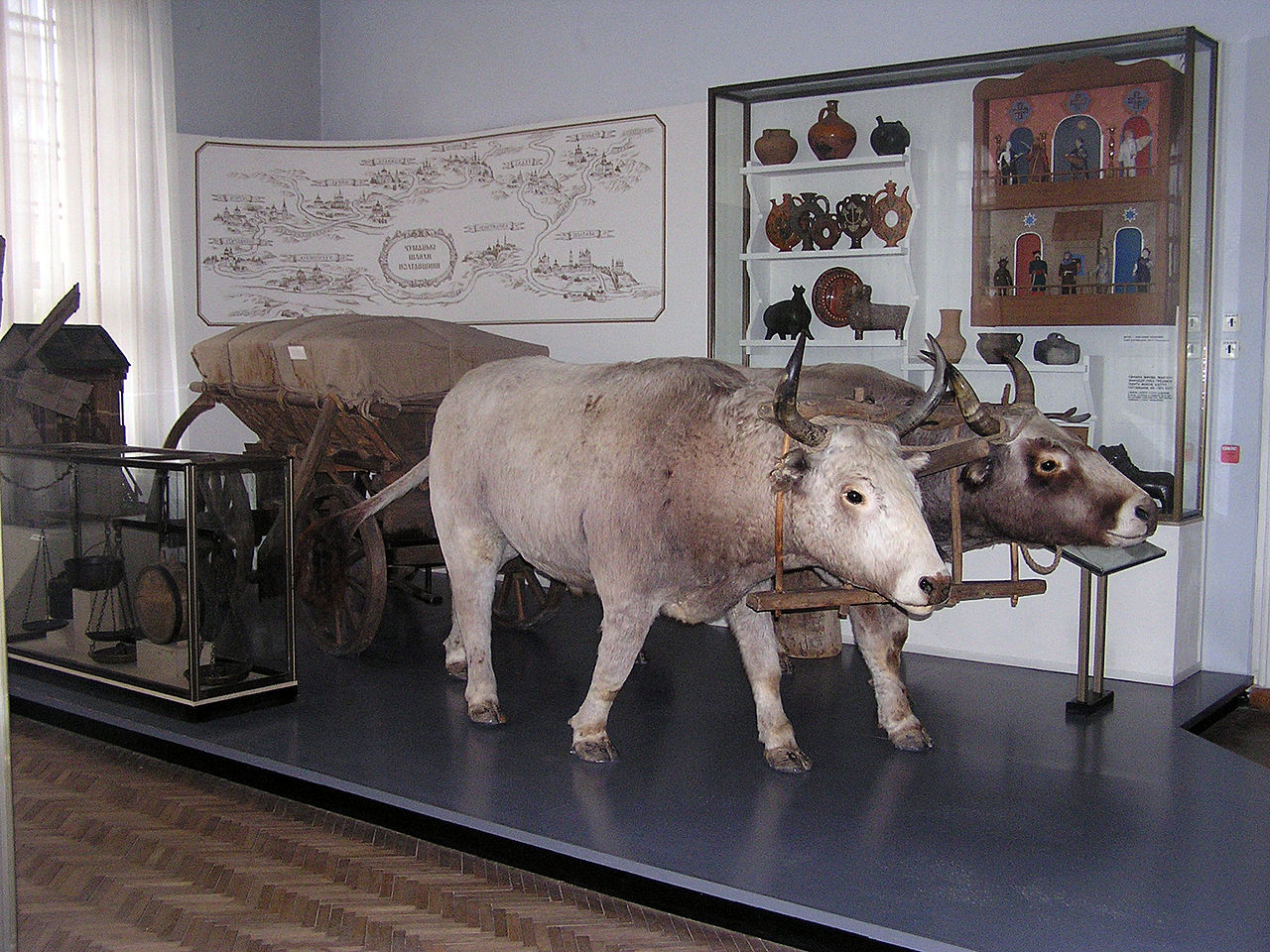
Czumaks - Pontic steppes teamsters of the olden days

Salve,
again,  it is Anno Domini 2017, the very brand new and full of promises year - wish you all the best, especially good health and lots of smiles.

I titled this post the 'czumaks' or chumaks (alternatively chyumaks) because these teamsters with their ox-drawn tall wagons were the most ubiquitous sight in the ''ukrainian' ('ukrainne' - the edge lands, borderlands - in the Polish sense of the Pontic or Black Sea northern shores area between the Crimean Khanate and Wolyhnia and Podolia of Poland) steppes during the XVI through XIX centuries, note that in the late XVIII century this area was conquered by the Russian Empire; the conquest and annexation had been causing massive exodus of the Muslim Crimean Tatars to the Ottoman Empire, and the influx of Ukrainian and Russian subjects (including German, Polish etc), while the local Crimean population of Greeks and Armenians grew steadily (mostly destroyed by Stalin after 1944).
Armenian, by nationality  but a Russian subject, artist  living in Crimea Ivan Aivazovski - painter of the Pontic region of the Russian Empire - painted the czumaks, but Crimea and the Pontic (Black) Sea figure high amongst his many subject.


Polish painter Jozef Brandt also painted the czumaks
Jan N. Lewicki did this engraving showing the czumak

and other depictions from XIX century
Lansere


including a historic photo

enjoy and Buna Fortuna