Tuesday, May 17, 2016

Hubal - Jacek Komuda


Salve,
mości pan Jacek Komuda, o którego powieściach już się bylem wypowiadałem na blogu, 'popełnił' był nowa powieść historyczna pt 'Hubal' wydaną w kwietniu 2016 roku.

Dla mnie jest to książka o.... koniach i naszych tradycjach... po prostu o byciu Polakiem  w typie staropolskim, którego to staro-Polaka tak chciała i wciąż chce z nas wyciąć komuna.
Podoba mi się, że na kartach pojawia się bardziej niż epizodycznie pułkownik Jerzy Dąmbrowski, słynny zagończyk z 1914-21 Łupaszko, choć może miałem inna wizje jego działań tej smutnej a tragicznej jesieni 1939 roku - może kiedyś powstanie i film, i powieść/komiksy o słynnym Łupaszce który hasał po dawnym Wielkim Księstwie Litewskim niczym Aleksander Lisowski czy Samuel Łaszcz goniąc hiperborejczyków.. Nota bene definitywnie tytuł pierwszego partyzanta II wojny należy się właśnie pułkownikowi Dąmbrowskiemu (przeczytałem biografię zagończyka pióra prof. Strzembosza)
 
Książka rozpoczyna się w momencie ataku Niemiec na Polskę, wkrótce dochodzi do niej atak Związku Sowieckiego (o okupacjach obydwu można poczytać tutaj), wali się świat II Rzeczpospolitej, nadchodzi czas wilków.... i w duszy to może chciałbym, żeby autor zaczął swa powieść od dziejów młodego Dobrzańskim, o jego I wojnie, o Legionach i o wojnie z Ukraińcami oraz Rosja Sowiecka, ale wtedy ta powieść miałby pewnie 2000 stron, a takie 'nudne tasiemce' tylko może pisać Steven King czy R. R. Martin.
Powieść również posiada pewne elementy 'baśniowe' których ucieleśnieniem jest symboliczny rumak majora 'Bohatyr'.  Ale te elementy, tak często obecne w prozie pana Jacka np w cyklu o Jacku Dydyńskim (czy jak również u mospani Cherezińskiej) w niczym nie zakłócają historycznego charakteru opowieści o majorze Hubalu i jego Hubalczykach.
Książka jest ogromna - ma prawie 800 stron, ale czyta się ją wartko, ba, nawet jednym tchem,  miejscami wstrzymując oddech, a czasem w duszy podśpiewując dumkę ukrainną... eh, sokole ty nasz, majorze Dobrzański.

Szczerze polecam te powieść 'awanturniczą'!
                               ***
Autor o książce:
Wywiad na TV Republika - tutaj
Wywiad na Bzik - tutaj
Wywiad na Uważam Rze - tutaj
artykuł o szlaku konnym w Łódzkim, wraz z notą biograficzną i spora ilością zdjęć pana majora konno lub z końmi - tutaj
Zdjęcie pośmiertne majora Dobrzańskiego w typie zdjęć w których  lubowali się hitlerowcy i komuniści - zabity bohater i jego niemieccy zabójcy
recenzje i opinie
[1]
[2]
[3]
[4]
pozdrawiam
ps
przy okazji trochę historii via historyczne artykuły z radomskiego 'Radomira' z lat 1980tych;
1. wspomnienia lokalnych mieszkańców z potyczki Hubalczyków z Niemcami nad Radomką z 1 X 1939 roku -


o terrorze niemieckim wobec wsi polskich na terenie działań Wydzielonego Oddziału Wojska Polskiego w 1940tym roku.


...

Sunday, May 15, 2016

Hayden expedition and survey photos - by W H Jackson


Salve,
photos from the XIX century can be astonishing in their clarity and information when comes to horse and rider etc. During the XIX century, when the true  art  of photography was born, Americans were in the forefront of this art and technology.
Most of the photos are still to be digitalized but many are already on line, accessible to anyone with a Internet access.
Wikimedia Commns has a great gallery - Hayden Survey, William H. Jackson, Photographs, compiled 1869 - 1878 - of the American surveyors and explorers of then Wild West.

Veteran of the US Army, explorer and businessman  William Henry Jackson, also a noted painter ( like the image above and here recalling the Great Plains in his art) and photographer, took these images - there are thousand available - during the Dr. Ferdinand Vandeveer Hayden's expeditions to the Rocky Mountains, including the famous 1871 Yellowstone expedition.
 Bellow W. H. Jackson photographed in 1872
 Dr. Hayden was a veteran of US Army too, and a participant of the numerous surveys and expeditions since the 1850,  the explorer of the Yellowstone River and the leader of the numerous expeditions to the area that led to the establishment of the Yellowstone Park in 1872.

From these photos we get a glimpse of horses and equipment used by the the 1870s American explorers and outfitters during the exploration of the Rocky Mountains etc.


Enjoy

Friday, May 13, 2016

Wspomnienie szarzy - 1920

Salve,
[in Polish]
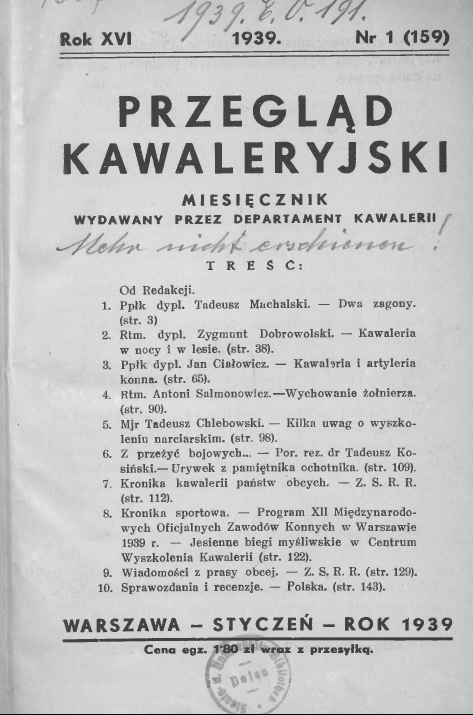
coraz częściej sięgam do publikacji związanych z wojnami Polski o niepodległości AD 1917-21, i 'kartkując' na Wielkopolskiej Cyfrowej  miesięcznik wojskowy ''Przegląd Kawaleryjski'' w numerze z 1939 roku natrafiłem na fragment wspomnień napisanych przez ppor rezerwy dr Tadeusz Kosiński ( być możne to doktor praw, prawnik i starszy asystent w Zakładzie Prawa Procesowego Cywilnego Wydziału Prawa Uniwersytetu Jana Kazimierza we Lwowie  - informacje o nim wziąłem z tego  artykułu - który po aresztowaniu prze NKWD w październiku 1939, spędził parę lat w wiezieniach i łagrach sowieckich, aż zaginał bezpowrotnie gdzieś w sowieckiej Azji Centralnej po 1941 roku).

Wspomnienia dotyczą wydarzenia w czasie jesiennej, zwycięskiej kampanii 1920 roku, i fragment przedstawia opis szarzy ułanów 1 Brygady Jazdy na oddziały piechoty bolszewickiej pod wsią Kłębówka koło Zasławia, szarzy  z dnia 23 wrzesnia 1920 roku, napisany dzień po jej wykonaniu,  w piątek 24 września 1920 roku:


Otóż wydaje mi się, że to jest nic innego jak opis fragmentu słynnej szarży 5-tego pułku ułanów zasławskich, od której to pułk dostał swoją nazwę. Opis szarży w ''Zarys historji wojennej 5-go Pułku Ułanów Zasławskich'':


Nota bene żurawiejki pułkowe tutaj.
Pozdrawiam
ps
o innej szarży pułku z 1920 roku, pod Korostyszewem - z malarzem Stanisławem E. Bodesem

Thursday, May 12, 2016

Rotmistrz o siodle - blog


Salve,
in Polish only:
mości pan rotmistrz (kapitan) Robert Woronowicz, więcej informacji o nim tutaj,  prowadzi blog w którym miesiąc temu poświecił wypis na temat powstania siodła używanego w Szwadronie Kawalerii Wojska Polskiego.

Pan rotmistrz nazwał siodło wz.36/2012, a cóż ukrywa się pod tymi skrótami i cyframi, to już wyjaśnia sam autor w artykule w linku powyżej.

Przy tym jest to bardzo ciekawa opowieść o kawałku historii XXI wiecznej polskiej jazdy, nawet jeśli jest to li tylko kawaleria reprezentacyjna Wojska Polskiego, to wciąż nawiązująca do ponadtysiącletniej historii jazdy polskiej.


Pozdrawiam

Wednesday, May 11, 2016

Castles, towns and palaces on youtube - Polish Kingdom and Polish-Lithuanian Commonwealth


Salve,
los caballeros or knights and alike naturally had to live in castles, palaces, manors, and towns. Due to the wars, partitions and Communists regimes in all our lands most of these places do not exists in their glory being ruins or most often they have disappeared under the dust of times. But thanks to hobbysts, historians and archaeologists and businessmen some have been restored, either as real functioning museums and/or places of business or as virtual presentations. The most famous are the Teutonic Castles, most taken by the Polish Kingdom by 1466 - in this video presentation.

Zamek (castle) Bobolice , one of the Eagle Nests (video)of Jura(Upland) Krakowsko-Czestochowska, has been brought to life, after more than 3 centuries of ruin -  see this video. For our Polish readers this is an interview with the owner and spiritus movens of the rebuilding by the Lasecki family.
Another example of a stronghold  being rebuilt in this area is the zamek Korzkiew - their website.
In present day Lithuania the government finally rebuilt the famous castle of Troki/Trakai - nice photos here - but the reconstruction was originally started in 1929 and almost completed by the Polish Republic in 1939.
Belorussian government finalized the  rebuilding of the famous Mir castle - Мірскі замак - where in 1812 Duchy of Warsaw uhlan regiments  fought a defensive action against the Russian Imperial cavalry and the owner, one of the richest men of the world, 8th Uhlan Regiment commander prince Dominik Hieronim Radziwill lost the castle because he had decided to become a Polish soldier, he later died  of the injuries in 1813-  nice video here.

There are many multimedia projects in the former Polish-Lithuanian Commonwealth lands that strive to recreate the appearance of these historic sites in animated renderings and videos.
some examples (links to videos are in [..] ):
Żółkiew/Zhovkva - established by the Crown grand hetman Stanisław Żółkiewski in Ukraine - [1 ]
Lębork - Pomerania - a medieval town [2]
Zamek Krzyżtopór - magnate residence [ 3]
Zamek Rabsztyn - [4]
Nieswież/Nesvizh, Radziwill residence in Belarus, [5]
Dobczyce - medieval town and castle [6]
Nieszawa - medieval town [7]
Royal City of Krakow & Wawel Castle-  a thousand years ago - [8a] [8b]
Ostróg/Ostroh - [9]
Biecz - XVI century appearance [10] [11] [13]
Tustan, castle in Ukraine built by Kazimierz Wielki [13]
Wieliczka , famous salt mines and their castle - [14]
 Kamieniec - castle [15]

and many others eg Kamieniec Podolski.

During the XIX century Polish patriot (veteran of the November Uprising  where he received Virtuti Miltiari cross for his bravery) artist Napoleon Orda drew, then engraved his drawings of former Polish-Lithuanian and Polish Kingdom castles and towns, and had these engravings published in a mutlivolume publication titled ''Album Widoków Historycznych Polski...'' - example here
enjoy
ps
all images are in Public Domain

Tuesday, May 10, 2016

Karol Tomczyk - ecuyer

Salve,
I am going to bring to this blog the writings on the historic riding - skillfully  presented in very readable fashion by my friend Karol Tomczyk, modern ecuyer from Poland - we have been friends for close to 10 years ... I lent him my copy of the English translation of Dom Duarte book on horsemanship ..

The writings are in Polish, so I am afraid you, the kind reader unfamiliar with reading of the rather difficult Polish language, will have to use Google translate, which is quite all right these days - :)
I call Karol an ecuyer - a term that aptly describes Karol as a student of old schools of horsemanship - from Xenophon to the cavalry manuals of the early XX century - and the practitioner of riding with modern horses and also a reenactor, mostly in the Napoleonic era events, like Leipzig 2013 or Waterloo 2015.

Karol created his own channel on Youtube, but has not posted much lately

a short lecture on horsemanship [ 1 ]  - in Polish
 A series of videos (1 through  7) showing training with  Kalifa Gazal - shagya stallion (Wiki gallery here ).

enjoy
ps
images from this great medieval Ellesmere Chaucer manuscript

Monday, May 2, 2016

Polish Peoples' Flag Day


Salve,
perhaps following the American Flag Day holiday the Parliament of Polish Republic established a flag day in 2004.

It is also the Day of the Polish Diaspora  {''Polonia''} all around the globe.


Holiday is a holiday naturally, but this year the Polish public TV (TVP) produced the Flag Day advertisement in which several people I know personally  - reeanctors and historical artists - took part and did it quite splendidly.
The little film shows more than a thousand years of Polish national colors and national history.

Winged Hussara reenactors Radek Szleszynski and Dariusz Bielecki, and the XVIII century Polish Commonwealth and XIX century  cavalry reenactor uhlan Dariusz Senator  participated in this filming, showing their period equipment, and in case of the winged hussars also showing off their well trained horses and horse tack ( the beautifully reconstructed horse bridles etc by Radek Szleszynski).

This is the TVP movie - [ film ]

Enjoy

ps
all images in Public Domain
ps'
and if you have not read yet - do it shortly - M.B.B. Biskupski, Hollywood's War with Poland, 1939-1945..