Thursday, March 16, 2023

Johann Casimir of Sachsen-Coburg

 Salvete Omnes,


a short entry about another Saxon prince and some interesting iconography associated with this German ruler 


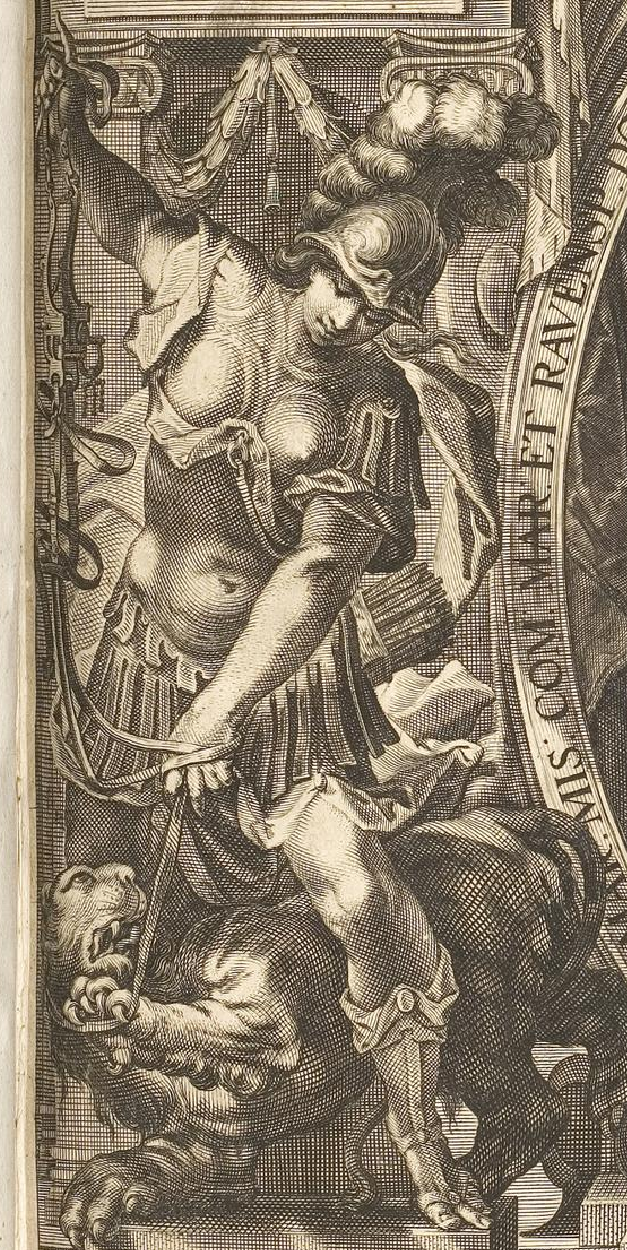
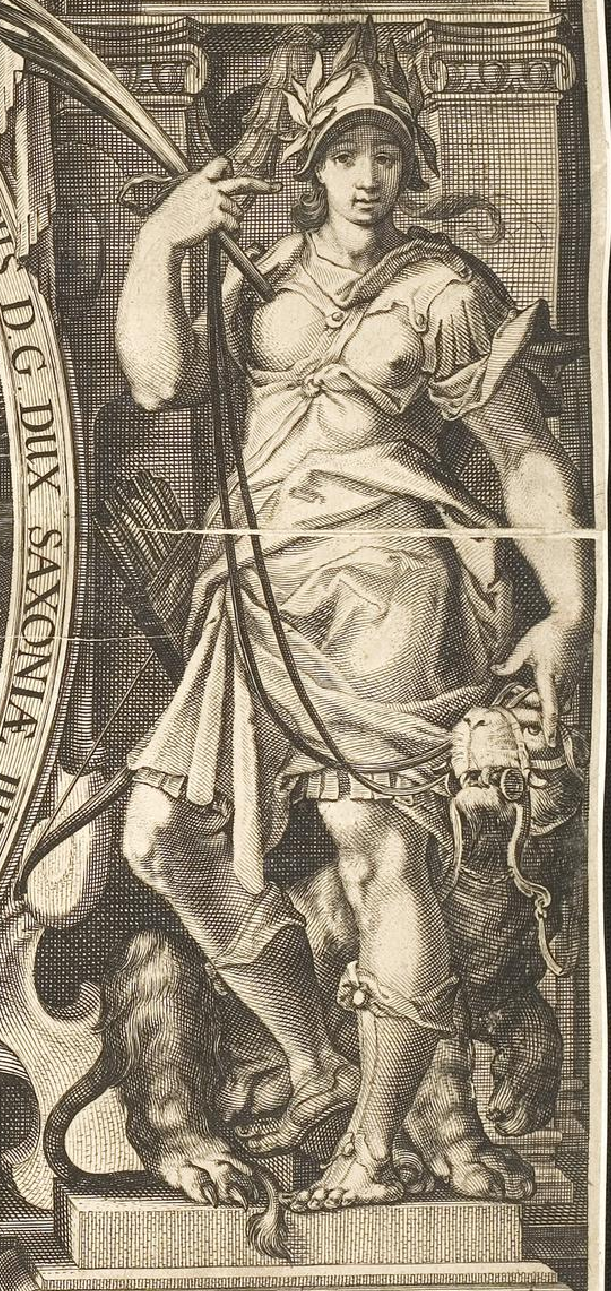
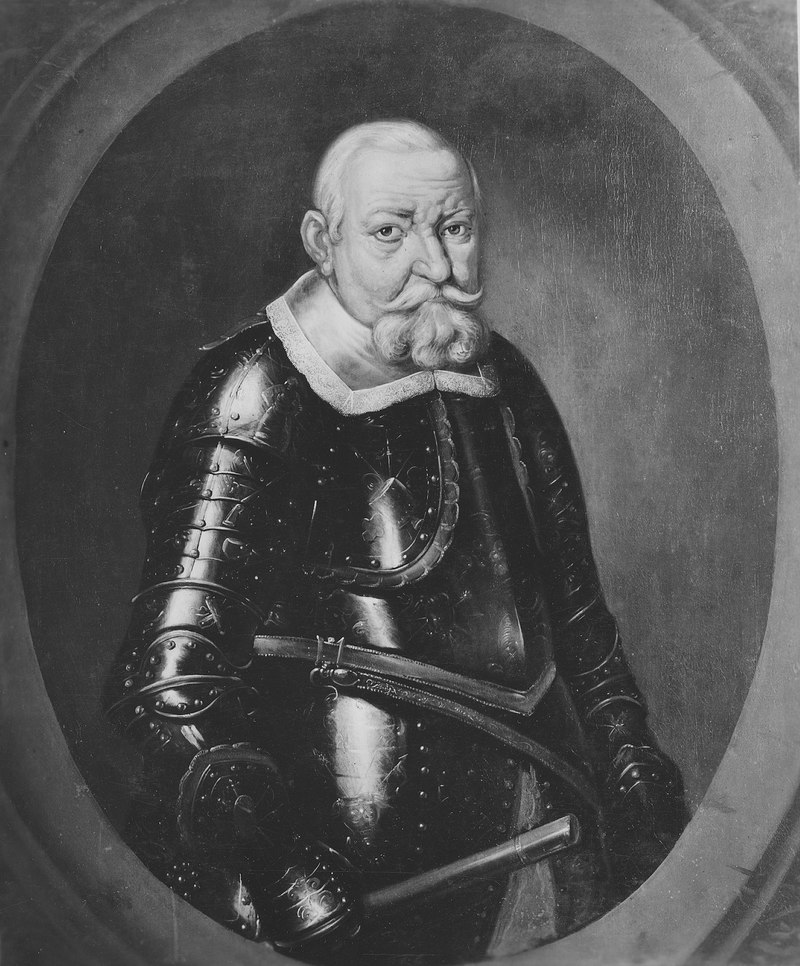
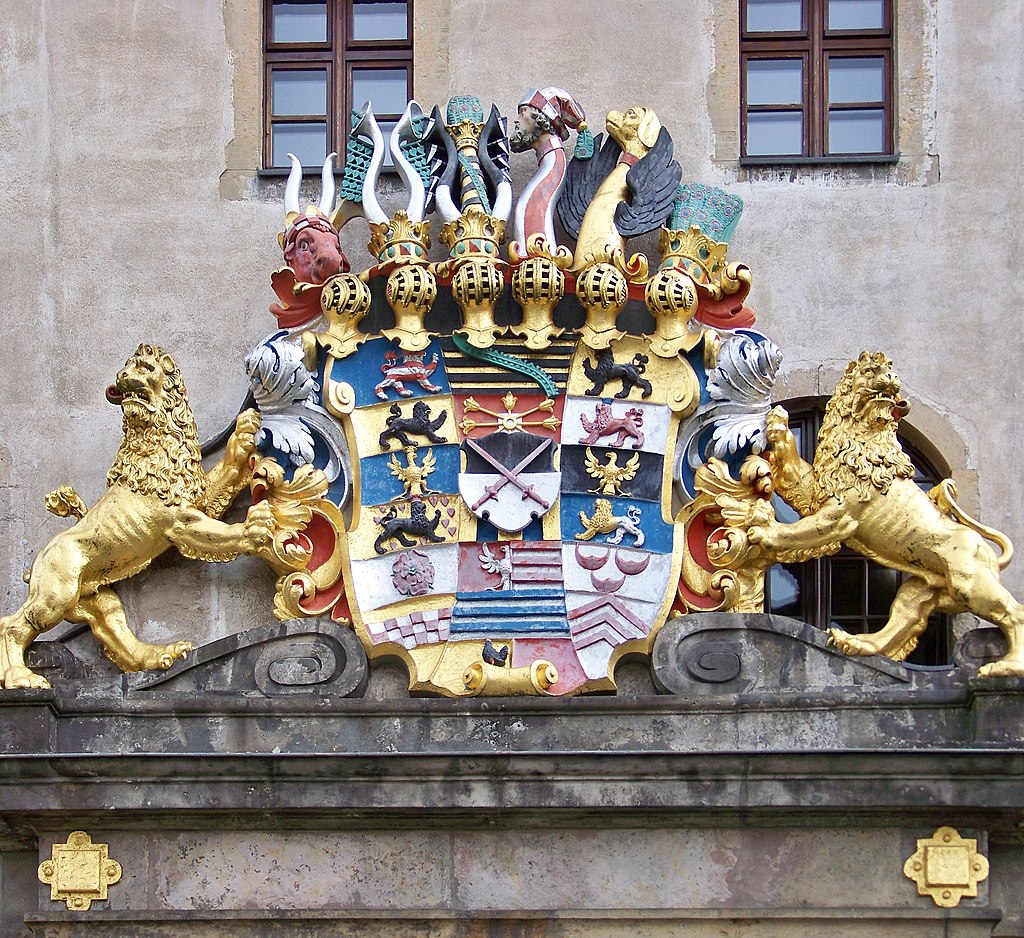
Johann Casimir (1564-1633) of the Ernestine branch of the House of Wettin, ruled over his principality of Schsen-Coburg where he was known for his projects to strengthen, enrich, and stabilize his realm. 


He fortified his primary fortress Veste Coburg - and at your own leisure you can peruse the Wiki Gallery for some rather remarkable vistas of this schloss - and thanks to his diligence  Catholic Imperial and allied Bavarian  armies were unable to take this fortress when Protestant prince Johan Casimir decided to enter the war on the Swedish, Protestant, side. Nota bene during his reign the witch trials were at their height in his lands, and he most likely used this mass formation psychosis to accuse of adultery, divorce and imprison his first wife, Anna of Saxony, at the fortress.


bridle with a curb-bit


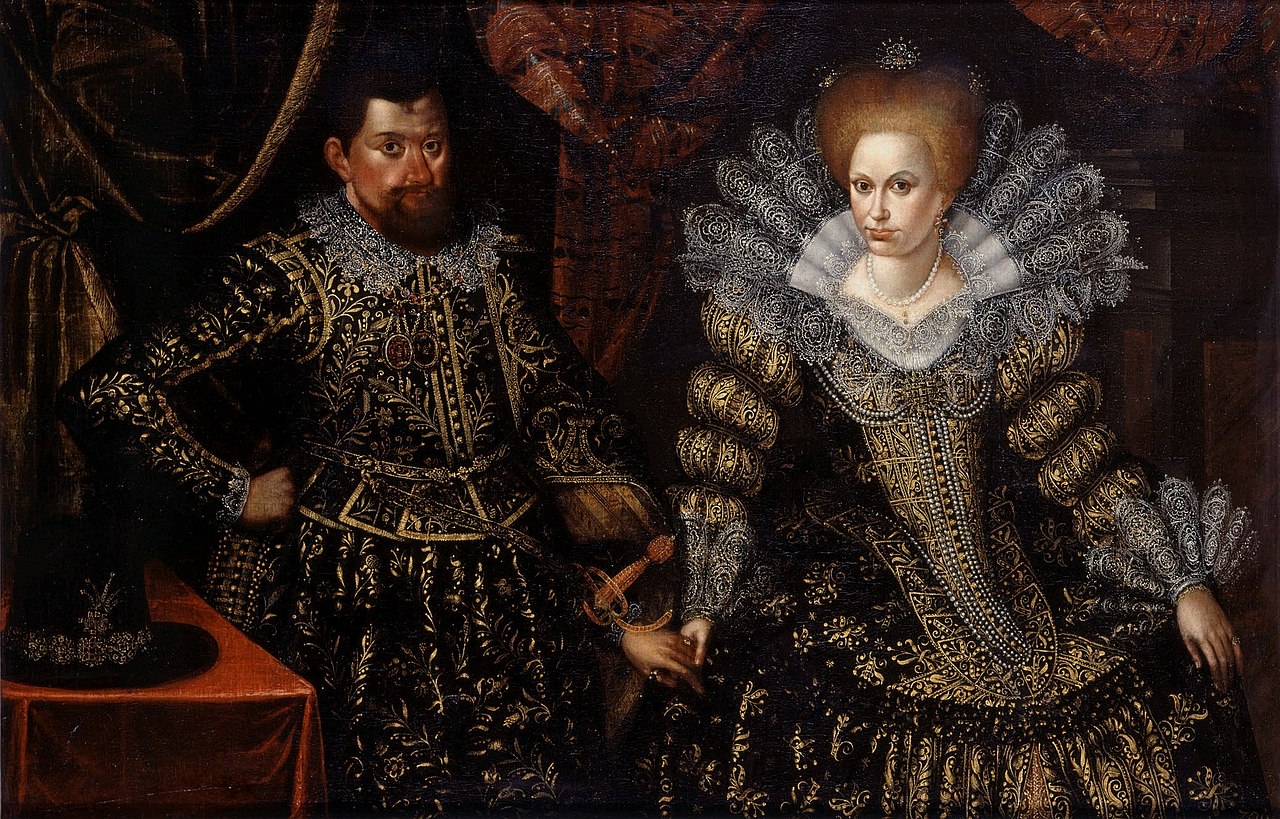
Beautiful epitaph at the Moritzkirche in Coburg. John Casimir had  master sculptor Nicolaus Berger  build this monument for his father Johann Frederic II of Saxony and his mother Elisabeth of Simmern-Sponheim. The monument was finished in 1598.


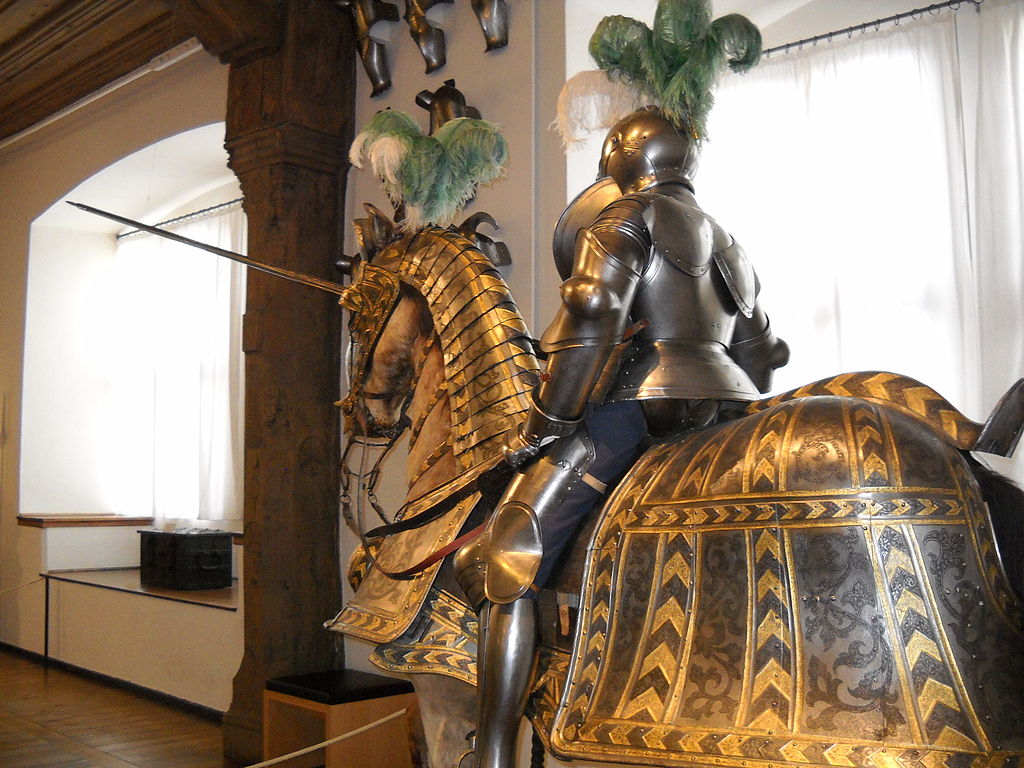
Finally, presently Veste  Coburg contains an arms and armour collection - so when you are in Bavarian north do visit this castle.


beautiful rapier from Solingen

Valate


Wednesday, March 15, 2023

Johann Georg of Saxony arms and armor

 Salvete Omnes,


10 days ago I posted about a Scottish pistols for Duke of Courland, one of them held at MET (NYC, USA)and that in 1616AD or so  this pair of pistols was given by Duke Fredrich Ketler to Elector of Saxony, Johann Georg I (1585-1656) of the Wettin House.

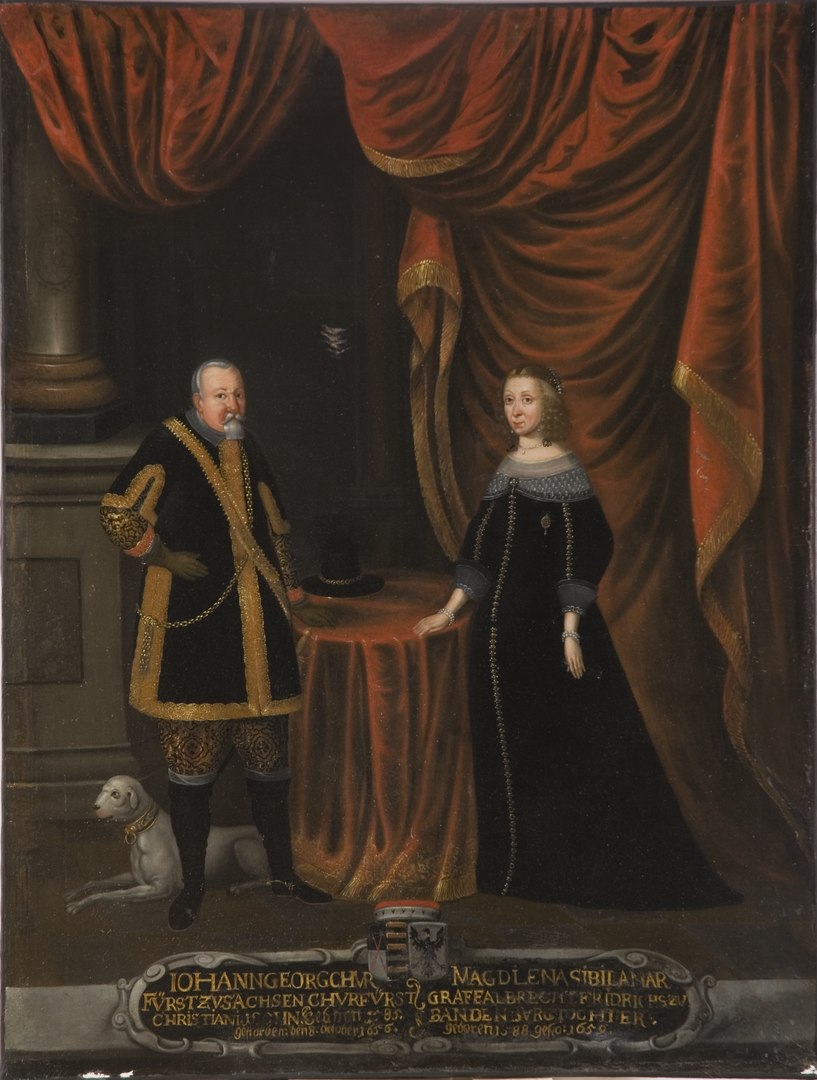
Johann Georg I and His Wife Magdalene Sibylle


During the reign of Johann Georg Dresden Schloss aka Dresden Castle (in Saxony, Fed.Republic of Germany) was the capitol of then quite powerful Saxony (Prussia and her wars on Saxony and Congress of Vienna 1815 reduced Saxony to a shadow of her former glory and importance within the Germanies - more than 270 German states & statelets prior to the Napoleonic Wars).


Johann Georg was reining during some of the most momentous and tragic periods of the European history, namely the Thirty Years
War(1618-1648).


We happily have some interesting iconography related to this prince and chivalry, his wars and reign etc.

our prince in the 30 Years War high fashion - buff coat.


Johann Georg I wearing a riding cassock alias casaque

Back to his Courland connection - dr Mariusz Balcerek,  mentioned in my previous post Polish researcher, wrote an article titled Murder in Jegalva [Mitau/Mitawa] in 1615  - published in 2008AD- can be read from his academia page.
From the article we learn that during the summer of 1615AD duke Wilhelm Ketler, who jointly ruled the duchy with his brother Friedrich, had his henchmen murder  two noble opposition leaders - brothers Nolde. His brother duke Friedrich was somewhat implicated
Upon learning about this crime in Mitau our  Polish suzerain, Sigismund III Vasa, and Polish Diet acted on this Courland high crime and misdemeanor. During the investigation undertaken in January -February 1616AD the royal commission concluded that duke Wilhelm was guilty of these crimes. 
In May 1616AD Sejm aka Polish Parliament extinguished Wilhelm's claims to Courland's throne.   ruled to have duke Wilhelm deposed,  banned from the duchy of Courland. In June our Sejm ruled that since then only duke Friedrich Ketler would remain the ruler of the duchy of Courland. Wilhelm went to live and eventually die in  Kukulow (Kucklow), town belonging  in the realm of West Pomeranian duke Boguslaw XIV.
During the period of late summer 1615 and early spring 1616 duke Wilhelm and his brother Friedrich wanted to preserve the status quo of their duchy as its joint rulers, and even  started hiring soldiers and shouldering support of various lords (like prince Lew Sapieha) and kings of Europe, hence James I of Scotland and England, and Gustavus Adolphus of Sweden, and Johann Georg I of Saxony. Perhaps - says dr Balcerek in a private exchange - the Scottish pair of pistols was part of a larger gift presented by the Kelter brothers to prince elector Johann Georg to ask him to intervene on their behalf at the Polish court.
Pistols stayed in Dresden but Wilhelm had to be gone from Courland for ever.
Fortuna audaces juvat.

Valete

Friday, March 10, 2023

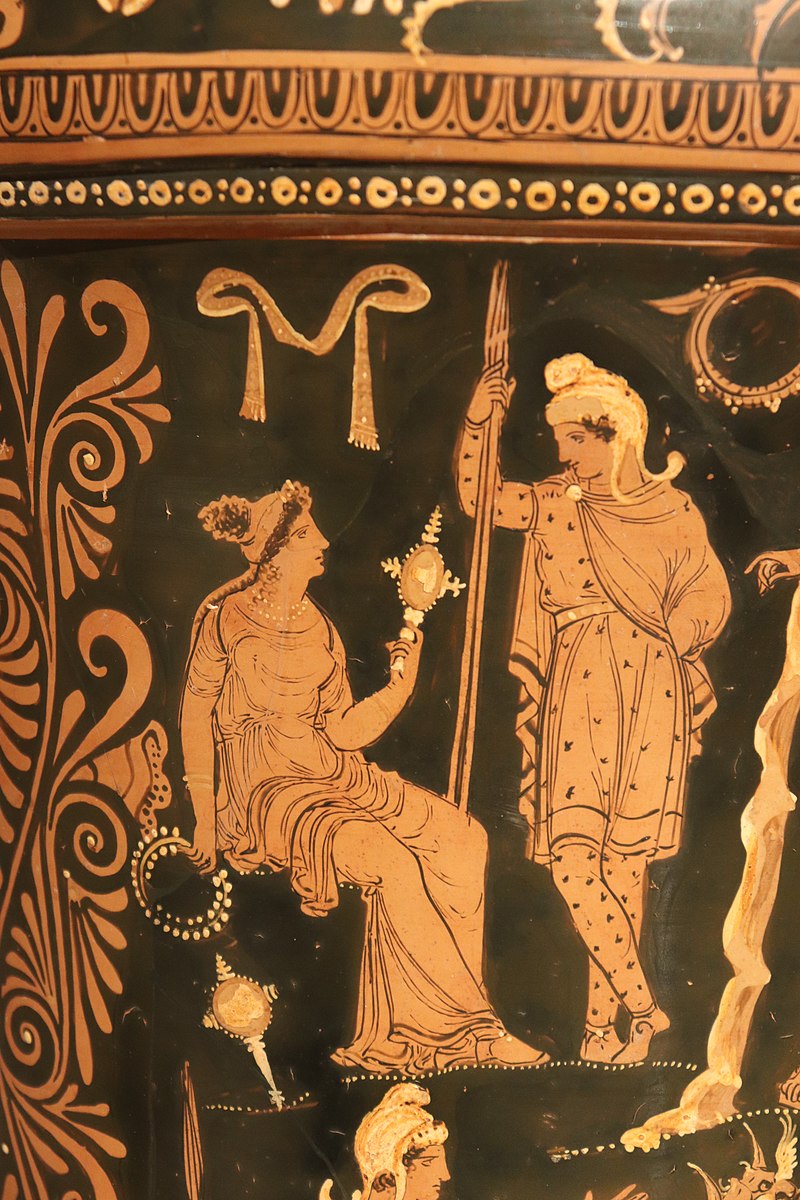
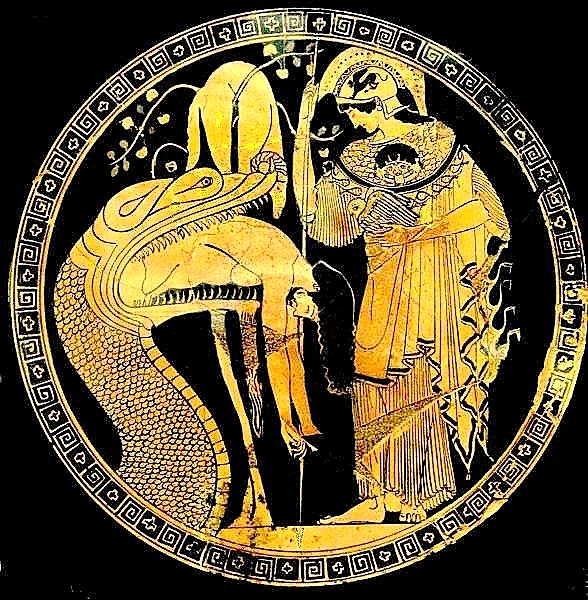
Perseus, Gorgon Medusa & Pegasus

Salvete Omnes,


Spring is approaching fast  as time flies - we should have the new year start on the Spring Equinox - like the ancient nomads and ancient Iranians had had. 

Gorgon chasing after Perseus


Ad rem,
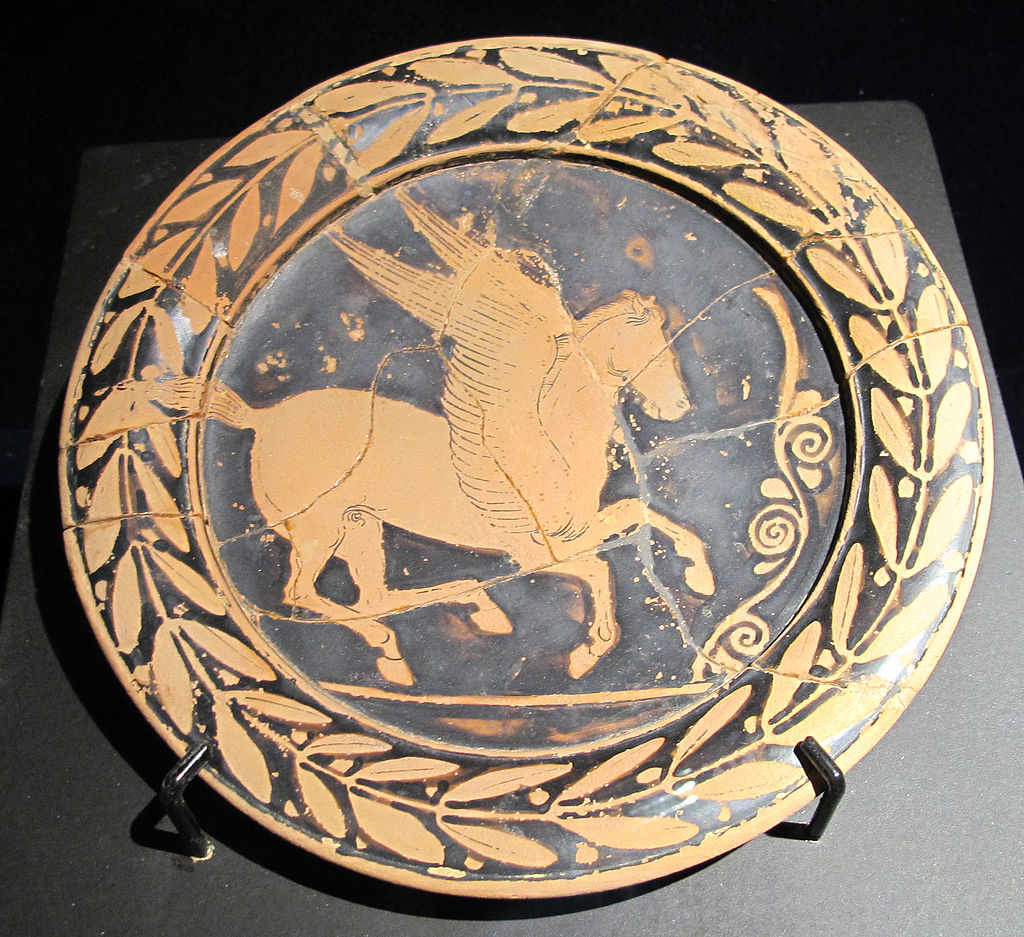
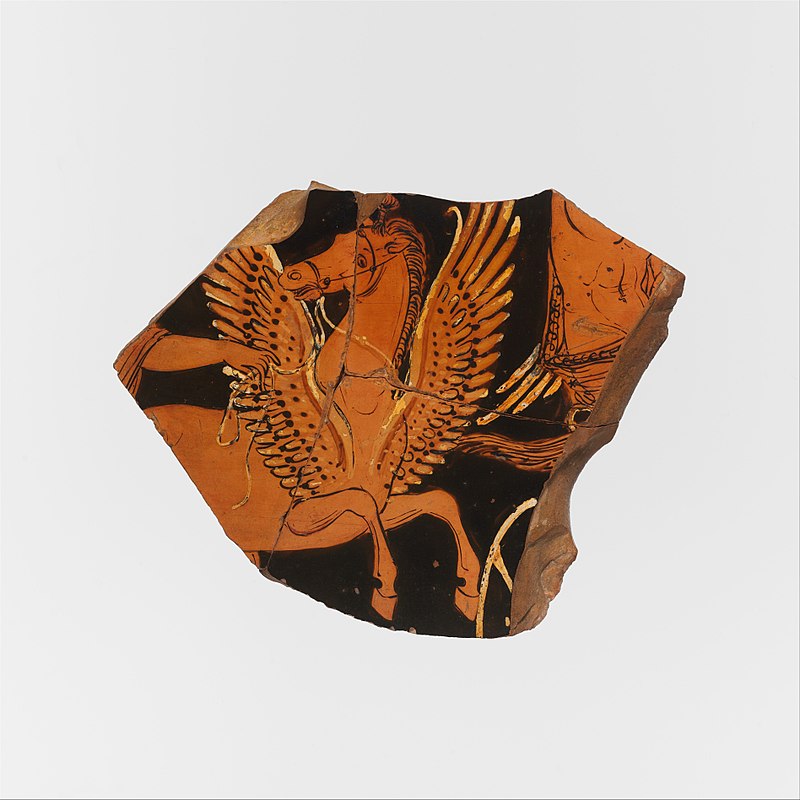
I love ancient Greek myths - and today decided to share some images related to the myth (well, collection of myths ) about the ancient hero named Perseus or the destroyer. Why Perseus, well, he is credited as the hero releasing the fabulous winged horse of the myths - Pegasus.


Hermes giving Perseus a curved sword

 Unwed Danae of Argos, daughter of king Acrisius,  was the mother of Perseus while his  father was the mighty and thundering  Olympian god Zeus (in form of the Shower of Gold or Golden Shower).  


Zeus as Shower of Gold coming to Danae


Danae and her son were banished from Argos by her father, sealed in a wooden casket and he had them thrown out into the sea. 

 After two days hey were fished out of the sea by Dictys (netman or fisherman), bother of king Polydectes (much-receiver or Death)  of Seriphos (island of the Cyclades). From that island he set our on his hero quest. The quest was prompted by the king Polydectes, lusting after Danae, who demanded that every young men on his  island provide him with a horse needed as a wedding gift for his intended marriage to Hippodamia (daughter of Oenomaus, famous for his chariot horses and chariot races). Perseus was too poor to own a horse so he boasted that he could find and slay a Gorgon monster. And as a result of his boast he set out on his quest.


Since Perseus was a mortal son of his Olympian god father, then his Olympian half-brothers and half-sisters would eventually come to his aid and provide him with magic items to help him achieve his hero quest: a cap of Hades (making the wearer invisible), winged sandals allowing him to fly, polished bronze shield, a curved sword, and a leather bag.

So this Perseus' hero quest involved searching for, finding and eventually slaying the Gorgon monsters, there sisters - Stheno (strength) , Euryale (far-leaper), and Medusa (wide-ruling). The most dangerous was Medusa, who once had been a beautiful girl and became the victim of Poseidon's lust and ravishment, and Medusa had the evil power to turn humans and animals into stones (petrifying them) just by looking with her eyes. 


Perseus, with his cunning, bravery, courage, and skills and magic tools, searched, found and slayed all there Gorgons, and used Medusa's head to carry on his other heroic deeds, including the defeating of the Poseidon's monster bound to devour princes Andromeda. 

Perseus freeing beautiful Andromeda

 
Perseus and Andromeda

Eventually, Andromeda and Perseus married and had children, and hero Heracles was one of their descendants. Perseus gave the Gorgon Medusa head to his half-sister goddess  Athena, who carried it on her shield.


Finally, about Pegasus and his coming to the world - when Perseus slayed Medusa by cutting her head, the monster carried her children conceived during the ravishment by Poseidon - winged horse Pegasus and a giant Chrysaor, and these unlikely 'twin' children finally left her body via her neck. Thus Pegasus flew into the skies and the legend. Not much is known about Chrysaor.


You can easily look for books available on the archive world library  - eg. borrowing  Early Greek Myth by Timothy Ganz, or the classic telling The Greek Myths by Robert Graves.

enjoy

Valete

Tuesday, March 7, 2023

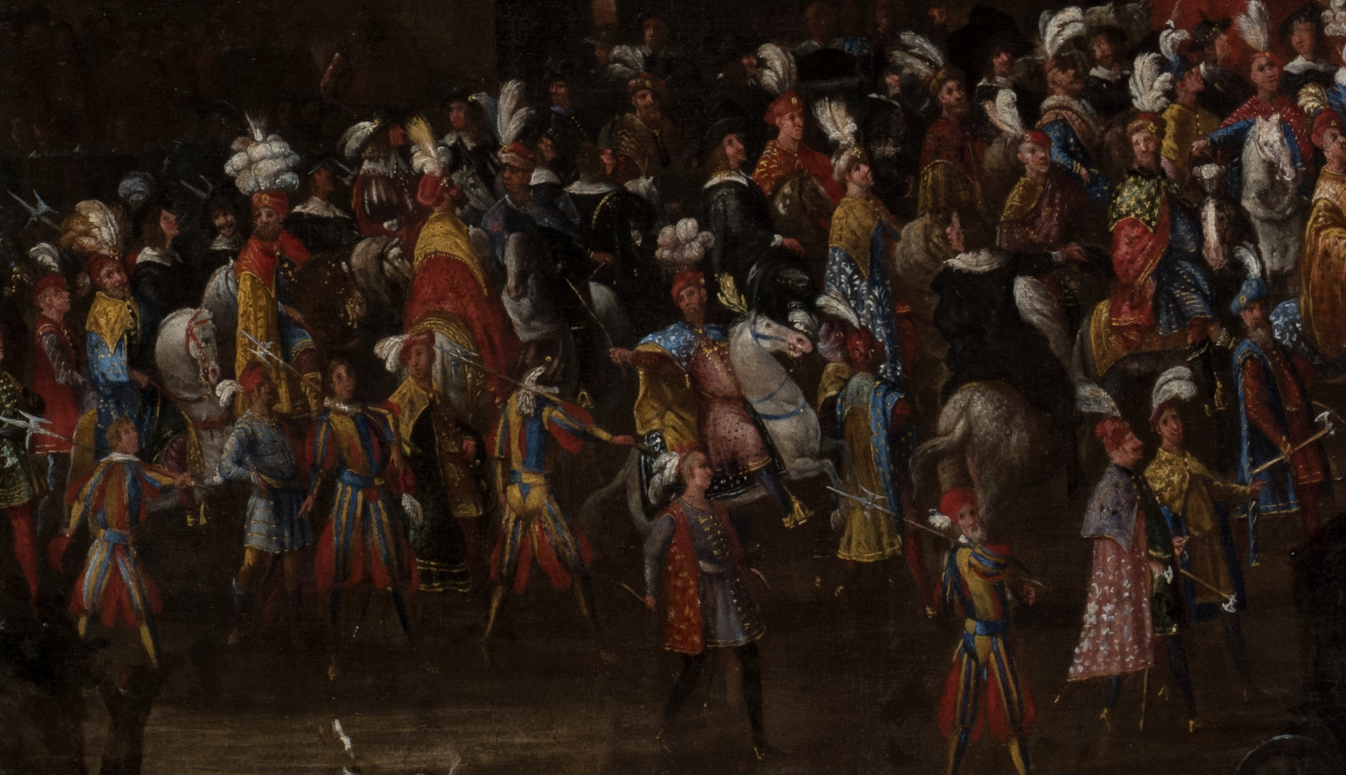
Jerzy Ossolinski 'entrada' into Rome - a Kornik painting circa 1640AD

 Salvete Omnes,


it is a bit ironic that the entry of Jerzy Ossolinski, the Polish King's Ambassador* to the papal court,  to Rome  had generated so much fine artwork in during the Old Poland history, mostly or presumably mostly by the Italian artists-Della Bella, Bellotto etc- of the era 91633-1795).


Today I would like to share with you this huge painting (  3,38m long)-  photo from the digital collection at the Kornik Library at the Kornik Castle.
It is nothing short than amazing on so many levels per Polish history-related works.


more about the detail and pertinent information about this historic event in the future, God willing

Valete

*newly elected king Wladyslaw IV, victorious against the Muscovy at Smolensk War (1632-33AD)