Tuesday, March 7, 2023

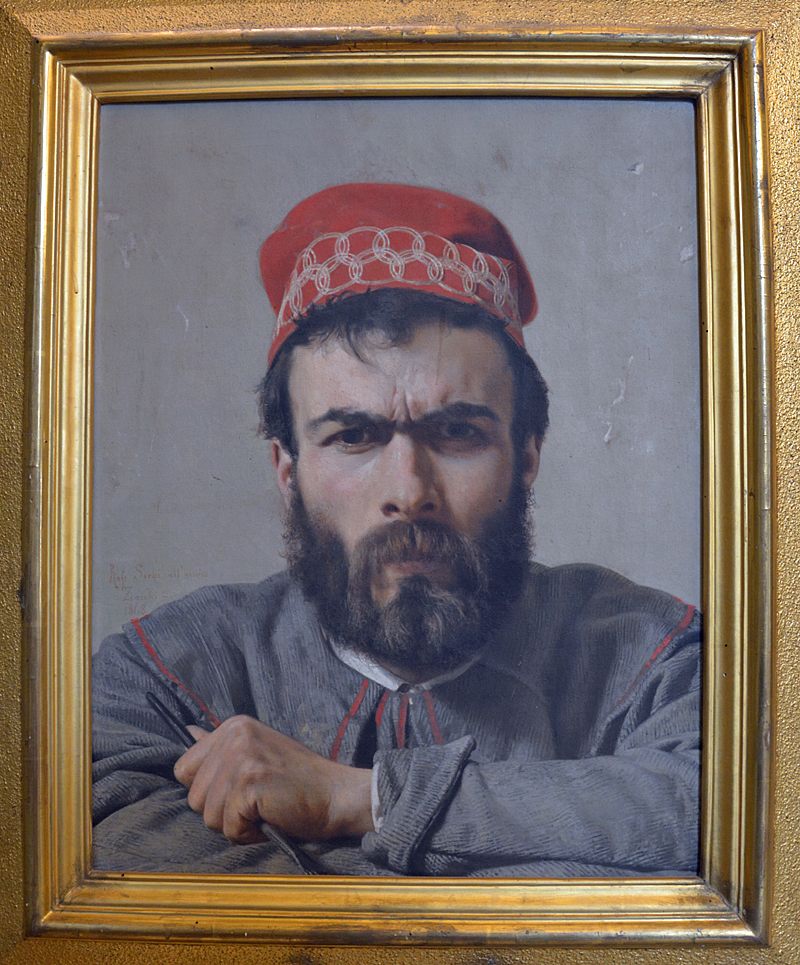
Raffaello Sorbi - Italian genre painter

 Salvete Omnes,


let us start with a short rather 'pintoresco/picturesque' entry of this Tuesday

Raffaello Sorbi (1844-1931) was a Florentine Italian painter specializing in genre painting.


This painter had some wonderful brushes - just breathtaking skills and talents - eg wiki gallery. 


but let us keep to to horses - here are some of his horse and horse-related work, and some of the hunting dogs of the era


enjoy

Valete

Sunday, March 5, 2023

A Scottish pistol gift for Polish Vassal duke of Courland Frederic Kettler

 Salvete Omnes,


back to the XVII century - our northern European part of the Eurasian continent. 


 So Courland & Semigallia, a westerly region within today's Latvia, was a duchy and fiefdom of Polish-Lithuanian Commonwealth from 1569AD.  


In the early XVII century the duchy was ruled by two dukes Friedrich (Frederic)(1567- )  and his brother Wilhelm (1574-  ), sons of the former Grand Master of the Latvian Order Gotthard Ketler, the first ruler of this post-Livonian Order & Livonian Confederation statelet.  

Gotthard Ketler and his wife Anna (she was from the medieval pagan prince Niklot and his descendants Slavic Obodrite dynasts, then of Holy Roman Empire duchy of Mecklenburg, that survived there until 1918AD)


Dukes Friedrich and Wilhelm ruled during the time when Polish-Lithuanian Commonwealth entered into the more than 60 year period of wars against the Swedish Kingdom for the southern and south eastern Baltic provinces of Polish realm. You can, if you read Polish or by using translator, read Polish researcher  Mariusz Balcerek's work Ksiestwo Kurlandii i Semigalii w wojnie Rzeczypospolitej ze Szwecja w latach 1600-1629 (The Duchy of Courland and Semigallia in the War between the Polish-Lithuanian Commonwealth and Sweden in years 1600-16290 published in 2012 - available for reading or download on Academia. There are good maps in this book, so it has many uses for any researcher. (I will point to pages in this book, writing Balcerek, Ksiestwo.. p..)


Duke Friedrich commanded a sizeable contingent of Courland's levy in the summer of 1605, when the  Swedish army landed in Courland. Duke had initiated action before our grand hetman Jan Karol Chodkiewicz with his Commonwealth army appeared on the front. During the Kircholm campaign duke Friedrich joined Chodkiewicz' army with a number of cavalrymen - pistoliers aka reiters. Duke himself wrote about three banners/companies(300-400?) that he took to Kircholm. Also a number of noblemen horsemen (a 100?) from Plityn/Piltene, separate from duke's reiters, took part in the battle, before having crossed the difficult ford across Western Dvina River. Their participation was important and significant, and they gave examples of bravery, sacrifice and heroism, losing brave commanders and horsemen like Sacken,Meden and brothers Dietrich and Ernst Brunnawen  (Balcerek, Ksiestwo,p.102-121 ).


The Pistol armed cavalry was a norm during the last 60 years in the German-speaking theaters of war in Europe. It quite agreed among the researcher that the German reiters made this short firearm the weapon for cavalryman of the period and of the future. And this rather  short-range effective firearms served well when in close-quarters combat.  Reiters aka Pistoliers used wheel-lock weapons, and also other types available then like snaphance  pistols and carbine.


It is believed that duke Friedrich received a gift, a pair or brace of snaphance pistols, from king James I, king of England, Wales and Scotland in 1615. And that in 1616 duke of Courland gifted these pistols to elector of Saxony, prince Johan Georg.

One of the surviving pistols is part of the Metropolitan Museum of Arts  (NY, USA) arms and armor collection. And the other pistol is at Dresden, Federal Republic of German. From the MET from there we got some nice photos of this splendid pistol


another Scottish snaphance pistol from Chicago museum.

Valete

Saturday, March 4, 2023

Yamnaya 'cowboys' skeletons and evidence for horseback riding

 Salvete Omnes.

March is upon us - bring peace to Ukraine, especially the Donbas  region...


photo credit: A. Frînculeasa, Prahova County Museum of History and Archaeology

a short entry -   the bioanthropological evidence for Yamnaya horsemanship, published in Science, vol 9, no.9, (March 3, 2023) .
Nota bene another Science article about the first horse tamers from the Eurasian steppe.


The Yamnaya Culture, the herders, horses, artefacts etc has been subject of my posts in the past, you can click on labels to go to those entries.
Today, a link to the article on skeletal remains of those Yamnaya cowboys' analysis from the point of view of osteological evidence.  


from the Abstract  - the entire article here.

The origins of horseback riding remain elusive. Scientific studies show that horses were kept for their milk ~3500 to 3000 BCE, widely accepted as indicating domestication. 

However, this does not confirm them to be ridden. Equipment used by early riders is rarely preserved, and the reliability of equine dental and mandibular pathologies remains contested. 

However, horsemanship has two interacting components: the horse as mount and the human as rider. Alterations associated with riding in human skeletons therefore possibly provide the best source of information. 

Here, we report five Yamnaya individuals well-dated to 3021 to 2501 calibrated BCE from kurgans in Romania, Bulgaria, and Hungary, displaying changes in bone morphology and distinct pathologies associated with horseback riding. 

These are the oldest humans identified as riders so far.

  Skeletons from Hungary, Bulgaria and Romania were studied and analyzed. Perhaps due to the Russia-Ukraine war no tests were done on the skeletons originated from burials further east in the Western Eurasian steppe.


 Nota bene , they found probable origin of the Bubonic plague in the Late Neolithic/Bronze Age gravesites.


Valete

Monday, February 27, 2023

Leopold Wilhelm Habsburg on horseback

Salvete Omnes,

back to the XVII century equestrian portraits from royal Europe.

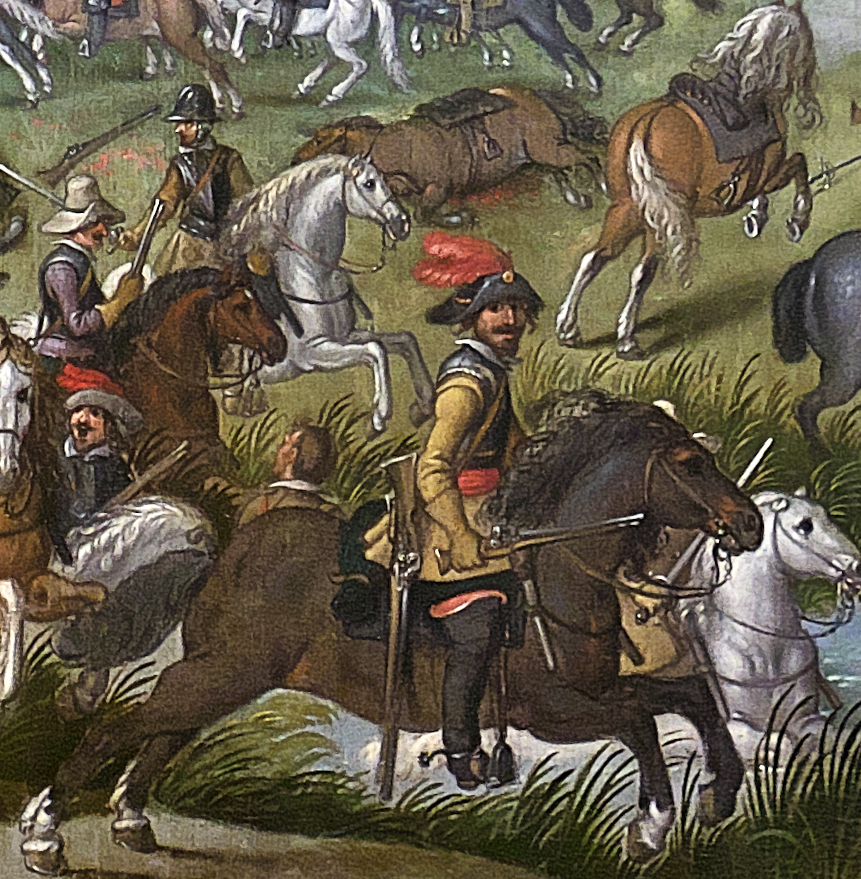
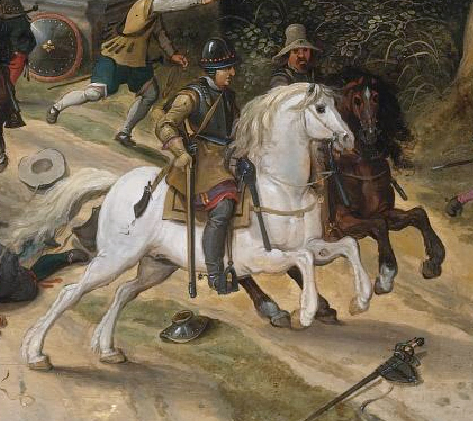
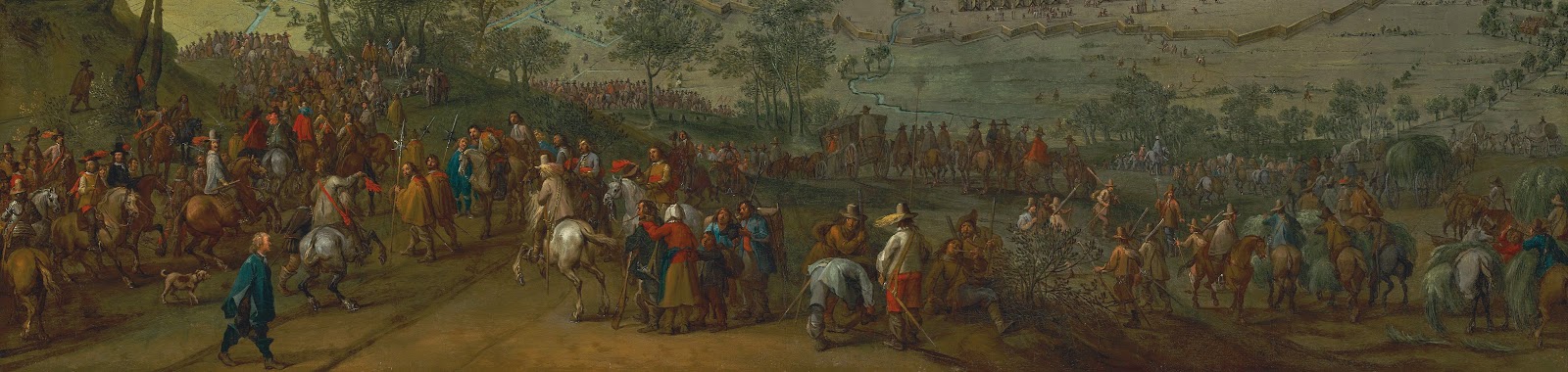
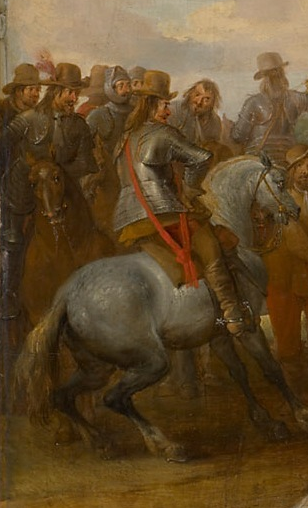
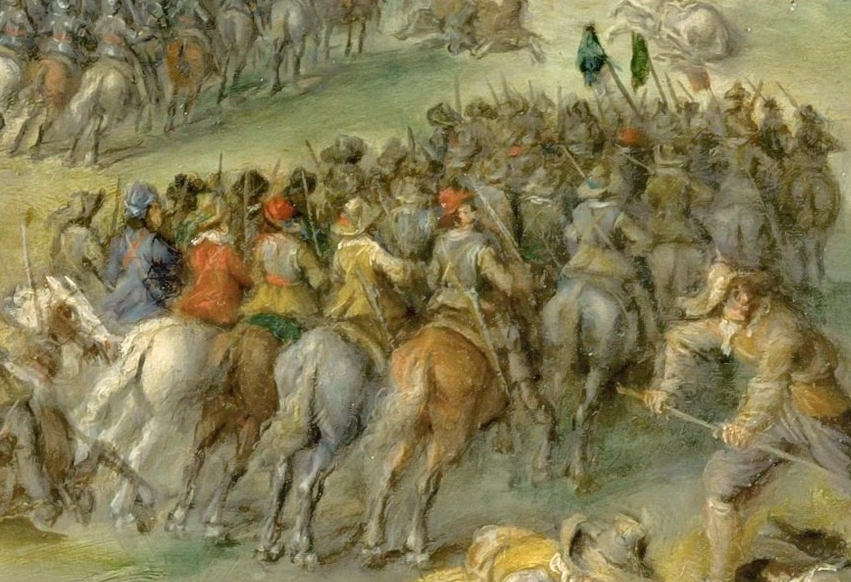
a detail of Peter Snayers' painting - Siege of Armentierers - and archduke on a gray horse

another Snayers - Siege of Diskmuided - this time archduke is mounted on a chestnut steed 


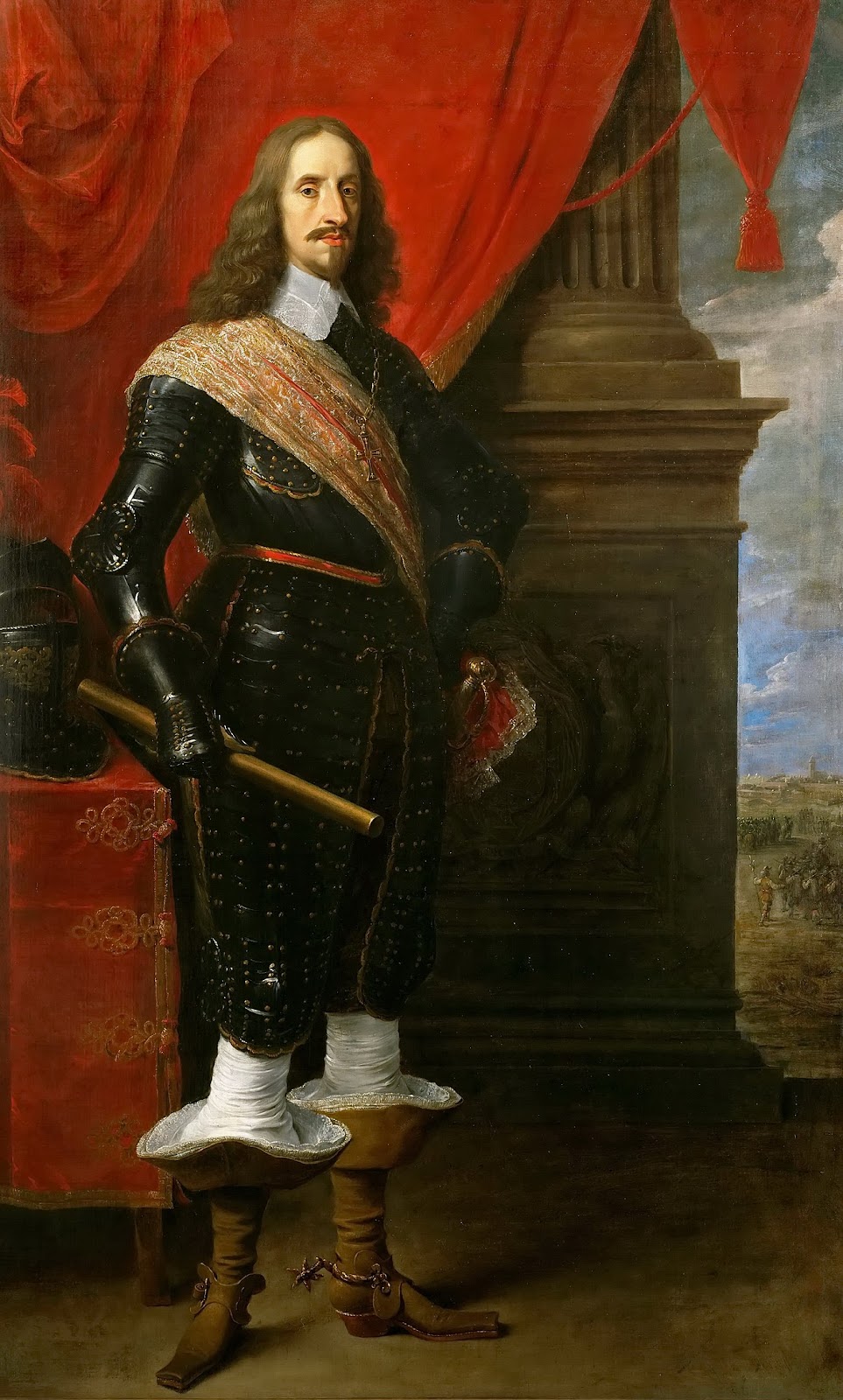
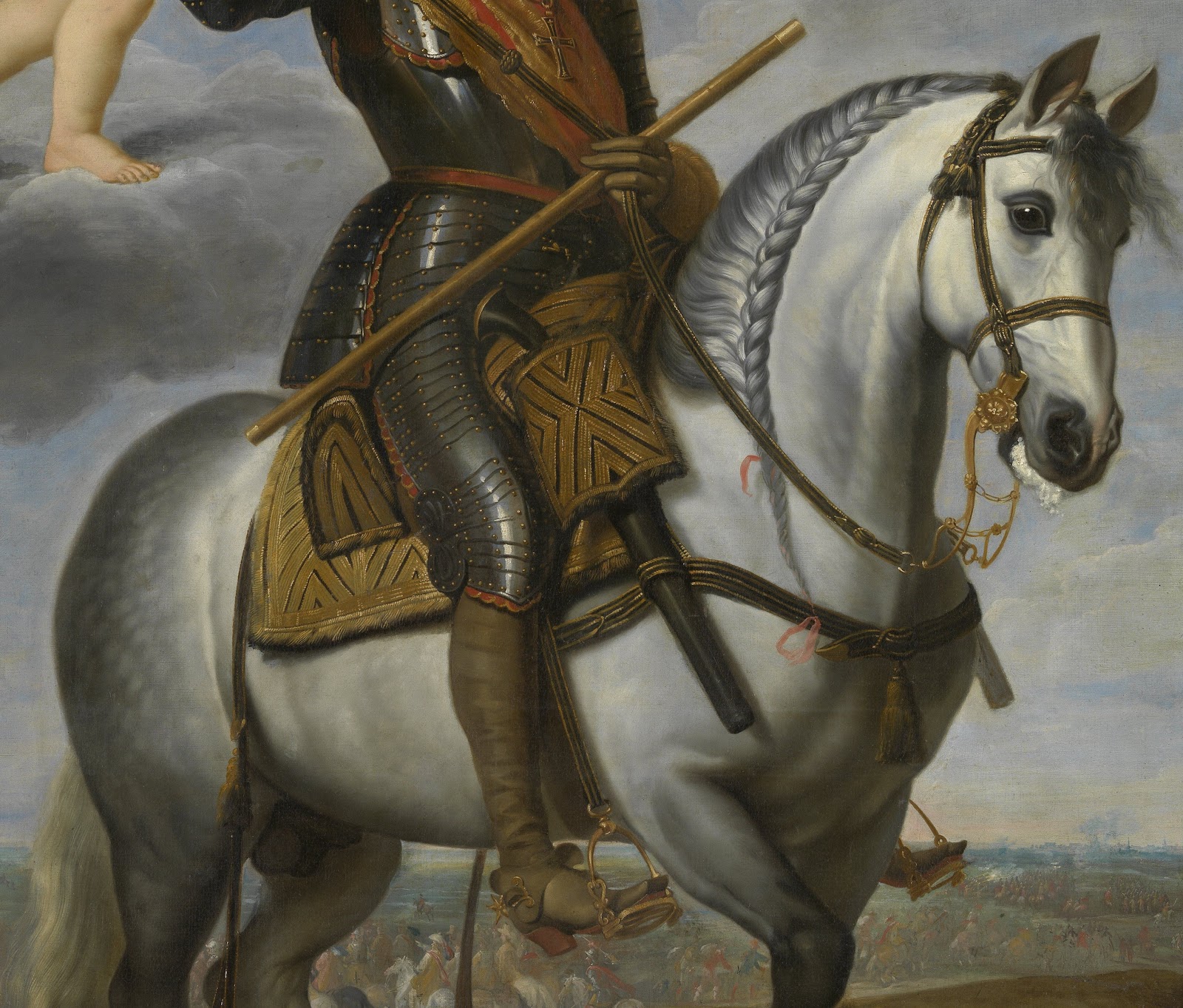
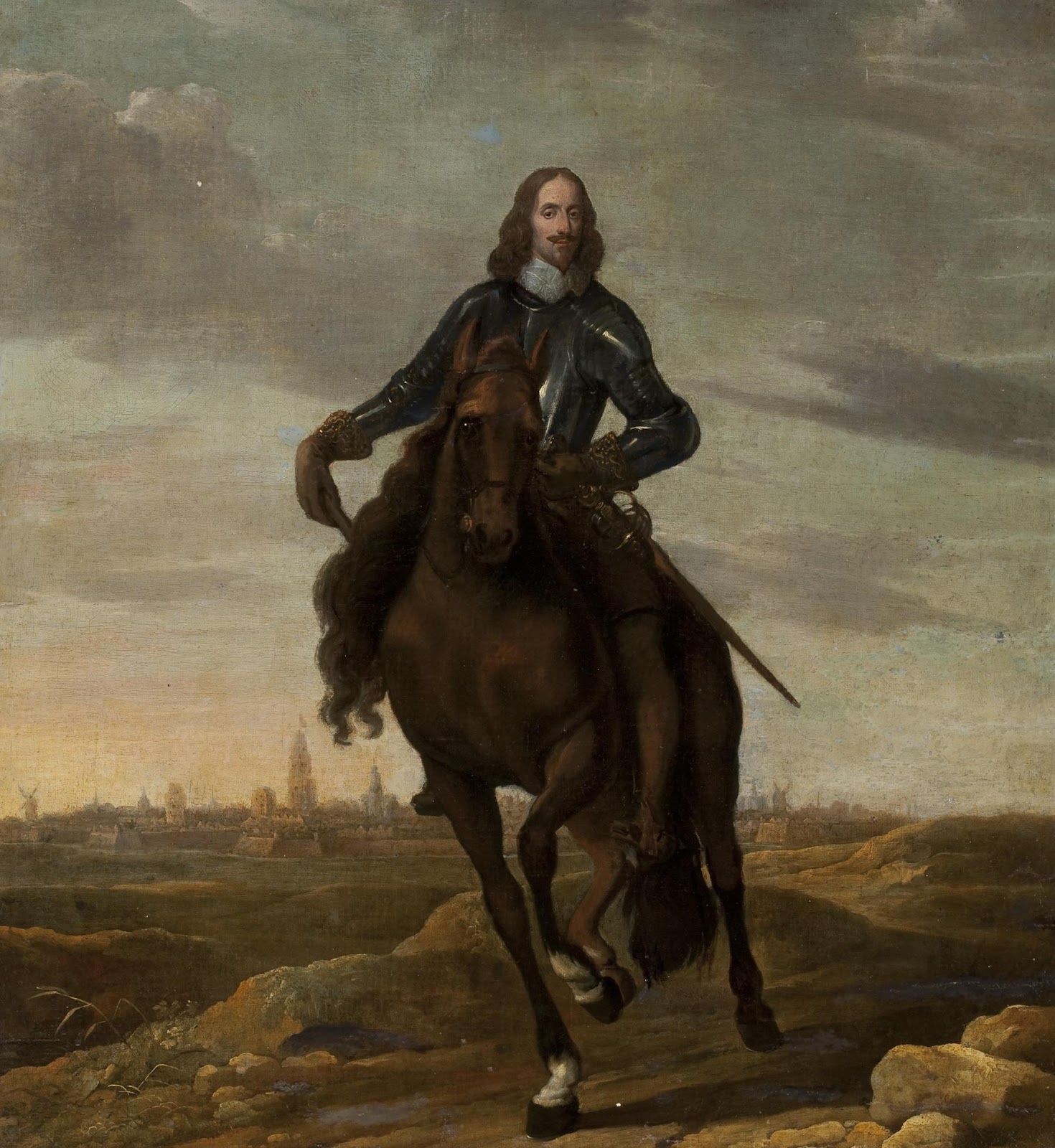
This time it will be archduke Leopold Wilhelm  von Osterreich (Hapsburg) - a scion of the Austrian imperial family: son of emperor Ferdinand II and brother of emperor Ferdinand III, who was not very lucky or perhaps unlucky as a military commander, but made it into history as art collector and bishop of Wroclaw (Breslau) upon  passing of  our Vasa royal, Karol Ferdynand Wasa in 1655/6 (he held 3 more bishoprics as the time of his passing in 1662), and also a Grand Master of the Teutonic Order.

National Trust images - 


a stallion and most likely a Spanish royal horse


I think this mount was a dark chestnut horse
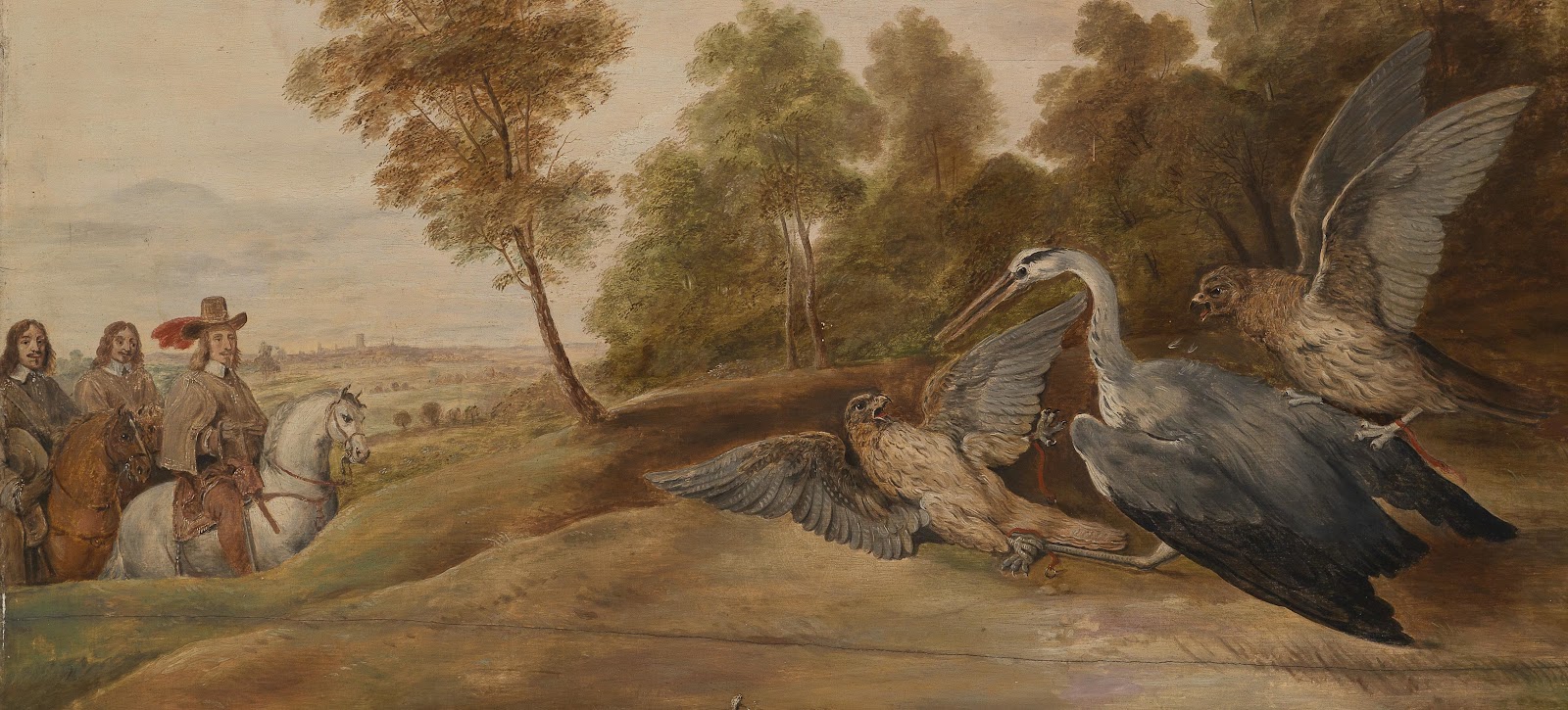
and here archduke hawking by David Teniers the Younger 


nota bene Leopold Wilhelm had some nice suits of armor as evidenced in these portraits, also showing the changes in fashion, including helmets etc. 


Valete
Friday, February 24, 2023

Back to George Catlin's Warriors

 Salvete Omnes,

there is war in Europe, as we all know, and Ukraine is the epicenter of it, the current escalation is a year old today.
I hope the war will end soon, the suffering and blood letting of the Ukrainian people.
Peace must prevail in Ukraine...

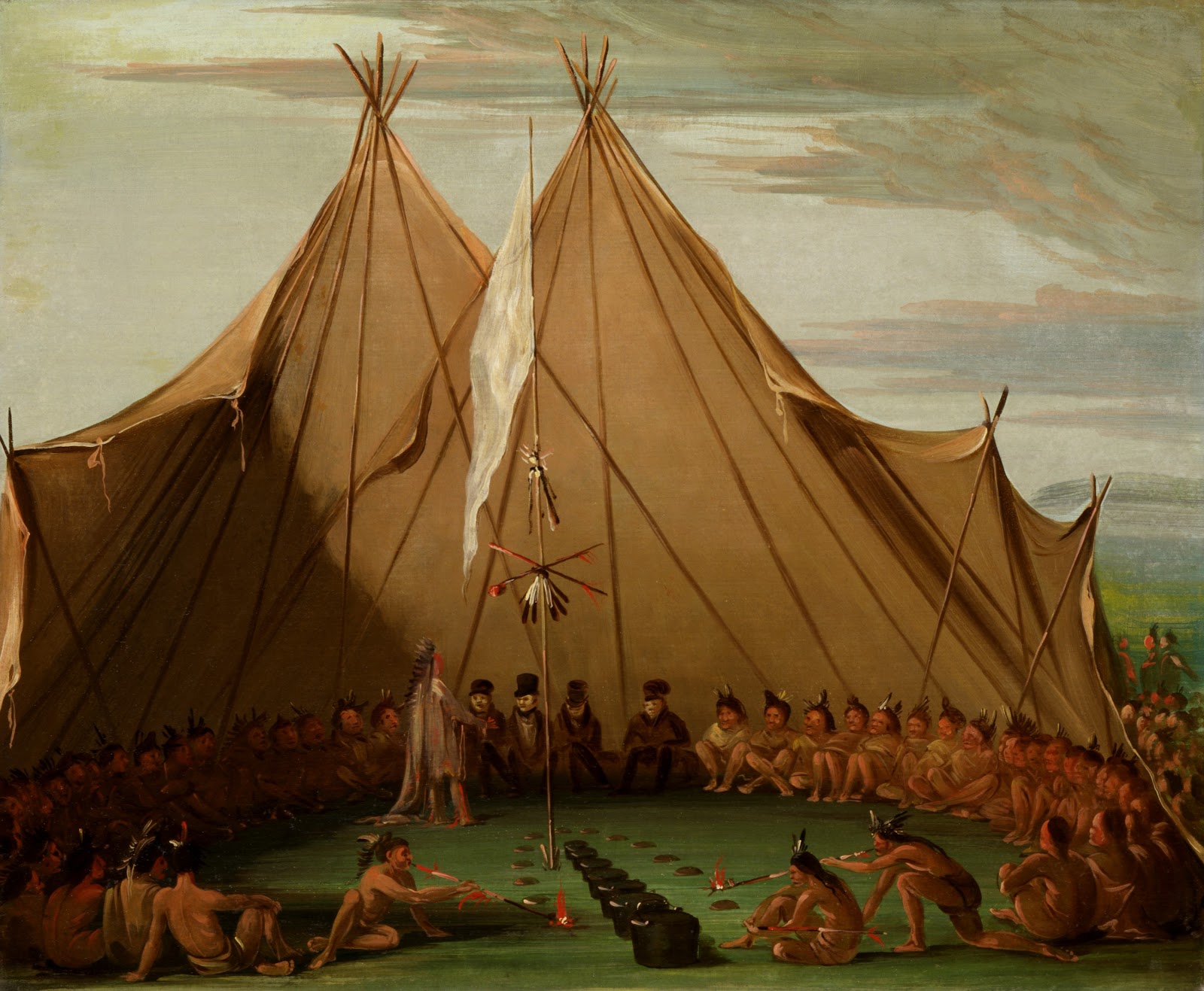
Long gone warriors from the Great American Plains will illustrate this post - all painted and drawn by Catlin's masterful hand
The Pawnee, Crow, Blackfeet, Mandan, Hidatsa and Sioux (Lakota):


Nowadays it is the time of scalp taking in Ukraine, but let us hope perhaps soon they will celebrate their acquired honors and stop the war, burring the war hatchet, and leaving this war in the past and for the historians, giving peace a chance.


let us hope the parties to this conflict will sit down and parley, like these Sioux in the Dog Feast Ceremony

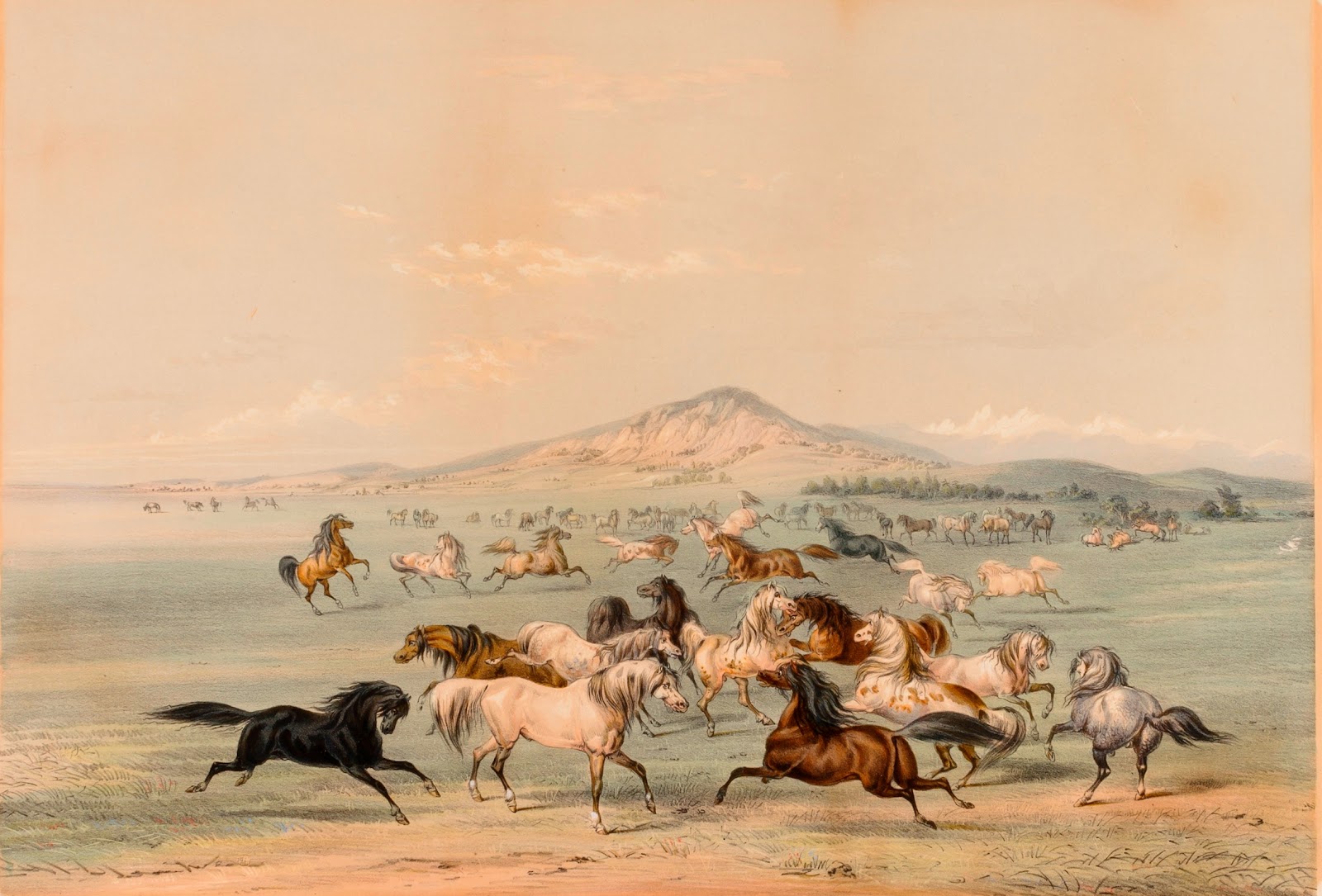
and things will go back to normal, and  their peace and tranquility will be closer to the image of  the horses in this print

all images come from the Smithsonian American Art Museum and National Gallery of Art.
Valete


Saturday, February 18, 2023

Wolfgang Wilhelm von Pfalz-Neuburg on horseback

 Salvete Omnes,


a quick entry showing equestrian portrait from the XVII century, German lands as there was no one Germany then, rather 'Germanies' then under the emperor and collectively known as the Holy Roman Empire.
So in this picture we have a chivalrous  prince Wolfgang Wilhelm, who was the groom from the wedding pictured in etchings by  Herr Zimmermann in Munich,  portrayed in a full equestrian plate armor, with a Marschallstab aka marshal baton .
The canvas was painted by a master from Rubens close circle of artists, named Deodat del Monte  ,

Let us take a closer look at his mount- 

 A palomino horse, perhaps a Spanish one. with a star a snip, and a sock on his left rear leg.

the head with a nice star and snip , while the bridle has a gilded curb-bit with longish shanks popular of this period

a Baroque Western saddle with a ornate 'horn'  - textile skirts 

horseshoes

gilded stirrups and spurs, a textile woven cinch visible


 and our  prince in the chisels of Abracham Hogenberg, German Kupferstecher .


If you ever in Dresden, ancient capital of Saxony, do check the castle where they display the most sumptuous XVII century saddles of the Saxon 

Valete