Showing posts with label Jan Karol Chodkiewicz. Show all posts

Monday, September 22, 2025

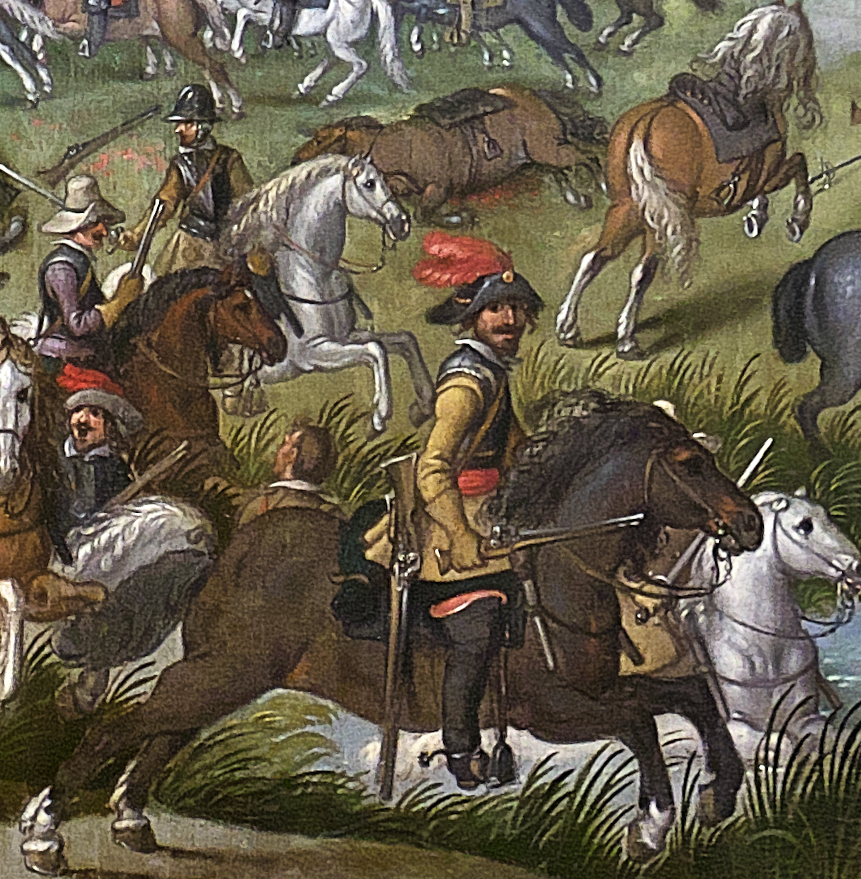
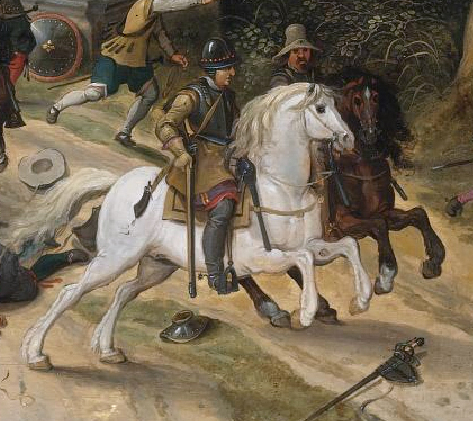
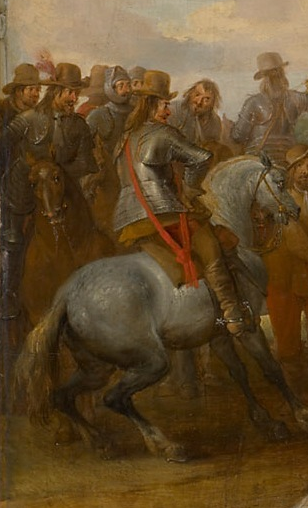
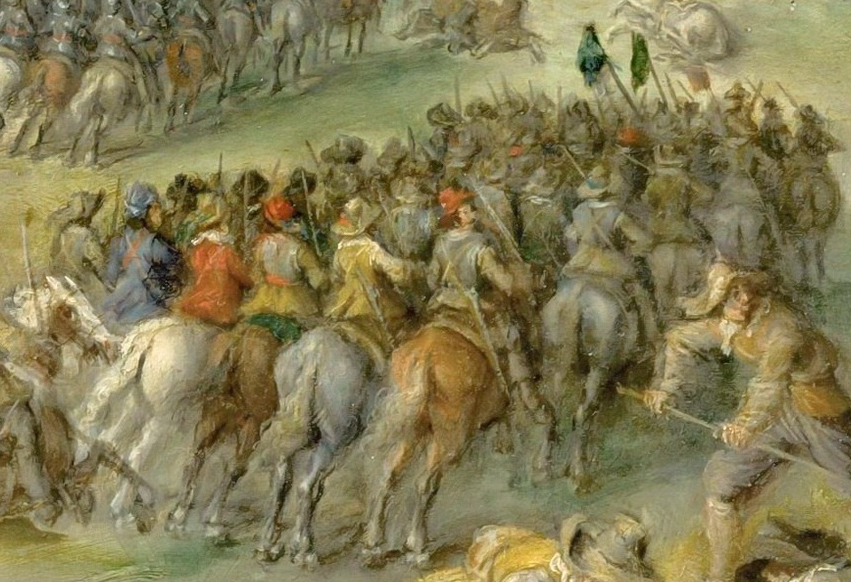
Polish-Russian war 1609-11AD - advance on Smolensk

 Salvete Omnes,

Yesterday, i.e., the 21st of September,  but in 1609AD,  Polish-Lithuanian army crossed the border the Commonwealth-Muscovy border and advanced onto Smolensk, the most important fortress of the western Muscovy, guarding the so called Smolensk Gate. 


Since 1582 Polish-Lithuanian Commonwealth and Muscovy had been under the truce, although our Polish-Lithuanian magnates supported Dmitry, the alleged son of Ivan IV,  who even married and crowned a tsarina Maryna Mniszech, Polish noblewoman. 


Since 1605AD Muscovite realm, Grand Duchy of Muscovy, was in the throes of the civil war  known as the Dimitriads, where various factions of the Muscovite aristocrats aided by Polish-Lithuanian magnates, foreign mercenary armies and foreign powers, like Sweden etc, were meddling within the Russian realm. Technically, upon the murder of tsar Dmitry I in 1606,  there was a tsar or grand duke Vasili IV Shuisky in Kremlin, but his fraction had to face Dmitri II, known as false Dmitry II, whose armies and popularity with the population allowed for control of rather vast areas of the huge Muscovite realm since 1608AD.

Since 1600AD Polish-Lithuanian Commonwealth already had been in a war, this was a dynastic war  against the usurper Karl IX of the kingdom of Sweden, where  the war was  mostly carried by Lithuanian  army with many private banners and companies. Ducal  forces were under the commanded of Jan Karol Chodkiewicz, victor of Kircholm 1605. 

King Sigismund III,  the scion of the Swedish Vasa dynasty elected by the noble host  to sit on the Polish-Lithuanian Commonwealth throne in 1587, and his councilors decided to breach the 1582 AD truce and to attack Smolensk, taken by the Muscovite armies in 1514AD. The ship had sailed- Mars ruled.


Smolensk on the Dniepr/Dnieper River 1609-11


Royal Polish army was divided into various divisions, the advance party was led by  Lew Sapieha, a chancellor of Lithuanian, and Stanislaw Stadnicki, castellan of Przemysl - reached Smolensk on September 28. 
Then came hetman Stanislaw Zolkiewski division, with the artillery park = reached the camps on September 29.
And finally the king's division and court with the rest of the army and thousands of wagon trains filled with ammunition, powder, food, fodder and other supplies and necessities, but also thousands of servants, traders, and camp followers. 

King and his contingent  crossed the border, via a bridge over the river Iwala or Iwata,  on the 21 of September, 1609 and reached Smolensk camps on  October 1, 1609.

The anonymous diary of this campaign tells that  in vanguard 800 Hungarian infantry marched first, then the 200 [infantry] of starost of Sacz [Stanislaw Lubomirski], 100 [infantry] of lord of Krakow[Janusz Ostrogski], then 100 strong  horse banner of  Old Polish Kozak cavalry of starost of Sacz,   then lord of Krakow also  a 100strong  Kozak cavalry. Thena very fine 200 winged hussars banner of starost of Sacz. Just before the His Majesty person and  retinue(70 strong) a very well equipped   100-lancer strong winged hussar banner  of lord of Krakow. After the king [marched] the court banner of 600 lancers, after them a 150 horse [reiter] banner made out of Prussians, Pomeranians and 'Inflanteers'  under pan Nowodworski*, each rider with two carbines. After them a 100 strong Kozak cavalry royal banner. Then 1400 German infantry under [Ludwik] Weiher [marched across the bridge]. The weather was fine, no clouds in the sky and this fine weather lasted until the evening. The king arrived in Wasylov where he joined hetman [Zolkiewski] already in the camp there. This day a finely equipped banner of prince Porycki, 150 horse strong, came[to our side].  (page 65 of the diary).


According the Polish archives,   during the quarter of the 5th of July through Ocbober 5, 1609 the cavalry arm of the army consisted of:

- 2,300 winged hussars or lancers

- 800 Polish kozak cavalry

- 300 "German' reiters.

By the next quarter - October through January 1610, the number of winged hussars would grow to 4000 lancers, Polish Kozaks to 900 horsemen, while reiters would fall to 269. Again in 2 quarters- January to July  1610AD the winged hussar would drop to 2205 lancers, Polish Kozaks to 400, and the reiters would grow again to 300 horsemen (after Kazimierz Gorski, 1895). 


Infantry - German, Hungarian hajduk, Polish hajduk and royal guards -  and artillery - cannon masters, gunsmiths, gun crews and craftsmen  -   also waved in numbers during the first year of the siege - started with 4213 officers and soldiers, went down to 2513 (June) and to 1698 in July 1610.  Gunmasters 


The siege continued during the summer of 1610,  the following winter and spring of 1611. During this period hetman Zolkiewski defeated the allied army at Klushino, July 1610, and consequently  the Muscovite Shuisky regime collapsed and victorious and Sun Tsu-like hetman Zolkiewski entered Moscow and new era, our Poles in Moscow, ensued.

King Sigismund III victorious at Smolensk


 Finally  our king ended victorious in June 1611AD,  when on the 13th  the Polish army stormed and captured the fortress, king  had medals made for the happy occasion. During the final assault knight of Order of Malta pan Bartlomiej Nowodworski *,  Nalecz coat of arms,  sallied to blow the gate and having succeeded became a hero. Winged Hussar Samuel Maskiewicz wrote his diaries describing the war. Hetman Stanislaw Zolkiewski wrote his famous work about his war -  Poczatek i progres wojny moskiewskiej. Another warrior ,Mikolaj Scibor Marchocki also wrote his history of the war.


Meantime, since 1605 many thousands of Cossacks, Zaporozhian and Don, roamed the Muscovite lands siding with this or that party or power But perhaps more importantly it was during this period that the  new Polish light cavalry was born:  the Lisowczycy (Lisowski' kozacy [singular Lisowczyk, kozak lisowski] cossacks), one could say also to the detriment of the civilian populations in Muscovy and in Polish-Lithuanian Commonwealth, and further west in the Holy Roman Epire and Hungaries.
For the project about Khotyn 1621 I did draw two Lisowski kozaks.

Valete

Sunday, March 5, 2023

A Scottish pistol gift for Polish Vassal duke of Courland Frederic Kettler

 Salvete Omnes,


back to the XVII century - our northern European part of the Eurasian continent. 


 So Courland & Semigallia, a westerly region within today's Latvia, was a duchy and fiefdom of Polish-Lithuanian Commonwealth from 1569AD.  


In the early XVII century the duchy was ruled by two dukes Friedrich (Frederic)(1567- )  and his brother Wilhelm (1574-  ), sons of the former Grand Master of the Latvian Order Gotthard Ketler, the first ruler of this post-Livonian Order & Livonian Confederation statelet.  

Gotthard Ketler and his wife Anna (she was from the medieval pagan prince Niklot and his descendants Slavic Obodrite dynasts, then of Holy Roman Empire duchy of Mecklenburg, that survived there until 1918AD)


Dukes Friedrich and Wilhelm ruled during the time when Polish-Lithuanian Commonwealth entered into the more than 60 year period of wars against the Swedish Kingdom for the southern and south eastern Baltic provinces of Polish realm. You can, if you read Polish or by using translator, read Polish researcher  Mariusz Balcerek's work Ksiestwo Kurlandii i Semigalii w wojnie Rzeczypospolitej ze Szwecja w latach 1600-1629 (The Duchy of Courland and Semigallia in the War between the Polish-Lithuanian Commonwealth and Sweden in years 1600-16290 published in 2012 - available for reading or download on Academia. There are good maps in this book, so it has many uses for any researcher. (I will point to pages in this book, writing Balcerek, Ksiestwo.. p..)


Duke Friedrich commanded a sizeable contingent of Courland's levy in the summer of 1605, when the  Swedish army landed in Courland. Duke had initiated action before our grand hetman Jan Karol Chodkiewicz with his Commonwealth army appeared on the front. During the Kircholm campaign duke Friedrich joined Chodkiewicz' army with a number of cavalrymen - pistoliers aka reiters. Duke himself wrote about three banners/companies(300-400?) that he took to Kircholm. Also a number of noblemen horsemen (a 100?) from Plityn/Piltene, separate from duke's reiters, took part in the battle, before having crossed the difficult ford across Western Dvina River. Their participation was important and significant, and they gave examples of bravery, sacrifice and heroism, losing brave commanders and horsemen like Sacken,Meden and brothers Dietrich and Ernst Brunnawen  (Balcerek, Ksiestwo,p.102-121 ).


The Pistol armed cavalry was a norm during the last 60 years in the German-speaking theaters of war in Europe. It quite agreed among the researcher that the German reiters made this short firearm the weapon for cavalryman of the period and of the future. And this rather  short-range effective firearms served well when in close-quarters combat.  Reiters aka Pistoliers used wheel-lock weapons, and also other types available then like snaphance  pistols and carbine.


It is believed that duke Friedrich received a gift, a pair or brace of snaphance pistols, from king James I, king of England, Wales and Scotland in 1615. And that in 1616 duke of Courland gifted these pistols to elector of Saxony, prince Johan Georg.

One of the surviving pistols is part of the Metropolitan Museum of Arts  (NY, USA) arms and armor collection. And the other pistol is at Dresden, Federal Republic of German. From the MET from there we got some nice photos of this splendid pistol


another Scottish snaphance pistol from Chicago museum.

Valete

Friday, October 1, 2021

List Jana K. Chodkiewicza do Mansfelda

Salvete Omnes,

[in Polish]

jak wiemy 27-emgo września minęła kolejna rocznica bitwy pod Kircholmem - i w mej 'stajni źródeł i wypisów' o wiktorii kircholmskiej mamy kolejne  źródło z epoki - piórem samego hetmana i zwycięzcy kircholmskiego.


List Jana Karol Chodkiewicza do Joachima Fryderyka grafa von Mansfelda, generała rajtarii szwedzkiej i dowódcy 10 kornetów jazdy prawego skrzydła armii szwedzkiej pod Kircholmem, w sprawie poległych oficerów i wymiany jeńców.  


 kopia miedziorytu Giacomo Lauro na podstawie rysunku Antonio Tempesta z 1606 roku


Valete

Wednesday, September 29, 2021

Chocim aka Khotyn 1621 order of battle - Polish-Lithuanian army

 Salvete Omnes,

One of the most important battles in Polish history, the one of Chocim (Khotyn) 1621,  is not really celebrated in Poland and other former lands of the Polish-Lithuanian Commonwealth. But for these celebrations that took part last Saturday in Rzeszow, Poland.


This epic armed conflict  between  Polish-Lithuanian Commonwealth and  Ottoman Turkey, the culmination of about 20 years of border conflicts, incursions, raids and etc, armed invasions eg Cecora 1620AD.  this year has its 400th anniversary.  And not a small role in  instigating this conflict, apart from the huge role of the Polish  border magnates, Zaporozhian Cossacks and Crimean Tatars,  was played by the enemies fighting during the early stages the 30 Years War -prince Gabor Bethlen on one side and the Hapsburg Empire. Perhaps Gabor Bethlen was instrumental in instigating the Ottoman attack on Polish-Lithuanian Commonwealth, as he was the enemy of our Respublica. Luckily for the Polish side the victorious Ottoman  commander Iskander Pasha had died before the fighting at Chocim took place.

so I would like to add some info about the Polish-Lithuanian Commonwealth army that mustered in the defensible war  laager around the medieval Chocim castle  on September 2nd, 1621 AD or at the beginning of a month long   'battle' between the hostile parties. It should be followed by another post about the Ottoman host.

the commander in chief :

Lithuanian grand hetman  Jan Karol Chodkiewicz

three major components of the army:

-mercenary soldiers and their retinues, where appropriate

-the Zaporozhain Cossacks

-magnate and lesser lords private banners and companies with appropriate retinue and warmed camp followers.

Polish-Lithuanian Commonwealth army at Chocim had also several separate commands -

 -Crown

-Lithuanian  grand duchy,

these former armies were untied under one register.

 -Zaporozhian Cossack

Now, as far as the total number of soldier there are two troop lists aka registers, that differ slightly as to the number of units and horses/portions(infantry),  of the Crown and Lithuanian army divided into different types of units:


Register one                                                                                              Register Two 

1. Winged hussars :

  -53 banners or 8520 horses (paid for soldiers on paper)          or             - 70 banners       or 8600 horses

2.  Pancerny kozak calvary and lisowczyk banners                     

  -66 or 8450 horses                                                                    or    -75 kozak cavalry or 7700 horse and 10 lisowczyk/1300horse

3.  German  reiter cavalry 

- 10 companies/ 2160 horses                                                       or - 12 companies 1300 horse

4.  regiments of German infantry

-5 regiments / 6450 portions                                                          or  -6 regiments  6100 portions

5.  Polish and Hungarian hajduk infantry

-29 companies/ 7600 portions                                                         or -30 regiments /8000 portions

all together 

33180 horses and portions.                                                             or- 33000 horses and portions

 Crown and Lithuanian army also included the camp followers, and some historians count to add about 30 to 35,000 armed camp followers from the hussar, kozak pancerny, reiter and  infantry commanders' retinues to the total number of armed combatants. The actual numbers of paid soldiers were at least 10% smaller in fact or so it this thought.

 The second important component consisted of the Zaporozhian Cossacks commanded by hetman Petro Konaszewicz-Sahajdaczny and it consisted of about 25-30,000 soldiers or portions(?)

 So for the purpose of operational and tactical combat application this Commonwealth army was divided into 'pulk' or temporary divisions of various sizes -
1.prince Władysław Vasa - 10,180 horses and portions

2. Grand hetman Chodkiewicz - 4,600 horses and portions

3.voivode Lubomirski -  3,350 horses and portions

4.Maciej Lesniowski - 1,000 horses and portions

5.Jana Mikolaj  Boratynski  - 859 horses and portions 

6.Mikolaj Zienowicz - 1,750 horses and portions

7.Aleksander Sapieha - 2,000 horses and portions

8.Piotr Opalinski - 1,600 horses and portions

9.Mikolaj  Kossakowski - 1,300 horses and portions

10.Mikolaj & Prokop Sieniawski, 1,200 horses and portions

11.Stanislaw Rusinowski - 1,200 lisowski horse

in addition there were 2,650 horses and portions that were not included in these 'pulks', as they arrived separately into the war laager  and thus not assigned to any division.

The army had circa  30 pieces of field artillery, only few of them heavier guns.  


Zaporozhian Cossacks, with their separate camp extended along the river constituted a self-operating rather huge division ( we do not know how they might have been divided and operated other than they did have a 'pulk'  organization too) -  like I said experienced fighter, scholar and commander hetman Petro Konaszewicz-Sahajdaczny commanding.   


From the very first day the Commonwealth army was not sufficiently provisioned with foodstuffs, horse fodder, munitions and especially gun powder. For some reason  the river Dniester was not used to ship food and war supplies into this war laager. Which is interesting in itself since all Commonwealth large rivers were used as the  shipping and trading highways, yet Dniester was no used to provide supplies to the fighting army.

to be continued

Valete


Monday, September 27, 2021

Kircholm 1605 - 27th of September


 Salvete Omnes,

today is yet another anniversary of the famous battle of Kircholm 1605 - so here find some links to scholarly articles


 Grand Duchy of Lithuania Field Hetman Jan Karol Chodkiewicz famously crushed the army of the Swedish usurper Karl IX Vasa. 


Polish researcher Mariusz Balcerek provided, on his academia.edu page, various research papers on or about this famous  military engagement

 in Polish -
- Orde de Bataille of both armies .

Poles in the army of Karl IX at Kircholm.

 Jan karol Chodkiewicz's Army

Duchy of Kurland and Semigalia at Kircholm

and others ...

while you are on YouTube you can watch some video productions on this battle eg  from Kings and Generals

 Paceam Aeternam to all the fallen soldiers

valete

Tuesday, August 24, 2021

Chocim 1621-2021 - via YT

 Salvete Omnes,

[in Polish]


zbliża się szybkimi krokami wrzesień i rocznica rozpoczęcia oblężenia albo bitwy obronnej wokół zamku w Chocimu nad Dniestrem połączonych armii Rzeczpospolitej Obojga Narodów dowodzonych przez hetmana wielkiego litewskiego J. K.Chodkiewicza(po jego śmierci przez Stanisława Lubomirskiego (herbu Szreniawa bez Krzyża) przy obecności królewicza Władysława, a kozacy zaporoscy przez swego hetmana Piotra Konaszewicz Sahajdacznego),  z armia Imperium Osmańskiego sułtana Osmana, młodzieńca wspomaganego przez swych doradców i dowódców.


Na YT pojawiły się wywiady i prezentacje związane z sama bitwa, kampania, wojną1618-1621, z wojskowością polska tamtej epoki i innymi podobnymi  tematami (filmików jest więcej - należy tylko wpisać szukaj w przeglądarkę YT, eg na Bitewnym szlaku)

Dr Przybył gości u Sebastiana Pitonia, gdzie opowiada wokół wojny z Porta Ottomańską i problemie kozactwa zaporoskiego, tak źle rozegranego przez włodarzy ówczesnej Rzeczpospolitej, przy koncertowej grze naszych ówczesnych wrogów.


Imć pan Jacek Komuda, Stadnicki wciąż was/nas potrzebuje, gości w swym dworze imć Jacka Bartosiaka, gdzie sobie gaworzą o wojskowości szlacheckiej epoki (bardziej rozrywkowo niż naukowo, ale momentami bardzo zgrabnie)

I finałowy film to wywiad a może prawie monolog mego druha dr Radosława Sikory, który opowiada o potrzebie chocimskiej AD 1621 w kontekście militarnym


miłego słuchania i/lub oglądania.

Valete

Sunday, October 25, 2020

List JKM Zygmunta III do Jana K. Chodkiewicza - Kircholm

Salvete Omnes,

[in Polish]

Add caption


we wrześniu minęła kolejna rocznica Chodkiewiczowego zwycięstwa nad uzurpatorem tronu Królestwa Szwecji pod Kircholmem, ku glorii Jego Królewskiej Mości Zygmunta IIII i wszystkich stanów Rzeczpospolitej Obojga Narodów :

Załączam kolejne źródło z epoki
List JKM Zygmunta do hetmana napisany po zwycięstwie :


Valete

Monday, September 30, 2019

Jan K. Chodkiewicza list do JKM Zygmunta III

Salvete omnes,
[in Polish]
w temacie Kircholmu to listy z epoki są wielce ciekawe, zwłaszcza listy uczestników bitwy, tutaj mamy list głównodowodzącego armią polsko-litewską hetmana Jana Karola Chodkiewicza do JKM Zygmunta III: 


co ciekawe, w końcowej części listu hetman litewski bardzo chwali księcia kurlandzkiego i jego stałość i dzielność we wspieraniu orężem własnym majestatu Rzeczpospolitej i JKM w bitwie i w tej wojnie.

valete

Friday, September 27, 2019

Rocznica Kircholmu 1605-2019

Salvete Omnes,
[in Polish]

i kolejna rocznica bitwy która rozsławiła husarie i polsko-litewskiego dowódce Jana Karola Chodkiewicza - nieledwie polskie Cannae, ku glorii JKM Zygmunta III i Rzeczpospolitej Obojga Narodów.

z mowy Jakuba Sobieskiego na pogrzebie Jana Karola Chodkiewicza (za Kudelka, Bitwa Pod Kirholmem)

parę rzeczy zrodlowych etc:
2 strony z 'Carolomachii'  autorstwa jezuity Wawrzyńca Bojera (wydane  jako Krzysztof  Zawisza 1606)  -

Piotr Skarga o zwycięstwie- via FBC - Pokłon Panu Bogu -
Pismo samego hetmana Chodkiewicza opisujące bitwę - także via Polona.
Grafika za akwarelą Juliusza Kossaka.
 z Kroniki biskupa Pawla Piaseckiego:


plan bitwy pod Kircholmem mości Kudelki  i kopia polskiego artysty T. Wieszczyckiego  grafiki Lauro i Tempesty z 1606 roku - więcej na temat pod Silva Rerum.


Chwała bohaterom i ich rumakom

valete!
ps
wielu sławnych, a dziś zapomnianych jak Tomasz Dąbrowa, Wincenty Wojna czy Lacki, rycerzy polsko-litewskich walczyło tamtego dnia, min sławny zagończyk  późniejszej wojny z Moskwa o Smoleńsk etc imć pan Aleksander Lisowski był towarzyszem husarskim w chorągwi husarskiej Wilamowskiego.
ps'
strona Mariusza Balcerka na Academia. edu i badania tegoż badacza nad bitwą.