Showing posts with label Jozef Pilsudski. Show all posts

Tuesday, May 12, 2026

Pilsudski's Coup d'etat or May putsch - 100 years

 Salvete Omnes,


100 years ago, between 12th through 15th of May 1926 Polish former military commander and political influencer marshal Jozef Pilsudski rebelled against the lawful goverment of Polish Republic and led thousands of troops faithful to his person against the lawful government's troops in Warsaw, then the capital of the republic. Pilsudski was one of the heroes and leaders during the crucial period of Polish history 1918-21, but once the country finalized wars and conflicts the political leadership of the state, mostly nationalistic democratic leadership, pushed Pilsudski to the curb, so to speak, and he went de facto into a self-imposed retirement. On May 12 Pilsudski  came out swinging. 


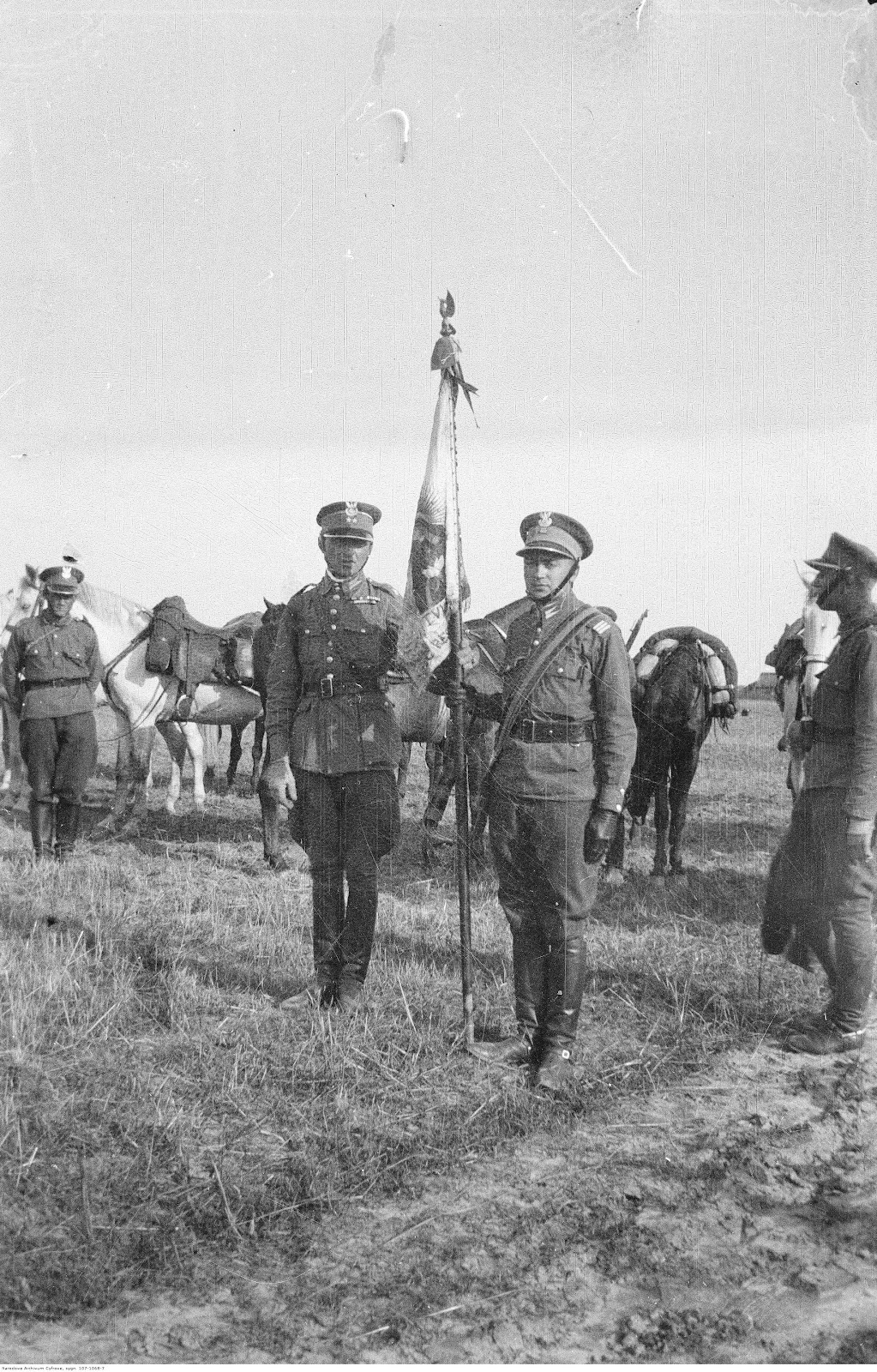
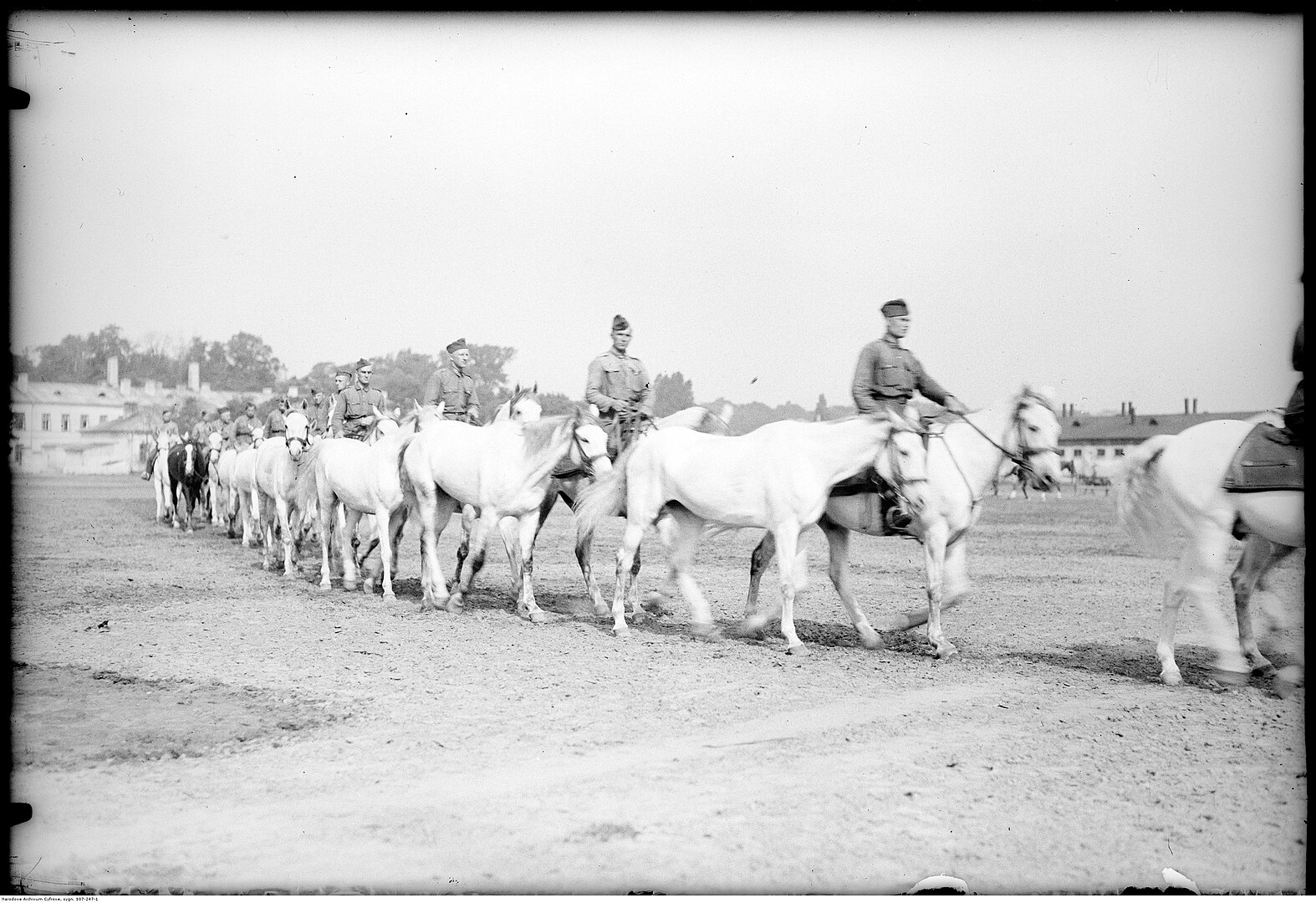
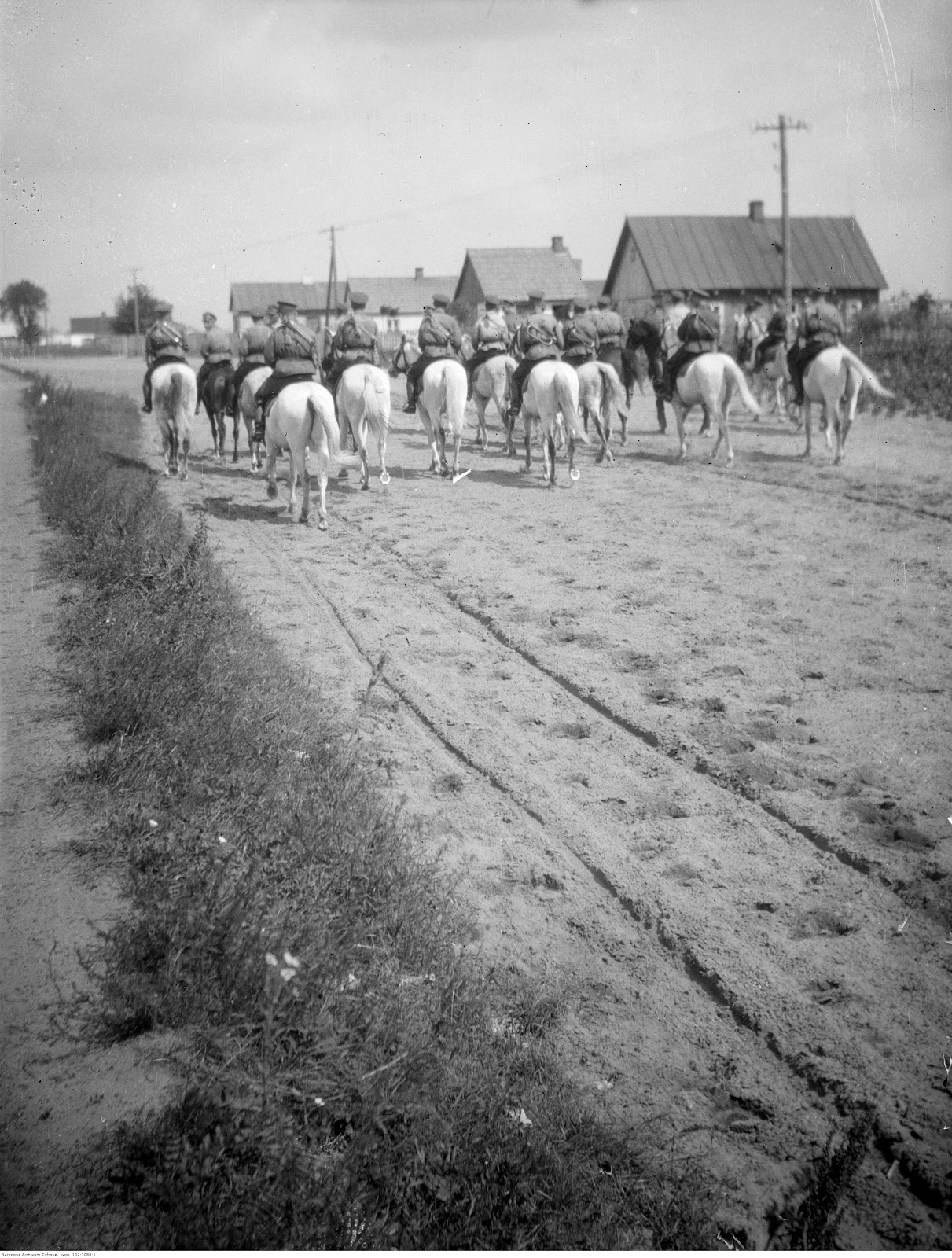
7th Uhlan cavalry regiment , 11th Uhlan cavalry regiment,  1st Mounted Rifle cavalry regiment, 1st Light Cavalry regiment etc  went over to Pilsudski's side and participated in the putsch on the 12th of May. More regiments would arrive during the 13th and onward. 


After 3 days of hard fighting between Polish soldiers and many shenanigans inflicted upon the governmental forces by various  socialist & communist organizations and parties supporting Pisludski (like delaying pro-goverment troops transports from Poznan ) Pilsudski and his colonels broke the will to fight of the president Wojciechowski  and the  Witos goverment.  Circa 150 pro-goverment officers and soldiers and circa 400 civilians were killed by the putschists. 


Finally, Poland would change during the next 13 years of her existence.  Pilsudski was not like Franco of Spain, Pinochet in Chile, or Mussolini in Italy. He had no precise ideology nor concept for his realm.
Until his death in 1935 marshal Pilsudski ruled Poland as the de facto dictator, as the lord and master of life and death of the citizens. He was idealized by the media and any criticism was brutally punished by state (from courts to police and  the officer corps - all fanatically obedient to their commander-in-chief).
In 1931 Polish author Tadeusz Dolega-Mostowicz described the political elites of that post-1926 'colonel' state in his immortal novel -Kariera Nikodema Dyzmy

In 1939 Pilsudski's colonels and their Sanacja aka 2nd Republic all came to a crashing end when the territory of Polish Republic was violated and borders invaded by Nazi Germany (and Slovakia) on September 1, and by USSR on September 17. Poland was completely conquered and partitioned between Germany, USSR & Lithuania by October 10th 1939. 

Valete

Wednesday, August 9, 2023

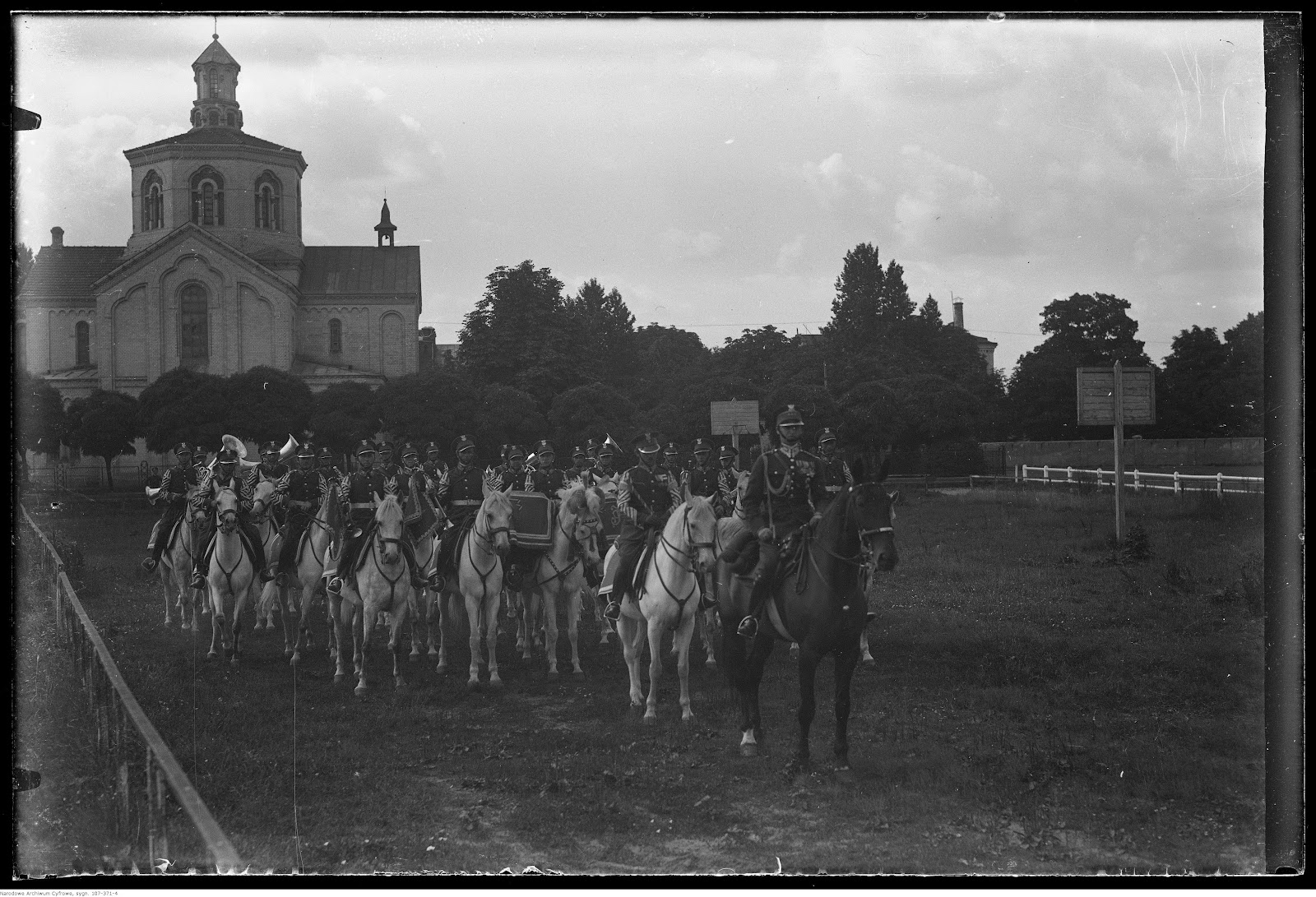
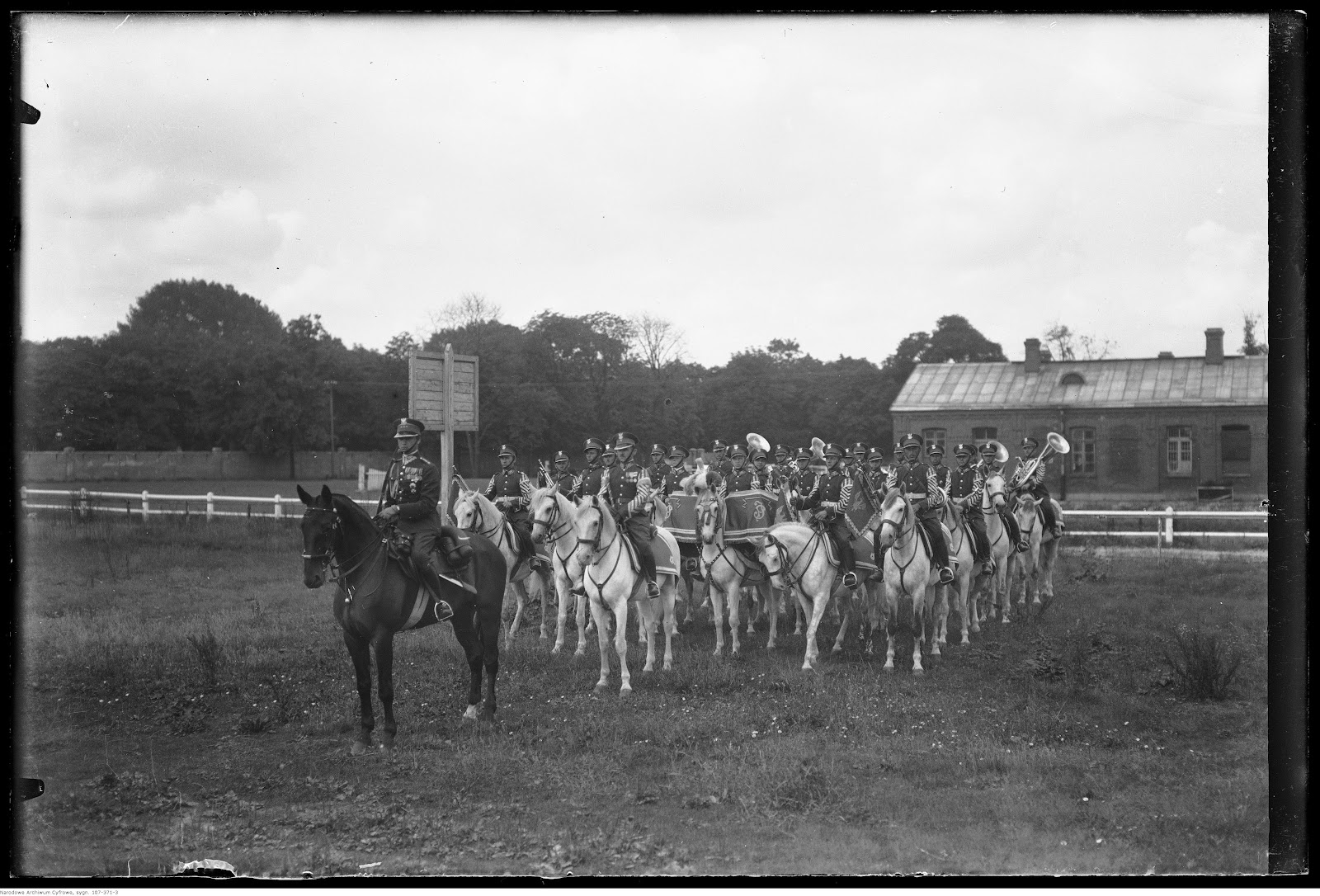
Polish Cavalry Trumpeters - interwar period I

 Salvete Omnes,


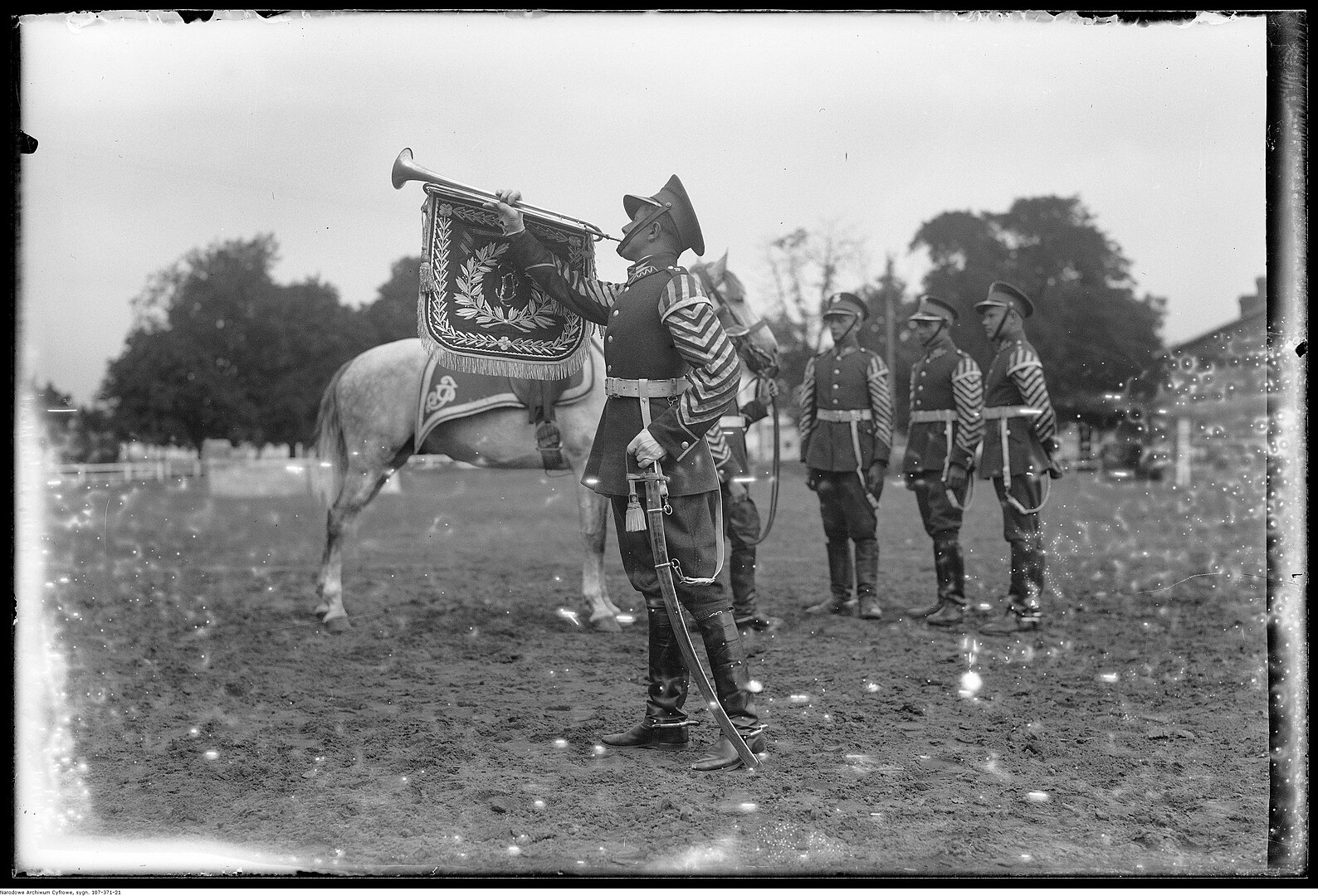
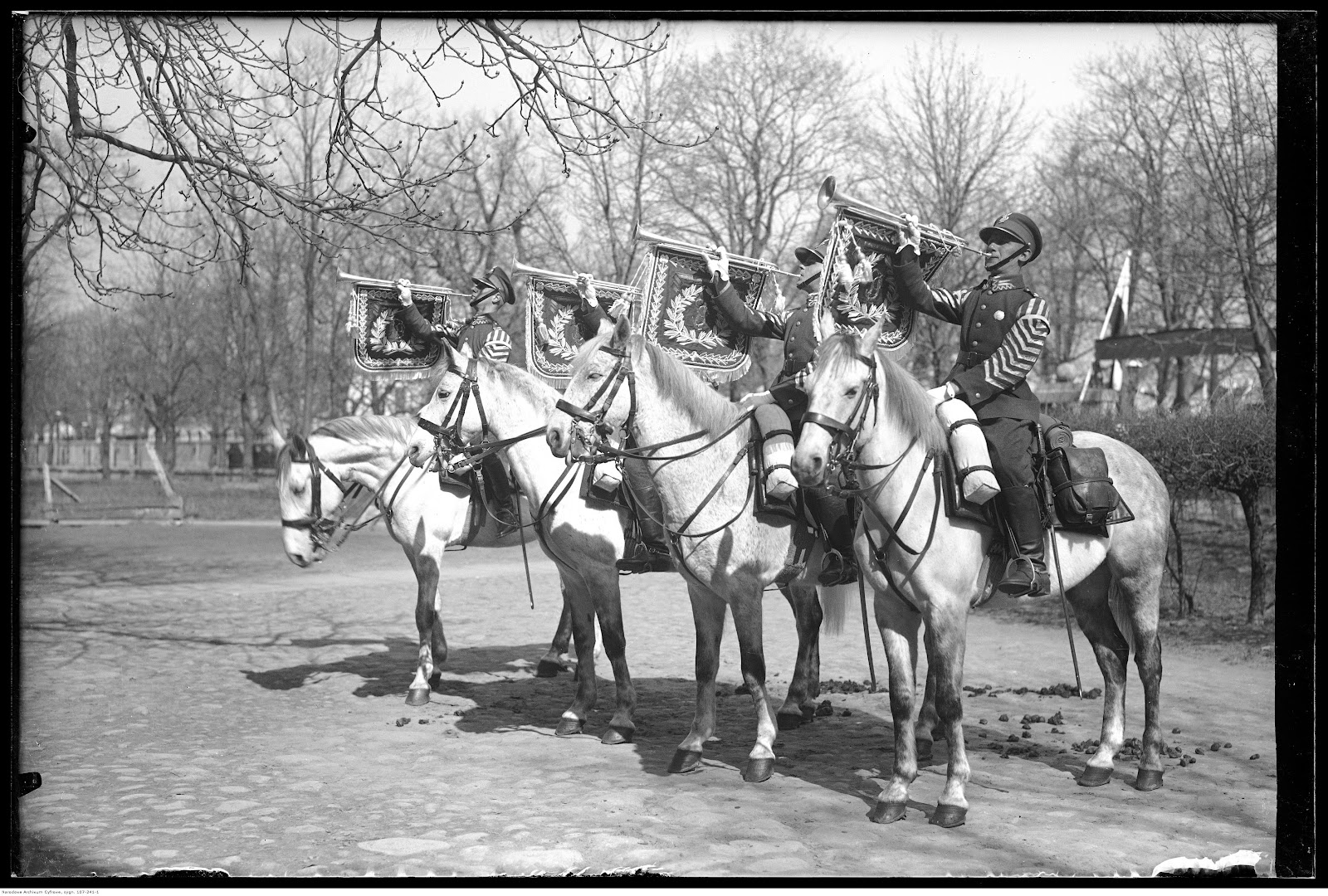
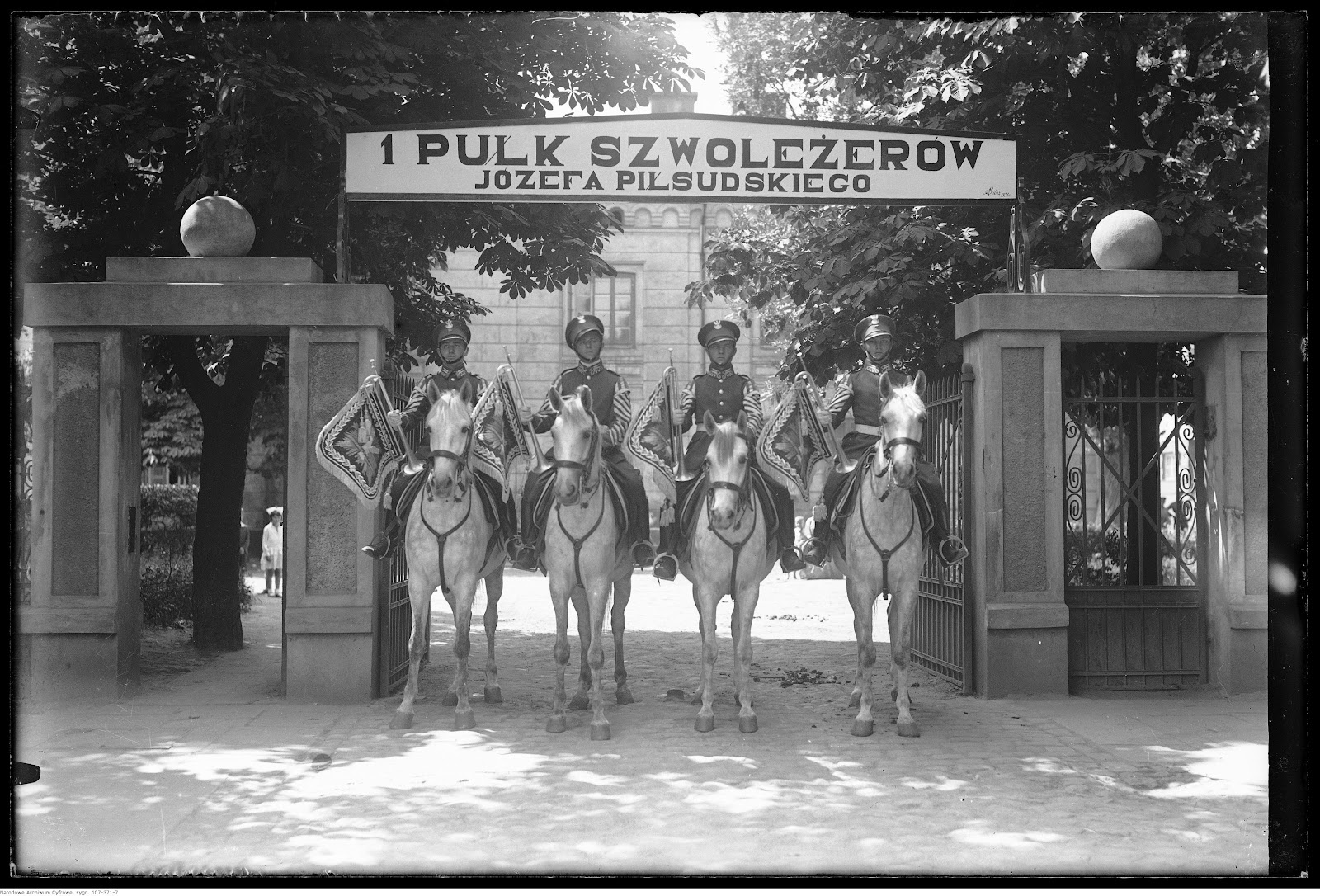
a short summer entry - Polish cavalry trumpeters from 1930 in the lenses of Narcyz Witczak-Witaczynski, nota bene tortured by German gestapo at Pawiak German prison and eventually murdered by the Germans at the KL Majdanek  (concentration camp) in March 1943.


Today the cavalry trumpeters of the 1st szwolezer (chevau-leger ) regiment - famous for the 1918-20 wars for independence, and for bravery and heroism during the 1939 campaign.


note that the Polish cavalry arm of the Polish army, organized from nothing in 1918, developed training, uniforms, weapons, and especially for this blog theme their own saddles for soldiers and officers and horse tack during the 1920s and 1930s, encouraged  horse breeding and remount service(my great grandfathers bred horses for Polish cavalry)  and training centers (Grudziadz) for the cavalry regiments and horse artillery etc - it was all short of miraculous, I think.
The invasion of Nazi Germany with allies along along the Soviet Union occupation after 17th September 1939, and the partition of occupied Poland between Germany and Soviet Union 1939-41, and the later war in the east 1941-45 ended Polish equestrian & cavalry traditions in Polish lands. And the Communist goverment extinguished any cavalry regiments and traditions within the Polish Army 1949-89, in the late 1940s, after the end of World War II.  


Valete.

Wednesday, February 16, 2022

Swit panstwa polskiego et inne linki

 Salvete Omnes,

[in Polish]

chciałbym podzielić się z Wami, drodzy surferzy netowi, paroma linkami do książek i rozmów/wywiadów, które ostatnio przesłuchałem czy czytałem.
największa moja ciekawość wzbudził wykład profesora Andrzeja Buko - academia  , FBC , lubimy czytać - związany z książka 'Świt państwa polskiego'  , który odbył się na portalu Archeologia Żywa i był/jest zatytułowany Rywale rodu Piastów? - Andrzej Buko | KONTEKST 51. - czytałem książki profesora 'Bodzia' (2015), 'The Archaeology of Early Medieval Poland' (2008) i coś tam artykułów - eg ten artykuł.  Szczerze polecam ten wykład plus pytania i odpowiedzi po prezentacji tematu. Nota bene nie słuchałem jeszcze Q&A o Rusi Kijowskiej z Dariuszem Dąbrowskim (świetna 2-tomowa praca tego historyka o Danielu Romanowiczu), ani spotkania z Bartoszem Kotnym et al.  o kulturze przeworskiej, ani też o Scytach,Władcach Wielkiego Stepu. Może nadrobię -:)

Teraz pokłusujemy do XVII wieku, i tamże na portalu Ostoja Tradycji można posłuchać spotkań i gawędy dwóch Jacków - Komudy i Bartosiaka (Strategy and Future) na tematy wojenne (eg ta gawęda) i wojenno poboczne staropolskie, a wszystko w kontekście nadchodzącej premiery filmu fabularnego zrealizowanego  min z funduszy zebranych od darczyńców i Fundacji Ulanów króla Jana etc- premiera owego 'Diabla Łańcuckiego' ma się odbyć na Zamku w Krasiczynie 19 lutego, AD 2022. 

Na portalu Strategy and Future Jacek Bartosiak rozmawia z prof. Andrzejem Nowakiem, wielkim historykiem polskim i autorem serii Dzieje Polski  - temat: Rzeczpospolita, od Piastów po współczesność. 

Na portalu Historia Bez Mitów - rozmowa o micie Piłsudskiego w PRL. - gdzie Brunon Różycki i Tomasz Ciołkowski rozmawiają o meandrach mitu Marszałka. Wcześniej, bo we wrześniu 2021 odbyły się:  rozmowa mości Brunona z prof. Lechem Wyszczelskim na temat zaniedbań J. Piłsudskiego w wojsku miedzy 1926-35., i rozmowa tych dwóch przedmówców na temat Marszałka jako wojskowego 1914-23.

I na koniec raport z Fundacji Adarma - jako, że biją w teorbany, kotły i bębny wojny media a politycy jakby na Ukrainie nie toczyla sie wojna of 2014 a Białoruś z 'utajnionej przyjaciółki' stała się wrogiem RPIII - to warto poczytać krytykę projektu reformy Wojska Polskiego przygotowanej przez Strategy & Future jako Armia Nowego Wzoru. Krytyka jest arcy-konstruktywna, obfituje w odwołania do historii wojskowości, w tym oczywiście staropolskiej.

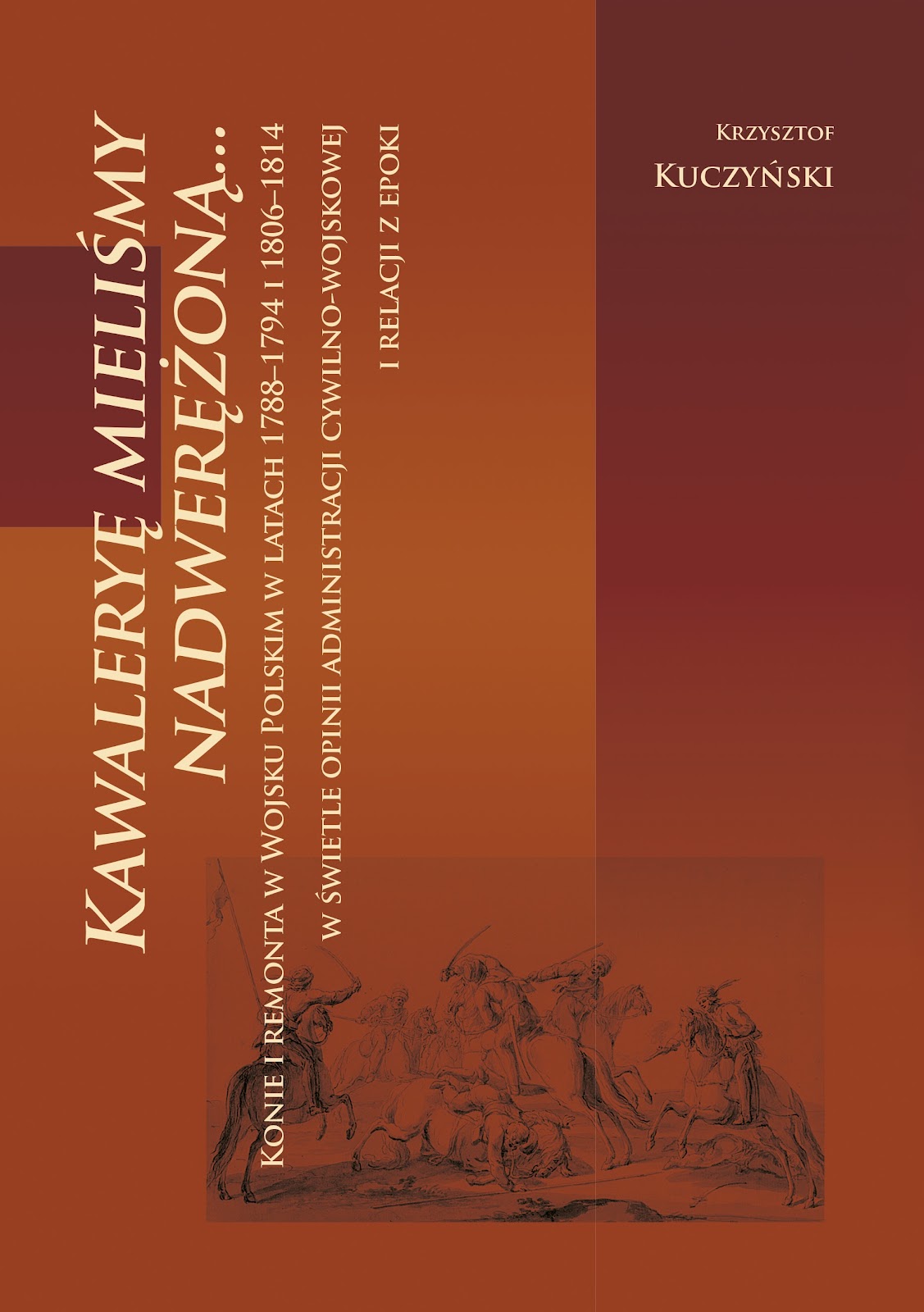
Z końskich tematowa w literaturze przedmiotu to dodam, że Infort Editions wydało prace  'KAWALERYĘ MIELIŚMY NADWERĘŻONĄ...' o koniach kawalerii epoki 1788-94 i 1806-14, Autorem jest Krzysztof Kuczyński, a prace można znaleźć tutaj.
Zresztą praca Mariusza Sampa o wojnie Mieszka I z Wieletami pt Brenna 991AD, tez mogłaby wzbudzić zainteresowanie, jak i krotkie wprowadzenie do Połowców Węgierskich Jakuba Juszyńskiego.

miłego czytania a słuchania etc


Valete

Saturday, November 13, 2021

Equestrian Monuments in Polish squares and Pilsudski

 Salvete Omnes,

Yesterday Polish Republic - Respublica Poloniae - and Poles from around the world celebrated the Independence Day - November 11.

I would like to corral some of equestrian monuments dedicated to a man who has become, since 1937AD, the embodiment of the restored Polish  Independence - no matte what political spectrum.
Hence, the equestrian monuments to Jozef Pilsudski and Polish Independence in Poland-
I think one of the most interesting monuments is the one from Katowice, capital of Upper Silesia voivodeship.


It was paid for by the Polish Silesian citizens and sculpted in America by a fellow Slav, Croatian artist Antun Augustincic, in 1930s- the sculpture w was never delivered to Poland as II World War erupted and after the 1945 the Polish Soviet puppet state (than a satellite-state after 1956 ) was active destroying monuments to Pilsudski - like the one in Komarow  near Ostrowia Mazowiecka. Augustincic's monument went into his museum in then Yugoslavia, and finally arrived in Poland in 1991.


There used to be a monument in Tarnopol, now Ukraine, in the then Sobieski Square, but it was destroyed by the Soviets.


In Komarow, near Ostrowia Mazowiecka, there was a monument sculpted by Antoni Pług-Mierzewski, survived the Nazi and Soviet invasion and destruction,  and the Polish Communists destroyed it in 1954; and it was rebuilt in 1999 and can be admired and celebrated.


Then the old royal city of Lublin (the famous site of many monumental and important events in Polish history) also has a monument - sculpted Krzysztof Skora and erected in the restored Republic in the Lublin's Lithuanian Square (the symbol of the Polish-Lithuanian Union) in 2001 .


Town of Nysa, Lower Silesia voivodeship, has a monument sculpted by  Marian Molenda.


Town of Nowy Sacz, Malopolskie voivodeship, has a monument too, erected  in 2018 - sculpted by Stanislaw Szwechowicz.


City of Rzeszow, Podkarpackie voivodeship, has had the monument erected recently, in 2018- sculpted by Wladyslaw Dudek.

and so yesterday in many Polish cities and towns marches were held to commemorated the Independence Day - the largest in Warsaw, the capital of Poland. Interestingly or sadly  the current mayor of the Poland's capital city  was against the march, and went to a local court to prohibit it on some spurious grounds, and the Polish government stepped in and made the march of some 150,000 happy citizens possible. All the main stream media (MSM) from the US, UK, Canada were calling Polish citizens marching right-wing and nationalists. No MSM called these marches patriotic and the Polish marchers the patriots... Is patriotism or the warm and kind feeling towards one's country history, tradition,  national colors and emblems a crime in the light of those for-profit media agencies and outlets?

Long live Polish Independence.


I took a screen from the MN stream yesterday -

and yesterday there was the Veterans Day in the US - I hope all had a peaceful one.

Valete

Saturday, July 3, 2021

Przewodnik dla kupujących konie

Salve,

[Polish]
następna, w tabunie mego bloga,  pozycja polska z XIX wieku w temacie kupowania koni jak interesujące a praktyczne dzieło o budowie konia dla jeźdźców i miłośników hipologii. Pisane to dzieło także ku przestrodze dla kupujących konie, jako ze byla to epoka rostrucharzy- czyli handlarzy koni.


Przewodnik dla kupujących konie : czyli zbiór zasad do ocenienia zalet, wad, oraz wieku konia z cech jego zewnętrznych, dla uniknienia strat i zawodów z nadużyć nierzetelnych handlarzy pochodzących.''


Na tę pracę natrafiłem poprzez książkę Maji Łozińskiej pt ''W ziemianskim dworze, Codziennosc, obyczaje, swieta, zabawy.'' Warszawa 2011 (PWN), gdzie na stronach 167-172 podejmuje autorka tematykę koni wśród mieszkańców dworków, dworów i pałaców jak dawna, podzielona zaborami Polska czy w II Rzeczpospolitej długa i szeroka.'


Książkę-przewodnik z poradami dla kupujących konie napisał  warszawski magister nauk weterynaryjnych i praktyk weterynarii imć Piotr Seifmann a wydal ja księgarz Aleksander Nowolecki w 1858 roku. Książkę można ściągnąć ze strony  Centralnej Biblioteki Rolniczej.
Myślę, ze jeszcze będę do niej wracał.

Ciekawostka, maleńki konik ciągnący wózek


Przy okazji,

w swej książce, pani Maja cytuje,strony 168-9, relacje Mariana Rosco-Bogadanowicza o trzydniowych targach końskich w Tarnopolu(wtedy zabór austriacki)  ogromnego spotkania kupców i kupujących zaczynającego się w czwartą niedziele Wielkiego Postu, relacja pochodzi z lat 80tych XIX wiecznej Polski pod zaborami:


     ''Bliskość granicy rosyjskiej sprawiała, że przybywali kupcy rosyjscy i przyprowadzali, jeśli już nie pełnej krwi rysaki ze stad Orlowow, to przynajmniej  tak zwane 'rysiaste' (półkrwi), mało co  ustępujące tamtym z prezencji jak tez typowego długiego kłusa.[..] 


Na [..] olbrzymim targowisku rozkładali się kupcy z pośledniejszymi końmi, reklamujący swój towar od samego rana  głośnym pokrzykiwaniem i przepędzaniem po wąskiej, a tłokiem jeszcze zawężonej drodze wokol placu. 
Arystokracja końska tymczasem nie opuszczała stajen  i robiła staranna do późniejszej prezentacji tualete[1]. Konie te - zaprzęgowe w wózkach, a wierzchowce pod chłopcami stajennymi - ukazywały się dopiero kolo południa, gdy już co dystyngowansi koniarze pojawili się przed Puntschertem[2]''

[1] orginalna pisownia
[2] hotel w Tarnopolu


a na koniec monumentalny pomnik Józefa Piłsudskiego w Tarnopolu, zniszczony przez sowieckie władze  jesienią AD 1939 (co w dobie niszczenia pomników na dzikim Zachodzie to nas już nie zadziwi)


valete