Showing posts with label battle of Orsza 1514. Show all posts

Monday, September 8, 2025

Winged Hussar Companion from Lapanow ca. 1652AD

 Salvete Omnes,


it has been some time since I posted anything related to the winged hussar.

Pacem Aeternam


One of my friends, Damian Loj, sent me this link to an epitaph from Lapanow's church of Saint Bartholomew the Apostle (founded in 1529 by Mikolaj Lapka, and rebuilt in 1614 by judge (iudex castri) Marcin of Lutoslaw Lutoslawski).


The Lapanow Parish was an affluent one in the end of the XVI century,  consisting of the following villages - Lapanow, Lutomierz, Kepanow, Grab, Boczow, Brzozowa, Ubrzez, Kobylec, Wola Wieruska, Janiszowka, Wolica and Wola Grabska. There were three church patrons - Hieronim Lapka, Stanislaw Lubomirski ,Druzyna coat of arms, and Jan Dabrowski (1596).

The stone plaque depicts a pious winged hussar companion Marcin Lapka (1599-1652). Lapka's wife Marianna Lipska from Lipia had the epitaph carved circa 1652. The plaque was mounted on the outside of the church and only in 2012 was moved into the church. The linked site says that the archives from 1748 noted four such epitaphs existing at that time, unfortunately only two survived the winds of times, albeit the second one from 1666AD contains only the lower part of the epitaph. The second epitaph, Andrzej Werbski Pilawa coat of arms,  was also funded by his wife Magdalena nee Lyszkowska  and their children.


 we can see clearly the hussar lance, his 3/4 plate armor, hussar helmet or shishak, and l-type Polish sabre


The plaque also contains the winged hussar's coat of arm - in my opinion it is Szreniawa, 


and not a Druzyna (also called Szreniwa bez Krzyza - Szreniawa without a Cross), as they declare on the website linked above. But on the other hand, Druzyna is part of Szreniawa lore, and some historians, following Jan Dlugosz  consider Druzyna to have been the original coat of arms out of which the Szreniawa developed or originated. Bartosz Paprocki, the author of the monumental Polish heraldry, listed the Lapka family as both Szreniawa and Druzyna (circa 1543), later writers like Niesiecki and Boniecki say that Lapka were of Druzyna coat of arms.


Lapanow has also a very unusual monument to the farmer peasants killed, 5 killed and 10 gravely wounded protesters,  by the government's forces on June 5, 1932,  which makes this column a symbol of our Polish peasant farmers struggle for the peasant rights during the 2nd Polish Republic.


ps
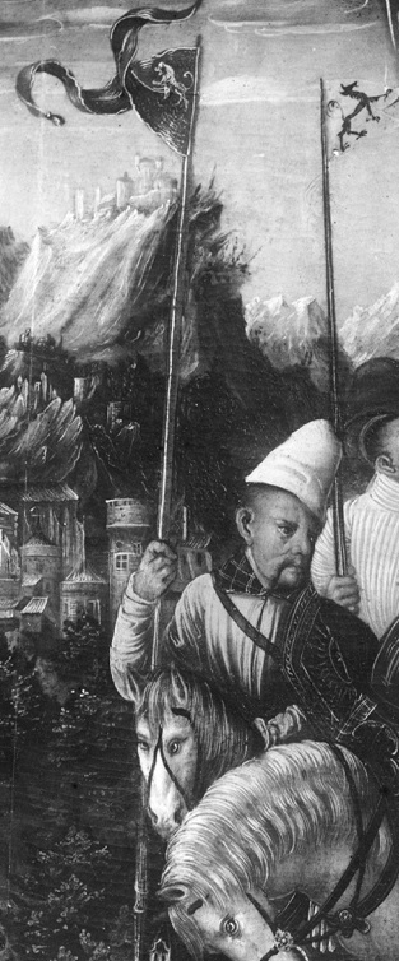
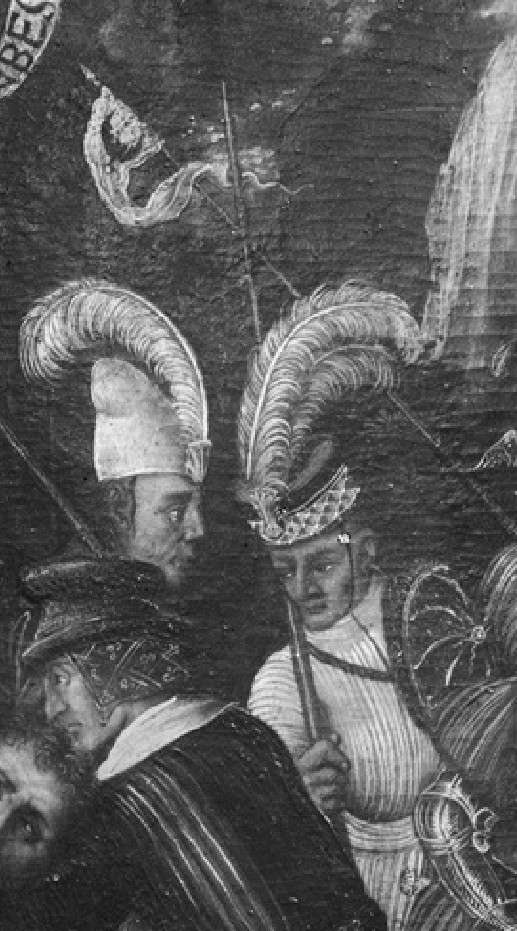
8th of September is also the anniversary of the 2nd battle of Orsza(Orsha) - a huge  and victorious battle for the Polish-Lithuanian realm against the Muscovy ( the Orsha battle was won but the war did not result in recovering Smolensk, the gateway to Lithuanian Duchy).

Valete

Monday, September 11, 2023

Orsza 1514 - a 1515AD woodcut

 Salvete omnes,

so yet another anniversary of 9-11 -  in the link my old post about my experiences that day - pacem aeternam to all the victims 

a quick return to the Orsza battle and victory over the Muscovy ..


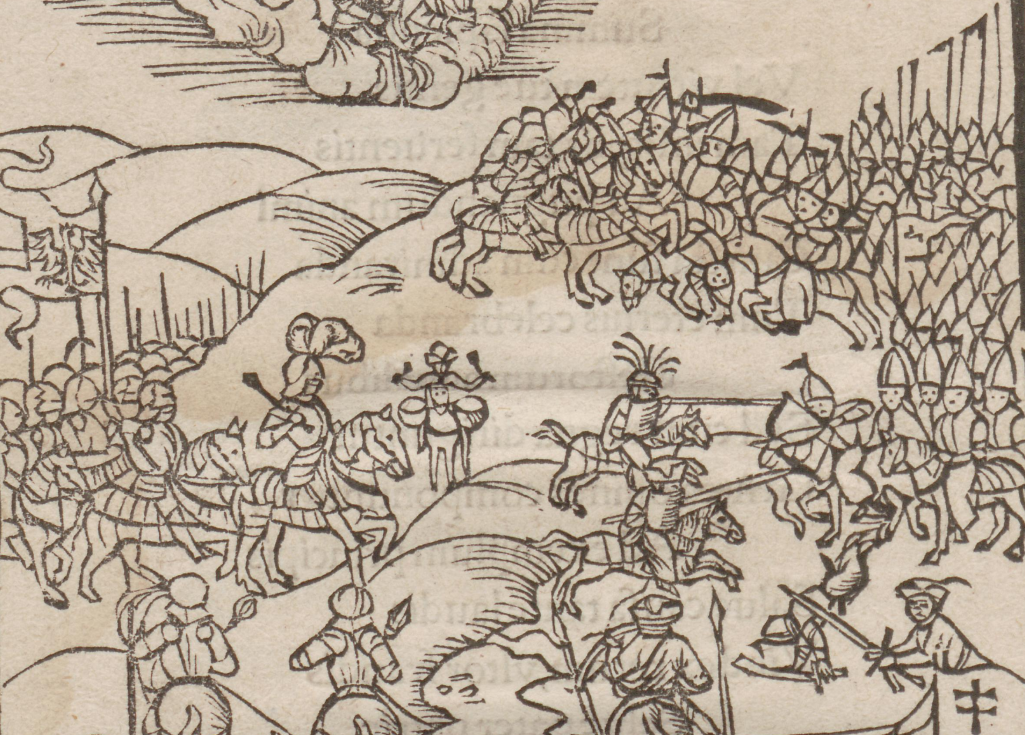
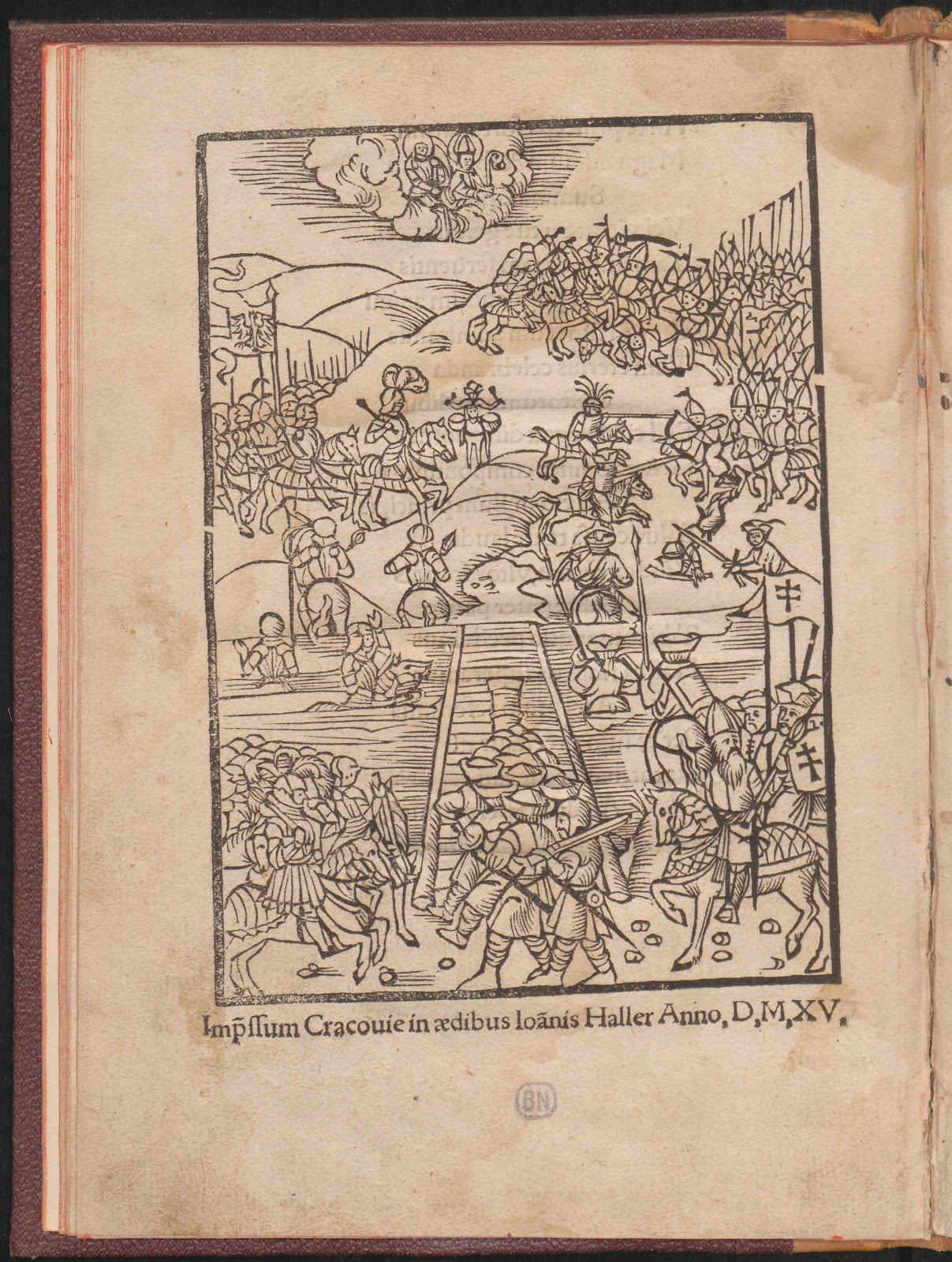
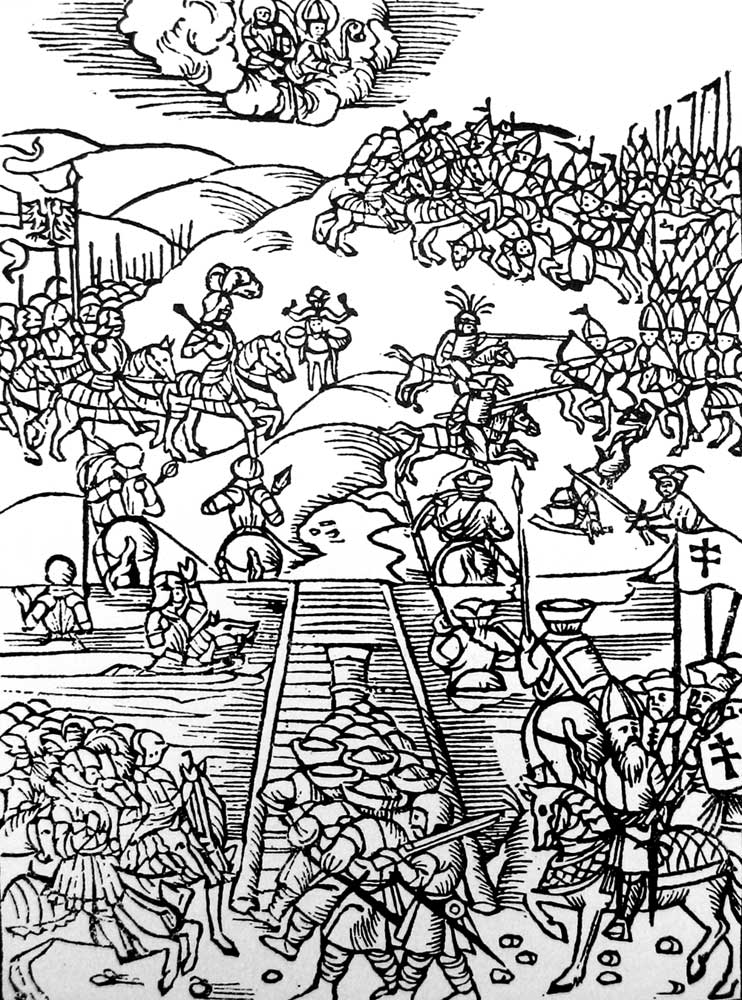
 so probably the very first image of the battle appeared in 1515AD in printed  poem written by Andrzej Krzycki, Kotwicz coat of arms, who was queen Barbara Zapolya secretary, Ad Divum Sigismundum Poloniae regem et Magnum Ducem Lithuaniae semper invictum post partam de Moskis victoriam Andree Krziczki inclite coniugis sue Cancelarii carmen, Kraków 1515, 


the printer was Jan Haller and they published  this poem in Krakow, then the capital of the Polish state.

perhaps Polish commander hetman Janusz Swierczowski, Traby coat of arms, on the left while horsemen of opposing armies are dueling between the armies 


there is a horse drummer next to the Polish hetman

emjoy

valete

Friday, September 8, 2023

Orsza 1514-2023 arms and armor of non-hussars

 Salvete Omnes


I have written a little bit about the Orsza 1514 battle - today's is yet another anniversary - and various aspects of Polish military of the early XVI century, mostly from the  early winged hussars position in that battle and the greater conflict.. Today we are going to move away from the famous Orsza battle painting towards various sources from the period, predating the famous Warsaw National Museum piece.

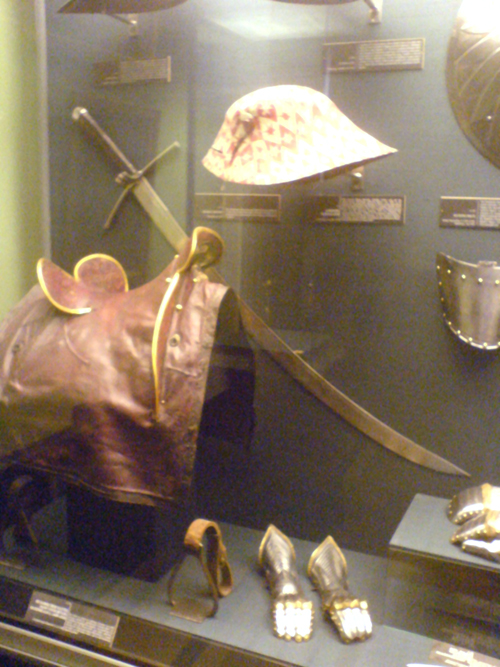
So during this period the principal side arm of the Polish knights, men-at-arms, horsemen and of some infantrymen  still was a straight sword - 


Salet helmet, plate armor, 'messer sword' and long sword

many infantrymen were using a German messer - of the longer or shorter blade, with sabre-like hilt - like the one from Vienna


Speaking about the infantry they were using crossbows 


and early arquebus firearms. 


Rotameisters and aristocrats, men-at-arms and knights would have worn plate armor of the older, Gothic or Italian style, or the newer Maximilian's style - like this St. George in Durer's print


Non-hussar Polish cavalry could have looked more like the Durer's knight from his famous engraving

Cornelis Van Dalem's painted version

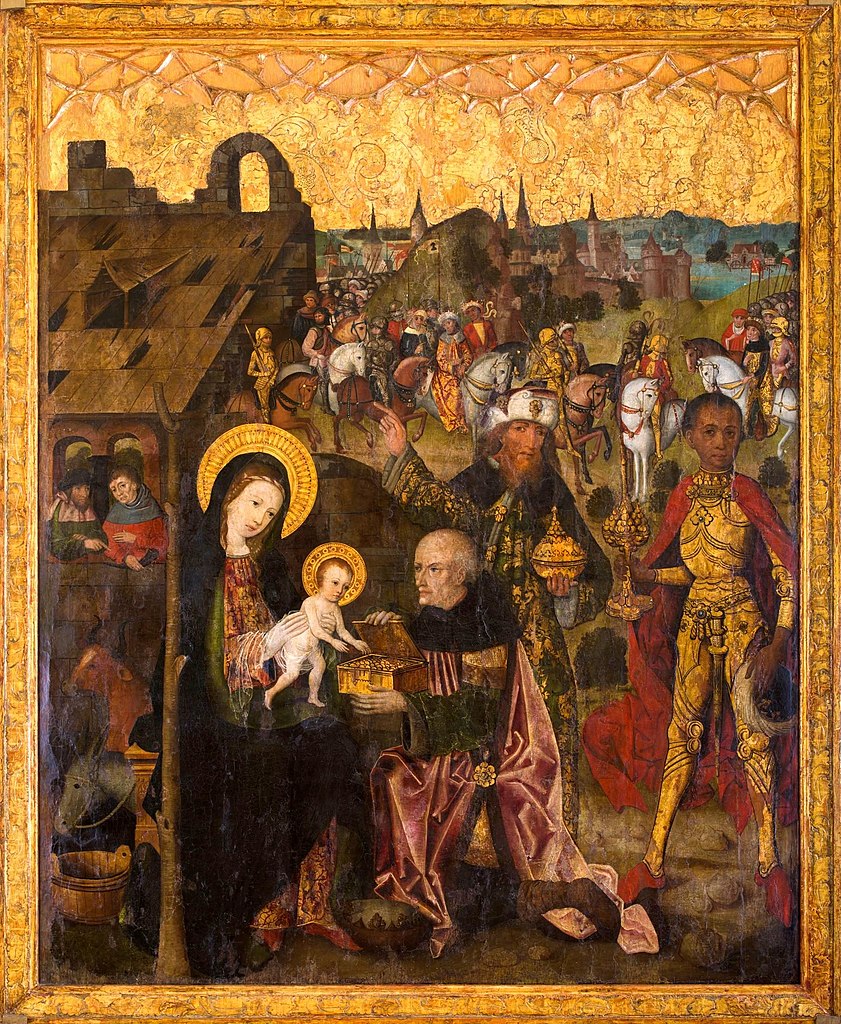
There is a tempera panel painting from a Krakow workshop  circa 1500, now held at the National Museum at Poznan, that shows various knights and men-at-arms in plate of this turn of the century period.


enjoy - to be continued 

by the way you can revisit my post about the Behem Codex - to see some period iconography from the Royal Court.

Valete
Sunday, October 30, 2022

Michal Lancz aka Lantz from Kitzingen & Krakow 'Rac' Hussars

 Salvete,


the story of the early hussars is closely intertwined with the stradioti aka stradiots.
Costume, weapons - lance, shield, and a sword - and agile horses.
In our  Polish Crown realms the  name 'stradioti' was not adopted nor used in general, but instead the Polish kings and noble masters of those horsemen-for-hire used names like the 'Rac'[1] when hiring a horseman who was armed with a lance and the so called Balkan shield (rectangular shield with the upper left right er elongated upwards. He was to have an agile horse, a curved sword and perhaps a horseman's axe.  In sum, a rather light cavalry type of a horseman.

In the surviving Polish archives (thanks to the Germans who were busy torching them in 1939-45) there are some references to the early 'Rac' hussars prior to the 1500Ad, but the written evidence keeps on growing after 1500AD and proves that Rac hussars or horsemen armed and fighting in the 'Rac' manner were popular type of cavalry in the Crown army and private armies too, however the growth is rather weakly reflected in the period iconography.


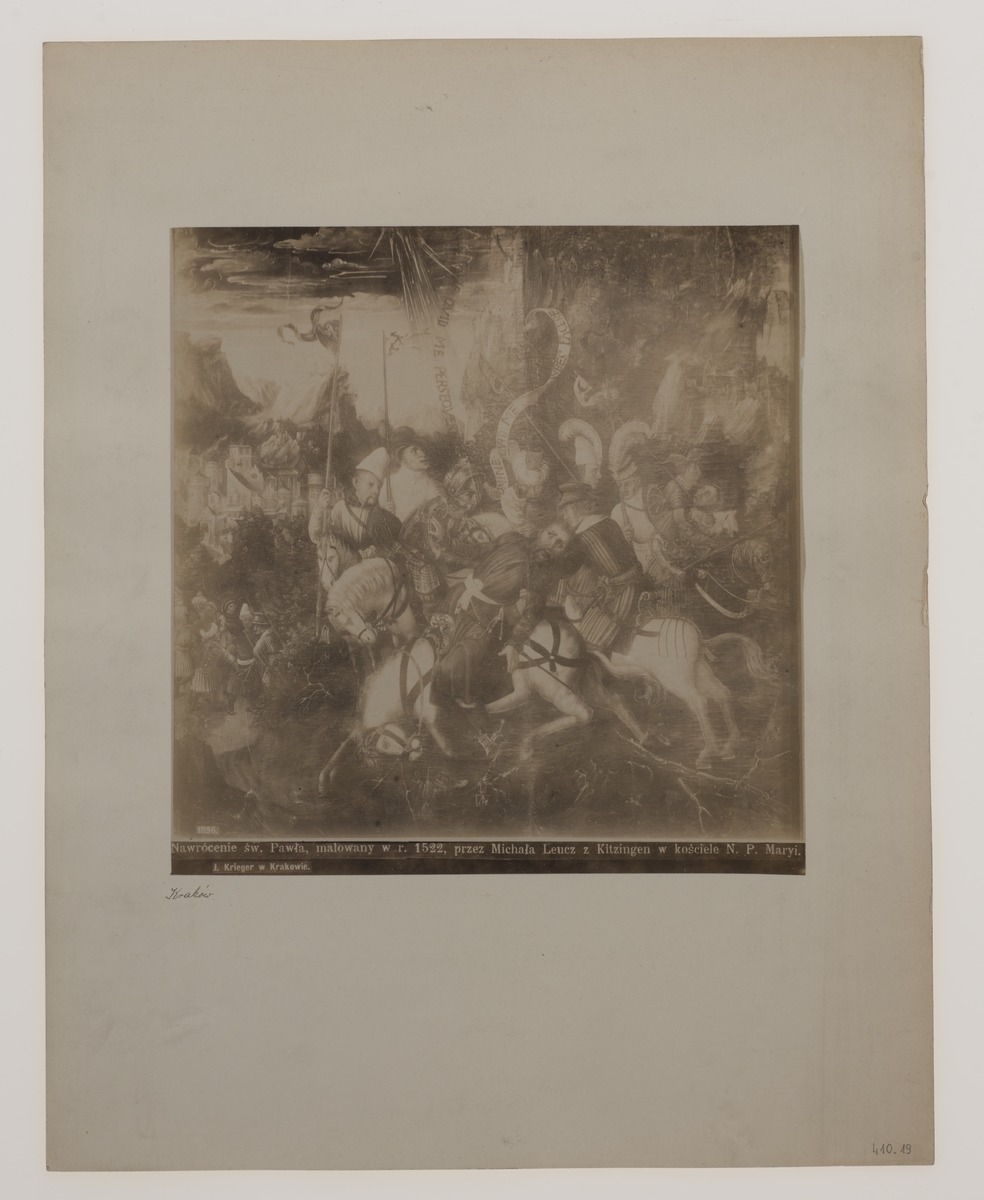
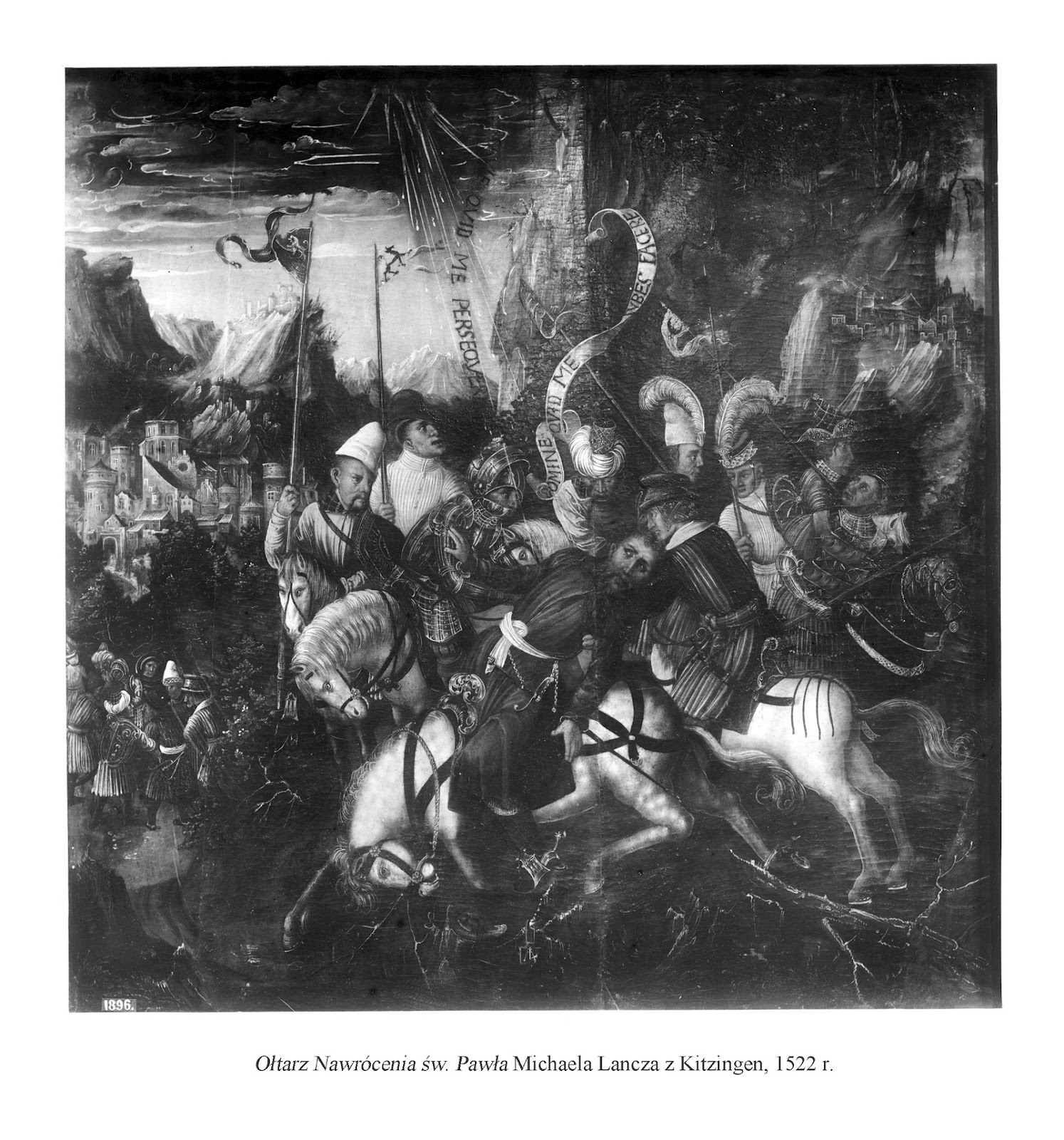
One of those rare iconographic sources could have been a small painting by Michal (Michael) Lancz vel Lantz(1470-1523Ad) painted circa 1522AD from Krakow.  It was titled Conversion of Saint Paul (see this wiki article) and was the central part of a small altar retabulum located at the Saint Mary's Basilica in Krakow (Cracow). The painting was looted  by the Germans in 1940AD. Since 1940AD the painting has been missing and is listed as a part of the Polish artworks taken by the Nazi Germany etc during the World War II.
Thanks to the photographs by Ignacy Krieger (taken in the last quarter of the XIX century) and by Stanislaw Kolowca in 1940, and Adolf Guzik also in 1940 we know how the painting looked and was placed in the retabulum and the chapel. Based on these photos the painting was reconstructed by Zofia Kaszowska from the Fine Art Academy in Krakow in 2003AD.


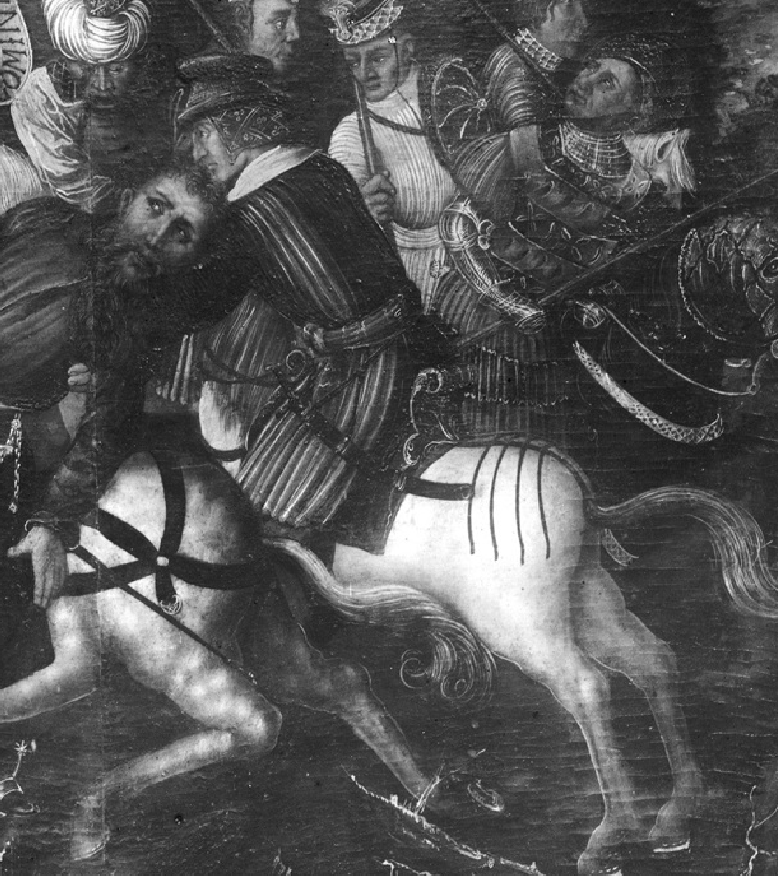
Here is more of the painting details - 

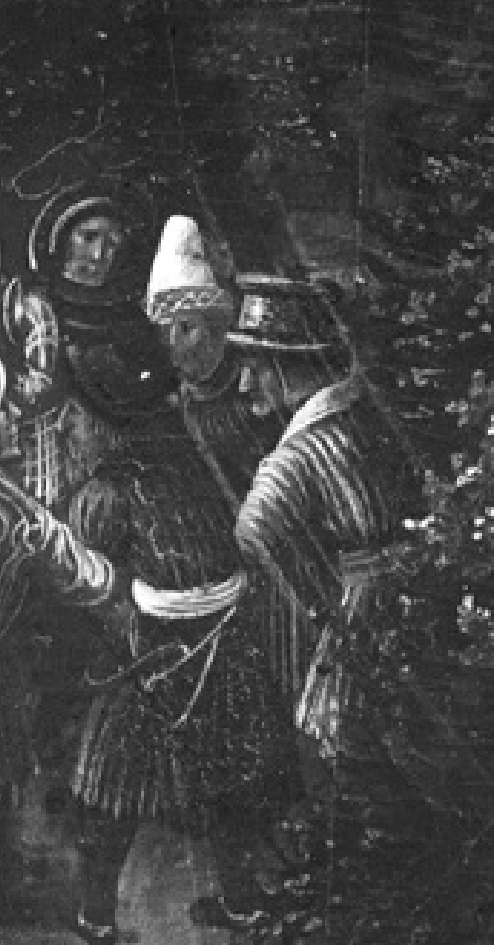
a typical Rac hussar wearing a soft kaftan, curved sword and tall hat. Horse with a typical horse tack.

a Rac hussar with a featherless tall felt hat and lance, another lance armed hussar behind him

early Rac hussars with lances and shields, tall hats with feathers
early Rac hussars in soft kaftans and tall hat


Valete 


ps
[1]

Rac comes from from the Old Polish name for Serbians in general or from the name for the town of Ras, in Serbia, whose citizen were called Rascines already in the XII century AD,  while in Hungary the Serbian lands were called Racorszag, the land of Racs in the 1400s. See Grabarczyk .

Thursday, September 8, 2022

Orsza 1514 -2022

 Salvete Omnes,


and as every year on this day we commemorate the 2nd battle of Orsza 1514AD.


King Zygmunt I Stary (Sigismund I the Old) and his army commanded by prince Konstanty Ostrogski, Ostrogski coat of arms, and hetman Janusz Swierczowski, Traby coat of arms,  won resounding victory over grand prince Vasili III and his  Muscovite army(augmented with the Tatar allied and converted recently into Orthodox Christianity).


 Our king lost Smolensk, his largest and most needed fortress, to Vasili III and his commander Lithuanian Michal Glinski in July 1514- perhaps a 80 thousand strong Muscovy army , with camp followers, servants and retainers, invaded our king's eastern realms in the Spring of 1514Ad.
Polish historian and prolific researcher of this period  prof. Marek Plewczynski puts some blame on the Lithuanian commander prince Ostrogski, who perhaps like the ancient Cuncator tried the tactic of  hanging on  awaiting for the expected large number of Polish Crown troops, but before they could have come to the rescue the fortress of Smolensk fell to mighty charm or magic spelled by prince Glinski. The stronghold at Orsza, however,  defended by Jan Spargeld with resolve and under much less assault than Smolensk withstood perhaps a weaker Muscovite siege and repelled their assaults until king's army came in August.

Having gathered his nobles, retainer, mercenaries and volunteers it was at Minsk in Grand Duchy of Lithuania where our king reviewed his armies before seeing them go east: 


 - 15 thousand Duchy horse - commanded by prince Ostrogski and prince Jerzy Hercules Radziwill.


 - 14 thousand crown horse (heavy lancers, early hussars and light horse armed with crossbows and bows and some early firearms perhaps, and 3 thousand crown  infantry -  this Crown contingent was commanded by Swierzowski, 

 -2,5 thousand court horse, and several thousand of Polish lords private volunteer retinues- commanded by Wojciech Sempolinski, Nalecz coat of arms.

Perhaps as many as 38 thousand horse and men including unknown number of guns, plus many thousands of camp followers and retainers had gathered at Minsk to march onto river and seek a return of captured Smolensk to our lord king's domain.

King decided to stay with 4 thousand soldiers at the fortified camp at Borysow, on the Berezina River, while the combined king's army marched having forded Berezina and forced, with artillery fire,  the vanguard of the Muscovite army to quit the vicinity of Berysow on August 27 and then the royal army marched after the enemy toward Orsza and Dnieper. On the 28 of August Polish vanguard led by Jan Pilecki defeated a Muscovite rearguard ambush, and our royal army continued on the Orsza Road to the Bobr River crossing where at this ford another action was fought, where starost of Rohatyn Jan Boratynski defeated 2000 strong Muscovite command and took their commander, voivode Kiselich(?), prisoner.  During another action by the royal vanguard rotmaister (Captain) Jan Sapieha's command defeated  another Muscovy command.
Voivode Ivan Chelyadnin, who now commanded the entire Muscovy grand prince's field army in this area of war, aided in his command by prince Mikhail Golitza and prince Dymitr Bulgakov withdrew across the Dnieper keen on attacking royal army during their fording of the big river, always a difficult and dangerous maneuver in warfare  for the fording command.

  and so the opposite armies stood, then during the night of 7-8th of September our royal army engineers built two wooden pontoon bridges, on top of wooden large kegs,  the whole royal army crossed fast and the battle joined and the men with lances, bows and arrows, swords, matchlocks and halberds, pikes and axes in hand went to achieve victory.


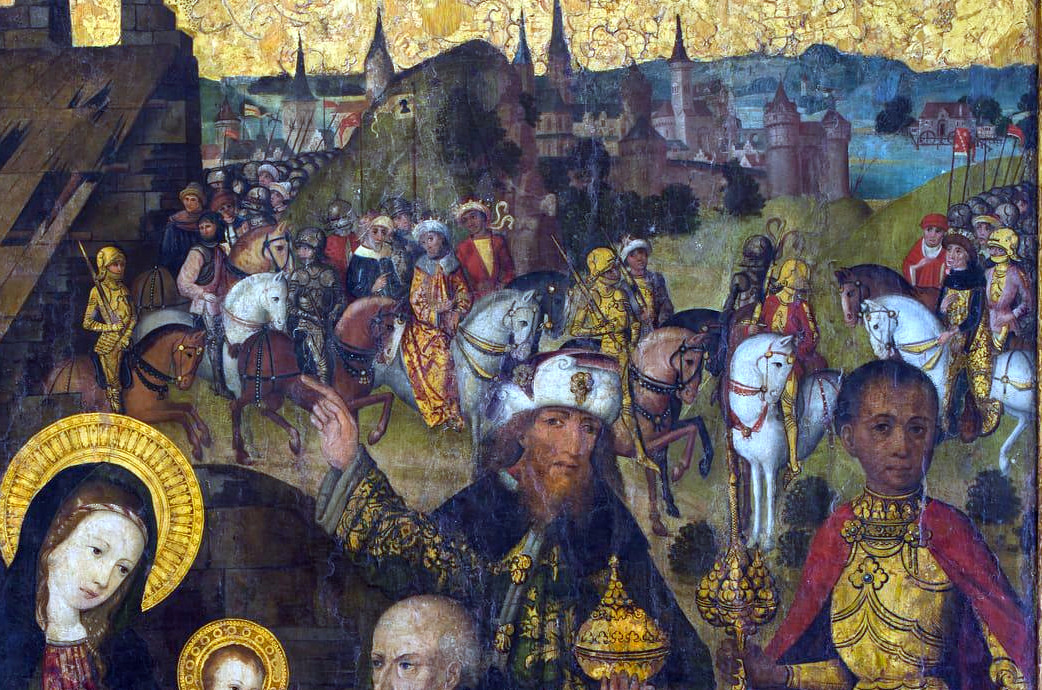
Ostrogski has become the field victor of this battle  - being supposedly the commander of the combined echelons of the royal army - and here we see this brave Ruthenian as he was seen in this 1540s? Radziwill family painting - now at the Polish National Museum at Warsaw.


Polish heavy lance cavalry and their commander 


early hussars


so let us celebrate with some imagery from the period or near in time period, with some caveat  - our king was unable to recover hie lost city of Smolensk, the most important fortress in that part of  the Grand Duchy of Lithuanian Ukrainian (borderland) zone with the Grand Duchy of Muscovy. It took   circa100 years and a decisive action by our king's namesake Zygmunt, but the III (and his grandson), who campaigned in Grand Duchy of Muscovy and captured Smolensk. 


 ..


Valete