Showing posts with label Bronze Age horse. Show all posts

Wednesday, July 5, 2023

Sintashta chariot - the dawn of horse chariotry

 Salvete Omnes,


a short entry today, it is summer time - but lots of viewing pleasure, I daresay.


So here are two very interesting, exciting and unusual videos completely breaking and doing away with the narrative of the Bronze Age chariot being a Middle Eastern invention and practice. The presentations are about the Sintashta (Petrovka) culture of the present southern Russia and northern Kazakhstan, their chariots and the chariot reconstructions via experimental archaeology. 

In the chronological order:


The Sintashta culture - earliest chariots, fortified settlements and bronze metallurgy.  


EXARC - The Bronze Age Chariot of the Sintashta-Petrovka Period


Therefore we are able to see perhaps the very first charioteers from XXI century BC (2100-1800BC) . These were the possible inventors of driving harness and the very vehicle itself, plus the second most epochal aspect - horse breeding, selections and training for war (both archaeologists from the Torun presentation (late May conference in Torun, Poland) have their pages on academia, where, along with another seasoned archaeologist dr Andrey Epimakhov's work.

Ivan Semyan

Igor Chechushkov

Andrey Epimakhov

Upon registering on Academia you can download and then can study detailed explanation of the harness reconstruction, training, equipment, and surviving artefacts etc via their articles and books . 

Nota bene, in 1999 dr Anthony , after  the1995 carbon dating of the Sintashta discoveries, published his paper - The Sintashta Genesis. 


In light of last 40 years of research (eg the most important may be the English language work by prof. David Anthony's 'The Horse, the Wheel and the Language' already discussed here ) and many years of the experimental archaeology then the publications like Osprey Military Publishing: 

'The Mycenaeans' (2005).

'Bronze Age War Chariot' (2006) and some others must be corrected as it contains false information and thus is a 'garbage.'

Arkaim/Arkhaim today 


Valete

Sunday, June 18, 2023

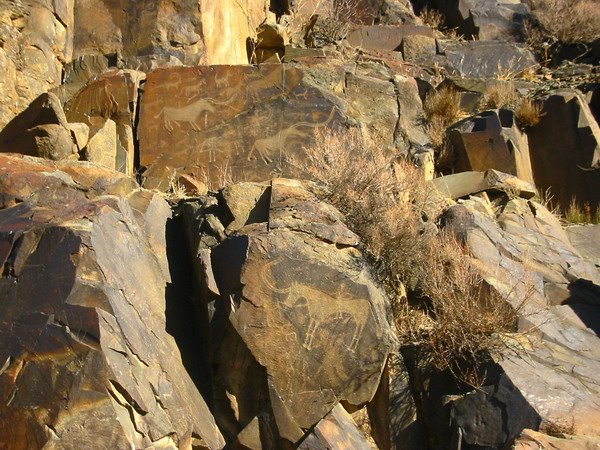
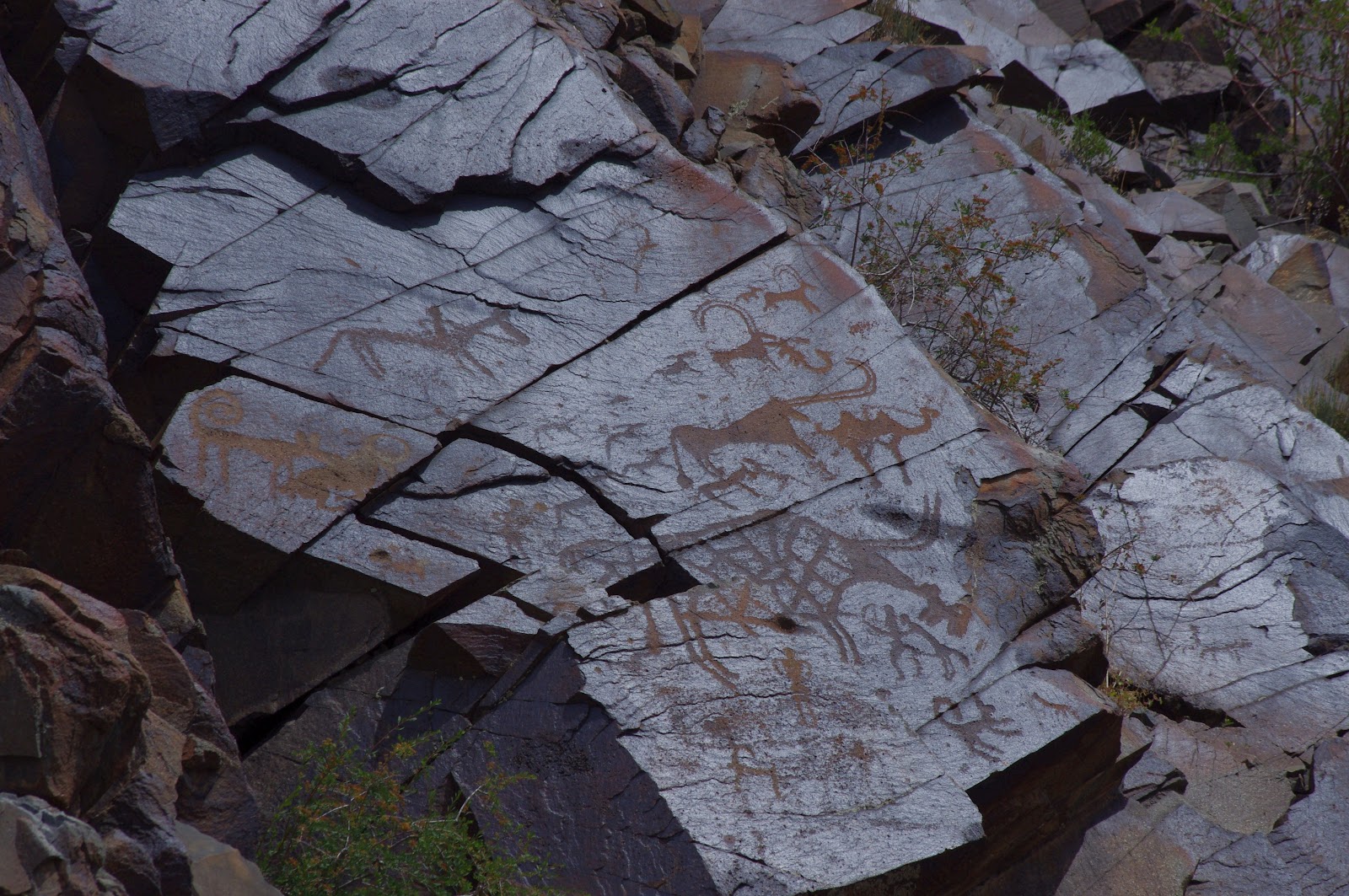
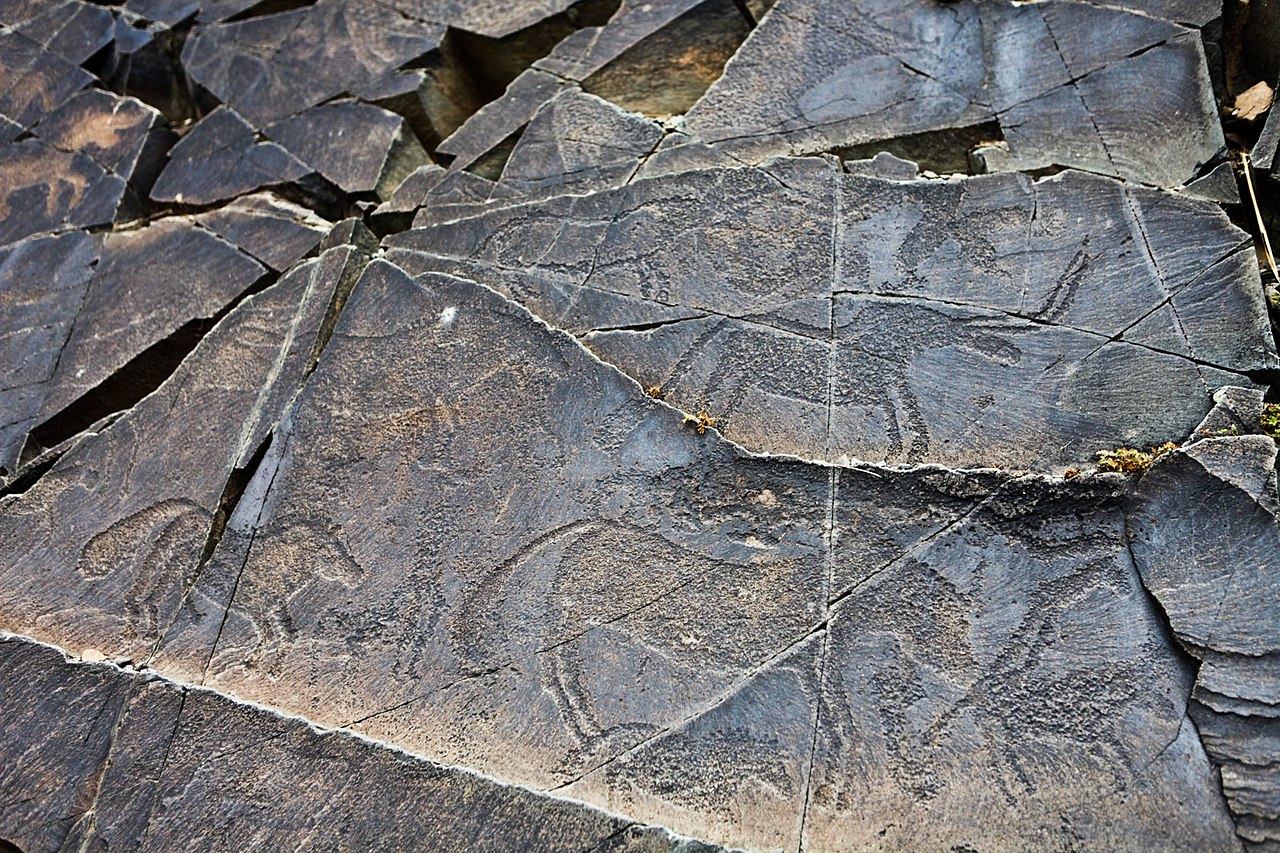
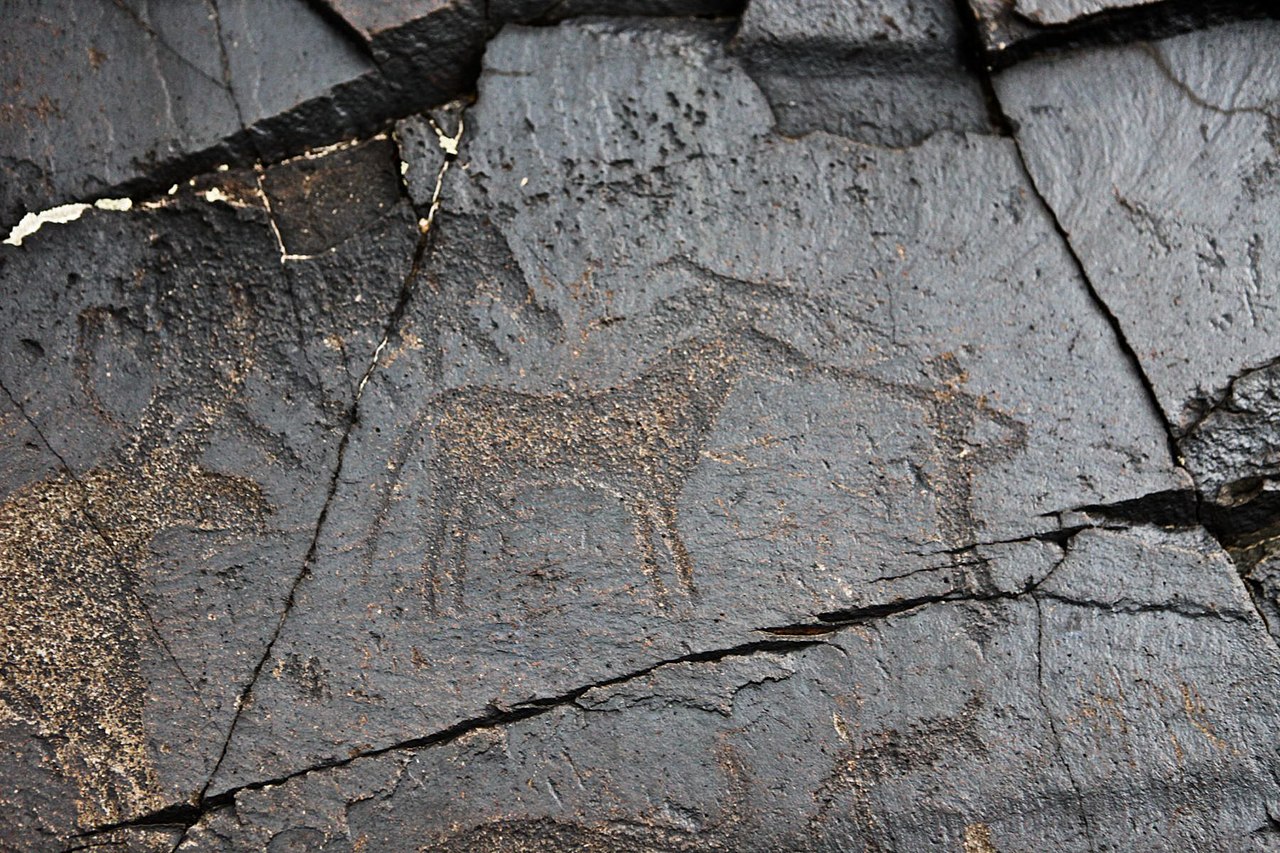
Tamgaly Petroglyphs - dawn of domesticated horse

 Salvete Omnes,


we will lope to the Central Asian heartlands - the Kazakhstan's heartlands where many rock art sites have been discovered and some studied and preserved in a kind of open air museums.


In Zhetysu or Semirechye ( the Seven Rivers) region of Kazakhstan there is this area known as Tamgaly/Tanbaly Reserve Museum and UNESCO site (Tamgaly River valley)- here, in this article from academia - authored by S. Sapatayev & B. Zheleznyakov cum J. Biver - you can view the geography (maps) of the region and  one fine rendering  of the Bronze Age petroglyphs from Tamgaly. First studied and described by a Soviet archaeologist A.G. Maksimova in 1958, these petroglyphs and associated archaeological sites have been studied by scientists. 


The Sun-beams & Sun-heads from the mentioned article - associated wit the Andronovo culture, and burial grounds belonging to the Andronovo culture (Atasu and Semirechye variants of  the Andronovo culture within Kazakhstan)the  have been found in this area.


Poznan Adam Mickiewicz University researcher prof. Andrzej Rozwadowski's article on the shamanic characteristics of these petroglyphs - more interesting aspects & examples  of this rock art in the Eurasian context can be found on the professor's  academia page (linked in his last name) 


you have many more available for viewing and downloading from wiki commons eg


a horse with ibex? horns like in the later Scythian/Saka kurgan burials eg Berel kurgans reconstructed by prof. Krym Altynbekov


Apart from horses and humans there are deer, cattle, argali (mountain sheep), camels and sacred motives etc.

Valete


Friday, August 19, 2022

Karpacka Troja

 Salvete  Omnes,

[in Polish]


Natrafiłem na ciekawa stronę o filmach robionych przez Zdzisław Cozac  - Archeo-Film
Tamże, wśród innych arcyciekawych produkcji, jest film pt Trzcinica - Karpacka Troja.
Dotyczy on skansenu archeologicznego w Trzcinicy kolo Jasła na Podkarpaciu, gdzie archeolodzy od lat prowadzą badania nad zabytkami pozostawionymi przez mieszkańców  tego miejsca żyjącymi na tamtym terenie od wczesnej epoki Brązu po epokę wczesnych Piastów (kiedy gród został zniszczony , domniemanie przez Piastów) , zaś pomysłodawcą stworzenia miejsca eksperymentalnej archeologii i żywej historii był Jan Gancarski (wideo z prezentacją tutaj).


Mnie zaciekawił pokazany w filmie zaprzęg kultury Epoki Brązu(21-22 minuta)  Ottomány-Füzesabony, a także zdjęcia z dioramy w skansenie, gdzie także pokazany jest wóz z Epoki Brązu  ciągnięty przez konia powożonego z ziemi przez idącego obok właściciela(? ).
Być może będę miał więcej informacji na temat rekonstrukcji tego zaprzęgu od badaczy ze skansenu, do których to zwróciłem się z prośbą o materiały etc.


na tym zdjęciu nieco widać te uprząż końska i sposób zaczepienia uprzęży do wozu


Rekonstrukcja domów przysłupowych 1650-1350 l. p.n.e. na terenie Skansenu Archeologicznego w Trzcinicy 

artykuł o broni z epoki Brązu i wczesnej epoki Żelaza - academia.  Katalog zbiorów z epoki Brązu i Żelaza z muzeum w Sanoku.

Valete

Tuesday, March 6, 2018

Chariots of the Kingdom of Two Lands

Salvete Omnes,
Spring is here, Baroque horses and Polish winged hussars can wait for another day, so today we are traveling to the New Kingdom of Two Lands or Aegyptus ( the ancient Greek name for the kingdom of the Nile valley, used in Odyssey by Homer,  orAigyptos - Αἴγυπτος ).
these energetic ancient Hellenes had settled as traders and mercenary soldiers in Egypt in Late Bronze Age/early Iron Age, and eventually after the Macedonian conquest of the Achaemenid satrapy of Egypt they had ruled the land of the Nile for centuries  before the Octavian's Roman legions came and put an end to the Macedonian dynasty and ushered in 6 centuries of Roman rule, eventually the conversion to Christianity and the birth of Coptic  nation  ( presently in danger of being obliterated in post-1952  Republic of Egypt that is mostly Arabic and Islamic in culture and religion; nota bene I know quite of few Copts in the US and Canada and hear  their stories).
Just a little post to signal my interest (and hopefully yours, dear traveler) in the beauty of the chariot horse and the chariot itself, instruments of war from before.
so here below we have a few images of great warrior  pharaoh of the XIX Dynasty  Ramses II (who was a fair-haired or reddish-blond man, as his surviving mummy shows  ) war exploits and leadership,


always most resplendent and bellicose when riding in his chariot, with his trusted bows and arrows in hand, javelins and deadly  khopesh sword resting near.


also this beauty of sumptuous art, for it is a ring with chariot horses from Ramses II (held at the Louvre Museum in Paris, France)

enjoy
ps
all images are from Wiki Commons