Showing posts with label Leliwa coat of arms. Show all posts

Saturday, August 22, 2026

Obertyn AD1531

 Salvete Omnes,


on August 22, 1531 Polish Crown hetman Jan Tarnowski, Leliwa coat of arms,  defeated the Moldavian army under despot Petru(Peter) Rares at Obertyn (since 1945 in Soviet Ukraine, then since 1991 in Ukraine). 


Early Polish hussars charged lance in hand along with the more armored men-at-arms, while their flanks were protected by a wagenburg defended by infantry with fireams & crossbows and camp servants with bows and crossbows. 


woodcut from Marcin Bielski
Polish Crown regained Pokutia(Pokucie) region, which would be part of Poland until 1772. Returned to Poland in 1919, lost in 1939.


Hail and fame to the victors and pacem aeternam!

Valete

Friday, June 30, 2023

Mikolaj Hieronim Sieniawski, Leliwa Coat of Arms

 Salvee Omnes,


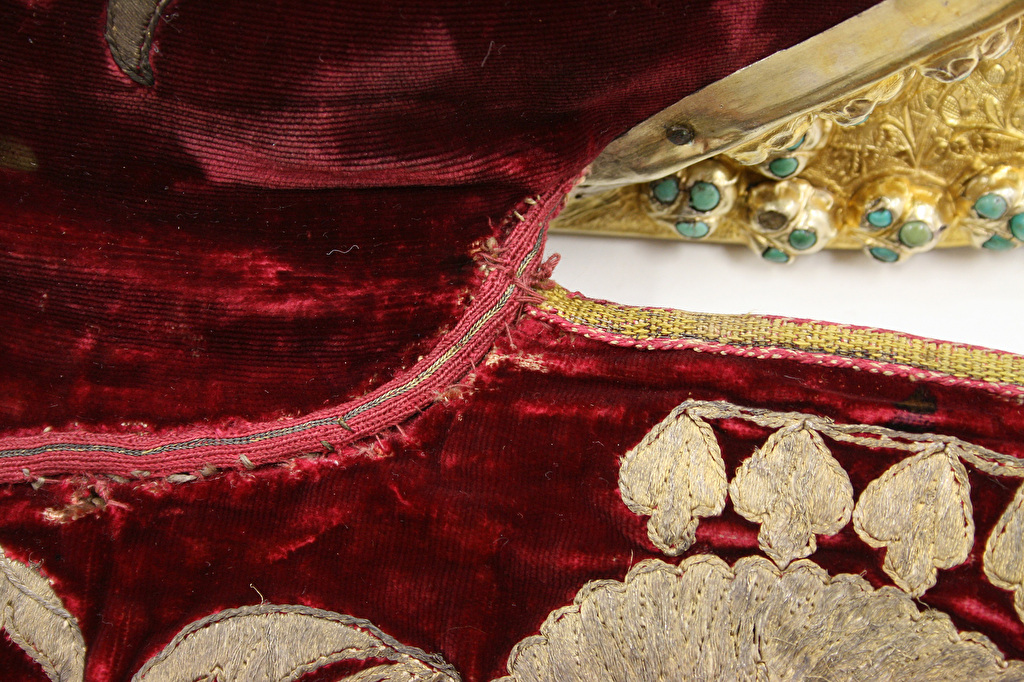
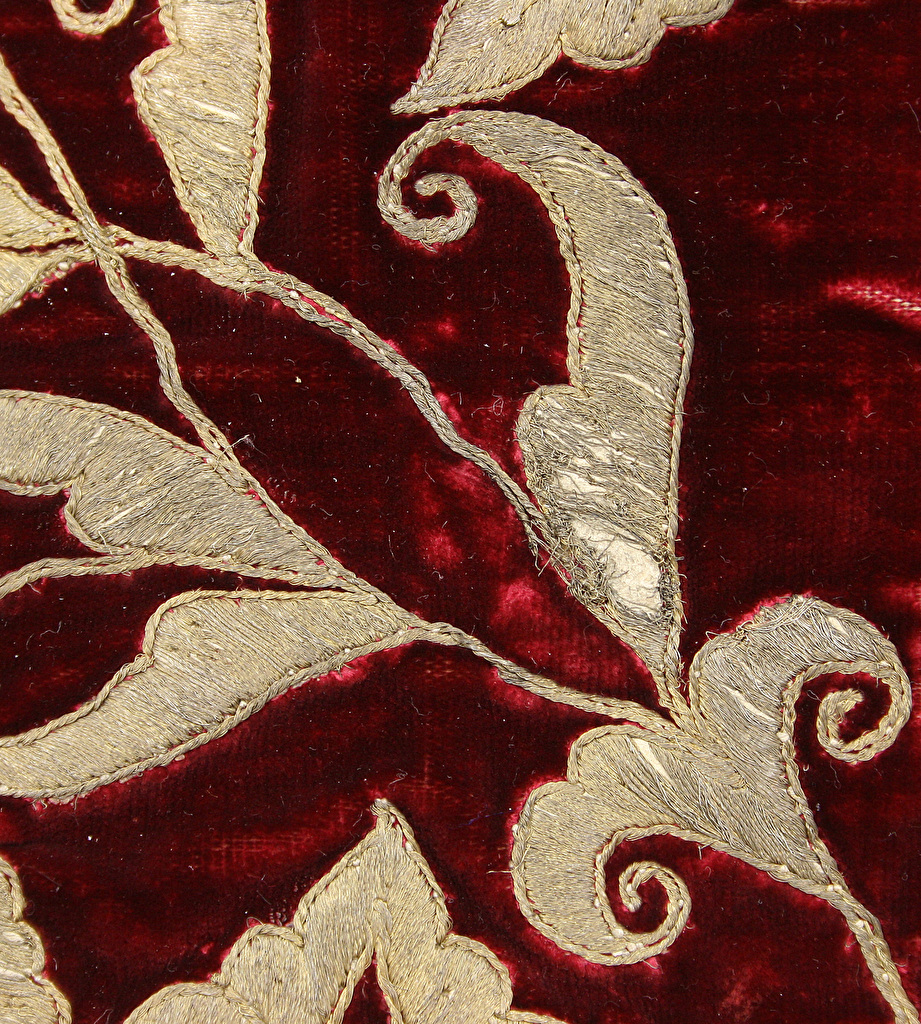
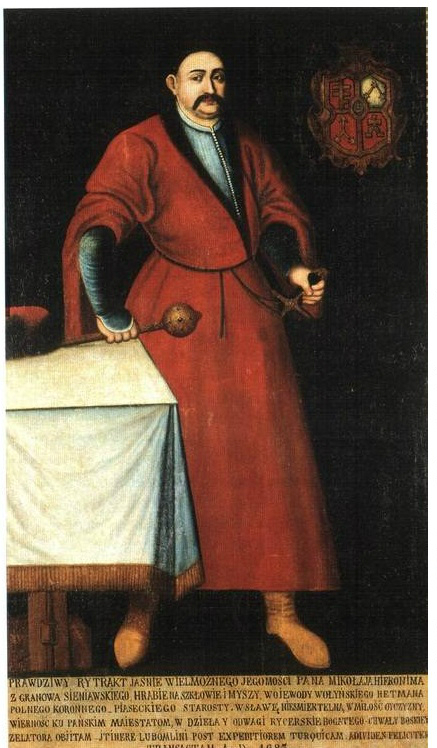
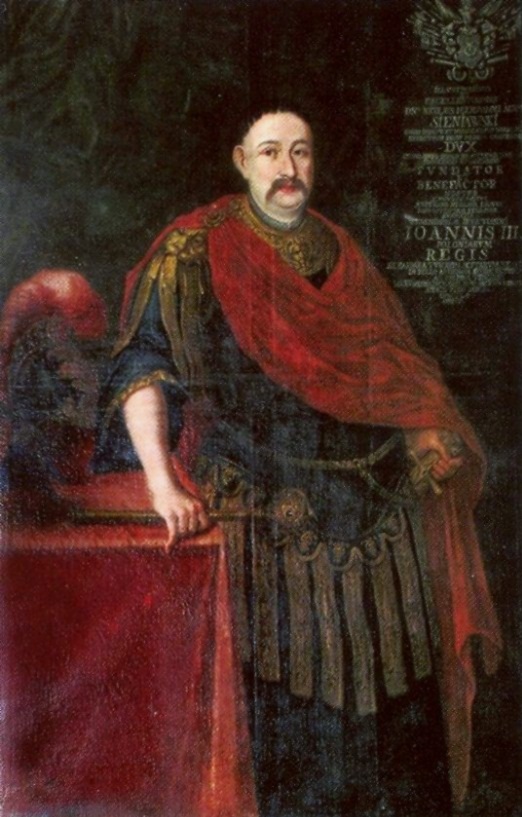
National Museum in Krakow has been digitalizing their collections - so I decided to corral some items associated with Mikolaj Hieronim Sieniawski, Leliwa coat of arms, who was a Field Crown Hetman during the reign of Jan III, and participated as a commander in many battles of this period, dying in present day Slovakia during the return of the Commonwealth armies to Poland from the 1683 Vienna campaign.

So here are the itemes - a portrait


his karacen scale armor with a winged hussar helmet /shishak - 


his sabre - 


his powder horn -


his beautiful saddle in detail 


 finally some of his portraits from wiki commons, a mix of the XVII and XVIII century works. 


Valete

Tuesday, July 10, 2018

The good times of summer

Salvete omnes,
my friend Krzysztof Laszkiewicz, local historian and 'collectionner' of unusual antiques, while doing research encountered and thus re-discovered the original AD 1433 Lodz town charter granted by king Wladyslaw II Jagello. Town and its belonging villages were owned by Crown chancellor Piotr Szafraniec, Bishop of Wloclawek, Stary Kon coat of arms.
   This was the second charter granted to Lodz, 10 years before the king  granted first charter.
Nota bene my own hometown, 30 km away to the east,  was located in the allied duchy of Masovia, and its town charter was granted by the Masovian sovereign prince Siemowit V of Masowia in AD 1427.

The Lodz renewed charter our ailing king granted during the important war council and gathering of magnates, nobles and Crown troops in the Royal Castle of Kolo. with witness being some of the most important persons of the Polish Crown:
-Wojciech Jastrzebiec, Archbishop and Primate of Poland, Jastrzebiec coat of arms
-Zbigniew Olesnicki, bishop of Krakow, Debno coat of arms
 -Spytek of Tarnow, voivode of Sandomierz - Leliwa coat of arms
 Jarand (Jurand) of Grabie, voivode of Sieradz - Pomian coat of arms
-Marcin of Kalinowa, veeran  commander of the battle of Grunwald and at the time of signing of the Lodz charter the commanding officer of the Polish troops on the Polish Crown-Teutonic Order border. - Zaremba coat of arms
-Mikolaj of Michalow, Castellan of Krakow, Roza coat of arms

The document was most likely read aloud and sealed by Wladyslaw of Oporow, Crown sub-chancellor and king's confidante and adviser. Wladyslaw was of the same coat of arms as famous Zawisza Niger (Czarny aka Black), i.e., Sulima coat of arms.
This document was lost since 1922 and Krzysztof brought it back into the public light and enjoyment in March of 2018. Now his book - How I rediscovered Lodz Town Charter - is ready and will be available for purchase  in Poland starting July 27, 2018.

 I did 4 small drawings for my friend's book and I pray the will smartly augment his narrative.
here there are some sketches I did in preparation for the book
sketch 1
sketch 2


sketch 2.1
Valete!

Friday, November 10, 2017

Stanislaw Tarnowski, Leliwa coat of arms, from Chroberz

Salvet omnes,
today the small village of Chroberz, Little Poland, is rather unknown and beyond the beaten path of the tourist traveler but  long time ago it was a lively place,  full of splendor and wealth, for it was  the residence of  Stanislaw Tarnowski  one of the clan 'members of the Tarnowski family, Leliwa Coat of arms.
The old glory of this place is reflected in the local church, founded by pan  Stanislaw Tarnowski who  was eventually buried there in AD 1568.

Paprocki wrote in his Polish Nobility Coat of Arms  circa 1586
According to pan Paprocki's armorial, grandfather of our Chroberz Stanislaw was also named Stanislaw and he had been the fifth son of Jan, voivode of Cracow (however, a family tree where you can see that his grandfather was named Jan and modern genealogists agree with grandpa being Jan rahter than Stanislaw).
Following our pan Paporcki we read that his grandfather Jan, also a voivode of Cracow, and grandmother, Katarzyna de domo Ligęza, had one of their sons named Spytek, who was a voivode of Sieradz, Crown podskarbi (treasurer),  and a known warrior, Spytek had with his wife Barbara, de domo Szydlowiecka,  had two sons*: Wojciech and our Stanislaw.
Young Stanislaw went on a pilgrimage to the Holy Land, also visited Italy and the Holy Roman empire  Europe.
Pan Stanislaw was a voivode of Sandomierz and Crown podskarbi (treasurer) and one of the most important movers and shakers in the late Jagiellonian Poland.
He took as his wife Barbara, de domo Drzewicka, who bore him the following children:
 Stanisław Tarnowski (born circa 1541- 1618) — Castellan of Sandomierz and Radom, miecznik koronny (Crown sword-bearer).

Barbara — wife of Stanisława z Podhajec Wolskiego, Castellan of Sandomierz,

Katarzyna — wife of Florian  Noskowskiego, Starost of Ciechanow,

Krystyna — wife of Stanisław Lipnicki, stolnik  of Sandomierz,

Anna — wife of Mikołaj  Herburt, Castellan of Przemyśl,

Beata Elżbieta — wife of Baltazar Lutomirski, Starost of Lezajsk  

Elżbieta (Zofia) — wife of Piotr Pieniążek of Krużlowa


His widow had master Jan Michałowicz z Urzędowa built a beautiful Renaissance tomb effigy for her late husband in AD 1569.
                                                          ***
The tomb sculptured figures placed within it designed grandeur, apart from their prima facie spiritual and religious significance -  Christ rising to Heaven, and apparent artistic value - Renaissance art, contain some of the interesting military imagery of the period, concerning the equipment of a wealthy warrior-nobleman and statesman.
the entire tomb of Stanislaw Tarnowski

field armor & a schishage helmet

another helmet, a pistol in a holster, & gloves, top part of the kopia (lance) with a pennon
 Lances, warhammers, & shield with Leliwa coat of arms
pan Stanislaw in his eternal repose, wearing a full armor of the period
a war saddle with crouper and breatplate
kettledrums

enjoy
*according to Paporcki