Showing posts with label Crispin de Passe. Show all posts

Tuesday, February 15, 2022

Ambrogio Spinola Doria - maestro of war

 Salvete Omnes,


the clouds of war seem, according to the msn media and respective governments, to be hanging menacing low over the steppes  and shores of Ukraine, Belarus and Russian Federation in the east of Europe (and east of that funny union), and with mysharonacirrus-19 laid to rest (tell it to a certain, fancy socks wearing, prime minister of Canada and his afficionados ), let me share some images showing  one hell of a command master - XVII century condottiero/condottiere Ambrogio Spinola Doria from Genoa and in the service of the Crown of Spain. 

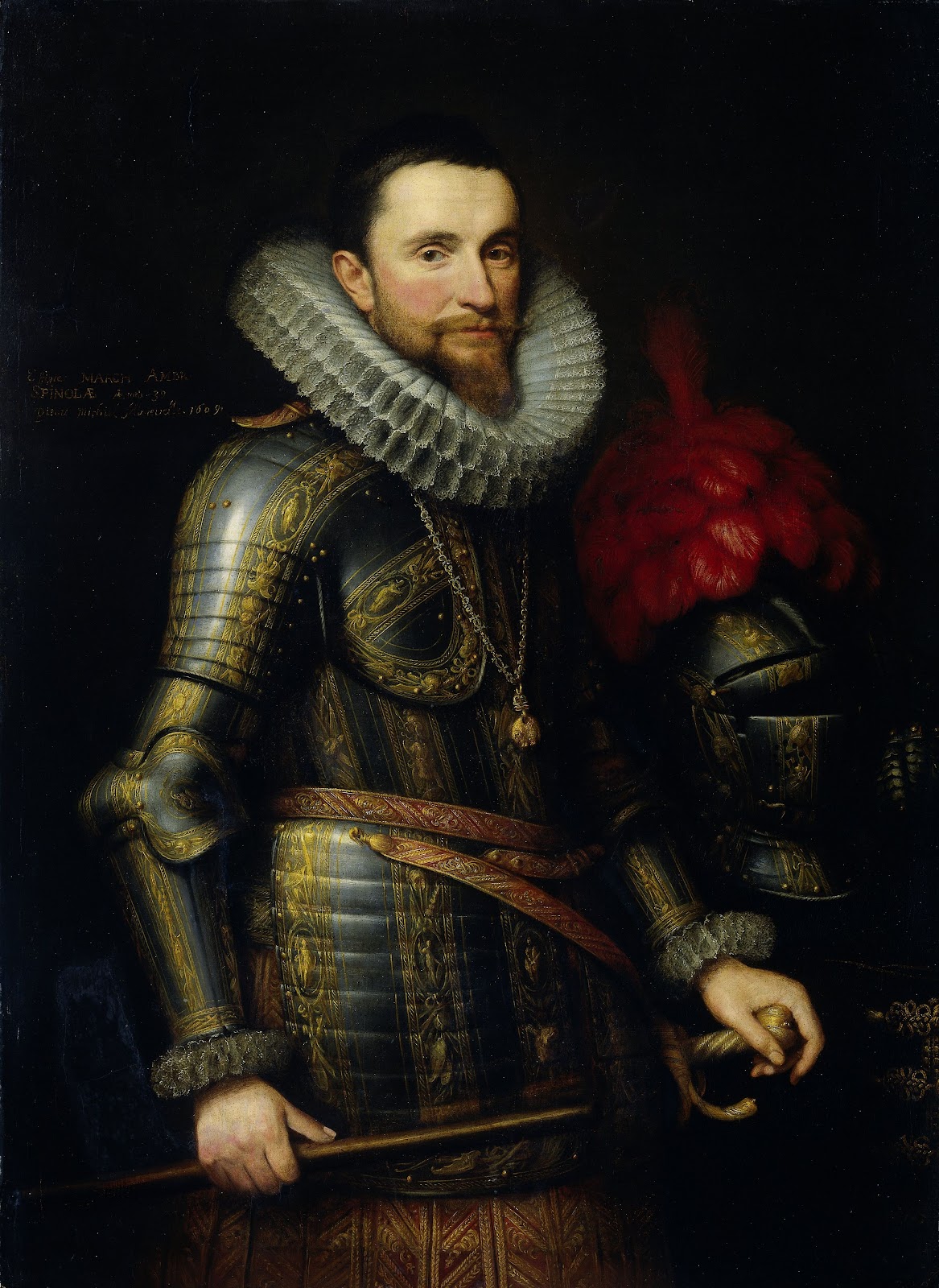
early (1609AD) portrait by Michiel Jansz. van Mierevelt


  - surrender of Breda detail - by Diego de Velazquez, 


Surrender of Julich/Juliers details - by Jose Leonardo
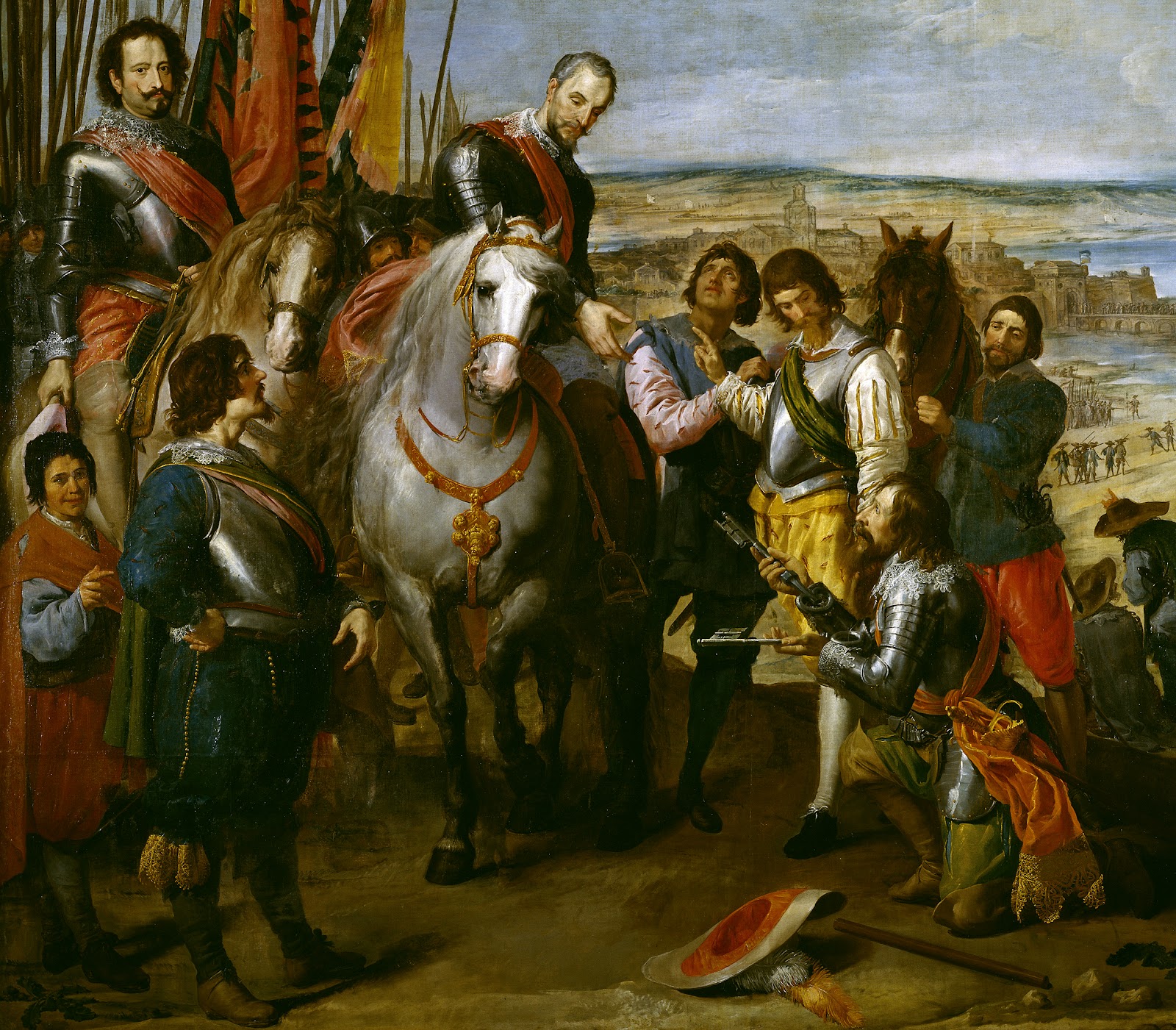


and another surrender of Julich by Peter Snayers


and a print by Crispin de Passe


and another, later  1628AD,  portrait by maestro van Dyck


Valete

Thursday, May 16, 2013

L'instruction du roy en l'exercice de monter à cheval via Gallica


Salve,
I have been browsing daily through the French Gallica Bibliotheque Numerique and yesterday I came across the famous equestrian work:

  L'instruction du roy en l'exercice de monter à cheval .. etc. written by the famous ecuyer Antoine de Pluvinel (1552-1620),  disciple of the Italian equestrian schools of the XVI century, for the king of France 

Book (1666 edition) can be viewed in its entirety on the Bibliotheque site (I linked the title above) - with the great illustrations by the Duch artist Crispin de Passe (circa 564-1637).  Here, de Passe plate showing another famous cavalier and military commander of the XVII century,  Ambrosio Spinola Doria, the victor at Breda, known via the famous painting  by Diego Rodríguez de Silva y Velázquez. 


Above the greeting there is one of the illustrations from the book, also from the Bibliotheque, showing the master ecuyer and his pupil, Louis XIII.
Below, a painting showing the very king, and his famous minister le Cardinal Richelieu, from wiki.


I have a facsimile of the 1625 edition, in English translation from 1989.