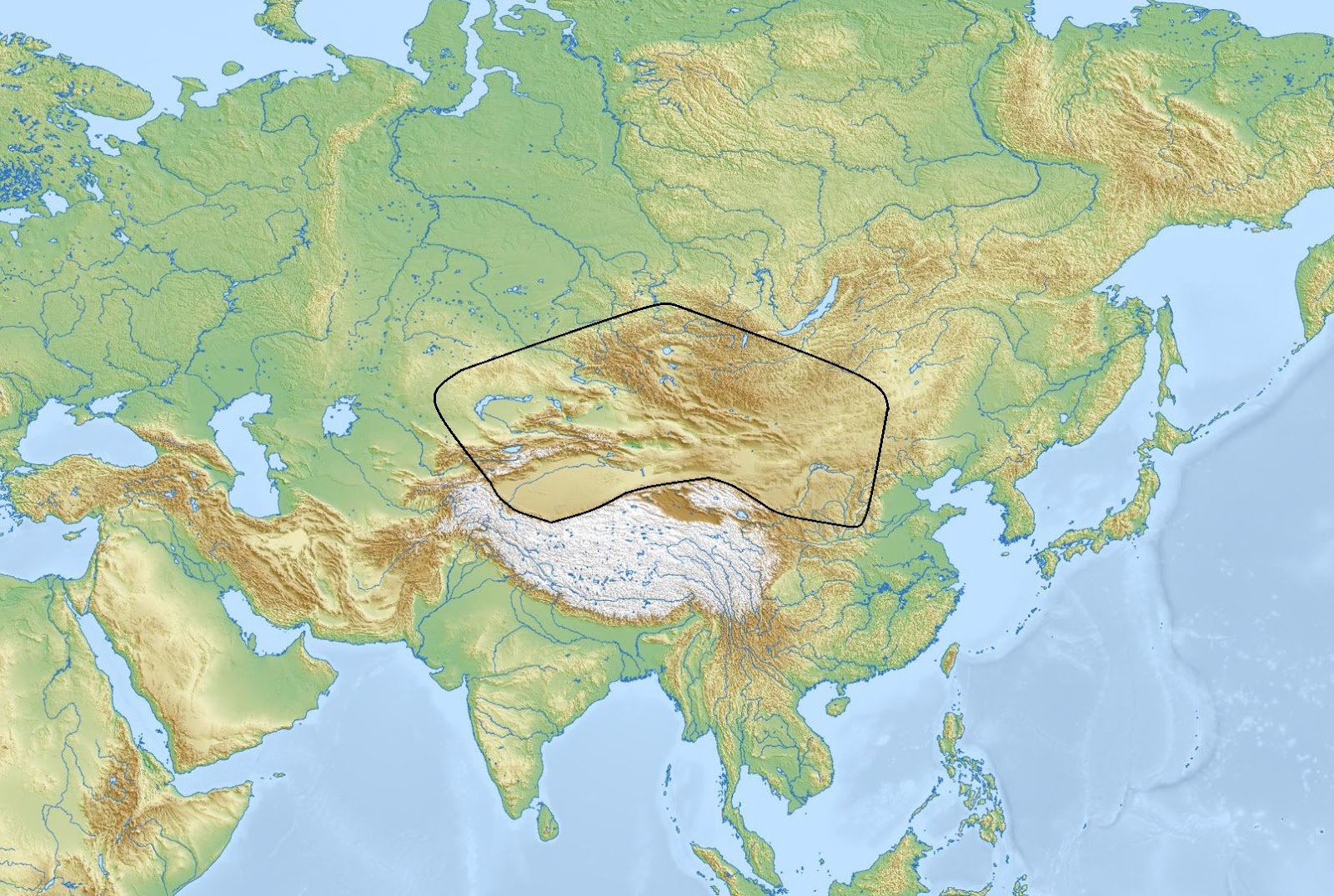
Showing posts with label Central Asian horse. Show all posts

Monday, February 16, 2026

Tatar cowboys lassoing horses in the Altai steppe- Ossendowski

Salvete Omnes,


in the early 1910s to 1930s there was this Polish traveler, journalist, history and adventure writer: Antoni Ferdynand Ossendowski, internationally famous for his book on Lenin and his book on the Siberia and Mongolia during the Bolshevik Revolution, including his conversations with Baron von Ungern-Sternberg, 


conqueror of Outer Mongolia and failed anti-Bolshevik crusader.


So in his book Man and Mystery in Asia pan Antoni  tells a number of stories that originated in his voyage to Siberia in 1899, while still a university student. So while traveling with already famous geologist,  prof.  Stanislaw Zalewski (Polish scientists working for the Russian Empire were exploring Siberian mountains and vastness for more then a century at that time - the most famous being Stanislaw Czerski) described the lassoing and taming of the semi-wild horses by the Tatars in the Altai steppe.

Oriat tipi-like yurt


 The Altai Tatars aka the Oriats, being Buddhists, were native to these regions and were under the assault from the Russian bureaucracy and colonists (in this narrative they were Ukrainians from Russian Ukraine mostly), who would rob them of their horses and kill the Tatar owners...


.


Nota bene, they say when Red Army liberated from the Nazi Germans the area around Warsaw, Poland, the NKVD (later KGB) came to the cemetery where Ossendowski was buried, and opened his grave in order to make sure that this famous anti-Bolshevik and anti-Communist was actually deceased. 
There was another Polish witness to Baron Ungern's rule in Mongolia - Kamil Gizycki who wrote a book on his experiences there in 1920-21 and his subsequent route to Harbin, China, and Poland. 


Valete 

Monday, May 27, 2024

Yuezhi - camels, horses and Central Asia

 Salvete Omnes,

one Bactrian camel, Eurasian animal style nomad art, from the Yuezhi steppe 


and a little about  the Yuezhi themselves - the Central Asian empire builders from their horse and camel backs. 
Academia article on the name reconstruction. 
 

the extend of  the Yuezhi empire


..

Yuezhi embroidery


*Great Sergei Yatsenko and his article on the Yuezhi embroidery from Mongolia.

Valete

Tuesday, November 16, 2021

Tocharians - shenanigans with the genetic studies?

 Salvate Omnes,

regarding the linguistic group known  as the Tocharians, the easternmost branch of the Indoeuropean language family? after 1700BC (we are the People of the Horse), and before the Ancient North Eurasians(ANE) :


I read this article with disbelief -  

and then I found this article in contra  to the 'science ' presented -

and then this article about the shenanigans allegedly  perpetrated in this estimable institution? 


uff, there is science and there is politics(in my other career I have seen FBI labs engaged in some 'strang'e behavior regarding DNA & contaminated evidence in criminal proceedings), there is law and there is political trial (like in the Soviet or Communist China cases) , American case in point may be the Kyle Rittenhouse' trail in Kenosha, Wisconsin (currently, i.e., since this morning  the jury deliberation have been taking place).

anyway, back to the story - this researcher has the following article - Don't believe everything you read in peer reviewed papers.
and per my fellow Poles and our ancestry - a little in size but large in content article with a very vigorous discussion under the article. And the larger site - Khazaria - where Polish DNA ancestry is discussed -


and some images from the famous Kizil Caves
These Tarim basin caves, in the Chinese  Xinjiang autonomous region, are  the UNESCO site these days.


and some Gok Turks


Valete

Friday, February 1, 2019

Flying Horse of Kan-su/Gansu

Salvete Omnes,
new month - February is a bit cold in our Northern Hemisphere so let us go back to the times when earth was much warmer that today and winters were not so crazy as the one we have now over the American Midwest.

today, at first it was going to be  just a quick post that grew and morphed into a larger thing -:), perhaps a little bit of an intro about the complicated relations between the steppe peoples of the later I millennium B.C.-early I millennium AD and the Han Chinese and their great empire that created true China after the short lived Qin empire of Qin Shi Huandi.
This uneasy relationship is perhaps epitomized in the figure of famous Flying (galloping) horse of Kan-su (today written Gansu)

During the most of Han empire the Hexi Kan-su corridor was the area of much fighting, at first in the early II century BC  between the Yuezhi or the nomadic Indoeuropean of this area against the invading Hsiung-nu (Xiong-nu - perhaps mix of Indoeuropean, Turkic and Mongolian tribes) or nomadic Mongolian steppe dwellers who wrestled  Kan-su and Tarim basin from the Yuezhi (who in turn pushed the Saka into Bactria, Northern India and eastern Persia - hence Sakastan in Persia and Saka in the Parthian armies), while the Xiong-nu eventually faced the Han Chinese armies moving north and north east.

After much fighting the Han empire broke and conquered the Hsiung-nu (Xiong-nu) of their immediate vicinity - famously it was general Dou Xian who had  accomplished this - and pushed them out of  Kan-su and entered the rich oasis-kingdoms of Tarim Basin (today Uigur homeland within the Peoples Republic of China) and moved west towards the Tien-shan mountains and beyond.
In the vastness of Tarim the Han emperors established the Protectorate of the Western Regions, and until the end of the Han rule it was the area of much warfare and diplomacy but also of large trade routes, giving rise to what later has been named  the Silk Road and growth of  rich cities of Central Asia like Bukhara, Merv, Herat, Samarkand etc.
From the start when Han armies stood on the empire's northern frontier they had to rely on horse transport, and Han administrators established a very elaborate trade in horse and horse breeding along the Kan-su frontier and other northern frontiers. The needs of the imperial armies were huge - some 300,000 were needed for campaigns and army maintaining outer frontiers along the western and northern Han empire  perimeter - said one ancient Chinese historian.
These great horse needs put even greater strain on the empire's ability to produce war horse or even good sumpter horses (and for some reason Han Chinese were not best horse breeders, even after capturing Ordos Steppe and Kan-su steppes, and forcing curious Dian Kingdom into Han 'yoke'), thus making horse breeding of quality stock the most important task for the empire administrators,  and forcing much reliance on constant horse tribute from conquered nomadic tribes and states and also seeking trade horses obtained via exchange for ever-desirable Chines silk.

But not all people along the trade and geopolitical Chinese empire power routes were willing to trade their equine wonder weapons aka blood horses to the Chines adversaries (real or potential) without some or more resistance, so from the Chinese sources we have the story of the expeditions to the West, including the expedition to get the heavenly/celestial horses from Ferghana between  111-102 BC.
here we have perhaps a symbolic heavenly horse, his neck and tail high while galloping and neighing at the same time, as powerful stallions tend to do; note the forelock tied, in a typical nomadic style denoting a war horse.


Perhaps more about the Han horses and cavalry in the future.

Valete  &  Khoda Hafez

ps
images from Wiki Commons

Thursday, November 30, 2017

Ancient Indoeuropean and Saka Central Asian horses and domestication - article on paleogenomics*

Salvete Omnes,
I came across this article - Ancient genomic changes associated with domestication of the horse, - published in Science April 2017. Zainolla Samashev, one of the authors, made it available for download and study at academia.  - many thanks
the reseachers exmamined horses from:
 a mare - Sintashta Culture, Chelabinsk Russia - Indoeuropean horse chariots from early Bronze Age (some human DNA discussion here)
 two stallions -  Arzhan I, Tuva, Russia  (Iron Age Scythia)
 13 stallions - Berel kurgan II, Kazakhstan ( Iron Age Scythia)

The article talks about the most ancient of domesticated horses, about the Iron Age Saka/Scythians and their horse husbandry, their breeding methods that did not disrupt natural herd structures (tabun and stallion harems) that resulted in diversity of genetic material in their horse sherds,. Nota bene the researchers found evidence for  horse milking ,  coat colors preference and robust forelimbs ( metacarpal bones - re anatomy and horse conformation - check M. Horace Hayes -Points of Horse and dr Deb Bennett site).

Also, do check this free-access article on this study from the New York Times that does explain the Science article in layman's terms.
note that the Berel kurgan horses (article on Berel horse sacrifice)  were subject  to an older genetic study,  in 2005 - a summary of article available here. Nota bene Yakutia horses alias Yakut Horse (Long Riders Guild Academic Foundation has also an article on the horse) - this unusual horse has a fine article devoted to its genetic origin and makeup - Tracking the origins of Yakutian horses[...]. - can be read here.

*paleogenomics

Sunday, March 2, 2014

Central Asian Gobi Desert and its horse fodder


Salve,
today a quick jump over to Central Asia :)
I have in my possession this great book by Mr Gladtiz Horse Breeding in the Medieval World (1997), and in there, amongst the mountains of facts and stories, the author gives information on the  flora suitable for horse within the dry steppes of the Gobi.


So allow me to quote some of his research, as in my opinion it is interesting and enriching our knowledge on possible horse environments of Eurasia etc:

 Trans Altai Gobi - without life until the coming of summer rains, and its fodder consists of saltworts, bor-budurgan, Gobi feathergrass and onion. Here the horses can dig in the salt-brine pans and then drink the water that gathers there. Then they feed on tamarisk, wormwood (artemsia incana) feather grass (both stipa capillata and stipa gobica), deris (lasiagorstis splendens) white roots of rhubarb, varios bulbs such as tulipa uniflora, anabasis (anabasis brevifolia - used to fatten camels), caragana pygmaea, Rheum leucorhizum, zygophyllum xanthoxylon, Reaumuria soongorica (but this one is of little value to horses), and also stipa orientalis where conditions permit. In the steppe that borders Trans Altai Gobi the foodstuffs for horses might include Stipa Capillata and stipa gobica, couch-grass (Agropyrum cristatum) feather-grass, motley grass, in more desert steppe Gobi feather-grass and onions (Allium polyrrhizum, Alllium mongolicum), sheep's fescue or baglur (Anabasis brevifolia).

Wild horses lived there, and from the medieval sources we learn that  in  the X century Kansu Uigurs hunted them, so the wild horse is listed as the part of the list of products of these territories.

Wild asses or Khulans of Mongolia


I used Kmuser and Schreiber map  from wikipedia..