Salvete Omnes,
two VI [6th] century BC painters from the ancient Greek world - in the theme of Iliad
Exekias - the pottery from the MET.


Painter of the Vatican Mourner -

.

Valete
Salvete Omnes,
two VI [6th] century BC painters from the ancient Greek world - in the theme of Iliad
Exekias - the pottery from the MET.
Painter of the Vatican Mourner -
Valete
Salvete Omnes,

today we have the last day of July 2026, time flies or as ancient Greek philosopher Heraclitus said - panta rhei.
While another ancient Greek - Homer - and his compositions - the Iliad and the Odyssey - have been with our culture for close to 3,000 years, inspiring countless writers, painters, sculptors and film makers - eg the latest Nolan's film.

So our horse-related image comes from the Iliad milieu, but from the early Archaic period of the ancient Greek history & art, as it shows Odysseus and Diomedes' infiltration the Thracian camp, the Trojan allies, at Troy in order to steal their famous horses ("huge of size, a wonder to behold'' or - ''His[Rheos] be verily the fairest horses that ever I saw, and the greatest, whiter than snow, and in speed like the winds.'). Odysseus slays (of honey-sweet life) Rhesos/Rhesus, a Thracian king, and 12 other sleepingThracian warriors. - Book X of Iliad,
 |
| Murray's translation |
 |
| the amazingly well portrayed white stallion |

the act of killing of king Rhesos you can also study from the Wiki Commons page, where horse side of the amphora does not appear. Note that Odysseus is carrying a bow and arrows in a quiver slung on his back.
Valete
Salvete Omnes,

April 1st or April Fools Day - what a Spring day to behold ..
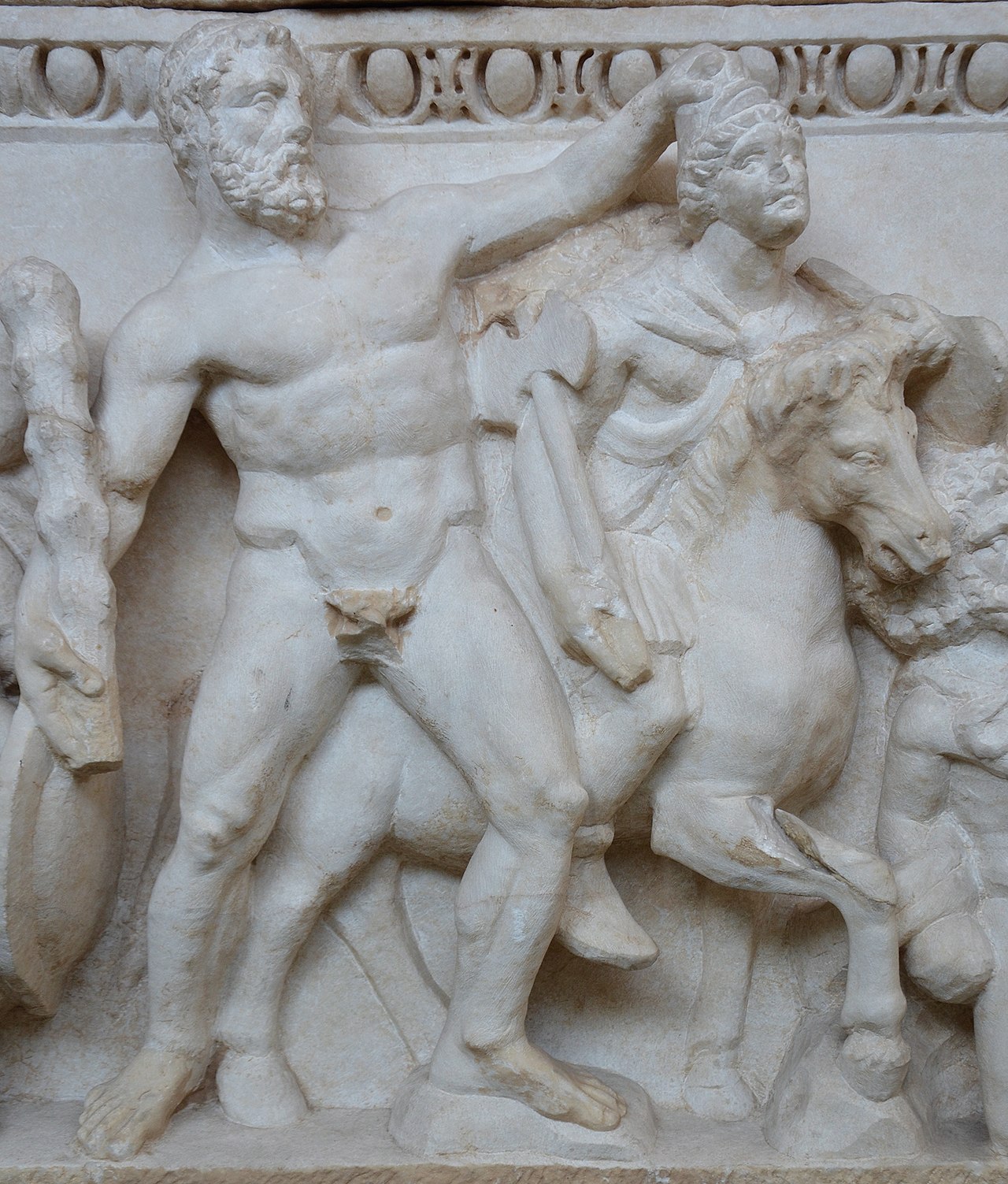
so let me invite you to the ancient Greek mythological hero's adventure - the lion pelt clad and with armed with a bow and club Heracles, son of Alcmene and god Zeus, sailed on his quest for the belt of Hippolyte, the queen of Amazons. Accordingly the name Amazon was meant to mean ' without a breast, because the right breast was cut off, that it might not hinder the use of bow' and javelin.

According to Apollodorus, in his 9th labor Heracles was ordered by the 'evil' Eurystheus, king of Tiryns, to fetch him the belt of Hippolyte (belt of Ares), the queen of the Amazon warrior-women from the river Thermodon [in Pontus according to Strabo].
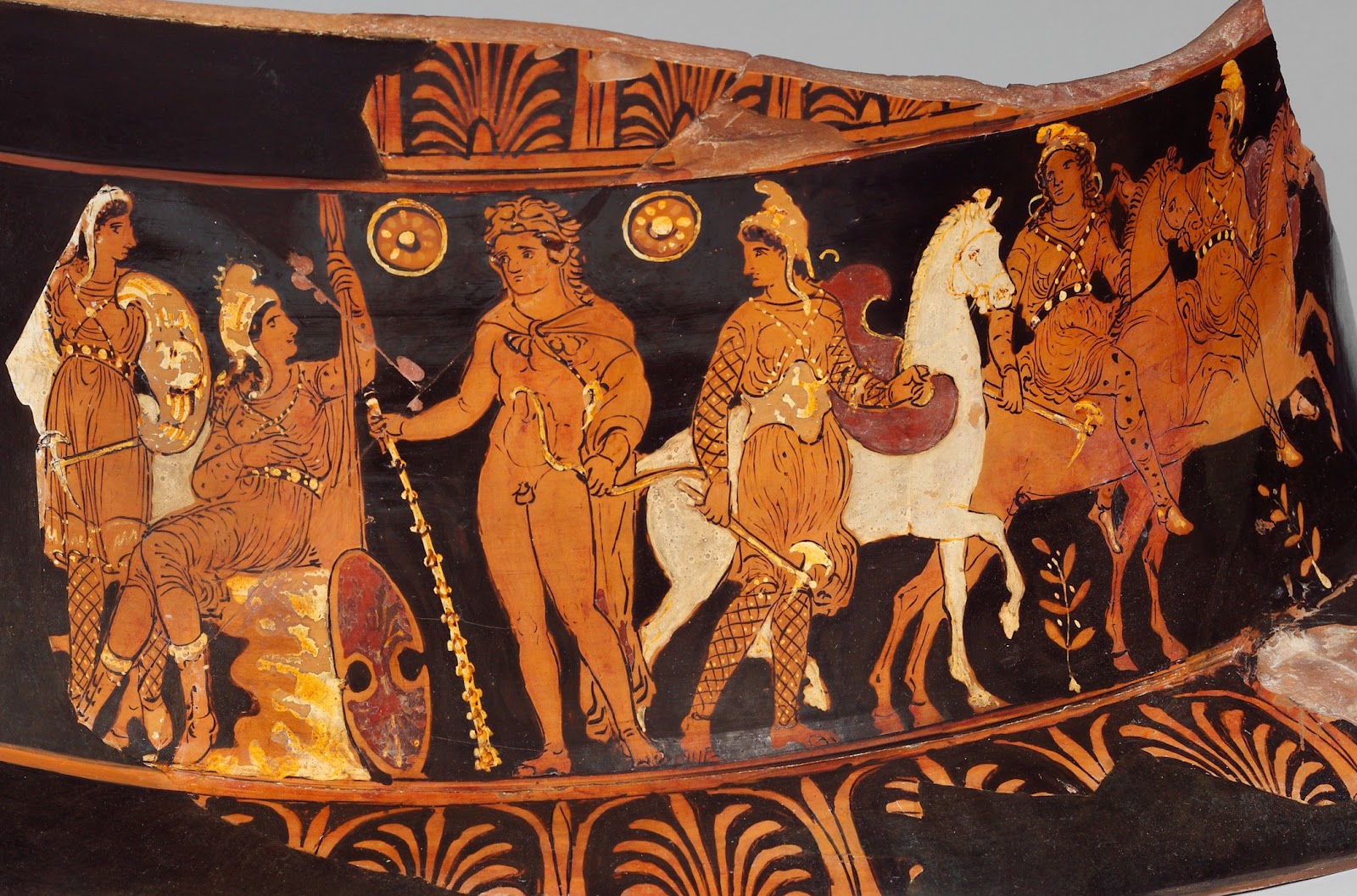


Heracles, according to Apollodorus, came by ship with his companions, and having put into the harbor of Themiscyra was visited by queen Hippolyte wearing the belt. Goddess Hera, always trying to derail Heracles in his efforts, arrived in the likeness of an Amazon warrior and went up and down the horde of Amazons saying the strangers who had arrived were carrying off the queen. So the Amazons in arms charged astride their horses down the harbor. But when Heracles saw them in arms, he suspected treachery, and killing Hippolyte stripped her of her belt. And after fighting the rest[of the Amazon host] he sailed awaya dna touched at Troy.'


Diodorus, Book II, 4-16., gives a detailed description of the battle between Heracles and the Amazons.


valete
Salvete Omnes,

during VIII century BC or the Iron Age in ancient Greece, of the Archaic Age, the inhabitants produced many thousands of bronze horse figures that, according to researchers, served as personal offerings to their gods, at the Hellenic sanctuaries like Olympia, Delphi, Ephesos and others.
MET possess many of these votive figurines.


Valete
Salvete Omnes,

Spring is approaching fast as time flies - we should have the new year start on the Spring Equinox - like the ancient nomads and ancient Iranians had had.
 |
| Gorgon chasing after Perseus |
Ad rem,
I love ancient Greek myths - and today decided to share some images related to the myth (well, collection of myths ) about the ancient hero named Perseus or the destroyer. Why Perseus, well, he is credited as the hero releasing the fabulous winged horse of the myths - Pegasus.
 |
| Hermes giving Perseus a curved sword |
Unwed Danae of Argos, daughter of king Acrisius, was the mother of Perseus while his father was the mighty and thundering Olympian god Zeus (in form of the Shower of Gold or Golden Shower).
 |
| Zeus as Shower of Gold coming to Danae |

Danae and her son were banished from Argos by her father, sealed in a wooden casket and he had them thrown out into the sea.
After two days hey were
fished out of the sea by Dictys (netman or fisherman), bother of king
Polydectes (much-receiver or Death) of Seriphos (island of the Cyclades). From that island he set
our on his hero quest. The quest was prompted by the king Polydectes, lusting after Danae, who demanded that every young men on his island provide him with a horse needed as a wedding gift for his intended marriage to Hippodamia (daughter of Oenomaus, famous for his chariot horses and chariot races). Perseus was too poor to own a horse so he boasted that he could find and slay a Gorgon monster. And as a result of his boast he set out on his quest.

So this Perseus' hero quest involved searching for, finding and eventually slaying the Gorgon monsters, there sisters - Stheno (strength) , Euryale (far-leaper), and Medusa (wide-ruling). The most dangerous was Medusa, who once had been a beautiful girl and became the victim of Poseidon's lust and ravishment, and Medusa had the evil power to turn humans and animals into stones (petrifying them) just by looking with her eyes.


 |
| Perseus freeing beautiful Andromeda |
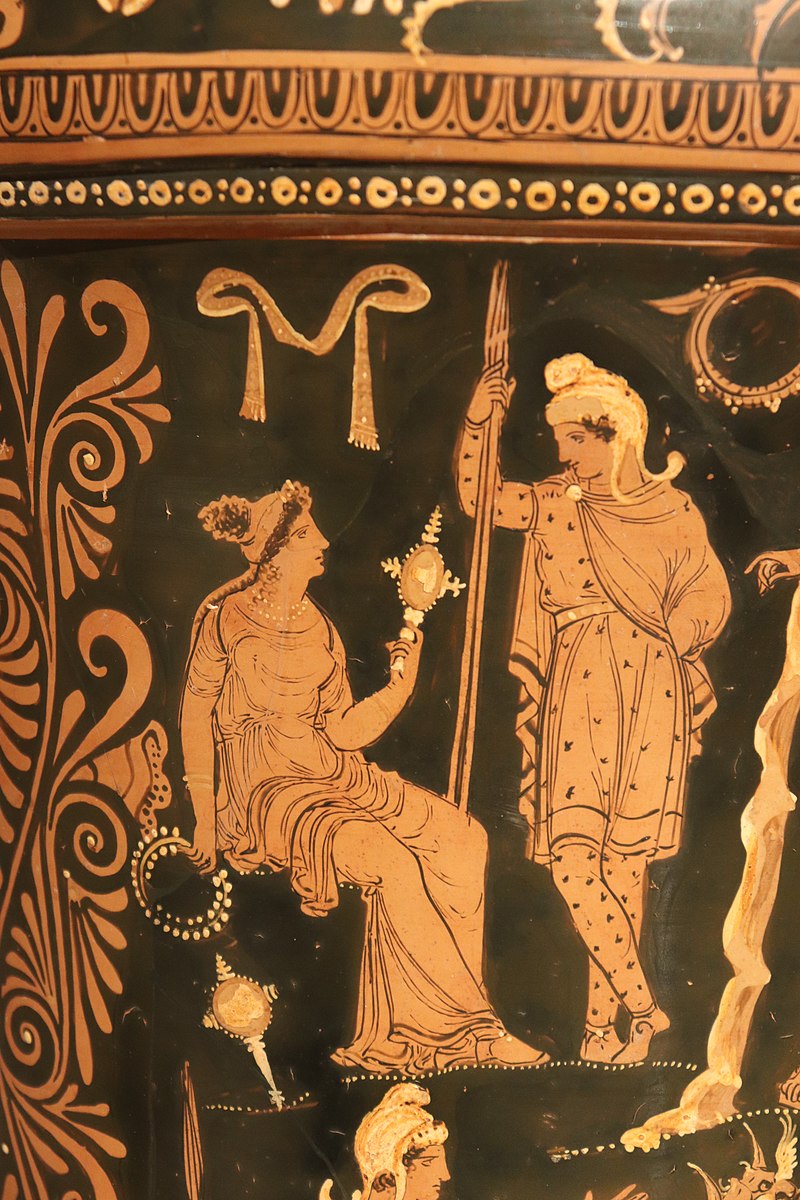 |
| Perseus and Andromeda |
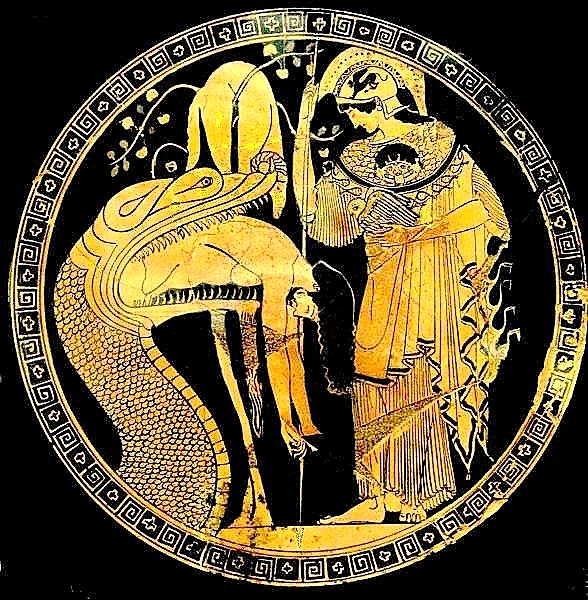
Eventually, Andromeda and Perseus married and had children, and hero Heracles was one of their descendants. Perseus gave the Gorgon Medusa head to his half-sister goddess Athena, who carried it on her shield.
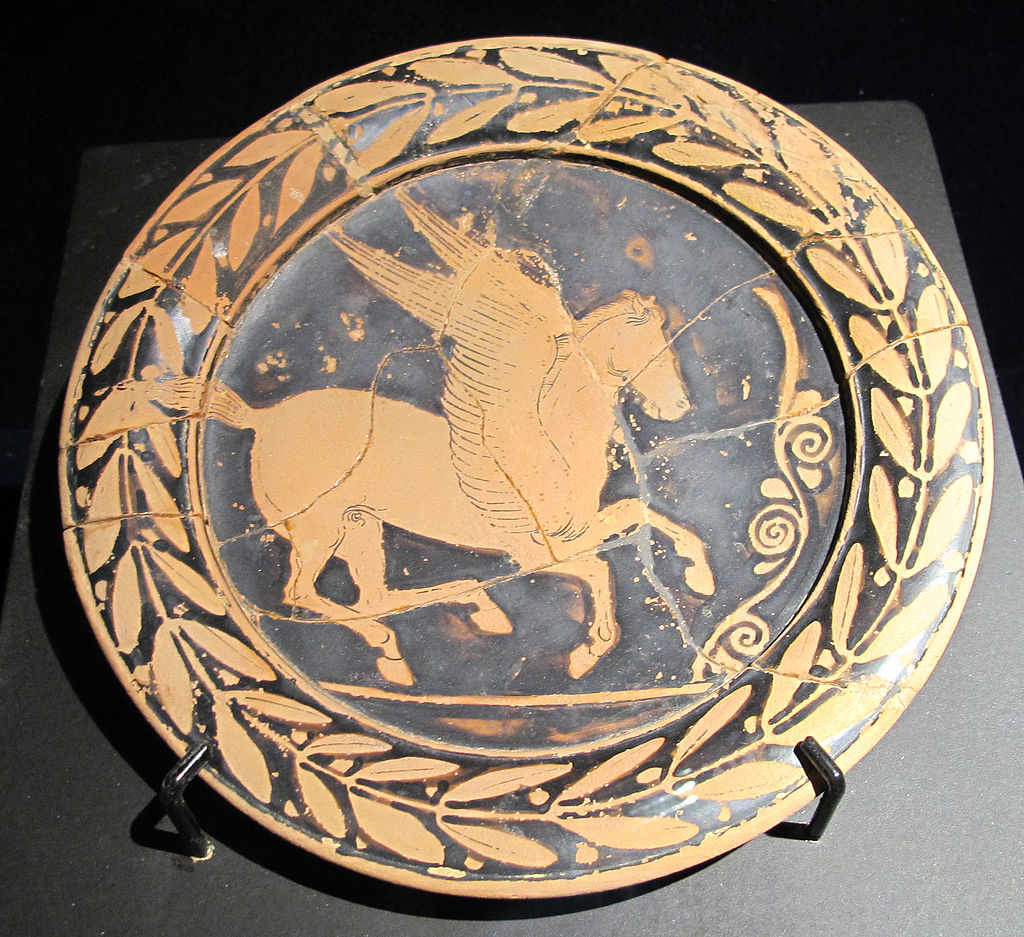
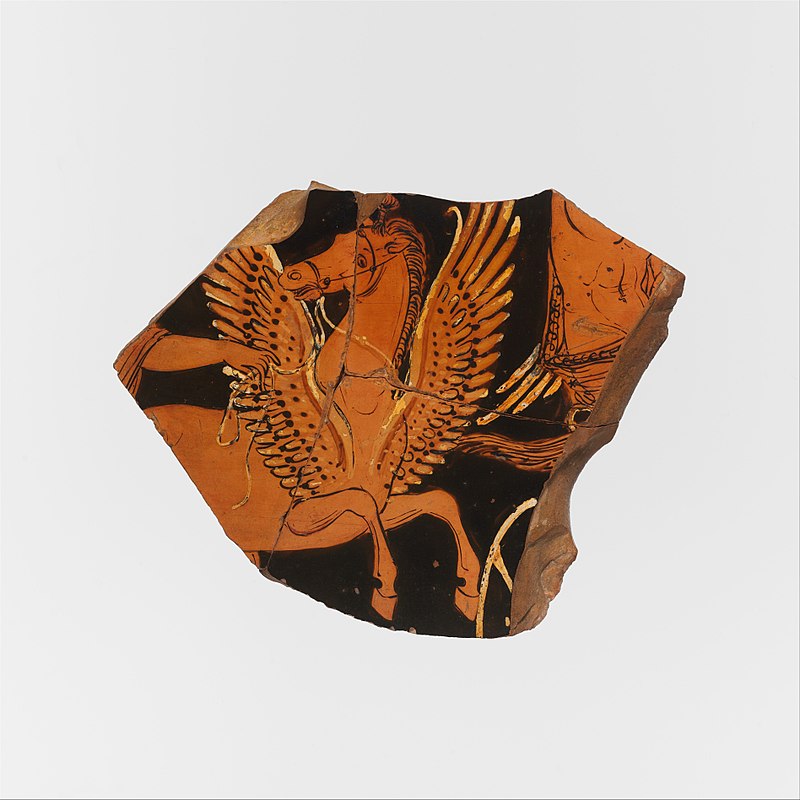
You can easily look for books available on the archive world library - eg. borrowing Early Greek Myth by Timothy Ganz, or the classic telling The Greek Myths by Robert Graves.
enjoy
Valete
Salvete Omnes,

a short entry, but with some interesting works linked in there - for your pleasure and perusal.
Do canter away with Xenophon and his horse

when Henry G. Dakyns translated Xenophon's Cavalry Commander (Hipparch, Hipparchicus) - I posted it here -

so Henry Dakyns also made his own analysis of this treatise with annotations - nota bene a short entry to the Greek cavalry prior to the age of Philip II & his son Alexander (Macedonian conquerors eg prof. Ilkka Sylvanne article on their Art of War) by S. Skarmintzos on Academia.


Valete
