Showing posts with label kantuš. Show all posts

Monday, April 8, 2024

Alexander sarcophagus in the Istanbul Archaeological Museums - short side & the battle of Issus

 Salvete Omnes,


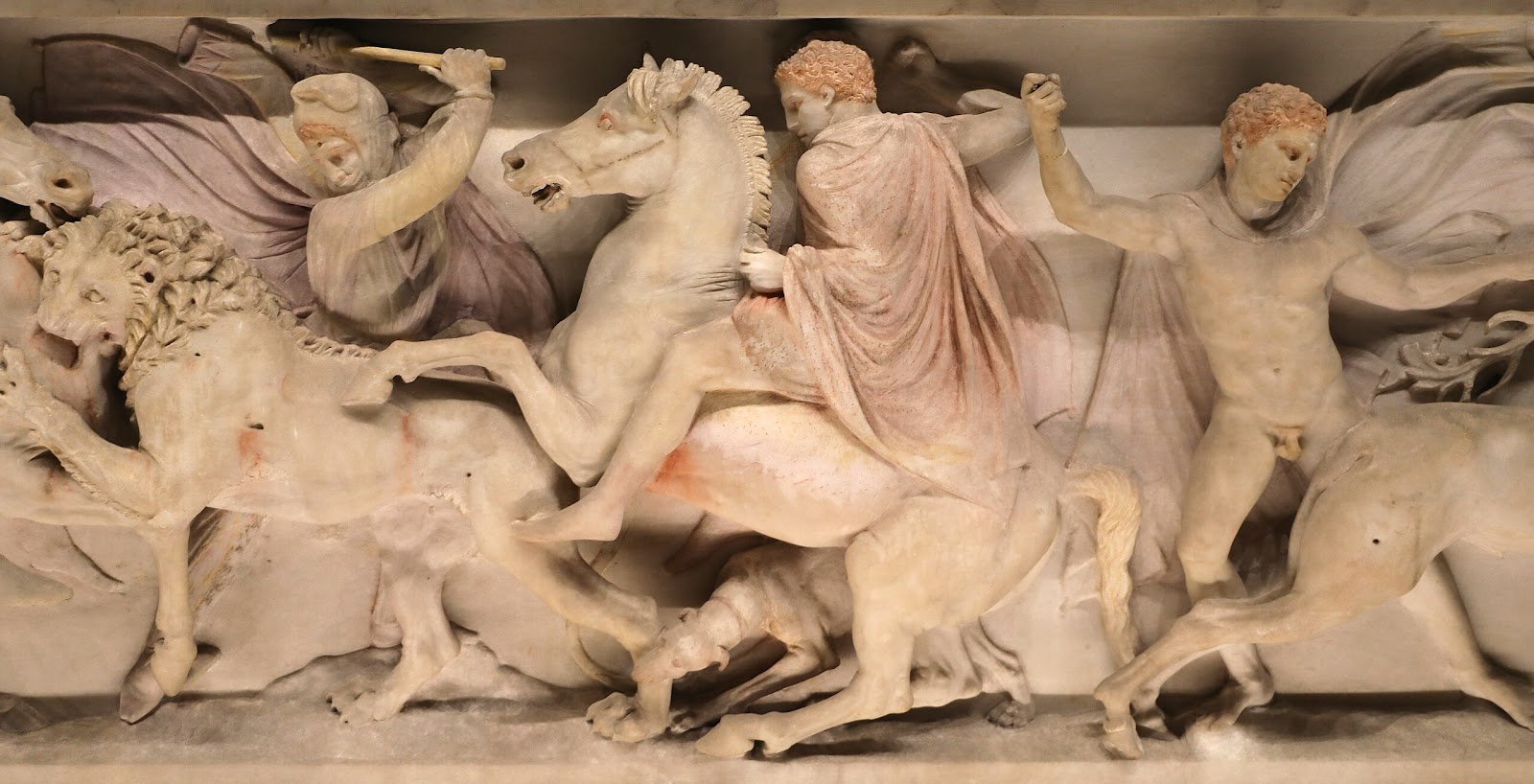
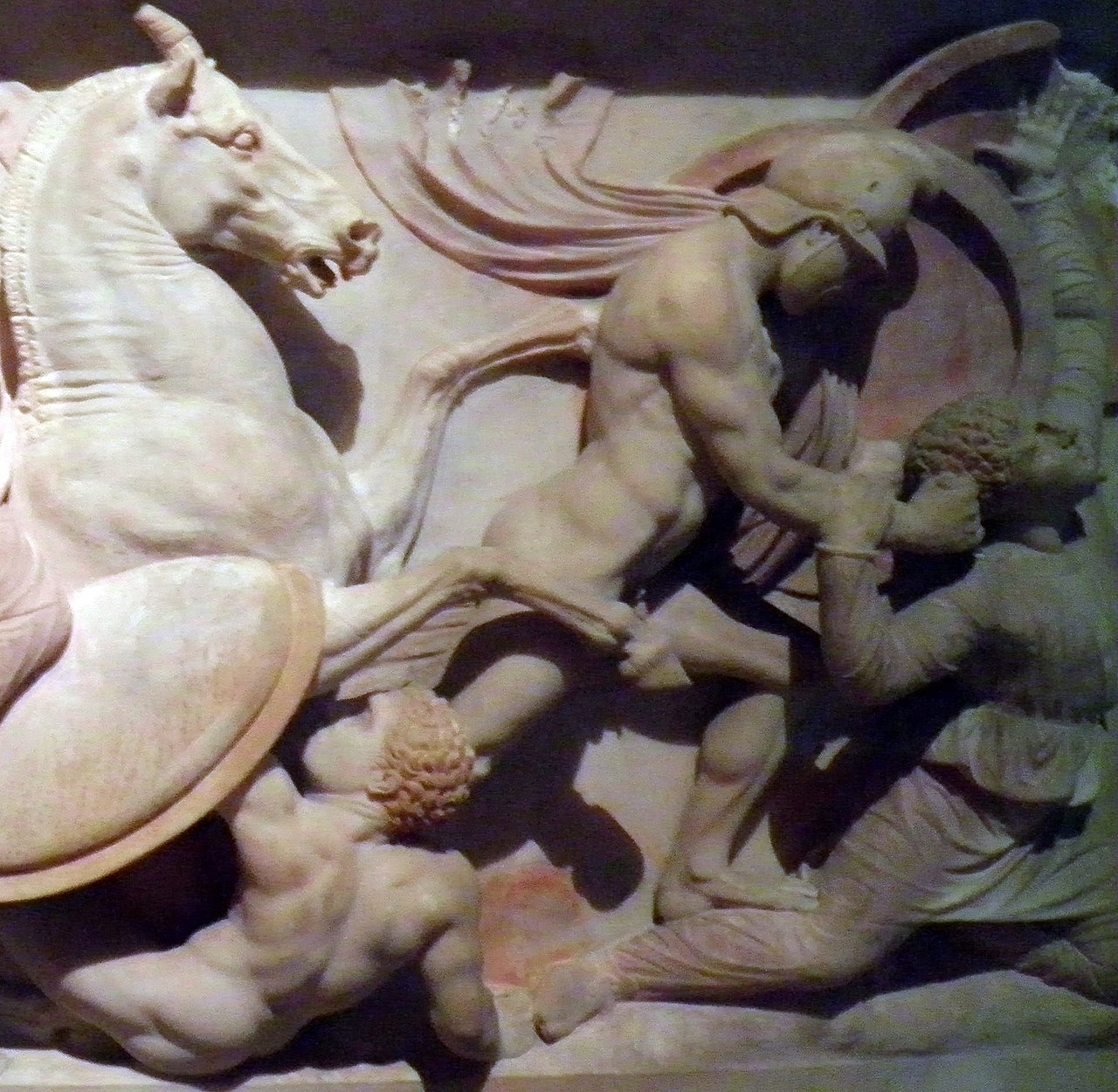
the short sides of the sarcophagus contain two battle scenes - here I will share with you the photos form Wiki Commons of the battle of Issus (eg prof. Nicolas Sekunda's The Persian Army - book published by Osprey Military Publishing)


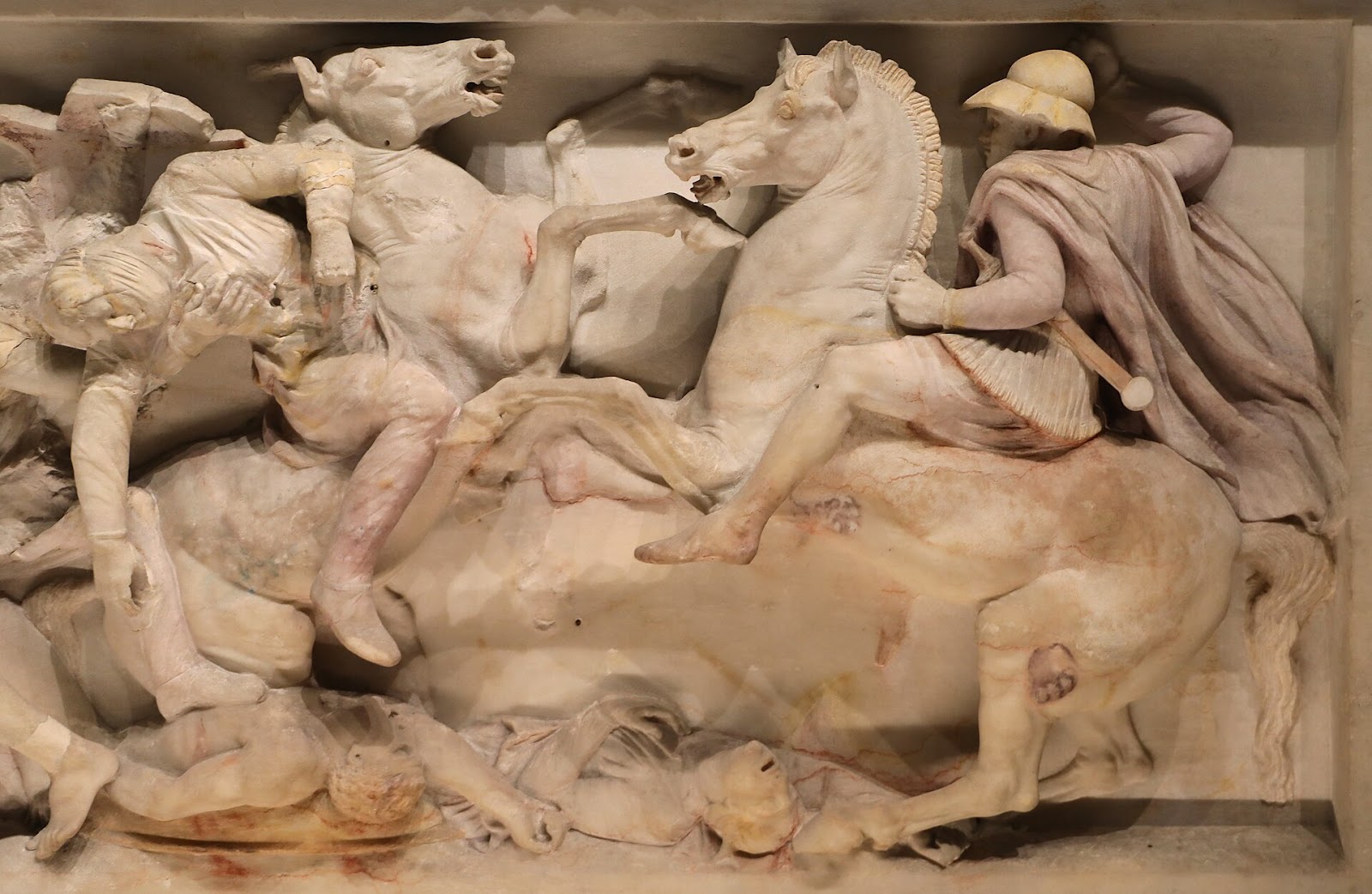


beautiful sculptures to study, copy and interpret - link to Wiki in my previous post
enjoy

Valete

Sunday, November 6, 2022

Chertomlyk gorytos & scabbard revisted

 Salvete Omnes

long time ago, Internt time long, I posted this entry - including  some articles and one drawing-rendering {I can now do a better work on this rendering) from the scabbard found along with the gorytos at the Chertomlyk kurgan.

so a little update - I noticed a couple days ago that someone posted much better photo of the gorytos and scabbard from Chertomlyk - nowadays at the Azov Museum


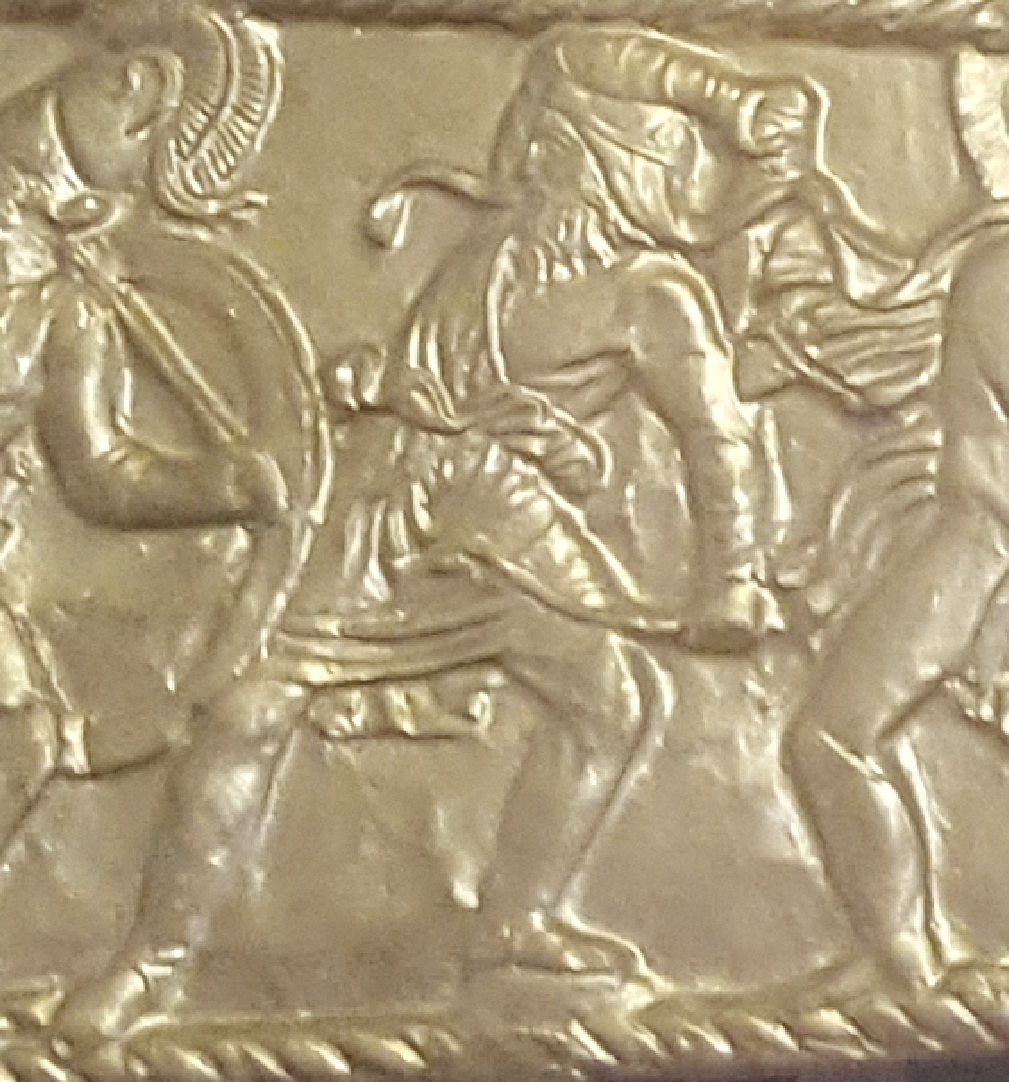
and the Scythians or rather non-Greek warriors from the scabbard - including one with a long spear on horse and one wielding a sagaris ax or a battle ax.

combat with a spear wearing a Median coat- kantus


a Scythian bowman with a sword?


the whole beautiful tandem


enjoy

ps and do vote this Tuesday, Nov. 8, 2022 - these midterm elections are awfully important !!!

Valete

Friday, October 5, 2018

Cilician coins - Achaemenid Empire horsemen


Salvete Omnes,
I have not been to ancient Persia lately, hence there is this opportunity revisit, via Coin Archives .
In particular, there is this set of coins from Tarsos related to the period of 450-400 BC when a number(?) of  Syennesis of Cilicia (Cukurova, modern Turkey)  or the rulers of the Achaemenid satrapy, were important, perhaps semi-independent lords of that important satrapy during the tumultuous V century BC.
The coins contain plenty of detailed information - horse type, horse tack, tied forelocks and tails, arms and armor of the horsemen and king-divine figures etc.
1.fabulously detailed coin with a horseman typically armed with a bow and wearing kyrbasia
2. a horseman wearing a Median coat or kantus
3. another horseman wearing a kantus
4. horseman wearing kyrbasia
and more Cilcian satrapy coins - more or less damaged - but still amazing

Valete!
ps
details from drawings by Flandin of the Apadana (Persepolis) staircase procession

Friday, July 15, 2016

Titian's Ecce Homo and 2 horses & bridles

Salve,
let us move deeper into the European history today, and thus I would like to invite you for a little excursion into the world of the Italian master Titian or Tiziano Vecellio...
Should I add that I absolutely admire and enjoy Titian's works (eg 1, 2,3, 4, 5... ), especially his religious and mythological works, his nudes and portraits. Perhaps I should - :)
I own one large album of his works by Sir Claude Philips, but then Wikimedia Commons users and Google Art project allow us, by providing high resolution photos, to get so close to many of the paintings that we can almost touch the brushwork , or so it seems.

So, while looking a this large painting by Titian - Ecce Homo - (the painting is quite dark in the area of horses, perhaps due to the aging process and various restoration/protection efforts) I noticed several interesting aspects of the contemporary riding equipment, costumes and finally quite naturalistic horse portraits.

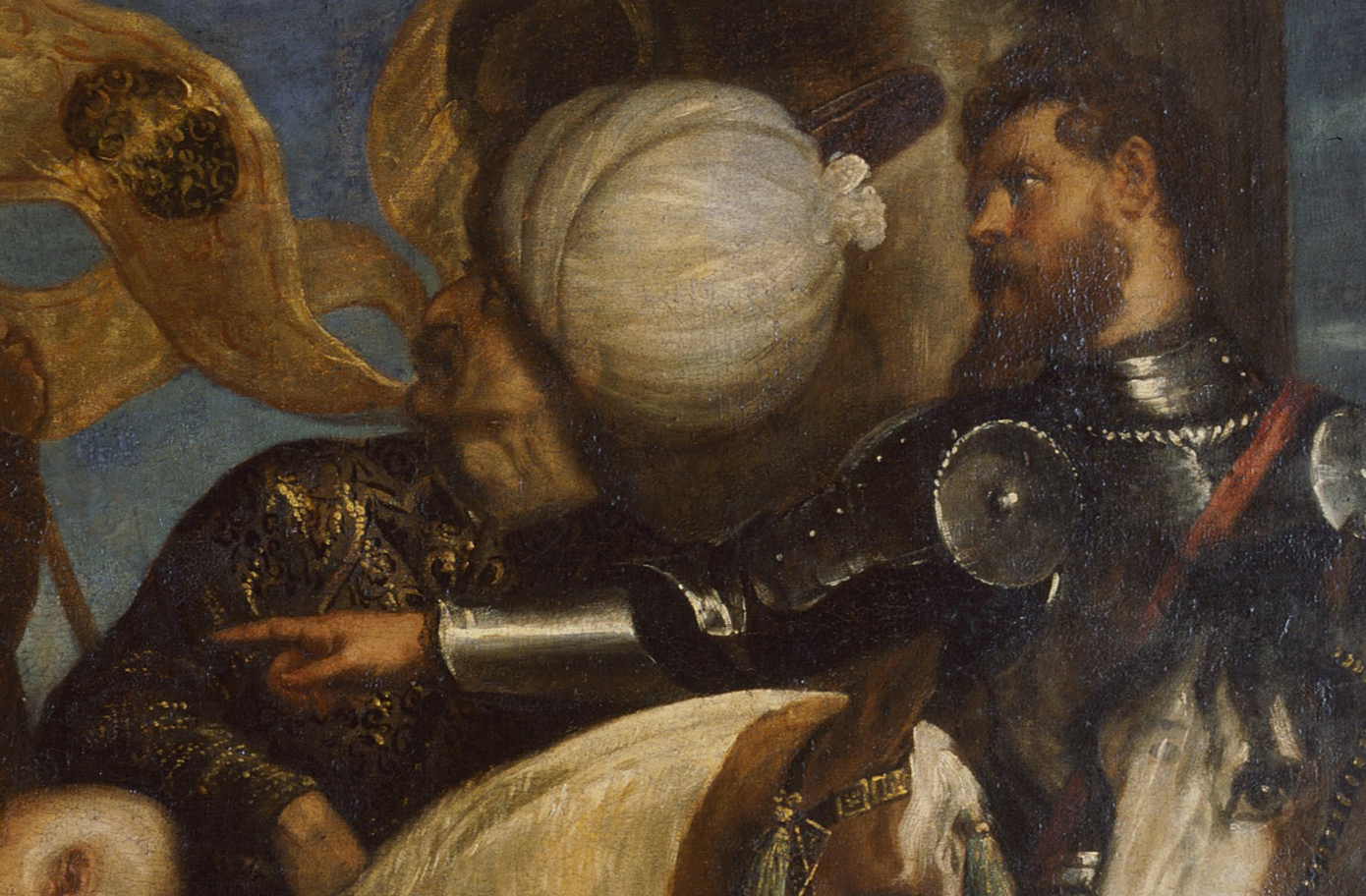
First horse and rider - going left to right - is a Saracen (Ottoman Turk in costume and appearance) thus his horse also might be Turkish - nota bene it is a palomino. The bridle appears to be influenced by the Turkish design, but the curb-bit has some long 'S' shaped shanks.

a closeup on the bridle - the low noseband is very interesting.

but then this net-like covering with tassels is similar to the French XVI century equestrian tack, often designed by the Italian artists. Perhaps it was copied from the Ottomans?

German/Italian/Spanish? - note the long, narrow head, small ears, and a bold face

a closeup - large, expressive eyes and neighing mouth (another very animated horse in this Titian's painting)

 actually the horse is not dissimilar to the horse face in the famous Breda painting by Diego Velazquez - perhaps an Iberian horse then?

this horse and the Velazquez horse have stockings - coincidence, or preference for colorful horse markings...


a breastplate and short-shanked curb-bit

Riders appear in contemporary outfits - one a Saracen (Ottoman Turk) and the other a 'Roman' (Italian or German nobleman)

the soldier in a foreground wears an interesting short crimson velvet? coat with long kontusz-like sleeves (going back to the Median/Persian riding coat kantuš), while the figure behind him has a long expensive chain-of-mail coat on the second figure. Both are wearing swords, with two different kinds of suspension.

 Nota bene in this painting this costume was used as well, except over the armor

staff weapons - a halberd and a partisan, also a flag
Finally, I could not tell if these two horses are shod..
enjoy