Showing posts with label Russian uhlans. Show all posts

Saturday, November 30, 2024

Russian cavalry 1806-7 via Robert Wilson

 Salvete Omnes,


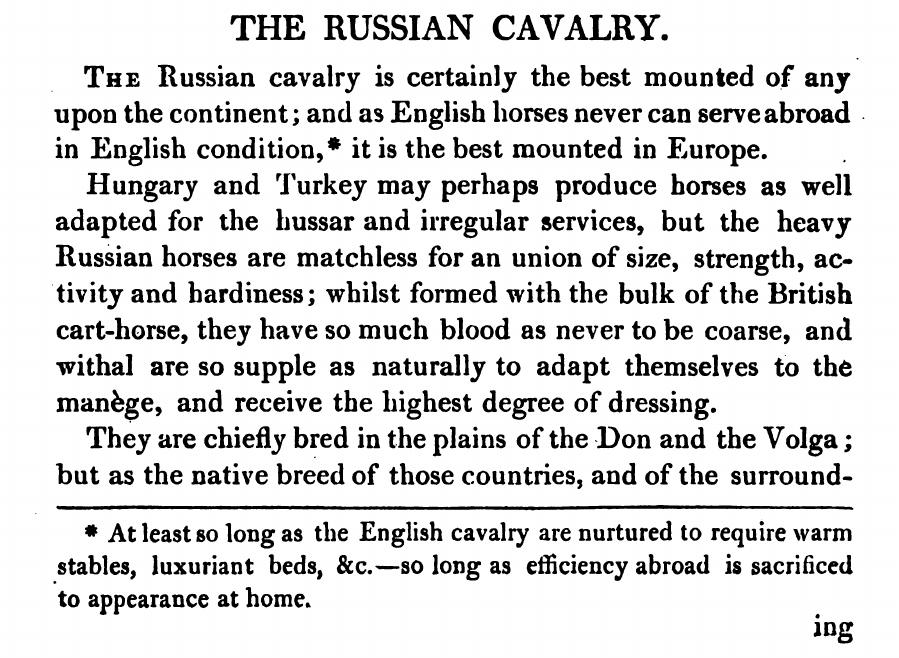
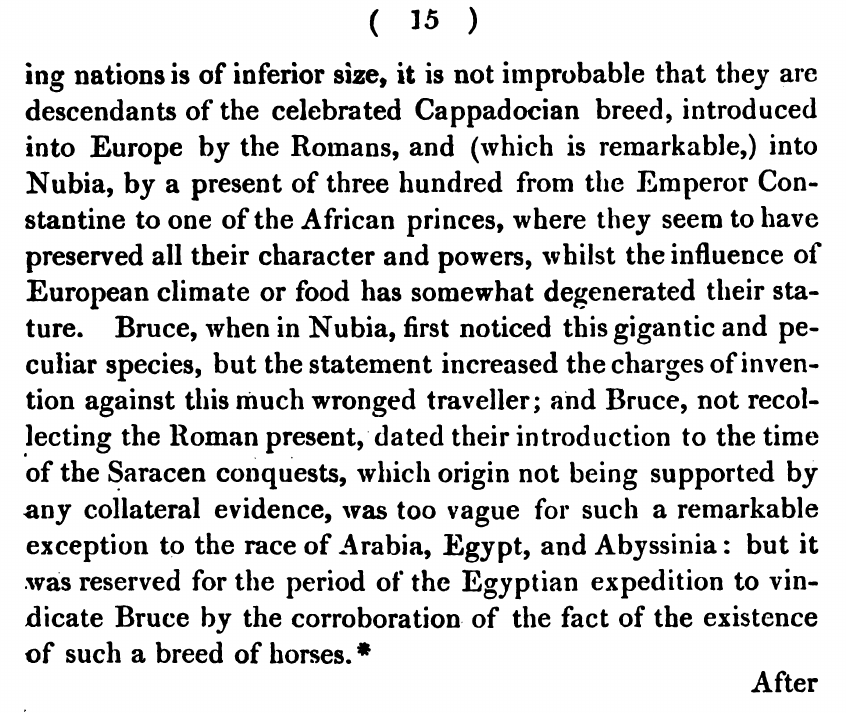
long time ago I bought a book on the Russian Cossack irregular cavalry  during the Napoleonic wars, and looking for some information I checked whether this particular primary source -   Brief remarks on the character and composition of the Russian army, and a sketch of the campaigns in Poland in the years 1806 and 1807 -   cited in there was available on line.

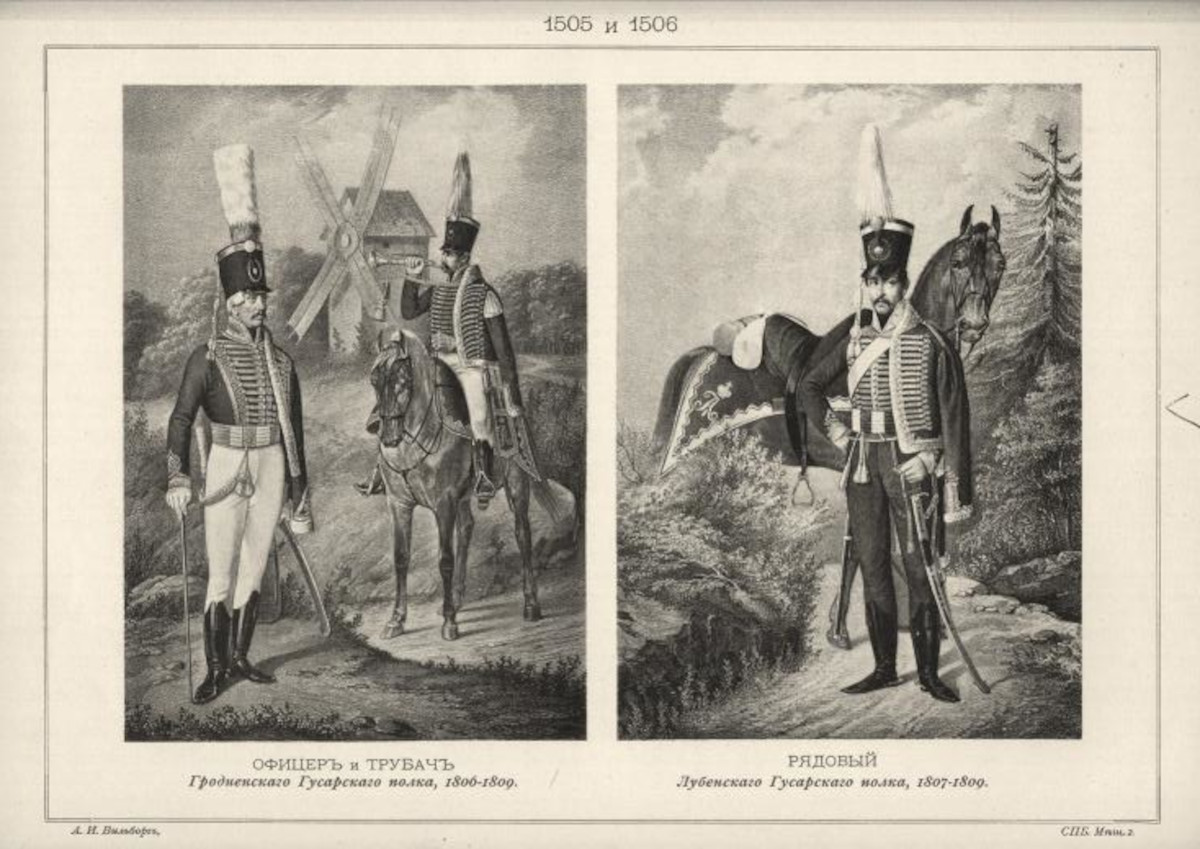
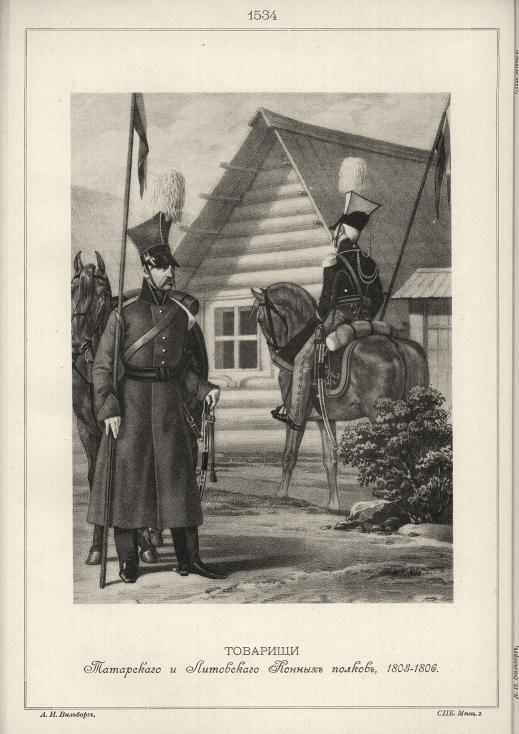
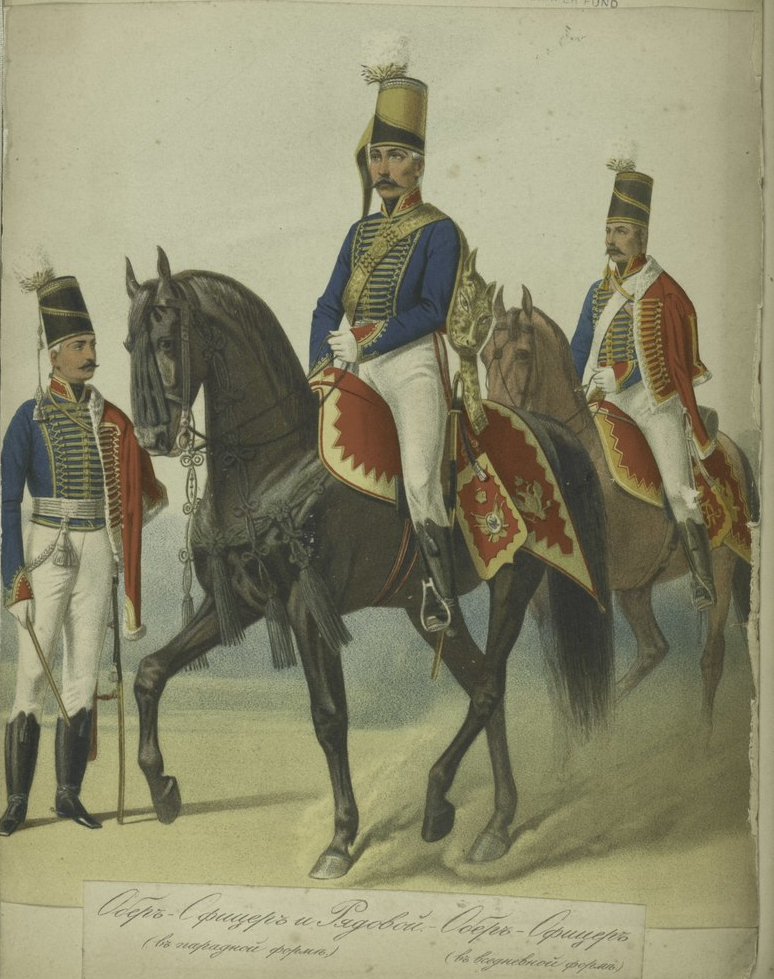
A. V. Viskovatov - Istoricheskkoe opisanie Odezhdi i vooruzheniya Rossieskikh


Thankfully there are many sites where you can read or download to read this 1810 source by Robert T. Wilson. My favorite is world library Archive - here you can have the link.

Wiktor Mazurowski *- Friedland 


From this book I corralled for you general Wilson's remarks on the Russian regular cavalry from his book, describing the splendind qualities of the Russian army horses, comparing them with the period British horses when on campaign:


.


.


.


.

.


.


*Wiktor Mazurowski (1859-1944) was a Polish painter of battles and war, educated in the atelier of Wojciech Gerson in Warsaw,  active  in Russian Poland and after 1918  in the independent Poland. In 1944 during the Warsaw Uprising 85 years old maestro Mazurowski was murdered, along with his wife Zofia, by the German SS unit

Valete


Sunday, February 13, 2022

Maksymilian Gierymski - some sketches

 Salvete Omnes,


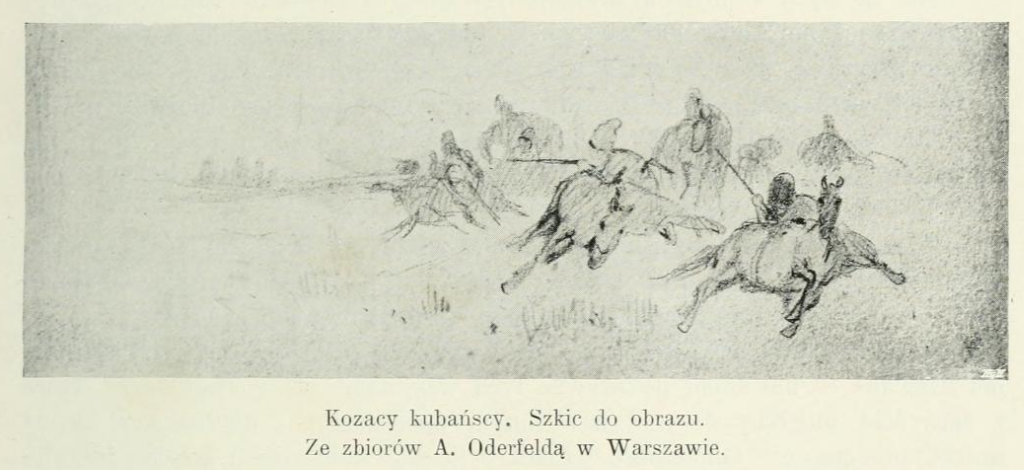
there was this uprising in Polish Russia back in 1863 - and the hopeless struggle known as January Uprising drew 200,000 young men to the guerilla-like armies of the Polish insurgents. One of these soldiers was a very young student Maksymilian Gierymski from Warsaw, the capital of Russian Poland (Congress Kingdom). 


Young Giermyski, born in 1846 AD, participated in the guerilla warfare against the Russian Imperial army, and this more than a year long field service must have been imprinted in his mind's eye, and thus influenced his art too - as evidenced by his sketches and paintings. Maestro Gierymski did not live long and tragically succumbed to tuberculosis in 1874AD, his untimely death cut down his developing artistic career .  But that is every Earthling's destiny - to live and to  die one day for certain. C'est la vie.

Here are some of his sketches  - horses, Russian Cossacks, uhlans and Polish guerillas. 


In the future I will share some more of Max Giermyski's works - eg as related to Mazepa, both the Byron's poem and historic Mazepa in the certain Polish 17th century memoir.

Valete

Tuesday, June 1, 2021

Alexander Sauerweid

Salvete Omnes,

today, new month of June, I would like to bring to your attention the brushwork et al. of Alexander Sauerweid, (1783-1844), a prolific European artist from  Kurland (Baltic vassal state of Polish-Lithuanian Commonwealth 1561-1795AD, and then annexed by Russian Empire and nowadays is part of Latvia). Alexander, disciple of the famous Dresden Academy of Fine Arts, made a trek around Napoleonic Age Europe and upon the invitation of tsar Alexander I of Russia  became an instructor at the Saint Petersburg Academy of Arts.
Alexander painted  portraits of Napoleon's horses - the French emperor had more than a hundred horses at his disposal when on war footing.
eg


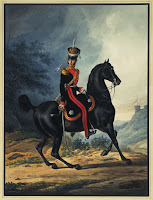
in 1807 he drew the Russian Imperial Army - here  one image of the Russian lancers via archive 


In 1810 he drew soldiers and uniforms of various armies - made available on line via the Napoleon Series archive:
- the Westphalian Kingdom army  eg lancer


 - the army of Kingdom of Saxony  (then in union with Duchy of Warsaw), at that moment in its swan song, soon to be 'dismembered and swallowed' by Prussia. 


  - then again Alexander did plates showing the Saxon army of 1811

cuirassiers


horses  and officers of the Russian army eg


Artnet collection of his works - 

Battle of Leipzig 1813


Valete

Wednesday, December 11, 2019

Käthy, Neptun etc & C.G.E. Mannerheim

Salvete Omnes,

this year on November 30th the world history celebrated  the 80th anniversary of the beginning of the Soviet-Finnish War of 1939-40 or the Winter War, which was the naked and most brutal (bombing of the civilian buildings etc) aggression on Finland, and it was the most heroic war of defense and audacity, and marshal Mannerheim and his army and his people had the honor of stopping the Stalin's Red Army. (US military study of the Red Army doctrine and execution of this war).
In spite of the French, British and American outcry, the western powers of the late 1939 did nothringFinland's defense led by Mannerheim was left to their own designs and steadfastness, with some Swedish armament shipments, and due to their bravery and careful planning (like the use of fixed defenses of the Mannerheim Line, built between 1920 through 1930s) there were able to bring the war to a standstill, saving the most of the country but losing valuable Karelia to Stalin.


the author of this defensive war was the scion of the Swedish aristocratic family settled in Finland since the XVIIIc  baron Carl G.E.Mannerheim, who was the consummate cavalryman, schooled in riding at the Imperial Russian military riding schools, uhlan and chevalier guard officer, and commander of  13th Vladimir Uhlan Regiment (until 1911) and Life Guard Uhlan Regiment of His Imperial Majesty (until 1913) - both in Warsaw, Russian Poland. During the World War I's first year he commanded(?)  the Independent Life Guard Cavalry Brigade, fighting on the front against the forces of the Germany and Austro-Hungarian Empires -eg action on Krasnik. Then he commanded the 12 Cavalry Division until 1917.


 In Finland he became the cavalry commander and the military leader and fought on the side of Whites during the War of Liberty (on Wiki this conflict is called the Finnish Civil War). Next year he again served as the leader, thus secured the Finnish independence and transition to from the Grand Duchy of Finland to Finnish Republic in 1919.
His leadership was instrumental in the survival of Finland during the War World Two, allying the Finns with the Nazi Germany against the mortal danger posed by the Soviet Union until 1944 and going over the Allied side, this securing the Finnish territorial integrity and survival.


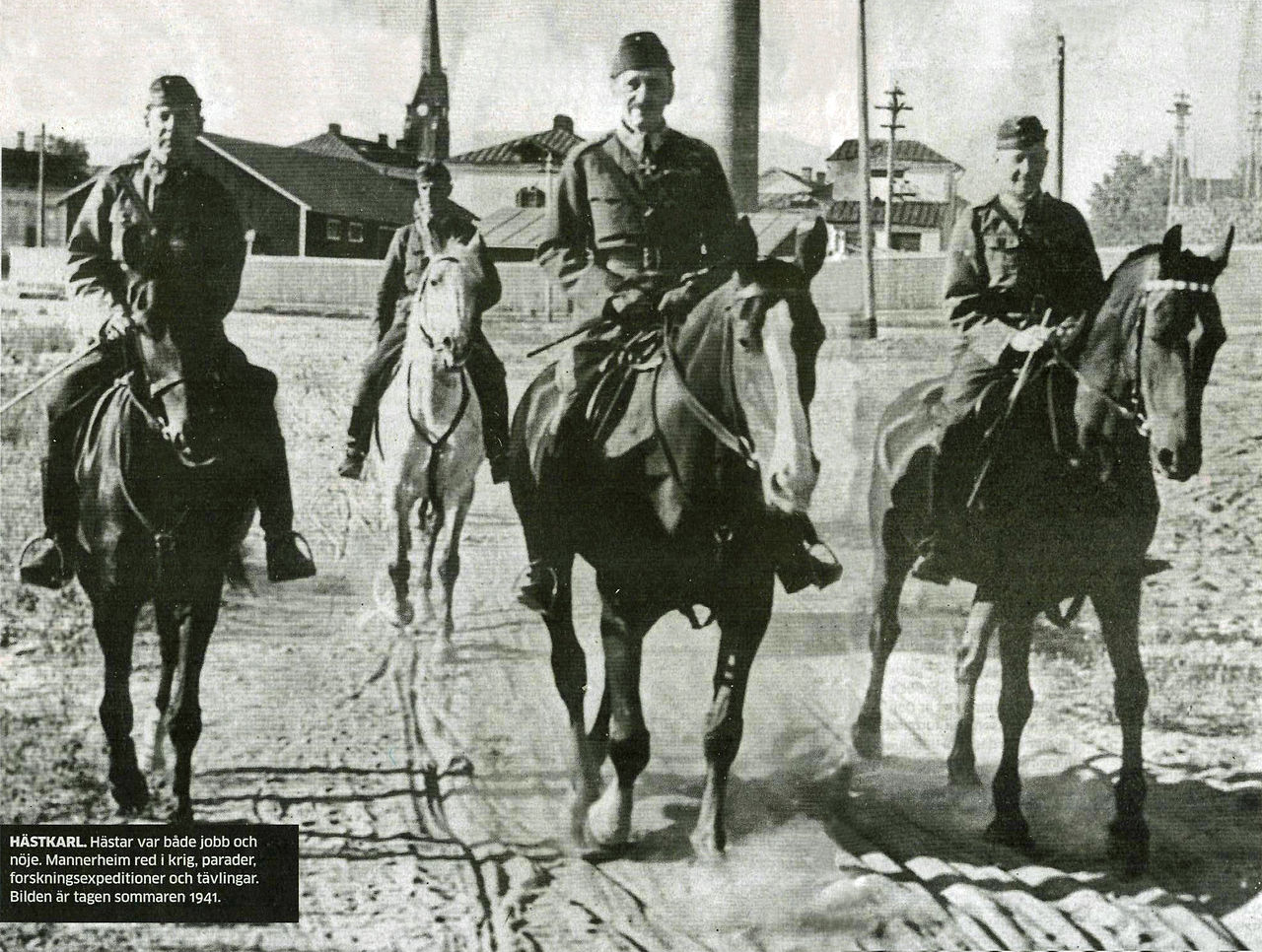
 It is known that he rode Filip across Asia to Pekin (today Beijing), Neptune was his horse in Finland in 1918, and later he rode Andermann that died in 1939. After that he rode Kathy.
More about Neptune and Kathy below -
      Neptune - was a  medal winning Olympic dressage horse, that is Swedish officer major Gustaf Adolf Boltenstern won silver medal in dressage in 1912 Olympic Games in Stockholm, Kingdom of Sweden, and in 1918 Neptune was sold to Mannerheim.

  Kathy - was his horse in the 1930s until the end that is the Mannerheim funeral - .


below photos of Neptune and Kathy under marshal Mannerheim:


perhaps Andermann being ridden by Mannerheim 


across the Central Asia to Tibet and China trek -two volume book  available here.


 Kathy's stone

Valete

ps
all photos from wiki commons