Showing posts with label Jan Odrzywolski. Show all posts

Wednesday, October 6, 2021

Stanislaw Zolkiewski 6-7 October 1620

Salvete Omnes.


Reminiscing a bit today -

401 years ago, in the vicinity of the Dniester River the last act of the military tragedy was  unfolding.
Our Polish-Lithuanian army had been  in full withdrawal from the war laager at Cecora on the River Prut.
After the unsuccessful  Cecora battle, during the night of 20-21st of September 1620AD, our Polish war camp underwent a violent and long bout of disharmony, desertion, open rebellion and  especially  atrocious thievery and robber committed by the camp servants and some unruly elements among the troops, especially accused were the Lisowczyk kozaks.  In light of the threat posed by enemy standing menacingly across the field from the Polish ramparts, the commanders and officers brought the camp to some semblance of order and obedience.  The crimes were not mentioned and left unpunished,  the loss of several thousands who deserted cross Moldavia to the Polish border was hurtful but they pulled the troops in some sort of cohesive army again. When the negotiations with Iskander Pasha failed the plan to withdraw to the Polish border was announced and preparations carried speedily.

The tactical withdrawal started on the 29th of September 1620, two hours after darkness when grand hetman Zolkiewski, field hetman Koniecpolski  and  about 5,000 officers, soldiers and an unknown number of armed servants started their  march away from the safety of the Cecora war laager rampart  and moved  this moving fortress toward the Polish border,  in a wagenburg (wagon fort) formation: 

- vanguard, then the entire cavalry horse herd,  6 files of 100 wagons each pulled by horses and chained, finally a rearguard with small field-guns and infantry. Winged hussars, pancerni kozak, Lisowski kozak soldiers marched on foot along  and on both sides of this fighting moving fortress, their pistols and carbines ready and charged. Wounded and sick were carried inside the wagon train, in the wagons etc.

During this fighting retreat Polish army  wagenburg  fought several large engagements with pursuing Ottoman and Tatar forces, attempting to break and destroy the withdrawing army. 

Namely, first they fought  for 3 days a very tight  rearguard action Sept 30-Oct1-2, 16620, then  beat off another assault on October 4, and the final assault during the night of October 5-6, 16620. Polish army fought well against all these  assaults and successfully repulsed all of them.

Finally,  the tired army marching  its wageburg formation and maintaining military order had  reached the vicinity of the border (some 10 km to the river and then across the river there was Polish border stronghold of Mohylow, today Mohyliv-Podolskyi), near Sawki (the present day village of Sauka) and was resting, while in its immediate vicinity there were columns of  Tatar units circling around, mostly Kantemir murza command.  They marched circa 165km in six night marches, under lots of pressure, with exhausted troops under the almost constant assault of their merciless foe.
It was there, in the camp during the evening of October 6, 1620, when some of the aggrieved officers and companions demanded that our grand hetman Zolkiewski punish those guilty of the robbery and thievery during the rebellion and general desertion and panic  back on the 20-21 st September.
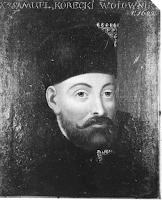
Upon hearing the demand for punishment and return of the stolen property, the camp servants and soldier rabble rebelled and started breaking up the wagon formations,  unhitching the horses and riding away towards the safety of the river. The panic and rebellion spread from the rabble to the troops thus far disciplined, and entire banners dissolved and  unraveled. Within a short while the army ceased to exist. One of the first to run was the famous rider and commander prince Samuel Korecki - who eventually betrayed by the Moldavians, and was captured by the Tatars, delivered to the Ottomans and died in a Turkish prison in 1622.
Grand Hetman Zolkiewski, with his second in command field hetman Koniecpolski,  at first refused to abandon the wagon fort but lacking the necessary soldiers to fend off another Tatar attack and with the light coming from  the burning wagons he  saw the helplessness of the situation and  thus started marching towards the Dniester river,  leading  some most faithful and disciplined troops, the last remainder of the once proud and powerful Commonwealth army. After about 1,5km to 3km of night marching from the burning and looted wagenburg this last  Polish command was attacked by a large body of  Tatars, who dispersed the exhausted troops, killing and slave taking during this terrible night. 
Grand hetman was left with a small group of  cavalrymen, mostly German reiters of Donhoff company along with some faithful like field hetman Koniecpolski, wounded captain Donhoff, winged hussar Abraham Zlotopolski(he survived and made it across the river) , servant Kurzynski, and Silnicki. 

He refused to mount a horse brought by a servant, killing it with  his sword and saying -
-'I am not going to mount [a horse], it would be sweet dying along with you. Let God finish His judgement over me'

So they walked another several hundred of paces, and finally Koniecpolski and Zlotopolski forced our  tired old hetman into a saddle of another horse brought for this purpose.  Some disorganized Polish  cavalry band appeared from the darkness and grand hetman rode away or perhaps his horse carried him away with them, never to be seen alive again.
His body, with signs of struggle, deep wound on his head and without his right arm, was found and recognized by the Kantemir Tatars about 5km from the river on the following day. They left the body where they found it and Zolkiewski's wife, Regina Zolkiewska,  who had sent a special group to find his body, later on  she had a monument built on the spot ( but it no longer exists, destroyed in 1890s). 

Iskander Pasha ordered the severed head to be taken as a trophy to the very Ottoman sultan's court. The head was displayed in Constantinople.

Only about 3,000 soldiers, quarter army, private and Lisowski kozaks (many of them from the September 21st deserters group under Odrzywolski and Chmielecki) , got away to the safety, along with unnamed number of camp servants. The remainder was dead or in captivity (like the wounded and sick in the abandoned wagon fort) to be ransomed or perish there, including field hetman Stanislaw Koniecpolski, Jan Koniecpolski, Mikolaj Strus, Samuel Korecki, janusz Tyszkiewicz, Jan Zolkiewski, Lukasz Zolkiewski, Mikolaj Potocki, Zaporozhian Cossak Samuel Koszko and still very young Bohdan Chmielnicki  and many many other officers, soldiers and camp servants. Some were sent to the galleys, to row to their death the Ottoman boats, others died in captivity being slaves to their Ottoman masters.

Stanislaw Zolkiewski died a heroic and epic death, fighting for his king and country.

Pacem aeternam

Valete

Monday, September 27, 2021

Cecora 1620 - Royal army of Commonwealth or Respublica

 Salvete Omnes,


before there was Chocim 1621 there had been the Cecora campaign, Polish invasion of Moldavia  that ended in a major disaster for the Commonwealth army and most of its participants - including the heroic death of the commander in chief Stanislaw Zolkiewski and his reiter bodyguard.


The Royal army the marched across the Dniester River into the Moldavian territory;
the army had circa 7,000 horses and portions, divided into a  'pulk ' (temporary divisions) large operational units[1]:

Commander in chief - Crown grand hetman Stanislaw Zolkiewski 

 (all units identified by the commanders' names)

1 pulk - commanded by the grand hetman de jure, but it was actually commanded by a winged hussar banner captain Makowiecki

- cavalry in total 1,220 lances and horses:

Winged hussar banners:

1. grand hetman banner led by Malynski - 270 lances

2. starost of Chelm Danillowicz - 150  lances 

3. starost of Halicz Makowiecki - 150 lances

Pancerni kozak cavalry:

1.starost of Winnica Aleksander Ballaban banner- 150 horses

2. Dworycki/Dworzycki banner - 150 horses

3.  voivode of Ruthenia Jan Danillowicz banner -300 horses 

4. Wolmar Farensbach banner - 50 horses

 Infantry  450 portions

1. Royal court Polish infantry company -300 portions

2. Farensbach's company - 50 portions

3. voivode of Ruthenia Jan Danillowicz's German infantry company  - 100 portions

total 1,670 lances, horses and portions


2nd pulk - Crown field hetman Stanislaw Koniecpolski

 Cavalry in total - 1,100 lances and horses

Winged hussars banners:

1. field hetman own banner - 200 lances

2. Marcin Kazanowski - 150 lances

3. voivode of Braclaw Potocki - 150 lances

4. Strzyzowski - 150 lances

Reiiters or German pistoliers

1. Herman Denhoff's banner - 200 horses

Pancerni kozak cavalry

1. Odrzywolski (actually commanded by Ujazdowski) - 150 horse

2. Lewikowski - 100 horse

Infantry 430 portions

1. field hetman's own company commanded by Damiecki - 230 portions

2. Rybinski Polish levied infantry-  200 portions

total pulk number of lances, horses and portions - 1,530 


3rd pulk -starost of Halicz Mikolaj Strus (famous 'defensoe' of the Kremlin in Moscow in 1611-12)

all Cavalry unit

Winged hussar banners

1.son of voivode of Podolia Sieniawski - 100 lances

2 Malinski - 150 lances

Pancerni kozak cavalry

1. Mikolaj Strus own banner - 100 horses

2. starost of Chmielnik - 100 horses

3. Kowalski - 100 horses

Private volunteers and their retainer - 1500 horses

total pulk number of lances and horses - 2,050 


4th pulk - prince Samuel Korecki

Total cavalry numbers - 600 lances and horses

Winged hussars banners:

1. prince Korecki's own banner -150 lances

2. castellan of Kamieniec Podolski - 100 lances

3. Wrzeszcz - 150 lances

Pancerni Kozak banners:

1.prince Samuel Korecki's own - 100 horses

Light cavalry -

Lithuanian? Tatars - 100 horse archers

Infantry companies - total 300 portions

1.Wiadrowski - 200 portions

2.Ujazdowski - 100 

Total pulk numbers - 900 lances, horses and portions


5th pulk - starost of Kamieniec Podolski Walenty Kalinowski

  total number of lances and horses - 500

Winged hussar banners:

1. starost of Kamieniec Podolski  own - 150 lances

2. Firlej -  150 lances

Pancerny Kozak - 

1.  Kalinski - 100 horses

2. Wachowski - 100 horses

 Infantry

1. Starost of Kamieniec Podolski own Polish infantry - 100 portions

2. Starost of Kamieniec Podolski own Ruthenian infantry - 100 portions

total pulk number of lances and horse and portions - 700


Finally, Teofil Szmberg was nominated  as the commander of all artillery (16 small field peices and some heavy muskets mounted on wagons  ), while Stanislaw Trzebuchowski became  the general commander  of infantry.

Master of camp/wagon laager was Jan Odrzywolski.


about 3,200 men of this army were the so called 'state soldiers' and under the direct command of the grand hetman, while about 3,600 belonged to the private banners and companies owned and paid for by magnates and lords, esepcially Kalinowski and prince Korecki and their 'vassals' and partisans.
additionally, other private and mercenary units came streaming in to join the marching  royal army between the 1 of Spetmeber and 12th of Septmeber, like the 800 soldiers under Stefan Chmielecki, who was a partisan of prince Korecki.   Janusz Tyszkiewicz joined the army with 400 Cossacks and 200 infantry.

Then,  there were the 12 banners of Lisowski kozaks or  Lisowczyks - various sources Hurmuzaki and Miaskowski etc state different numbers, perhaps between1,300 to 1,700 most seasoned horsemen - -  under Walenty Rogawskiwith very few retainers if any, but for their commander and officers retinues. They came late on the 11th of September, with a 100 horse banner of Slowinski,, and with another 150 horses banner of prince Zbaraski?.

In total, before the hostilities on the 17th of September the Royal army might have been circa 10,000 lances, horses and portions, and in addition  perhaps 8-10,000 camp servants (the infantry was very small in number while cavalry companions relied on their service), that provided for horse fodder, food and herding horses.

 On the 2nd and 3rd of September this army, already divided by politics and personal dislikes, crossed te Dniester River, without awaiting the troops coming to join them from the interior of Commonwealth.

On the 7th of September hospodar or prince Graziani join the royal army with as little as 600 Moldavians and mercenary Serbians (Graziani had promised 15,000 troops, but as we can see he  failed miserably). Additional 400 Wallachians  horsemen led by two captains broke away from the Ottoman command and joined the royal army.

On the 12th of September the entire army reached the old fortified campground near Cecora on the Prut River and on that date perhaps as many as 11,000 thousand lances, horses and portions camped at Cecora war laager. Instead of marching on to contain and  besiege   the Iskander-Pasha small Ottoman army at Tehinia/Bender, our grand hetman chose to await the enemy at the fortified war laager.


[1] army and war camp organization near the so called 'Gruszka' wilds (12 km east of Mohylev)  Sept 1, 1620AD re , Majewski, Cecora, p. 142-45

Valete

Friday, June 11, 2021

Polish army at Batoh list - I

 Salvete Omnes,

continuing with Batoh battle and massacre topic


I am going to provide the list of known Polish banners and regiments at Batoh wilds May 31-June 2nd, 1652.
(compiled by  Polish historian Wojciech Jacek Dlugolecki in his book Batoh 1652) - 

                             Commander-in-chief - Crown Field hetman Marcin Kalinowski

today the heavy cavalry and our winged hussar banners and their commanders and/or owners:

 1.Crown Quartermaster (Obozny koronnyy) Samuel Kalinowski's banner,  commanded by 'porucznik'?(lieutenant) Sokolnicki - 116 horses and portions

2.Crown Field Hetman Marcin Kalinowski banner  - 150 horses

Stanislaw Zygmunt Druszkiewicz , Bozawola coat of arms, was a hussar companion in this unit and he survived this battle to have an illustrious career as ...a light cavalry commander during the later years well into the reign of our king Jan III Sobieski. Druszkiewicz wrote a diary published

3. Crown Standard-bearer Aleksander Koniecpolski's banner, commanded by Stanislaw Wyzycki - 150 horsess


Stanislaw Wyzycki

then a podstarosci perejaslawski (substarost of Perejaslaw) Stanislaw Wyzycki, Gieralt coat of arms,  survived this rout and massacre, and later commanded as a porucznik (lieutenant) winged hussar banners during the later wars eg at the great victory at Cudnow (1660), rising to a rank of regimentarz (Deputy Hetman) in a Crown Army. He was an elector of our king Michal Korybut Wisniowiecki, and then of Jan III Sobieski. A member of Sejm in 1676, died in 1680.

4.Crown Grand Marshal Jerzy Lubomirski's banner - 123 horses

5.Starost of Krasnystaw Marek Sobieski's banner - 85 horses

6.Starost of Sokal Zygmunt Dynhof(Denhoff)'s banner - 111 horses

7.Tobiasz Minor's banner - 75 horses

Tobiasz Minor of PrzybyslawicePolkozic coat of arms -   pan Tobiasz might have been present at Batoh, and certainly his winged hussar banner, that he had lead since 1649,  was annihilated there, but he survived, along with his much reduced cossack banner, and fought on at least until 1653, while his sons Aleksander and Jan continued military careers.
He was a seasoned soldier, fought at Orynin (1618), was not present at Cecora 1620 and Chocim 1621, but took part in the victorious  battle of Uscie 1629, where under the command of castellan and future field hetman Stanislaw Lancoronski, Zadora coat of arms, Crown forces defeated Tatars. During the Chmielnicki Rebellion he was active from the very beginning, and fought with distinction and bravery.

8.Castellan of Chernigov Jan Odrzywolski's banner - 63 horses

Jan Odrzywolski (1590-1652),Nalecz coat of arms,  was a famous Polish raider and cavalry commander of the Crown army, especially during the 1618-1625 period, eg he led a successful Crown army raid against the Tatars dwelling  the Pontic shore, in the Akkerman and Ochakov shore area.
He was a cossack banner commander during Stanislaw Zolkiewski's  Cecora campaign of 1620, and during the inconclusive battle he was on the right wing of the Crown army. Then when in the fighting withdrawal  he, along with famous raider Stefan Chmielecki and , abandoned Zolkiewski's war laager, broke through the Tatar encirclement and thus was saved, but it was not a honorable action on their part, and he might have lost his Crown Guard position as a result of his avtions. Historians are not certain if he was present at the battle of Chocim (1621), and perhaps he might have provided, again along Chmielecki, services as a commander of the smaller forces screening and deterring Tatars from raiding deeper into the Crown lands.
During the battle of Martynow (1624) fought with bravery and distinction against Kantemir  mirza , leading special advance units into the fray, and after the battle he, along with Chmielecki, commanded the special group organized by hetman Koniecpolski that kept pursing the defeated Tatars, inflicting serious casualties upon this elusive enemy. 
Later  being a professional soldier he also became a politician and a magnate, and eventually a senior army commander. Twice  he was a Sejm representative from Braclaw voivodeship in 1639 and 1642, became a senator (a castellan) and important southern Polish Crown personage, both in politics and military areas.

His command suffered a defeat inflicted on them by the Tatars during the victorious  battle of Kamieniec (22nd October 1633), battle won by hetman Koniecpolski . Working with the grand hetman he was trusted and often carried important tasks and duties, eg he organized hetman Koniecpolski's  war laager marching towards Ochmatow 1644, and during that battle he commanded the forward units that defeated the Tatars and then pursued  the Tatars all the way to their camp there, making important addition to the total victory there. 

During the Chmielnicki Rebellion he was a senior officer of the crown armies. eg fought at Korsun battle (1648),and during tactical Korsun withdrawal commanded the center of Polish war laager where he was taken prisoner by the Tatars. During the great battle of Beresteczko (28-30th June 1651) he commanded his own 'division' on the left wing of the Commonwealth army. Starting in 1637 he was the owner of one pancerny cossack banner and one winged hussar banner. 

During the battle  of Batoh (1-2nd June 1652)  he commanded, along with Marek Sobieski, the cavalry formations against the Tatars.
He was murdered on June 3, 1652 at Batoh.


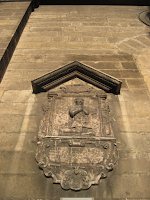
Stanislaw Wyzycki - epitaph at the Bernardine church in Lviv


So in the Crown army under hetman Kalinowski there might have been 873 horse strong detachment of winged hussars. These banners were all but destroyed - according to the army rolls and registers for the 2nd and third quarter of 1652AD.

to be continued

valete