Salve,
some time ago in June I
mentioned this anniversary - 718 years since white eagle (aquila) was officially adopted as Poland's national emblem.
Eagle has been the symbol of states and tribes and clans since time immemorial, Greeks, Romans, and Scythians, just to name the few. In ancient Greece and republican Rome eagle was the companion of
Zeus and
Jupiter, carrying their thunderbolts, one of the symbols of the Roman Republic. With these divine thunderbolts in his claws eagle also became the symbol of Imperial Rome, and the symbol of
Rome's legions. Imperial
Byzantium had a
two-headed eagle as its symbol (according to Konopczyński it derives its symbolic two heads from Roman god
Janus), while
Charlemagne had his palace in
Aachen adorned with a large image of the royal
raptor. It would eventually became the symbol the the
Holy Roman Empire. (in 1410)
During the high Middle Ages the lands of central and south central Europe, from
Modena, Karniola, and
Serbia in the south , through
Tyrol,
Bohemia,
Moravia, Holly Roman Empire and lands of Polish principalities eagle would become the principal image in their coats of arms., while in the north and west image of the lion would dominate.
In Polish history - the
Piast state - the first image of an eagle come from a
denarius minted by our first king
Bolesław the Brave, while the first mention to the eagle may come from
Gallus Anonimus, the author of his 'Gesta principum Polonorum,' who wrote in the early XII century that Polish troops carried victorious signs.
Wincety Kadłubek, another chronicler and author of the first use of a 'res publica' term for Poland, wrote that in 1182 our duke
Kazimierz II's troops carried ''the signs of a victorious eagle, symbol of royal majesty,'' in the battle against the
Kievan Rus troops at the battle of
Brest in 1182., so during the
Period of Fragmentation various Piast dukes and princes adopted eagle as their heraldic symbol, first in
Silesia, then in
Lesser Poland and
Greater Poland, later in
Kujawy and
Mazowsze.
First it was duke of Wrocław
Henryk IV Probus who already possessing the heraldic symbol of
black Silesian eagle,, added white eagle, but without a crown, as his second heraldic symbol in 1290, when he took the throne of Krakow and Lesser Poland. A month later he had the same eagle, but with a crown on its head, on his seal.
Upon Henryk IV's death, his successor,duke of Greater Poland and
Gdańsk Pomerania ,
Przemysł II took, as per his agreement with Henryk IV, the throne of Kraków and with it the heraldic symbol of the royal seat - White Eagle. It has been determined that the eagle was white, with a gold ribbon across his wings and chest in the fashion of the Silesian eagle, and its heraldic shield/field was red/crimson.
I started this project - drawing king Przemysl II in his most royal appearance, most likely mounted, on a fully caparisoned horse.
sketches:
.
sources
.. from National Archives at Kraków :
Duke
Henryk IV Probus - with
Silesian eagle on his shield - a drawing from his tomb
.. Henryk IV Probus from his sepulchre - coats of arms on Poland and Silesia
.. Henryk IV Probus as shown in the mauscript
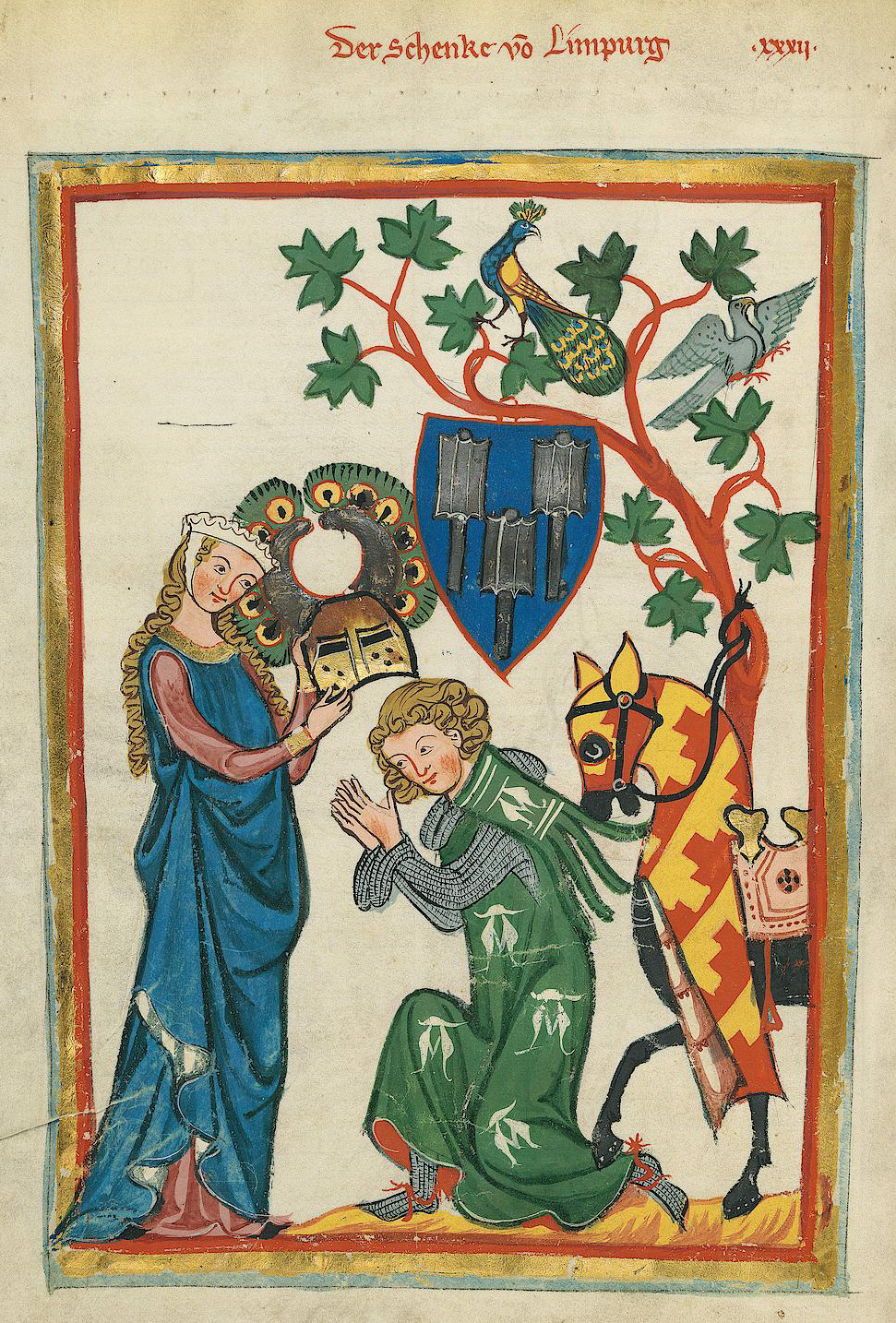
Mannese Codex - great source for the period costume, weapons, heraldry and horse tack - here the caparisoned horse
.. another Silesian Piast prince
Henryk V of Legnica
..Bolko I of Świdnica-Zębice - particularly splendid effigy of this Piast prince
..
King Przemysł II as drawn by
Jan Matejko
.. king Przemysł II's royal seal - Premisl II Dei Gratia Regis Poloniae Domini Pomeraniae
..
Szczerbiec
.. the inscription on this Przemysław's seal says: Redidit ipse potens vitricia signa Polonis (God Almighty returned Polish victorious signs, ie, the eagle)
..
to be continued
* into to Polish heraldry on
Wikipedia
Ps
also, Sept 8 is an anniversary of the Orsza victory(
Orsha battle) fought between the Lithuanian-Polish forces under
knez Ostrogski (
Kanstancin Astrožski ) and the Grand Duchy of Muscovy army under Chelyadnin and Knez Bulgakov-Golica in 1514. The battle is famously depicted in the Orsza painting (National Museum in Warszawa), one of the most important iconographic sources to the period; please note that early Polish hussars (based on the Serbian and generally speaking Balkan mercenaries) are depicted in the painting.
A
song celebrating this victory in Belarusian - (and
lyrics)
another
song (in Belarusian)