Salvete Omnes,
two VI [6th] century BC painters from the ancient Greek world - in the theme of Iliad
Exekias - the pottery from the MET.


Painter of the Vatican Mourner -

.

Valete
Salvete Omnes,
two VI [6th] century BC painters from the ancient Greek world - in the theme of Iliad
Exekias - the pottery from the MET.
Painter of the Vatican Mourner -
Valete
Salvete Omnes,

a short entry but the study is enjoyable and well researched -
a Master thesis by Stephanie Baldwin - Bit by Bit: an Iconographic Study of horses in the reliefs of Assyrian king Ashurnasirpal II (883-859B) - Univeristy od Stellenbosch.


The study can be had from the author's Academia page .
Enjoy
Salvete Omnes,

Cheiron Journal Yt channel had their presentations and discussion on the ancient (Bronze Age - New Kingdom ) Egypt and their horse training and their chariotry.
During this session Lonneke Delpeut introduced the image of horse desensitizing from the Ramses/Ramasses III temple of Medinet Habu.
Later this University of Vienna scholar made available her own article on the relief and its implication- Academia.edu.

.

The later part of the presentation dr Delpuet showed the discovered and reconstructed horse stables at the Ramses/Ramesses II's capital city of Pi-Ramesses(Qantir, Egypt). Interesting aspect of the stable construction was the creation and use of horse urine containers, presumably once collected the urine was applied in the leather tanneries process ( urine still can be used for tanning processes today). The stables had access to the river, allowing for washing and watering. Fascinating subject on many levels.

Presentation from the exhibit -The Horses of the Pharao
..
the second lecturer was Miriam Bibby who presented more material on the horse training within the context of chariotry. Eg we learn the construction of the chariot horse harness from the royal depictions, as well as the names of the Ramses II's chariot horses at Kadesh - Victory-in-Thebes and Mut-is-Content.

Valete
Salvete Omnes,

from the Journal of Eastern Mediterranean Archaeology and Heritage Studies (2026) comes this article:
On Stallions and Mares: Gendering of War Horses used in Ancient Egypt. by Uros Matic & Loneke Delpeut. - so perhaps you may find this approach to horse history of interest


Article is nicely illustrated too.
enjoy
Valete
Salvete Omnes,

Cyprus - Late Bronze Age - had a vibrant chariot culture. Cyprus polis were trading with Ugarit and other trade centers in the eastern Mediterranean.


.


Enkomi - British Museum - an article by Veronica Tatton-brown.

Valete
Salvete Omnes,

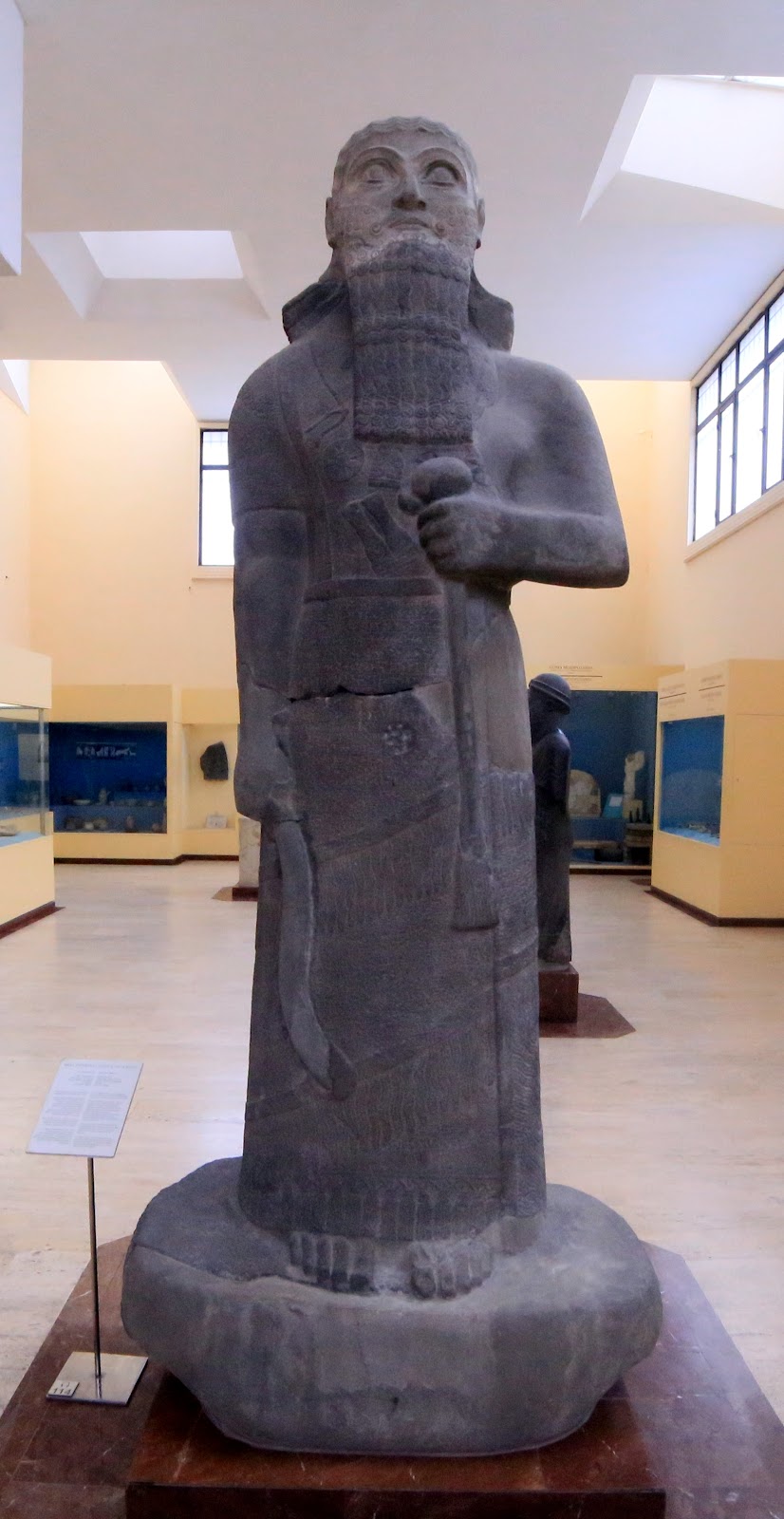 |
| king Shalamanser III, son of Ashurnasirpal II, king of Assyria, ruled from 859-824BC |
a little trip into the depths of the Western Asia during the early Iron Age, when Assyrian kings and their warriors dominated and told that world about their conquests and grandeur through monumental art and inscriptions.
the martial and equestrian art & history connected to the Neo-Assyrian king Shalmaneser III and his conquests I have already presented on my blog.
Today we will visit the so called Black Obelisk, from the British Museum collections, when British subjects uncovered, pillaged and bought old art from many ancient but often forgotten locations.


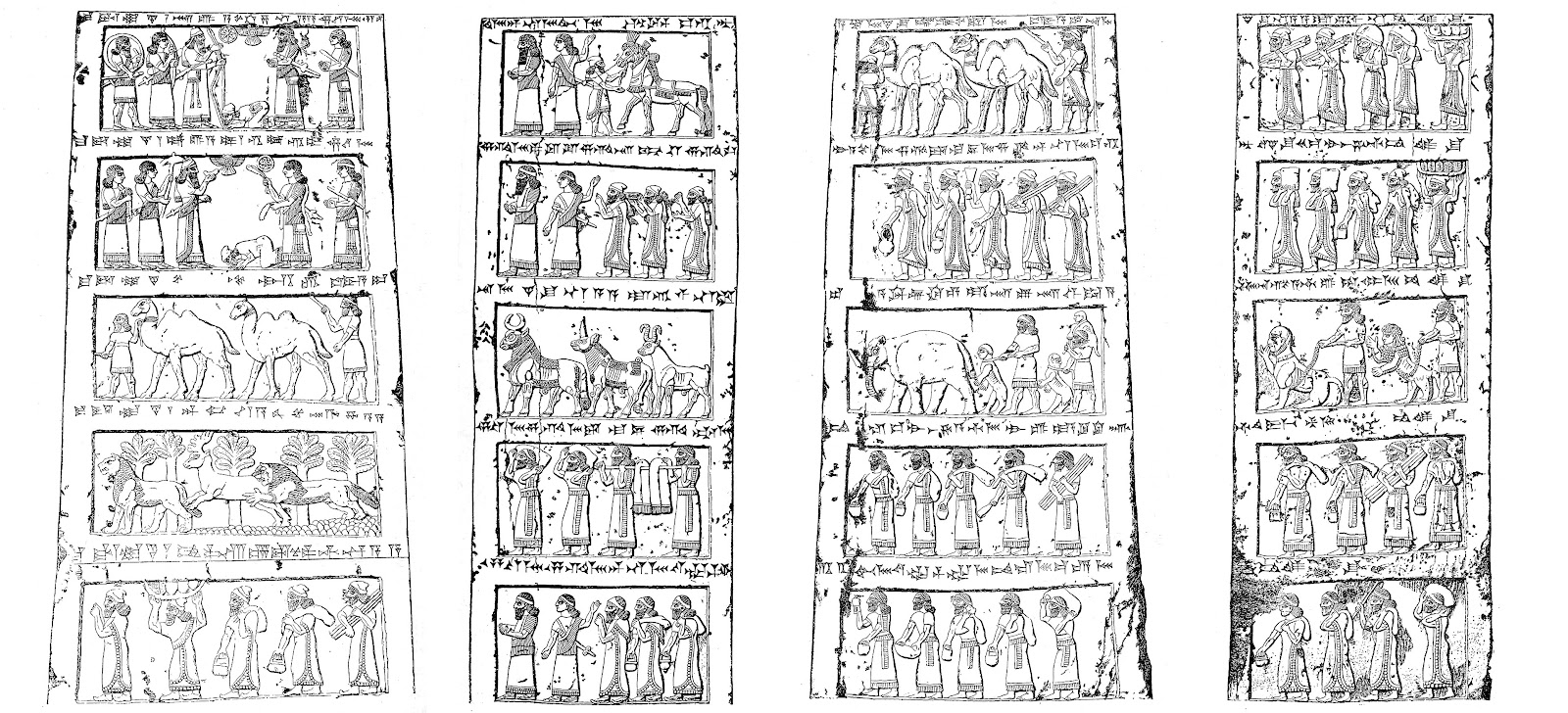
The Obelisk or stela, from 1846AD in the British possession, came from the Neo-Assyrian Kalhu (Nimrud, near present day city of Mosul) where sir Austen H. Layard discovered this obelisk there during his voyages (you can listen to his own writings about his explorations in Niniveh and Babylon on Librivox).
and shows the triumphal reception of many processions of various vassals and tribute bearers, showing obeisance to the Assyrian king and his court in his 31 year of campaigning and waging power from the land of Assur.

Among them we have a horse from Gilzanu brought by Gilzanean delegation led by Sua, the king - older article on Gilzanu here. Already at the end of the Bronze Age Assyrian sources mentioned Gilzanu (in present Iran) as the area where they got horses, by tribute and commercial exchanges. During the period of of early Neo-Assyrian empire this Gilzanu region/kingodm has been associated with the sites in Northern Iran, among them there is one tepe (hill) known as Hasanlu in the Gadar River valley in the Zagros Mountains (shared nowadays between Iran, Iraq and Turkye). In the stela king had the tribute specified to have been horses trained to harness (chariot horses) and donkeys.
 |
| the led by a groom horse seem to have some sort of an armor covering his, it is a stallion, throat, neck and chest |
 |
| with a bow in his hand great king Shalmaneser III receives obeisance from Sua, ruler of Glizanu |


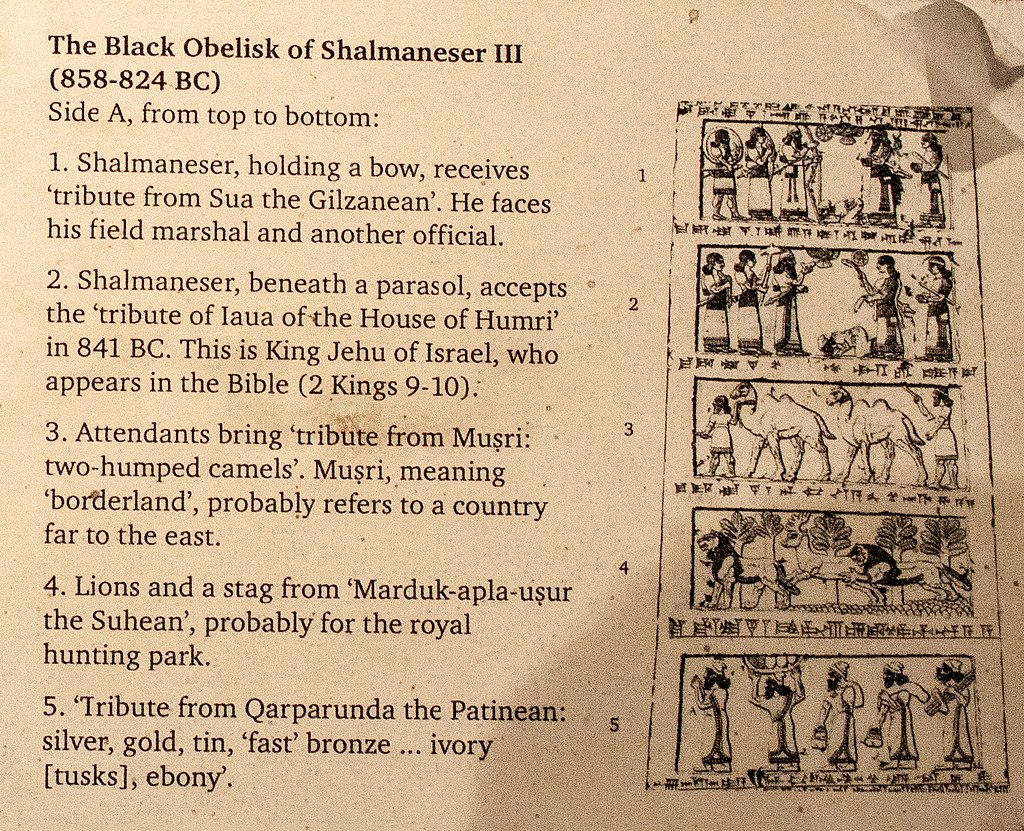
a close up onto the Bactrian Camels, also from Gilzanu

 |
| prostrated king Jehu son of Omri showing obeisance to Shalmanaser III |
 |
| Jehu's tributary procession |
 |
| the Black Obelisk aka stela in the British Museum |
ps
Polish historian prof. Lukasz Niesiolowski-Spano of the Department of History, Warsaw University - his academia page - sees Omri as the first king of Israel, while he also wrote a fascinating article about David, the historical figure and the king of Hebrew Bible.
Valete
Salvete Omnes,

a short entry today, it is summer time - but lots of viewing pleasure, I daresay.


So here are two very interesting, exciting and unusual videos completely breaking and doing away with the narrative of the Bronze Age chariot being a Middle Eastern invention and practice. The presentations are about the Sintashta (Petrovka) culture of the present southern Russia and northern Kazakhstan, their chariots and the chariot reconstructions via experimental archaeology.
In the chronological order:

The Sintashta culture - earliest chariots, fortified settlements and bronze metallurgy.

EXARC - The Bronze Age Chariot of the Sintashta-Petrovka Period
Therefore we are able to see perhaps the very first charioteers from XXI century BC (2100-1800BC) . These were the possible inventors of driving harness and the very vehicle itself, plus the second most epochal aspect - horse breeding, selections and training for war (both archaeologists from the Torun presentation (late May conference in Torun, Poland) have their pages on academia, where, along with another seasoned archaeologist dr Andrey Epimakhov's work.
Upon registering on Academia you can download and then can study detailed explanation of the harness reconstruction, training, equipment, and surviving artefacts etc via their articles and books .
Nota bene, in 1999 dr Anthony , after the1995 carbon dating of the Sintashta discoveries, published his paper - The Sintashta Genesis.

In light of last 40 years of research (eg the most important may be the English language work by prof. David Anthony's 'The Horse, the Wheel and the Language' already discussed here ) and many years of the experimental archaeology then the publications like Osprey Military Publishing:
'The Mycenaeans' (2005).
'Bronze Age War Chariot' (2006) and some others must be corrected as it contains false information and thus is a 'garbage.'
Arkaim/Arkhaim today
Valete


