Showing posts with label chariot Bronze Age. Show all posts

Friday, July 24, 2026

Ancient Egypt horses, stallion & mares - a 'libre' article

 Salvete Omnes,


from the Journal of Eastern Mediterranean Archaeology and Heritage Studies (2026) comes this article:

On Stallions and Mares: Gendering of War Horses used in Ancient Egypt.  by Uros Matic & Loneke Delpeut.  - so perhaps you may find this approach to horse history of interest 


.


Article is nicely illustrated too. 

enjoy

Valete

Thursday, February 26, 2026

Bronze Age Cyprus chariots - Enkomi etc

 Salvete Omnes,


Cyprus - Late Bronze Age - had a vibrant chariot culture. Cyprus polis were trading with Ugarit and other trade centers in the eastern Mediterranean. 


.


.


.


Enkomi - British Museum - an article by Veronica Tatton-brown. 


Valete

Monday, February 23, 2026

Ugarit - Chariots and horses

 Salvete Omnes,


the subject of today's postingi is the late Bronze Age city of  Ugarit in northern Syria, the city most famous for the so called Ugarit texts


Urtenu's house (in French Ourtenou & numbered 18 on the map) excavations brought to life hundreds of clay tablets containing texts dealing with chariots and horses.  

royal fortress 


houses


.


Ugarit had a force of chariots ( 2-horse chariots invented and brought to the Near east from Eurasian steppes) and their riders (  maryannu class, of Mitanni and other Indo-European chariot societies, functioning within the administration of polis at the top of the society),  warriors, including archers, and perhaps later on in the period also some horsemen .

horses appear in the Ugarit myths 

Ugarit was engaged in the horse trade with other states, like Cyprus, Mari, Karkemish & Hatti 

Many chariot parts - yoke saddle bosses and finials  have been found in Ugarit archaeological excavations (eg Caubet 1991), also bronze bits and fragmentary blinkers  - see linked article below.


arrow bronze points


horseman from Ugarit 

. they used armor - bronze

armor scales 

see this huge article on the chariots on Academia by  Caroline Sauvage & Mariann H. Feldman  - Object of Prestige? Chariots in the Late Bronze Age Eastern Mediterranean.(2010)

diagram from the said article


Valete

Wednesday, April 24, 2024

Metal bit - on the Zeravshan River in Bronze Age BMAC & steppe


 Salvete Omnes,

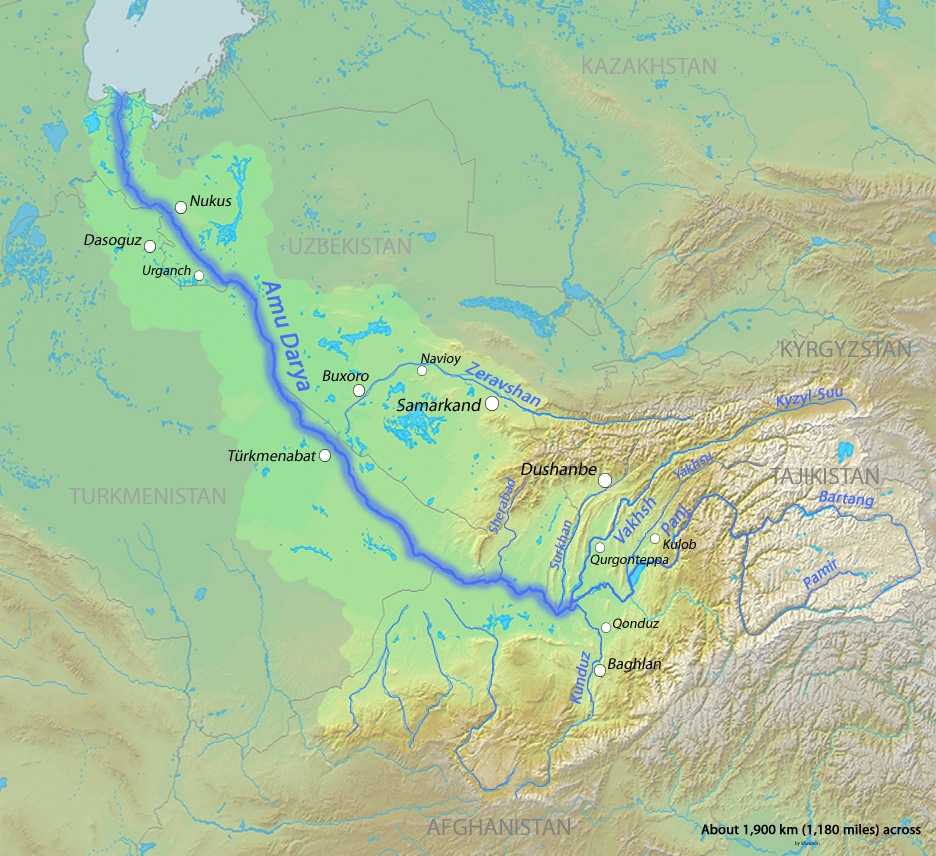
Tajikistan and Uzbekistan share a fine river, that  is known nowadays as the Zeravshan [Зарафшон] River  ( the Polytimeus River of the ancient Greeks, later also  the Sughd River) , which meaning in Persian is the 'spreader of gold,' 


flows from the Zeravshan  glacier of the  Zeravshan Mountains, passes between two mountain ranges, Zeravshan and Turkestan, and empties her waters into the irrigation projects  and sands of the Kizil-Kum (Kyzyl-Kum) desert before reaching the mighty Amur-Daria River.  


Near the famous Panjakent [in Tajik Панҷакент or in RussianПенджикент] in the Zeravshan Valley there is  this ancient BMAC site - Sarazm - that between  IV (Namazga I-II) through late III millennium BC(Namazgan V) was  residing on the edge of the world, between the vastness of Eurasian steppe and its Proto-Indoeuropean  inhabitants and the sedentary civilizations to the south, west and east. It was the center for tin and copper, turquoise trade. With the copper and tin mined in the steppe, processed there and shipped by the Sarazm traders to the Akkadina and Ur elites, to the Harappan, Mohnejo-Daro and Elam sites, as well in the Caucasus and further west.


About 30 km west of Sazam at Tugai, not far from today Samarkand, as Sarazm was being abandoned some Petrovka -Sintashta nomads moved east and settled at the end of III millennium and/or early II millennium (Namazga V) to practice copper smelting and smithing. They moved from the Ural-Ishim steppes with their wagons, cattle, sheep and goats, and chariot-pulling horses.*

Circa 1km from Sarazm there is a burial site at Zardcha-Khalifa. There a male was buried - his plentiful  grave gifts included two bronze bar bits with looped ends; two complete bone disc-shaped cheekpieces and two fragmented ones of the Sintashta type. The bar bits are the older known metal bits found. The arrangement suggests that was part of the chariot team equipment.* 


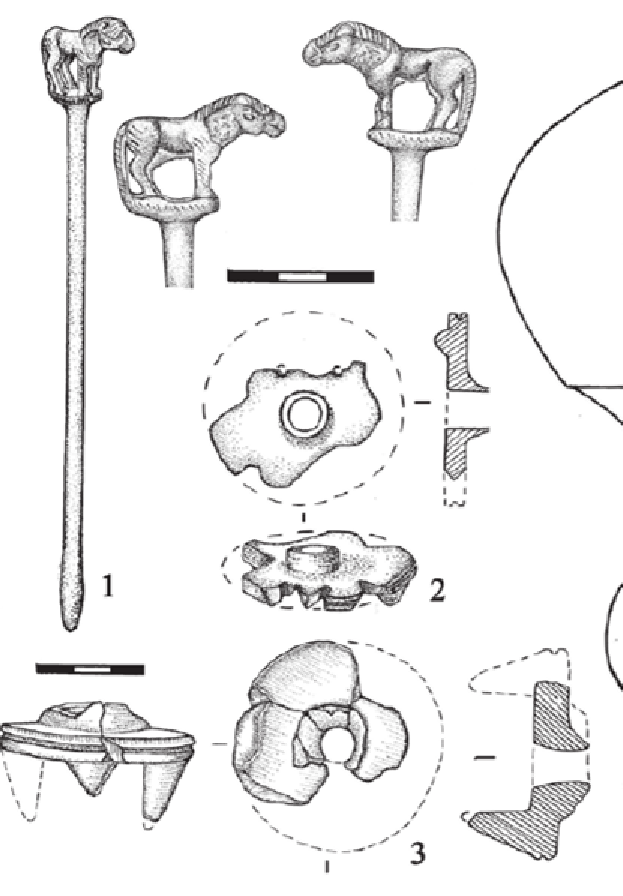
The grave also included the only known BMAC-made pin with the figure of a horse - perhaps this Zardcha-Khalifa chief was a horse dealer?*


Nota bene the ancient Middle Eastern tin, for bronze production, came from BMAC- Central Asia.

*you can read more about this site and this period in dr. Anthony's 'The Horse, the Wheeel and the Language.'* (chapter 16)

Valete


Tuesday, October 24, 2023

Chariots - Rock Tombs of El Amarna

 Salvete omnes,


a quick lope to ancient Egypt, New Kingdom period, the rule of Amenhotep IV/ Akhenaten(Echnaton), the 10th pharaoh of the XVIII Dynasty. 
On Archive world library there is a collection of archaeological reports from the famous site El Amarna - the short-lived capital of sun-worshiping Akhenaten and his empire.


 Nota bene  German archaeologist Ludwig Borchardt discovered the famous bust of hemet-nesut-aat meretef Nefertiti, the grand or main wife of the pharaoh,  at the ruins of el Amarna, nowadays stored at the State Museum in Berlin .


The reports - by a husband and wife team Norman de Garis Daves & Nina M. Davies ( jointly as N. de G. Davies) with Seymour de Ricci - contain hundreds of drawings from the rock tombs at Tell el Amarna.


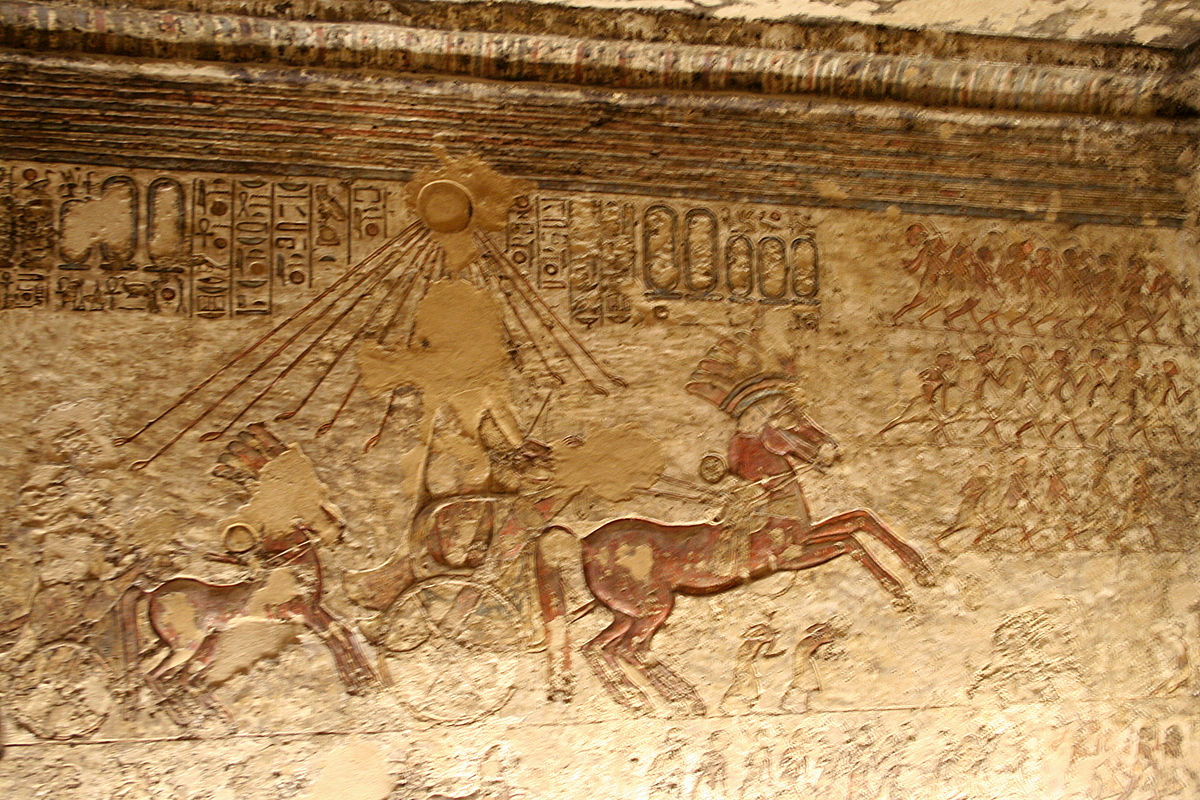
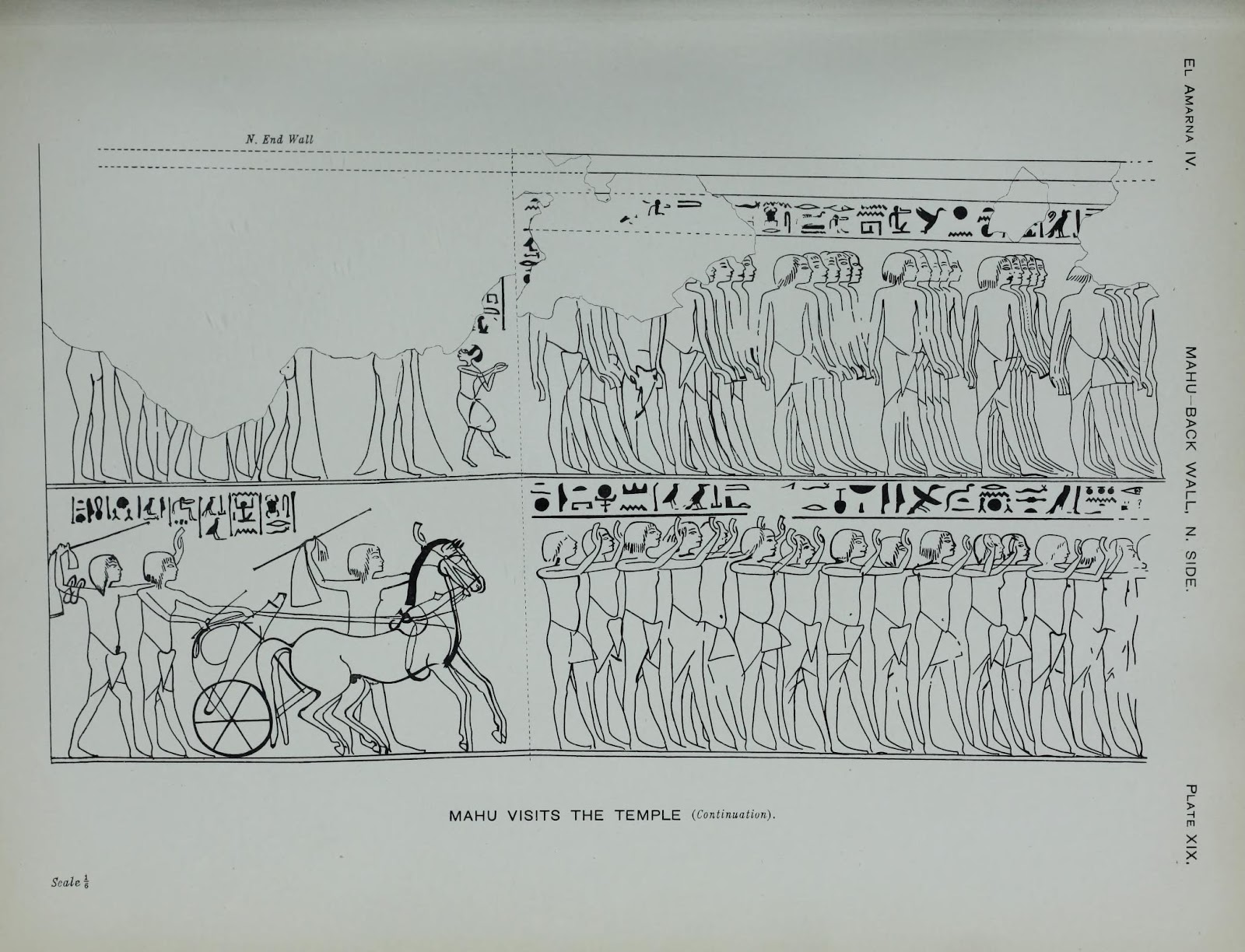
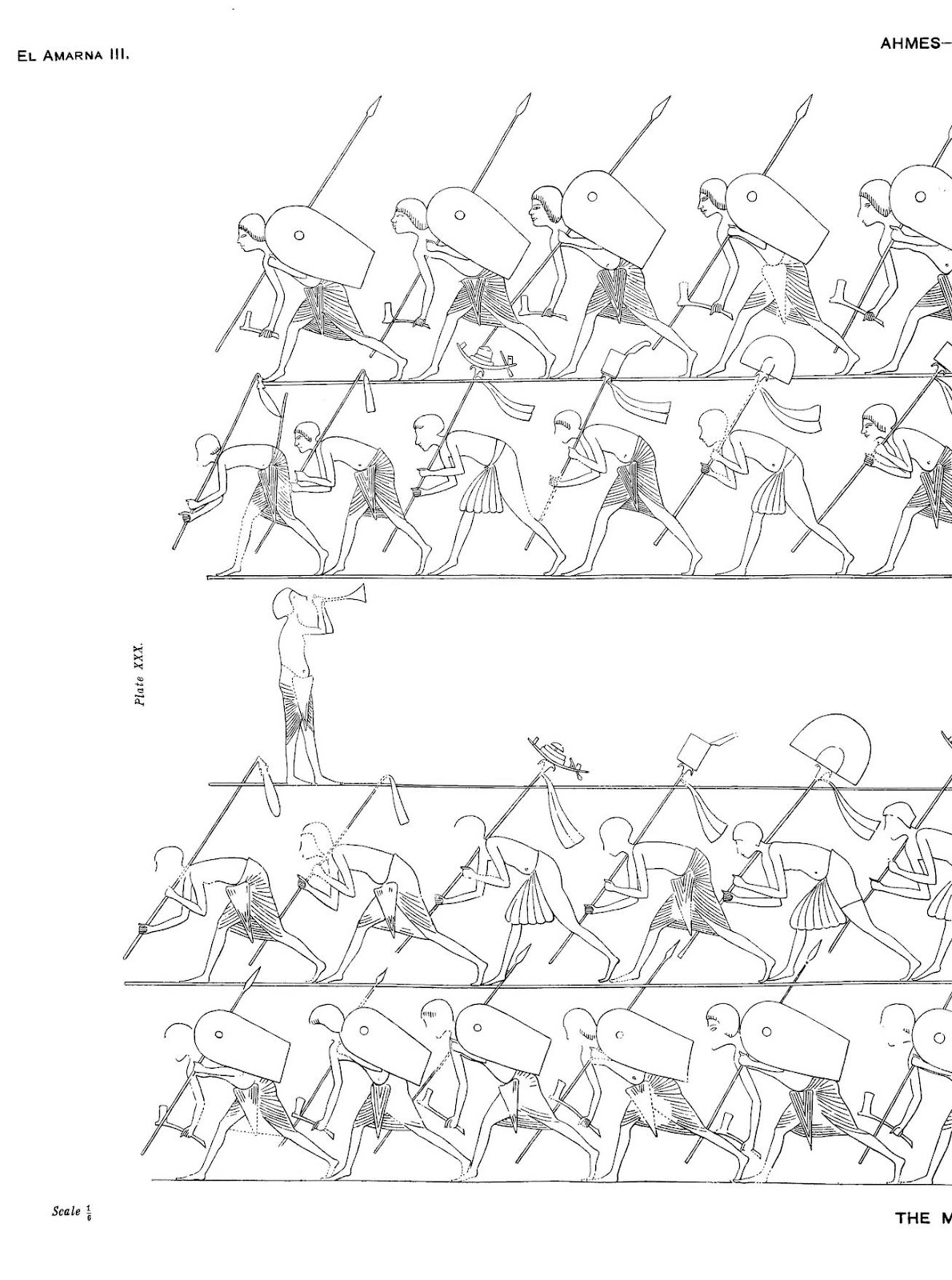
I decided to pick some drawings up for a chariot display for this blog - these are horses and chariots of the royal couple and their family, of the court officials and administrators. 


among the buried at Tell el Amarna was one captain Mahu, 


the chief of the Medjay - the paramilitary force guarding the pharaoh and his capital


tribute, including horses 


Valete