Showing posts with label battle of Warsaw 1920. Show all posts

Monday, August 15, 2022

Piotr Michalowski and Polish Soldiers Feast Day

 Salvete Omnes,


Today is a good day to celebrate if you are a Polish Polonian - :)  and more than 1000 years of Polish Armed Forces 


sadly, the current government felt it was  not appropriate to celebrate this Armed Forces Feast Day with a  military parade in Warsaw, with Polish Armed Forces respective representational units marching in the capital city, and hundreds or even thousands of reenactors did not march either, like they did in years prior, with yours truly in 2016.


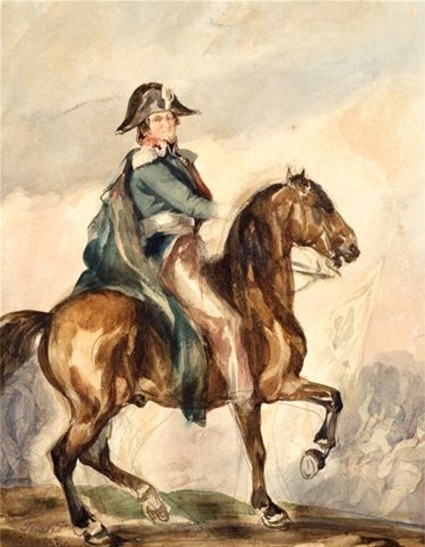
So why not some beautiful art to wipe the tears of rage and disappointment - hence Piotr Michalowski's works come in handy 


and we reminisce about the Polish Armed Forces more then a millennium long tradition with Michalowski's painting showing our good king (then still official but a Piast prince) Boleslaw I Chrobry entering Kiev/Kyiv on August 14, 1018. 


Polish king came to help his son-in-law prince Sviatopolk I of Kiev against their enemy prince Yaroslav. Our king Boleslaw's Kiev Expedition was a grand success and brought lots of plunder and booty, including princes Predslava, his new wife in common. With Boleslav's entry  into the capital of Kievan Rus  comes the origin legend of our Crown sword, Szczerbiec, 
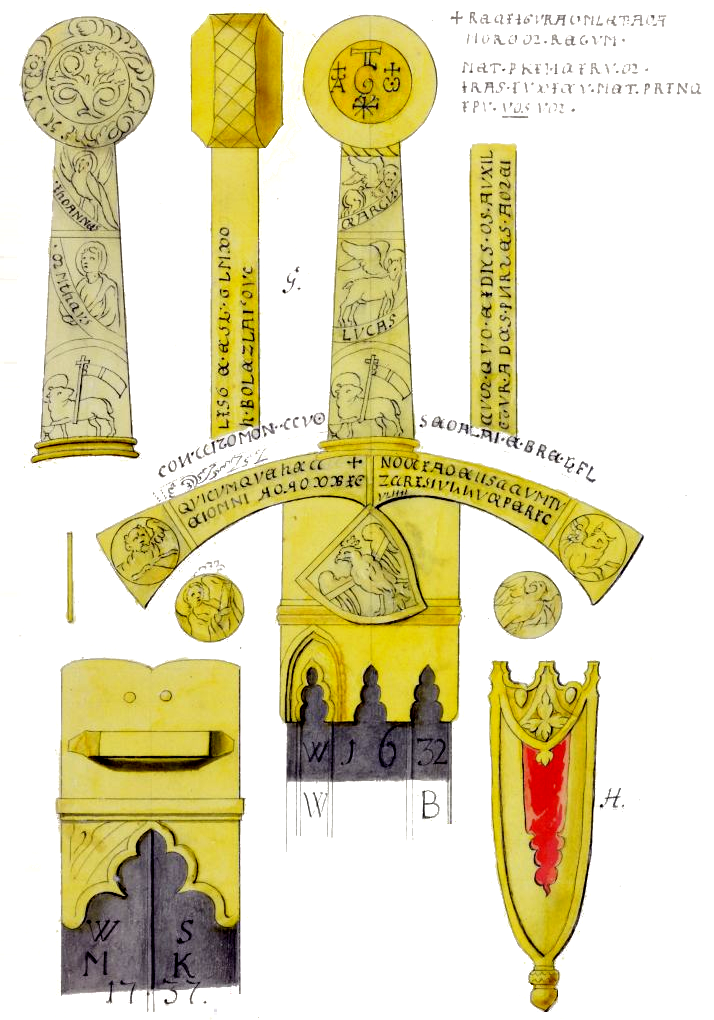


where Boleslav was to chip his sword against the  Kiev's Golden Gate.  Jan Matejko also painted a canvass showing this moment of Polish Piast ruler triumph.


Poland Piast realm under Boleslaw I Chrobry (the Brave)
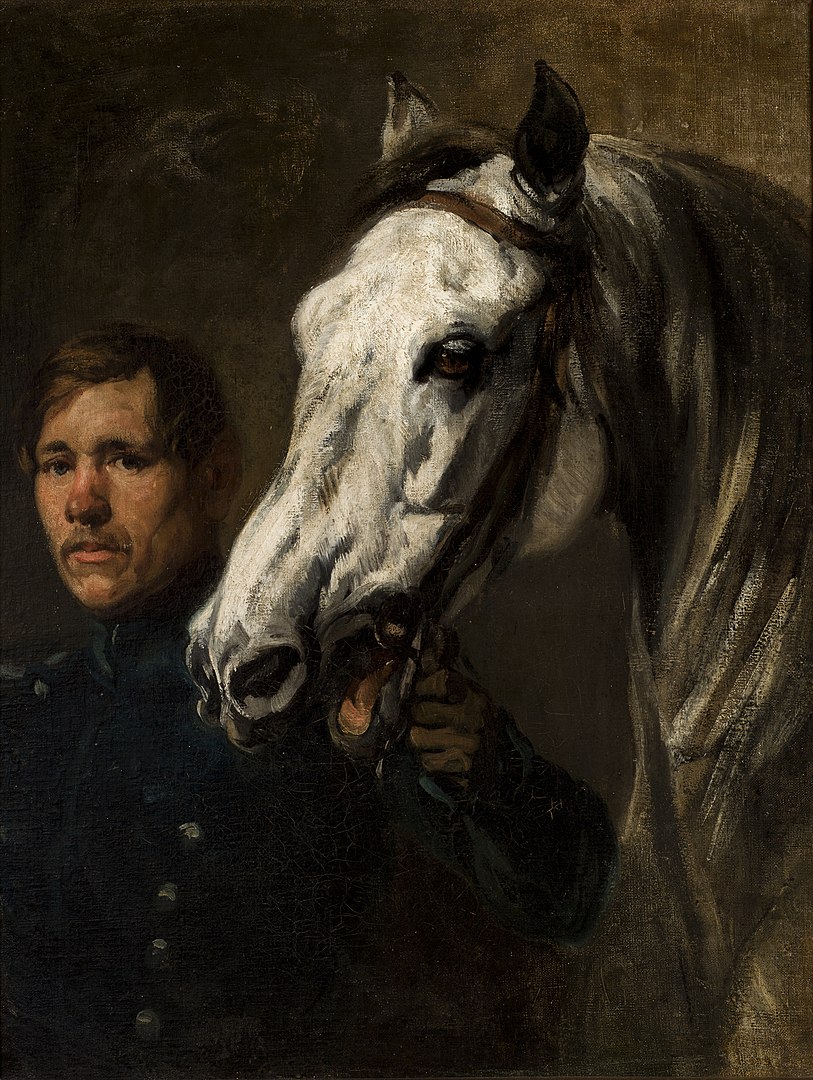
and today is also the anniversary of the beginning of the famous battle of Warsaw 1920 and in this painting by Michalowski we have a Polish peasant on horseback. It was the peasant leader and prime minister Wicenty Witos who addressed and called upon our Polish farmers and peasants to defend the Homeland against the bolsheviks in 1920.  Thus finally Polish peasants were officially acknowledged as the defenders of Poland reborn.  The defend they did. But new Poland did not repay their defenders back, but that is a story for another day. 


Valete

Monday, August 31, 2020

Polish cavalry 1918-20

Salvete Omnes,


Polish cavalry (and mounted artillery) as a branch of Polish armed forces was reborn during the fighting on the Eastern Front of the World War I and various cavalry squadrons, dyons and  regiments sprung into action with the rebirth of the Polish Republic (sadly not as  Kingdom of Poland, eh, all those socialists at the helm back then and now - :) ).

Polish cavalrymen came from mainly three varied cavalry traditions - Austro-Hungarian, Imperial Russian and Imperial German. There was also French (the Haller army) influence but it was not very noticeable due to the size of those cavalry units.

The War Ministry created a separate staff body - the Generalny Inspektorat Jazdy or GIJ (the Inspectorate General of Horse) on January 22, 1919, while at the same time they maintained another staff office called Sekcja Jazdy (Horse Section of War Department). And both administrative bodies overlapped and conflicted a bit with one another.
First General Karnicki was the head of the GIJ, but he left for the front and general Kawecki became the Inspector General of Horse in August 1919.
So the regulations and manuals and actual practices on schooling and training of the cavalry in training seemed to reflect the above mentioned mix of traditions. The IGh and his staff favored the Austro-Hungarian and Imperial German traditions hence they published directives etc in that spirit of good manege riding and preparation, while the majority of the field officers of Polish cavalry had been trained and experienced in the Imperial Russian field practices.  For example the first cavalry regulations were adopted after the Imperial Wehrmacht one published in Berlin in 1917, and the first 'temporary' regulations were published in May of 1920  (Jerzy Grobicki, Organizacja Kawalerji Polskiej w latach 1918-21. Przeglad Kawaleryjski Nr 3 (77) p.215).
Thus the squadron and regimental replacements coming to the front had to be retrained in the field cavalry practices, and varied from regiment or even squadron to squadron.
But this was the time of war, where practice was tested with blood and mortality.

The GIJ 'failed' to promulgate and enforce the uniform system for all regiments in terms of arms, training and uniforms - but then the lack of equipment, arms and horse tack forced the government to purchase available on the the world market military surpluses - be it American, French etc.
One of the interesting aspects of the Polish military of that period it the very fact that  many landowners and wealthy peasant farmer and other citizens provided their own arms, uniforms, horses and horse tack throughout the duration of this war.

Things came to change for the cavalry regiment  in 1921 and again in 1924, but that is another story.

Grobicki's drawing of cavalry regiment organization


 I will add the English translation for this diagram in the future.

to be continued


Valete

ps
Polish cavalry of that war is beautifully described in a book by a Polish scholar and novelist Bohdan Królikowski titled  '' Ułańskie lato (The Uhlan Summer)'' (and it does need to be translated into English).
I am not going to talk about the Osprey Military Publishing attempt at the subject..

Thursday, August 15, 2019

Vivat Polish Armed Forces - 99th anniversary of battle of Warsaw

Salvete Omnes,
 
today is the 99th anniversary of the one of the most important battles in the history of the world, especially the modern world - the battle of Warsaw 1920.
 
also this year is the 100th anniversary of the first Silesian Upraising, the first of the three that brought some of Silesia back into Poland . Thousands of soldiers of the Polish Armed Forces will parade in Katowice to commemorate this historic event today.


also, today is the Polish Armed Forces day and the Feast of Assumption
some photos of the soldiers and already veterans of the Polish-Bolshevik Russia war that were part of the  Szwadron Przyboczny Naczelnika Państwa (Chief of State Guard Squadron), taken by Narcyz Witczak-Witaczynski  who was one the heroes of the 1914-21 struggle for the Polish Independence.


vivat Polish Armed Forces!!
 One of the architects of this victory general Jozef Haller and his command, the  Blekitna Armia (Blue [sky-blue really] Army) - that was made up of Polish volunteers from all around he world, especially from the US and Canada.


Blue Army monument in Warsaw:

the 1925 photo of the horse artillery with general Haller

nota bene, Polish radio [in Polish] program  about the battle, with recordings of the eyewitnesses of this struggle.
valete

Wednesday, August 15, 2018

Assumption of Mary - Polish Armed Forces Day

Salvete Omnes,
I just watched Polish Armed Forces parade in Warsaw, commemorating the Polish Armed Forces Day which is also the feast day of Assumption of Mary or Feast of Assumption.
This year hundreds of reenactors, from the early Piast Poland to World War II, paraded along with the regular soldiers of Polish Armed Forces and elements of allied NATO troops in front of the Polish Republic President and various governmental officials in Warsaw, Respublica Poloniae.

This year, 2018, is the 100th anniversary of the Polish renewed independence.
Polish military Eagle holding so called Amazon shield

And 98th anniversary of the battle of Warsaw, one of the most important battles in the world history. It was great victory for the newly reestablished Polish state, where Polish peasants farmers responding to a call from the prime minister Wincenty Witos flocked to the Polish forces and swelling the army up to a million fighting men  defeated the Red Army barbarians.
The Polish Army was armed but lacked ammunition and in the early days of August 1920  Hungary  shipped ammunition from their factories but they were stopped from reaching Poland through Czechoslovakia, so Romania allowed these transports to pass through their territory, and they reached Polish soldiers in time to defeat the Communists. Poland also received help  from France but these arms and munition shipments were blockaded  ( the rest of Western Europe refused to help or even to let the transports with arms and munitions reach Poland).
general Tadeusz Rozwadowski, architect of the battle of Warsaw victory AD 1920

Vivat Polish soldiers and   vivat Saint Mary, Mother of God and Queen of the Crown of the Kingdom of Poland.

Valete!

Tuesday, August 15, 2017

'Miracle' on the Vistula River & Polish Army Day


Salve,
today in Polish Republic or Rzeczpospolita Polska they celebrate the Polish Army Day, including the military parade in Warsaw. also, this the Feast of Assumption - Hail Mary, Queen of Poland!
The date commemorates the victory secured by the Polish armed forces over the invading Communist Russian Red Army 13th-25th August, 1920. So called Mircale on the Vistula or the battle of Warsaw along with the defeat of the Budyonny's Horsearmy at Komarów  and the battle of Niemen River

constitute the triple victories that led to the establishment of the post-Versailles borders for the newly independent Poland.
I must stress that thanks to the work by the Polish politicians like Roman Dmowski and Wincenty Witos and countless others the most numerous group of the Polish society, the peasants, joined en masse the Polish armed forces and thus won Poland's independence. They say the peasants feed you and defend you. 
 Some photos from the battle of Warsaw
order nr. 71 by general Rozwadowski


general Haller and Jozef Pilsudski

captured Red Army standards


Vivat Polonia, vivat milites Poloni! - including Polish-Americans, Polish-French and Polish-Brazilians - the Blue Army!
...but also vivat Poland's Ukrainian & Belorussian brethren, as the officers and soldiers from these two nations fought on the side of Polish soldiers in the war! Also I salute the White Russians  and the Cossacks from Don and other hosts who fought as allies for humanity during the 1920.
Vivat 'foreign volunteer' soldiers - especially from France, including future President Charles de Gaulle , but perhaps more important was the military material aid received by Poland that arrived from France along with the Blue Army. Here should mention the Hungary sent munitions in the most critical time to Poland ( eg about 80 rail freight-carts arrived at the Skierniewice train station full of ammunition from Manfred Weiss factory in Hungary on August 12, 1920). Romania also lent Poland a helping hand in this war, allowing war material trains from Hungary to pass on their way to Poland. Unfortunately, newly established Czechoslovakia was Poland's most active enemy, including armed annexation of the Polish Cieszyn Śląsk.

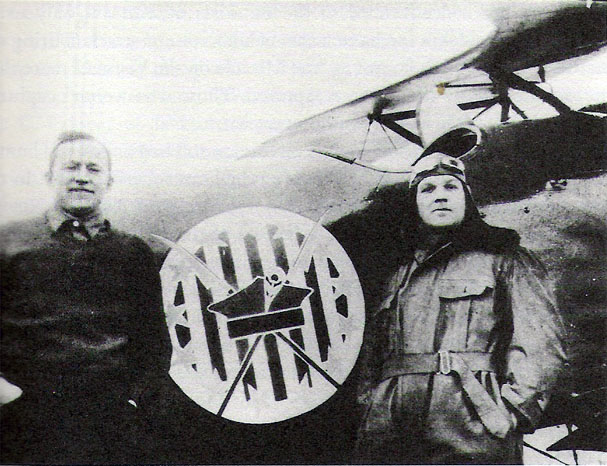
the pilots (7th Air Escadrille) from the United States under Merian C. Cooper

(later producer of King Kong).

And Duma Rycerska - my favorite soldier song from the XVI century, performed by prof. Jacek Kowalski - by pan Adam z Czahrowa Czahrowski poet and  a winged hussar.