Showing posts with label Juliusz Kossak. Show all posts

Tuesday, October 14, 2025

Young Pasek at Parkany & Juliusz Kossak painting

 Salvete Omnes

the painting above, a watercolor painted by famous artist Juliusz Kossak in the late XIX century, depicts a particular event that took place during the aftermath of  the 2nd battle of Parkany.

Polish XVII century memoirist Jan Ch. Pasek wrote down the description of the 1683 campaign based on conversations with the actual participants. One of them was his brother's son (hence synowiec) or nephew  Stanislaw Pasek.
The painting describes Stanislaw's tale about what happened after the battle:

'My nephew Stanislaw Pasek [captured] a certain  important-looking Turk, because of his fine costume and  of a beautiful steed he was mounted upon; he had already disarmed [his prisoner] and rode with him by leading the [Turkish] horse by its reins, with the Turk mounted upon it, until a German [horseman] rode up, and when [the German] was parallel to the Turk , he run  [the Turk] through with his sword. The Turk just only groaned, so when [my] nephew turned to see [he saw] that the [Turk] opened his mouth  in last gasps and was falling off the horse. The German rode quickly to the side. My nephew berated the [German] -
-"Oh scoundrel, such and son of the bitch! you killed my prisoner, is that honorable?"
The German just laughed and said [in broken Polish]:
-"I am [your] Pan/Sir / Brother , Pan/Sir/ Pole, I am astonished that you want to feed this devil/pagan."
My Nephew continued to scold him:
-"You are a knave, not a chivalrous man, when you kill a prisoner in my custody (in my hands)."
The German kept on laughing and riding, thus slipped away [unpunished].                                                     What was the nephew to do? The German harbored [then] great hatred towards the Turks [...] and because the German were cruel by nature and when in victory don't know how to show noble moderation.''

in Polish from one of the versions that survived, devoid of Latin phrases and curses) -


..


enjoy

Valete

Friday, June 6, 2025

Julisz Kossak - Pol's Mohort illustrations


 Salvete Omnes,


in 1836-39 while living in village of Kalenica Wincenty Pol,  already a poet and veteran of November 1831 Uprising,  met a nobleman and veteran of Polish pre-1795 army, Duchy of Warsaw and all the other wars Poles fought in the early XIX century,  general Franciszek Ksawery Krasicki. 

Pol also met and conversed with another veteran major Kazimierz Ostaszewski of Zarszyn. In Nienadowa he met another veteran soldier Antoni Debinski, commander of infantry battalion in the pre-1795 Polish Crown army.
All these veterans told to Wincenty Pol these chivlaric  stories about one brave cavalryman Szymon Mohort, who in the autumn of this life, being almost a 100 years old  and still a soldier, was killed  defending Polish lands against the Russian invasion in the battle of Bruszkowice in 1792.

Inspired by these conversations our Wincenty spent a dozen year composing and polishing his poem - Mohort or  knightly rhapsody, officially finishing the poem on December 28, 1852.

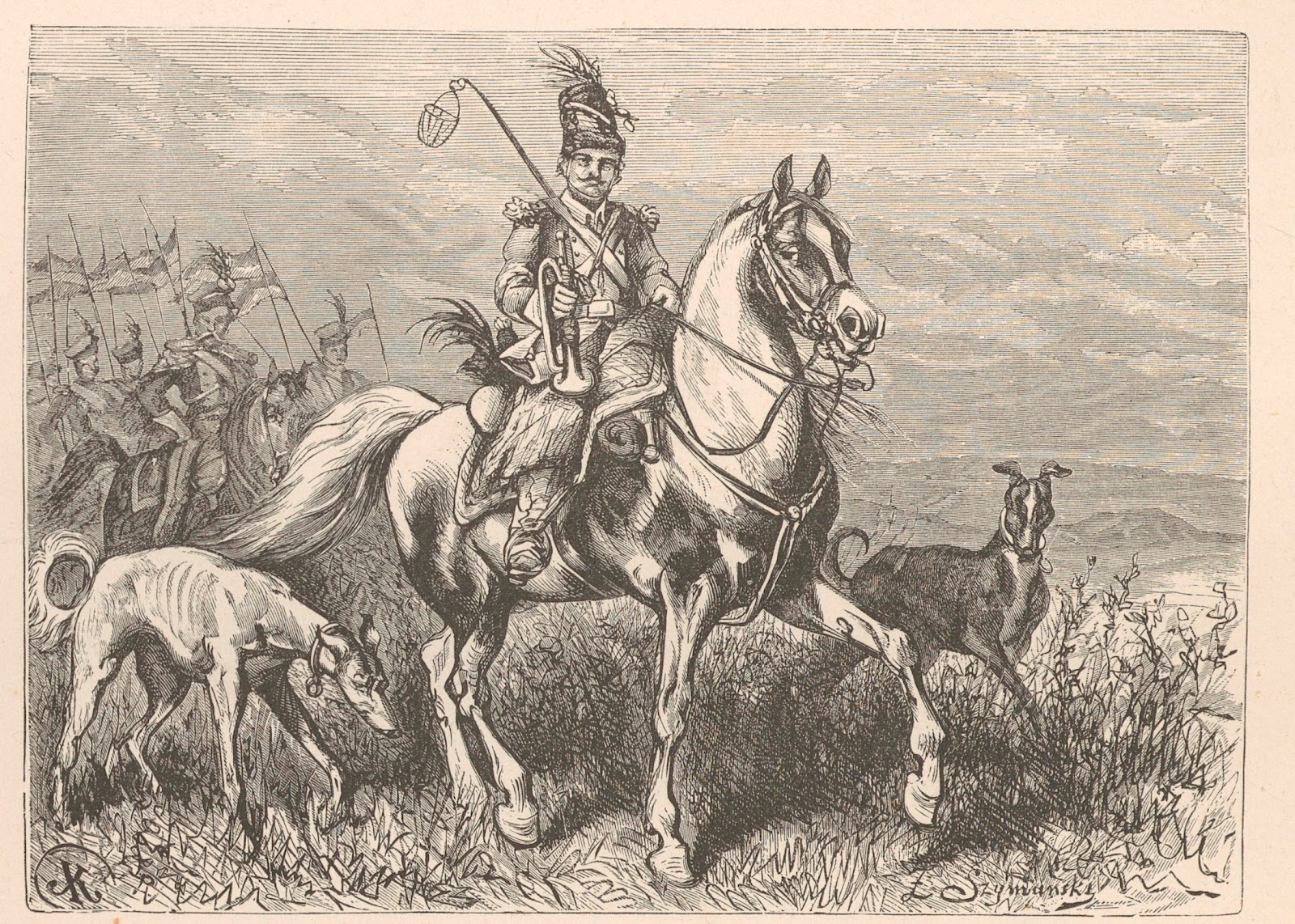
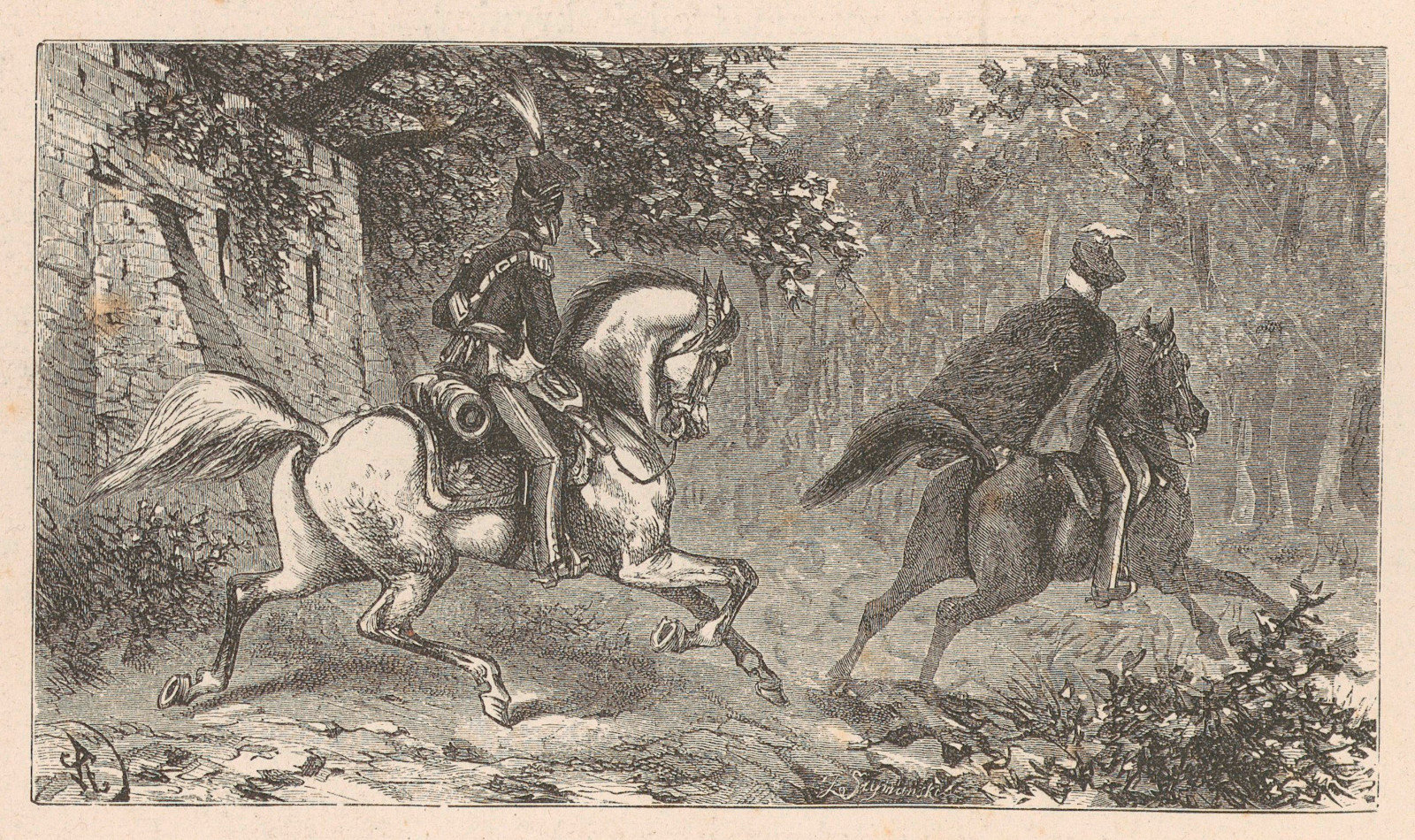
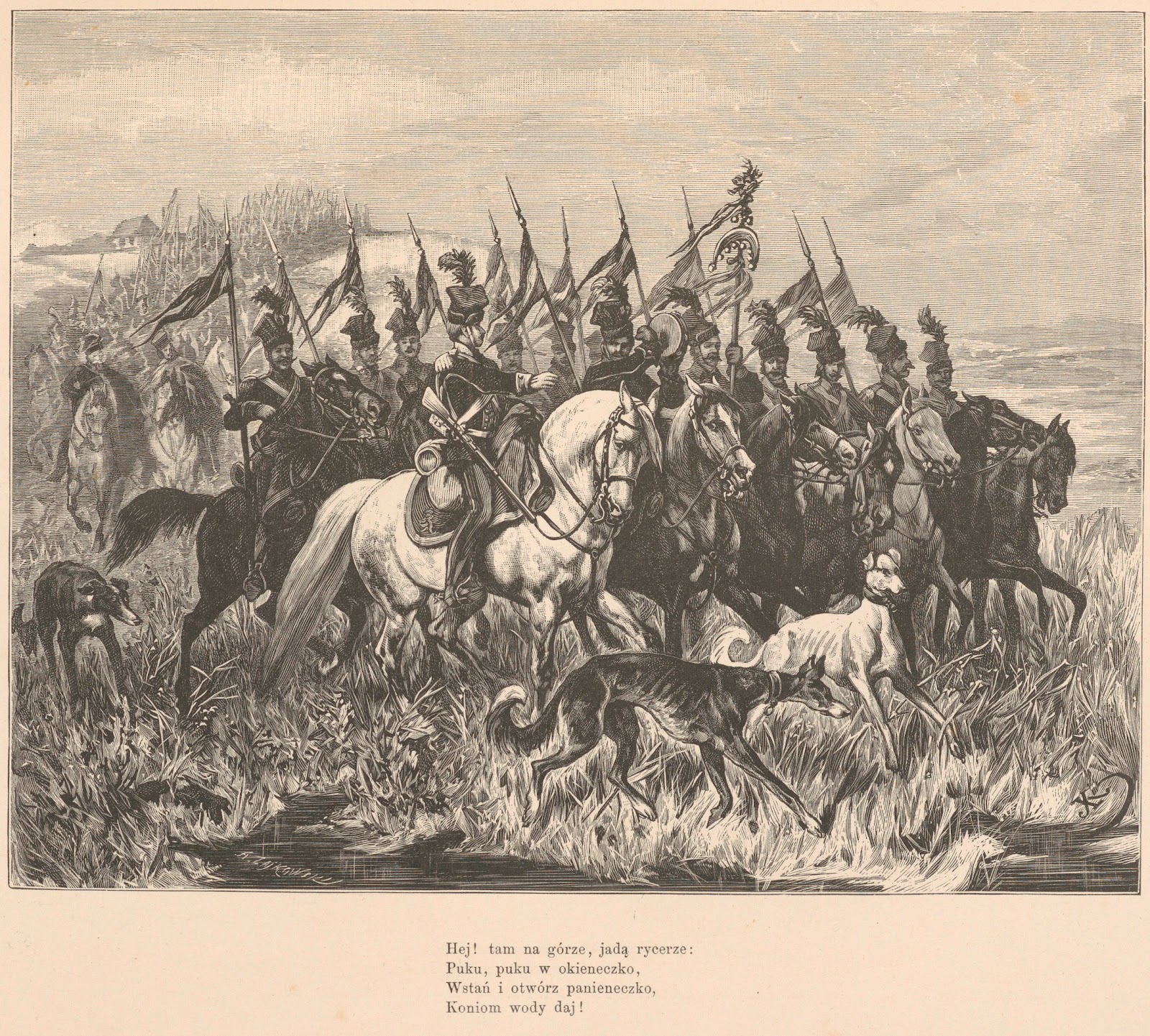
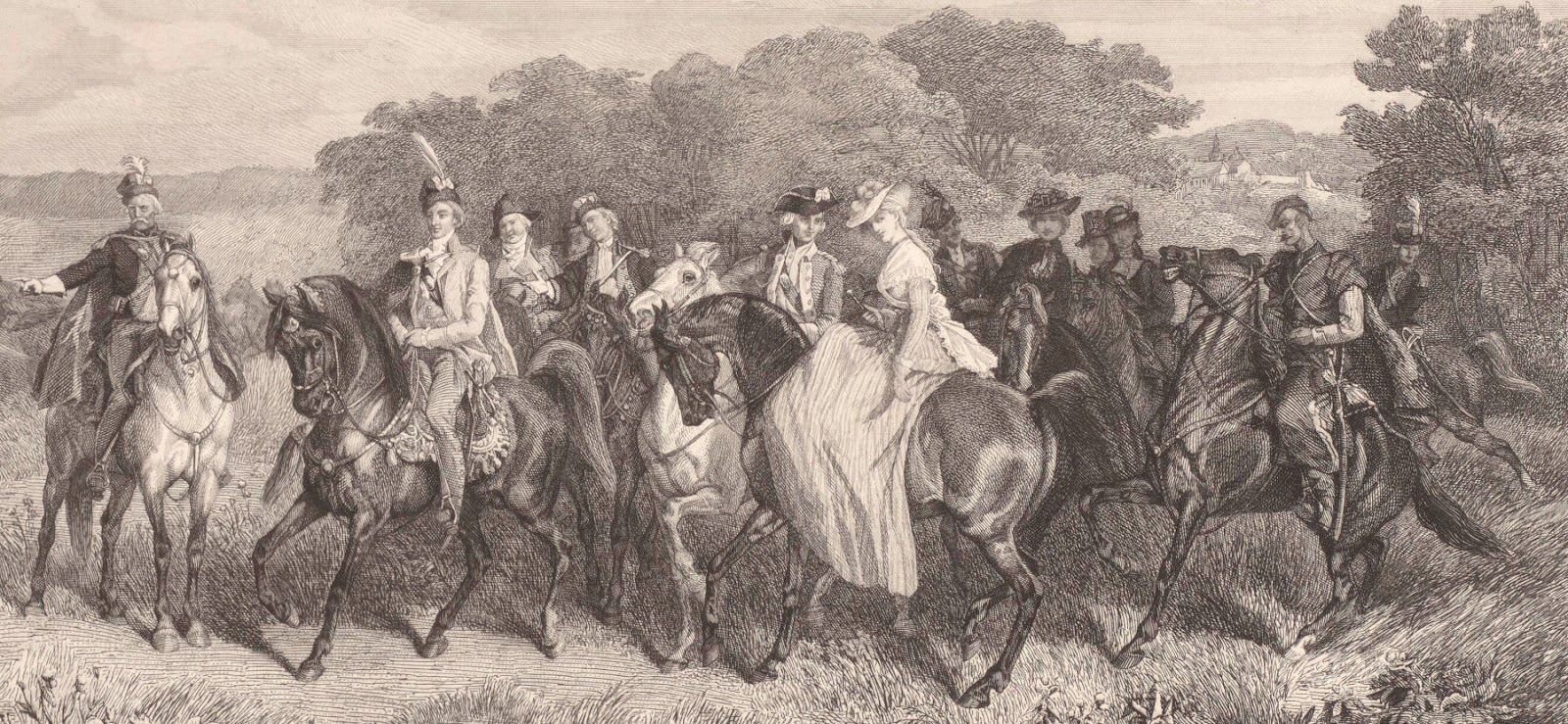
Mohort Rhapsodies was published in in Krakow in 1854, and immediately  was met with praise and admiration by other writers, intellectuals, artists and general readership. It was published in many editions, more than a dozen times, between 1854 and 1914.  Many Polish artists of the era painted canvases based on Mohort poem, including Juliusz Kossak, January Suchodolski, Jozef Brodowski and others. 
The  1882 edition of Pol's  rhapsodies was particularly finely presented for the demanding audiences by Herman Altenberg of Lwow, who asked  then famous Juliusz Kossak to create illustrations for the poem.


This edition was exquisite and widely admired, adding more to the spread and interest in the Pol's poetic work.

I corralled some of these full page and smaller illuminations for our viewing pleasure - 


all images come from Polona, Polish National Library, digitized  edition of  Pol's Mohort.


.


.


Valete

Thursday, August 29, 2024

Juliusz Kossak - Polish peasant horses XIX century

 Salvete Omnes,


one month go go before this 2024 summer will be over - things move swiftly, don't they? 
a little return to our XIX century Polish painter - Juliusz Kossak, and his  genre paintings of the country life, horse markets and peasants


.


.


.


valete

Thursday, June 27, 2024

Juliusz Kossak, his stud presentation in print from National Museum in Warsaw

Salvete Omnes,

so the Dog Days of the summer have arrived.   

a little short entry 


I truly enjoy the art painted and drawn by the Polish XIX century painter Juliusz Kossak.

some year ago I posted this color version of Juliusz Kossak's oil painting - Mohort presenting the herd to prince Poniatowski.


Polish National Museum in Warsaw has a print (digitalized)  , showing the whole presentation scene in a  different composition, made circa 1870AD, the painting was owned by Mrs Eugenia Juszkiewiczowa.


enjoy
Valete

Sunday, November 19, 2023

Bog powiezyl mi honor Polakow, Bogu go tylko oddam - o ostatnich chwila polskiego Bayarda

 Salvete Omnes,

[in Polish]


w pazdzierniku, z okazji 210 rocznicy smierci wielkiego syna Polski, mialo miejsce spotkanie na Zamku Krolewskim w Warszawie pt „Jak naprawdę zginął książę Józef Poniatowski?" - debata.
Oto link ze strony polskiego radio z linkiem do nagrania ze spotkania na YT-   otoz jest to bardzo ciekawa prezentacja, pod katem badan medycznych i swiadkow-uczestnikow bitwy lipskiej,  owych chwil ostatnich wielkiego polskiego zolnierza i wodza armii Ksiestwa Warszawskiego ksiecia Jozefa Poniatowskiego (i juz wtedy marszalka Frencji, w czasie bitwy pod Lipskiem 19.X.1813.


Debatuja prof. Dariusz Nawrot, historyk i rekonstruktor epoki Ksiestwa Warszawskiego, i dr. Maria Turos, lekarz medycyny i rekonstruktor chirurgii et medycyny epoki napoleonskiej, a w ostatniej godzinie debaty mamy pytania i obserwacje od uczestnikow-widzow. 


Z pamietnika Bialkowskiego - o onym masztalerzu ksiecia i koniu, ktorym byl rumakiem ksiecia kiedy dosiegnal go Tanatos .


Nota bene wieczna chwala i honor dla oficera sztabowego Hipolita Beschamps'a, ktory wspomagal w czasie odwrotu rannego herosa i w ostatniej tragicznej chwili rowniez zginal od kul wrogow probujac ratowac smiertelnie rannego ksiecia.

Valete!

Thursday, October 13, 2022

Kossak - 1877 Lwow (Lemberg) Expo horses

Salvete Omnes,
a short entry -
I would like to bring to your attention two published prints from Tygodnik Ilustrowany (1878 - The Illustrated Weekly) that were intended to depict notable horse presented at the Lwow (then Lemberg, Austrian Partition or the invented by the Austrians  Galicia & Lodomeria) Provincial Expo in 1877AD.
The drawings for these two plates were done from life by one of my favorite Polish artists of all times - Juliusz Kossak.

The plates were published the following year and did no have any more text or description but the small print at the bottom of each plate.

First Plate - 


the horses depicted above with the owner's name:

a- Percheron horse- by count Alfred Potocki

b-Ardennais, stallion & mare -  by prince Adam Sapieha

c- Ksiaze, konik zmudzinek aka Samogitian stallion, by Teofil Ostaszewski

d-Tarant (spotted horse aka Appaloosa ) and srokacz(Paint) - by Oczosalski

e- carriage mares - by count Willhelm Sieminski

f- peasant horses - by Forczyk, a farmer from Stare Siolo village

g- horses- by Kazimierz Szeliski


Second Plate -

the horses depicted:

a- Gulda, part-Arabian mare - by Trzeciak

b-Obeyan & Partyzant - Arabians - by prince Heronim Lubomirski

c-Tarant - by Sozanski

d-Suliman, young stallion or colt by Hulimek?

e-Granat - English Thoroughbred stallion - by count Stefan Zamoyski

f-Hajdamak, stallion- by Siemiginiowski

g- 3 mares - by count Juliusz Dzieduszycki

h- a stallion - by count Waclaw Baworowski


Valete

Saturday, November 27, 2021

Noli equi dentes inspicere donati

Salvete Omnes,


just a short entry - from the late ancient Rome comes this very old proverb - Noli equi dentes inspicere donati -  written down by Saint Jerome in his commentaries on St. Paul's Epistle to the Ephesians.


 The Polish version goes as follows -  Darowanemu koniowi nie zagląda się w zęby - and all European languages have this saying (including the Turkish language).


The English - don't look a gift horse in the mouth


The Spanish - a caballo regalado, no le mires el diente


etc

enjoy... 

Valete

Thursday, May 6, 2021

Wyjawienie sposobów jakich handlujący końmi używają - von Tennecker circa 1834

Salve,


   przeglądając biblioteki cyfrowe natrafiłem na poniższą publikację, w temacie 'rostrucharzy' i ich fachu, pełna przysłowiowych forteli czyli oszustw alias fałszów handlarskich, a także o tym  jak hodować i handlować końmi , gdzie można sobie postudiować w tym poradniku z początku XIX wieku, ze  wcale nie było wtedy  inne podejście niż dzisiaj przy handlu  mechanicznymi rumakami (samochodami):

'Wyjawienie sposobów jakich handlujący końmi używają do ich upięknienia, odmłodnienia a następnie do oszukiwania kupujących konie z dodaniem nauki o najnowszym i najprostszym sposobie anglizowania koni i korzyściach jakie ztąd dla handlarza końmi wynikają.' [oryginalny iście barokowy tytuł z wydania ].


 - autorem był oficer, bo major, kawalerii  saskiej  mości von Tenneker (pisownia według wydania jak wyżej), którego to dziełko napisane w latach 1820tych w Dreźnie i circa 1828 wydane w Lipsku? przetłumaczono i wydano w Warszawie, Królestwie Polskim-Imperium Rosyjskim, w 1834 roku - można je sobie  ściągnąć tutaj, tj z   Wielkopolskiej Biblioteki Cyfrowej, i czytać do woli. Praca pochodzi z epoki końskiej, i tchnie duchem swego czasu. Mamy tez  język hipologiczny tamtej epoki z Królestwa Polskiego.


Książka-poradnik  jest interesująca na wielu płaszczyznach, np od pielęgnacji konia na sprzedaż po fortele handlarzy, a ciekawym aspektem handlu końmi dla nas, współczesnych czytelników, jest wybór 'ludzi stajennych'  czy ów 'berajter' handlarza koni czyli ujeżdżacz pokazujący  konie przeznaczone do sprzedaży (autor robi porównanie tegoż berajtera handlarskiego z kawalerzystą ), meklerzy w handlu końmi etc.
Przy okazji widać jaka role, i to przynajmniej od XVIII wieku, odgrywali żydowscy handlarze końmi (np we wspomnieniach księcia Sanguszko handel końmi w rekach żydowskich handlarzy także jest uwypuklony).

z pracy -
'Dla handlarza najlepszy jest koń, który ma małą głowę, krzyż prosty, maść (kolor) modnej, a mianowicie mocno odsadza ogon; słowem który posiada to wszystko co należy do okazalej i w oczy uderzającej figury;[...]' iż bardzo mało jest kupujących , którzy uważają na rasę [sic!], na ruch wolny i swobodny[sic!], na dobry fundament konia;[sic!]'


-'[..] a do tego, gdy fałsz fizyczny połącza z fałszem moralnym, co poniekąd zawsze bywa, gdyż kto się dopuszcza pierwszego , niezawodnie i drugi posiada.'

 *przy okazji, to przypisy występujące w książce od polskiego wydawcy tez są ciekawe.


pozdrawiam