Showing posts with label medieval knights. Show all posts

Tuesday, October 25, 2022

Battle of Agincourt 25th of October 1415

 Salvete Omnes,


 today is the anniversary of the great French chivalry defeat from the hands of the English at Agincourt, France. Many thousands of knights and men-at-arms rode and then walked their destriers (dextrarius or war horse) across the freshly plowed and muddy field between two densely wooded forests into the volley after volley of the heavy Welsh/English bows archery, i.e, bodkins. And they died and still marched on and died some more... pride before dishonor one could say. But couldn't they chose more wisely the place and time to fight, instead of falling into the English trap? Master Sun Tsu could have said a word or two about this one, had he lived around the time..
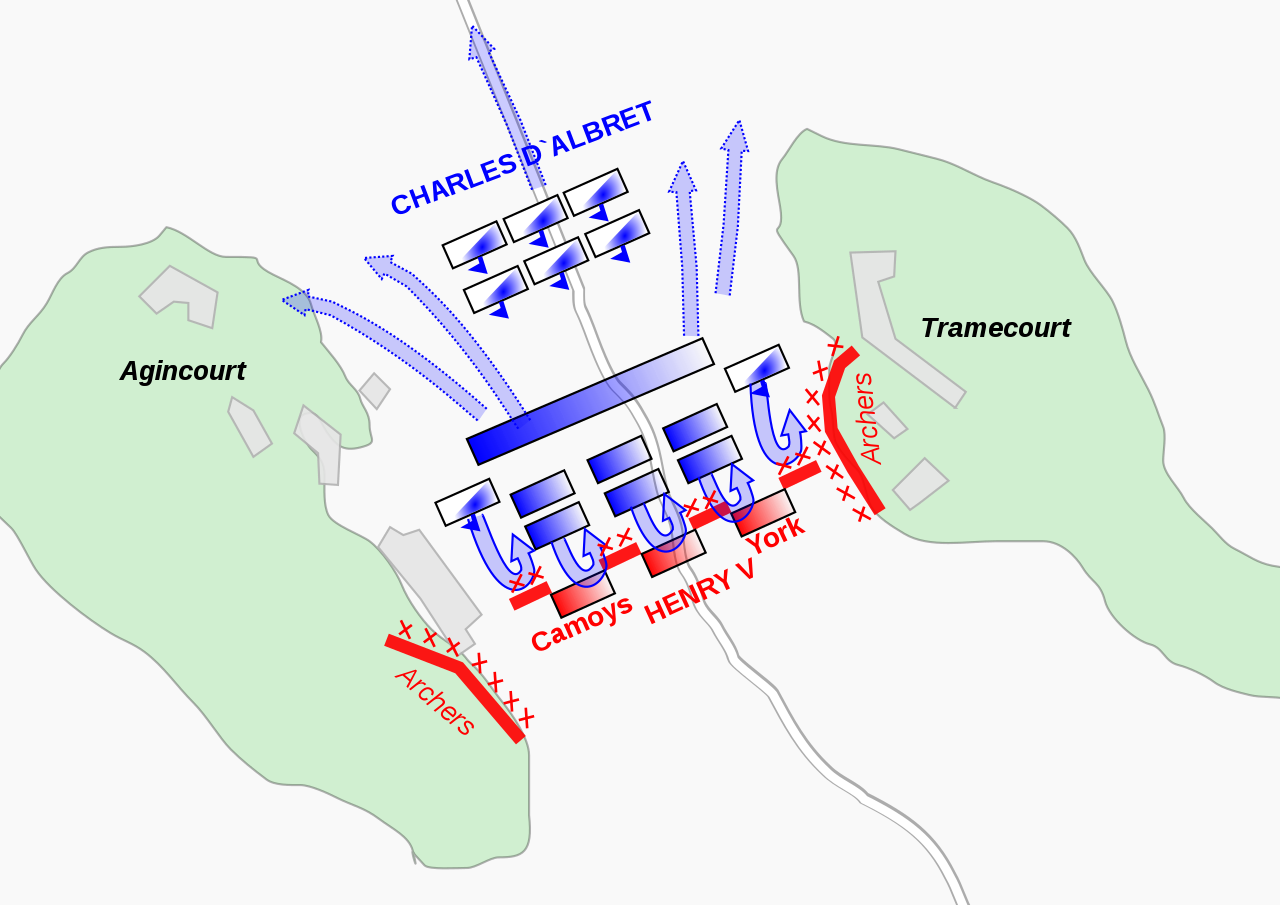


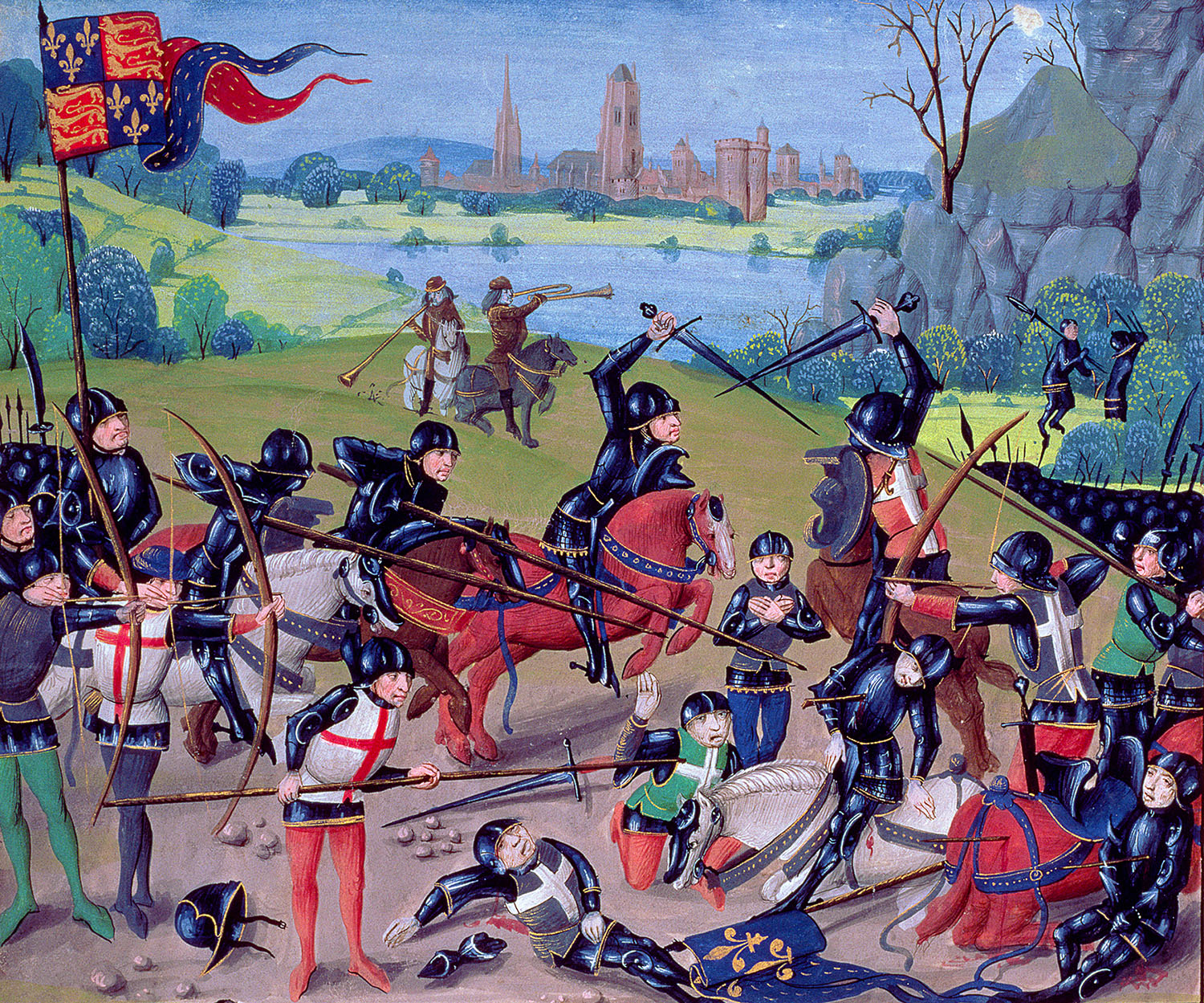
I have read many books on the subject,, bah, I have watched various  feature films about this battle (two based on Shakespeare, and one from Netflix) - and when the date comes around I think about that 1415 October day when French chivalry died in such great numbers from the great bow's war arrows and the merciless knives and swords of the English. The execution of the French men at arms and knight being held prisoner in the back of the English army, in several thousands at least, should be a day of enteral infamy and same for Henry V, king of England. 
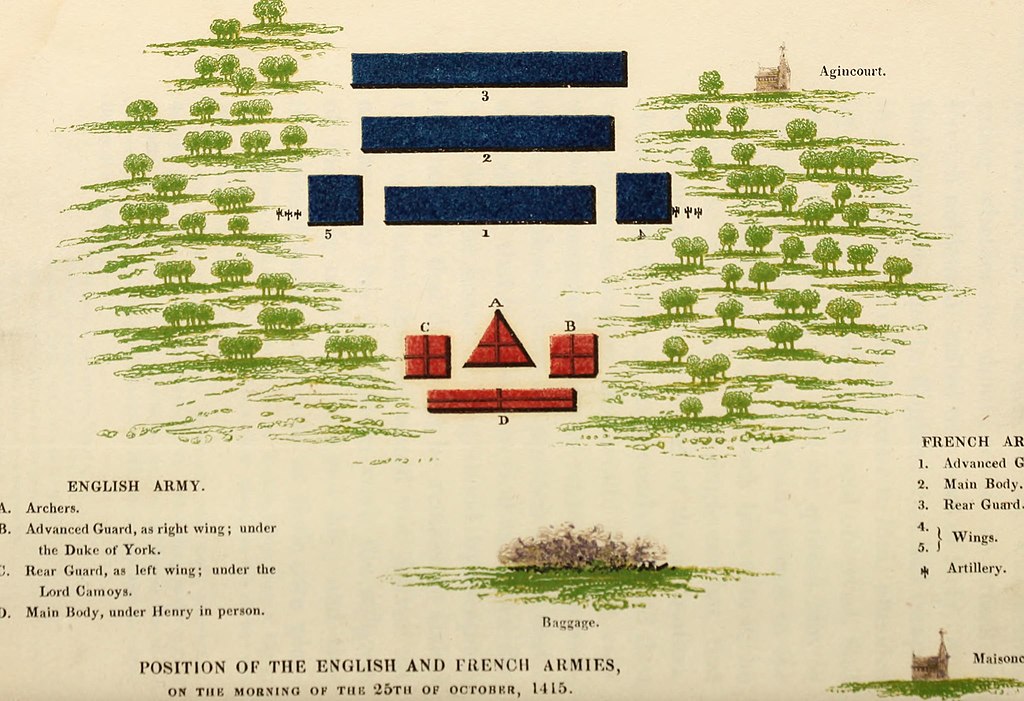


Countless British & Anglo-American writers wrote copious pages on how to excuse this crime against the chivalric values and Christian norms and ethics.. C'est la vie. 


The battles of Crecy, Poitiers and this battle, spanning almost a century of conflict,  were the most famous and quite unusual English victories during the Hundred Years War between two realms. 


I must add I have always preferred the French side in this conflict, but I still read many historical research, desertions  and fiction books written from the English side, including some great historical fiction written in America.


But in the end the French prevailed in this struggle  - gaining some great victories  that when fought in more reasonable for cavalry conditions brought them success, but I must add the French also adopted the Welsh/English bow  and these archer companies became a feature of the French XV century armies (along with the heavy armored horse lancers or gendarmes).


Perhaps one day we will look at the hobelars in this war, and other cavalry types and their horse equipment..


and the reenactors today


nota bene, one fine British artist Graham Turner has painted many works representing the battle, its participants and the period military subjects  etc - IMHO his art contains some of the finest representations of the period, the historical  period and the very struggle that ensued in the muddy fields of Azincourt. 

Valete


Saturday, July 17, 2021

Hans Memling, horses and riders & Madonnas

Salve friends and visitors,
Hans Memling was one of the many amazing painters of the Northern Renaissance - XV century prolific painter of astonishing imagination and  skill. 


Two Horses and a Monkey - a  portrayal of the medieval horse ideal, its allegory nicely explained here


Turin altarpiece 


Saint John triptych


Seven Joys of the Virgin 


Greveradenaltar


Resurrection (of Budapest) 


and for its beauty - the Portinaris - husband and wife


and some samples of his Madonnas - nota bene several of his Madonnas contain magnificent oriental (Turkish and Persian?) carpets


and Adam and Eve


Valete!


Monday, May 10, 2021

New medieval painting from Dariusz Bufnal's atelier

 Salvete Omnes,

I have been a friend of one hell of a painter (and musician) from Poland - messer Dariusz Bufnal from Wrocław, Poland - Facebook page here.

I have Dariusz' permission to show on my blog one of his latest brushwork, in his maker's intent and execution  sort of a  window into the XV century borderlands of Silesia, Lusatia, Bohemia and Saxony. Where Polish (Silesian Poles), Czech, Sorbian, German, and Pomeranian nobility and noble clans intermarried and mixed in the plethora marriage and political alliances, adopting language and coats of arms.
The castle-tower and medieval manor of Witkow, Lubusz land and today in part a Polish voivodeship(most lays in the Federal Republic of Germany) belongs to that medieval borderland tradition.
In this painting, one of three painted for the current owners of the castle-tower,  provides a depiction of the Central European  knights from the late XIV and early XV centuries.


   here, on canvas,  we have two brothers von Warnsdorf, Frantzko and Nickel, and their retinue in process of leaving their castle to take part in the Great War 1409-11 ( the Teutonic Order, Sigismund of Luxembourg and their  knightly guests with retinues  against the  Jagiellonian realm - kingdom of Poland and grand duchy of Lithuania) . They have the same coat of arms  - Leliwa - as Polish Kingdom and Silesian duchies clans. In the history of the castle you can read why von Warnsdorfs had Leliwa coat of arms.


The painting was executed in oils on canvas.
Dariusz Bufnal pinxit and all copyrights et al.
ps

maestro Dariusz also painted plates for Trzy Swiaty Sredniowiecza, a study-book on the medieval castles and fortresses from Lower Silesia, written by Grzegorz Kiarszys - Dariusz' Art Station link to some of those plates.

Valete

Sunday, September 16, 2018

Die Blume des Kampfes - mounted fencing

Salvete Omnes,

 from Wiktenauer project - Die Blume des Kampfes (Cod.5278) German (Holy German Empire ) circa  AD 1420 includes mounted fencing plates.
Just sharing them with you these plates. for inspiration study and enjoyment:


Valete!

Wednesday, April 26, 2017

Mounted combat training - video

Salve,
Arne Koets, knightly mounted combat practitioner and chivalry reenactor, shared a video of his mounted training with lances and swords - very interesting snippet into his and his companion training routine and skill honing. The levels of horse training are praiseworthy and just simply great. Arne's workshop videos .

It clearly brings to mind the teachings of Hans Talhoffer and other fechtbuch masters.
Wurttemberg

Konigsegg


Talhoffr - Personal

enjoy
ps
all images are from the wiktenauer.com (HEMA Alliance) project on Hans Talhoffer.

Tuesday, December 8, 2015

Cangrande della Scala - autopsy of a XIV century Italian knight


Salve,
while researching  the equestrian statues from the Medieval period, mostly from the Italian states, I came across this very unusual article(in pdf) authored by Gino Fornaciari et al.  A different version of this study via academia.edu.
The article is a step by step presentation of the autopsy of the preserved 'mummy' of  the XIV century Veronese prince and knight Cangrande della Scala, who was a very active warrior , statesman and the Ghibeline League supporter - his last deed was to take Treviso, in Veneto, and if you traveling in Italy do visit, it is a lovely small city with good cuisine and nice people (visited last year).

Cangrande was immortalized in the Decamoron and the Divina Comedia, and in this funerary equestrian monument

The authors of this multidisciplinary study conclude that this warrior-prince (1,73 m tall, healthy and robust otherwise) was cut short (he was only 38 years old) as he was poisoned with foxglove aka digitalis plant ('naparstnica' in Polish), present in his system.


There are some figurines of Cangrande I della Scala done by the militrary modelists - [1] , [2]
giving a sens of the richness and beauty of his chivalrous appearance.
Enjoy
ps
all images are from Wikimedia Commons