Salvete Omnes,

continuing on the subject of the Epiphany and Adoration of Magi in the pre-modern arts, a tondo by Raffaelo Botticini (1474-died after1520) from the Art Institute of Chicago.

.


enjoy
Valete
Salvete Omnes,
continuing on the subject of the Epiphany and Adoration of Magi in the pre-modern arts, a tondo by Raffaelo Botticini (1474-died after1520) from the Art Institute of Chicago.
Valete
Salvete Omnes,

Tang Dynasty period in Chinese history is famous for the ceramics in shape of horse and horse & rider.

I have a book - actually an exhibit catalog from the Kentucky Horse Park (published 2000AD).
Title: The Imperial China, The Art of the Horse in Chinese (review).
In the Chapter: The Horse in Chinese History by Bill Cooke (director emeritus of the International Museum of the Horse at the Kentucky Horse Park) there is a description of the Chinese terminology around the Tang Dynasty period.

 |
| Jisheng on the crouper harness |


Saddle - 'An'
 |
| Pommel and cantle saddle with tree bars |
 |
| High pommel saddle with a saddle cover, saddle pad, saddle mud guard, and stirrups |
 |
| horse with a crenellated mane |
Saddle-pad - 'cun' and Saddle mud-screen - 'zhang-ni'

Saddle cover - 'Anfu'

Saddle cinch/girth - 'Fudai'
Breastplate/breast-strap - 'Panxiong'


Crouper/crupper - 'Qiu'

Apricot/peach leaf ornament - 'Xingye'

Cranellated /crenelated mane - 'three flower' 'Sanhua'
Bounded Tail - 'Fuwei'

Crupper saddle adornment -'Jisheng' (parasite), also a version known as 'Fire pearl ' - 'Hounzhu'


Valete
Salvete Omnes,

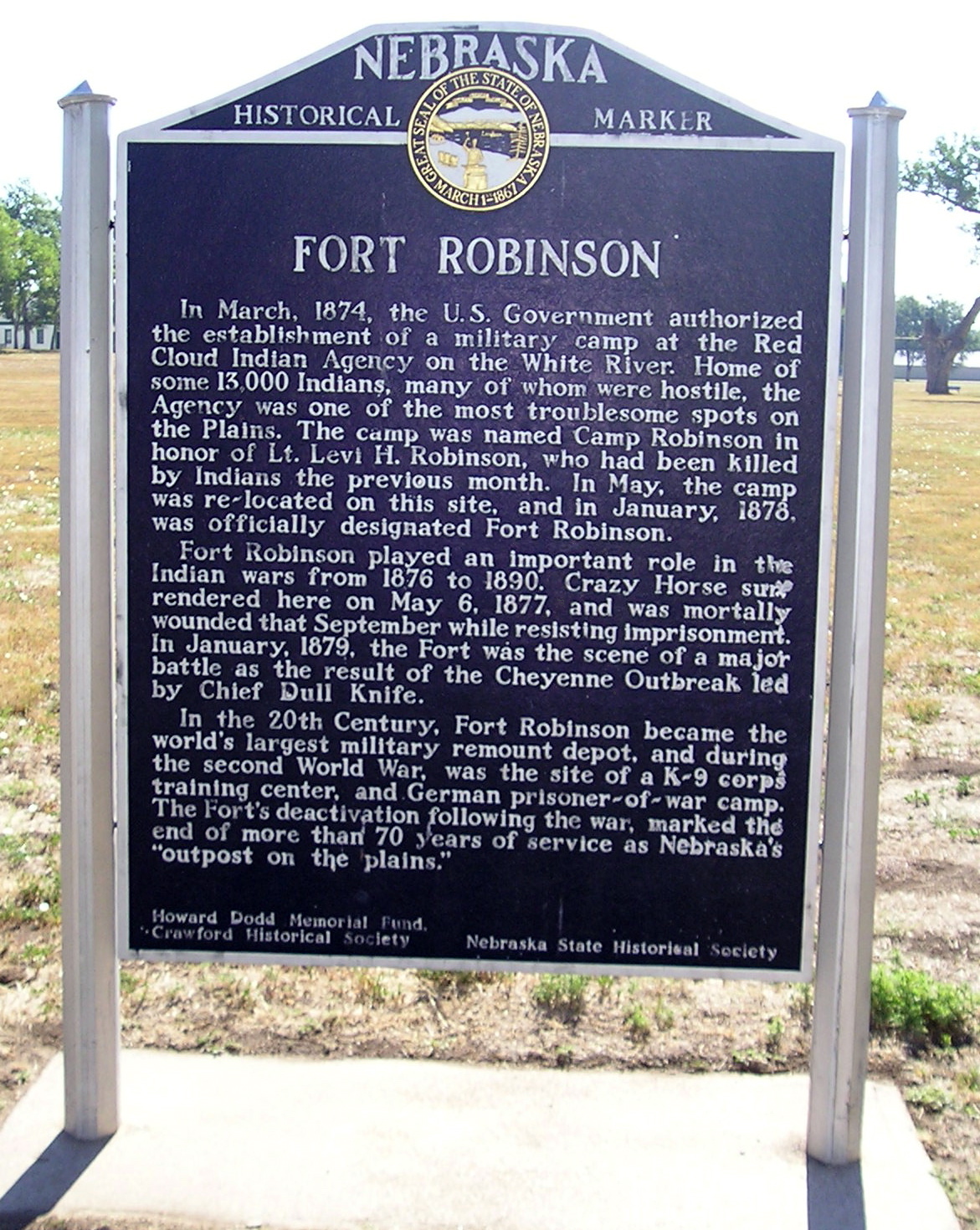
a couple days ago there was the anniversary of Crazy Horse's death at Fort Robinson, Nebraska (Sept., 5, 1877). Nebraska State Historical Society has this article about the Crazy Horse's sacred bundle.
I did write one posting on the life and death of Crazy Horse. Recently, I read this article - Tragedy at Red Could Agency. The Surrender, the Confinement and Death of Crazy Horse. by *Jeffrey V. Pearson ( published Montana, The Magazine of Western History (vol.55, no.2, Summer 2005) - can be read a Jastor platform. I am going to summarize the whole 1877 debacle as researched in this article:

On May 6, 1877 Crazy Horse and his Oglala & Northern Cheyenne followers came close to the Red Could Agency. Crazy Horse dismounted his war horse and loosened the knots in his horse's tail to declared to all present that his warpath was no longer. The Sioux and Cheyennes had to surrender their guns and [war] horses. Crazy Horse wanted to have his own 'agency at the headwaters of Beaver Creek (near present Gillette, Wyoming). The goverment chiefs and US officials were waving the idea of Crazy Horse going to join the Washington-bound delegation.
For the next 3 months the goverment chiefs like Red Cloud, Spotted Crow etc and their followers worked tirelessly to make Crazy Horse uneasy and hostile towards the whites and to create a perception that he was persona non-grata within the Great Sioux Reservation, They concocted stories about his hostility and government's murderous designs on his liberty and life. New goverment Agent - James Irwin - complained to the Indian Affairs Commission that Crazy Horse had been' all time silent, sullen, lordly and dictatorial.' Later on Irwin, along with a Special Agent Shapp, gave more ear to the big chiefs plotting and even reported potential mutinous behavior of Crazy Horse. The US Army, like Lt. Col. P. Bradley, the commander of Fort Robinson, Nebraska Territory, dismissed the accusations as hardly credible (end of July 1877).
During the mock battle after the June's Sun Dance ceremony held by the Oglala, the turmoil erupted between the 'Oglala patriots' and 'agency Sioux' ending in a melee where the agency Sioux were beaten with clubs and war clubs. This resulted in some sub-chiefs of the Oglala like He Dog and Little Big Man moving to the agency Sioux camps. At the same time Crazy Horse was strongly asking for his agency on the Beaver Creek. His other intentions throughout this period (May-September 1877) are unknown to the researchers of this period.
On August 30 at Fort Robinson chief of scouts Philo Clark met with the Sioux leadership and asked them, following orders from General Crook, to enlist against the Nez Perce outbreak in the Northwest. At first all chiefs refused, but later upon much quarrel they consented, with Crazy Horse reported by witnesses as saying - 'till all the Nez Perce were killed.' Frank Grouard, chief interpreter, [mis]translated Crazy Horse's refusal as 'we will go north and fight until not a white man is left.' The other interpreter Louis Bordeaux, furious at this lie, was not allowed to correct this falsehood. Then interpreter William Garnett came and the whole fiasco started anew, with Clark telling Crazy Horse that he had to stay on the Spotted Tail's agency - where Fort Robinson was located..
on August 31 the agency goverment chiefs - Red Cloud, Little, Wound, Young Man Afraid of His horses, American Horse, No Flesh, & Yellow bears - held a council with Agent Irwin, again accusing Crazy Horse of undermining the Agent and government's rule etc.
Alarmed by Bradley General Crook came to Fort Robinson on Sept. 2, 1877 and asked for a council on the following day on White Clay Creek. When the whole outfit, with Garnett and another scout Baptiste 'Bat' Pourier, were getting to go with General Crook to meet Crazy Horse, a nephew of Red Cloud, Woman's Dress, came by and told them Crazy Horse 'would come with 60 Indians[...] to kill Crook and whoever he has with him.' Garnett took this Woman's Dress to Crook and upon hearing this tall tale Crook held a council with Red Cloud and his chiefs, and upon this ad hoc gathered council the general declared the Oglala chief must be arrested. The chiefs agreed and further proposed to kill Crazy Horse themselves, to which Crook responded that he had to be arrested, for the killing would have been a murder.

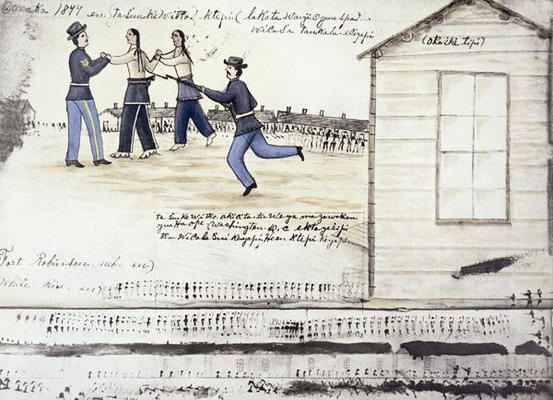
On Sept.4, about a thousand-strong cavalry strike force - 3rd US cavalry under Lt. Col, Mason and Indian Scouts and warriors under Clark, marched on the Oglala camps. When withing 1 mile of the Crazy Horse camp, they were reported that the villagers were scattering into the prairies and Crazy Horse was fleeing. Clark's scouts gave chase, while 3rd Cavalry returned to Fort Robinson. The chase ended when Crazy Horse entered the village of Touch the Clouds, Miniconjou Lakota camp, at 4pm. The scouts gave their reporting to Camp Sheridan officials. The events and talks and exchanged between Major Burke, commander at Camp Sheridan,and the Crazy Horse's side can be read here. Early on Sept.5, Crazy Horse arrived at Camp Sheridan and was a convoy was assembled to return to Fort Robinson. Crazy Horse rode his own horse all the way to and inside Fort Robinson, with Touch the Cloud and other Spotted Tail agency Indians. There He Dog, Little Big Man and numerous armed warrior led Red Cloud were positioned along with the mounted US soldiers. Bradley informed lt. Lee that there would be no talks and that Crazy Horse was going to be transported to Wyoming Territory and from there on train to Dry Tortugas, Florida. Then lt. Lee and commanding Captain Kennington led Crazy Horse, held by his arm by Little Big Man, into the guardhouse with two uniformed Lakota in tow. When they entered the dimly lit cell Crazy Horse shouted - I won't go in there, It is the place where prisoners are kept.' He tried to free his arm from Little Big Man's grip and pulled a hidden trader's knife against his captors , especially when Kennington pulled his sword to attack the warchief. Trying to leave the confinement of the guardhouse Crazy Horse still struggling with Little Big Man and being pursued by Captain emerged into the parade ground. There he wounded Little Big Man in the arm, and while trying to confront the carbine with bayonet armed sentry, Private William Gentles, Crazy Horse was jumped by Swift Bear, Black Crow, and Fast Thunder (all Brule Lakota scouts who came with him from Camp Sheridan). Kennington ordered the sentry to attack - "Stab the son-of-a-bitch!" Struggling with his three assailant Oglala's back presented a perfect target for a bayonet thrust and Gentles stabbed Crazy Horse inflicting the first deadly injury. Crazy Horse screamed - 'They have stabbed me' - as Private stabbed him again. Then Crazy Horse, still somewhat held by his Brule kinsmen, went quiet. He Dog came over to the fallen man and covered him with a slice of his blanket, while another Lakota, Closed Cloud, brought Crazy Horse' s own blanked. Crazy Horse said - "You all coaxed me over here and then yu left me!"
Post doctor, Valentine McGillycuddy, came to administer first aid and upon inspecting the wounds declared to Captain Kennington that the chief was dying. After much commotion and back and forth about 5 pm it was the warriors of Crazy Horse who carried him into the Adjutant's office, where around 10 pm he would die in a presence of his father Worm, his friend Touch the Clouds, along with the doctor and Bat Pourier.
Agency Indians breathed with relief, the same feeling was present among the command and rank & file at Fort Robinson. They all felt that the Oglala warchief brought this dismal ending upon himself. Chief of Scouts Clark wrote to Crook on September 9, 1877 - 'Crazy Horse's death is onsidered by most of the Indians as a right good thing for all concerned."
*all based on Jeffrey V. *Pearson's article from Montana magazine.
.


Korczak Ziolkowskis, fellow Polish-American, started many years ago a monumental, gigantic sculpture showing Crazy Horse leading from the front. Upon his passing his family has been continuing the noble endeavor.

Valete
Salvete Omnes,
a fine Saturday one could say, as the World War III yet have not started - Go willing never will, but let us pray for peace in the Holy Land, Europe and the rest of the world.
..
as rem, it is going to be about some heavy lance cavalry on war footing in the early XVII century western Europe, the town of Rheinberg on the banks of that great European river - the Rhine.
Museo del Prado, in Madrid, Kingdom of Spain-EU, has this painting - Asedio de la villa de Rinsbarch (Rheinberg), circa 1601AD?


interesting details can be find in this painting - quite a lot of cavalry, especially lance cavalry supplied by Spignola and his subcommanders.
 |
| lance company or banner under de Velasco |
 |
| ferrying horses across the river |

 |
| in the foreground a dappled horse with a tied tail ridden side-saddle by a woman |
 |
| we can see here the size of the lances and manner of holding them |
Salvete Omnes,

let us pray for peace and end of human suffering around the world as the Easter holiday is upon us.
we, in the Catholic Christianity, are in the Semana Santa - Holy Week/Swiety Tydzien, aleady in the third day of this last day of Lent.
Last year I did a post about Semena Santa in Spain and Palm-frond like arrangements - you can take a look here.
And I would like to share this Crucifixion by Conrad Laib (c.1410-1460), active in Salzburg, Holy Germany Empire.
Apart from the religious subject matter and artistic value, this work contains lots of information about the horses, horse tack and armor and even weapons of the era.

Bridles, spurs, stirrups, bits - a bonanza of material culture .


 |
| here clearly a white mule, animal for clergy, with a very sumptuous bridle an saddle |


a do watch again the famous masterpiece - 'The Passion of the Christ' by Mel Gibson (or any other film about the Passion of Christ)
Valete
Salvete Omnes,


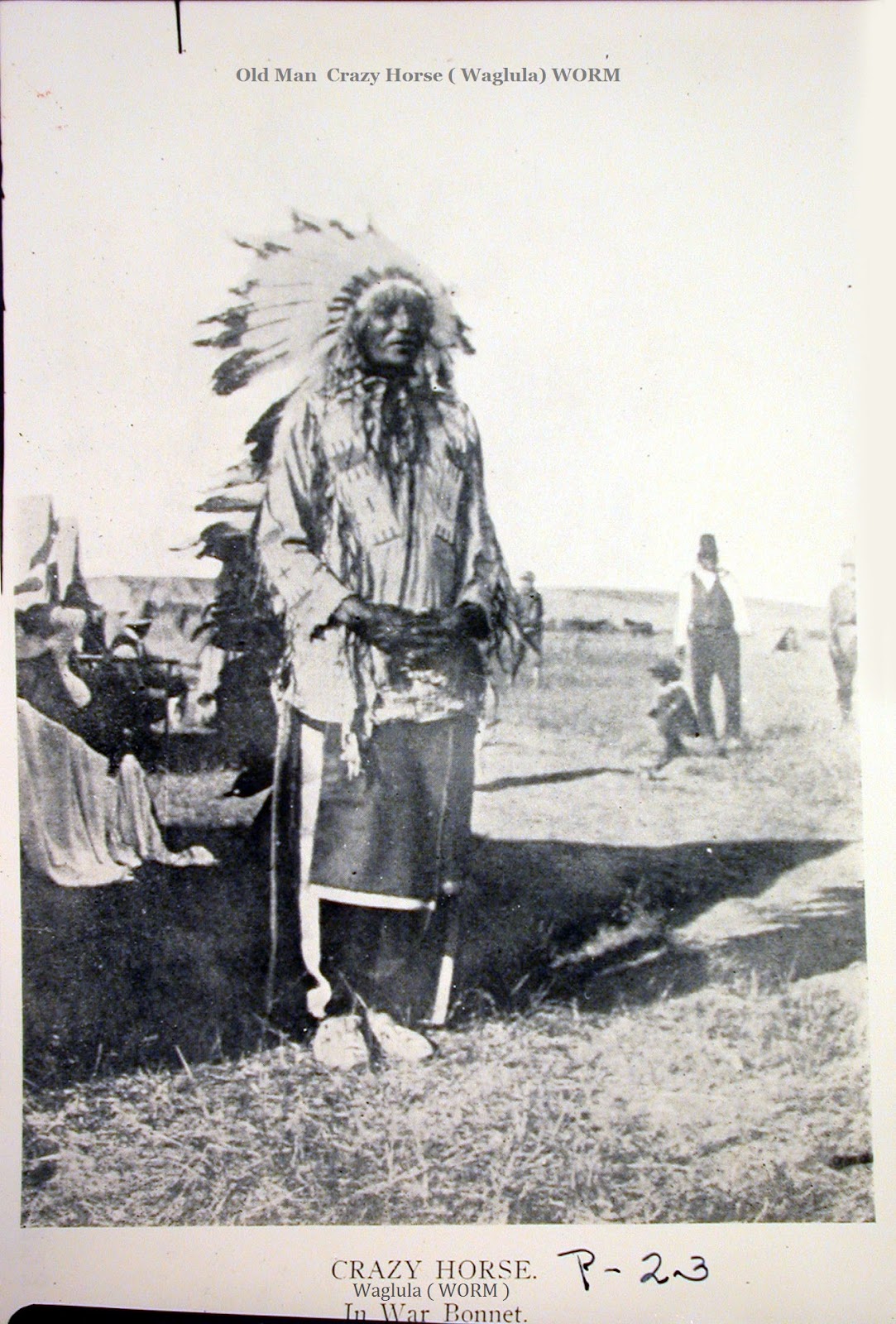
I am writing this post on the eve of the anniversary of Crazy Horse's death, who was a very brave warrior and blotahunka (war leader) of the Oglala Lakota/Sioux. Here are Frank Grouard's recollections about Crazy Horse. Or you can read Frank's biography on Archive.


On Archive - world library - there are books dealing with the life and in particular the tragic death of this Lakota warrior and leader. You can borrow them to read and peruse & study.
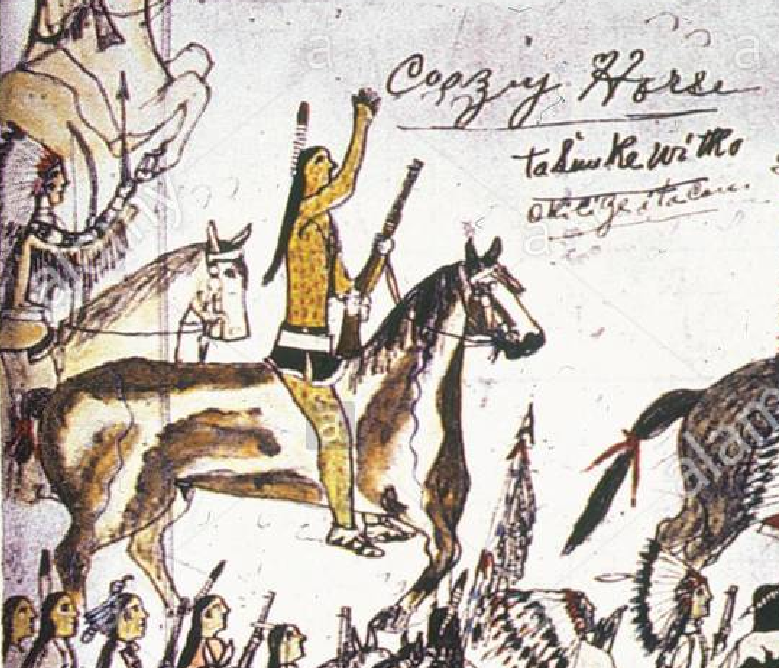
The surrender and death of Crazy Horse : a source book about a tragic episode in Lakota history - sources compiled by Richard G. Hardorff .
The Killing of Chief Crazy Horse : three eyewitness views - edited by Robert A. Clark.
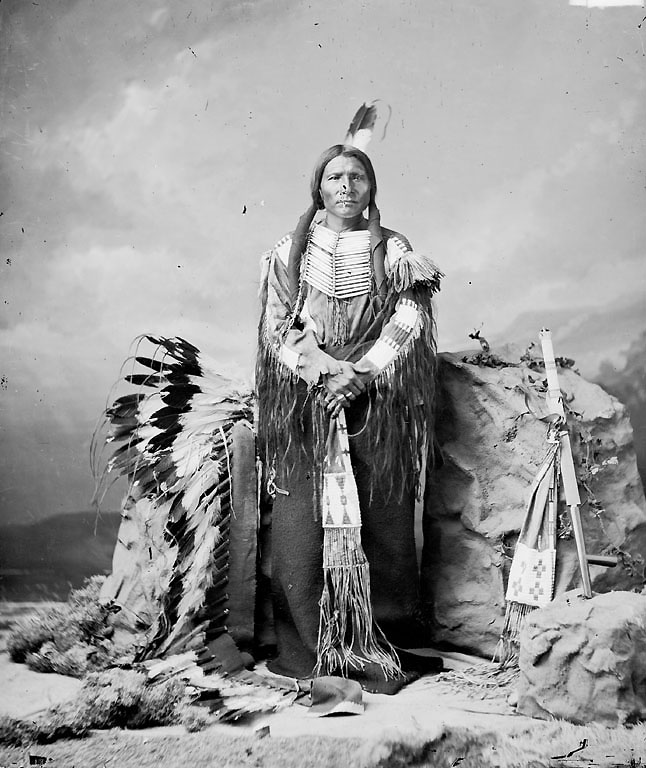
Touch the Clouds


He-Dog

Valete

