Showing posts with label Wladyslaw II Jagiellon. Show all posts

Saturday, July 15, 2023

Grunwald 1410-2023

 Salvete Omnes,


one of the swords from Grunwald


I visited the fields of the Grunwald battle several times in my life, but not lately I must hasten to add, perhaps in 2030 - :), God willing.


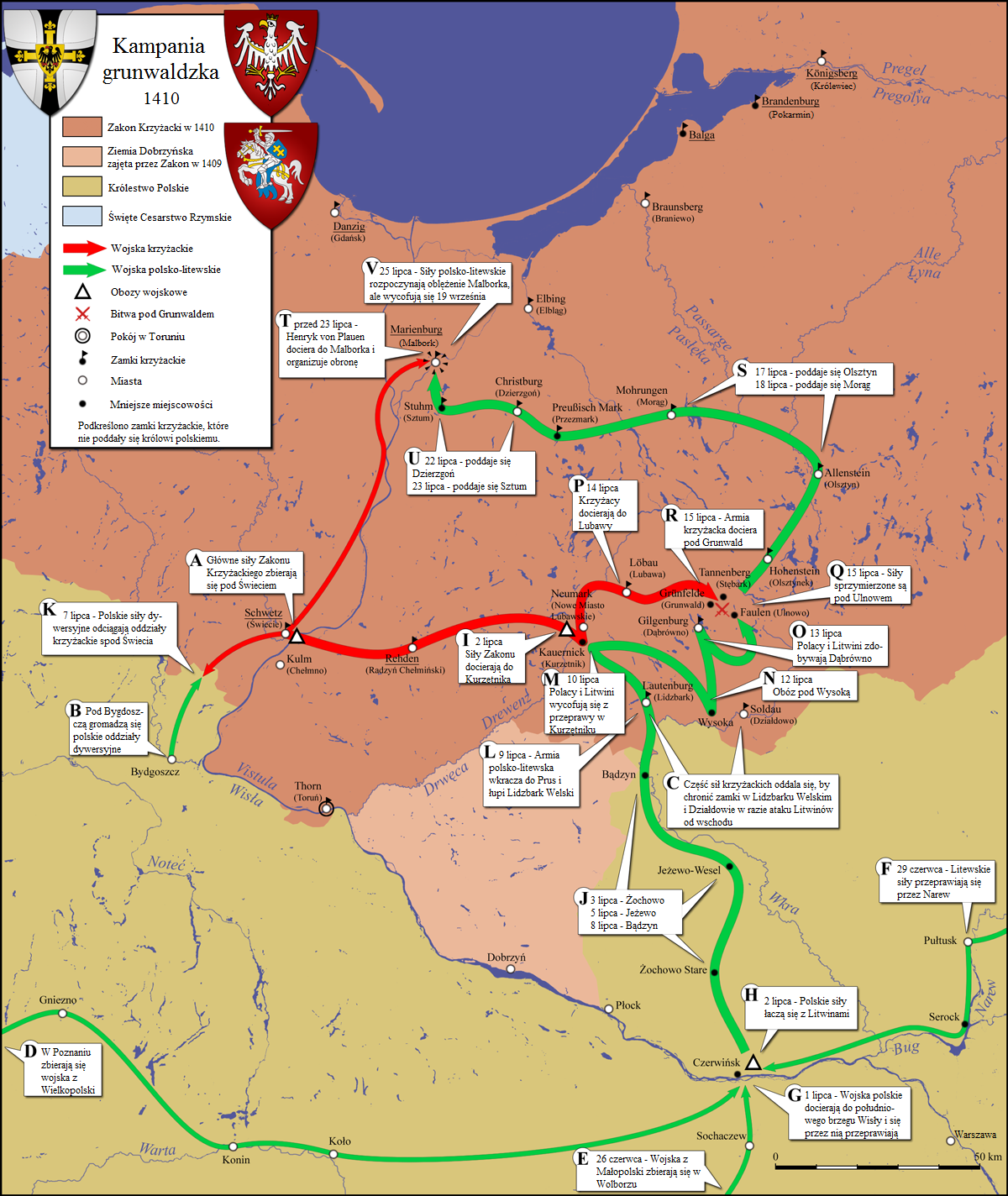
The huge reenactment event has taken place today and looking at the weather reports it has been a hot day as it was in 1410AD; this battle reeanctment is part of the weekend festivities  held annually across the  Grunwald-Stebark-Lodwigowo fields of  the Warmian-Masurian voivodeship in Poland-EU.  


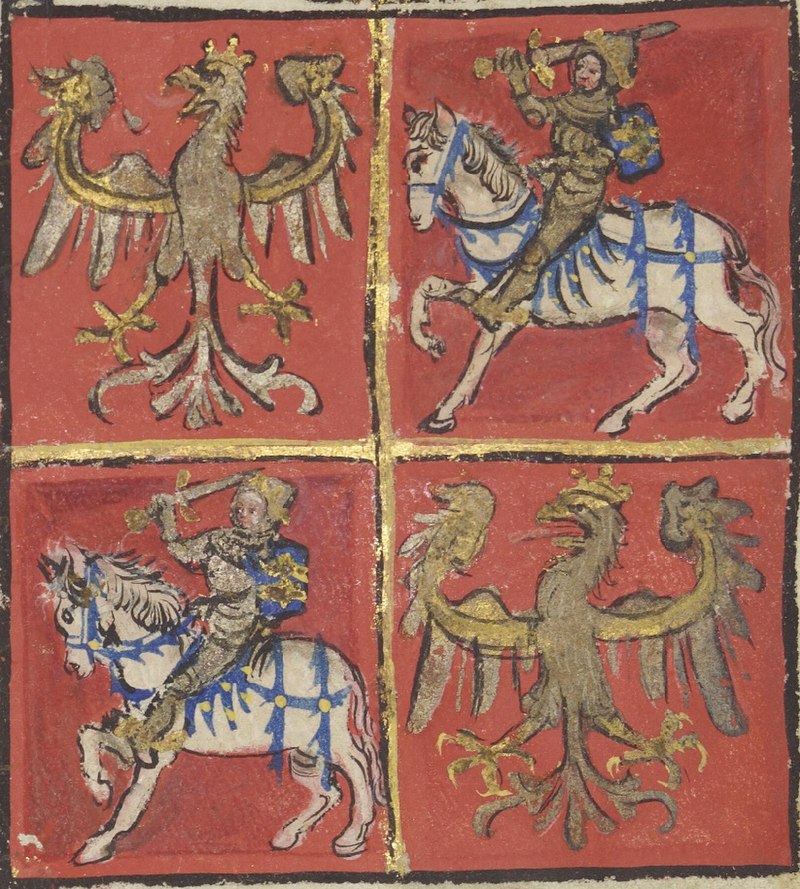
king of Polish Crown and supreme Lithuanian duke Wladyslaw II of the House of Jagiellons


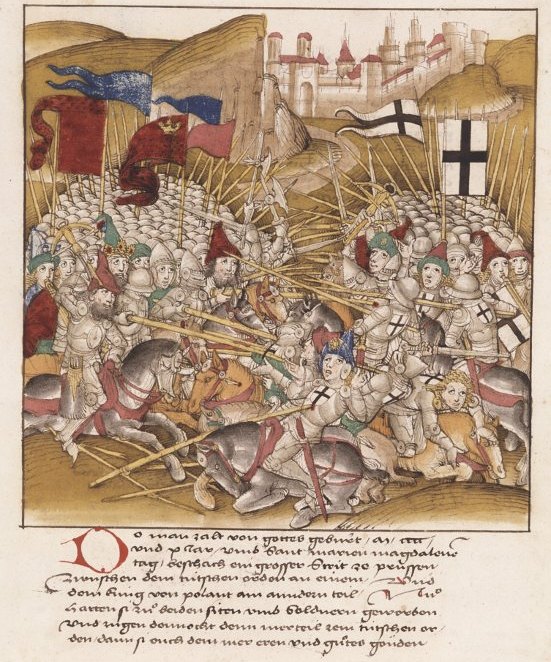
Two banners of the defeated Teutonic Order from Banderia Prutenorum and their Polish allies -

the great flag of the Order


the small glad of the Order


Flag of duke Konrad VII the White (Silesian Piast) - after the battle he became an ally of Polish Crown
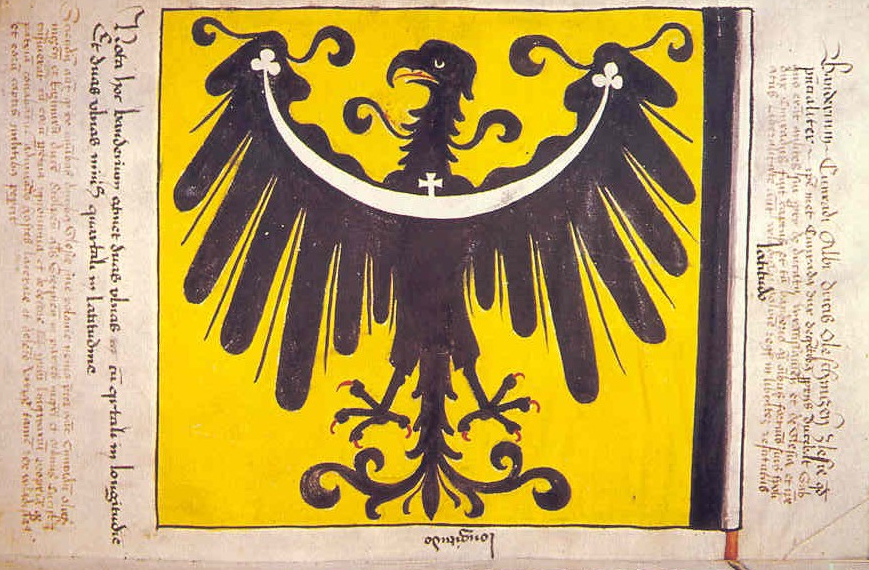


Banner of duke Casimir V of Pomerania (Pomerania House of Griffin ) -after the battle an ally of Polish Crown, it is too bad we had to wait until 1945 to re-unify most of Western  Pomerania with Poland.


..more Teutonic banners at prof. Piotr Nowakowski's academia site.

Sven Ekhdal's article on the Teutonic horses at the De Re Militari site


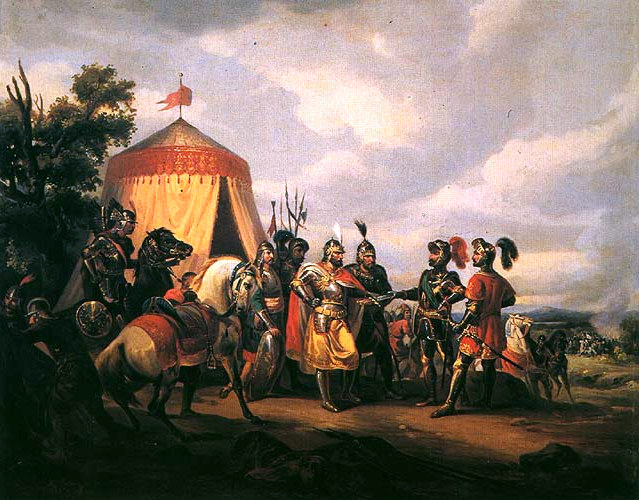
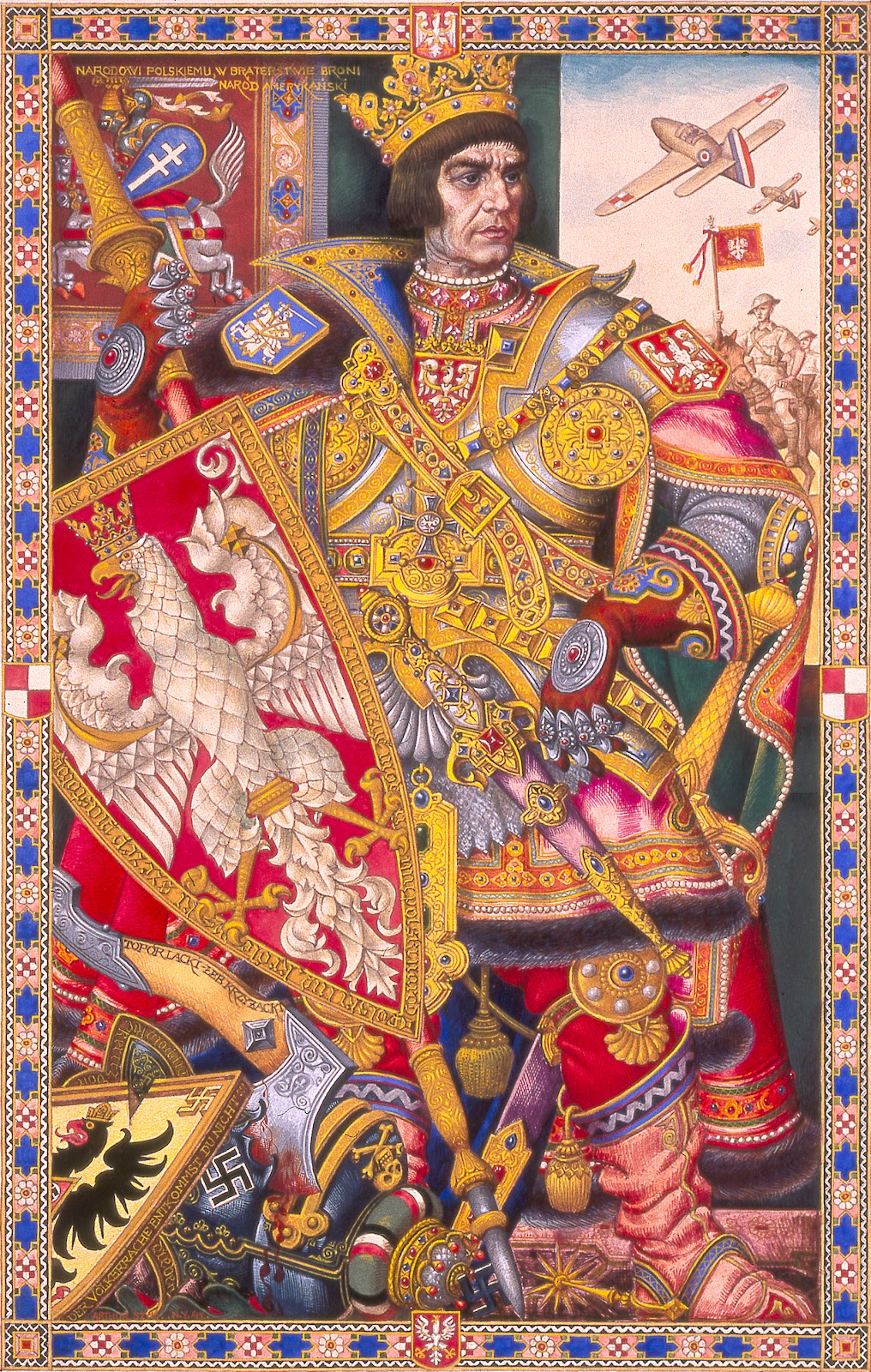
love the work by Polish-Jewish artist and great patriot Arthur Szyk and this imaginary portrait of our great king is splendid 

Valete

Friday, July 15, 2022

Grunwald 1410-2022

 Salvete Omnes,


the most famous painting in Polish art history - the allegory of this battle by Jan Matejko


Hear, hear, today yet passes another anniversary of the famous, in Polish history, battle of Grunwald.
Glory to the victors and vae to the defeated - pacem aeternam to all.


On the Polish site devoted to the history of arms and armor (Bron i Barwa) there is a free pdf file titled - 'Representation of the armies of the Order of Brothers of the German House of Saint Mary in Jerusalem in the historical miniature soldiers' by K. Czarnecki. 


Lodz University's Piotr Nowakowski, on Academia, made available for downloading one of his books(with illustrations by Andrzej Klein)  - Banderia Apud Grunwald - Teutonic Banners at Grunwald (nota bene there is also Banderia Apud Grunwald - Polish & Lithuanian Banners at Grunwald).  Another Nowakowski, Andrzej, is the author of Arms and Armour in the medieval Teutonic Order's state in Prussia , published in Lodz 1994. 


Another scholar Sven Ekdahl wrote Horses and Crossbows: Two Important Warfare Advantages of the Teutonic Order in Prussia - available for reading at DeReMiltiari site.


Krzysztof Kwiatkowski wrote -Wojska Zakonu Niemieckiego w Prusach 1230-1525(Armies of The Teutonic Order in Prussia 1230-1525), published in Torun 2016. Probably the most complete study of the military history of the Order to date.
Funny thing is there is no adequate comprehensive modern study of the Polish side of this conflict per arms, armor, horses, tactics, and knightly arts and logistics of the Jagiellon armies of the period..
Lodz University scholar Tadeusz Grabarczyk wrote some articles and two books on the Polish XV century infantry and cavalry - and this article on the Polish army at the Grunwald battle. 
On Academia there is this article, the subject controversial to the modern Lietuva narration of their history and role in the battle - on the Lithuanian retreat/withdrawal/rout at the battle of Grunwald 1410. You can peruse the Academia site in search of more articles and books on the subject of the battle. 


The re-enactment festival is taking place at Grunwald as I am writing this post - many  hundreds or perhaps thousands of reenactors are there until Sunday, July 17, 2022.

Feliks Sypniewski - before the battle of Grunwald


Valete

Tuesday, July 10, 2018

The good times of summer

Salvete omnes,
my friend Krzysztof Laszkiewicz, local historian and 'collectionner' of unusual antiques, while doing research encountered and thus re-discovered the original AD 1433 Lodz town charter granted by king Wladyslaw II Jagello. Town and its belonging villages were owned by Crown chancellor Piotr Szafraniec, Bishop of Wloclawek, Stary Kon coat of arms.
   This was the second charter granted to Lodz, 10 years before the king  granted first charter.
Nota bene my own hometown, 30 km away to the east,  was located in the allied duchy of Masovia, and its town charter was granted by the Masovian sovereign prince Siemowit V of Masowia in AD 1427.

The Lodz renewed charter our ailing king granted during the important war council and gathering of magnates, nobles and Crown troops in the Royal Castle of Kolo. with witness being some of the most important persons of the Polish Crown:
-Wojciech Jastrzebiec, Archbishop and Primate of Poland, Jastrzebiec coat of arms
-Zbigniew Olesnicki, bishop of Krakow, Debno coat of arms
 -Spytek of Tarnow, voivode of Sandomierz - Leliwa coat of arms
 Jarand (Jurand) of Grabie, voivode of Sieradz - Pomian coat of arms
-Marcin of Kalinowa, veeran  commander of the battle of Grunwald and at the time of signing of the Lodz charter the commanding officer of the Polish troops on the Polish Crown-Teutonic Order border. - Zaremba coat of arms
-Mikolaj of Michalow, Castellan of Krakow, Roza coat of arms

The document was most likely read aloud and sealed by Wladyslaw of Oporow, Crown sub-chancellor and king's confidante and adviser. Wladyslaw was of the same coat of arms as famous Zawisza Niger (Czarny aka Black), i.e., Sulima coat of arms.
This document was lost since 1922 and Krzysztof brought it back into the public light and enjoyment in March of 2018. Now his book - How I rediscovered Lodz Town Charter - is ready and will be available for purchase  in Poland starting July 27, 2018.

 I did 4 small drawings for my friend's book and I pray the will smartly augment his narrative.
here there are some sketches I did in preparation for the book
sketch 1
sketch 2


sketch 2.1
Valete!