Showing posts with label Russian Imperial Cavalry. Show all posts

Wednesday, November 26, 2025

Towards Polish Cavalry Saddle 1925: the Russian Imperial saddle

 Salvete Omnes, 

the second posting about the Polish military saddle of 1925. In the previous post I showed the British cavalry saddle of World War I etc, used by the Polish saddle makers to come up with their idea for their own cavalry saddle.


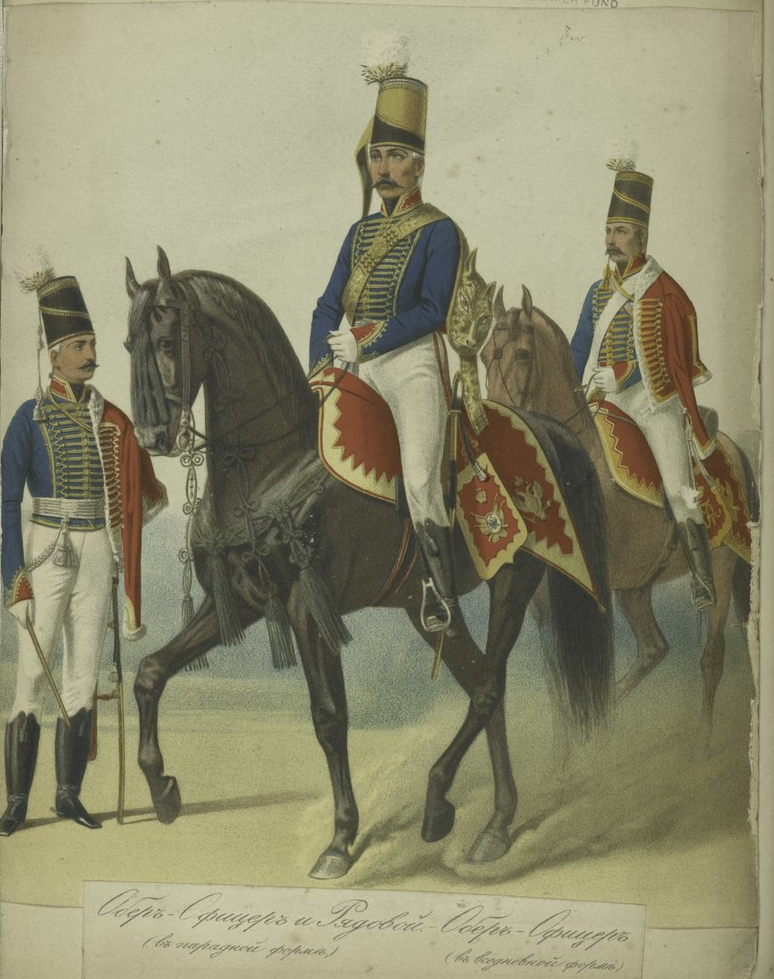
Polish saddle designers then used the Russian Imperial cavalry saddle or what the called the Polish-Russian saddle. 


.

Prior to 1917 the Russian Imperial cavalry was very numerous and many Polish citizens of the Russian empire served in the cavalry regiments of the tsars. They were very familiar with the saddles and tack of the Russian cavalry.

.


.


.


and next to the Polish saddle of 1925

Valete

Saturday, November 30, 2024

Russian cavalry 1806-7 via Robert Wilson

 Salvete Omnes,


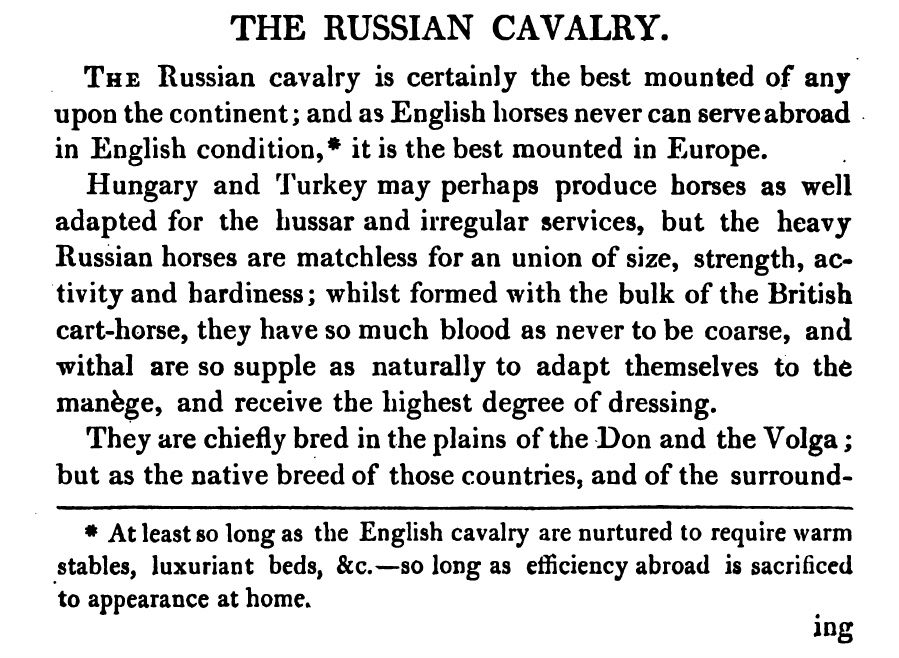
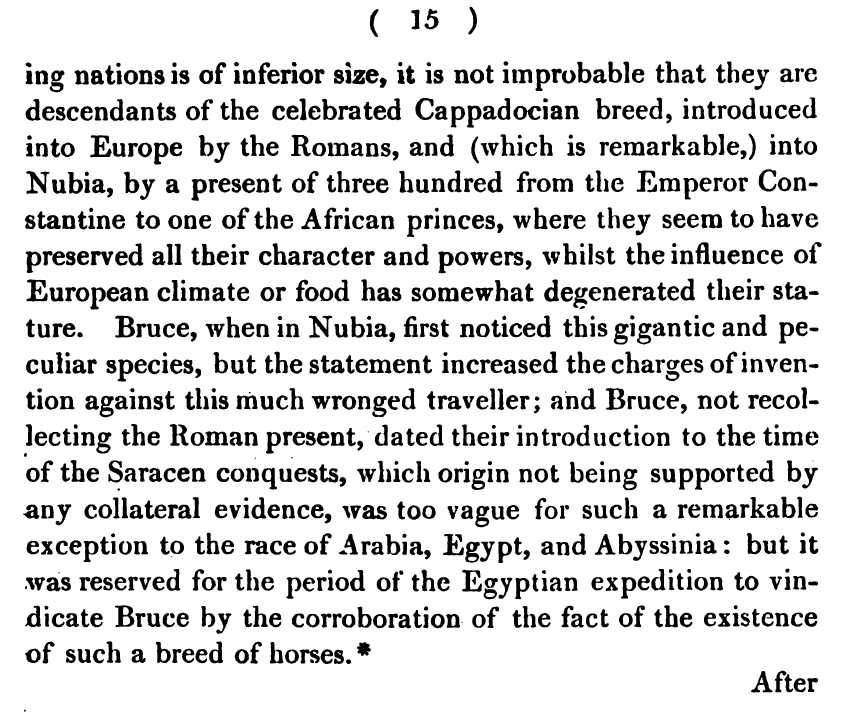
long time ago I bought a book on the Russian Cossack irregular cavalry  during the Napoleonic wars, and looking for some information I checked whether this particular primary source -   Brief remarks on the character and composition of the Russian army, and a sketch of the campaigns in Poland in the years 1806 and 1807 -   cited in there was available on line.

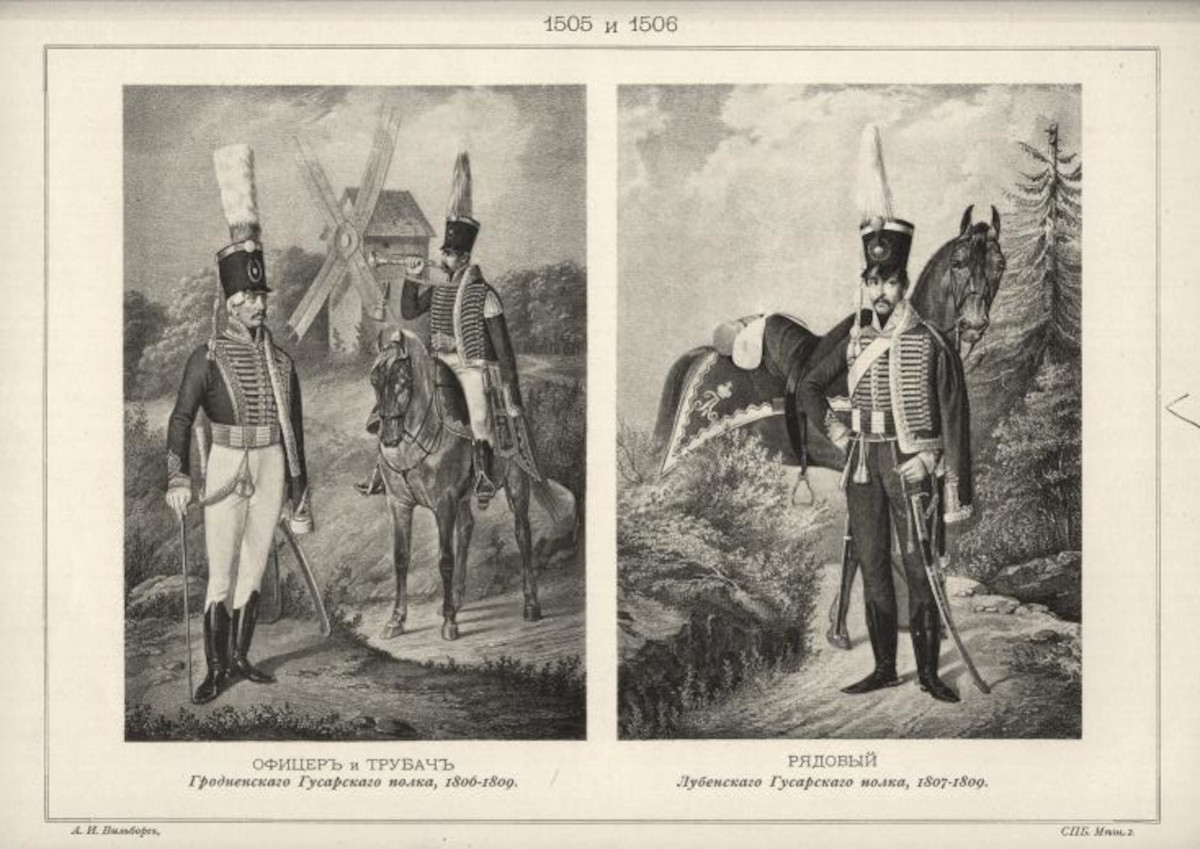
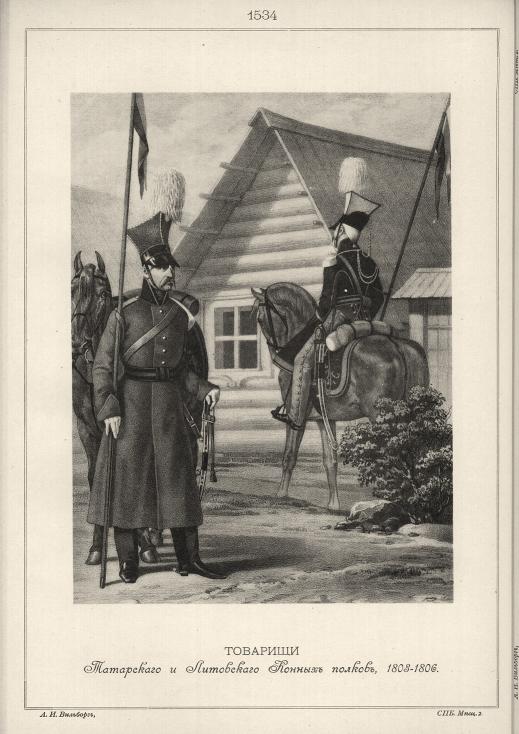
A. V. Viskovatov - Istoricheskkoe opisanie Odezhdi i vooruzheniya Rossieskikh


Thankfully there are many sites where you can read or download to read this 1810 source by Robert T. Wilson. My favorite is world library Archive - here you can have the link.

Wiktor Mazurowski *- Friedland 


From this book I corralled for you general Wilson's remarks on the Russian regular cavalry from his book, describing the splendind qualities of the Russian army horses, comparing them with the period British horses when on campaign:


.


.


.


.

.


.


*Wiktor Mazurowski (1859-1944) was a Polish painter of battles and war, educated in the atelier of Wojciech Gerson in Warsaw,  active  in Russian Poland and after 1918  in the independent Poland. In 1944 during the Warsaw Uprising 85 years old maestro Mazurowski was murdered, along with his wife Zofia, by the German SS unit. 

Valete


Tuesday, June 1, 2021

Alexander Sauerweid

Salvete Omnes,

today, new month of June, I would like to bring to your attention the brushwork et al. of Alexander Sauerweid, (1783-1844), a prolific European artist from  Kurland (Baltic vassal state of Polish-Lithuanian Commonwealth 1561-1795AD, and then annexed by Russian Empire and nowadays is part of Latvia). Alexander, disciple of the famous Dresden Academy of Fine Arts, made a trek around Napoleonic Age Europe and upon the invitation of tsar Alexander I of Russia  became an instructor at the Saint Petersburg Academy of Arts.
Alexander painted  portraits of Napoleon's horses - the French emperor had more than a hundred horses at his disposal when on war footing.
eg


in 1807 he drew the Russian Imperial Army - here  one image of the Russian lancers via archive 


In 1810 he drew soldiers and uniforms of various armies - made available on line via the Napoleon Series archive:
- the Westphalian Kingdom army  eg lancer


 - the army of Kingdom of Saxony  (then in union with Duchy of Warsaw), at that moment in its swan song, soon to be 'dismembered and swallowed' by Prussia. 


  - then again Alexander did plates showing the Saxon army of 1811

cuirassiers


horses  and officers of the Russian army eg


Artnet collection of his works - 

Battle of Leipzig 1813


Valete

Thursday, December 19, 2019

James Fillis - ecuyer on Archive.org

Salvete Omnes,
our 2019 is rapidly closing, with the beautiful holiday of Christmas still several days away.
so on the gift giving and receiving note perhaps you may be interested in this 'libre' collection of two translations of the European ecuyer James Fillis' famous French work on equitation -

Principes de dressage et d'équitation - the 2nd, 1891 edition - the photos of exercises come from that edition, eye friendly  -
below ecuyer Fillis in the Russian cavalry school uniform?


Breaking and riding, with military commentaries  (American edition here) was translated by captain Horace Hayes, one of my favorite XIX century writers on horse.

Grundsätze der Dressur und Reitkunst was translated by Gustav Goebel( the published 1918 version).

 In pre-war Poland it was published under the title Zasady ujeżdżania i jazdy konnej in 1930.


Valete
ps
I think I will post the entire chapter on the army horse.