Showing posts with label medieval manuscript. Show all posts

Friday, February 14, 2025

Ulrich von Liechtenstein and chivalry - Codex Manesse

 Salvete Omnes,

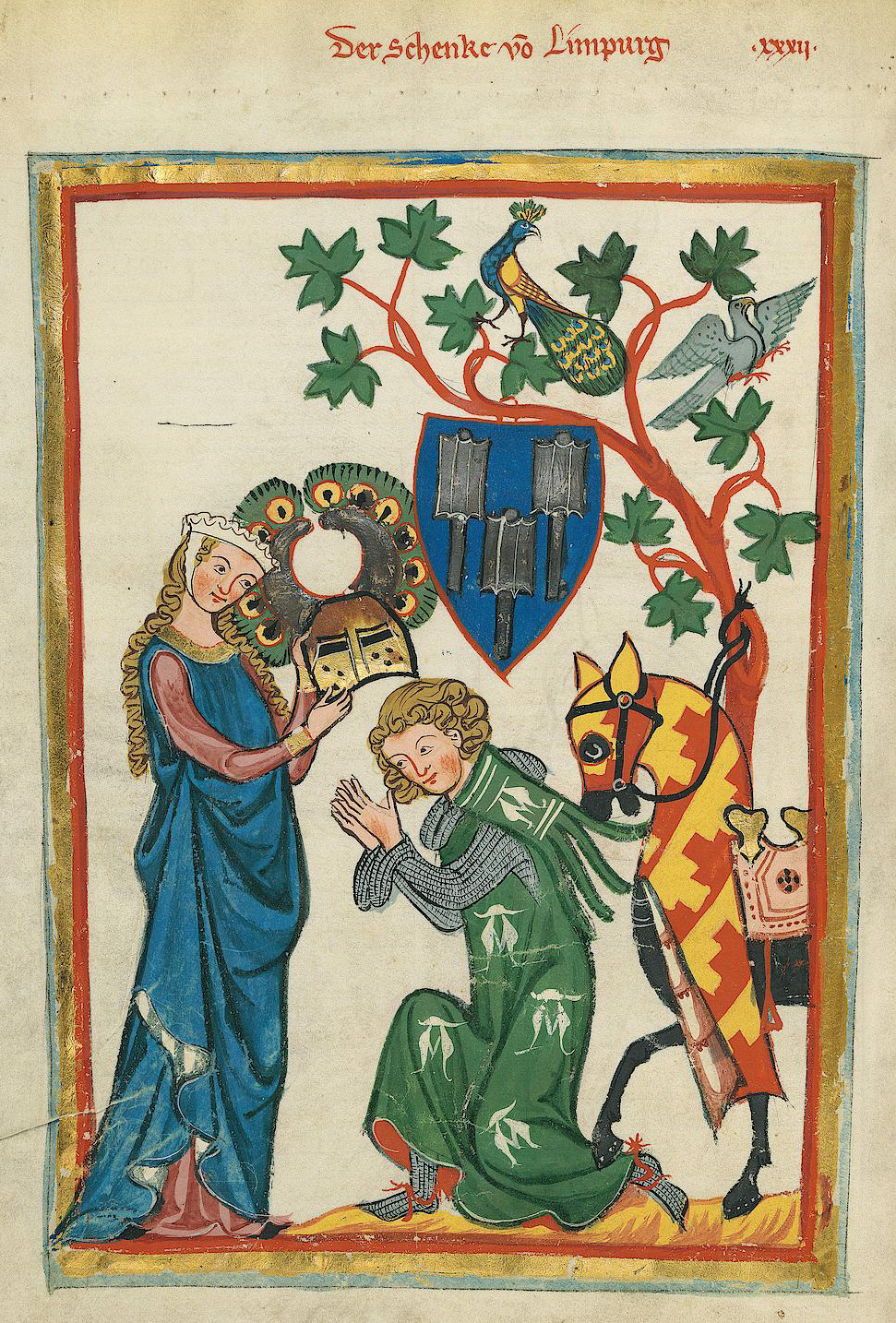
on the Valentine's Day perhaps it could be good and proper to see some chivalry, medieval romance &courtly love and who could be better that the XIII century German knight and poet Ulrich von Liechtenstein. Sir Ullrich, scion of the ministrialis * class family and himself a minnesinger or troubadour, authored the famous collection of poems titled Frauendienst ( Service of Ladies), which was translated into English by J.W. Thomas in 1969. You can borrow the 2004 edition from Archive Library. There are articles on sir Ulrich and his poetry on Academia.


there is humor in Ulrich's poetry - eg  the lady trick a suitor by suspending him in the air


.


.


and my most favorite plate of the Codex Manesse - our Piast prince Henryk Probus, where his horse's caparison bear letters that make a word - AMOR  which mean Love. 


ps * ministrialis class in Polish medieval society was represented by the włodyka   class (scartabellat). Below the wlodyka class there were the panosza (panozi or domicelli). They were absorbed into the naoblity (szlachta) or pushed into the peasantry etc during the closing up of the noble class in the XV century. 

Valete

Saturday, November 5, 2022

Hundeshagenscher Codex crica 1440AD

 Salvete Omnes,

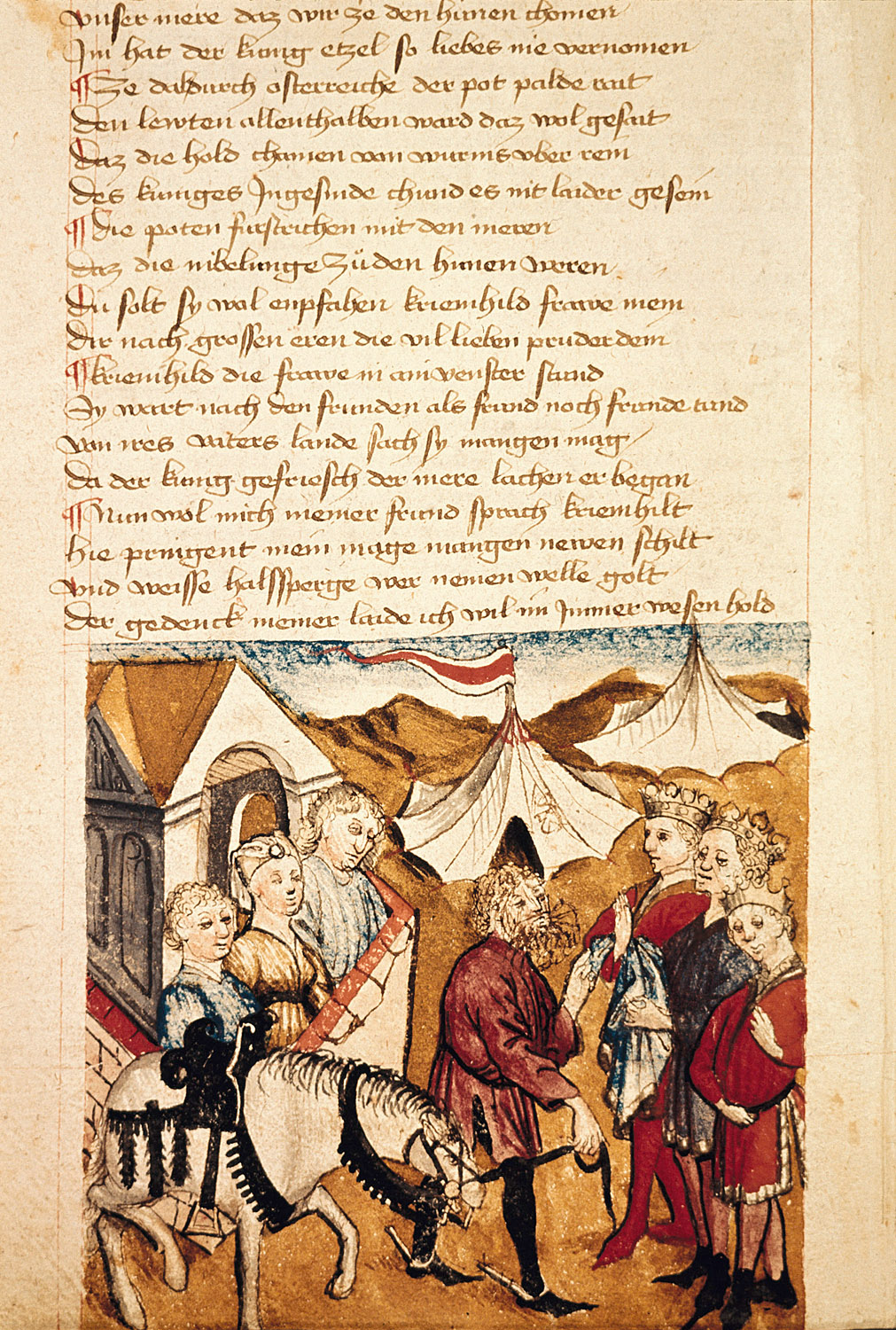
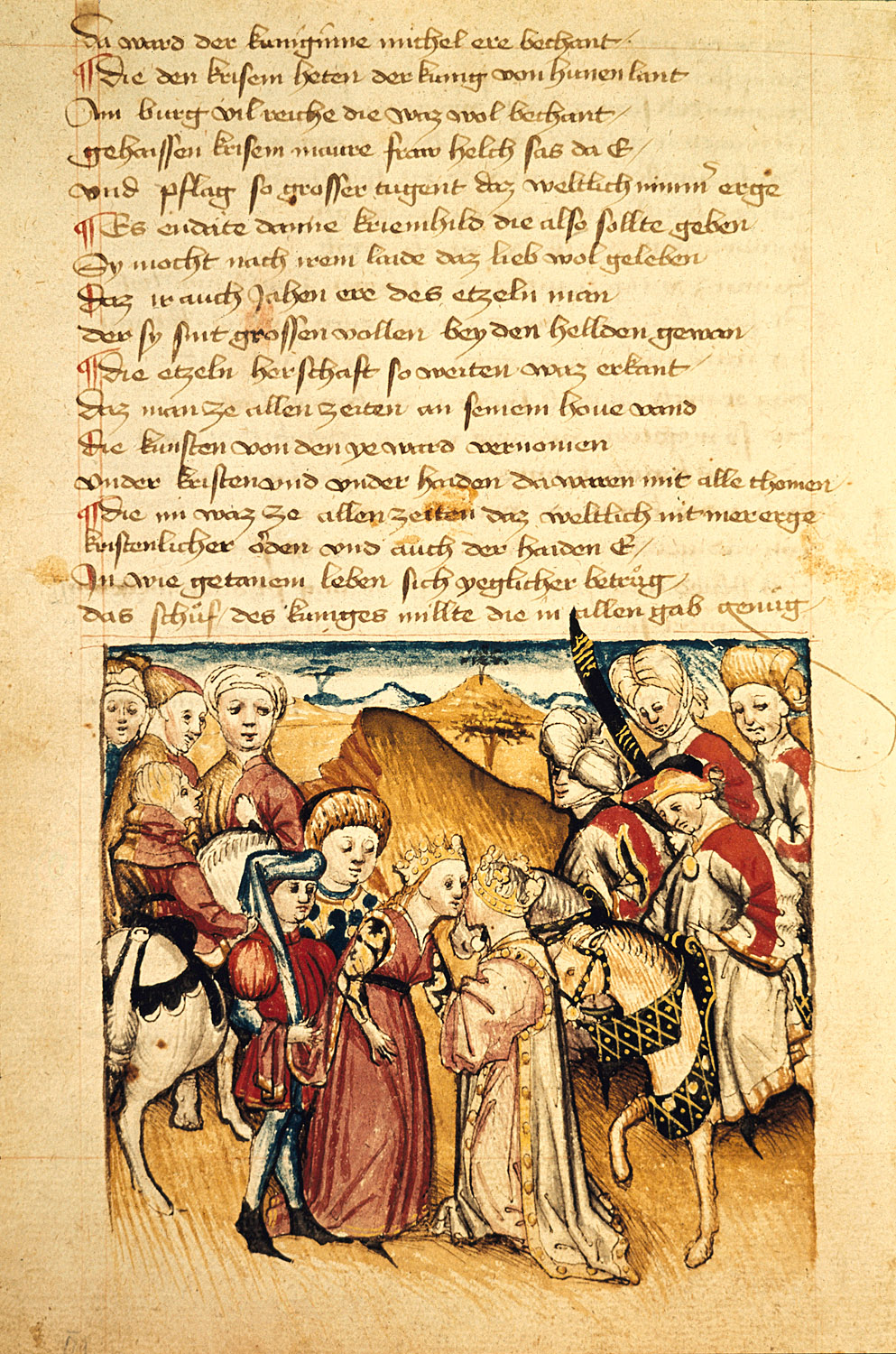
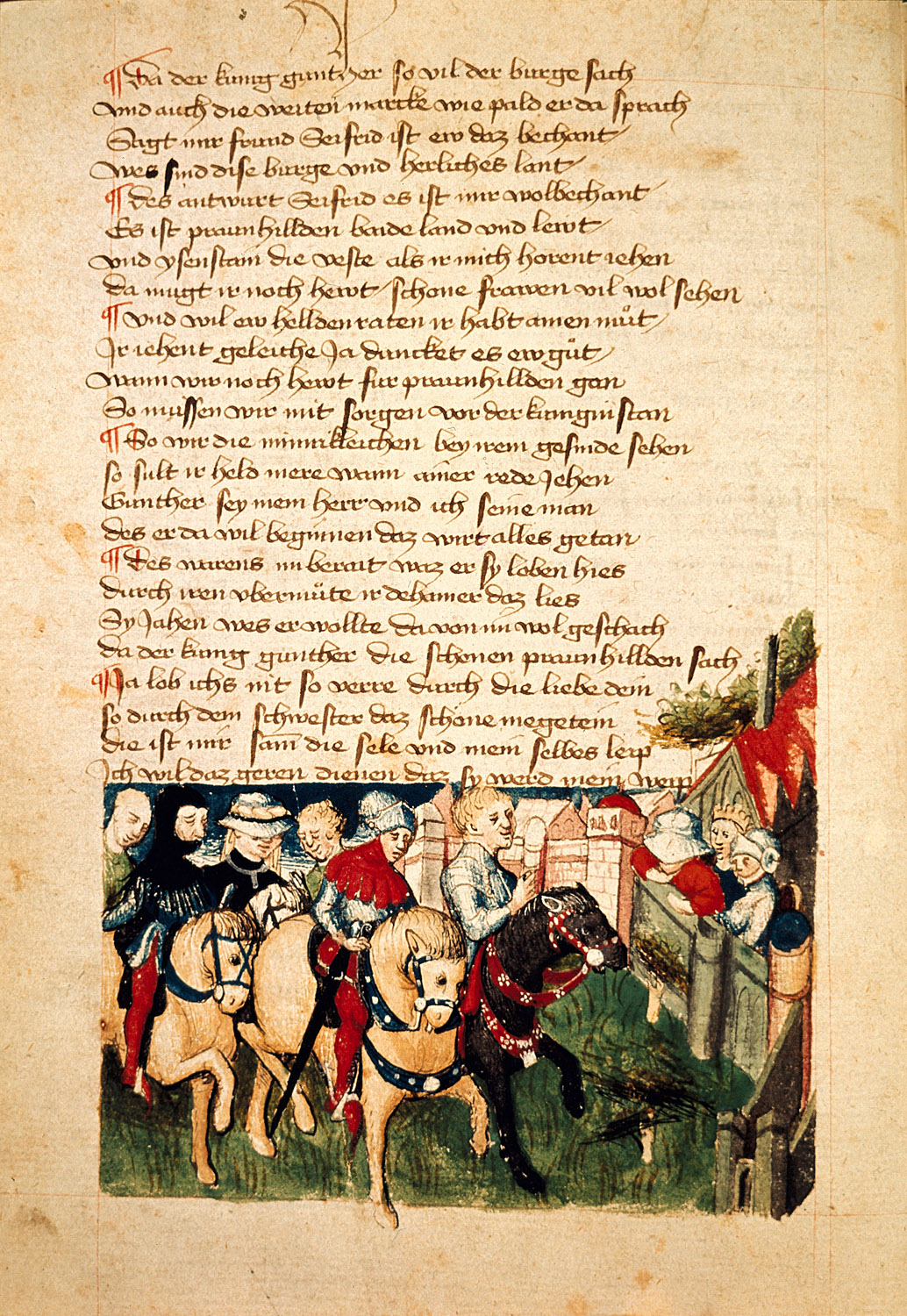
November evenings can be a longish affair for sure, so let us enjoy some high Middle-ages manuscript art from the German lands. And this 1440sAD manuscript  of the Nibelungelied or the Song of Nibelungs epic poem- and is wonderfully illuminated with XV century miniatures - full of vivid colors, complex scenes, and caparisoned destriers, warhorse, palfrey horses, tournaments, damsels, officials  and armored knights and ...other riders. 

The manuscript is held at the National Library in Berlin - nota bene it was named after a XIX century German librarian and art historian Helfrich Bernhard Hundeshagen, who actually worked on preserving and restoring this fine manuscript.


Valete

Tuesday, December 28, 2021

Bréviaire de Martin d'Aragon circa 1410AD - Gallica

 Salvete Omnes,


I hope your Christmas went well, and your batteries have been recharged - but we're in the holy period, the Orthodox Christians are still ahead of their Christmas, and then the Epiphany etc.
So taking this special period into account and feeling quite opportune I would like to share with you the link to a special breviary - Bréviaire de Martin d'Aragon - that can be perused at the French Library site aka Gallica.


It s one of those amazing examples of the medieval manuscript art - the illuminations are breathtaking and simply beautiful.
I am grateful for Gallica librarians that they made it available to us, the viewers and purveyors of beauty via digital collections.

This Cistercian breviary contains many paintings and illuminations, including some horse and equestrian images. The manuscript has been associated with the king of the Crown of Aragon, Martin el Viejo.


nota bene the shield looks very much like the adarga or the traditional Iberian  leather almond-shaped shield.  (the adarga shield was used by the frontier dragoons of the Spanish Northern Provinces in North America until the very end of the colonial Mexico)

and the Tournament illumination 


there is one more   illumination with horses  but I am going to keep it for another time, and it will be soon - :)

valete

Sunday, October 25, 2020

De medicina Equorum - Jordanus Ruffus & medieval hippiatric tradition

 Salvete Omnes,

Theodoric of Cervia referencing Vegetius Renatus:
'Just as  animals follow after humans, thus veterinary arts follow medicine'*

Sunday and we are jumping back to the fine medieval times - I always like to share research and ideas freely available, so there are two for today:
there is this  freely available dissertation by Sunny Harrison, PhD, from University of Leeds titled - Jordanus Ruffus and the medieval hippiatric tradition: Animal-care practitioners and the horse (2018).

Noble Jordanus Ruffus of Calabria (died 1256AD) was a 'miles in marestalla' or a knight- farrier( marescalsus) at the court of the Stupor Mundi, as the Holy Roman Emperor Frederic II of Sicily liked to be called.  He was the first known writer of the hippiatric treatises (quote bishop Theodoric with his Practica Equorum  was right there too) in the Western tradition. The material contained in this dissertation is both interesting and a bit arcane, but for all the history of horse aficionado this will be of much interest, I believe.
G.B. Tomassini, on his blog, has this very interesting article about Jordanus Ruffus and his book.


Incidentally, Vatican Library holds an early XV century translation into Italian of the Ruffus' XIII century manuscript, illuminated with many outstanding illuminations.


 Valete