Showing posts with label Herberstein. Show all posts

Wednesday, November 2, 2022

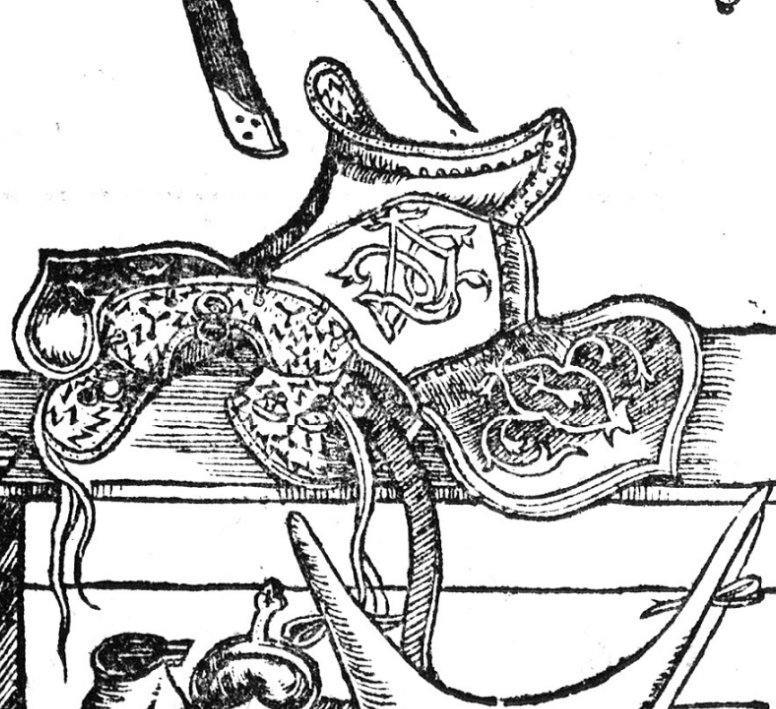
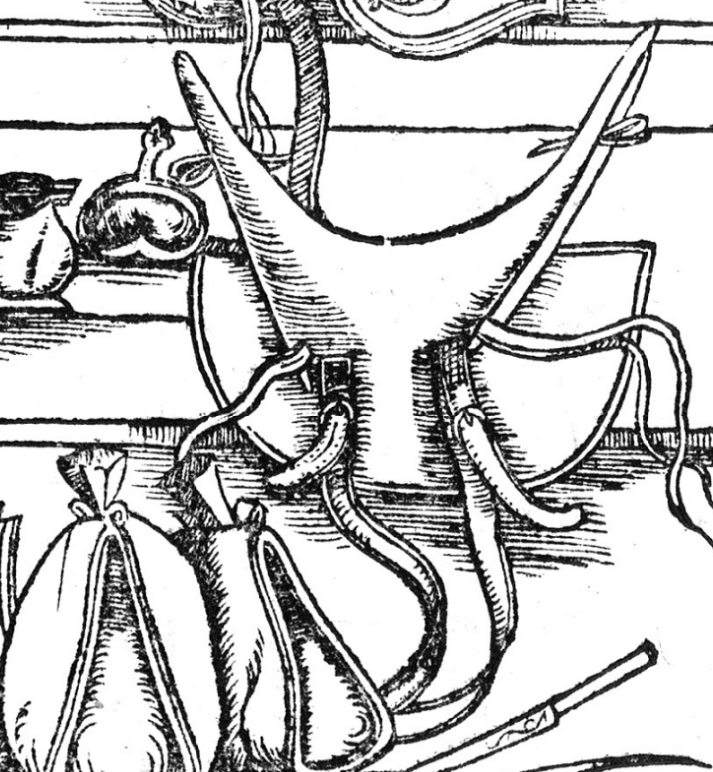
Notes Upon Russia - Sigismund von Herberstein - saddles etc

 Salvete Omnes, 


ten years ago I posted some quotes from Sigismund Herberstein's Notes Upon Russia et al. (Major's Translation)  then and now available on Archive.
Today I am going to add more text from that translation and the plates from the Latin original - wiki gallery.


Muscovy two-headed eagle is high on the news totem-pole these days, and their deeds are absolutely  not of kind and pleasant type to be proud of, but quite on the contrary  they bring death and destruction, misery and cold and perhaps hunger...


Saddles - of two types


***
 and may God and good willed people bring peace to the people of Ukraine

Valete

Sunday, October 28, 2012

Abraham de Bruyn's Grand Duchy of Muscovy horses & riders

Salve,

snow in large parts of Europe, huge hurricane in the eastern United States - crazy ending of the warm season, so let us concentrate on horses and their riders.

Abraham de Bruyn also created beautiful images of riders and horses with their tack, leaders and warriors of the Grand Duchy of Muscovy or simply Muscovy (Lev Gumilev teaches us, in his books, that Russia only starts with the great warrior and first rate statesman tzar Peter I although Western and Soviet/Russian historians tend to give 1547 as beginning of Russia, while in our neck of the woods our Polish-Lithuanina Commonwealth stopped using the name Grand Duchy of Muscovy only in 1764 or so).

Ad rem...
the Great Duke

..
woivode, with the characteristic Tatar drum at his pommel


.
noble (perhaps a boyar or oprichnik ) armed as with a lance like Polish and Hungarian hussars (perhaps the cost-cutting engraver just added these details to spice up the image for and edition aimed at some wealthy patron etc). We know that the Muscovites tried to form a winged hussar unit in XVII century.

..
lesser noblity

..
common horseman fighting as horse archer, as seen in the battle of Orsha painting 

Note the sabre hanging down on the lanyard in two woodcuts (loop of rope or leather thong fixed to the sword hilt, used to hang down the sword from the wrist), facilitating its use when axe was moved to the left hand or earlier when bow was used.

..
Muscovy fighting the Tatars of the Pontic-Caspian steppes always encouraged their settlement, participation in the armed forces and administration aided by the eventual conversion to Christianity.

..
a Tatar and a Muscovite


ps
 let us again quote from von Herberstein's work where he described Muscovite horses and soldiers:

They have small gelded horses, unshod, and with very light bridles, and their saddles are so adapted that they may turn round in any direction without impediment, and draw the bow. They sit on horseback with the feet so drawn up, that they cannot sustain any more than commonly severe shock from a spear or javelin. Very few use spurs, but most use the whip, which always hangs from the little finger of the right hand, so that they may lay hold of it and use it as often as they need; and if they have occasion to use their arms, they let it fall again so as to hang from the hand. Their ordinary arms are a bow, a javelin, a hatchet, and a stick, like a caestus, which is called in Russian, kesteni; in Polish, bassalich*. The more noble and wealthy men use a lance. They have also suspended from their arm oblong poignards** like knives, which are so buried in the scabbard, that they can scarcely touch the tip of the hilt, or lay hold of them in the moment of necessity. They have also a long bridle perforated at the end, which they attach to a finger of the left hand, so that they may hold it at the same time as they use the bow. Moreover, although they hold the bridle, the bow, the short sword, the javelin, and the whip, in their hands all at the same time, yet they know how to use them skilfully without feeling any incumbrance.' Some of the higher classes use a coat of mail beautifully worked on the breast with a sort of scales and with rings; some few use a helmet of a peaked form like a pyramid. Some use a dress made of silk stuffed with wool, to enable them to sustain any blows. They also use pikes.


Tuesday, January 11, 2011

Little sketch of Russian 'cholop' after von Herberstein


Salve,
upon reading some of the von Herberstein's notes I drew this image of a Muscovy warrior, and I gave him an Ottoman Turkish pallash taken off some Polish, Lithuanian or Tatar warrior; also I drew his horse taller than what von Herberstein described.

'They have small gelded horses, unshod, and with very light bridles, and their saddles are so adapted that they may turn round in any direction without impediment, and draw the bow. They sit on horseback with the feet so drawn up, that they cannot sustain any more than commonly severe shock from a spear or javelin. Very few use spurs, but most use the whip, which always hangs from the little finger of the right hand, so that they may lay hold of it and use it as often as they need; and if they have occasion to use their arms, they let it fall again so as to hang from the hand. Their ordinary arms are a bow, a javelin, a hatchet, and a stick, like a caestus, which is called in Russian, kesteni; in Polish, bassalich*. The more noble and wealthy men use a lance. They have also suspended from their arm oblong poignards** like knives, which are so buried in the scabbard, that they can scarcely touch the tip of the hilt, or lay hold of them in the moment of necessity. They have also a long bridle perforated at the end, which they attach to a finger of the left hand, so that they may hold it at the same time as they use the bow. Moreover, although they hold the bridle, the bow, the short sword, the javelin, and the whip, in their hands all at the same time, yet they know how to use them skilfully without feeling any incumbrance.' Some of the higher classes use a coat of mail beautifully worked on the breast with a sort of scales and with rings; some few use a helmet of a peaked form like a pyramid. Some use a dress made of silk stuffed with wool, to enable them to sustain any blows. They also use pikes.


*
now in Polish we use word 'Korbacz' [korbach] or 'Kiscien' for such a weapon, it was very popular in the Middle Ages amongst the plebeian militias and later amongst the Zaporozhian Cossacks, i.e. in the Polish-Lithuanian forces of the XV-XVII centuries.

**
Poniard (or Poignard, Poyniard, Puniard)
A term derived from the French poignard and introduced in England in the late 16th century, denoting a light dagger that had a strong blade, usually squarish in section, and a reinforced point, beadlike in shape. Some blades were deeply grooved and ridged, such a structure adding to the rigidity of the blade. Most poniards were only thrusting weapons—unlike the dagger of the time, which had larger, double-edged blades for making cutting strikes as well. When provided with a sizable cross guard and, particularly, a strong side ring for protection of the hand, the poniard served as a light parrying weapon used in conjunction with the rapier in personal combat.

Sunday, January 9, 2011

Sigmund Herberstein's 'Notes on Muscovy' at Archive.org

Salve,
 internet free libraries are such wonderful places for all us, students of the past and present. This time archive.org proved itself to be again the best internet resource, for I found both volumes of the famous 'Notes upon Russia: being a translation of the earliest account of that country, entitled 'Rerum moscoviticarum commentari' in downloadable book form, scan of the 1851 English translation. 
This is a portrait of the author Sigmund von Herberstein, who was a keen observer and fine writer.


Von Herberstein went to Muscovy Russia when it just had won several important engagements (eg capturing the city of Smolensk by treachery) with Grand Duchy of Lithuania and had had the  great prince Vasili III (Василий III Иванович) , one astute ruler, since 1505 when his even more astute father Ivan III ( Иван III Васильевич) died. These two rulers will figure in my future posts as their armies fought the Polish-Lithuanian ones ( I intend to talk about the famous battle of Vedrosha/Wiedrosza/Ведрошская битва of 1500, or battle Orsha 1514), as wall as the Crimean Tatars and Kazan Tatars, Livonianas etc. Amongst interesting aspects of the Muscovy Russia, Herberstein notes horses and uses this  word 'argamak' - Turkish word (borrowed from old Persian and pretty soon a subject of this blog more than one time) for a fine stallion - for some Turkish horses amongst many of the great prince horses, thus interesting information for me, a student of horse history - :). I guess I should mention that Herberstein is a reliable source to the conflicts between Muscovy Russian and Poland-Lithuania.


Well, this is the link -   www.archive.org Sigmund Herberstein mediatype:texts  - do enjoy reading it at your convenience:  on your ipad, computer, book reader, phone or by printing a copy of choicest pages.


Finally I added a small old pen & ink cum watercolor drawing of a Muscovite soldier from around the Orsha battle of 1514, based on a Northern Renaissance painting of the battle, now at the National Museum in Warsaw.


as Russian say - pa ka, fellow net travelers.