Showing posts with label Duchy of Warsaw. Show all posts

Monday, August 11, 2025

Horse soldiers of Duchy of Warsaw - prints circa 1831AD

 Salvete Omnes,

a quick entry - Dog days of the summer - 

ad rem, one of my favorite periods in Polish uniform history is the Duchy of Warsaw: 1806-1815AD , during the Napoleonic Wars.

Poniatowski and his staff in Krakow's Sukiennice 1809, Stachowicz pinxit

Stachowicz, Michał (1768-1825) conceived the idea and drawings while a German engraver Sebastian Langer (1772-1841) executed the prints for a publication in Krakow (then a so called Free City of Krakow) in 1831.


.


.

.

Valete

Monday, June 24, 2024

The grand folly begun on the 24th - Russia 1812

Salve,


I have been listening to the '1812' audiobook version of prof. Adam Zamoyski's great work.- Napoleon's Fatal March on Moscow.


on this day the 24th of June but in 1812 the great Grand Army begun crossing the Niemen  River from Duchy of Warsaw  into the Russian Empire - the Polish hopes and expectations for the restoration of Poland in her pre-1792 border were at the highest. Unfortunately, the fickle Fortuna   and Napoleon would disappoint them absolutely. 

the huge armies - one commanded by Napoleon and the other by tsar Alexander - 'gathered' around Kown(Kaunas, present day Lithuania), both separated by the steep banks of the Niemen River.


Polish cavalrymen were in the avant-garde or advanced guard of the French army.  Young cavalry captain,
Roman Soltyk, Soltyk coat of arms, was the commanding officer of the squadron of the 6th Ulan Lancer regiment ( commanding officer colonel Michal Pagowski of Duchy of Warsaw army), was  stationed with his command on the Polish side of the Nieman River (near Poniemon, whereas the Russian side of the river had the town of Kowno) that June 1812, these Polish lancers, one of the best Polish ulan lancer regiments,  were attached to the French cavalry division  under general Bruyeres (Soltyk's version - in fact  Bruyere).


On the eve of June 24, 1812 ,  at the camps of the  6th Uhlans a travel carriage pulled by 6 horses and surrounded by a small detachment of the mounted chasseurs of the guard stopped suddenly at the lancers' outpost. 


From the carriage, to to astonishment of those present, emerged Napoleon and Berthier, prince of Neuchatel. They were met by the officers of the regiment and the emperor demanded Polish uniforms for Berthier and he. Napoleon took colonel Pagowski's coat and off duty cap , the ulan's czapka being to heavy said the emperor. He then mounted colonel Pagowski's horse and Bertheir, also dressed as Polish ulan officer, took the other horse of Pagowski.


 2nd Lieutenant Nikodem Zrelski, advance-post commander with his company of the 6th Ulans, went along with the emperor and Berthier, as their guide and scout. 
They rode to Aleksota (nowdays part of Kown/Kaunas, Lithuanian) on the left bank of the Nieman River and there Napoleon reconnoitered the whole Kowno area. The next day the Grand Army marched across into the war and mayhem.
 

Hundreds of thousands  of men and horses would suffer, perish and die during this campaign.


Pacem Aeternam


enjoy

Sunday, November 19, 2023

Bog powiezyl mi honor Polakow, Bogu go tylko oddam - o ostatnich chwila polskiego Bayarda

 Salvete Omnes,

[in Polish]


w pazdzierniku, z okazji 210 rocznicy smierci wielkiego syna Polski, mialo miejsce spotkanie na Zamku Krolewskim w Warszawie pt „Jak naprawdę zginął książę Józef Poniatowski?" - debata.
Oto link ze strony polskiego radio z linkiem do nagrania ze spotkania na YT-   otoz jest to bardzo ciekawa prezentacja, pod katem badan medycznych i swiadkow-uczestnikow bitwy lipskiej,  owych chwil ostatnich wielkiego polskiego zolnierza i wodza armii Ksiestwa Warszawskiego ksiecia Jozefa Poniatowskiego (i juz wtedy marszalka Frencji, w czasie bitwy pod Lipskiem 19.X.1813.


Debatuja prof. Dariusz Nawrot, historyk i rekonstruktor epoki Ksiestwa Warszawskiego, i dr. Maria Turos, lekarz medycyny i rekonstruktor chirurgii et medycyny epoki napoleonskiej, a w ostatniej godzinie debaty mamy pytania i obserwacje od uczestnikow-widzow. 


Z pamietnika Bialkowskiego - o onym masztalerzu ksiecia i koniu, ktorym byl rumakiem ksiecia kiedy dosiegnal go Tanatos .


Nota bene wieczna chwala i honor dla oficera sztabowego Hipolita Beschamps'a, ktory wspomagal w czasie odwrotu rannego herosa i w ostatniej tragicznej chwili rowniez zginal od kul wrogow probujac ratowac smiertelnie rannego ksiecia.

Valete!

Wednesday, August 30, 2023

Maestro Ryszard Morawski - Pacem Aeternam

 Salvete Omnes,

 sad news today -

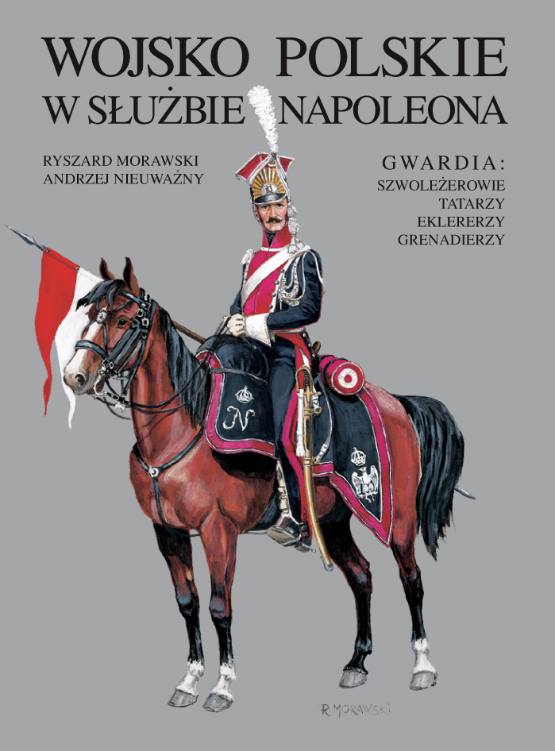
maestro Ryszard Morawski (born 1933) , Polish illustrator and historical artists - sculpture, painting and other graphic arts, passed away yesterday - 29th of August, 2023.
Pan Ryszard was trained at the Fine Arts Academy in Warsaw, Poland, with painting masters like Michal Bylina and Antoni Trzeszczykowski., both veterans of the Polish Army  and combatants of the wars, Trzeszczykowski of the Polish-Ruso War of 1920 and Bylina of 1939 and Home Army through 1944.
There is an interview, done by Adam Paczuski, with Ryszard Morawski on Napoleon website - in Polish, but can be easily translated via google books, to get the gist of it. Long time ago in NYC I met Andrzej  Zaremba, who cooperated with maestro Morawski, in his bookstore there. Nota bene Ryszard Morawski painted many portraits of the famous Polish Arabian horses from  the Arabian Horse Janow Podlaski Stud.

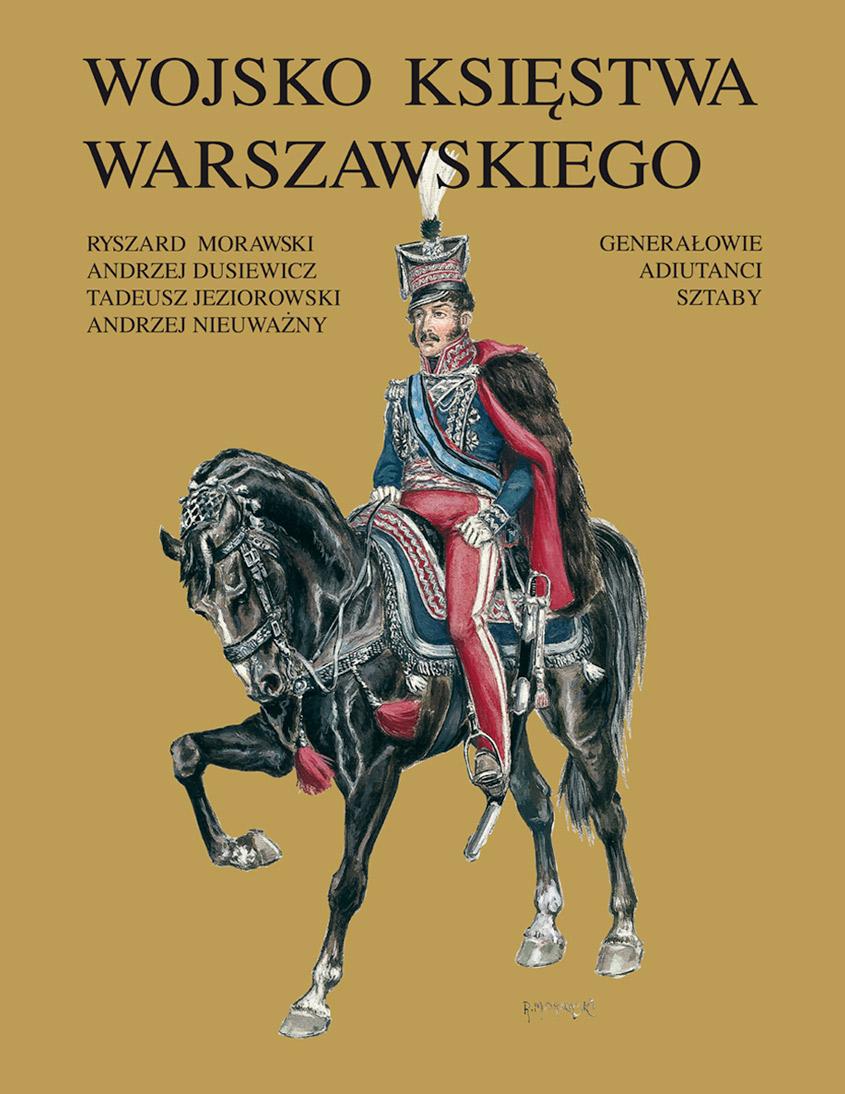
I started my adventure with Pan Ryszard's work via Polish comics magazine Relax (where his uniforms plates were published, along the comics stories by great artists like Grzegorz Rosinski Marek Szyszko, Christa, Boguslaw Polch, Jerzy Wroblewski etc, then the Cavalry of Duchy of Warsaw  and other of his fine books, of which I am attaching the covers - note I hold no copyrights to those images, as present them here only for educational purposes - of his albums that I have in my own library. 


His fine albums, individual plates and other art can be had from his Polish publisher Karabela.

Pacem Aeternam

Valete


Monday, August 5, 2019

Charging - Napoleonic cavalry in painting

 
Salvete Omnes,
a short summer entry - just some fantastic XIX century equestrian military art


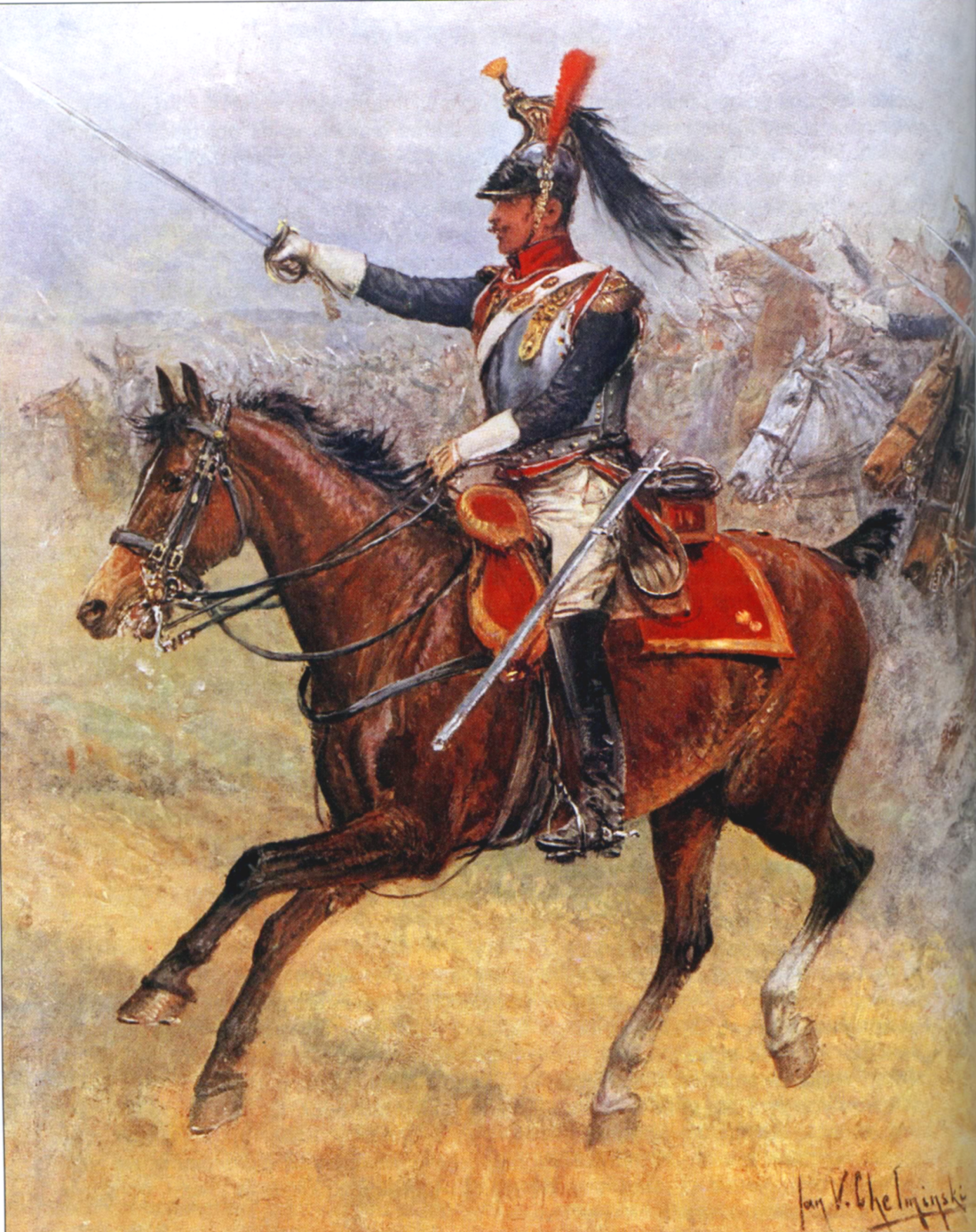
Napoleonic, Polish and French, cavalry in  paintings - mostly maestro Edouard Detaille, Jean-Louis-Ernest Meissonier and Jan Chelminski:


 Jean-Louis-Ernest Meissonier:


Jan Chelminski


Valete

Wednesday, November 28, 2018

Snow and horses Berezina AD 1812


detail

Salvete Omnes,
my heart is black with sadness today, my beloved German shepherd Inka Negra was euthanized today.
She will sleep forever in the oak forest. C'est la vie.
                                            ***
End of November brings another anniversary in Polish , French, Russian and German military history.
Falat's landscape

On 26th of November  the remains of the Napoleonic Grande Armee (Great or Grand Army), that had entered Russian Empire in the summer 1812, fought their last large ( the entire fight lasted from 26 to 29th of November ) battle of this terribly mismanaged and badly executed campaign.
Encircled by three Russian armies, pursued relentlessly by Russians and inclement weather, starving and frostbitten, with military horses reduced to skeletal steeds collapsing at any given moment and using peasant koniks - now consisting in large part of Polish soldiers, and then the German, Croat, Dutch and French soldiers, plus vast number of camp followers and stragglers - so this struggling army came to the old Polish-Lithuanian Commonwealth Berezyna (Berezina) River crossings on the way to Wilno (Vilnius, Lithuania), had to built bridges, fight their enemies in snow, ice, forests and freezing waters, and just to keep on walking towards Duchy of Warsaw and Empire.
For the Napoleon it was do or die type of an engagement, the emperor being effectively encircled with his fighting-men spread out on the right and left banks and twice the number of civilians and stragglers on the left bank.   For a moment if all came to halt around  the fords on the Berezyna (Berezina) River between Studzianka(Studienka) and Borysow (Borisov), present day Belarus. Actual battle was very bloody and very costly in terms of losses in men, families and materiel, but  soldiers' valiant sacrifice did win Napoleon another chance to fight on in the spring 1813 etc, thus the French Empire was saved and survived the Russia 1812 debacle to fight on until Waterloo stopped all.
On November 29, 1812 Grand Army survivors started marching towards Wilno, but less than 10,000 of them capable to bear arms and fight (and they did fight smaller battles and skirmishes). Several days after Berezyna Napoleon left his army and went straight to Paris, to organize new armies to fight in the Germanies the following spring.
Military details of this battle will become subject of many posts in the future (so  many surviving diaries and memoirs provide so much interesting equestrian information that it would be shameful not to bring them back).
Falat's work
But today I want to post something about the painting, not jsut any painting abut a huge panorama work planned and executed by two Polish masters of brush and paint : Wojciech Kossak and Julian Fałat, with help from several Polish artists - Michał Wywiórski, Antoni Piotrkowski, Kazimierz Pułaski (cousin of Kossak), et Jan Stanisławski.
Falat's winter scene
So these two great brushmasters set on to paint  the grand last act of the Napoleonic retreat from Moscow AD 1812, the battle of Berezina River.
In November 1894 Falat proposed to undertake this project, to be painted in Berlin, where he was residing. The financial backers of this project were Roman Potocki, Antoni Wodzicki and Stanislaw  Homolacs.
Kossak was to paint the figures and Falat the nature(being the foremost painter of landscape, especially the snowed scenery etc, but he painted one bridge with figures too, as seen above). Kossak went to the site in Russian Empire and studied the uniforms and armaments.

The work started on December 1, 1894 and in April 1896 the finished Berezina panorama went on display in Berlin. In September 1898 it went to be displayed in Warsaw, in April 1900 went to Kiev, and in June 1901 to Moscow. After that show it was kept at Kossak's home at Krakow, The panoramic painting was 15 meters high and 120  meters long and without a proper gallery to display it (unlike Raclawice Panorama),  it having been rolled and slowly decaying at Kossak's atelier it was destined to survive in its entirety for long. Addtionally there was the conflict between the two leading painters, and so this great work of art was completely cut into multiple panels and then these smaller paintings were sold off to interested buyers. It had begun already in 1907 when Kossak started to cut it into smaller parts, selling those pieces he painted himself.
There are but photos of some of the larger scenes surviving


Valete!

best books on this engagement
in Polish:
Marian Kukiel, Wojna 1812 Roku, vol. II.
Robert Bielecki, Berezyna 1812.
English:
Alexander Mikaberidze, Battle of the Berezina.