Showing posts with label Tang Dynasty. Show all posts

Wednesday, February 18, 2026

Fire Horse Year & Tea Horse Road

 Salvete Omnes,


Chinese zodiac - Fukuoka, Japan


the Lunar year of Fire Horse started on February 19th.  May this new year bring peace and prosperity to all.


Today's post will be about tea, mules and horses.

The Chamadao or Chamagudao or the Ancient Tea Horse Road was the trade route between  Tang China and Tibet and Bengal. 


Along with silk and porcelain the teas of China became quite early essential  commodities for the external markets and coveted Chinese imports. 


For more than a thousand year Chinese caravans of tea-horse (mule) muleteers and porters carried packaged tea from Chengdu in Sichuan & Kunming in Yunnan,  from Pu'er & Dali regions of tea growing and production to the Tibetans of  Lhasa and other centers of power, to the Nepalis further west and to the Bengali yet further to  the southwest, all  across the Himalayan mountains and plateaus. 


Since horses did not breed well in the main Han China provinces, then the Chinese export of tea & silk etc led to the exchange of  those much coveted Tibetan-bred horses  for tea etc. 

Tibetan pony


The Song Dynasty, very poor in good horses for their cavalry due to their wars with the  Jin Dyansty and Mongols, is known for importing the Naqu/Hequ horses from Tibetan breeders.


Hequ horse of Tibet

Hequ horse

Hequ horse


.


Teas from the Chinese cultivation areas was harvested by hand, dried, fermented and shaped into bricks and cakes, the final products wrapped in bamboo leaves & husk or tree bark for travel. For six months the tea caravans would trek the road until reaching their desired market destinations. 


The Chinese tea drinking spread to India, Mongolia, Central Asia and Japan, and much later to Muscovy and Europe. 

Valete

Sunday, December 14, 2025

Tang riding horse harness terminology

 Salvete Omnes,


Tang Dynasty period in Chinese history is famous for the ceramics in shape of horse and horse & rider. 


I have a book - actually an exhibit catalog from  the Kentucky Horse Park (published 2000AD).
Title: The Imperial China, The Art of the Horse in Chinese (review). 
In the Chapter: The Horse in Chinese History by Bill Cooke (director emeritus of the International Museum of the Horse at the Kentucky Horse Park) there is a description of the Chinese terminology around the Tang Dynasty period. 


The author provided information on the horse harness terminology -

Jisheng on the crouper harness

Bridle- 'luotou' and the Bit - 'Youle' with cheek-bars - 'Biao'


Saddle - 'An'

Pommel and cantle saddle with tree bars

High pommel saddle with a saddle cover, saddle pad, saddle mud guard, and stirrups

Behind the saddle, to the saddle tree Tang saddlemakers added 4-6 straps hanging down the saddle pad

horse with a crenellated mane


Saddle-pad - 'cun' and  Saddle mud-screen -  'zhang-ni'


Saddle cover - 'Anfu'


Saddle cinch/girth - 'Fudai'

Breastplate/breast-strap - 'Panxiong'


Crouper/crupper - 'Qiu'


Apricot/peach leaf ornament - 'Xingye'


Cranellated /crenelated mane - 'three flower' 'Sanhua'


Bounded Tail -  'Fuwei'


Crupper saddle adornment -'Jisheng' (parasite), also a version known as 'Fire pearl ' - 'Hounzhu'


enjoy

Valete

Thursday, February 13, 2025

Quian Xuan - late Song and Yuan painter

 Salvete Omnes,

a noble horse archer 

Quian Xuan (1235-1305) - was a painter and calligrapher during the Song and Yuan dynasties of China. He grew up during the conquest of Chinese states by Chingiss Khan and later creation of the Yuan, Mongol, Dynasty.  He is known by his intricate paintings of birds, landscapes, and mixing of the late Song style and ancient Tang one.   


Liao Dynasty period painting of the famous consort


Consort Yang mounting a horse while emperor is watching. - Smithsonian has a page devoted to this artwork.

Tang emperor and his eunuchs retainers


consort being helped to mount the horse . Note the dragon on the saddle's skirt


Yang Guifei was considered one of the Four Beauties of China, and subject of many paintings and artworks in the Chinese and Japanese arts. eg this Wiki Commons page.
During the An Lushan rebellion when imperial forces were all but defeated, the Tang guard soldiers surrounding the emperor forced him to order his favorite consort to commit suicide. She died in July 756 Ad, but went on to live as the object of art and poetry and novels in the Asian history etc. 


Valete

Sunday, October 13, 2024

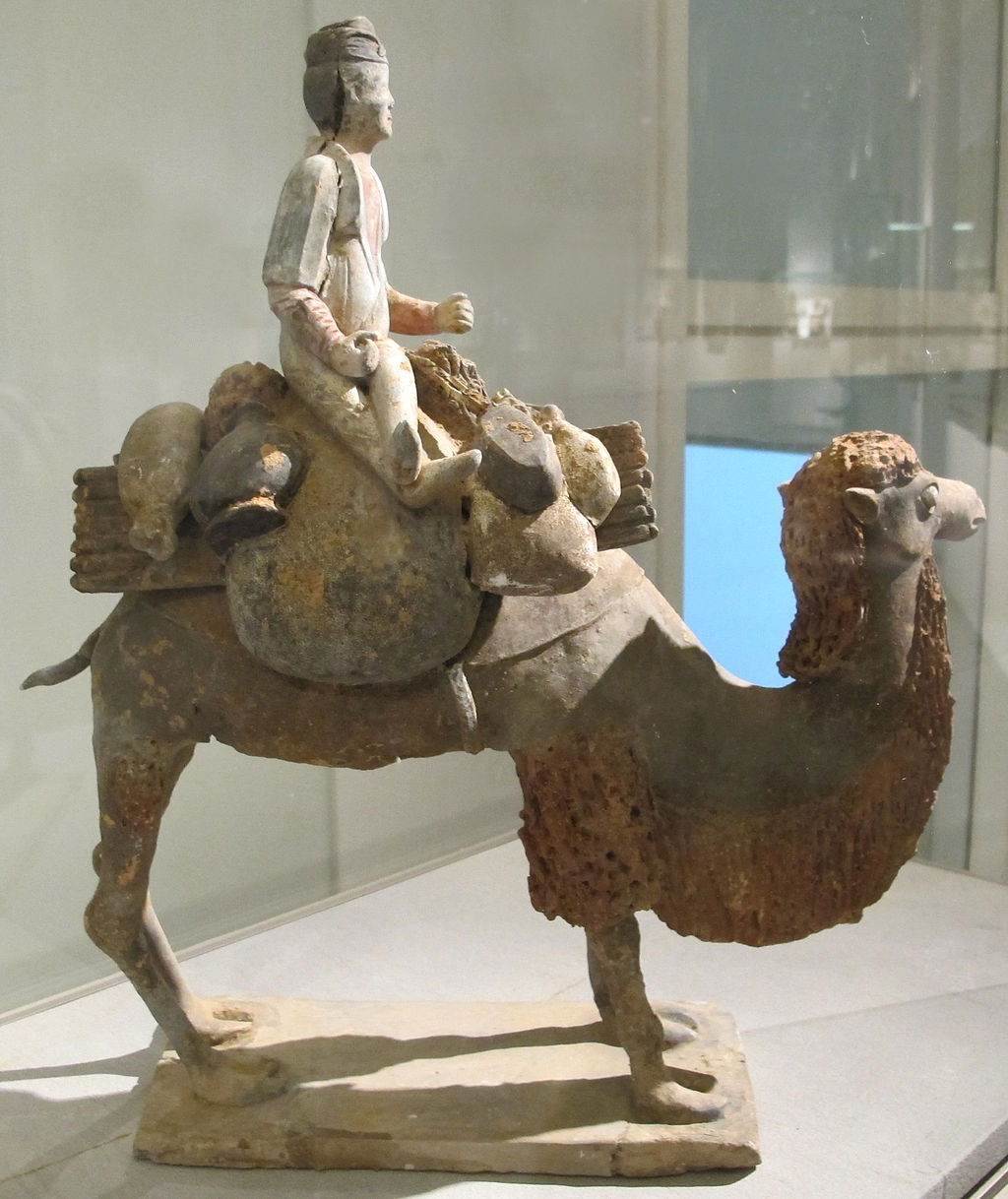
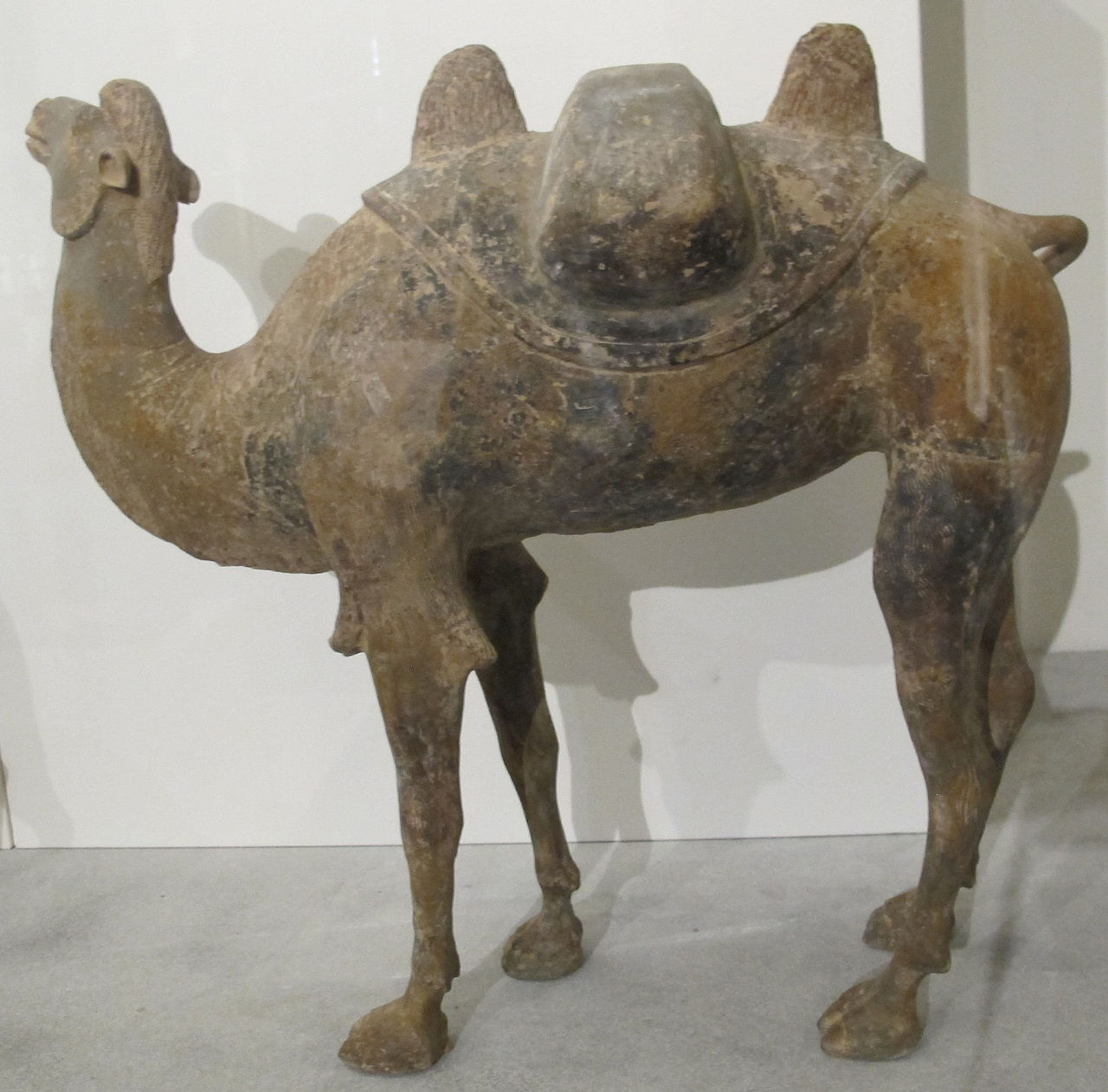
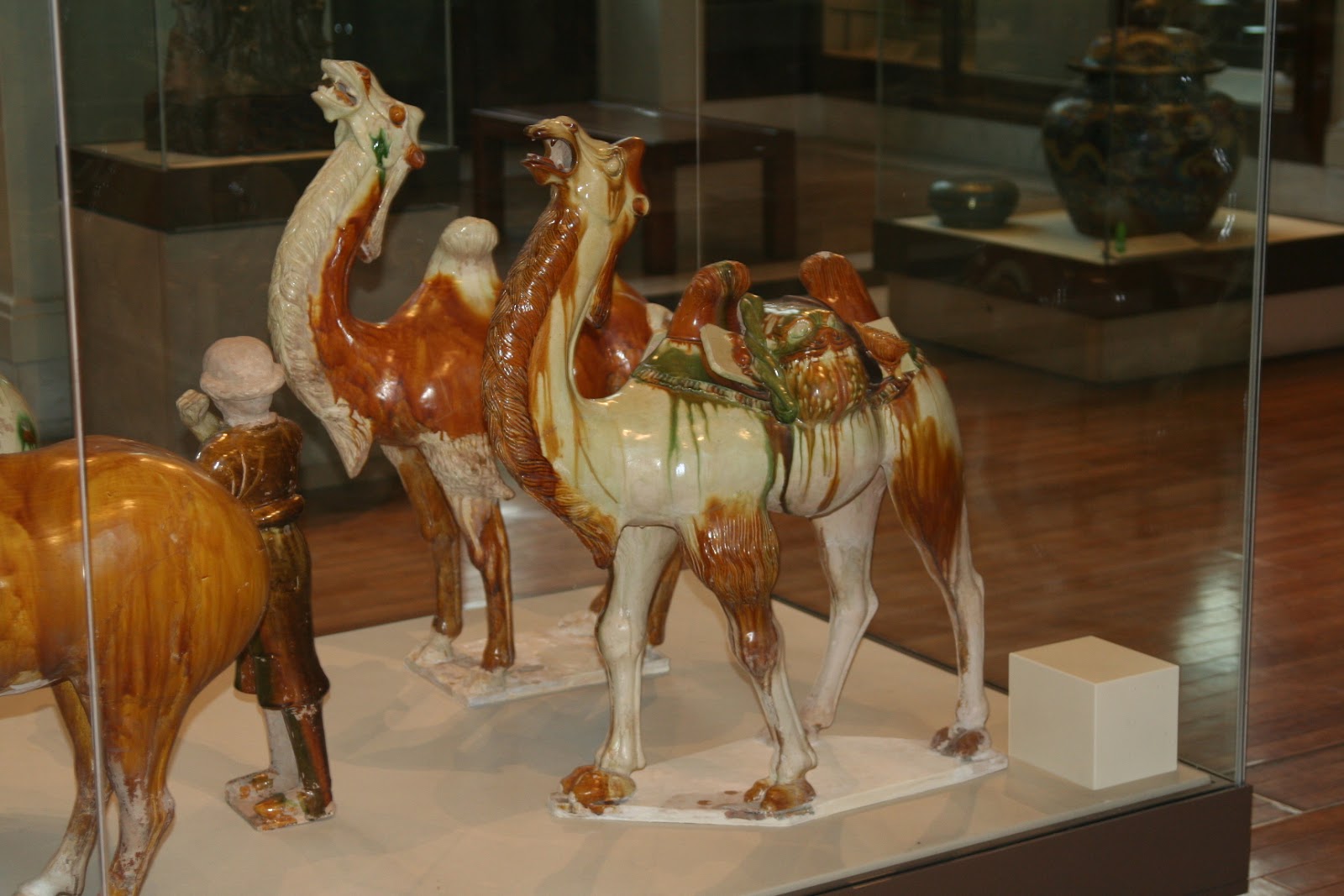
Camels from Tang Dynasty p.4

 Salvete Omnes,


from Guimet Museum,  Paris, France:

Tang camels and some Sogdians or northern attendants 


. this one is late Sui Dynasty or early Tang


from British Museum  in London, UK - tomb of Liu Tingxun


enjoy


Valete