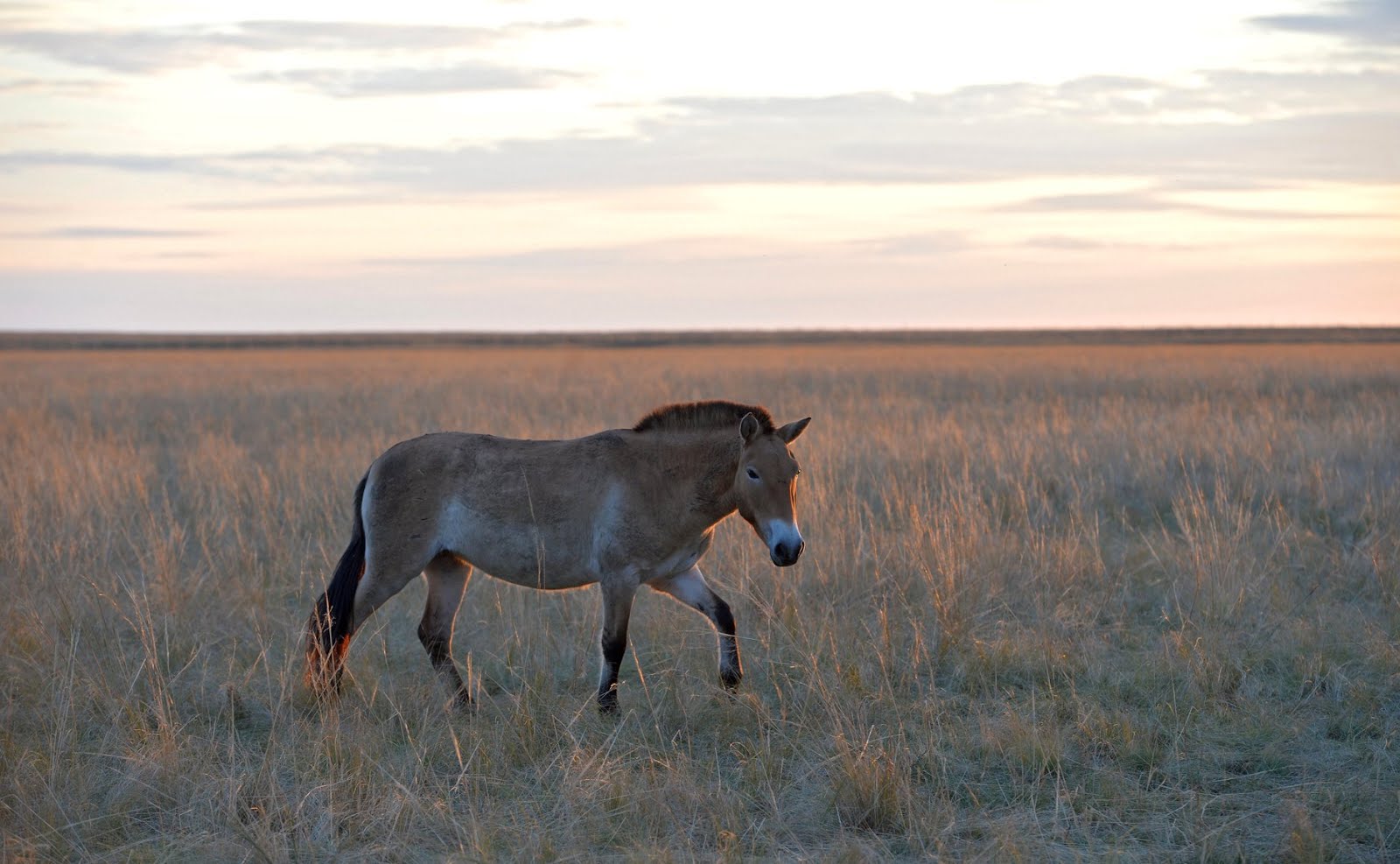
Showing posts with label Przewalski horse. Show all posts

Friday, June 12, 2026

Cheiron Journal - lectures on horse domestication

 Salvete Omnes,


Yesterday, I just discovered for myself that Cheiron has had  a Yt channel - 

Przewalski horse - its association with Botai 


I started with dr William Taylor, author of Hoof Beats, and his lecture on the archaeological 'broken narratives' around horse domestication in southern Russia and Kazakhstan steppes of west-central Eurasia. (His article on Botai horizon & horses). The 1 hour presentation is followed by a q&a session. 

Photos of Przewalski horses and feral/wild horses (known as mustangs in America) - all images are from Wiki Commons.


.

.


Valete

Monday, November 25, 2019

Xsiadz Jundzill - opisanie 'dzikiego konia' z Azji Centralnej circa AD 1807

 
Salvete Omnes,
[in Polish]
 

Krótki wypis acz niecodzienny, bowiem znalazłem  opisanie koniowatego zwanego przez autora Czygietay'em albo 'dzikim koniem'.
Ksiadz Stanisław Bonifacy Jundziłł, herbu Łabędź, polski przyrodnik, opisał był onagra ze stepów Azji Centralnej, w dziele 'Zoologia krótko zebrana, cz. 1: Zwierzęta ssące' (w linku wydanie z 1824 r) pierwszy raz wydanym w Wilnie AD 1807.

W nazwie używa terminu tatarskiego - Czygietay - na określenie tego scigłego koniowatego dziś zwanego kułanem czy onagrem,  i w Azji Centralnej żyjącego w środowisku naturalnym wraz z koniem Przewalskiego czy antylopami saiga etc.
 
Używa nasz badacz juz istniejacego określenia łacińskiego Equus Hemionus Pall.

opis


Valete
ps
zdjęcia kułanow i koni Przewalskiego z Wiki - z Mongolii i południowych stepów Rosji oraz pustyni Negew.

Sunday, February 26, 2017

an early Middle Pleistocene horse

Salve,
just a short link to an article already published in Nature from 2013.
It is a very interesting article on the origins of the modern equids - for this discovery of an early Middle Pleistocene horse in Canada, in permafrost, allows various scientists to study the ancient equids from inside out,  especially to trace their genome sequence, including more support for the separation between the domesticated horse and Przewalski horse. Also this discovery shows that horse was domesticated within a narrow geographic area and with limited number of animals.
North American Pleistocene Horse by Philip Newsom(c)

Another article on the subject, just in more descriptive manner.

Beautiful paintings by George Stubbs - via wiki Commons - showing dams (brood mares) and their foals.


enjoy

Wednesday, April 24, 2013

Daily sketch - Przewalski horse

Salve,
 beautiful Spring has arrived finally - and I am thinking about the big open grasslands of Eurasia, where wild horses have been domesticated by our ancestors, perhaps more than 6000 years ago.  The ancestor of the domesticated horse or tarpan has been extinct since XIX century, but its cousin, the Przewalski horse, is still surviving. I sketched this Przewalski horse head for now.  But I am going to give a try at drawing a tarpan, especially since I have this excellent (but outdated in many parts) book by David P. Willoughby titled ''The Empire of Eqqus,'' where the author drew some fine diagrams of the wild equids that are quite helpful in understanding the anatomy differences etc.
Polski konik aka Polish konik was used to recreated the extinct tarpan (Tadeusz Vetulani et al) and in Poland there is this wild horse preserve at Popielno, where wild koniki roam. From Popielno the offsprings of polskie koniki gave raise to various wild horse herds throughout European nature preserves.
Interesting article on the ecology of the wild horse and aurochs modern substitutes