Showing posts with label Petrovka. Show all posts

Wednesday, April 24, 2024

Metal bit - on the Zeravshan River in Bronze Age BMAC & steppe


 Salvete Omnes,

Tajikistan and Uzbekistan share a fine river, that  is known nowadays as the Zeravshan [Зарафшон] River  ( the Polytimeus River of the ancient Greeks, later also  the Sughd River) , which meaning in Persian is the 'spreader of gold,' 
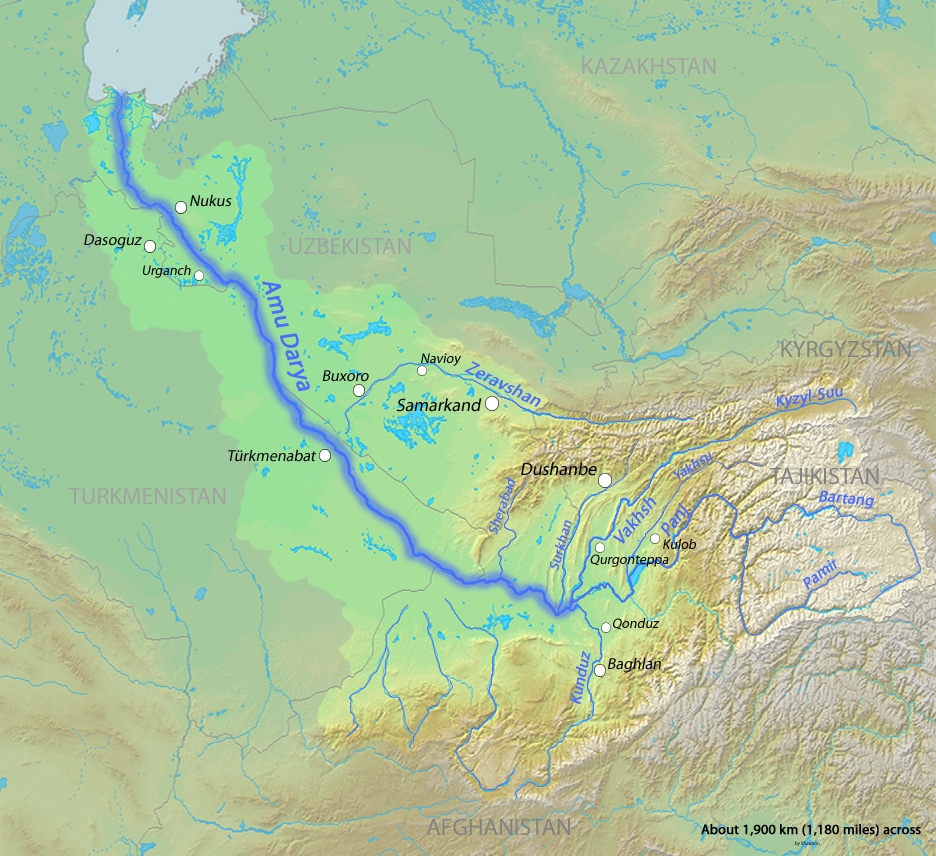


flows from the Zeravshan  glacier of the  Zeravshan Mountains, passes between two mountain ranges, Zeravshan and Turkestan, and empties her waters into the irrigation projects  and sands of the Kizil-Kum (Kyzyl-Kum) desert before reaching the mighty Amur-Daria River.  


Near the famous Panjakent [in Tajik Панҷакент or in RussianПенджикент] in the Zeravshan Valley there is  this ancient BMAC site - Sarazm - that between  IV (Namazga I-II) through late III millennium BC(Namazgan V) was  residing on the edge of the world, between the vastness of Eurasian steppe and its Proto-Indoeuropean  inhabitants and the sedentary civilizations to the south, west and east. It was the center for tin and copper, turquoise trade. With the copper and tin mined in the steppe, processed there and shipped by the Sarazm traders to the Akkadina and Ur elites, to the Harappan, Mohnejo-Daro and Elam sites, as well in the Caucasus and further west.


About 30 km west of Sazam at Tugai, not far from today Samarkand, as Sarazm was being abandoned some Petrovka -Sintashta nomads moved east and settled at the end of III millennium and/or early II millennium (Namazga V) to practice copper smelting and smithing. They moved from the Ural-Ishim steppes with their wagons, cattle, sheep and goats, and chariot-pulling horses.*

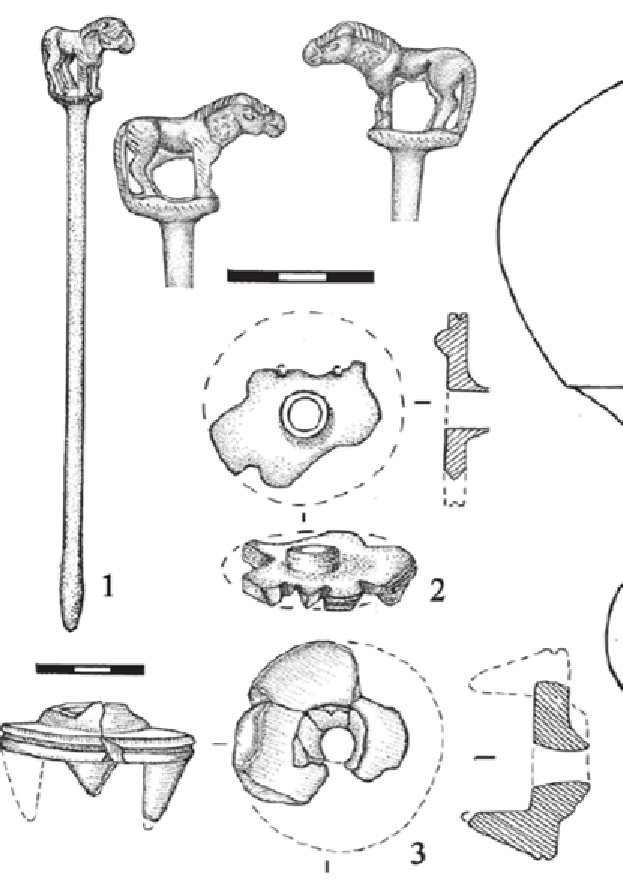
Circa 1km from Sarazm there is a burial site at Zardcha-Khalifa. There a male was buried - his plentiful  grave gifts included two bronze bar bits with looped ends; two complete bone disc-shaped cheekpieces and two fragmented ones of the Sintashta type. The bar bits are the older known metal bits found. The arrangement suggests that was part of the chariot team equipment.* 


The grave also included the only known BMAC-made pin with the figure of a horse - perhaps this Zardcha-Khalifa chief was a horse dealer?*


Nota bene the ancient Middle Eastern tin, for bronze production, came from BMAC- Central Asia.

*you can read more about this site and this period in dr. Anthony's 'The Horse, the Wheeel and the Language.'* (chapter 16)

Valete


Wednesday, July 5, 2023

Sintashta chariot - the dawn of horse chariotry

 Salvete Omnes,


a short entry today, it is summer time - but lots of viewing pleasure, I daresay.


So here are two very interesting, exciting and unusual videos completely breaking and doing away with the narrative of the Bronze Age chariot being a Middle Eastern invention and practice. The presentations are about the Sintashta (Petrovka) culture of the present southern Russia and northern Kazakhstan, their chariots and the chariot reconstructions via experimental archaeology. 

In the chronological order:


The Sintashta culture - earliest chariots, fortified settlements and bronze metallurgy.  


EXARC - The Bronze Age Chariot of the Sintashta-Petrovka Period


Therefore we are able to see perhaps the very first charioteers from XXI century BC (2100-1800BC) . These were the possible inventors of driving harness and the very vehicle itself, plus the second most epochal aspect - horse breeding, selections and training for war (both archaeologists from the Torun presentation (late May conference in Torun, Poland) have their pages on academia, where, along with another seasoned archaeologist dr Andrey Epimakhov's work.

Ivan Semyan

Igor Chechushkov

Andrey Epimakhov

Upon registering on Academia you can download and then can study detailed explanation of the harness reconstruction, training, equipment, and surviving artefacts etc via their articles and books . 

Nota bene, in 1999 dr Anthony , after  the1995 carbon dating of the Sintashta discoveries, published his paper - The Sintashta Genesis. 


In light of last 40 years of research (eg the most important may be the English language work by prof. David Anthony's 'The Horse, the Wheel and the Language' already discussed here ) and many years of the experimental archaeology then the publications like Osprey Military Publishing: 

'The Mycenaeans' (2005).

'Bronze Age War Chariot' (2006) and some others must be corrected as it contains false information and thus is a 'garbage.'

Arkaim/Arkhaim today 


Valete