Showing posts with label peasant life. Show all posts

Wednesday, December 11, 2024

Jozef Chelmonski - National Museum, Warsaw

 Salvete Omnes,

auriga, wagon driver - woznica


a short entry -
National Mseum of Arts in Warsaw, Poland holds this special exhibit  - a showcase of Jozef Chelmonski's painting.

there was no music like the folk music, Chopin's mazurkas etc came from this tradition


this temporary exhibit ends on January 26, 2025 and who knows when they gonna have another one. 


So if you are in Warsaw, Poland, these coming weeks perhaps make a trip to the museum, right in the heart of Warsaw, near the Poniatowski Bridge on the Vistula (Wisla) River.


Nota bene there will be a lecture on the 19th of December 2024 about the carriages and sleigh, horse tack and traveling during the times of Jozef Chelmonski.

Polish Jewish wagon driver 


old master of Mazowsze is collectible in Poland and without, eg Sotheby's Chelmonski - Four Horse Wagon on a Rainy Day. or Lempertz. 

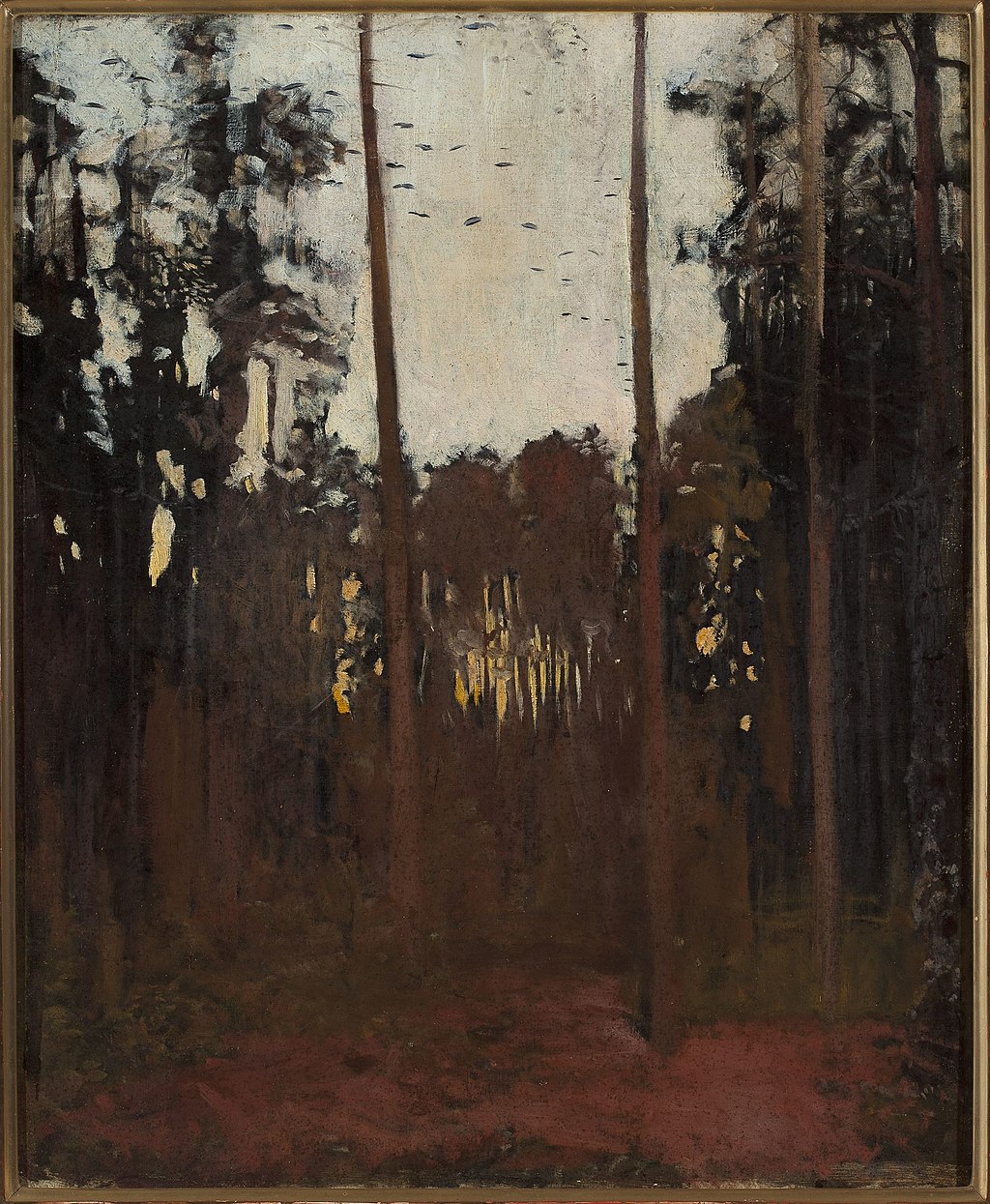
my favorite non-equestrian painting of Chelmonski - it remainds of the woods of my childhood in Lowicz Masovia (Mazowsze)

Valete

Friday, September 27, 2024

Friedrich Gauermann - mid-XIX century Austrian peasants and their horses

 Salvete Omnes,


a quick entry: this portfolio is  full of colorful pictures of the  Alpine peasant life of the Austrian Crown lands -  Friedrich Gauermann (1807- 1862).


son of Jacob (painter from Württemberg, who eventually settled in Austrian Empire, where he died in 1843)


Friedrich's paintings: 


.


and the last scene - not unlike American frontier's scene - just mountain folks trying their carbines and muskets, with a wagon in a background.


Valete

Tuesday, May 30, 2023

Zygmunt Vogel, Old Poland, Jewish and peasants' horse

 Salvete Omnes,

Warsaw's panorama as seen from the Praga Vistula bank


 Zygmunt Vogel (1764-1826AD) was a Polish artist of German descent, both parents emigrated to Polish Kingdom during the mid-XVIII century, who was active both in the XVIII and XIX centuries. 

Krakowskie Przedmiescie Street


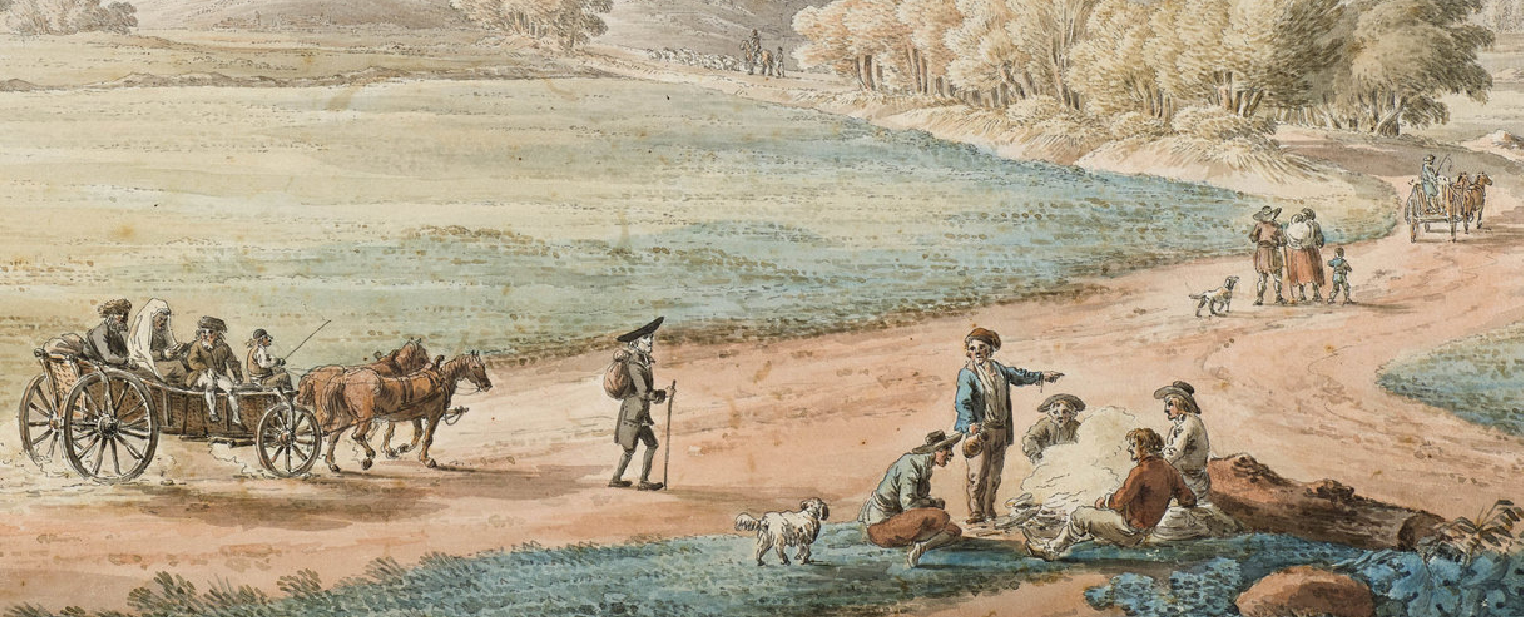
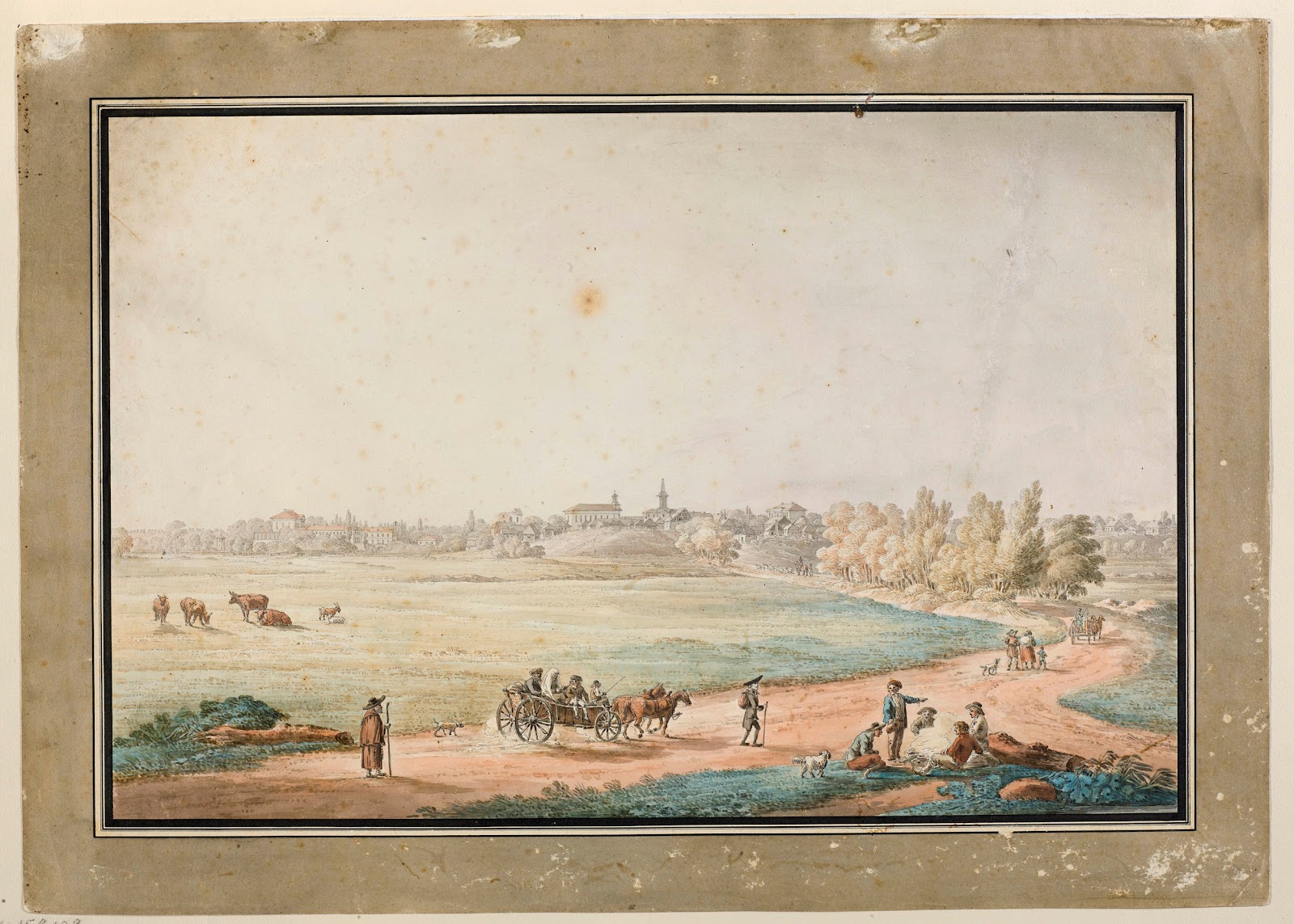
 In these watercolors we see the town of Kock - two different views ( from the collections at the National Arts Museum in Warsaw).

Do note the wagons and men and boys riding pareback.


In this view, there is a Jewish family abroad a wagon returning to the town, with some traveler  way ahead, another cart pulled by horses and perhaps farmers and beggars at the fire.

there are some red, Old Polish cows in this landscape


in this watercolor the town of Ostrog, during the Ruthenian, Duchy of Lithuanian and  Old Poland the town & castle was the seat of the Ostrogski clan. 


 Krasinski Palace in Warsaw - the south side - as it appeared in the 1790s


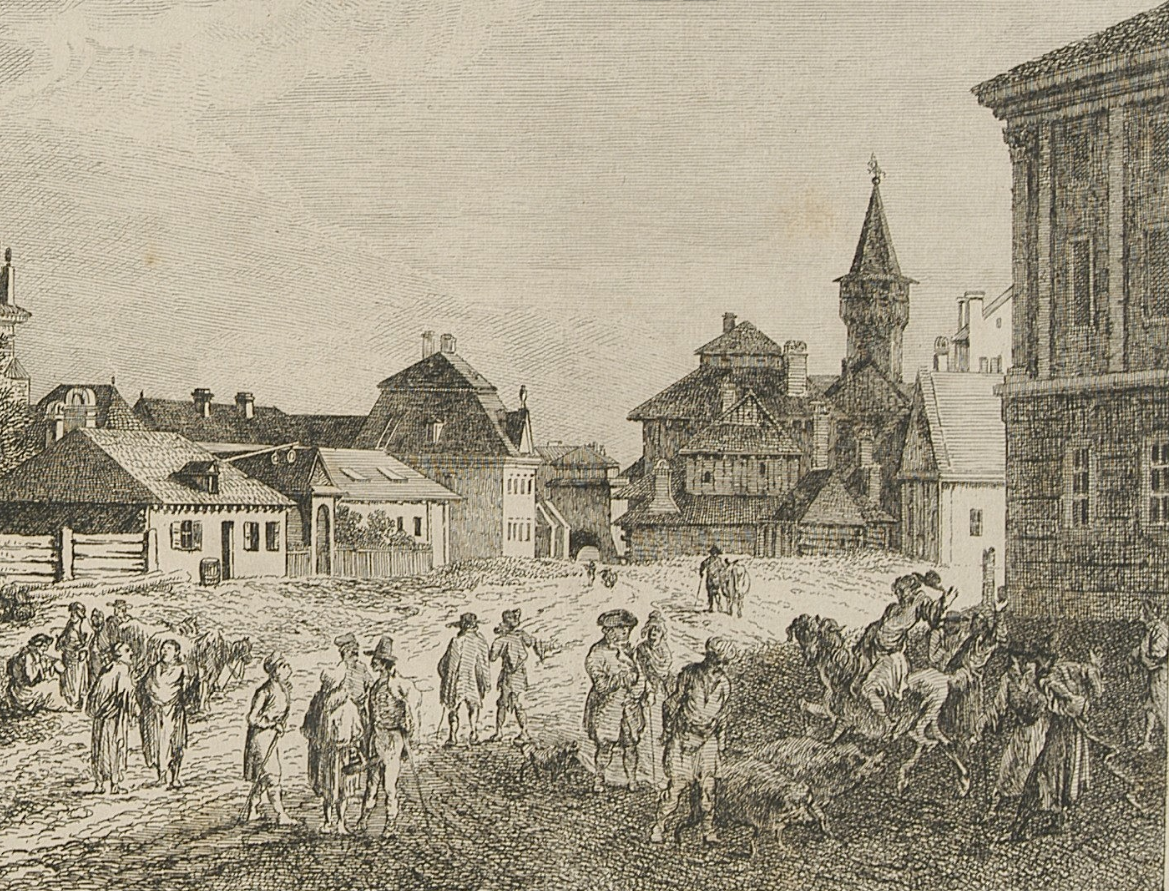
A detail of town dwellers and one horseman, from a print showing the old town of Tarnow - 

Note that the people in those watercolors and prints are dressed in the Old Polish costumes and national attire etc. Back then we had our own popular culture, one cannot say about the present days in Poland... but even then our poets satirized the wealthy and rich propensity to follow Paris and London fashions (like the riding attire from England was all the rage well int the XIX century early years).
and some Old Poland cattle in this view of the Ujazdow castle.


I will have more Vogle's artwork in the future, the pieces from the Duchyof Warsaw period. as they are very interesting per the army and ulan cavalry etc.

Valete

Wednesday, November 16, 2022

Jaroslav Věšín - Czech painter in Bulgaria

 Salvete Omnes,


today let us loot at the gallery of works by a great genre painter from the Slavic lands, i.e., Bulgarian kingdom, Czechia and Slovakia (then part of the Hungarian Kingdom).


  so this pre-World War I Czech painter, Jaroslav Vesin, studied in in Prague with prof. Antonin Lhota, and then in Munich (with Jozef Brandt and  Karl von Piloty et al.) . He was one the founders of the painting school in Sofia, Bulgaria where he remained until his death in 1915AD.

so this is a vibrant country life - robust peasant life and some hunting


Valete