Salvete Omnes,
 |
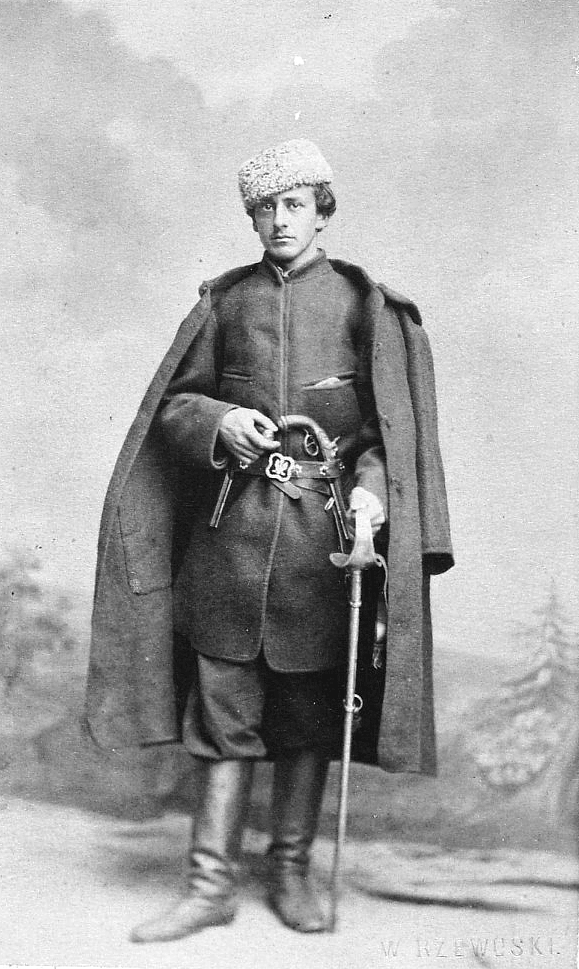
Max Giermyski was a participant of the Uprising
|
 |
Map of sites of battles, encounters, ambushes and scrimmages during the Uprising
|
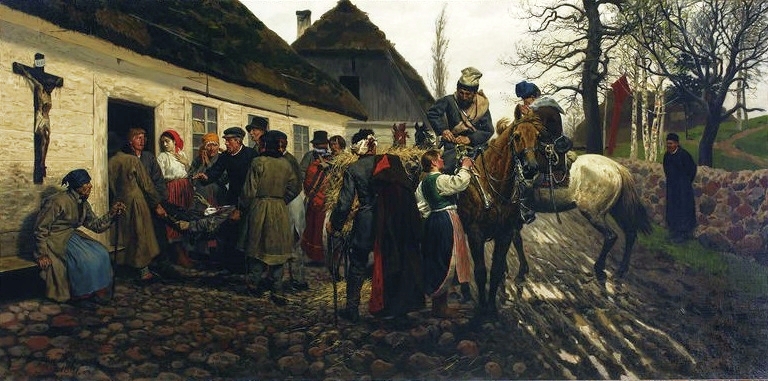
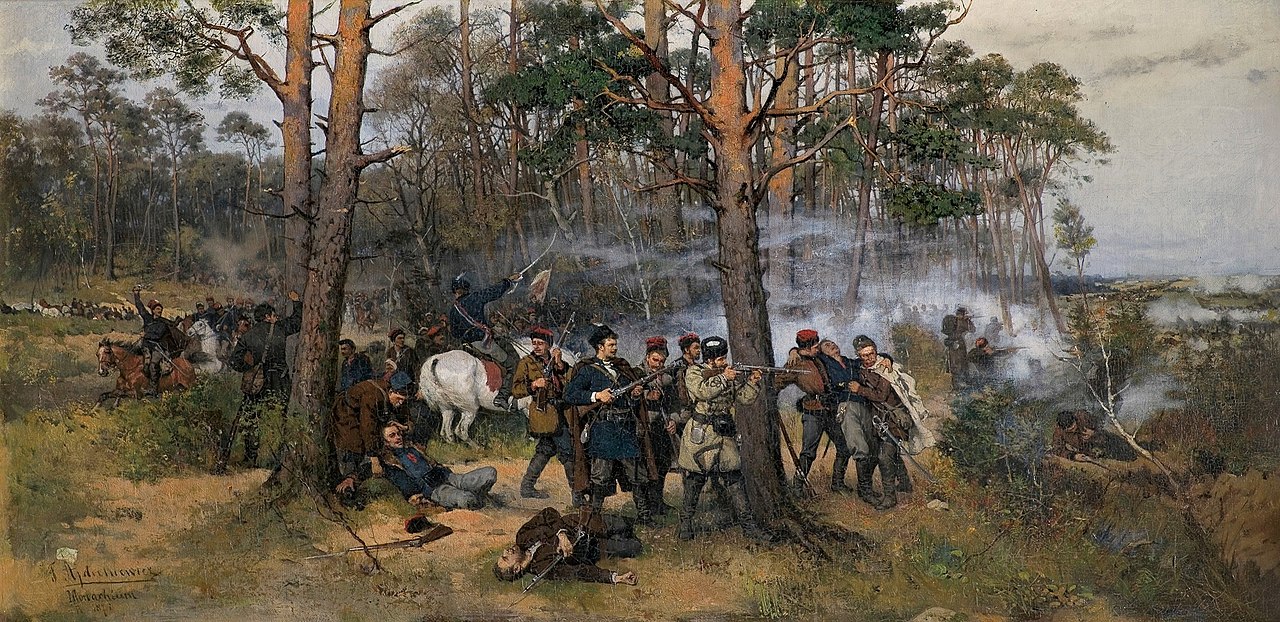
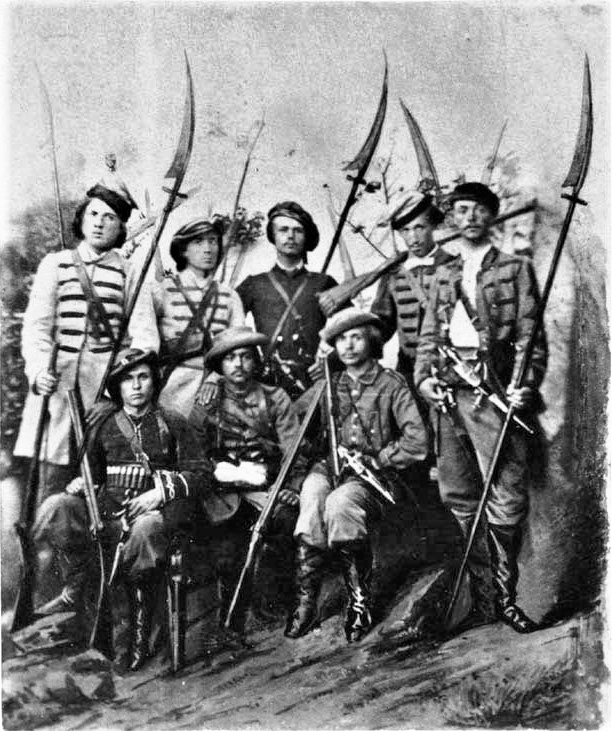
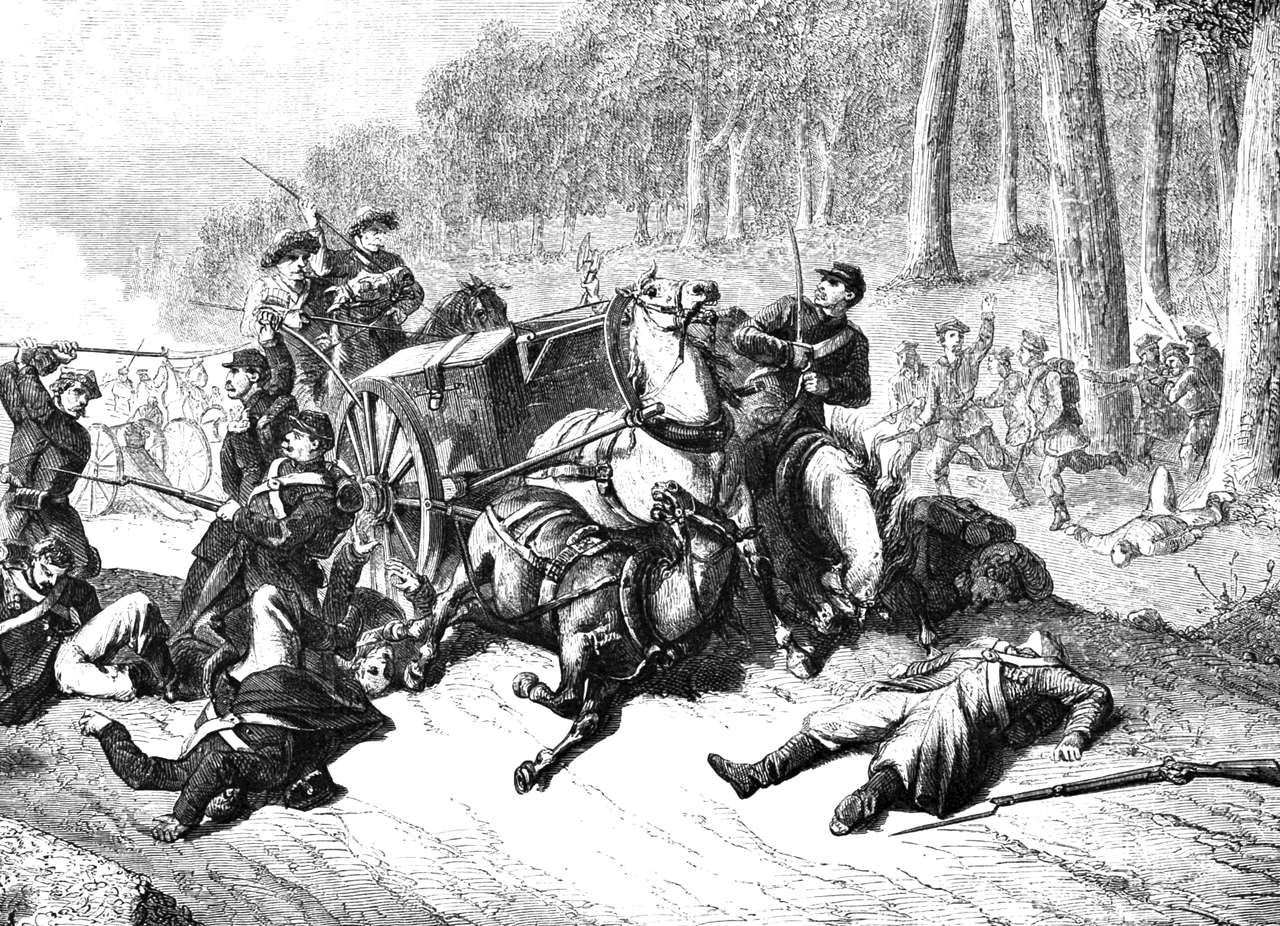
Today there is one sad anniversary - the January Uprising 1863 - a rebellion of Polish hothead patriots, men of honor and useful idiots against the Russian Empire. Without international support (like in case of Turkey during the Crimean War), without proper arms (using scythes as close combat pole weapon, and hunting shotguns and muskets)
and with partisan logistics, and without wide national support (egthe peasants did not support widely this Uprising, they actually were neutral or even hostile ) and with the entire Imperial army weight and might, this motley of partisan units and many different leaders and bad commanders could not win any victory.
In return the Urpising brought nothing but suffering and loss of lives (and plenty of new cemeteries) , loss of entire wealth & landed estates amassed by the previous generations and also the acute loss of any possibility for change of Polish futures within the empire (only Japanese War of 1905 and World War I brought changes and final restitution of Poland, albeit a completely different state than even the one known as Congress Poland1815-1830).
***
In return we have had a rather romantic vision of these 22 months (or so) of partisan hopeless warfare - this romantic version has been written into the Polish psyche by poets and politicians using a slogan: 'Poszli nasi w boj bez broni'('our boys took to the field without a weapon'). The Polish leadership in German-occupied Poland and with the Stalin's Red Army approaching used the same approach of romantic bloodletting in 1944, with known and most tragic results that are still felt in the Bu-Vistula-Oder country.
But then this is our past, one cannot change the history, but hopefully the Poles in the EU and around the world will do the utmost not to repeat the bloodletting and other romantic notions of doing politics by losing lives of the best and bravest and most patriotic etc.
Ironically, when the Uprising was extinguished, some of the soldiers who retreated and surrendered into the Austrian-held Polish provinces, found themselves being shipped, be it by force or strong persuasion, to Mexico in order to fight there for the French and Austrian disastrous attempt to create the Mexican Hapsburg realm. Some ended as French Foreign legionaries, others joined French Army and fought in the Franco-German War etc.
In Russian Poland the time after the Uprising was very hard and mournful , many were executed and exiled.
Many prisoners taken by the Russian Imperial forces were sent to Siberia, but after serving their sentences these Sybiraks became explorers, businessmen, and entrepreneurs there and ...within the wide expanses of the Russian Empire, one of the best areas for Polish expansion were the Caspian Sea oil fields, where our Polish inventors, technicians and engineers prospered and became fabulously wealthy, and in turn used their wealth to created endowments and thus sponsored our Polish academicians, researchers, scientists, national libraries and publishing industries inside the Russian, Prussian and Austrian-Poland.
In wake of the Uprising the leaders of Polish Nation worked hard to bring together the entire population, from the noblemen to peasants, thus in 1918 through 1920 Poland was able created herself by the cunning of our leaders and blood and sweat of our soldiers and all citizens.
For Polish speakers - [in Polish]
Marek Rogowicz na YT popularyzuje bitwy i potyczki powstańczych oddziałów- aspekty militarne według źródeł z epoki:
oto linki do nagrań:
Bitwa pod Żyzynem - 1.
Bitwa pod Ignacewem 1863 - 2.
Bitwa pod Małogoszczem 24 lutego - 3.
Potyczka pod Stefankowem 22 kwietnia 1863 r. - 4.
Bitwa pod Staszowem 17 lutego 1863 r. - 5 .
Potyczki konnego oddziału Bończy pod Gielniowem i Górami - 6.
A tutaj rozmowa z dr Jaroslawem Centkiem - Wybrane bitwy Powstania Styczniowego.
Naczelnik Romuald Traugutt, wysoce dekorowany oficer armii imperialnej, człowiek honoru a rozpaczy, który rzucił wszystko i poszedł do Powstania honorowo coby zginać, i zginał jako ostatni dyktator Powstania na stokach Cytadeli w Warszawie, o Powstaniu:
 |
zrzut za prof.Jacek Kowalskiego wypisem, tamże pieśni powstańcze - Twitter
|
Chwała Powstańcom i na pohybel wrogom Polaków. Vivat Polonia na całym świecie.
valate