Showing posts with label coup counting. Show all posts

Monday, June 22, 2026

White Swan, Absaroka warrior, his war deeds and art & Little Big Horn

 Salvete Omnes,

June 2026 is the 150th anniversary of the Centennial campaign of the US army against the Lakota Sioux and their Northern Cheyenne allies (with some Arapahos).

Frank Rinehart took this photo of White Swan 


So, naturally, it is the 150th anniversary  of the Little Big Horn battle, fought on 25th (Reno Valley and Custer Last Stand, & 26th (M. Reno and F. Benteen's fight) of June 1876.


While operating on the Great Plains US Army - both cavalry and infantry units - used native 'wolves' or scouts who upon enlistment would act as the 'eyes and ears' of the American military commands. 

For the 7th Cavalry operating against the 'hostile' Lakota and Northern Cheyenne that late spring and early summer 1876 the goverment officials authorized various Indian scouts from friendly nations.
   The  Absaroka/Apsalooke//Crow nation held council and authorized 25 scouts for the US Army in April 1876. These warriors, and also Arikara/Ree and friendly Sioux warrior were to be spread  out between various commands during the campaign. 
White Swan was one of 6 Crow warriors   handpicked and assigned to scout for the famous 7th Cavalry regiment. Crows together with friendly Sioux and Rees  made up the 35 scout-strong unit under the command of Lieutenant Charles Varnum, called Peaked Face by the Arikara scouts, aided by French Canadian-Santee Sioux interpreter   Mitch Bouyer & famous frontiersman, Civil War veteran, guide and hunter  Charlie Reynolds
 White Swan fought along  his scout companions, the soldiers and officers of Major Marcus Reno command, and miraculously  survived the two day battle, much wounded from gunshots and  lance thrusts and cuts. 
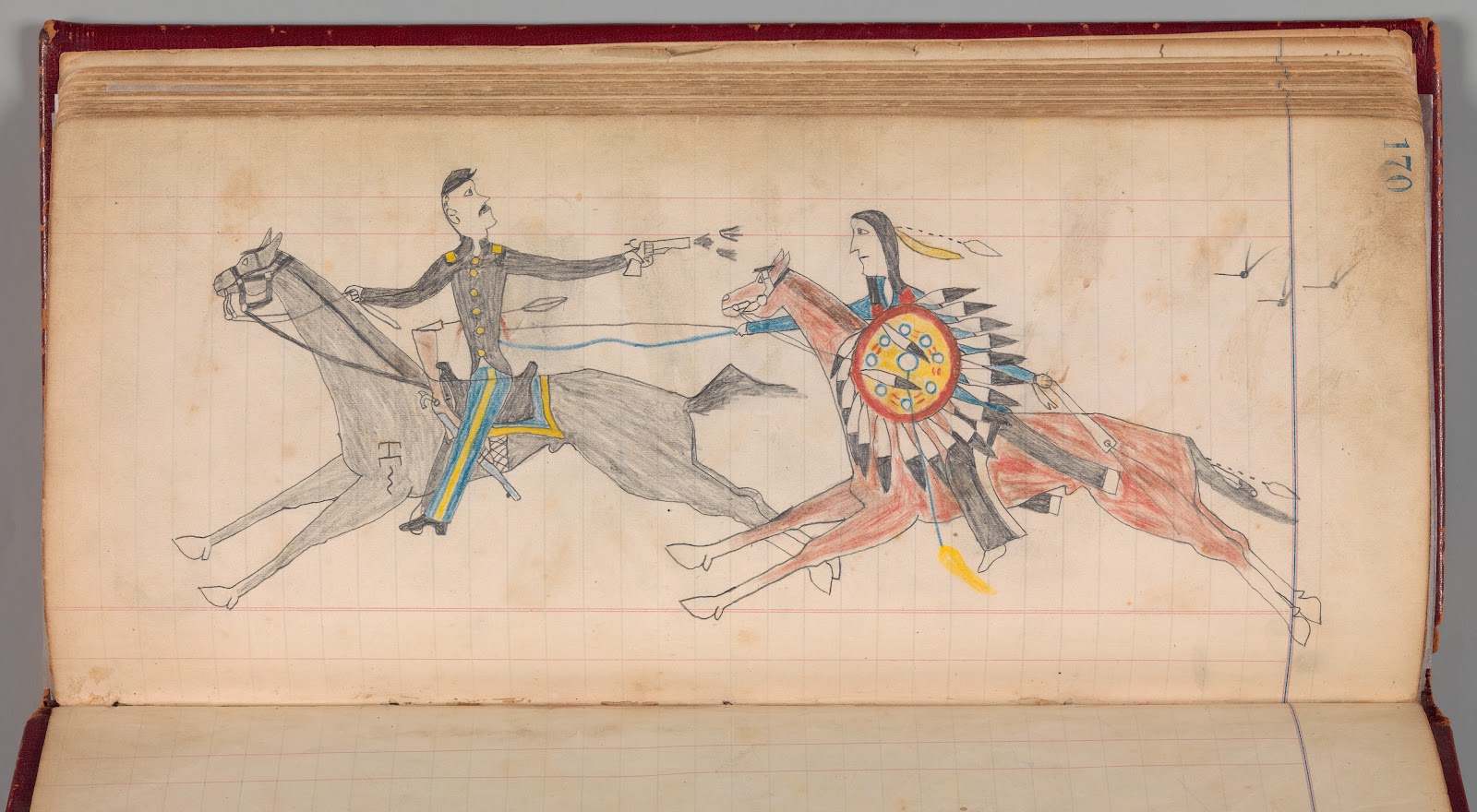
During the battle White Swan counted coup on the enemy warriors in the true Plains warrior fashion.

Photo by Fred Miller - Montana Historical Society 

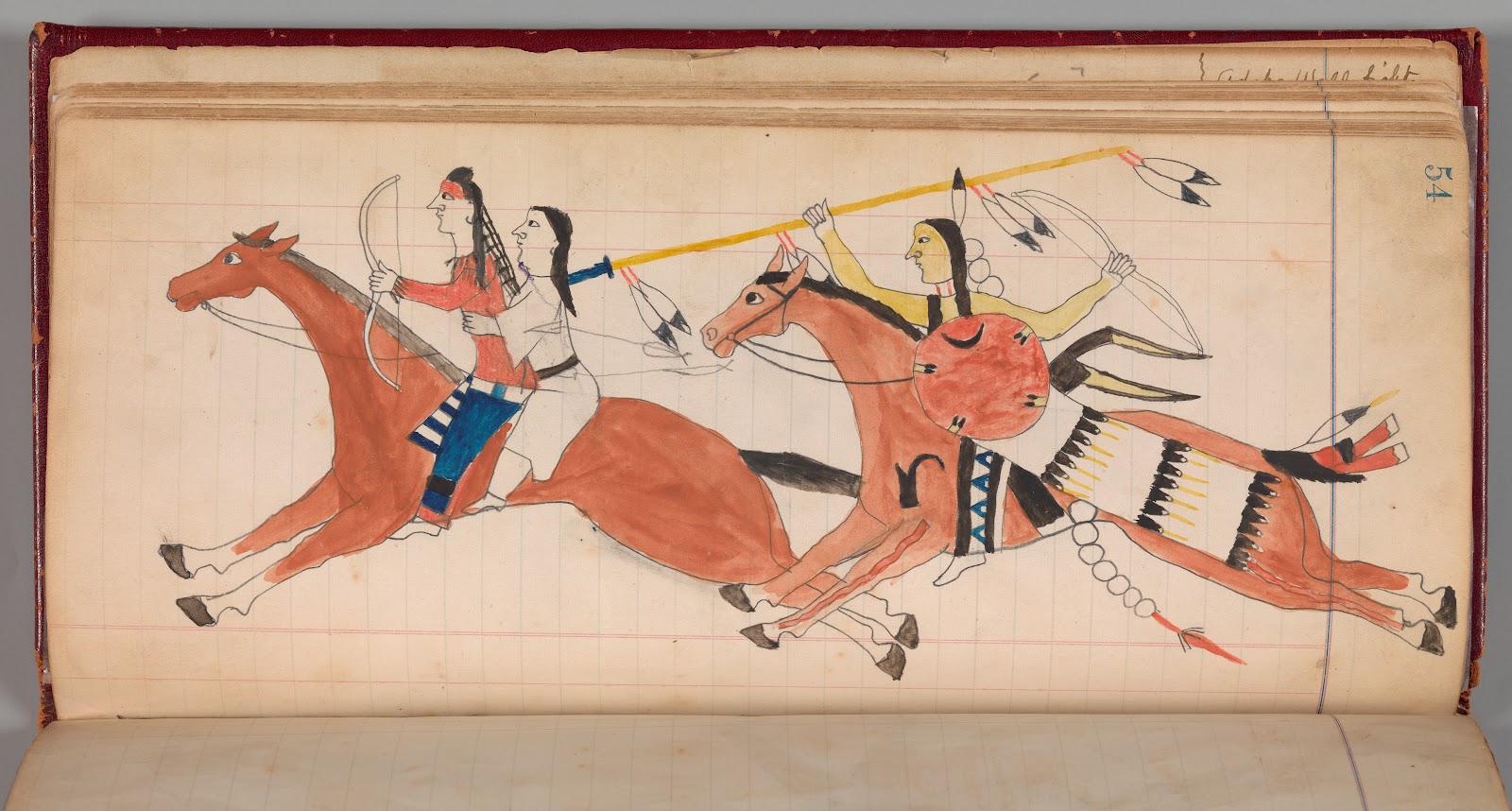
After the din of battle passed White Swan's made drawings of his exploits in the battle, pictographs drawn and colored in the tradition of Plains peoples, showing his battle experience during the major Reno's advance and retreat during the first phase of the battle of Little Big Horn (Greasy Grass River). 


Denver Art Museum has this war record made by White Swan, painted circa 1890.

Gilcrease Museum has this war record of the LBH battle by White Swan.

White Swan healed from his many wounds and reenlisted with the US Army for the winter campaign, and served as a scout until March 1881, among his exploits was the campaign against the Nez Perce. White Swan died in 1904, known for his role at the battle, his fine art depicting warfare and recollections about the conflict on the high  prairies. 

.
Portrait by Joseph Henry Sharp circa 1900


White Swan's tombstone 


Valete

Tuesday, June 17, 2025

Rosebud Creek battle - 1876-2025

 Salvete Omnes,


Rosebud Creek battle -  June 17, 1876 - in 2021 I posted some native, Cheyenne, Lakota etc, warriors' accounts of the battle, where general Crook aided by Washakie and Plenty Coups was defeated by Crazy Horse, the blotahunka of the Oglala  Lakota.


Today I want to commemorate the battle and its participants with the prints from American media of the period.


the Lakota-Cheyenne allies would fight another grand battle at the Greasy Gras/ Little Big Horn river in 8  days. 
Here a presentation by the Rosebud Battlefield State Historical Park - via archive world library.
Stanley Vestal, Warpath: The True Story of the Fighting Sioux Told in a Biography of Chief White Bull - could be borrowed from https://archive.org library 

Valete

Thursday, January 4, 2024

Harper's Weekly, ledger art & Sitting Bull

 Salvete Omnes, 

2nd post of this year. 


I hope your New Year is going all right, but let us bring peace to this world, the wars around Africa, Europe & Asia are in full wicked and evil bloom. 

ad rem, 


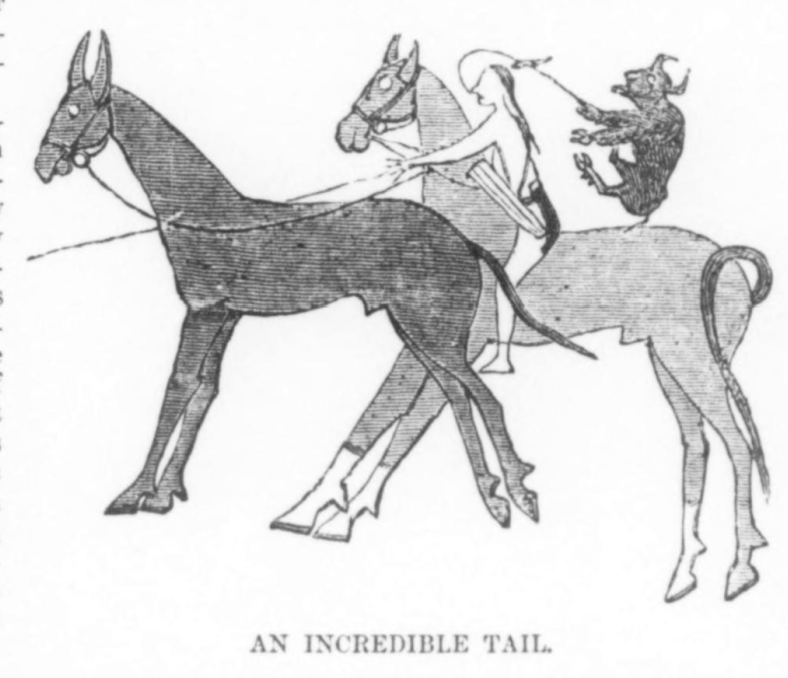
in 1876 Harper's Weekly published this article by David Hunter Strother under penname Porte Crayon  on a rather unusual subject - the native & hostile leader's own autobiography in pictures, aka the ledger art of famous Hunkpapa Lakota leader and medicine man/shaman & warrior Sitting Bull. 

In the years before 1876 Centennial Campaign Sitting Bull was in the forefront of the Lakota Sioux (Teton) opposition to the American conquest of the Lakota way of life, trespassing on their  hunting grounds (recently won from the Crows et al.)  and their pursuit of the bison herds etc. Eventually, Sitting Bull would be murdered by the Indian Policemen outside of  his cabin prior to the Wounded Knee Massacre during the so called Ghost Dance War in 1890.


The drawings were purchased by doctor  James P.Kimball from  a Yanktonai man at Fort Buford, Dakota Territory in 1870, who sent them to the Medical Director's Office, Department  of Dakota, and from there they were sent to the Army Medical Museum  in 1871. More on these drawings in the future posts. 
The ledger's drawings were copied from the colorful originals in order to be printed in the black and white magazine- 


.


to be continued

Valete 

Tuesday, August 2, 2022

Maffet Ledger - Cheyenne warriors counting coup and capturing horses

 Salvete Omnes,


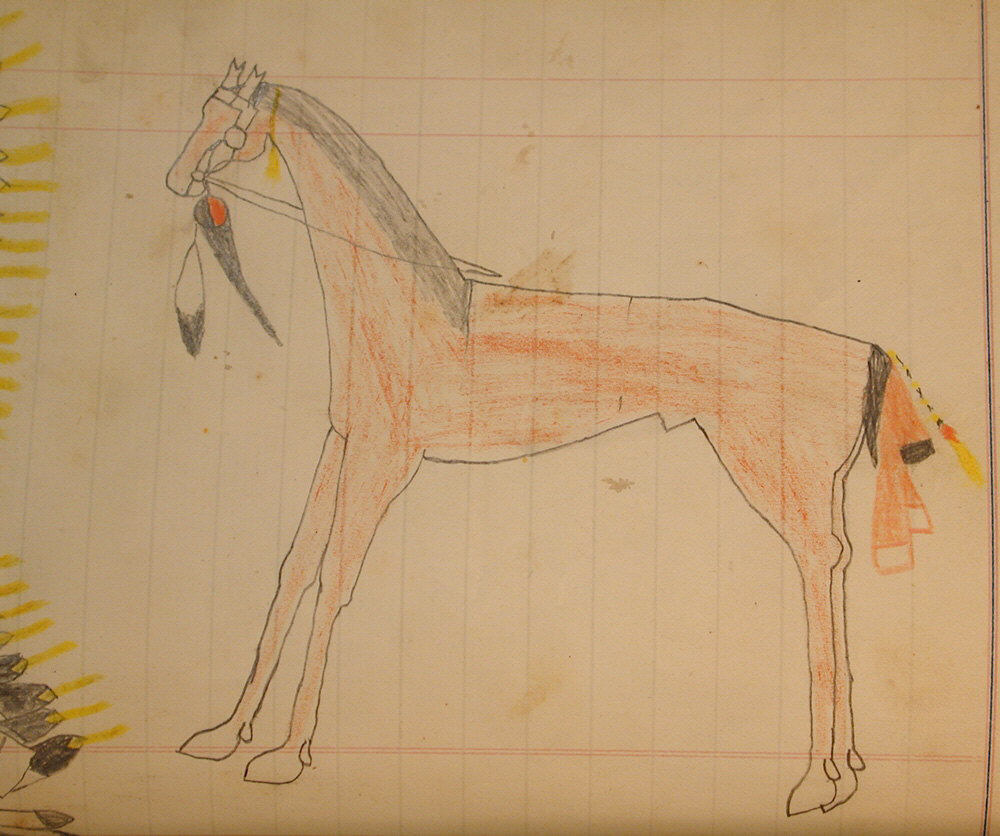
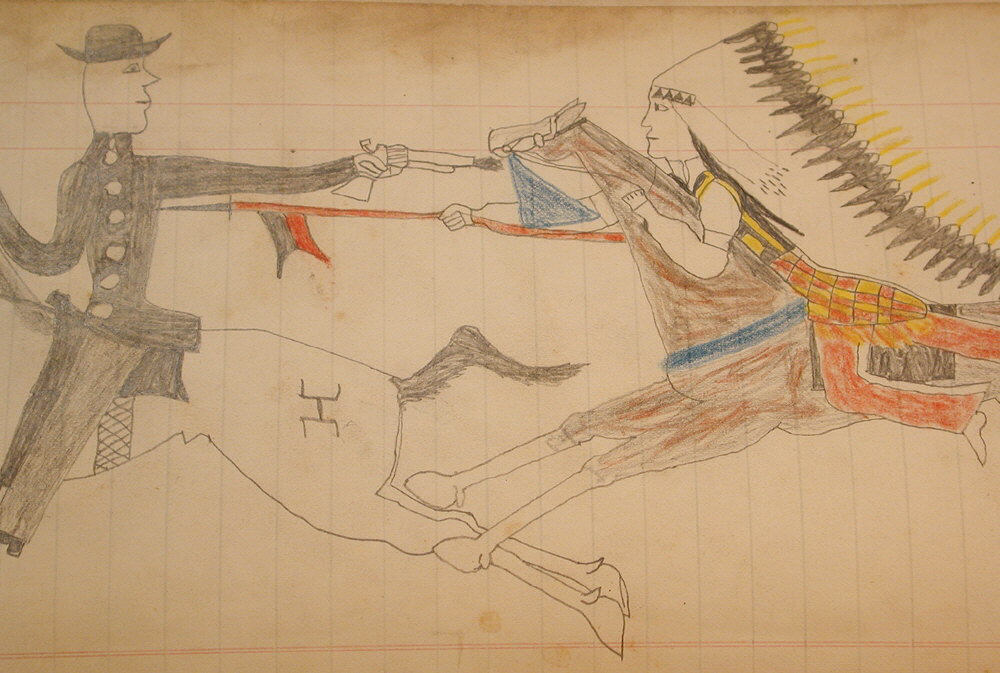
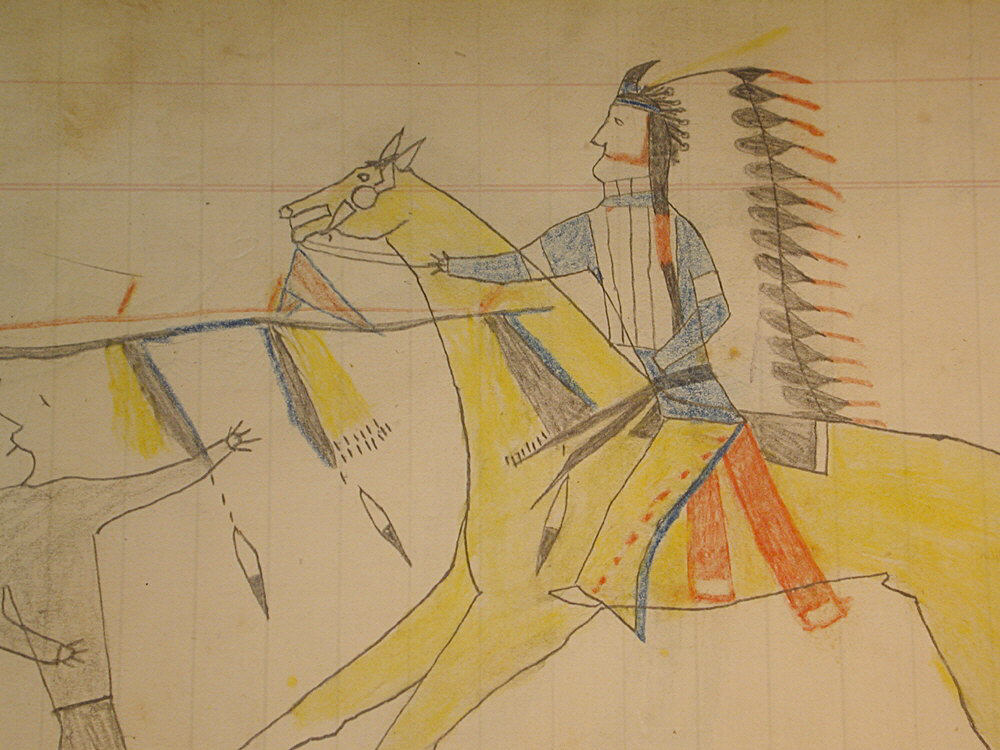
a quick canter to the  grassy pages of the Maffet Ledger -  1880s ledger being a collection of drawings done by various Southern and Northern Cheyenne warriors from Oklahoma - it is held at Metropolitan Museum of Arts in NYC

Feats of prowess, including counting coups and capturing horses -  all about the martial culture of the Cheyenne warriors of those epic times as seen through their own eyes. 


and I would like to point you to this fine book - Counting Coup and Cutting Horses: Intertribal Warfare on the Northern Plains, 1738-1889 by Anthnony McGinnis.. - fantastic study of the Plains Indians inter-tribal warfare. 

It can be borrowed [sic!] from Archive World Library or be purchased too - eg Amazon.


Valete

Saturday, June 19, 2021

Rosebud Creek fight - 1876-2021

 Salvete Omnes,

 on June 17, but 145 years ago in the Montana Territory a battle was fought between the Plains warriors  representing Lakota Sioux and Northern Cheyenne bands on one side against general George Crook commanding  the so called Big Horn & Yellowstone expedition  consisted of  detachments of the US Cavalry and infantry aided by other Plains warriors of the Shoshone and Crow tribal bands. eg wiki page.

This battle is known as the battle of Rosebud or Rosebud Creek, but it is also known as the battle 'where the girl saved her brother.'


Northern Cheyenne Buffalo Calf Road Woman rescues her brother
Among the Cheyennes in this battle was Chief Comes in Sight, a brave man 
and a good fighter. His sister had followed him out to the battle.
 At the beginning of the fight he had charged the soldiers many times, and 
when they were fighting the upper group of soldiers, as 
he was riding up and down in front of the line, his horse was killed under him.
White Elk was also riding up and down the line, but was going in the opposite
direction from Chief Comes in Sight, and it was just after they had passed
each other that Chief Comes in Sight was dismounted. Suddenly White Elk saw
a person riding down from where the Indians were toward the soldiers,
pass by Chief Comes in Sight, turn the horse and ride up by him, when
 Comes in Sight jumped on behind and they rode off. 
This was the sister of Chief Comes in Sight, Buffalo Calf Road Woman 
(Muts i mi'u na')- 

The Cheyennes have always spoken of this battle by this name : 
"Where the girl saved her brother — 
Kse e' se wo is tan'i we i tat'an e." 
Young girl saved his life brother. 
[..] It was near where Comes in Sight was unhorsed that the 
Shoshoni with a spotted war bonnet was killed. 
 THE FIGHTING CHEYENNES, p 323-4.

on May 31, 1876 Crook's command consisted of -
Captain John V. Furey - chief quartermaster

Captain W.S. Stanton - the engineer officer for the expedition

dr. Albert Harstuff, assistant surgeon

15 companies of the 2nd and 3rd US Cavalry regiments - commanded by Colonel W. B. Royal

5 companies of the 4th and 9th Us Infantry regiments - Major Chambers commanding

there were 106 US Army wagons driven by teamsters  and additional 600 mules led by packers  also carrying supplies.

on June 14 some 261 Plains warriors joined the army command, that is this was a  contingent of the  Shoshone, brought to the camp  by Tom Cosgrove as US Army guide to the Shoshone and led by their chief  Old Washakie with his  85 warriors, and the 175 Crow warriors under various war-chief -including Plenty Coups, thus assembled to join the Crook's column in march, scout and fight.

 There were scouts who communicated between general Crook and the native allied warriors: Frank Gruard, Louis Richaud,, and Big Bat.


The entire Crook's command counted some 1,300 soldiers and warriors. 


The native defenders, i.e. about a thousand of the Lakota - Oglala, Minniconjou, Sans Arc, Brule, Hunkpapa etc-  and Northern Cheyenne warriors, apart from Wooden Leg, including Two Moon and Little Wolf -   under various chiefs and champions. It is said that the Oglala Lakota war leader or blotahunka Crazy Horse was the 'commander' of this native army, but we cannot say that for certain due to the nature of the Plains Indians warfare and their individual desire for glory and honor and martial deeds - the famous coup counting.


Archive world library has a military study(presented in partial fulfillment of the Master of Military Art and Science requirements) of the battle  by Richard I. Wiles - it is available for download or reading upon the site.
On the same site you can borrow many more books on the subject of this conflict and battle, which was a part of the so called Centennial Campaign of 1876.


there are various native accounts of this battle - eg Wooden leg - Cheyenne champion,  who might have discovered the invading column, and whose report lead to the first real scrimmage between a Cheyenne party under Little Hawk and the  entire encamped column on June 9th. 

Anyway, here you can have readily available accounts of the battle made by its participants, both US Army and native.


Famous Lakota warrior champion White Bull thus described, to Stanley Vestal, his attire that day:
'[..]a pair of dark blue woolen leggins decorated with broad stripes of blue and white beads, beaded moccasins, a long red flannel breech-cloth reaching his ankles, tucked under his belt over his regular loin-cloth, a shirt, over the right shoulder he had a thong  supporting a small rawhide loop (there were four small leather pouches of different kinds of earth medicine, a buffalo tail and an eagle feather) . around his waist he placed his folded black blanket and belted it with  his cartridge belt with a hundred cartridges. He borrowed a war bonnet from his brother in law, Bad Lake, it had a long tail of eagle feathers, while there were no feathers around the head of this bonnet. The bonnet had no protective powers and White Bull took it for its beauty. He was armed with his 17-shot repeating rifle.  He selected and saddled his fast horse, on its forelock and tail he tied an eagle feather, while the bridle-bit was adorned with an imitation scalp made from a woman's hair. Only horses which had been used to ride down an enemy could be adorned as such. Then he rode to his uncle Sitting Bull tent where the warriors were gathered.''*

White Bull sang a song -


''Friends, try your best


I do not wish my father to be made ashamed.

Because he is a chief''*

White Bull told a story of his personal encounter with a Shoshone warrior champion - 'he rode a fast bald-faced sorrel with white stockings, his horse tail was tied up in red flannel and a red flannel strip was tied about its neck. The Shoshone warrior had a cartridge belt and a repeating rifle'  White Bull killed the Shoshone's horse and counted a coup on the Shoshone warrior whom he lamed in the right leg, but this enemy survived the battle*

Valete


* Stanley Vestal, Warpath: The True Story of the Fighting Sioux Told in a Biography of Chief White Bull - can be borrowed from archive.org library

Saturday, May 9, 2009

Red Shield


Upon re-reading, somewhat closer than before, of works by Dorsey,'Cheyenne', Grinnell 'The Cheyenne Indians', Cowdrey, 'Arrow's Elk Society Ledger' etc., I decided to repaint my Red Shield warrior already shown here a few weeks ago.
I started with the buffalo (bison) horse mask, and this particular item completely changed the way this image feels, I think. I recently photographed the whole book on the subject, Cowdrey et al., 'Indian Horse Masks', at the American Indian Museum library downtown Manhattan. The mask is identified as of Blackfeet origin, and since both tribes, Cheyennes and Blackfeet were so closely related, I decided to give his horse such a mask.
In the near future I will repaint his shield, the medicine (war) paint on his horse, lengthen the lance etc. I already started repainting his headdress, eg the red horns that were, according to Grinnell (and Bent :) ), painted separately one by one on the event of the wearer counting coup on his enemies.
To be continued