Showing posts with label Renaissance horse. Show all posts

Friday, August 2, 2024

Francois Clouet - Royal horses and riders

 Salvete Omnes,
long time ago I posted this painting by Francois Clouet (1515-72) - a French master, who was skilled in water media as gouache and oil painting. 

Dauphin Henri II Valois (1519-1559), 1543AD - at Menil Collection, Texas

..

monsieur Clouet painted several more paintings of French Valoise dynasts on horseback. 

First, the splendid Francis I (1497- died 1547) - oil on oak panel 


mounted on a splendid buckskin stallion, perhaps a Neapolitan horse?
Francois I was defeated at the battle of Pavia 1525, during the Italian wars

..
then his portrait of Henri II on a Neapolitan stallion?
this equestrian portrait of Henri II is housed at MET - NYC.  Attributed to Couet's workshop. - king, in a comfortable and rich riding attirle, appears as a very engaged rider, with a horse whip in hand, perhaps in a style of the Italian riding style of Grisone or Fiaschi. Perhaps there is more symbolism to this painting, as it differs from the three above that in those the dynasts are portrayed as  chivalrous knights in 3/4 armor  and masters of the realm.

canvas on wood panel later transferred to canvass. 
this  chestnut stallion appears also of a Neapolitan - spirited and showing off in a trot or even a passage?

Stallion's harness is splendid, perhaps silver or of metal textile while the saddle is perhaps of the cloth of gold - silk, gold and silver. The saddle has two cinches, woven in the same ornament pattern as the saddle,.

king Henri II died after getting eye-to-brain injury from a splinter hurled from a broken lance wielded by his opponent count de Montgomery of the Scottish Guard during a joust 10 days earlier.


enjoy

Valete

Tuesday, May 23, 2023

House of Savoy I

Salvete Omnes,


another quick post of more than several future posts dedicated to the equestrian portrayals of  some members of the House of Savoy, an Italian dynasty that is still going on today. Among other deeds and actions they were crusaders during the Age of Crusades - here I always refer you to Helen Schrader, who researches the Outremer  and writes both non-fiction and  'awfully' engaging novels about their history. 

The Savoyards claimed titles to the Kingdom of Jerusalem, Kingdom of Cyprus, and Armenian Kingdom of Cilicia.


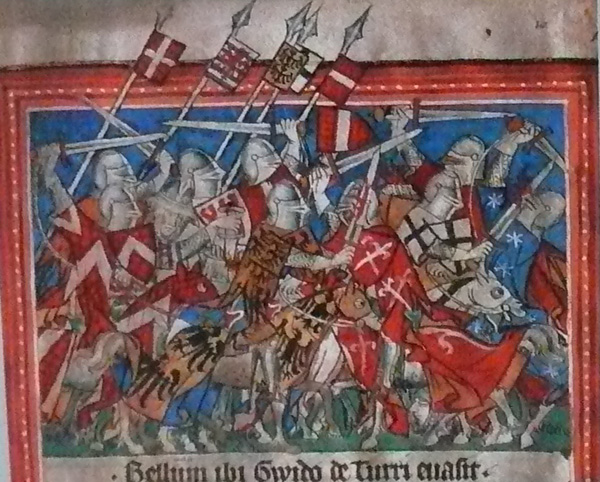
We will start with  some heraldry as evidenced in their medieval seals and one miniature - the dynasty was founded by Humbertus I who ruled in the County of Savoy, then a state within the Holly Roman Empire.


40 years of rule 

Thomas, son of Humbertus III 
Peter 


Amadeus V 

                                                                     Amadeus V in this XIV century miniature 

and then move to the transforming XVI century and this duke - Emanuele Filiberto I (1528-1580AD) on horseback in the full display of the Renaissance horsetack and rider's attire. 

woodcut circa mid XVI century.
his portrait painted by maestro Paolo Veronese 


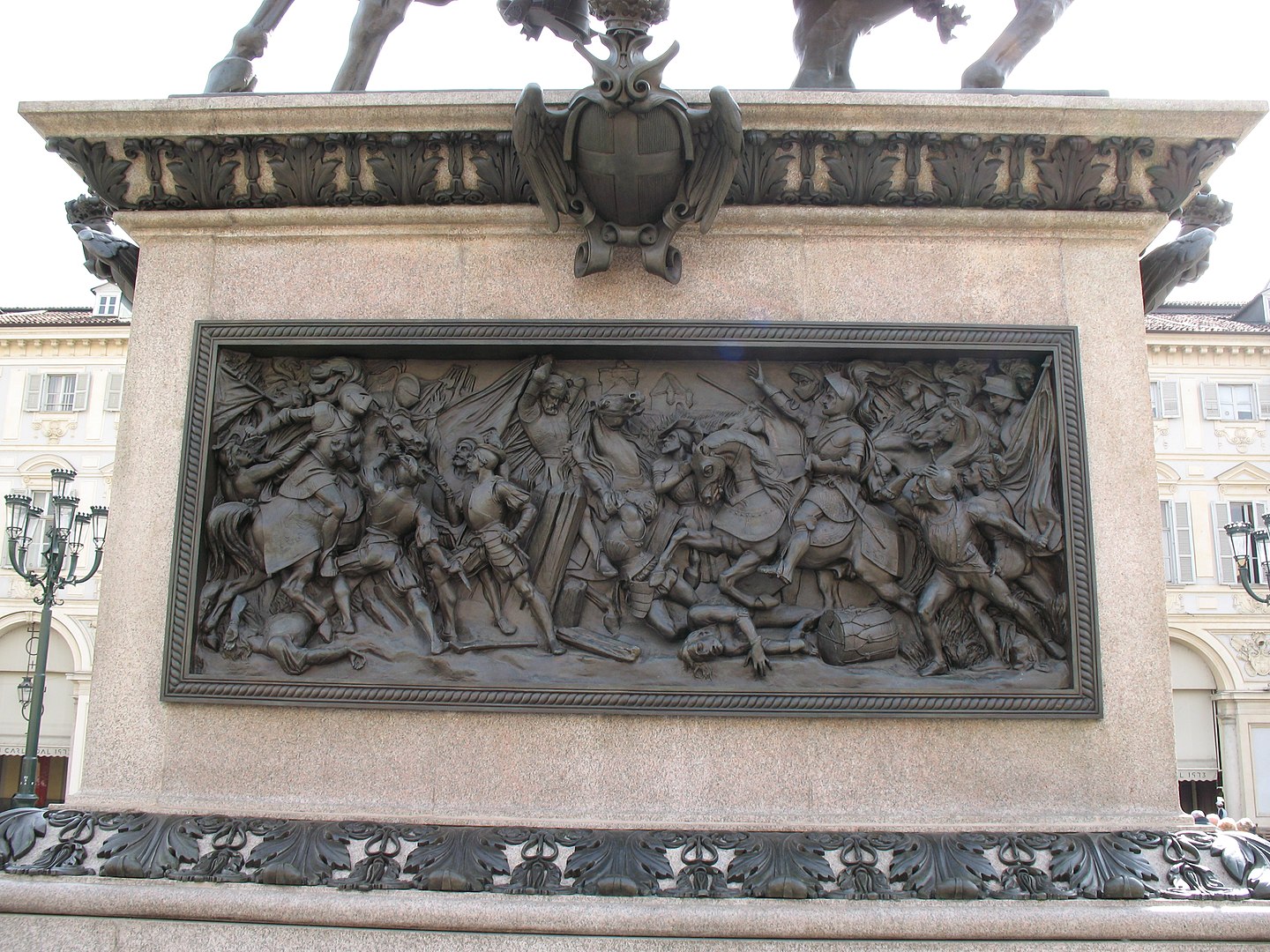
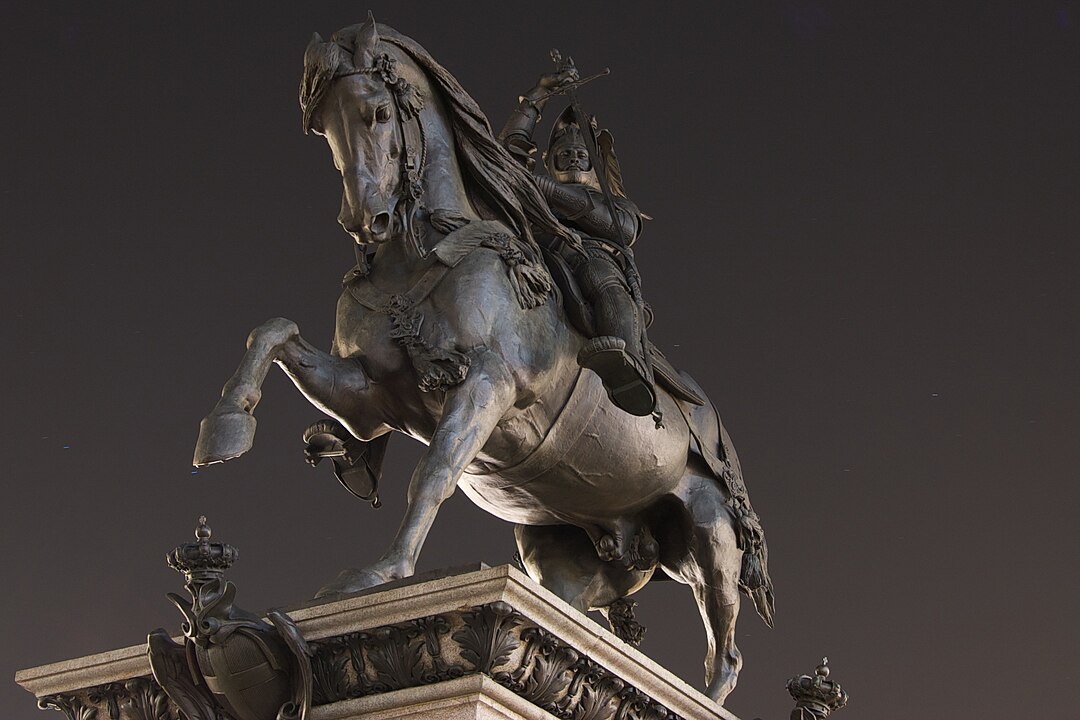
this ruler has been subject to an equestrian monument in Torino (Turin), Italy-EU - erected 1838AD  


to be continued - 
ps
all images come from Wiki Commons. 

Valete

Saturday, November 22, 2014

La Brida y la gineta - article from academia.edu

salve,
XV century king Enrique IV of Castile/ Castilla riding a la gineta/jineta


Interesting articles on academia.edu by messer Giovanni Battista Tomassini:

“Maneggi and jumps”. The basic exercises of Renaissance horsemanship - (...)

The breeds of the Kingdom. An unpublished manuscript by Federico Grisone - (...)

A la brida” and “a la gineta.” Different riding techniques in the late Middle Ages and the Renaissance - (...)

I always love to watch other artists doing their work and this a treat,  if you like bande dessinee and in addition this particular series tittled 'Djinn' by Ana Miralles ..  there are no horses there but some great art and interesting story ...
enjoy

Above, Juliusz Kossak's drawing of a hussar horseman of the Jagiellonian period of the middle XVI century.

Saturday, December 8, 2012

Abracham de Bruyn's Horses

Salve,
 I have been showing prints by de Bruyn and this print I find very appealing as it shows only horses, 5 powerful horses, with a stallion acting very assertively.

Perhaps these horses are just to show de Bryun's  mastery of the equine subject, I do not know.
well, enjoy - :)


Wednesday, October 3, 2012

Polish-Lithuanian Commonwealth riders in de Bruyn's album - part I

Salve,
INTERNET digital libraries allow us to peruse books long ago taken from the circulation, especially very old books and prints from XVI-XVII centuries.
In those libraries there are many treasures - eg archive.org,  gallica etc - and search engines permit us to search their collections and download found treasures for free, for non-commercial use.

In these collection one can find prints by Abraham de Bruyn, a Flemish engraver active in the second half of XVI century in Flanders and in the free city of Cologne (here one of his books - description the duc d'Anjou's departure from Dover, passage through Zeeland, and entry into Antwerp on 19 February 1582, available for free at archive.org ).
 The following images of Polish-Lithuanian Commonwealth nobles and soldiers come from two sets of illustrations  -
1.
Illustrations de Diversarum gentium armatura equestris. Ubi fere Europae, Asiae atque Africae equitandi ratio propria expresaa est.  (1578)

2.
Equitum descripcio, quomodo equestres copie, nostra hac aetate, in sua armatura, per cunttas, videlicet Europae, Asiae et Affrice, nationes in re militare sese habent nunc primum. (1576)

The engravings show the Polish-Lithuanian Commonwealth horsemen around the reign of our good king Stefan Batory, when Polish and Hungarian military traditions saw the most interplay - especially the emergence of armoured hussars, complete rule of the Hungarian sabre etc while the costumes military men wore merged, as evinced in these engravings

..Polish nobleman

.. Polish hussar officers

.. Polish hussar

.. Hungarian hussar

.. Lithuanian hussar

.. Ruthenian hussar

.. Polish standards bearers

.. Polish horse - musicians

.. Polish horse - trumpeters

..
next time - part II

Sunday, February 20, 2011

1520s German woodcuts on two different 'seats'

Salve,
Blog has been slow this month and a bit dried, but nevertheless galloping forward I would like, and I fully intend to take you along :) 

By the way, I would like to extend  my Old Poland's sincere welcome to new followers and all the visitors of my blog.

Ad rem, ever since Dr Deb Bennett (scholar and horse trainer I admire and respect a lot) published her fine book 'The Conquerors. The Roots of the New World Horsemanship' ( http://www.equibooks.com/conquerors.html ) there has been this  popular notion that short riding style know in a Spanish form 'la jineta' was an exclusive Spanish and then Colonial New Spain domain.
Well, we know that Eastern Eurasian horsemen who were archers used short stirrup leathers and high saddle from  the Late Antiquity onwards,  causing many headaches to Chinese Emperors of Tang Dynasty (Uighurs and Turkuts)  and to the Germanic heirs of the Western Roman Europe a bit later (Awars).
Moors or more proper the African Berbers who brought the 'short stirrup' and high saddle  or 'la jineta' to Iberian Peninsula did not invent the practice for they had learned that style from some Turkish mercenaries (ghulams and mamluks - I intend an article on furusiyya here one day ) from Central Asia and Egypt.
Incidentally at the time of the spread of Spanish riding style into Americas there were other people that had been riding  short and high in South-Eastern Europe for long time already - the Ottoman Turks and their vassals in the Balkans -Hungarians, Wallachians etc, Ruthenians, Golden Horde warriors and Crimean Tatars, and Adyge, Georgian, and Alan peoples of the Caucasus these people would not call their riding style 'la jineta.'

Now we have an ample evidence that nobles of Central Europe (Holy Roman Empire) trained in both riding style - the short and long stirrup leather technique (la brida in Spanish), from woodcuts of 1520s done for Holy Roman Emperor Maximilian I who wanted to have been seen as the perfect knight (and used printed and lavishly illustrated books to buttress his image). Both woodcuts show a knight hunting, one of the best martial exercises for a mounted warrior - eg, great horseman, archer and warrior Chinghis or Genghis Khan used it to train his warriors.
Enjoy these woodcuts and study them a bit ( as per more evidence - long stirrups of knightly style is present in many woodcuts by master Albrecht Durer and other  XV and XVI century artists, while short Turkish riding style in paintings and drawing of  XV century master from Venice Bellini, and some woodcuts of Durer and others)


Friday, January 28, 2011

Training horses for war XVI century

Salve,
a quick but very telling image that speaks for itself

training horses for war during the Renaissance, when firearms became part of regular warfare, forcing riders to train their horses  against the equine's natural instincts to run away from fire, smoke, and loud and sudden noise.
ps
 my sketch of late XVI century reiter -with GIMP and Mypaint

Monday, January 17, 2011

Lucas Mayer woodcuts 1595-96 - warfare in Kingdom of Hungary

Salve,
the subject of today's entry will be woodcuts of a German printmaker named Lucas Mayer who was active in the Holy German Empire  from 1566 through 1606. Amongst many he produced a woodcut showing our king Stephen Bathory as a prince of Transylvania and later as king of Poland-Lithuanian Commonwealth.

First woodcut shows a battle between the armies of Transylvania and Ottoman Turks in August 1595 ( most likely Michael the Brave indecisive (victor had to withdraw) victory over Ottoman commander Sinan Pasha front guard corps - battle of Calugareni where 16000 Wallachians plus 7000 Hungarians and 12 cannons under captain Kiraly bloodied 100000 Turkish force in the Neajlov River  canyon near Bucharest  ), with plenty of detail on each cavalryman dress and armament
Second woodcut shows a battle again between the Transylvania and Ottoman Turks in 1595. with many interesting ways of lance handling - resembling Sarmatian, Roman and medieval 'fechtbuch' techniques.
Third woodcut shows Hungarian army, vassals of the Hapsburgs,  of the 1596 commanded here by Nicolas Palfi  or Palffy Miklos , governor of Gran,  meeting the refuges under army escort, and it is very interesting as amongst other  things,  it shows feathered wings on some of the hussars


Palffy Miklos here in this nice German single leaf woodcut


*

I am enjoying myself living on the High Plains of US, last weekend we went to to western horse show at the El Paso County Latigo Horse Center , Colorado lost of horses and every level of horsemanship, too bad so few boys and men participate in these equestrian sports; horses and horse sports  seem to be feminine field nowadays, who may know, perhaps for the better :) . Got to see a 1870s  Henry riffle (under restoration), about to buy my first hunting rilfe (as oppose to assault riffle - i am not going hunting, my terrier does it here ) and a nice recurve 50 lbs bow..
Also had a chance to observe  horse shoeing of many different horses, and while at it we, friendly farrier Susan and I, talked -well, Susan  talked and I asked questions mostly - about horse's hoof,  horse breeds and  hooves, mustangs and trimming hooves for crooked and injured legs & feet.
I got myself a US cavalry saddle circa 1917 in not so bad condition, 11 3/4 " seat and hope to have it restored as one of the straps is broken wikipedia.org/wiki/McClellan_saddle

Tuesday, December 7, 2010

Filippo Orsoni's drawings from Victoria & Albert Museum, UK

Salve,
I would like to share my latest discovery of sorts - a more that 20 drawings XVI century drawings  showing Renaissance warriors, horse harness, armor and horse tack Victoria and Albert Museum in UK.
 
    I must say that I love the European Renaissance period for their armor and paintings, and also because, a little  sadly, during this period the artists-armourers  sung their swan song when comes to the knightly armor.
   well, nevertheless, before full armor suits gave way to courtly dresses of French court and uniforms of Louis XIV armies, there was this period of great flowering of knightly fine arts and design, especially in Milan and Nuremberg. Goldsmiths, painters, designers and sculptors worked on the final stage in the development of European knightly armor, because of the Renaissance interest in the Antiquity and its arts, they started decorating armor with Roman and Greek ancient fashions. 
One of the most famously known workshops was  the Milanese armourer Filippo Negroli shop/atelier   en.wikipedia Filippo_Negroli , example of his work Burgonet alla Romana Antica   - I could not more warmly recommend a  book, produced by the Metropolitan Museum of Arts, titled Heroic Armor of the Italian Renaissance,  you can get it from the net eg amazon.com/Heroic-Armor-Italian-Renaissance-Stuart , full of scholarly articles on the subject of XVI century armor and  illustrated with prints, paintings, photos of actual armor, and drawings of actual designs.
In that book I came across drawings of Filippo Orsoni, little known Italian painter and designer,  showing  a fanciful rider dressed for a horse masquerade/parade or horse carousel. Another drawing shown in that book was a designed set of armor of alla antica type (nice introduction in this MET article with bibliography   metmuseum.org renaissance armor ) for the dashing French monarch Henri II (got to write one on the fine chivalrous king), in this painting he is still   a dauphin of France, dressed in wonderfully adorned half-armor riding a curb-bitted  but  very fine  gray stallion with tied-up tail in a equally splendid war saddle:
This small painting was done by a famous portraiture painter Francois Clouet en.wikipedia. Clouet  is one of several paintings showing Henri II riding his horses,  the king who was known for his passion for horses, hunting, war and one beautiful mistress.

Finally, there is the link to the Victoria and Albert Musem album, well, small part of it, in their display.
Please note you will find on page 18 see a hussar-costumed rider ridding a fine horse, wearing a plumed shishak, armed with a painted lance and Balkan shield; also a Turkish rider and an armoured knightly rider; and a chart showing a war horse depicting potential equine illness - all and all fine drawings, too bad only 20 out of 306  vam.ac.uk filippo_orsoni

Sunday, December 5, 2010

Two Renaisance drawings from 'Joconde'

Salve,
     Renaissance art is full of horses, and while looking  for some examples of Alphonse de Nueville art (  Alphonse-Marie-Adolphe_de_Neuville  great French military and equine painter  of XIX century) I found two nice Renaissance drawings from France. I find them quite intriguing as they show rather large horses, most likely stallions or geldings, in harness outfits that  resemble Medieval, Renaissance and Baroque  carousels (equine festivals with equine games and displays of courtly ridding).

   Ad rem, the  French net library/depository 'Joconde' offers us these two fine ink wash drawings from the 3rd quarter of XVI century by the workshop of Niccolo dell'Abbate dell'Abbate , Italian artist who worked in XVI century France and was one of the masters of the Fontainebleau School.
  
In the first drawing we can see a page holding a saddled parade horse, dressed for occasion. It seems to me that our messer Niccolo or his pupil was showing a proposed design for a horse parade outfit, most likely intended   for his royal masters, the House de Valois as horse furniture/harness in this painting showing Francis I and H.R. Emperor Charles V  Franz_I_und_Karl_V    or in this famous full armor portrait of Francis I, nota bene we need to examine it in the future as opposed to the Titian's Charles V portrait ,  commons FrancoisI I France.jpg   Tizian Charles V .  Besides the flamboyant harness we can observe a very nicely decorated war saddle, long stirrup leathers, long curb-bit (long shanks),  two cinches/girths.


Drawing below shows a page riding another caparisoned horse. Here we got this beautifully drawn  example of a gaited horse, ridden by a page with one hand in a really long-shanked curb-bit. Please note that the saddle is different from the one above, it is not a war saddle per se, as it seems to lack the extended thigh protectors characteristic to XV-XVI century war saddles, or perhaps it represents the new type of Western European saddle.  Again we see two cinches/girths and long stirrup leathers. The style of ridding, long stirrups etc, seems to be what the Spanish and Portugese called ' la brida.'
This bridle, like the one above, has a not throatlatch per se, but there is a second 'headstall' attached to the proper headstall acting both a throatlatch and a suspender for a small tassel, done  in the ancient Turkish/Islamic/Mongol fashion.


 Here you can see an example of the master Niccolo painted horses, a but different from these two drawings  - Niccolo dell'Abbate_002.jpg

Friday, March 13, 2009


Hello again,
it has been a while since my last post.


While I was reading this entry Wojna litewsko -rosyjska_1558-1570  on wikipedia I found this image above -   two Polish riders with the standard:  White Eagle in the red field. Most likely this is an ensign and his companion and they are part of  some cavalry, perhaps Royal Cavalry Banner,  in their parade clothing, with some very ornate horse tack - red and blue dyed leather .
  They both carry Hungarian style sabres as this nomadic and Central Asian weapon became the weapon of choice for the Polish, Ruthenian and Lithuania nobility and military.
  One can note the multicoloured clothing, the 'red' rider has most likely a ''żupan,'' with a blue collar put down, in the fashion of the second half of XVI century. Also note the spur on the standard bearer's boot.
  Similar fashion and horse tack appear in the German woodcuts of the second half of the 16th century when Polish riders are depicted.
  On the right my own old ink drawing of a winged  hussar officer that is based on the German 1570s woodcut by a very prolific artist based in Nuremberg, Jost Amman.