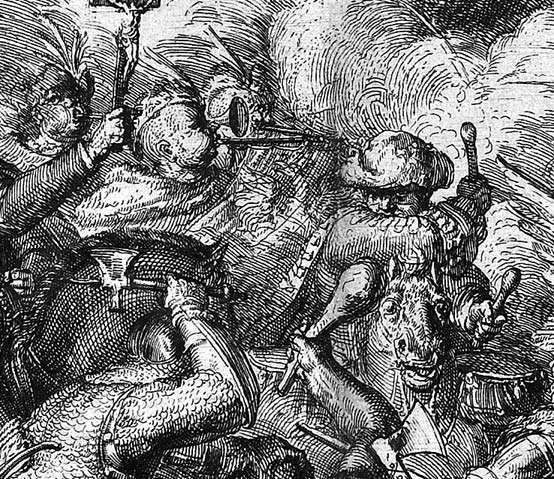
Showing posts with label paukier. Show all posts

Monday, February 3, 2025

Birth of Argentine Cavalry Feb. 3, 1813 - battle of San Lorenzo

 Salvete Omnes,

today we will canter to Argentina, when the country was being born and its cavalry too. 
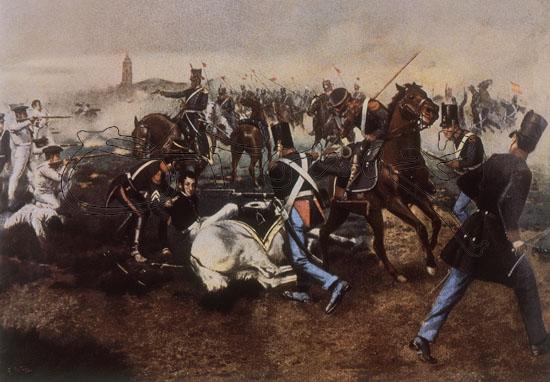


I saw this monument by Fernando Pugliese  on the Argentinian portal and decided to do a quick post about the Argentinian cavalry and their first victorious battle, of San Lorenzo, during long war for the Latin American independence. 


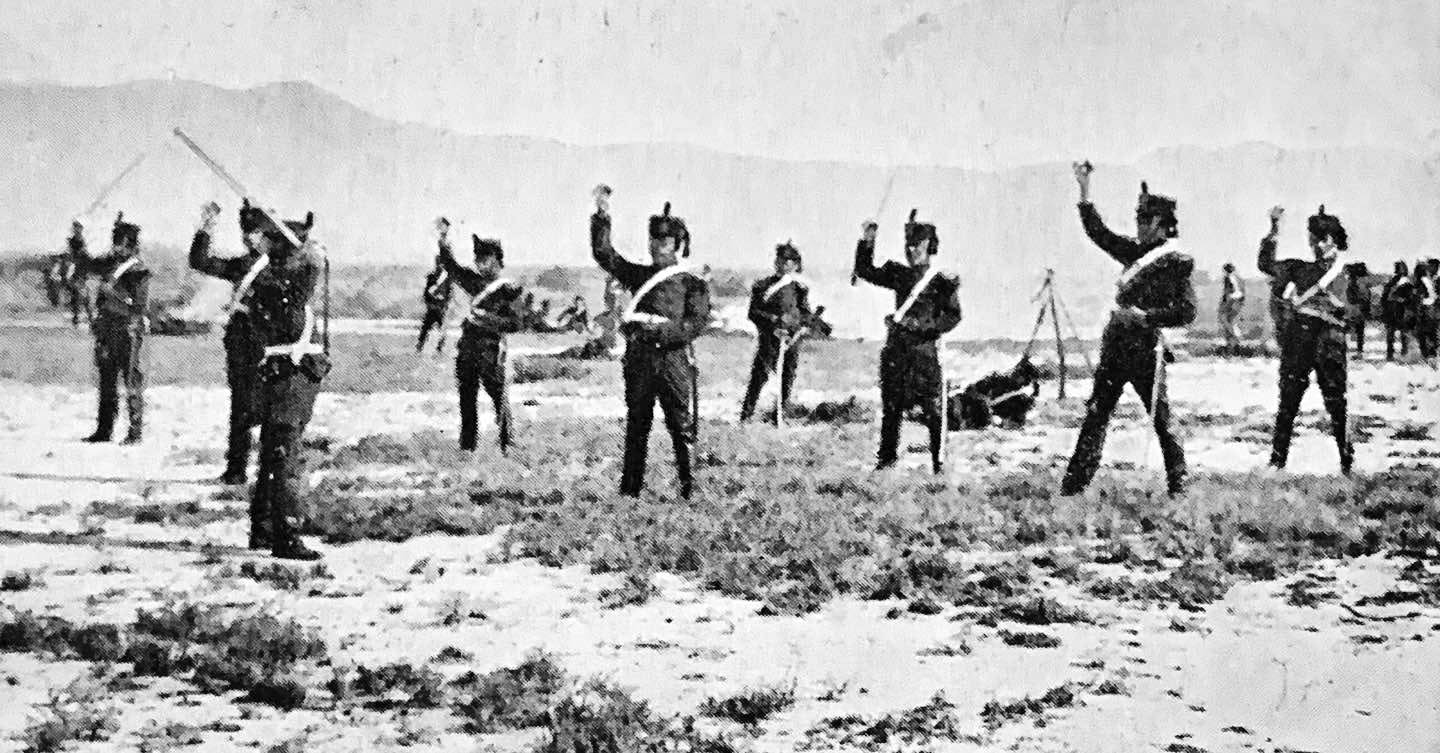
In early March 1812 Lt. Colonel Jose Francisco de San Martin petitioned the junta (el Primer Triunvirato) to organize cavalry unit  for the rebellion and on March 16, 1812 the first squadron of the cavalry (Ganaderos a Caballo) was born, housed in the Cuartel de la Rancheria (moved in May 1812 to the Cuarteles de el Retiro) in Buenos Aires. In September 1812 2nd squadron  was organized, and the 3rd was formed in the late 1812.

The  newly formed cavalry regiment consisted of 3 squadrons, 
each squadron :    1 squadron commander, 

1 squadron Corporal Major, 1 Adjutant Major, 1 Guidon Bearer 

1 cavalry captain, 1 cavalry lieutenant and 1 cornet.
9 cavalry sergeants, 3 cavalry corporals, 31 cavalry grenadiers and one cavalry trumpeter
 The cavalrymen were armed with lances, flintlock carbines,   and curved sabres. They rode in the so called Hungarian saddles.* 

Montevideo, the capital of Spanish viceroyality of La Plata, was under siege of the rebellion's forces (or Republican) but royalist organized naval raids on the settlements along Rio de la Plata, using ships,  boats and naval-borne infantry aka marines.  That February 1813 the royalist landing force force, 250 militia infantry with 4 artillery guns, were about to raid the vicinity of the settlement of San Lorenzo.
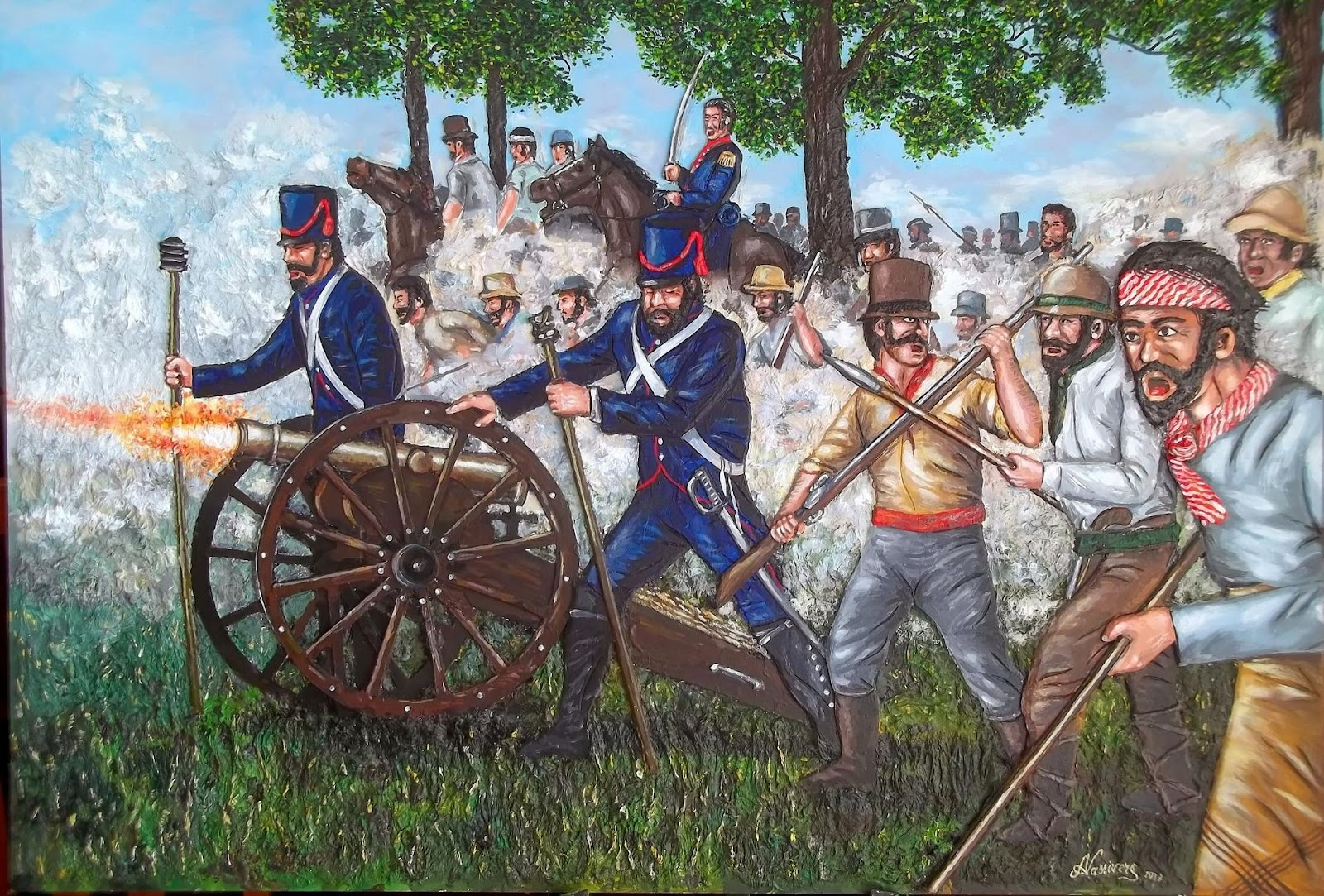

De San Martin was ordered to 'raid the raiders' and upon scouting the plains around the San Lorenzo Convent he prepared, in a gaucho fashion,  a dawn surprise attack on the raiders coming onto the land from their ships and boats. During this expedition he led 125 cavalry, men and horses, and 50 militia. 


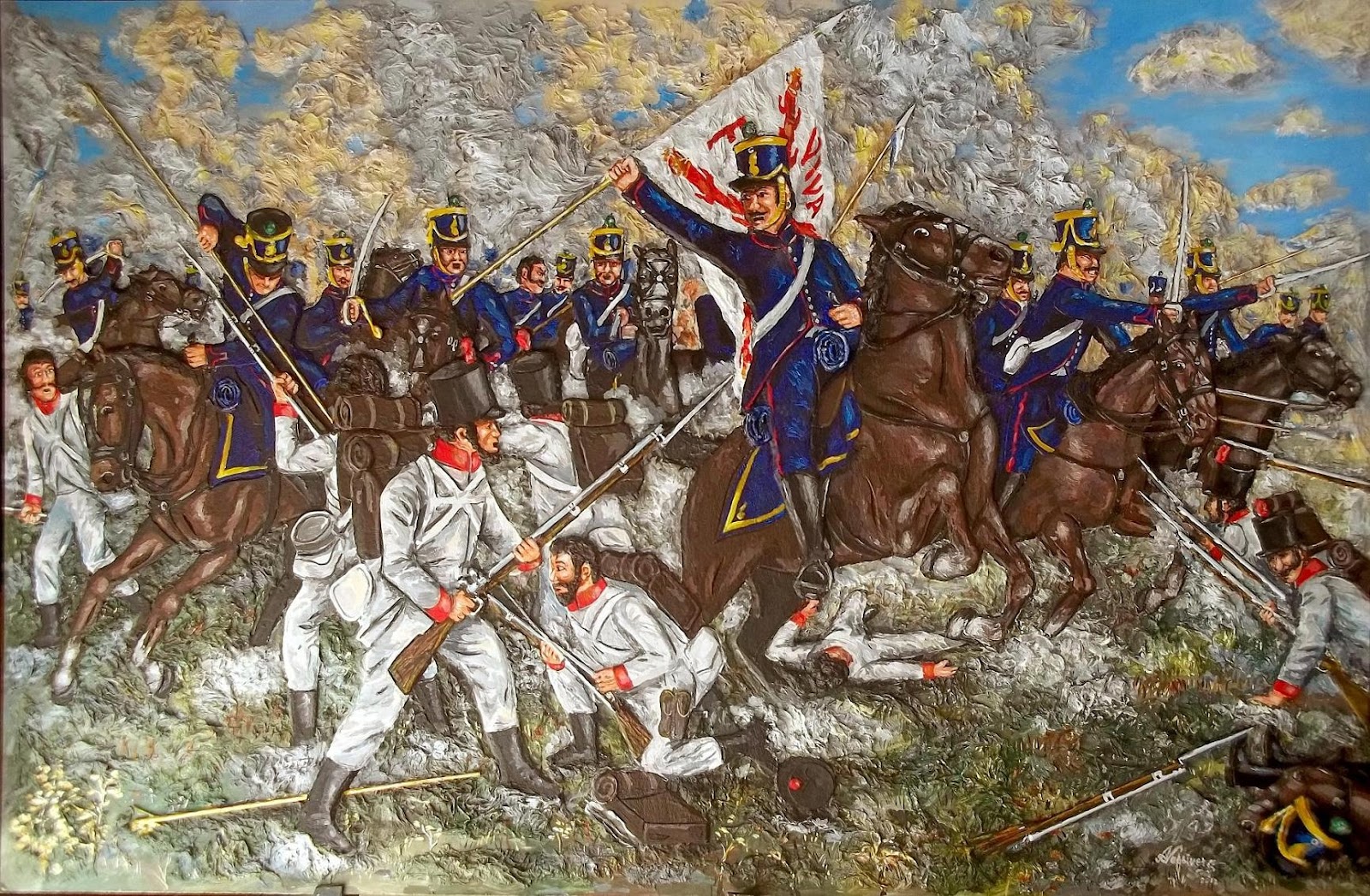
Lt. Colonel de San Martin ordered his cavalry to use their white arms only and his cavalry, divided in two columns of 60 each moved, in a pincer movement, charged the infantry, fought a hard fight and eventually defeated the raiding royalists. 


during the fighting one of the cavalrymen, el sargento Juan Bautista Cabral, saved de San Martin's life, when   lt. colonel de San Martin was pinned down by his fallen horse and in danger of betting killed - as depicted in the said  monument  in from the the modern regiment's barracks. 


* original document printed in ''La Revista de Buenos Aires,' v. Iv, 1864 page 480-1 , 

***

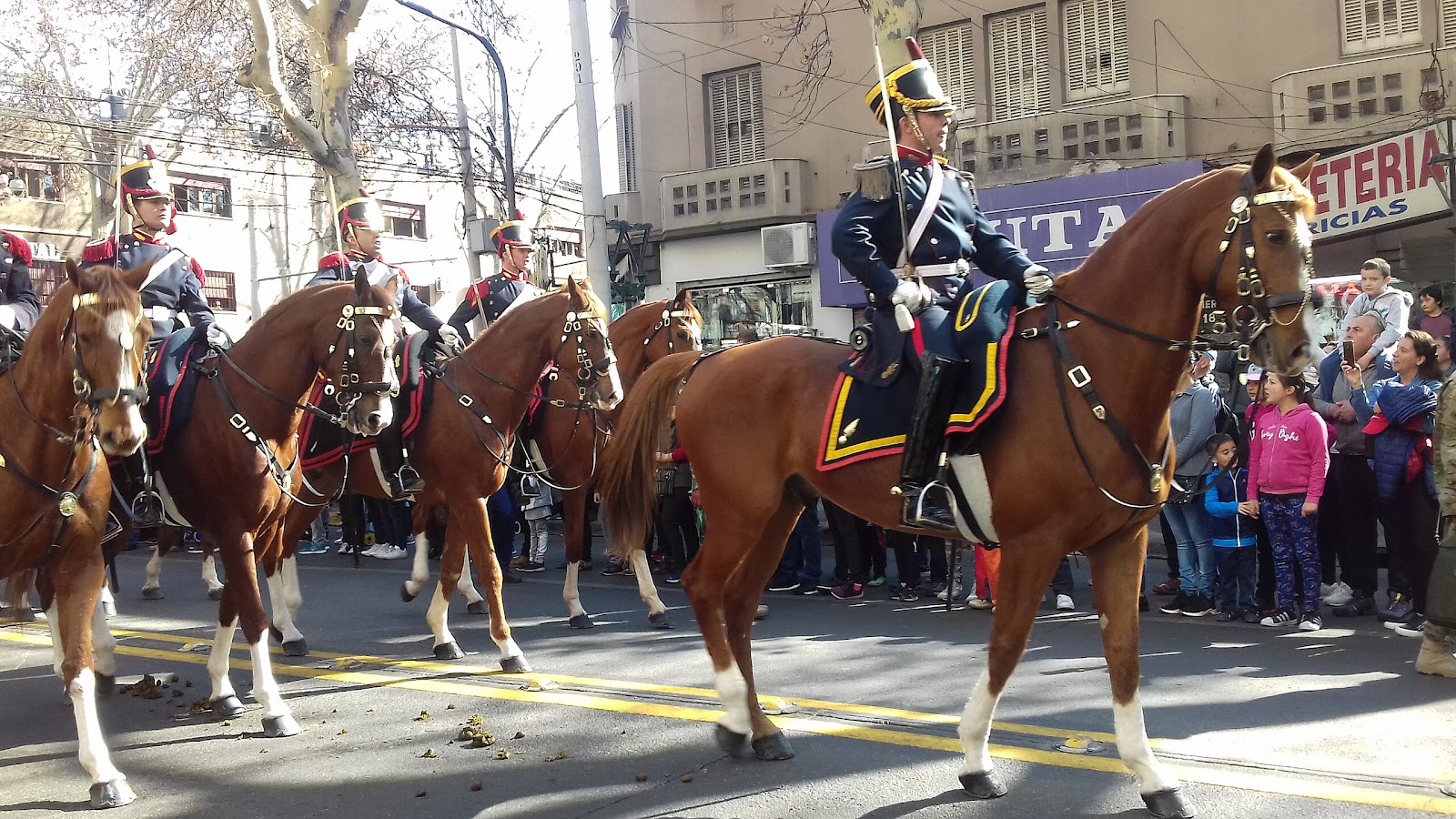
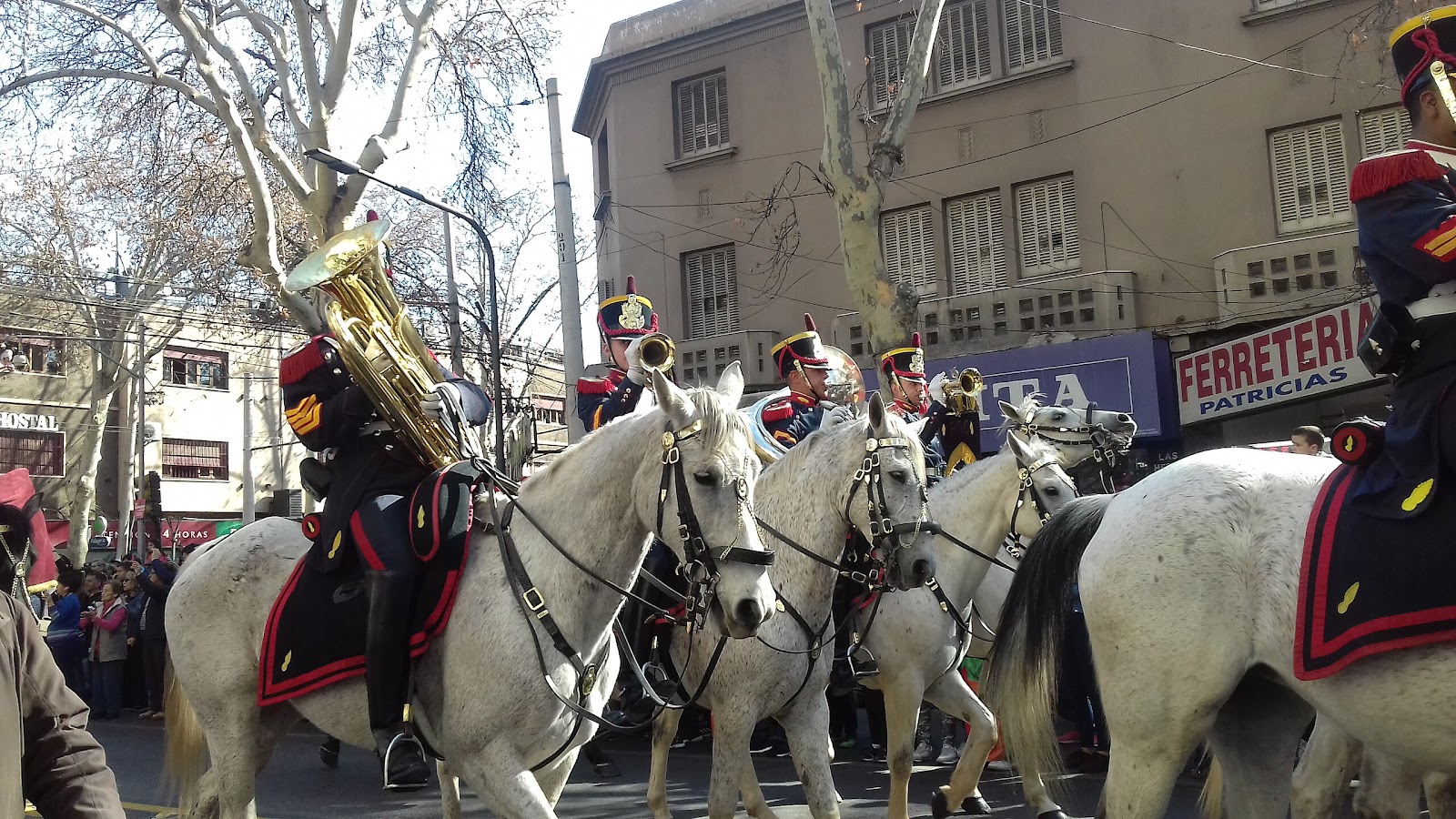
the Regiment is the guard regiment of the Argentinian army - 


Valete

Wednesday, November 8, 2023

Equestrian-themed Jewels from Polish-Saxon Court of Augustus II the Strong

 Salvete Omnes,


Dresden's Saxon Royal Castle contains some of the most outstanding royal jewels in the world - 


the famous and fabulous green diamond of king Augustus III


among there are some beautiful examples of jewelry made for our kings Augustus II the Strong and his son Augustus III (of the Wettin Hourse). 


Augustus II had a goldsmith Johann Melchior Dinglinger working for him, and master Johann created many magnificent object of his art. These objects can be seen at  the Grünes Gewölbe (Green Vault) inside the castle.

One of the is this cup with a horse - outfitted in the Polish style of the period, with the sabre suspended under the saddle's skirt. 


Agate, enamel, gilded silver, gold, precious and semiprecious stones were used by maestro Dinglinger to make this magnificent cup, one of two (circa 1722).

There is also these 2 figurines of  Nubian/Ethiopian drummer and trumpeter on horseback -


and many more beautiful objects - like this composition


or this egreta alias szkofia (aigrette)


Valete

Tuesday, September 19, 2023

Stockholm Roll / Rolka Polska - scans from Warsaw Royal Castle collection

Salvete Omnes,

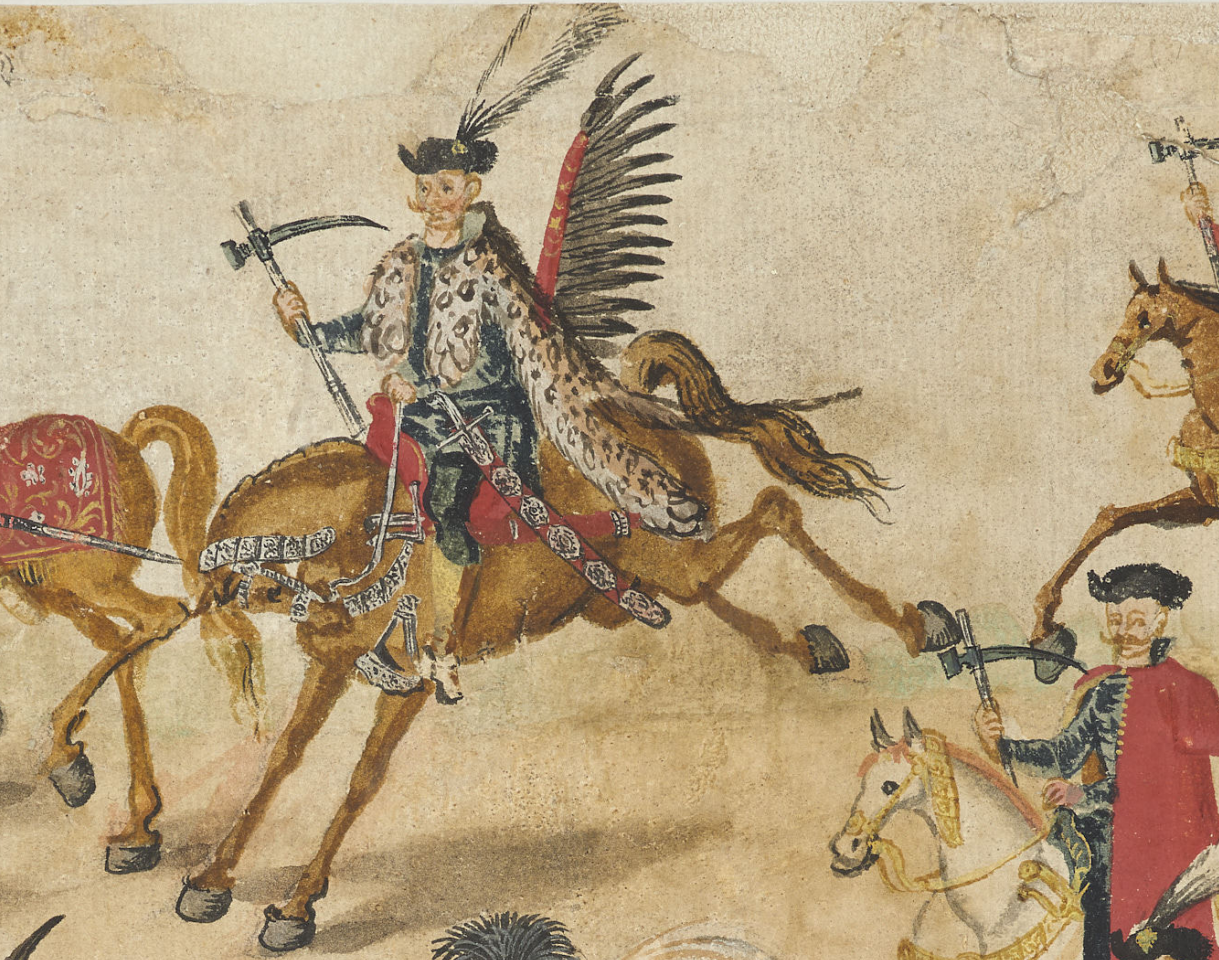
king astride a chestnut horse


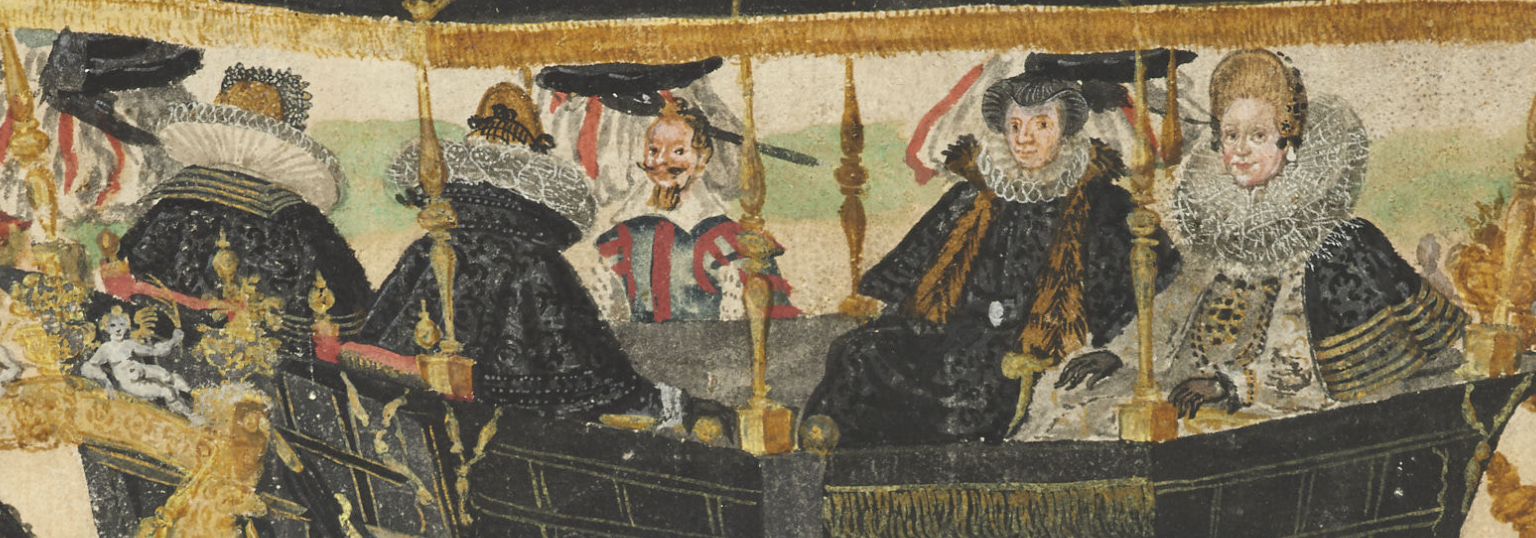
I am happy to provide this newest event in the saga* of the Rolka Polska or Stockholm Roll frieze-like painting on paper -  a gouache work of art circa 1605 AD, that was painted in the aftermath of the nuptials of our king Zygmunt III with the imperial princes Konstanza (Konstancja/Constance - known for the privilegium de non tolerandis Judaeis in her estates ) of Austria, and their triumphal entry into the Old Capital, i.e. Krakow.
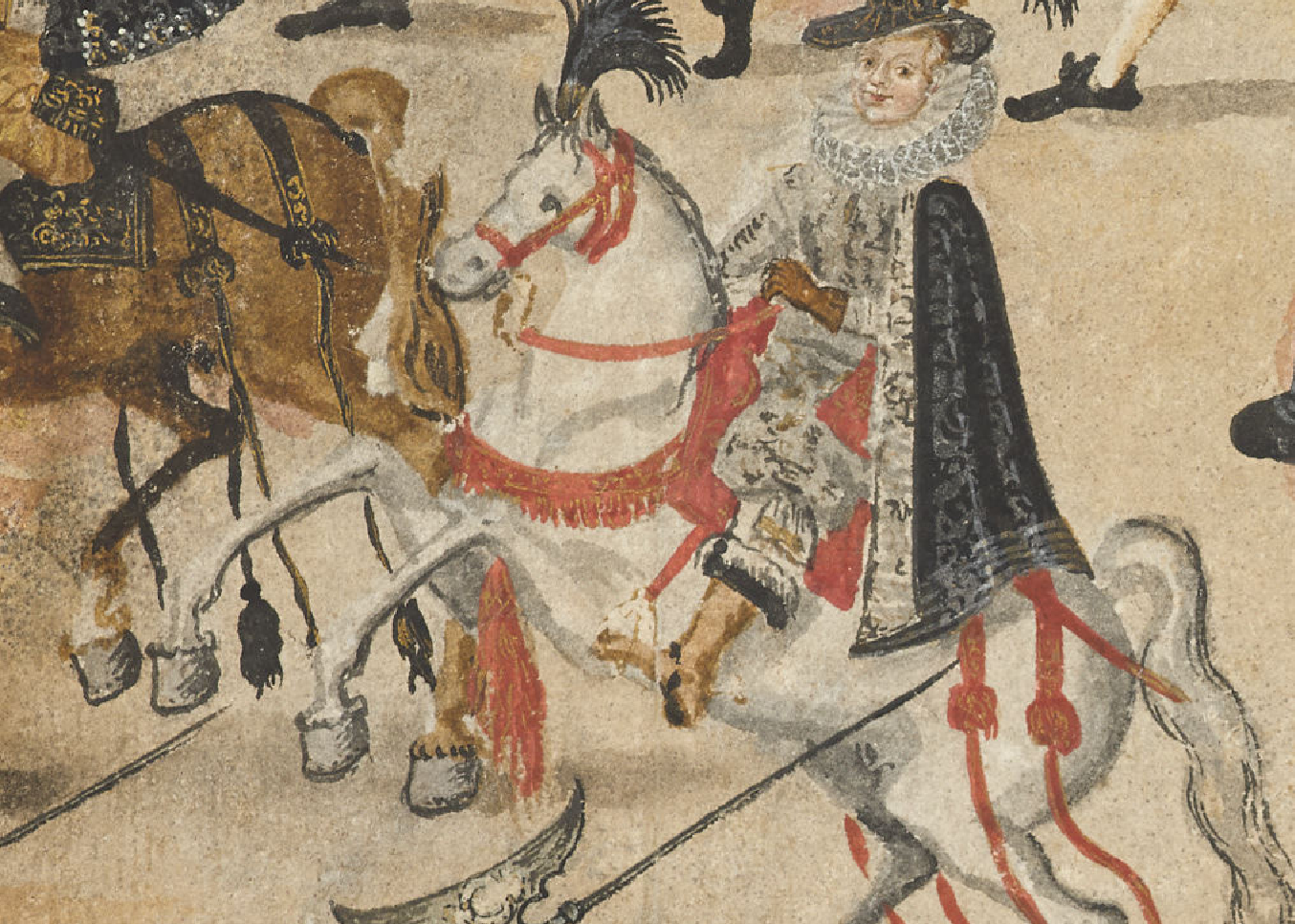
We see a display of horsemanship, bejeweled arms and armor, and horse tack, painted horses, variety of horse tack (Italian perhaps and Polish and Eastern i.e., Ottoman and Crimean and Transylvanian ), variety of splendid costumes - Polish, Spanish and Italian and Eastern (Ottoman, Muscovy, Persian etc) . 

future queen of Polish Crown - princess Konstanza of Austria, her mother Archduchess Maria Anna of Bavaria, her sister Maria Christina, and princess Anna Vasa of Sweden.


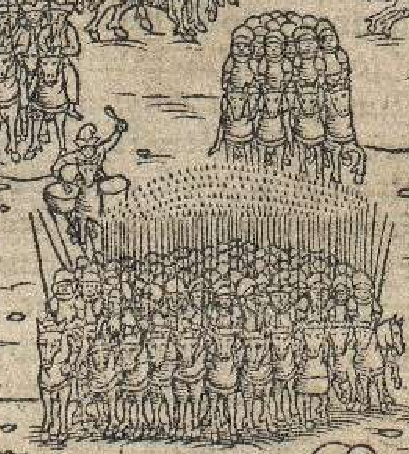
Polish infantry - drummer with a white eagle drum 

king's ecuyer on a bay horse


                                                                           and the future king Wladyslaw IV - 10 years old at that time 

young prince on a gray horse 


Link to the Royal Castle Museum portal in English / here Polish .

But Wiki Commons has some great scans from Swedish Royal Armory - here's the link. 

enjoy

Valete
*Rolka was painted for the king and his wife and their family and court, and in 1655 (during the Deluge) the special Swedish art commando while robbing valuables and even marble architectural  elements from the Royal Castle took the Roll to Sweden, and it was stored at the Livrustkammern, Sweden having violated the return of cultural treasures' condition  specified in the treaty of Oliwa 1660. In 1960s some Polish & Swedish historians started collaborating on a book publication about the Polonica (Polish and Poland related  objects taken from Poland during the Polish-Swedish wars) in the Swedish collections and the Roll was included. In 1969 Sweden allowed for the Roll to travel to Poland for the exhibition, and in 1974 Swedish Prime Minister Olof Palme, while visiting Poland, returned officially the Roll to Poland, directly to the collection of then newly restored from the World War II German barbarity our Royal Castle at Warsaw. 

Monday, September 11, 2023

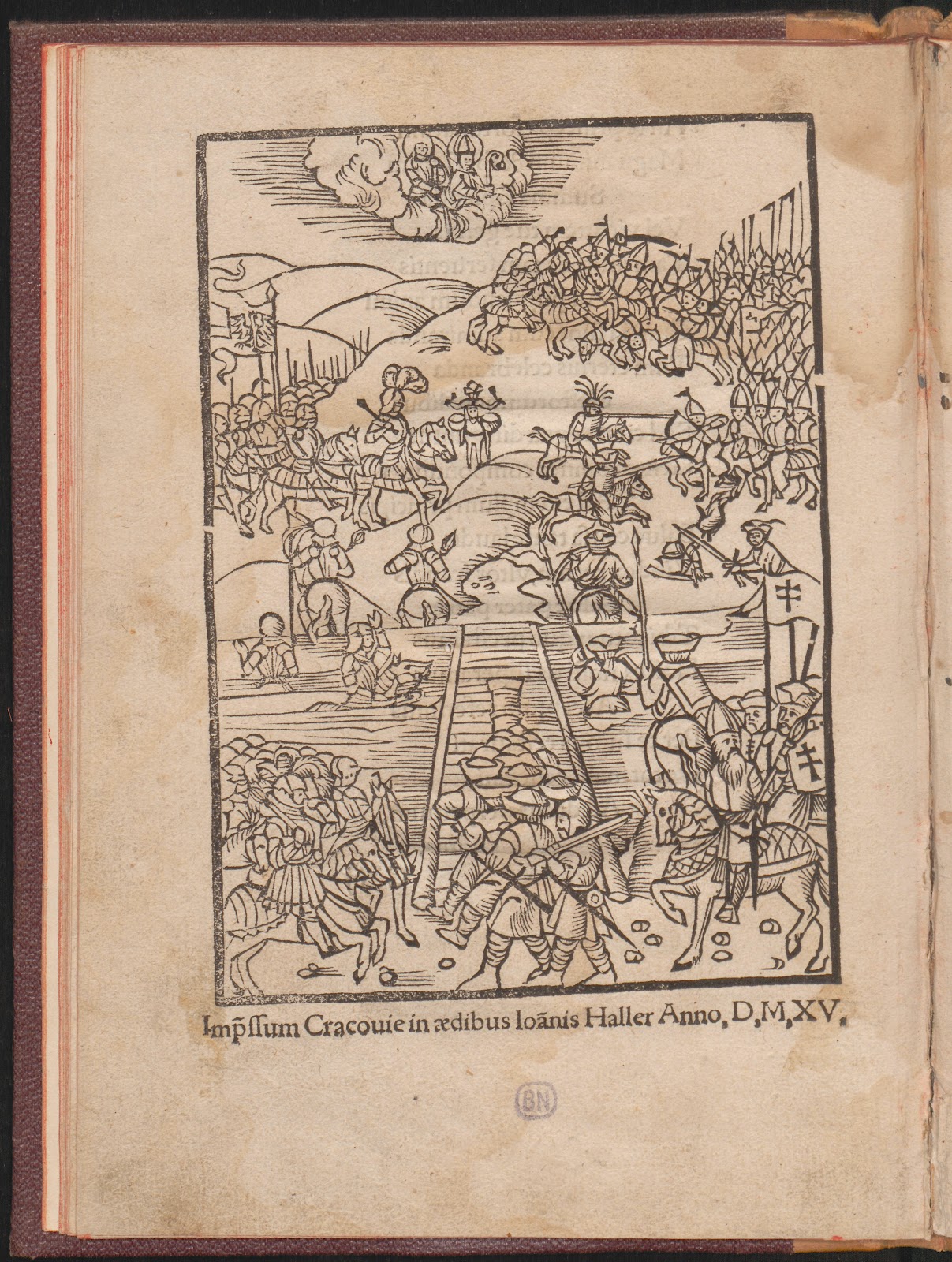
Orsza 1514 - a 1515AD woodcut

 Salvete omnes,

so yet another anniversary of 9-11 -  in the link my old post about my experiences that day - pacem aeternam to all the victims 

a quick return to the Orsza battle and victory over the Muscovy ..


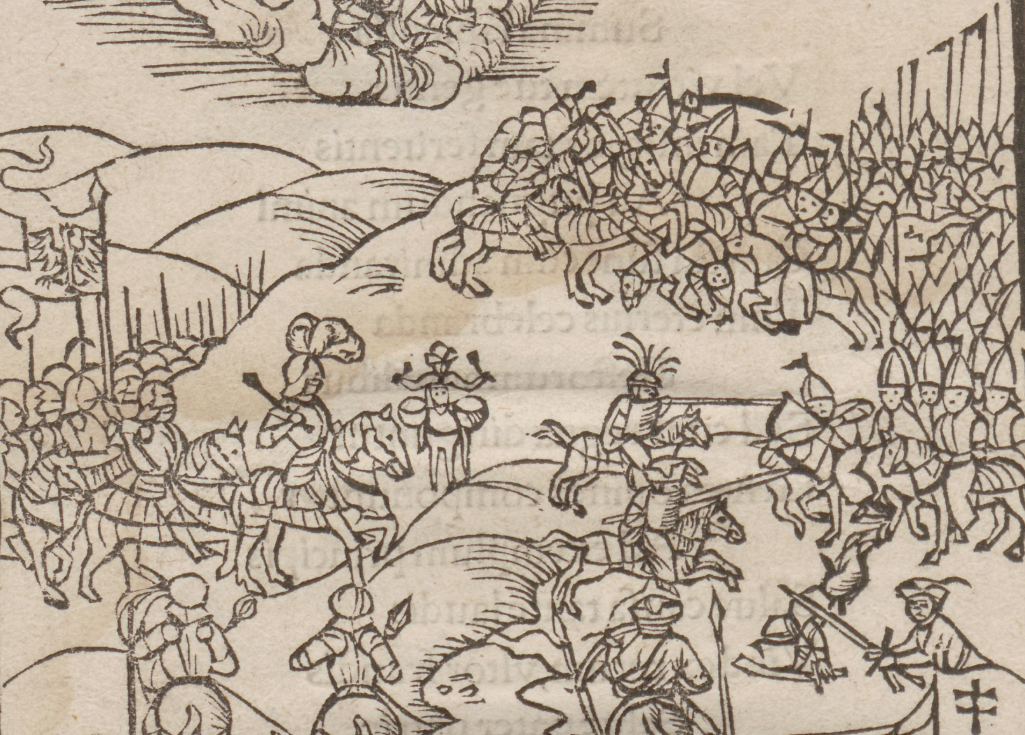
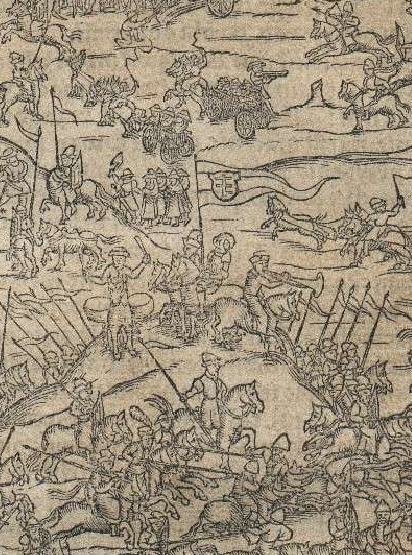
 so probably the very first image of the battle appeared in 1515AD in printed  poem written by Andrzej Krzycki, Kotwicz coat of arms, who was queen Barbara Zapolya secretary, Ad Divum Sigismundum Poloniae regem et Magnum Ducem Lithuaniae semper invictum post partam de Moskis victoriam Andree Krziczki inclite coniugis sue Cancelarii carmen, Kraków 1515, 


the printer was Jan Haller and they published  this poem in Krakow, then the capital of the Polish state.

perhaps Polish commander hetman Janusz Swierczowski, Traby coat of arms, on the left while horsemen of opposing armies are dueling between the armies 


there is a horse drummer next to the Polish hetman

emjoy

valete

Tuesday, August 15, 2023

Polish Army Day - a millennium of defending the realm

 Salvete Omnes,


so  this day, August 15 is the Polish Army Day (Feast of the Soldiers) - the date is also the Feast of Assumption of Mary. 
So for more than millennium Polish warriors, knights and soldiers, mostly peasants led by their noble lords and officers defended the Polish lands.
This particular August date  commemorates the battle of Warsaw, AD 1920, when the Red Army Juggernaut of an  offensive was broken and eventually rolled back into the Red Russian lands (although there are many disagreements and disputes on why the leadership did not help White Russians finish off the Bolshevik rule and restore Russia from the communist monstrosity), thus preserving the newly restituted Polish state. 
The battle is important to the XX i XXI century modern Polish state ideology and politics, but we have had many battles equally important and momentous in our millennium long history. But be what it may, at least the holiday falls in the summer month, when the weather is warm and sunny. 

Hail to the defenders - and may war never return to the Polish lands

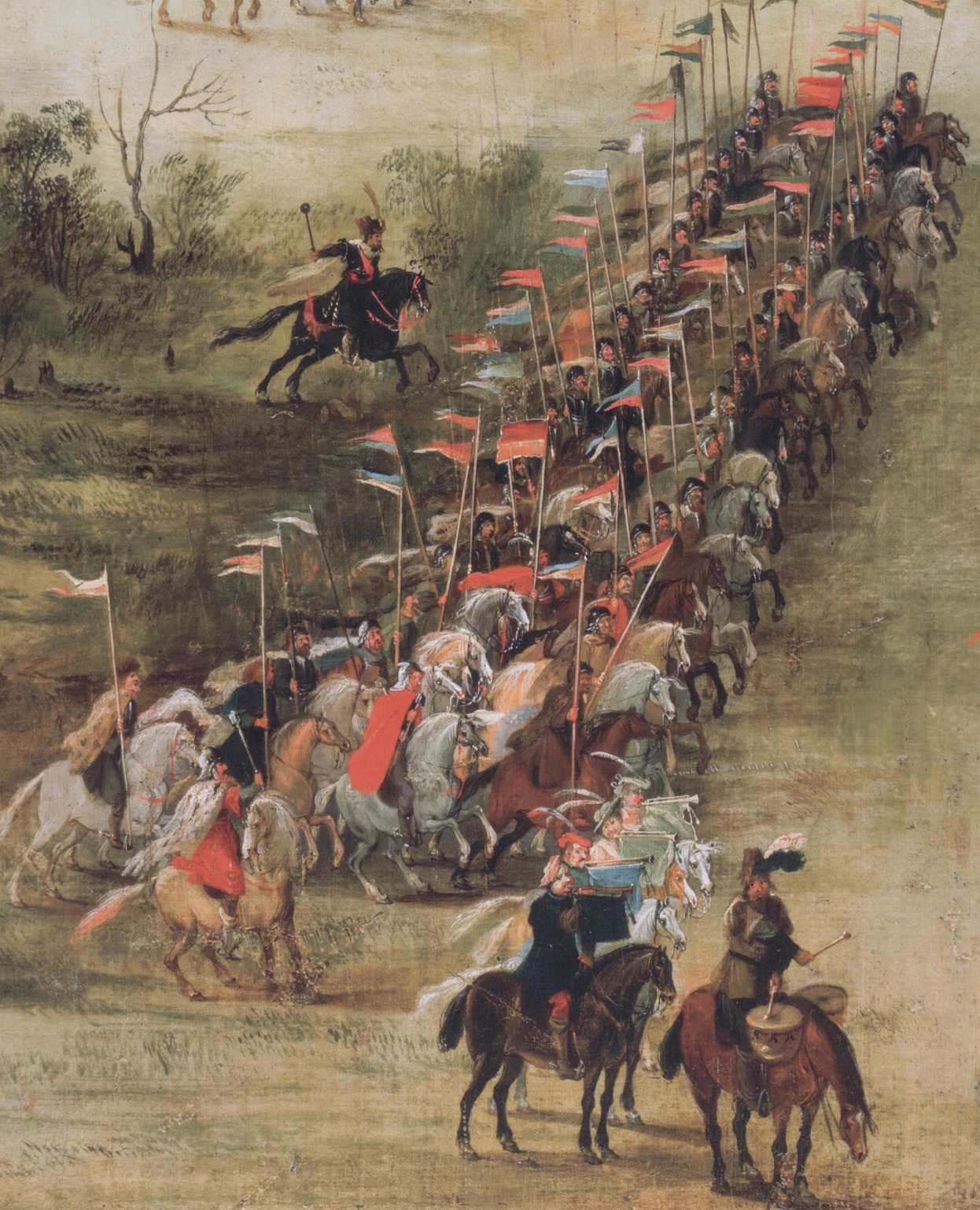
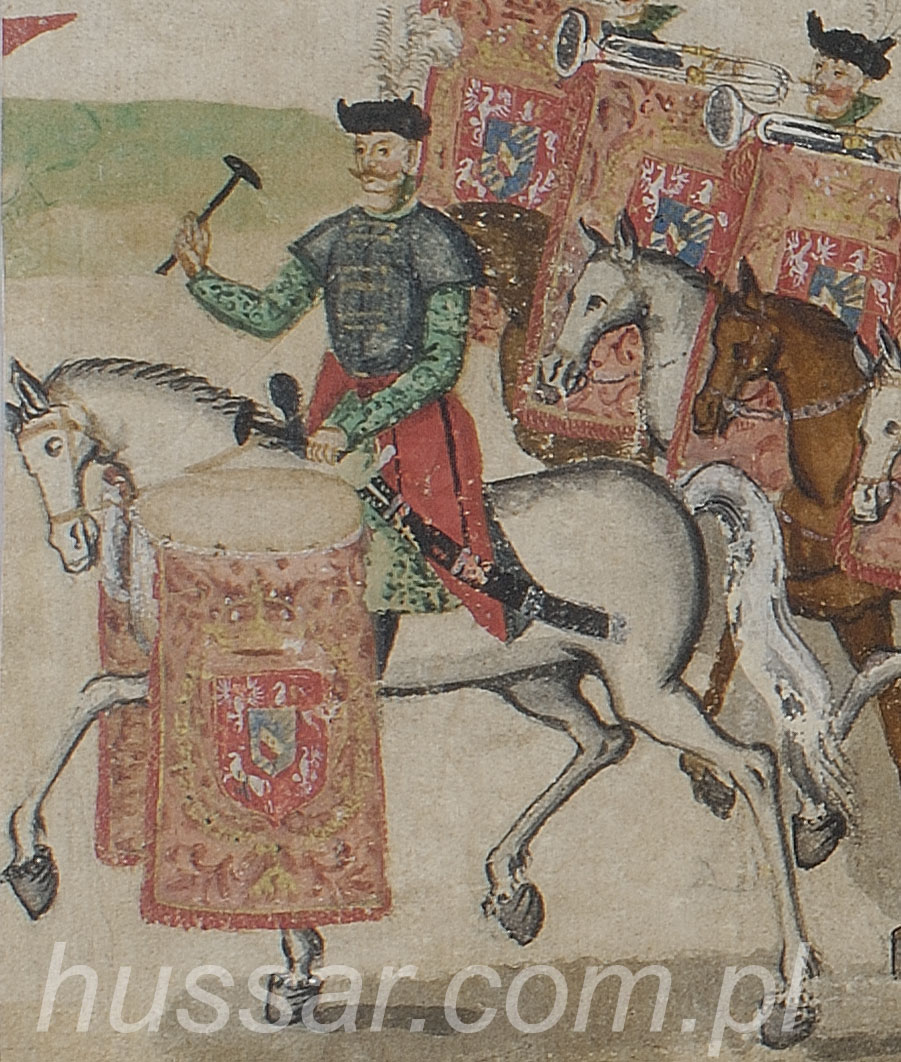
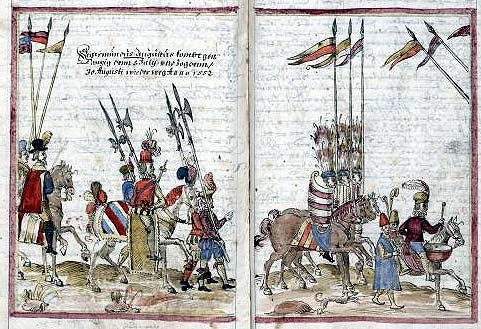
and along with the text I am including some photos of the Polish cavalry drummers of the mounted musicians platoon from the 1 pulk szwolezerow (1st chevau-leger regiment) of the 2nd Republic -  Polish names for these musician-soldiers were 'kotlista'(modern) and old 'pauker, paukier, pałkier, & pałkierz,  '


during the pre-partition Poland - Polish-Lithuanian Commonwealth and Crown of Poland - the mounted drummers were part of the cavalry units and were very colorful, while playing an important role of signaling and providing psychological support to the fighting troops.


and although the Napoleonic 1st Polish chevau-legers of the Guard were not part of the Polish army, their splendid uniforms and short but illustrious history merits to have them included here - painted by Bronislaw Gembarzewskie (great historian and illustrator, another victim of the Nazi German genocidal policies in occupied Poland)


Valete