Showing posts with label Crazy Horse. Show all posts

Sunday, September 7, 2025

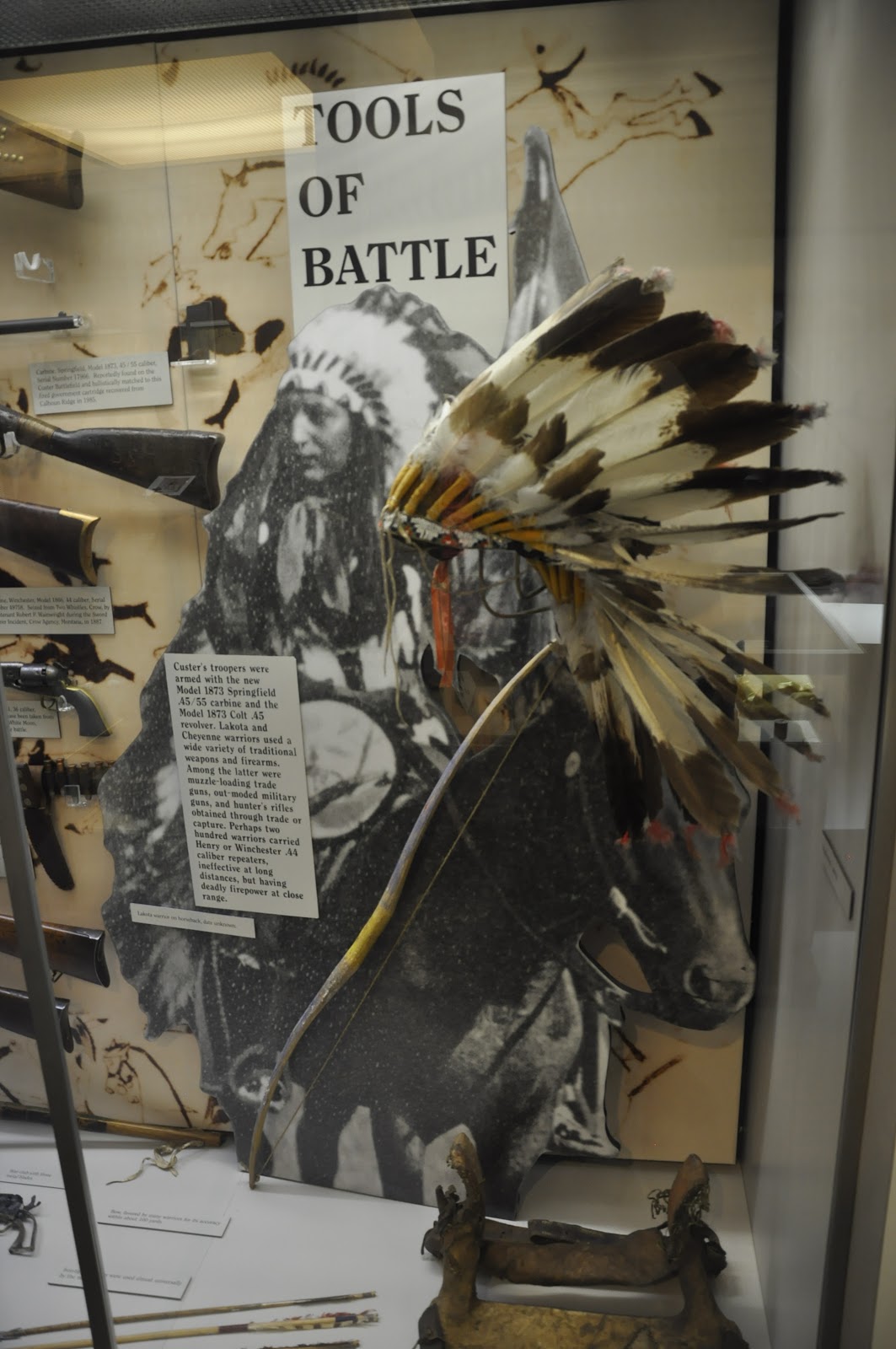
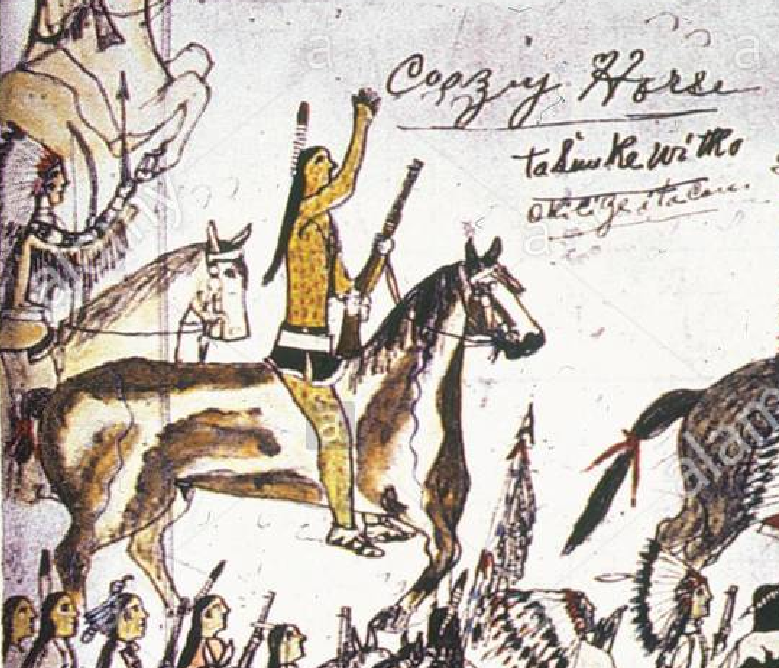
Remembering Crazy Horse, Oglala Lakota blotahunka

 Salvete Omnes,


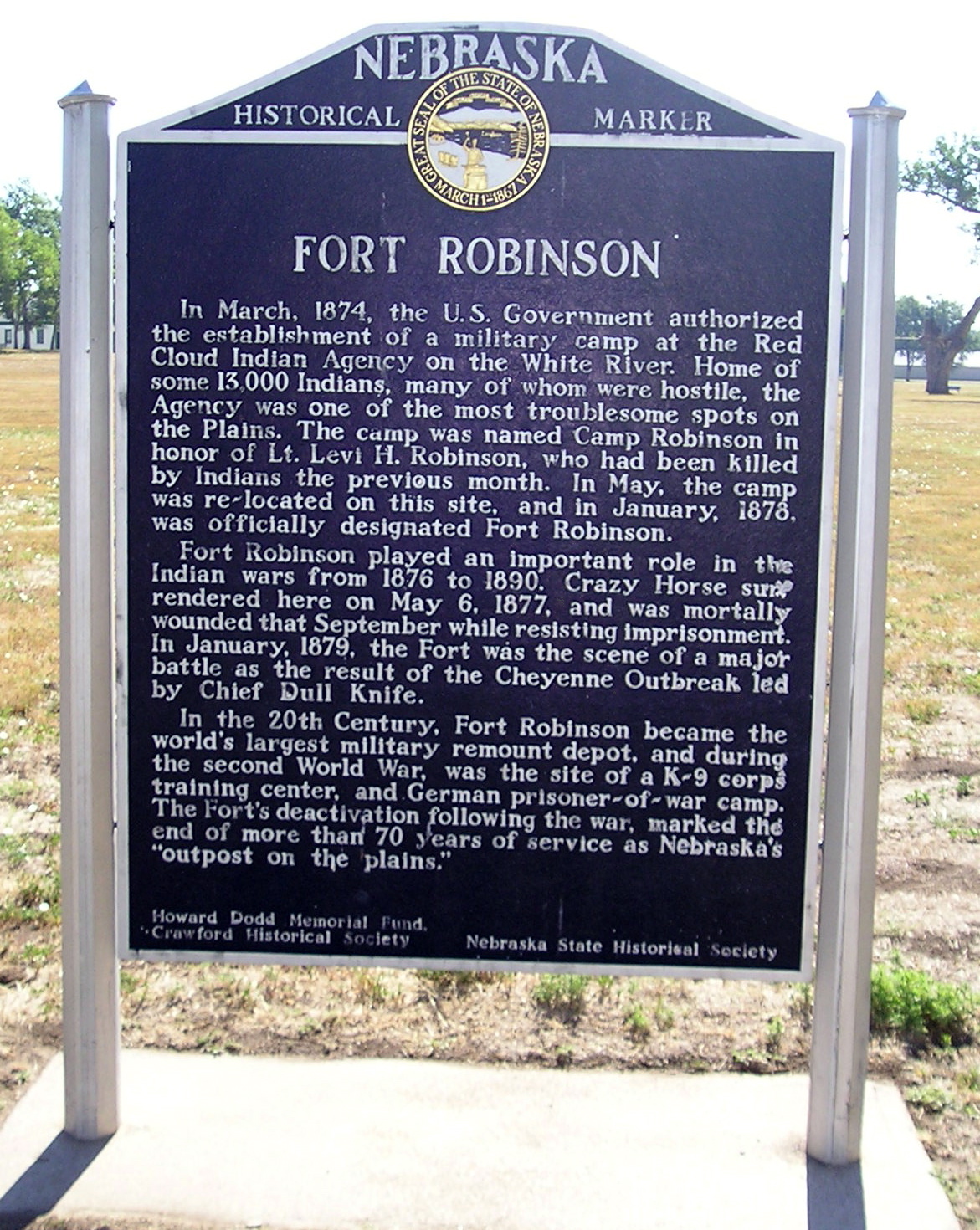
a couple days ago there was the anniversary of Crazy Horse's death at Fort Robinson, Nebraska (Sept., 5, 1877). Nebraska State Historical Society has this article about the Crazy Horse's sacred bundle

I did write one posting on the life and death of Crazy Horse.  Recently, I read this article - Tragedy at Red Could Agency. The Surrender, the Confinement and Death of Crazy Horse.  by *Jeffrey V. Pearson ( published Montana, The Magazine of Western History (vol.55, no.2, Summer 2005) - can be read a Jastor platform. I am going to summarize the whole 1877 debacle as researched in this article: 


On May 6, 1877 Crazy Horse and his Oglala & Northern Cheyenne followers came close to the Red Could Agency. Crazy Horse dismounted his war horse and loosened the knots in his horse's tail to declared to all present that his warpath was no longer. The Sioux and Cheyennes had to surrender their guns and [war] horses. Crazy Horse wanted to have his own 'agency at the headwaters of Beaver Creek (near present Gillette, Wyoming). The goverment chiefs and US officials  were waving the idea of Crazy Horse going to join the Washington-bound delegation. 

For the next 3 months the goverment chiefs like Red Cloud, Spotted Crow etc and their followers worked tirelessly to make Crazy Horse  uneasy and hostile towards the whites and to create a perception that he was persona non-grata within the Great Sioux Reservation, They concocted stories about his hostility and government's murderous designs on his liberty and life.  New goverment Agent - James Irwin - complained to the Indian Affairs Commission that Crazy Horse had  been' all time silent, sullen, lordly and dictatorial.' Later on Irwin, along with a Special Agent Shapp, gave more ear to the big chiefs plotting and even reported potential mutinous behavior of Crazy Horse. The US Army, like Lt. Col. P. Bradley, the commander of Fort Robinson, Nebraska Territory,  dismissed the accusations as hardly credible (end of July 1877).

During the mock battle after the June's Sun Dance ceremony held by the Oglala, the turmoil erupted between the 'Oglala patriots' and 'agency Sioux' ending in a melee where the agency Sioux were beaten with clubs and war clubs. This resulted in some sub-chiefs of the Oglala like He Dog and Little Big Man moving to the agency Sioux camps.  At the same time Crazy Horse was strongly asking for his agency on the Beaver Creek. His other intentions throughout this period (May-September 1877) are unknown to the researchers of this period. 

On August 30 at Fort Robinson chief of scouts Philo Clark met with the Sioux leadership and asked them, following orders from General Crook, to enlist against the Nez Perce outbreak in the Northwest. At first all chiefs refused, but  later upon much quarrel they consented, with Crazy Horse reported by witnesses as saying - 'till all the Nez Perce were killed.' Frank Grouard, chief interpreter, [mis]translated  Crazy Horse's refusal as 'we will go north and fight until not a white man is left.' The other interpreter Louis Bordeaux, furious at this lie, was not allowed to correct this falsehood. Then interpreter William Garnett came and the whole fiasco started anew, with Clark telling Crazy Horse that he had to stay on the Spotted Tail's agency - where Fort Robinson was located.. 

on August 31 the agency goverment chiefs - Red Cloud, Little, Wound, Young Man Afraid of His horses, American Horse, No Flesh, & Yellow bears - held a council with Agent Irwin, again accusing Crazy Horse of undermining the Agent and government's rule etc. 

Alarmed by Bradley General Crook came to Fort Robinson on Sept. 2, 1877 and asked for a council on the following day on White Clay Creek. When the whole outfit, with Garnett and another scout Baptiste 'Bat' Pourier, were getting to go with General Crook to meet Crazy Horse,  a nephew of Red Cloud, Woman's Dress, came by and told them Crazy Horse 'would come with 60 Indians[...] to kill Crook and whoever he has with him.' Garnett took this Woman's Dress to Crook  and upon hearing this tall tale Crook held a council with Red Cloud and his chiefs, and upon this ad hoc gathered council  the general declared the Oglala chief must be arrested. The chiefs agreed and further proposed to kill Crazy Horse themselves, to which Crook responded that he had to be arrested, for the killing would have been a murder. 


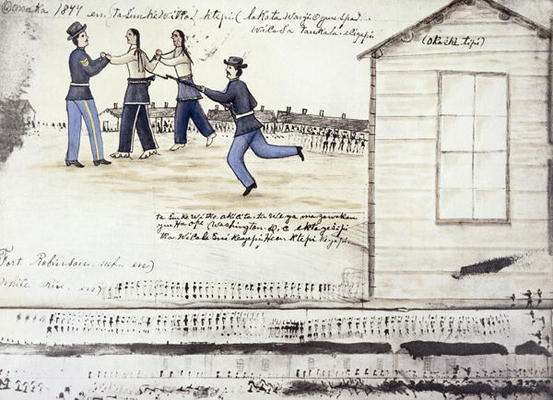
On Sept.4,  about a thousand-strong cavalry strike force  - 3rd US cavalry under Lt. Col, Mason and Indian Scouts and warriors under Clark, marched on the Oglala camps. When withing 1 mile of the Crazy Horse camp, they were reported that the villagers were scattering into the prairies and Crazy Horse was fleeing.  Clark's scouts gave chase, while 3rd Cavalry returned to Fort Robinson. The chase ended when Crazy Horse entered the village of Touch the Clouds, Miniconjou Lakota camp, at 4pm. The scouts gave their reporting to Camp Sheridan officials. The events  and talks and exchanged between Major Burke, commander at Camp Sheridan,and the Crazy Horse's side can be read here.  Early on Sept.5, Crazy Horse arrived at Camp Sheridan and  was a convoy was assembled to return to Fort Robinson. Crazy Horse rode his own horse all the way to and inside Fort Robinson, with Touch the Cloud and other Spotted Tail agency Indians. There He Dog, Little Big Man and numerous armed warrior  led  Red Cloud were positioned along with the mounted US soldiers. Bradley informed lt. Lee that there would be no talks and that Crazy Horse was going to be transported to Wyoming Territory and from there on train to Dry Tortugas, Florida.  Then lt. Lee and commanding Captain Kennington led Crazy Horse, held by his arm by Little Big Man,  into the guardhouse with two uniformed Lakota in tow.  When they entered the dimly lit cell Crazy Horse shouted - I won't go in there, It is the place where prisoners are kept.' He tried to free his arm from Little Big Man's grip and pulled a hidden trader's knife against his captors , especially when Kennington pulled his sword to attack the warchief. Trying to leave the confinement of the guardhouse  Crazy Horse still struggling with Little Big Man and being pursued by Captain emerged into the parade ground. There he wounded Little Big Man in the arm, and while trying to confront the carbine with bayonet armed sentry, Private William Gentles, Crazy Horse was jumped by Swift Bear, Black Crow, and Fast Thunder (all Brule Lakota scouts who came with him from Camp Sheridan). Kennington ordered the sentry to attack - "Stab the son-of-a-bitch!"  Struggling with his three assailant Oglala's back presented a perfect target for a bayonet thrust and Gentles stabbed Crazy Horse inflicting the first deadly injury. Crazy  Horse screamed - 'They have stabbed me' - as Private stabbed him again. Then Crazy Horse, still somewhat held by his Brule kinsmen, went quiet. He Dog came over to the fallen man and covered him with a slice of his blanket, while another Lakota, Closed Cloud, brought Crazy Horse' s own blanked. Crazy Horse said - "You all coaxed me over here and then yu left me!"
Post doctor, Valentine McGillycuddy, came to administer first aid and upon inspecting the wounds declared to Captain Kennington that the chief was dying. After much commotion and back and forth about 5 pm it was the warriors of Crazy Horse who carried him into the Adjutant's office, where around 10 pm  he would die in a presence of his father Worm, his friend Touch the Clouds, along with the doctor and Bat Pourier. 

Agency Indians breathed with relief, the same feeling was present among the command and rank & file at Fort Robinson. They all felt that the Oglala warchief brought this dismal ending upon himself. Chief of Scouts Clark wrote to Crook on September 9, 1877 - 'Crazy Horse's death is onsidered by most of the Indians as a right good thing for all concerned."

*all based on Jeffrey V. *Pearson's article from Montana magazine.

.


Korczak Ziolkowskis, fellow Polish-American, started many years ago a monumental, gigantic sculpture showing Crazy Horse leading from the front. Upon his passing his family has been continuing the noble endeavor. 


Valete

Wednesday, June 25, 2025

Little Big Horn or Greasy Grass- a cavalry battle 1876-2025

 Salvete Omnes,


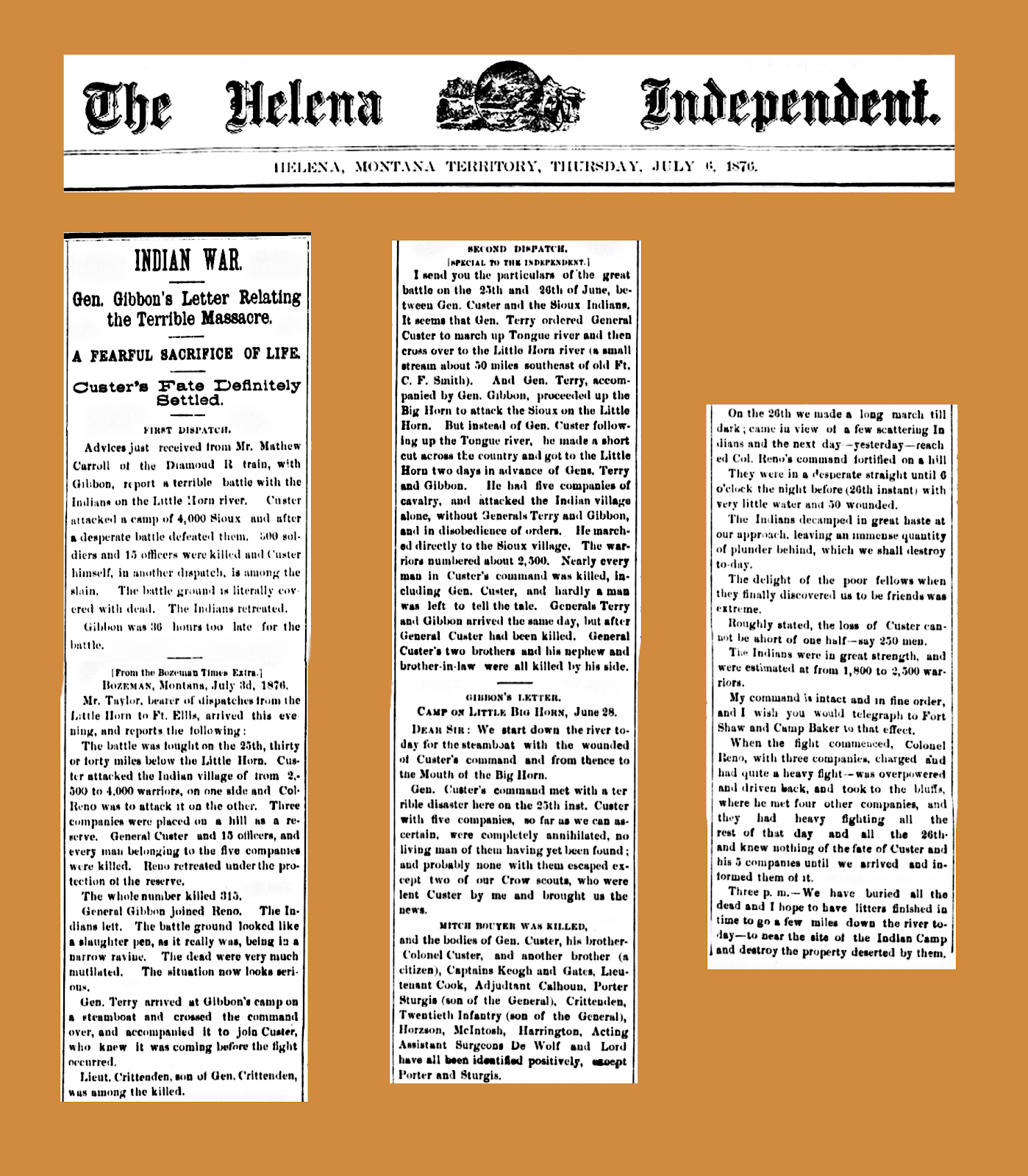
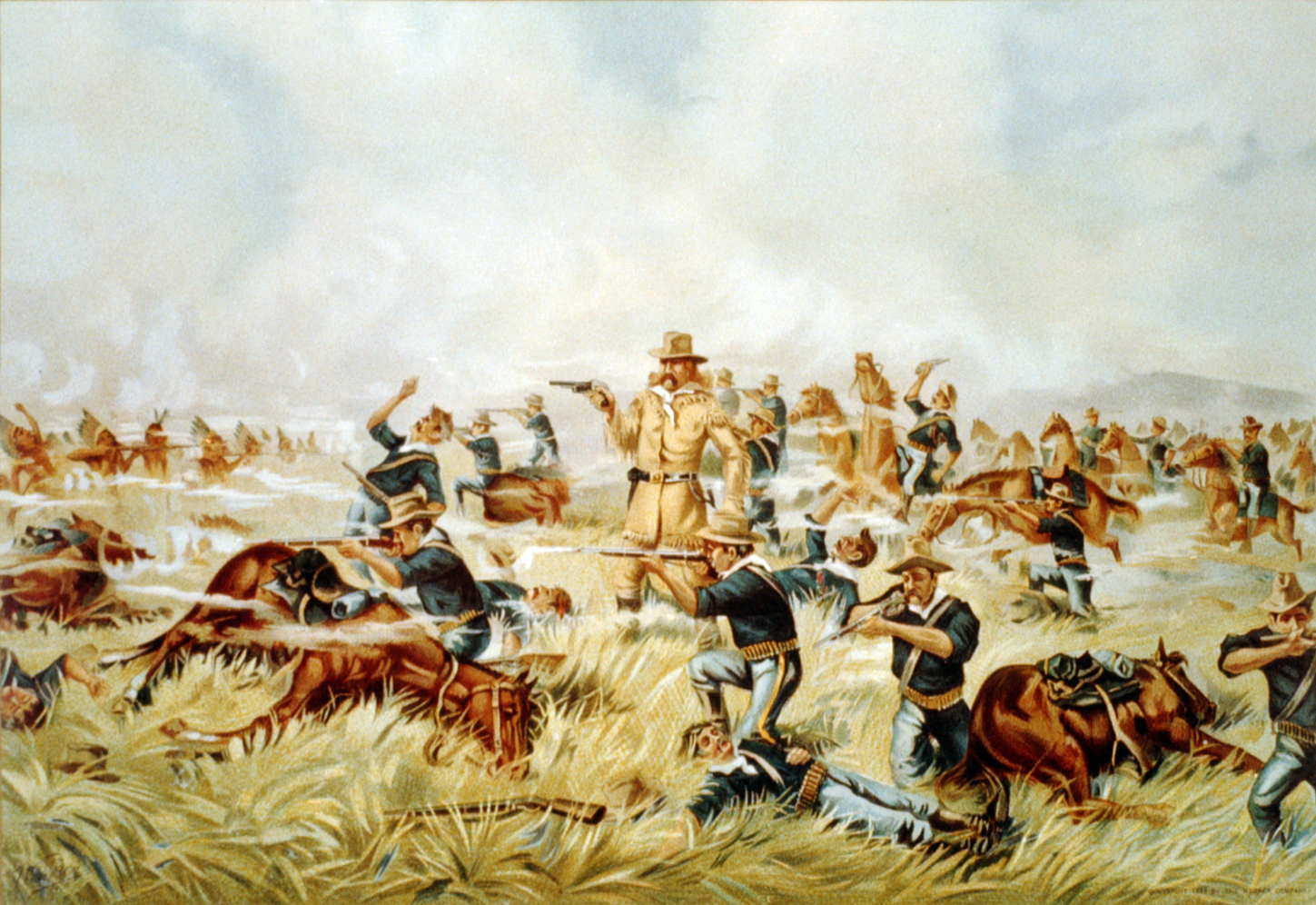
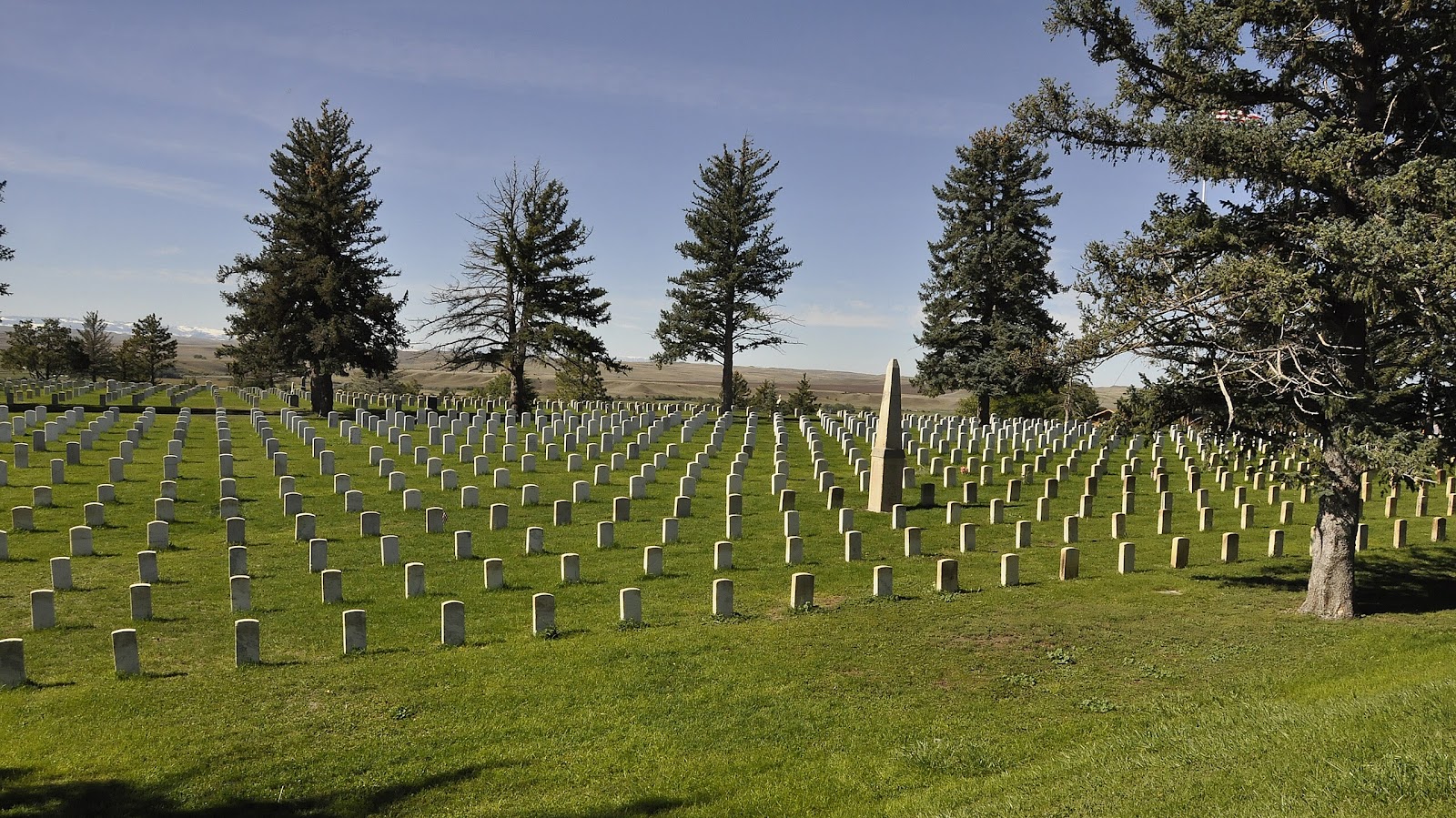
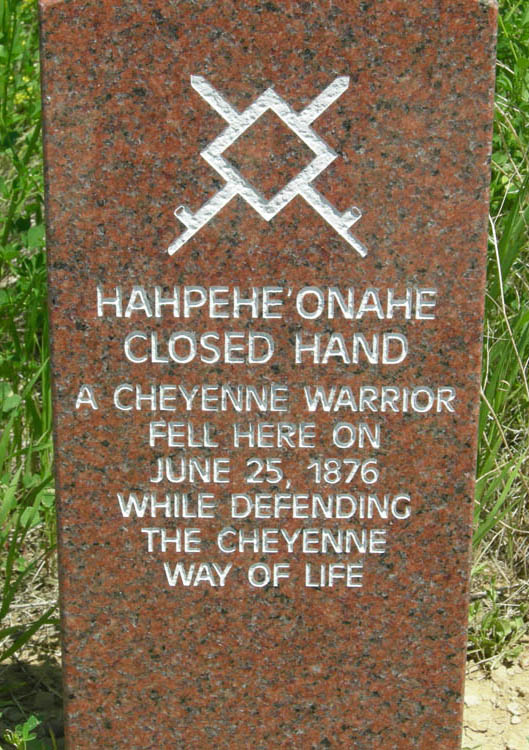
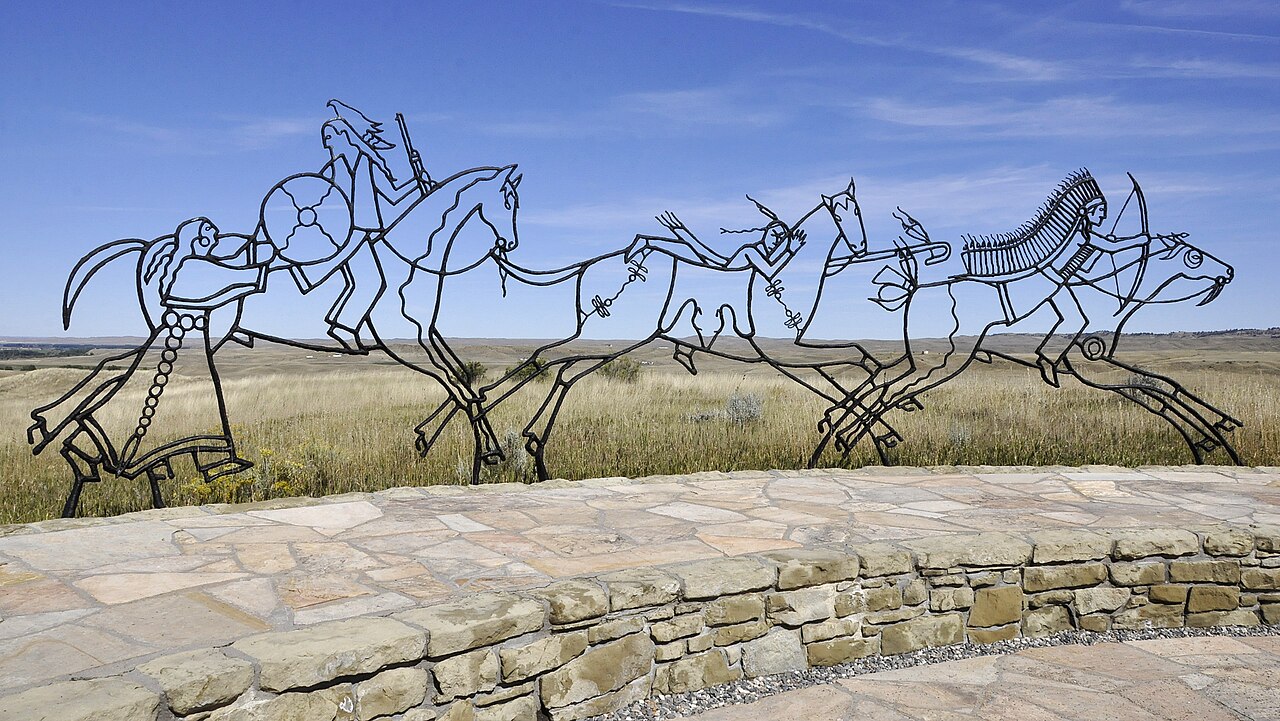
June 25, 1876 - first and the decisive day of the battle in the valley of the Greasy Grass River aka the Little Big Horn River. I have done numerous posts about the battle and yet when then anniversary comes I want to revisit and remember the heroic struggle between the native warriors of Lakota and Northern Cheyennes against the Progress embodied by the politicking commander, G.A. Custer, and his 7th US Cavalry horsemen and native allied scouts.

a view from the Custer Hill towards distant Big Horns


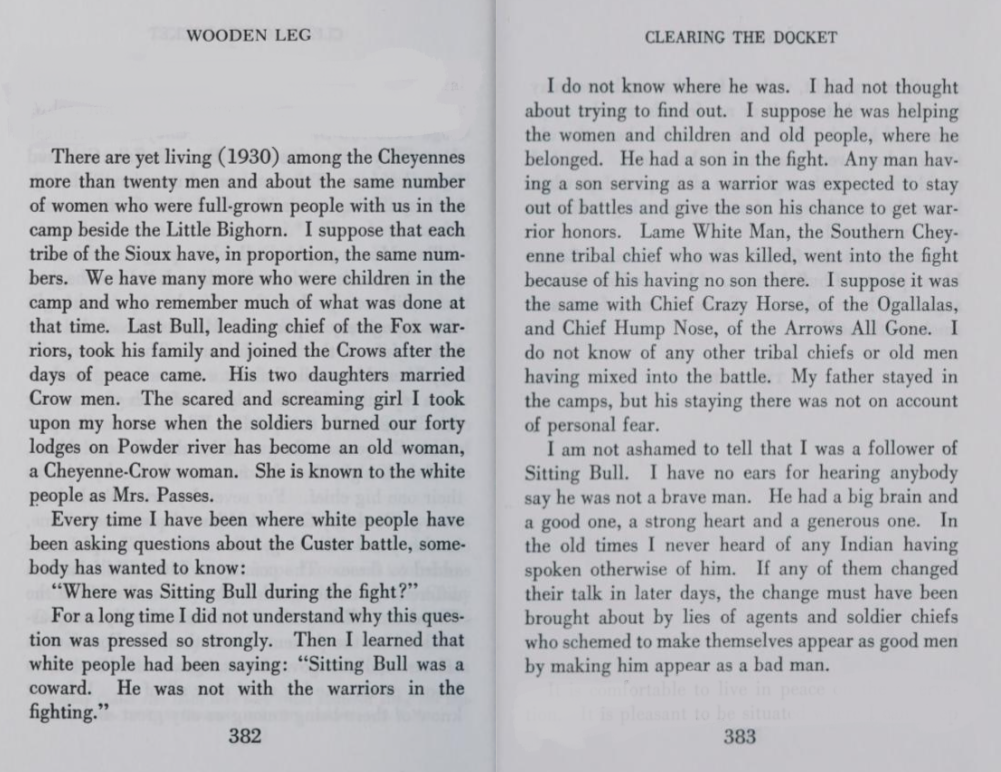
warrior Wooden Leg of the Northern Cheyennes recounts here his recollections about the battle. Perhaps one day I will return to the narratives etc described from this book.


Sitting Bull's recollections about the battle as printed by the New York Times, 1881.
The American Surveyor magazine  - GPS used to solve some Custer's Last Stand mysteries. 


Pacem aeternam

ps
texts about or related to the battle on Archive

Valete

Monday, September 4, 2023

The Life & Death of Crazy Horse, Oglala on Archive

 Salvete Omnes,


I am writing this post on the eve of the anniversary of Crazy Horse's death, who was a very brave warrior and blotahunka (war leader) of the Oglala Lakota/Sioux. Here are Frank Grouard's recollections about Crazy Horse. Or you can read Frank's biography on Archive.


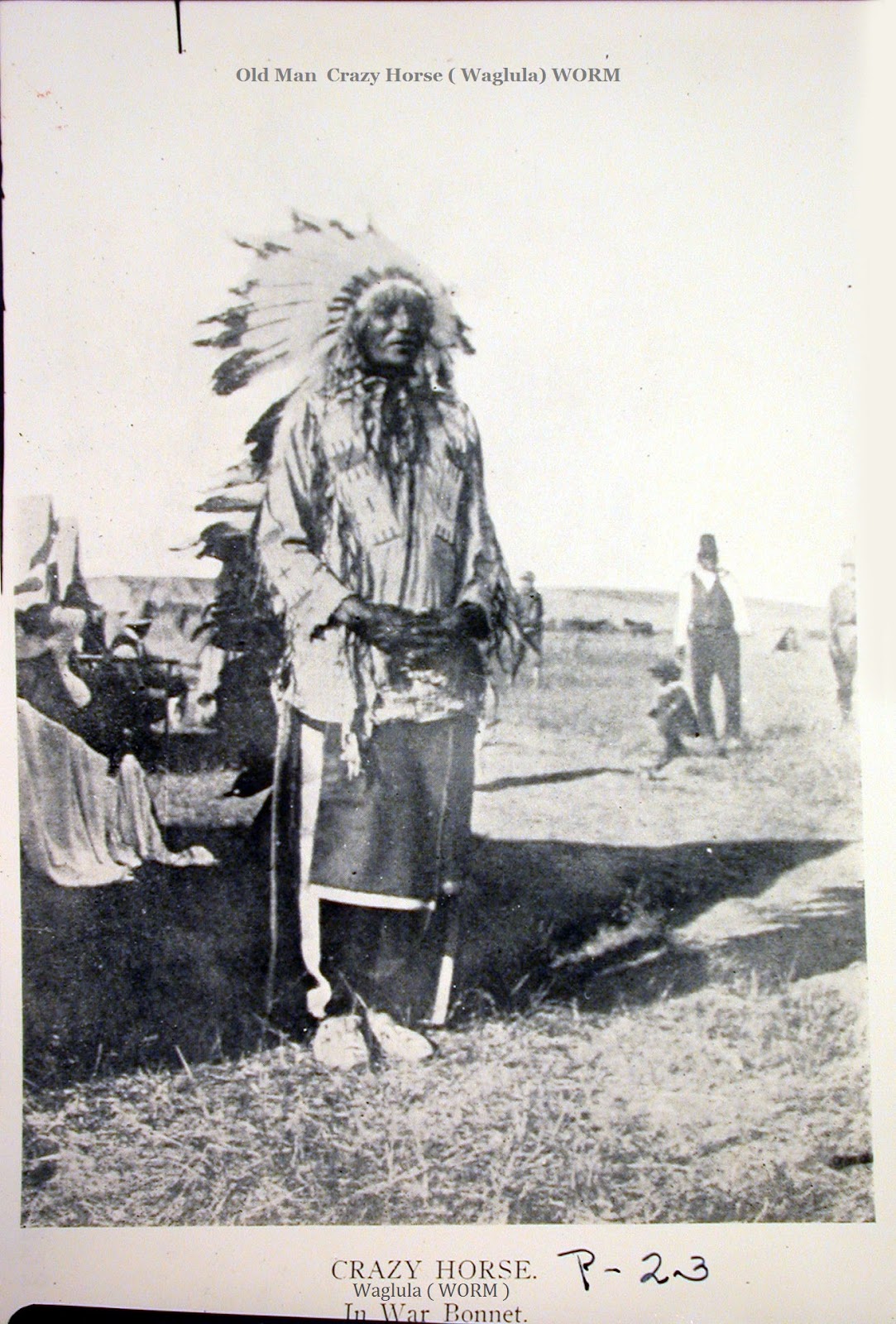
Crazy Horse, held by Little Big Man, was bayoneted and mortally wounded by the US soldier at Camp (later Fort) Robinson, Nebraska Territory, while in process of being detained and imprisoned by  the government on September 5, 1877. He died there, and his body was taken away for proper burial by his father, Old Man Crazy Horse/Worm.


On Archive - world library - there are books dealing with the life and in particular the tragic death of this Lakota warrior and leader. You can borrow them to read and peruse & study.


for example -
The life and death of Crazy Horse by Russell Freedman.

The surrender and death of Crazy Horse : a source book about a tragic episode in Lakota history - sources compiled by Richard G. Hardorff .

The Killing of Chief Crazy Horse : three eyewitness views - edited by Robert A. Clark.

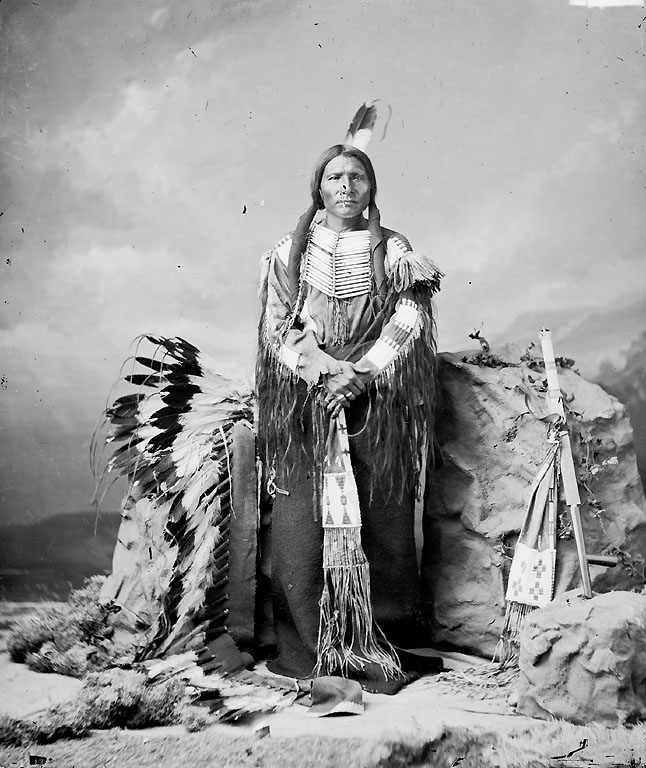
Touch the Clouds


He-Dog


Valete

Saturday, June 19, 2021

Rosebud Creek fight - 1876-2021

 Salvete Omnes,

 on June 17, but 145 years ago in the Montana Territory a battle was fought between the Plains warriors  representing Lakota Sioux and Northern Cheyenne bands on one side against general George Crook commanding  the so called Big Horn & Yellowstone expedition  consisted of  detachments of the US Cavalry and infantry aided by other Plains warriors of the Shoshone and Crow tribal bands. eg wiki page.

This battle is known as the battle of Rosebud or Rosebud Creek, but it is also known as the battle 'where the girl saved her brother.'


Northern Cheyenne Buffalo Calf Road Woman rescues her brother
Among the Cheyennes in this battle was Chief Comes in Sight, a brave man 
and a good fighter. His sister had followed him out to the battle.
 At the beginning of the fight he had charged the soldiers many times, and 
when they were fighting the upper group of soldiers, as 
he was riding up and down in front of the line, his horse was killed under him.
White Elk was also riding up and down the line, but was going in the opposite
direction from Chief Comes in Sight, and it was just after they had passed
each other that Chief Comes in Sight was dismounted. Suddenly White Elk saw
a person riding down from where the Indians were toward the soldiers,
pass by Chief Comes in Sight, turn the horse and ride up by him, when
 Comes in Sight jumped on behind and they rode off. 
This was the sister of Chief Comes in Sight, Buffalo Calf Road Woman 
(Muts i mi'u na')- 

The Cheyennes have always spoken of this battle by this name : 
"Where the girl saved her brother — 
Kse e' se wo is tan'i we i tat'an e." 
Young girl saved his life brother. 
[..] It was near where Comes in Sight was unhorsed that the 
Shoshoni with a spotted war bonnet was killed. 
 THE FIGHTING CHEYENNES, p 323-4.

on May 31, 1876 Crook's command consisted of -
Captain John V. Furey - chief quartermaster

Captain W.S. Stanton - the engineer officer for the expedition

dr. Albert Harstuff, assistant surgeon

15 companies of the 2nd and 3rd US Cavalry regiments - commanded by Colonel W. B. Royal

5 companies of the 4th and 9th Us Infantry regiments - Major Chambers commanding

there were 106 US Army wagons driven by teamsters  and additional 600 mules led by packers  also carrying supplies.

on June 14 some 261 Plains warriors joined the army command, that is this was a  contingent of the  Shoshone, brought to the camp  by Tom Cosgrove as US Army guide to the Shoshone and led by their chief  Old Washakie with his  85 warriors, and the 175 Crow warriors under various war-chief -including Plenty Coups, thus assembled to join the Crook's column in march, scout and fight.

 There were scouts who communicated between general Crook and the native allied warriors: Frank Gruard, Louis Richaud,, and Big Bat.


The entire Crook's command counted some 1,300 soldiers and warriors. 


The native defenders, i.e. about a thousand of the Lakota - Oglala, Minniconjou, Sans Arc, Brule, Hunkpapa etc-  and Northern Cheyenne warriors, apart from Wooden Leg, including Two Moon and Little Wolf -   under various chiefs and champions. It is said that the Oglala Lakota war leader or blotahunka Crazy Horse was the 'commander' of this native army, but we cannot say that for certain due to the nature of the Plains Indians warfare and their individual desire for glory and honor and martial deeds - the famous coup counting.


Archive world library has a military study(presented in partial fulfillment of the Master of Military Art and Science requirements) of the battle  by Richard I. Wiles - it is available for download or reading upon the site.
On the same site you can borrow many more books on the subject of this conflict and battle, which was a part of the so called Centennial Campaign of 1876.


there are various native accounts of this battle - eg Wooden leg - Cheyenne champion,  who might have discovered the invading column, and whose report lead to the first real scrimmage between a Cheyenne party under Little Hawk and the  entire encamped column on June 9th. 

Anyway, here you can have readily available accounts of the battle made by its participants, both US Army and native.


Famous Lakota warrior champion White Bull thus described, to Stanley Vestal, his attire that day:
'[..]a pair of dark blue woolen leggins decorated with broad stripes of blue and white beads, beaded moccasins, a long red flannel breech-cloth reaching his ankles, tucked under his belt over his regular loin-cloth, a shirt, over the right shoulder he had a thong  supporting a small rawhide loop (there were four small leather pouches of different kinds of earth medicine, a buffalo tail and an eagle feather) . around his waist he placed his folded black blanket and belted it with  his cartridge belt with a hundred cartridges. He borrowed a war bonnet from his brother in law, Bad Lake, it had a long tail of eagle feathers, while there were no feathers around the head of this bonnet. The bonnet had no protective powers and White Bull took it for its beauty. He was armed with his 17-shot repeating rifle.  He selected and saddled his fast horse, on its forelock and tail he tied an eagle feather, while the bridle-bit was adorned with an imitation scalp made from a woman's hair. Only horses which had been used to ride down an enemy could be adorned as such. Then he rode to his uncle Sitting Bull tent where the warriors were gathered.''*

White Bull sang a song -


''Friends, try your best


I do not wish my father to be made ashamed.

Because he is a chief''*

White Bull told a story of his personal encounter with a Shoshone warrior champion - 'he rode a fast bald-faced sorrel with white stockings, his horse tail was tied up in red flannel and a red flannel strip was tied about its neck. The Shoshone warrior had a cartridge belt and a repeating rifle'  White Bull killed the Shoshone's horse and counted a coup on the Shoshone warrior whom he lamed in the right leg, but this enemy survived the battle*

Valete


* Stanley Vestal, Warpath: The True Story of the Fighting Sioux Told in a Biography of Chief White Bull - can be borrowed from archive.org library