Showing posts with label Hans Suess von Kulmbach. Show all posts

Sunday, September 24, 2023

Hans Suess von Kulmbach - armored knights, horses, early hussar and stradiots lancers

 Salvete Omnes,


a little canter to early XVI century Polish ream where Northern Renaissance art life flourished in the old capital, in and around the royal court of Sigimund I Jagiellon. 

Apart from Michal Lancz there was another early painter in Polish Kingdom who also painted early hussars, stradiots and Rac, and knights and saints.

Northern Renaissance painter Hans Suess von Kulmbach was a prolific painter and draughtsman. 

In the old Limbach's church, nowadays a Lutheran Church, there is a surviving altar with his painting showing four military saints in period plate and chain armor-  


During the period of 1509-15 he was active in Krakow (Cracow), but returned to Nuremberg, where he died in 1522AD. He painted figures that resemble Rac or stradiots of the period. 


and the Adoration of Magi, in full glory at the top of this post,  is a mine to be explored

period bridle and curb-bit a a detail of the saddle's pommel


straditot and Rac lancers, ahorse with a curb bit

rowel spurs, langes messer and a stradiot attire

rowel spurs 


There is a painting at the old town of Sandomierz - Diocesan Museum. Probably painted in master Hans Suess' workshop in Krakow. But it closely follows the original master Hans' work.  Again, Rac lancers, stradiots and perhaps even Tatars (in those felt or sheep-skin  conical hats) . My thanks to Radoslaw Sikora for allowing me to use his photo of the said painting.


a sabre 

Polish bridle?  a curb-bit and double reins
lancers, their hussar lances with lively pennons 

more lancers and horsemen, including one Tatar handling the camel, a and 2 Tatars with arrow quiver? 

enjoy

Valete

Sunday, October 30, 2022

Michal Lancz aka Lantz from Kitzingen & Krakow 'Rac' Hussars

 Salvete,


the story of the early hussars is closely intertwined with the stradioti aka stradiots.
Costume, weapons - lance, shield, and a sword - and agile horses.
In our  Polish Crown realms the  name 'stradioti' was not adopted nor used in general, but instead the Polish kings and noble masters of those horsemen-for-hire used names like the 'Rac'[1] when hiring a horseman who was armed with a lance and the so called Balkan shield (rectangular shield with the upper left right er elongated upwards. He was to have an agile horse, a curved sword and perhaps a horseman's axe.  In sum, a rather light cavalry type of a horseman.

In the surviving Polish archives (thanks to the Germans who were busy torching them in 1939-45) there are some references to the early 'Rac' hussars prior to the 1500Ad, but the written evidence keeps on growing after 1500AD and proves that Rac hussars or horsemen armed and fighting in the 'Rac' manner were popular type of cavalry in the Crown army and private armies too, however the growth is rather weakly reflected in the period iconography.


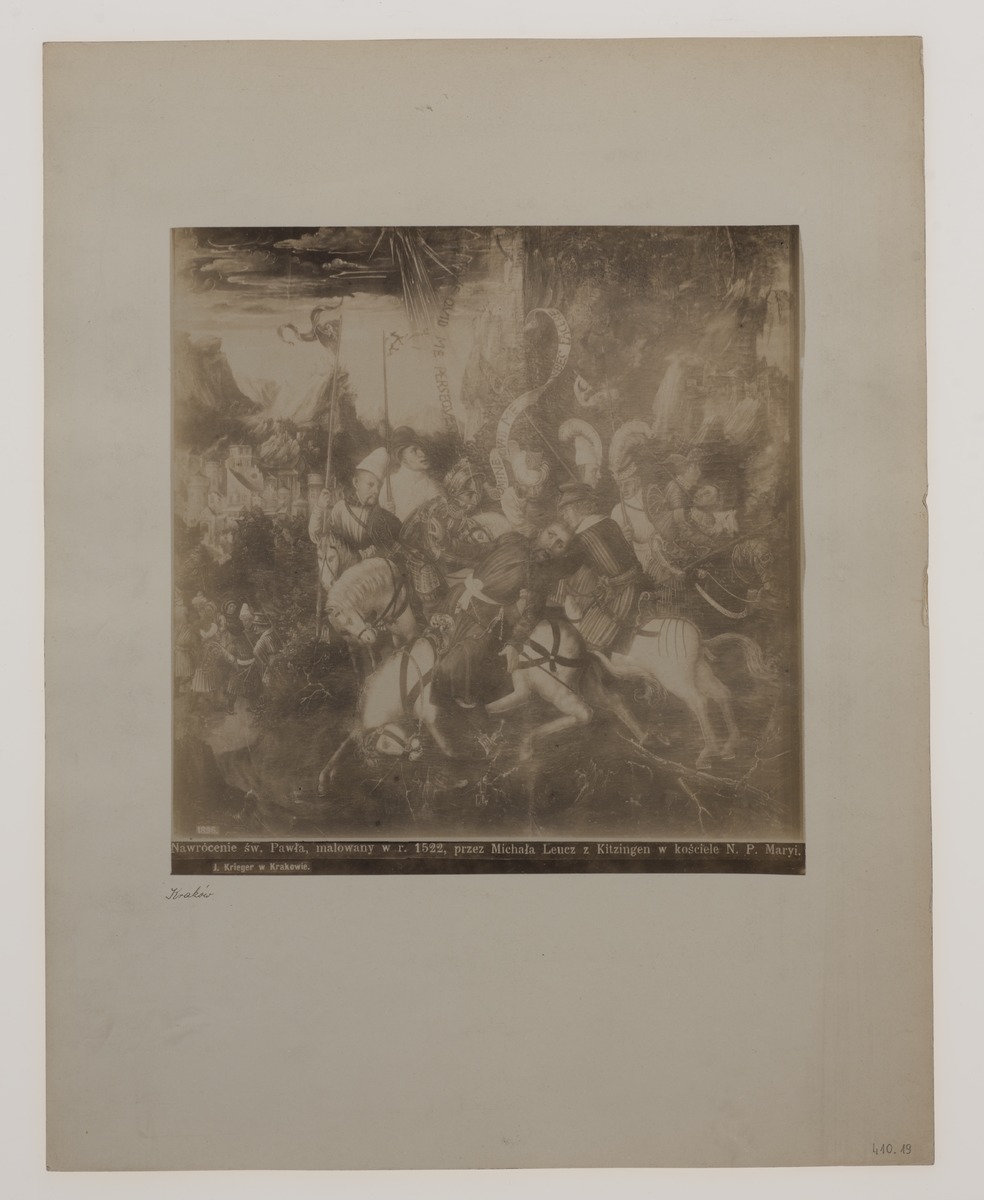
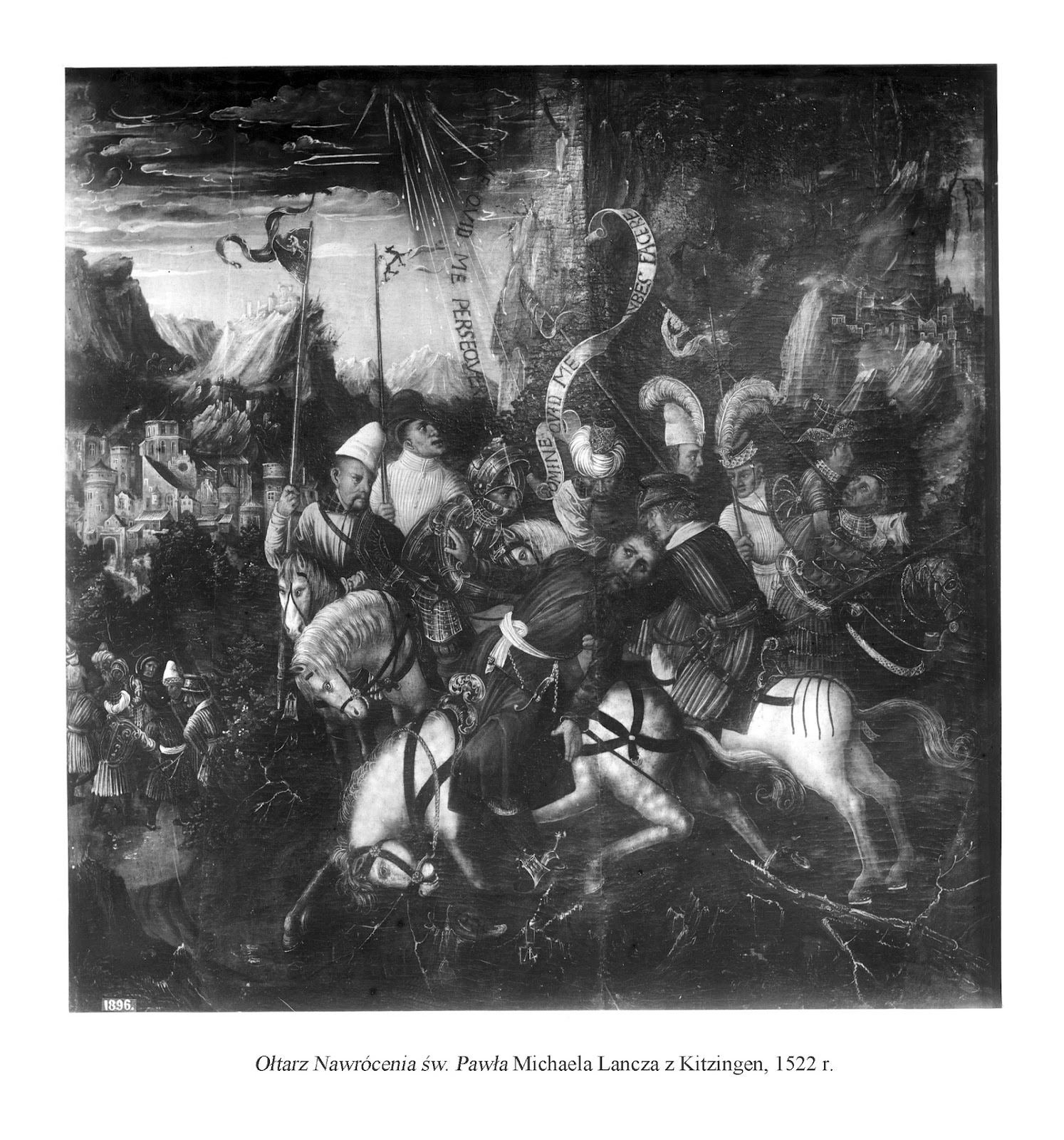
One of those rare iconographic sources could have been a small painting by Michal (Michael) Lancz vel Lantz(1470-1523Ad) painted circa 1522AD from Krakow.  It was titled Conversion of Saint Paul (see this wiki article) and was the central part of a small altar retabulum located at the Saint Mary's Basilica in Krakow (Cracow). The painting was looted  by the Germans in 1940AD. Since 1940AD the painting has been missing and is listed as a part of the Polish artworks taken by the Nazi Germany etc during the World War II.
Thanks to the photographs by Ignacy Krieger (taken in the last quarter of the XIX century) and by Stanislaw Kolowca in 1940, and Adolf Guzik also in 1940 we know how the painting looked and was placed in the retabulum and the chapel. Based on these photos the painting was reconstructed by Zofia Kaszowska from the Fine Art Academy in Krakow in 2003AD.


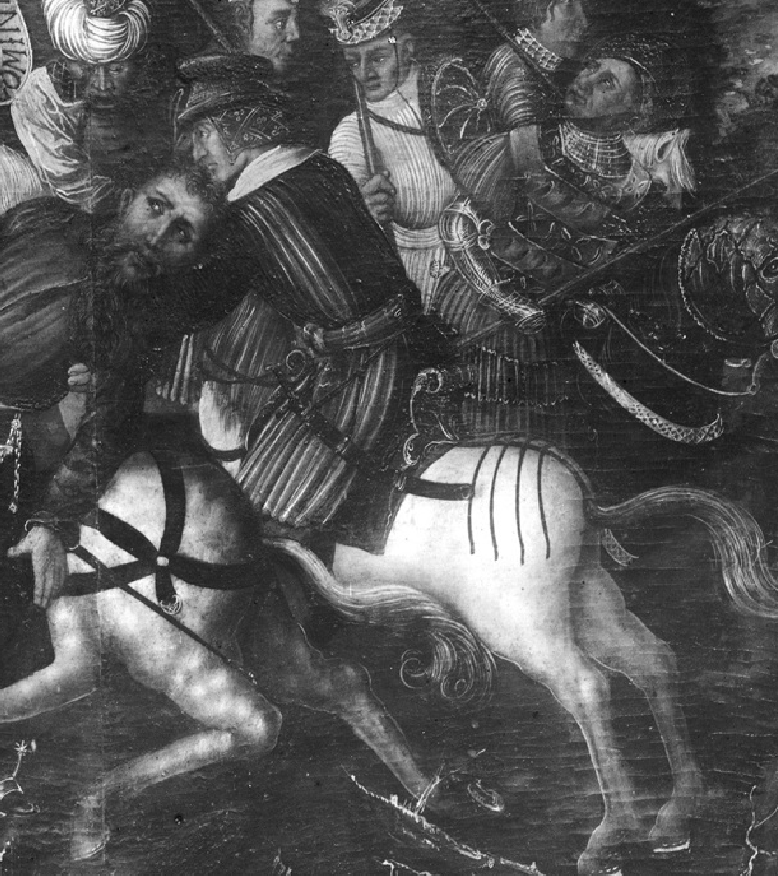
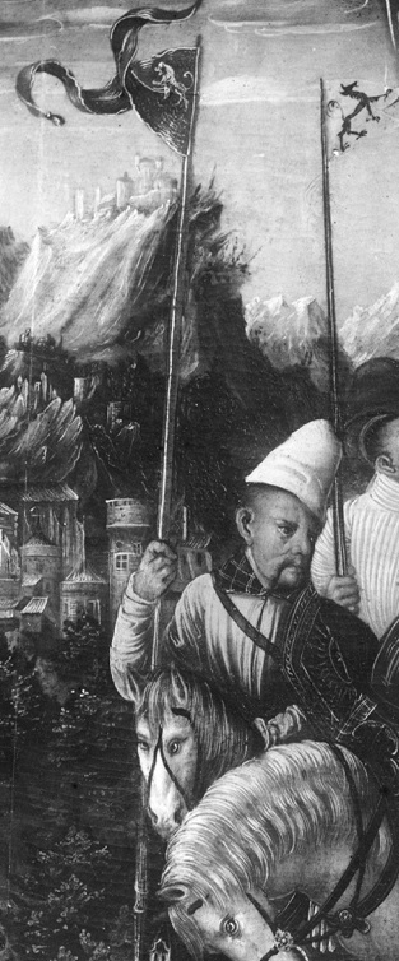
Here is more of the painting details - 

a typical Rac hussar wearing a soft kaftan, curved sword and tall hat. Horse with a typical horse tack.

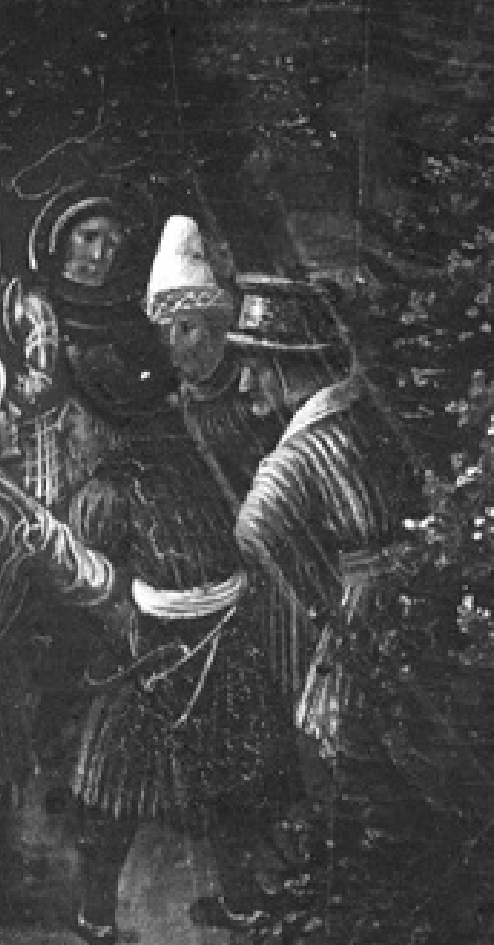
a Rac hussar with a featherless tall felt hat and lance, another lance armed hussar behind him

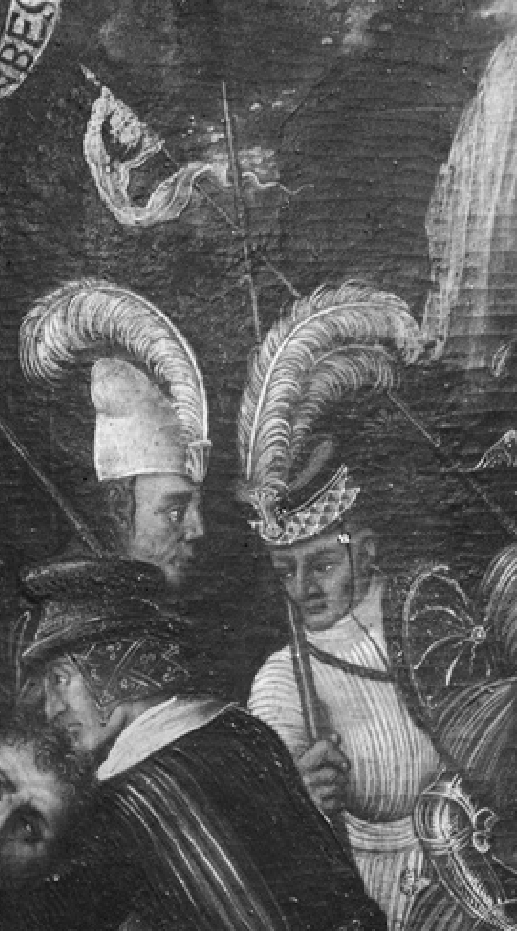
early Rac hussars with lances and shields, tall hats with feathers
early Rac hussars in soft kaftans and tall hat


Valete 


ps
[1]

Rac comes from from the Old Polish name for Serbians in general or from the name for the town of Ras, in Serbia, whose citizen were called Rascines already in the XII century AD,  while in Hungary the Serbian lands were called Racorszag, the land of Racs in the 1400s. See Grabarczyk .