Showing posts with label Tomasz Dolabella. Show all posts

Saturday, March 10, 2018

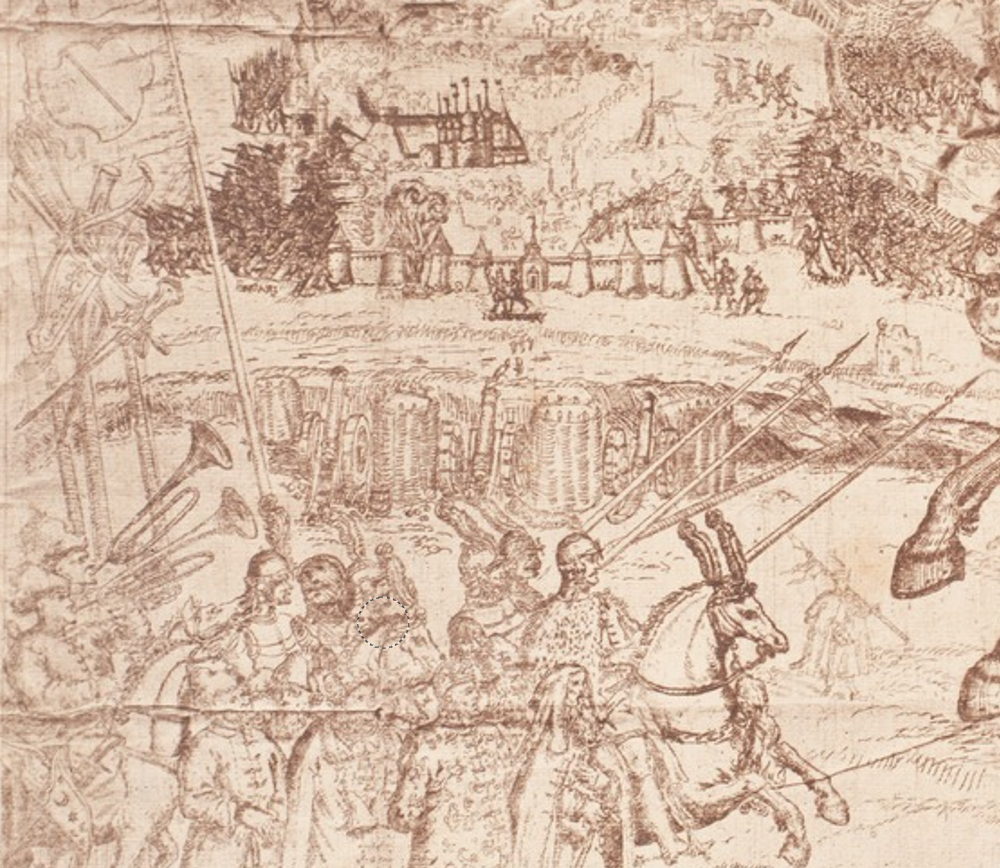
Sigismund III & winged hussars - by Tommaso Dolabella

Salvete Omnes,
yesterday I linked a photo album from PAU, today I found out that there is another version of this album from Polona (both part of Polish digital libraries or  FBC).
Looking at both scans I noticed I omitted 3 figures on the left of the royal eagle.
the two winged hussars on top appear to have wings, they are carrying kopia or winged hussar lances


His Royal Majesty Sigismund III, grandson of Sigismund I Jagiellon. The first Sigismund lost the city of Smolensk, and a 100 years later his grandson recovered it. He was a good king, just too bad he did not annex the bastardly Ducal Prussia, the sum of Polish sorrows in centuries to come.
glorious Sigismund III is riding in a Polish costume,  equipped as a winged hussar with a koncerz or tuck/estoq and hussar sabre, also his saddle appear to have been in winged hussar style 

winged hussars

a rider with wings and two other riders, also a Polish infantry soldier

Two officer wearing shishaq helmets, carrying a mace

nota bene for the first time I had seen this print in a publication titled Lisowczycy (The Lisowski Cossacks) by Henryk Wisner (by Bellona Publishing House) many years ago, then in a book on the Polish early modern equestrian portrait from 1986 edition  . Never in this detail
enjoy

Thursday, March 8, 2018

Zygmunt III Waza pod Smoleńskiem - Dolabella et husaria

Salvete Omnes,
[in Polish]
kontunujac w temacie staropolskim  to częścią albumu WYSTAWA STAROŻYTNOŚCI I ZABYTKÓW SZTUKI W KRAKOWIE. 1858- 1859  fotografii autorstwa Karola Beyera zcyfrowany i udostępniany na stronie PAU - Polskiej Akademii Umiejetnosci,  jest poniższa fotografia (dar mości Beyera dla PAN w Krakowie) przedstawiająca rycinę z początku XVII wieku  której bohaterem jest jego królewska mość Zygmunta III na tle odzyskanego od Moskwy  klucza do Litwy czyli Smoleńska.
Autorem sfotografowanej w 1858 roku ryciny był sam malarz i mistrz Tomasz Dolabella (lub któryś z czeladników czy uczniów z Dolabellii atelier).
 sam król, z wieńcem laurowym niczym antyczny zwycięzca, i z buławą wodzowska dosiada ze znawstwem( w pozie ujezdzeniowej zwanej być może 'galoppo a mezz'aria - bo kawalkatorska sztuka czyli  ujeżdżenie koni było domena Italczykow w tym okresie historii hipologii w całej chrześcijańskiej Europie) wierzchowca okulbaczonego w 'wyprawie husarsku' - z koncerzem pod udem, i pistoletem w olstrze - w butach z cholewami i ostrogami przybitymi do obcasów. Rumak powodzony jest jedna ręka na pojedynczych wodzach, z munsztukiem, ale ma także doczepiony do uzdy ozdobny łańcuch podwodny.

ledwie widoczni jeźdźcy, w tym jeden ze skrzydłem? , być może elearzy

oficerowie husarii?

chorągwie kopijniczej jazdy jaka była husaria

Po lewej stronie od doskonałego wierzchowca bojowego króla mamy grupę husarzy z kopiami eskortujących jeńców moskiewskich; są to pięknie pokazani towarzysze husarscy z kopiami, w rożnego rodzaju zbrojach i w lamparcie na ramionach,  z pocztowymi? po prawej stronie piechur - oficer hajduków?

a za nimi podążają muzycy chorągiewni grający na victorie króla i Rzeczpospolitej czyli trębacze husarscy.
karta z albumu z rycina

Valete!
ps
wieść gminna niesie, ze powyższa rycina, w doskonalej rozdzielczości pełna detali związanych z husaria ma się ukazać w planowanej na nieodległą przyszłość zbiorczej publikacji albumowej zespołu autorskiego Radosław Sikora et Radosław Szleszynski, czyli album pt Husaria Rzeczpospolitej II.

Wednesday, September 28, 2011

Polish-Lithuanian horseman circa 1634


Salve,
the palace- museum in Kielce, former residence of Polish bishops built originally for the bishop of Cracow and Crown chancellor Zadzik, has a collection of ceiling paintings, works by the Cracow based Tomaso Dolabella's workshop, depicting bishop Zadzik  activities of the 1630s.

The paintings are incredibly rich in artifacts of martial cutlure of the Polish-Lithuanian Commonwealth. One ceiling paintings depicts the king Wladysław IV Vasa triumph over the Muscovite Russia at the Smolensk War 1632-34.

I have some very bad images of two of  these paintings - like many other artworks related to the former glory of Poland - they are not really well know and not included in the art history books related to Poland etc.
Yet I decided to do a little painting of the rider that is shown in the very foreground of the painting depicting King Władysław IV and his colorful army (the brack and white fragment from this painting has been show in Richard Brzezinski's work Polish Winged Hussar).

I attached two different copies of the rider I have on my computer, to the right of my two sketches. As you can see this rider has some unusual attire, multicolored  - not dissimilar in its unusual mix of colors to the outfit worn by prince Janusz Radziwill  and his retinue in the painting by Westervelt (I have sketching that one too) -  is caring what appears to be  a  ''koncerz'' [tuck (estoc)] under his right thigh. Yet his koncerz  or broadsword appears to have a very Western hilt, so perhaps this is a rapier?
He appears to have a single feathered wing attached to the left side of his saddle, perhaps to the cantle?
He is riding very short (with short stirrups) in Tatar fashion, his horse has a very nice example of Polish bridle tack of that period, with a white heron feather? The top of horses back is covered with a very small shabraque, perhaps it is a ''mituk'' - particularly short horse shabraque used between XVI century until the end of Polish-Lithuanian Commonwealth.
well, these are my sketches and first attempts at painting him.
...

Sunday, March 14, 2010

Ceiling Painting from the Kielce Castle I

Salve,
Introduction 
One of the most interesting paintings of the Polish-Lithuanian Commonwealth concerning horses and riders comes from the Kielce Castle http://www.mnki.pl/pl/s,27,Dawny_Palac_Biskupow_Krakowskich.html . This castle was built for the Cracow bishop Jakub Zadzik, by his Italian architects and builders Poncino and Trevano, between 1637-1644 AD. Inside, our good bishop had many tapestries and paintings hung, while the ceilings were decorated with historical scenes of his times, concerned obviously with Polish history he was participant of. The ceiling paintings, and most likely many other paintings found in the castle at the time of its glory, had been painted by the Cracow workshop of Venetian emgirant, Tomasz  Dolabella.  Tomasz (Tommaso) Dolabella http://www.pinakoteka.zascianek.pl/Dolabella/Index.htm  http://commons.wikimedia.org/wiki/Category:Tommaso_Dolabella?uselang=pl was at first a royal painter for our Sigismond III Vasa but the he fell out of royal favors and stayed working in the royal city of Cracow, working for the Roman Catholic Church and eventually for the king Wladyslaw IV. Most of his surviving works are religious in nature but some show the most remarkable knowledge of Poland's life, fashions,  historical events and military equipment. http://upload.wikimedia.org/wikipedia/commons/3/39/Dolabella_Horseman.JPG
One of  the lost paintings showing historical events is the coronation of Maryna Mniszech as Tzarina of Muscovy, know only in black and white photograph. And this painting hopefully will be subject of more posts, but for now enjoy it as it is:

Tomasz Dolabella being Venetian of the Veronese, Tintoretto, Bassano etc traditions was a master of color, but his non-religious subjects and the full extend of colors and splendors can be seen in the surviving Kielce Castle ceiling paintings. Since this blog is all about the horses and horse tack, then especially the one painting  concerned with the victorious Smolensk war of our king Wladyslaw IV  http://en.wikipedia.org/wiki/W%C5%82adys%C5%82aw_IV_Vasa  is particularly suitable to show his workshop mastery of art.

The set of photographs showing the Smoleńsk  painting along with another painting depicting the negotatiations between Sweden and Poland, come from this Mateuszmar  collection on Picassa http://picasaweb.google.pl/MateuszMarmajStawowy/PaAcBiskupiWKilecach# however the actual photographer and owner of the said photos is Krzysztof Małys.

                                                             ***

My favorite fragments are these two photos, subject to further  analysis here, I hope  :
Photos by Krzysztof Małys