Showing posts with label hajduk infantry. Show all posts

Tuesday, November 11, 2025

Chocim 1673 AD - Jan Sobieski's infantry and cavalry victory

 Salvete Omnes,


On November 11, 1673AD Polish-Lithuanian Commonwealth armies under the command of Crown  hetman Jan Sobieski, aided by many capable senior commander like Lithuanian grand  hetman Michal Pac and junior commanders like Mikolaj Sieniawski, destroyed the Ottoman army, commanded by Hussein Pasha,  at Chocim (Khotyn in Ukraine now, by the will of Joseph Stain since 1945). Our king Michal Korybut Wisniowiecki died on Nove.10, 1673.
Polish historian D. Orlowski estimated, in his popular book Chocim 1673 (2007), that there were 27 thousand Crown soldiers, the Grand Duchy of Lithuanian brought close to 7 thousand soldiers. In total some 34 thousand soldiers, 65 cannons and 1 mortar. There are still the armed servants from the noblemen soldiers retinue, and we don't know how many of those participated in the storming of the Ottoman earthworks and camps. We have to take into account the 4-5 thousands of the Moldavian and Vallachian soldiers who came over to the Polish side with their rulers. Their infantrymen must have participated in the storming, capturing and dismantling of the Ottoman earthworks.

Ottoman army under Hussein Pasha, according to the Polish historians, were about 30-31 thousand strong, well provided for with munitions, supplies and fodder for the winter. They had a 25-30 artillery pieces and were in contact with their commands in Moldavia and  Kamieneci Podolski, and it is thought that the some Moldavian and Vallachian troops who had stayed with the Ottomans. They could not count on the Tatars, because these Ottoman vassals had been attacked by the Kalmucks from the  Don steppes, and Zaporozhian Cossacks from the north and west. 

I should add that before the battle there were tournament like duels and fights (harc in Polish) between bravest and most audacious horsemen from both sides. Two Polish notable knights died in these duels on the 9th of November, namely the Sieradz sub-cupbearer Jedrzej Modrzewski and leutenant Florian Maj. Polish-Lithuanian tried to take the earthworks defended by the jannisaries on the 10th but after a number of  very bloody engagements Polish attackers had to withdraw from the Ottoman fieldworks. Polish side maintained formations and martial spirit during the night of 10/11th  and thus Ottoman side had to stay in armor and with arms. 

In the morning of the 11th Polish artillery opened fire - the chroniclers say a quarter hour in duration of artillery fire. At 8 A.M.  in a surprise attack the  Polish infantry regiments and companies, camp servants and dragoon companies stormed the earthworks. with Jan Sobieski with a sabre in hand walked ahead of   his own dragoon regiment, yelling - 'for the love of God, for the [Christian] faith, and churches, for Amor Patria (Love of Homeland), with hope in God attack them courageously.'  many great infantry officers and other commander like the Crown artillery commander Marcin Katski,  Stefan Stanislaw Czarniecki, Korycki, Zebrowski, Denhoff, Tetwin, Heydepol, Pietrzykowski, etc. The rest is history 
We should note that Hussein Pasha, with about 5 thousand spahis cavalry, had made across the Dniester bridge before it collapsed, and found refuge in Kamieniec Podolski, with Halil Pasha.  But 8 thousand spahis perished, 6-8 thousand of jannissaries were cut down, many good commanders were killed or died from the wounds. 3000 Ottoman soldiers were taken prisoner.  
Both the small fort on the Turkish side of the river and the Chocim castle (Nov 13th) were taken.
Jan Sobieski marched his Crown army into the Turkish lands, Moldavia, and the war went on, and it was not going as good as the victory at Chocim promised. Moldavia was to become the object of Sobieski-Ottoman struggle and warfare for the next 20 odd years. But that is for another post. 

 
 The next Spring Jan Sobieski would become Jan III after the free election by the noblemen at Wola, then a village near Warsaw.

Saint Martin in the foreground, with Jan Sobieski and his army at Chocim in the background. 

 I played a little bit with this Vasa battle-flag and changed the Vasa coat of arms to Janina, Sobieski family coat of arms. 


. Jan Huchtenburg painting battle  at the National Museum, at Warsaw.


.

Jan Pasek, who was not at the battle, observed  in this Memoirs:   'During this[1673] the Turks did no leave the field [of war], but entrenched themselves at Chocim and encamped there. [..] with the Tatars already having gone from them. In inaudio exemplo (unheard of example) our side decided to take the entrenched camp, first they came close to the fieldworks, had the entire camp circumcirca (all around) surrounded. The  infantry climbed the walls' of  Turkish earthworks, and destroyed these walls nemine reclamante (with nobody protesting), since the Turks did not even fired their artillery, yet they had so many artillery pieces [at their disposal]. Our Lord must have blinded the pagans and taken away their hearts[courage]. for they received our men, who were clamoring to get to them, as modeste as if a guest had been arriving and not the foe.

Polish researcher-historian Zbigniew Hundert published an article [in Polish] on the winged hussar companies at Chocim 1673 - available on Academia

Like I write above, many thousands of men and horses died in this struggle, and when the bridge across the Dniester River, from the Turkish entrenched camp to the Moldavianside where there was a small Turkish fort, collapsed under the weight of men, horses and equipment, many more Ottoman soldiers and servants perished in the icy waters of the mighty river. Many perished from the Polish light cavalry pursuit and also from the wrath of the Moldavian peasantry. After the victory and march either back to Lwow or march into Moldavia,  the Polish-Lithuanian camps saw many thousands of horses die from the  very cold weather conditions etc. 

Perhaps some other time I will write about some aspects of this battle - like the booty and captives and animals taken by the victorious side.

Happy 11th to all Polish people around the globe and to all Veterans

Valete

Tuesday, July 25, 2023

Ujscie - July 25, 1655

 Salvete Omnes,

not only victories should be remembered, as there are lessons in defeats and debacles. 


In Polish history the 25th of July is one such day of infamy and defeat, namely the infamous battle and capitulation at Ujscie falls on this day. 
One of those anniversaries that were shameful for the Kingdom of Poland army & Greater Poland's nobility, one of the worst in their history.


The Ujscie debacle marks the beginning of time of Sorrows in Polish-Lithuanian early modern history known as 'Potop' (the Deluge) in our history, when rebellious Zaporozhian Cossacks, Muscovites, Transylvanians, and Swedish armies pillaged, raped and burned parts of the vast Commonwealth State.


The Swedish army was commanded by marshal Arvid Wittenberg, born in the Swedish province of Finland, who contracted  and organized his mostly German army at Dabie near Szczecin (Stettin) - this land was a newly acquired Swedish province  from the Griffins' Duchy of  Western Pomerania.


One Scottish solider of fortune 20 years old Patrick Gordon, later a memoirist and eventually a Russian imperial marshal and collaborator of tsar Peter the Great,  joined the Swedish forces there, becoming a reiter cavalryman, along with his fellow Scots - one day we could visit his diaries, available in Russian and English.
 This Wittenberg Swedish army, consisted of 6,000 cavalry and dragoons, and close to 8,000 infantry and artillerymen, left Swedish Pomerania, crossed the Brandenburg-Prussian Pomerania by consent of its ruler, the duke of Prussia and  Polish vassal,  and finally on July 21 crossed into Polish-Lithuanian Commonwealth. 


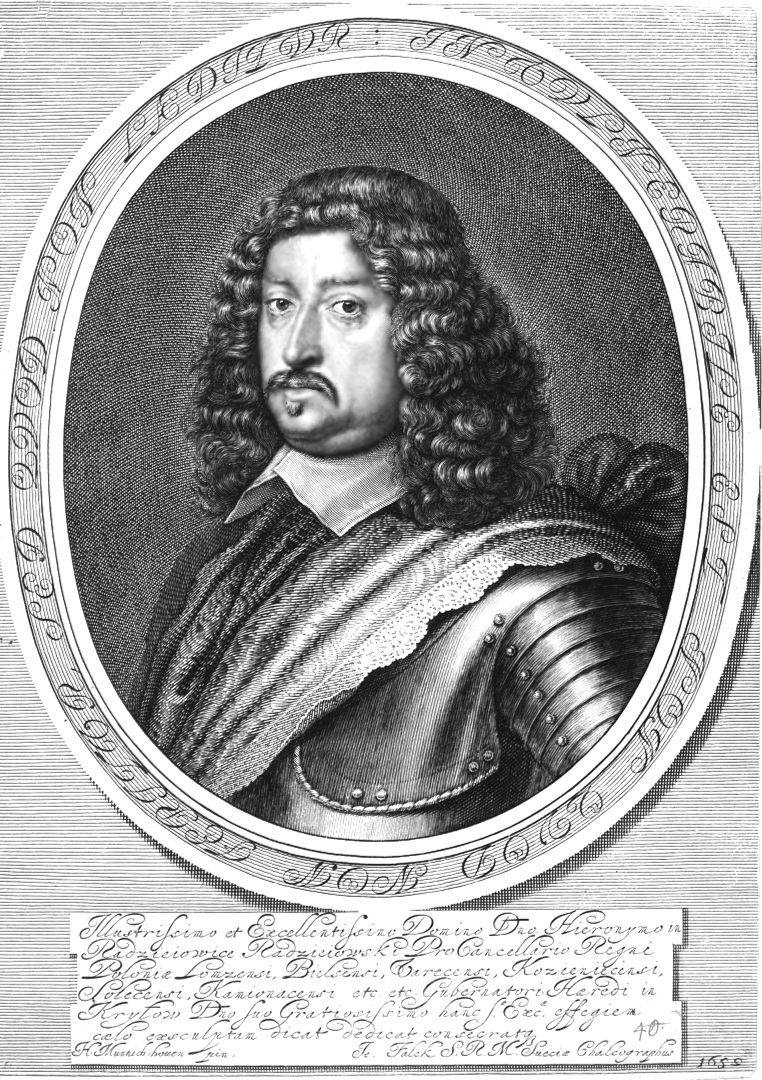
 Polish nobleman and disgraced courtier Hieronim RadziejowskiJunosza coat of arms, led this Swedish army towards his native land, against his king and his God, but not without the support of his fellow noblemen.


Approaching the Notec River they encountered a sizable and entrenched Polish army, consisting mostly of the noble levy militia (pancerni or winged  hussar-like with retainer), privately raised cavalry and infantry companies, and 1,400 hajduk & wybraniecka infantry, concentrated at the Notec fords  at Ujscie (confluence of the Gwda river and Notec)  and Wielen (with its castle), strategically protected by the swampy terrain and forests of the Notec valley, lack of roads and other smaller river  crossings. But there was also a detachment to the north in Pila and far to the north at Drahim (see below). They lacked in artillery and infantry, albeit noble retinues had many an armed servant able to serve in the trenches and radboauts


 But they really did not fight the invaders but for some infantry scrimmages etc on the 24th, while the old medieval fortrest, the starost castle at Drahim , was abandoned by its 400-strong Polish infantry  detachment already on the 21st, and Wittenberg took it without any fight. Do note that in the coming months numerous Polish strongholds - castles, fortresses and towns-  would surrender to the invaders, often without the fight. soon whole divisions of the Polish army would surrender to the invaders, one of the commanders who joined the Swedish invaders was Jan Sobieski, our future king.


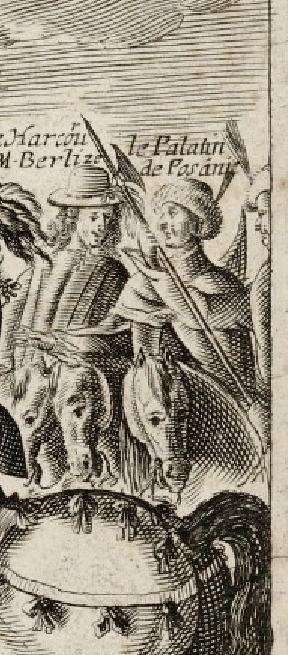
The eternal shame was shared or perhaps  belonged more appropriately to a Greater Poland magnate, voivode of Poznan Krzysztof Opalinski, Lodzia coat of arms,   who at that time had been in opposition to the Polish king for 5 years, and was a noted poet and satirist. 

Opalinski actually had brought his own winged hussar banner to the Ujscie camps, along with his private infantry and other retainers and servants. There are some sources that claim his winged hussar banner was sent to engage the Swedish forces but due to the lack of the cavalry-proper terrain could not attack them and withdrew. 


Opalinski's co-commander voivode of Kalisz Andrzej Karol Grudzinski, Grzymala coat of arms, belonged to the same anti-royal court fraction of the Polish elites (and Lithuanians had their Radziwill anti-royal camp). and thus both Opalinski and Grudzinski  were apparently voicing the opinion and convictions of many of the Greater Poland's nobility, many of them fed up with His Royal Majesty Jan II Kazimierz and his wife queen Maria Louise Gonzaga's politics and machinations,   so this Greater Poland noble militia army decided not to fight against Witternberg's army. 


Sources and historians provide that there were 15 thousands Polish soldiers concentrated  among the camps at Ujscie and Wielen. The Greater Poland's  noblemen, perhaps as many as 13 thousands,  officially surrendered and  left their camps for their estates the following day, 26th of July onward. But the act of capitulation was singed by Opalinski,  Grudzinski, and about 800 magnates and noblemen, and for the next several months more and more noblemen would sign for the Swedish king's protection known as the Salva Guardia.  


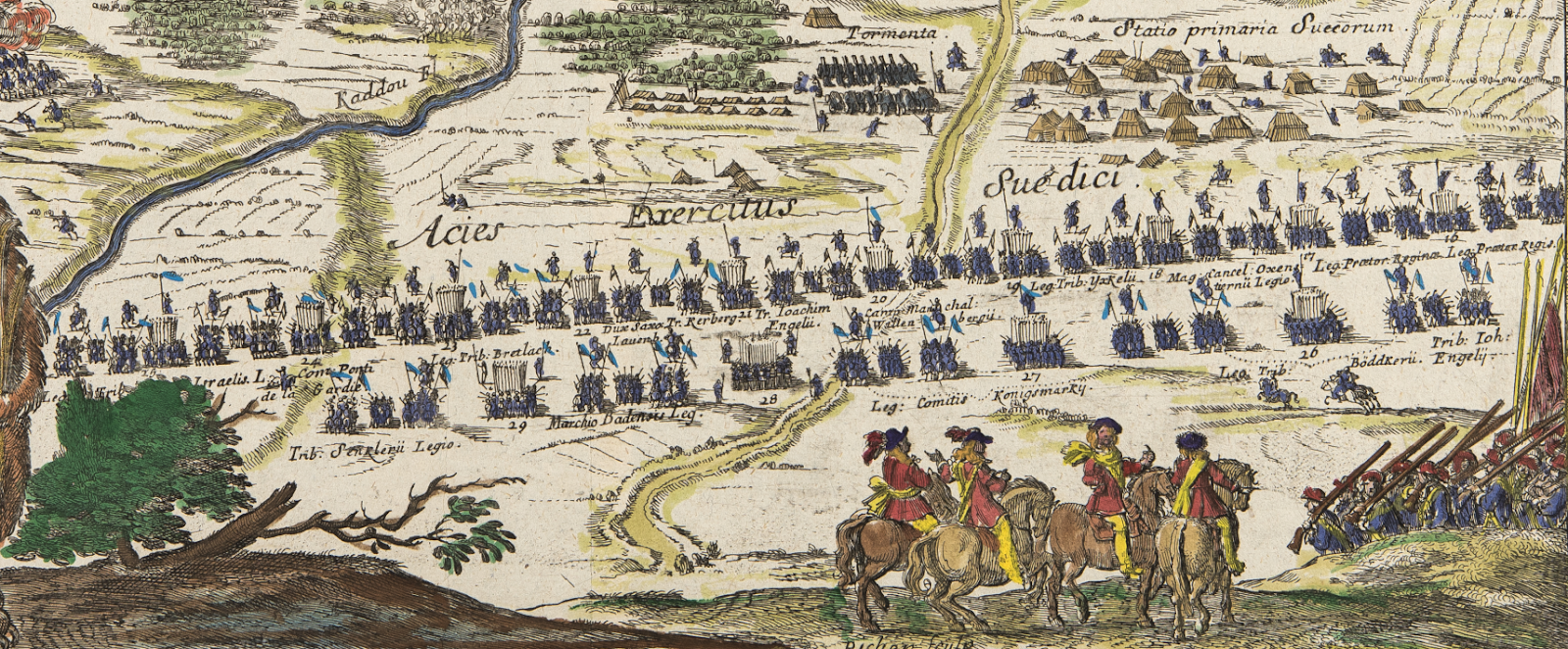
Swedish royal engineer and  participant of the war Erik Dahlberg created  a map of this first major battle of the Polish-Swedish war 1655-60 (he was not present at Ujscie, joining the Swedish army in 1656). There are mostly mounted Polish units and armed with lances etc  at the top of the map.


The defense of the monastery of Jasna Gora near Czestochowa (late November early Decemebr 1655) would mark the beginning of the turning of this  shameful tide (there were exceptions like Czarniecki  or Lubomirski, or Zamoyski,  & the lesser nobility and peasants). But four more years of war with Sweden would be facing Polish-Lithuanian realm. 

Valete

Tuesday, July 5, 2022

Klushino 1610

 Salvete Omnes,

precisely yesterday but in AD 1610 Polish Crown grand hetman Stanislaw Zolkiewski leading a small but chosen army defeated the Muscovite army near the village of Klushino. 

It was a grand victory... and led to some momentous changes in Eastern Europe.
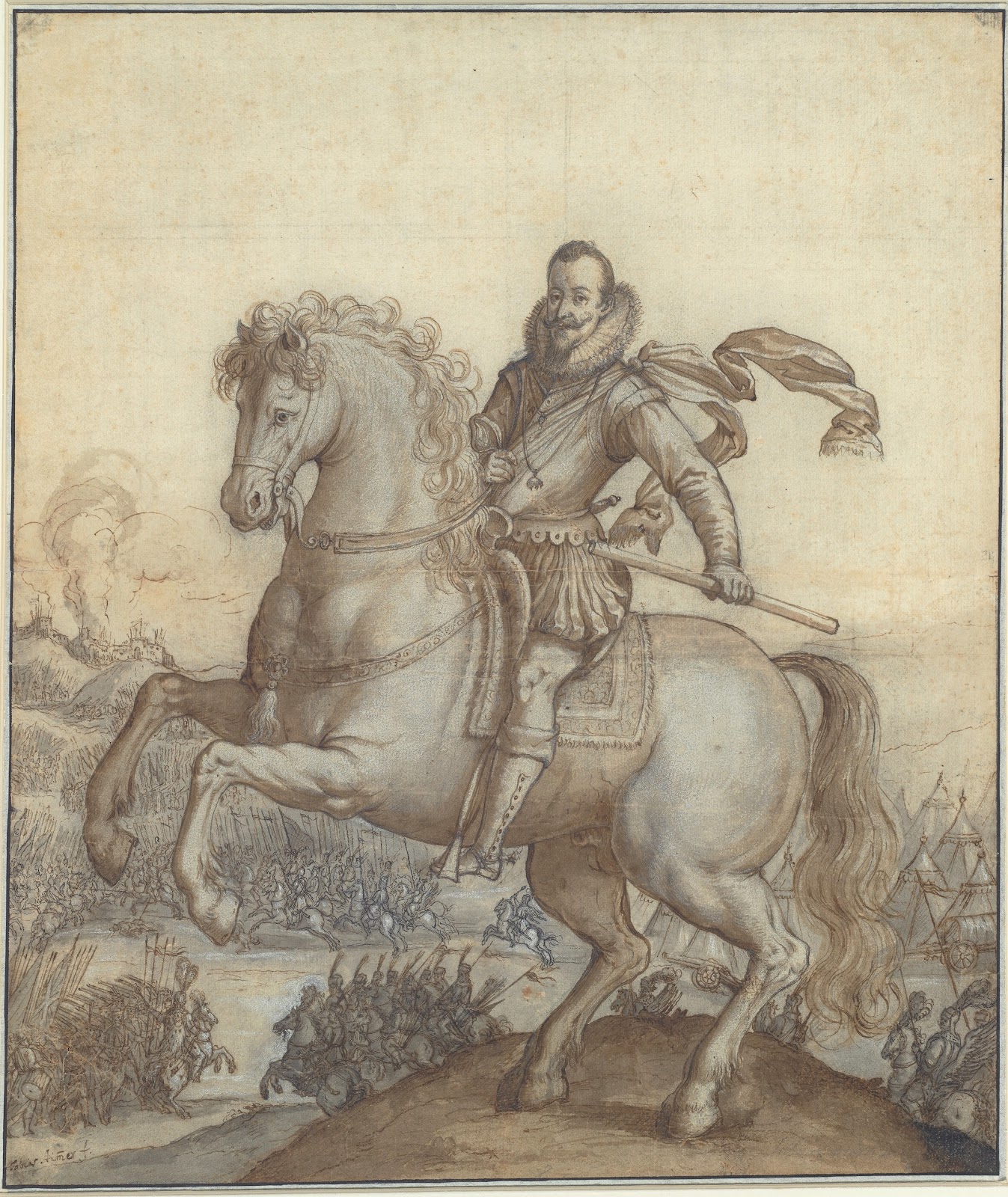
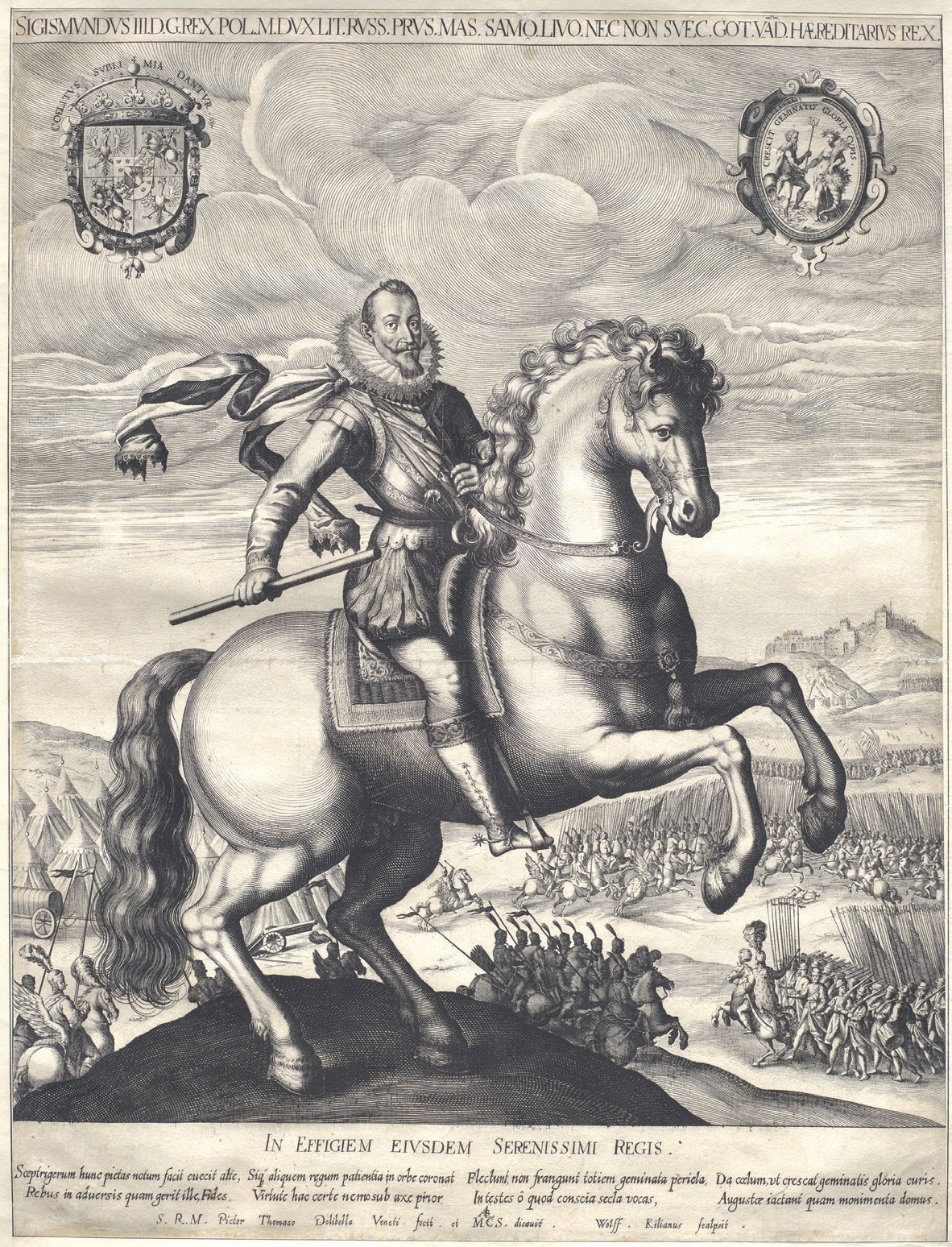
Today I was looking at the Wiki Commons- Sigismund III Vasa gallery and became pleasantly surprised to 'discover' this image - attributed to Monogrammist ASL and showing our king victorious with Smolensk in the background.


this well  known print (made after the lost Tommaso Dolabella painting) : 


...
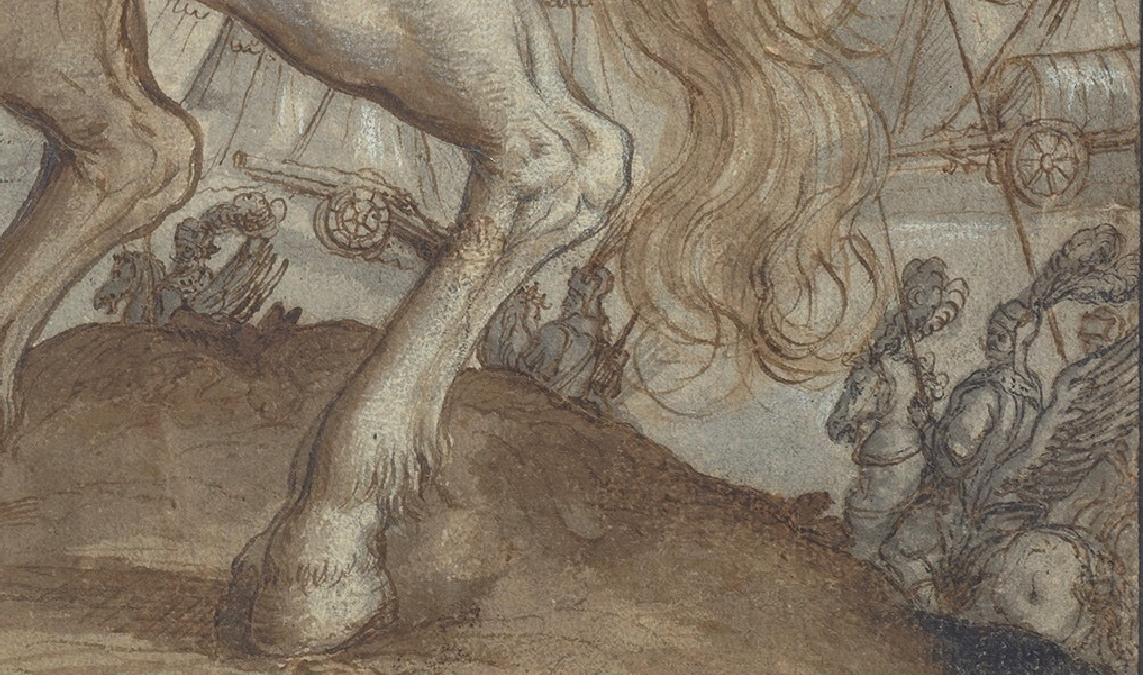
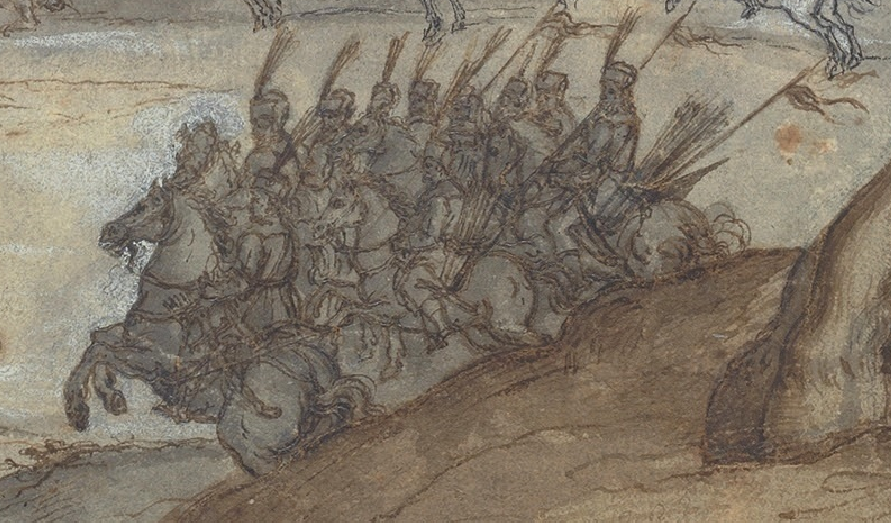
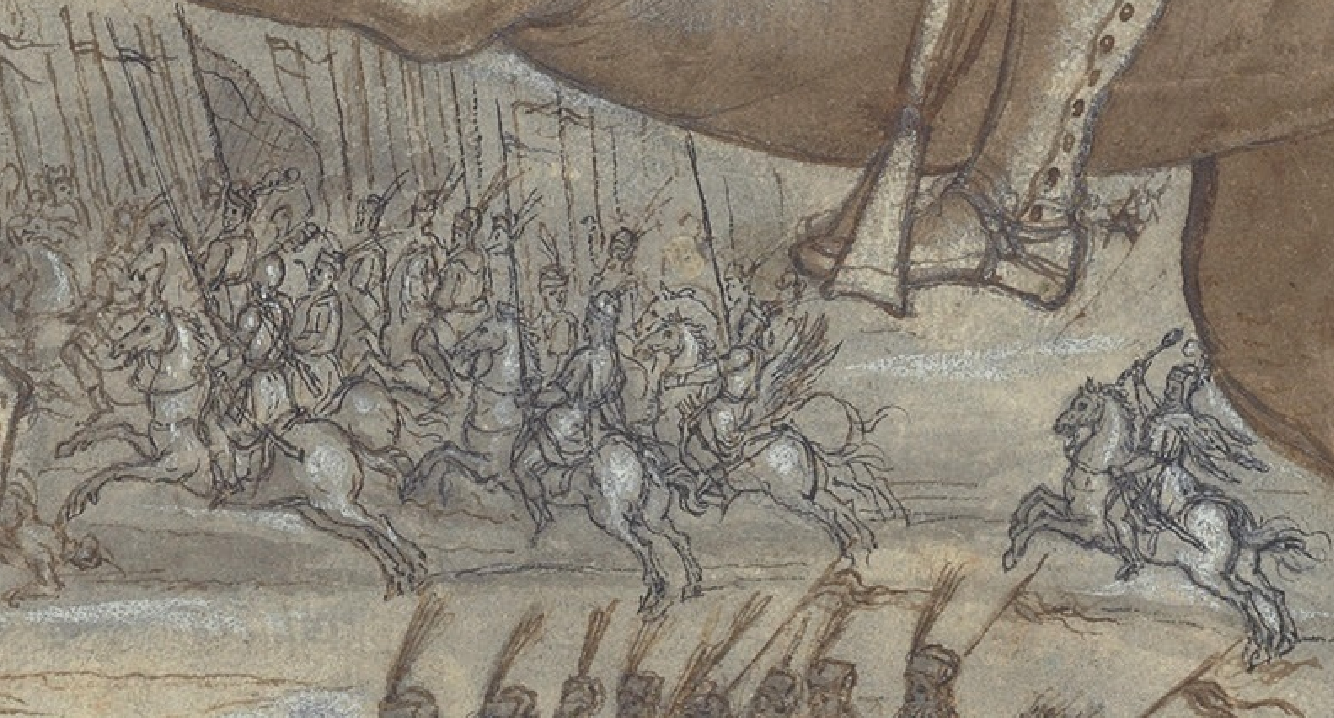
some details from the drawing:
winged hussar

Old Polish Kozak cavalry
 
winged hussars banner
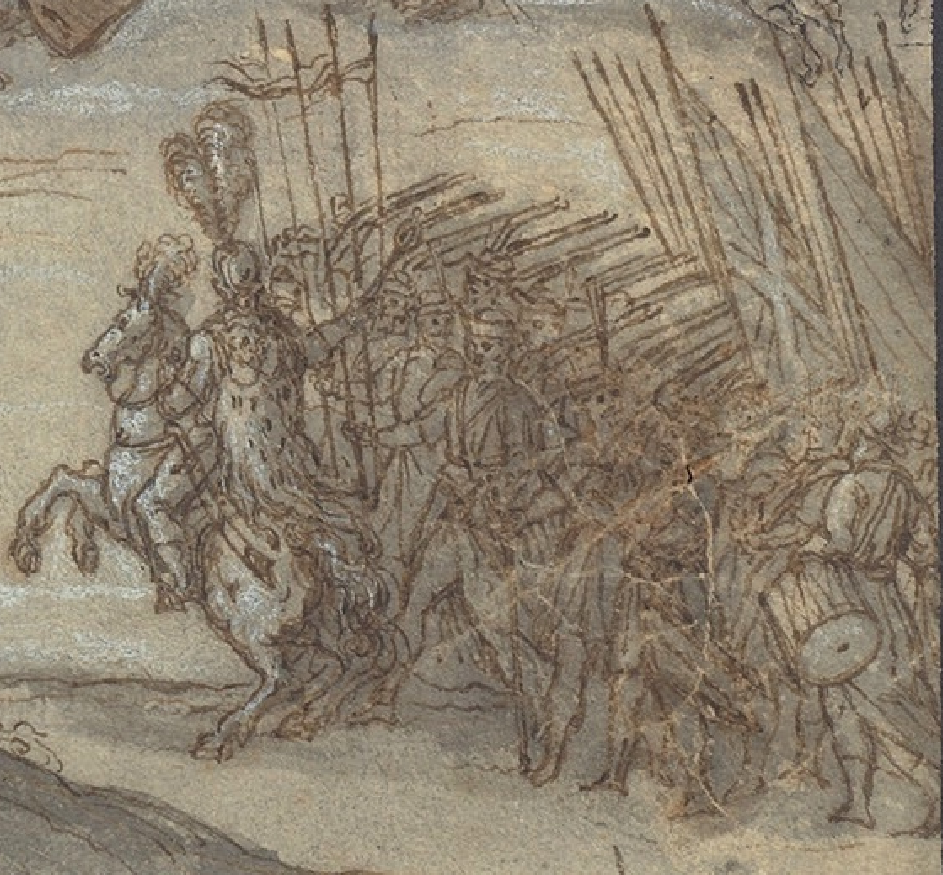
Rotameister or  a captain of Polish hajduk infantry or a field commander ordering infantry to action [I 'mirrored' the detail from the original drawing ]


Valete

Wednesday, December 8, 2021

Sketchbook from Baden-Wurttemberg

 Salvete Omnes,


via Szlafrokow Rozmowy group and its members comes yet another interesting visual  collection called a stambuch, a virtual treasure from the European early modern period - Stammbuch Johann Michael Weckherlin - that contains tons of hand drawn and painted coats of arms, portraits and illuminations from German lands drawn between 1500s-1600sAD.


there are many images there, but to share but a few could be a gateway for all to explore the collection:


you can download the entire collection in a pdf form, or study the images via the viewer provided by the Baden-Württemberg Archives. 


Valete

Wednesday, September 29, 2021

Chocim aka Khotyn 1621 order of battle - Polish-Lithuanian army

 Salvete Omnes,

One of the most important battles in Polish history, the one of Chocim (Khotyn) 1621,  is not really celebrated in Poland and other former lands of the Polish-Lithuanian Commonwealth. But for these celebrations that took part last Saturday in Rzeszow, Poland.


This epic armed conflict  between  Polish-Lithuanian Commonwealth and  Ottoman Turkey, the culmination of about 20 years of border conflicts, incursions, raids and etc, armed invasions eg Cecora 1620AD.  this year has its 400th anniversary.  And not a small role in  instigating this conflict, apart from the huge role of the Polish  border magnates, Zaporozhian Cossacks and Crimean Tatars,  was played by the enemies fighting during the early stages the 30 Years War -prince Gabor Bethlen on one side and the Hapsburg Empire. Perhaps Gabor Bethlen was instrumental in instigating the Ottoman attack on Polish-Lithuanian Commonwealth, as he was the enemy of our Respublica. Luckily for the Polish side the victorious Ottoman  commander Iskander Pasha had died before the fighting at Chocim took place.

so I would like to add some info about the Polish-Lithuanian Commonwealth army that mustered in the defensible war  laager around the medieval Chocim castle  on September 2nd, 1621 AD or at the beginning of a month long   'battle' between the hostile parties. It should be followed by another post about the Ottoman host.

the commander in chief :

Lithuanian grand hetman  Jan Karol Chodkiewicz

three major components of the army:

-mercenary soldiers and their retinues, where appropriate

-the Zaporozhain Cossacks

-magnate and lesser lords private banners and companies with appropriate retinue and warmed camp followers.

Polish-Lithuanian Commonwealth army at Chocim had also several separate commands -

 -Crown

-Lithuanian  grand duchy,

these former armies were untied under one register.

 -Zaporozhian Cossack

Now, as far as the total number of soldier there are two troop lists aka registers, that differ slightly as to the number of units and horses/portions(infantry),  of the Crown and Lithuanian army divided into different types of units:


Register one                                                                                              Register Two 

1. Winged hussars :

  -53 banners or 8520 horses (paid for soldiers on paper)          or             - 70 banners       or 8600 horses

2.  Pancerny kozak calvary and lisowczyk banners                     

  -66 or 8450 horses                                                                    or    -75 kozak cavalry or 7700 horse and 10 lisowczyk/1300horse

3.  German  reiter cavalry 

- 10 companies/ 2160 horses                                                       or - 12 companies 1300 horse

4.  regiments of German infantry

-5 regiments / 6450 portions                                                          or  -6 regiments  6100 portions

5.  Polish and Hungarian hajduk infantry

-29 companies/ 7600 portions                                                         or -30 regiments /8000 portions

all together 

33180 horses and portions.                                                             or- 33000 horses and portions

 Crown and Lithuanian army also included the camp followers, and some historians count to add about 30 to 35,000 armed camp followers from the hussar, kozak pancerny, reiter and  infantry commanders' retinues to the total number of armed combatants. The actual numbers of paid soldiers were at least 10% smaller in fact or so it this thought.

 The second important component consisted of the Zaporozhian Cossacks commanded by hetman Petro Konaszewicz-Sahajdaczny and it consisted of about 25-30,000 soldiers or portions(?)

 So for the purpose of operational and tactical combat application this Commonwealth army was divided into 'pulk' or temporary divisions of various sizes -
1.prince Władysław Vasa - 10,180 horses and portions

2. Grand hetman Chodkiewicz - 4,600 horses and portions

3.voivode Lubomirski -  3,350 horses and portions

4.Maciej Lesniowski - 1,000 horses and portions

5.Jana Mikolaj  Boratynski  - 859 horses and portions 

6.Mikolaj Zienowicz - 1,750 horses and portions

7.Aleksander Sapieha - 2,000 horses and portions

8.Piotr Opalinski - 1,600 horses and portions

9.Mikolaj  Kossakowski - 1,300 horses and portions

10.Mikolaj & Prokop Sieniawski, 1,200 horses and portions

11.Stanislaw Rusinowski - 1,200 lisowski horse

in addition there were 2,650 horses and portions that were not included in these 'pulks', as they arrived separately into the war laager  and thus not assigned to any division.

The army had circa  30 pieces of field artillery, only few of them heavier guns.  


Zaporozhian Cossacks, with their separate camp extended along the river constituted a self-operating rather huge division ( we do not know how they might have been divided and operated other than they did have a 'pulk'  organization too) -  like I said experienced fighter, scholar and commander hetman Petro Konaszewicz-Sahajdaczny commanding.   


From the very first day the Commonwealth army was not sufficiently provisioned with foodstuffs, horse fodder, munitions and especially gun powder. For some reason  the river Dniester was not used to ship food and war supplies into this war laager. Which is interesting in itself since all Commonwealth large rivers were used as the  shipping and trading highways, yet Dniester was no used to provide supplies to the fighting army.

to be continued

Valete


Monday, August 12, 2019

Polish reenctors at the court of Philip III at Lerma

Salvete Omnes,
Polish reenactors - winged hussars, pancerni, hajduk infantry , etc - visited Lerma, Spain on 2nd-4th of August , 2019, where their respective colleagues, the Spanish reenactors, held the festive weekend going back to the 1610s when Spain was ruled  by Felipe III  et his minister duke de Lerma.
This was the era of the iron Spanish tercio infantry, treasure fleets from the Americas, the flowering of Spanish literature - like the famous sword fighter and poet Francisco de Quevedo, Miguel de Cervantes, Gongora, Lope de Vega etc -  and fine and applied arts - Jose de Ribera, Vinvente Carducho, Juan Cotan or young Velazquez . 

Spanish gallery on Facebook - cuando eramos invencibles. And another Spanish gallery.

On the Polish side and Polish reenactors participation in this festive occasion, so it can be associated with the embassy Polish monarch His Royal Majesty King Zygmunt III sent to the court of Felipe III in 1614-15AD.
This embassy was lead be the castellan Krzysztof Korycinski, Topor coat of arms. His aim was  to bring some substantial financial Spanish assistance for the Polish war against the Muscovy, instead it resulted in the Spanish monarch bestowing on the Polish prince Wladyslaw , son of  Zygmunt III, an Order of Toison del Oro(Golden Fleece) eg visible in this painting.
Also pan Korycinski negotiated with the Spanish court the issue of the so called Neapolitan sums attempting to get some payments on the interest etc. Eventually, due to the outbreak of the so called 30 years war in 1618, the cooperation between Polish-Lithuanian Commonwealth and Spanish realm grew ever closer.


...


Below please  find the gallery of photos taken by (c) Radoslaw Szleszynski, whose masterly artisanal work .i.e. reconstructed horse bridles, cruppers and breastplates and pistol holsters can be seen on the horses ridden by the Polish reenactors, while the saddles were made by Marcin Ruda, known by his saddlery works throughout the medieval reenactors equestrian groups.


nota bene the horses in these pictures are Spanish horses that are veterans of the arena and other equestrian sports.


Valete