Salve,
I just saw this preview on youtube - u la la...
I have seen a number of Russian films on the Kievan Rus and the Mongols, including the animated Knyaz Vladimir.
I enjoyed the Russian version of the Chinggis Khan story (after the Secret History of the Mongols) and the movie The Horde, thus it appears that this movie Легенда о Коловрате (The Legend of Kolovrat) is looking like an awesome adventure for many an armchair warrior and film aficionado - :) .
The story came down to us from the old Ruthenian epic titled Повесть о
разорении Рязани Батыем (The Tale of the Destruction of Riazan).
The plot takes place during the Mongol invasion of the vast Kievan Rus (this was not Russia), when the Mongol armies under Batu Khan destroyed and subjugated all of the Kievan Rus principalities between 1237-40, making the surviving principalities their vassals.
The storyline is more or less about a desperate revenge raid led by the Riazan warlord Evpaty Kolovrat, a Rus bogatyr/vityaz, who went after Batu Khan, of the Golden Horde, and his army. The culminating point or the climax of this story was the duel between Kolovrat and a Mongol champion, Khostovrul, whom Kolovrat killed but the Rus champion was also killed later on. But his heroic death led to Batu recognizing his valor and bravery, and thus making his memory persist and spirit survive amongst the conquered Rus.
artful Russian animation on the same story.
enjoy
Equestrian Polish, Eurasian and the Americas history and horsemanship - from Bronze Age to circa1939AD. Historical equestrian art, my own artwork; reconstructions, and some traditional art media and digital artwork-related topics. All rights reserved unless permitted by 'Dariusz caballeros' aka DarioTW, copyleft or fair use.
Showing posts with label Y.A. Lansere Lanceray. Show all posts
Friday, June 30, 2017
Saturday, January 7, 2017
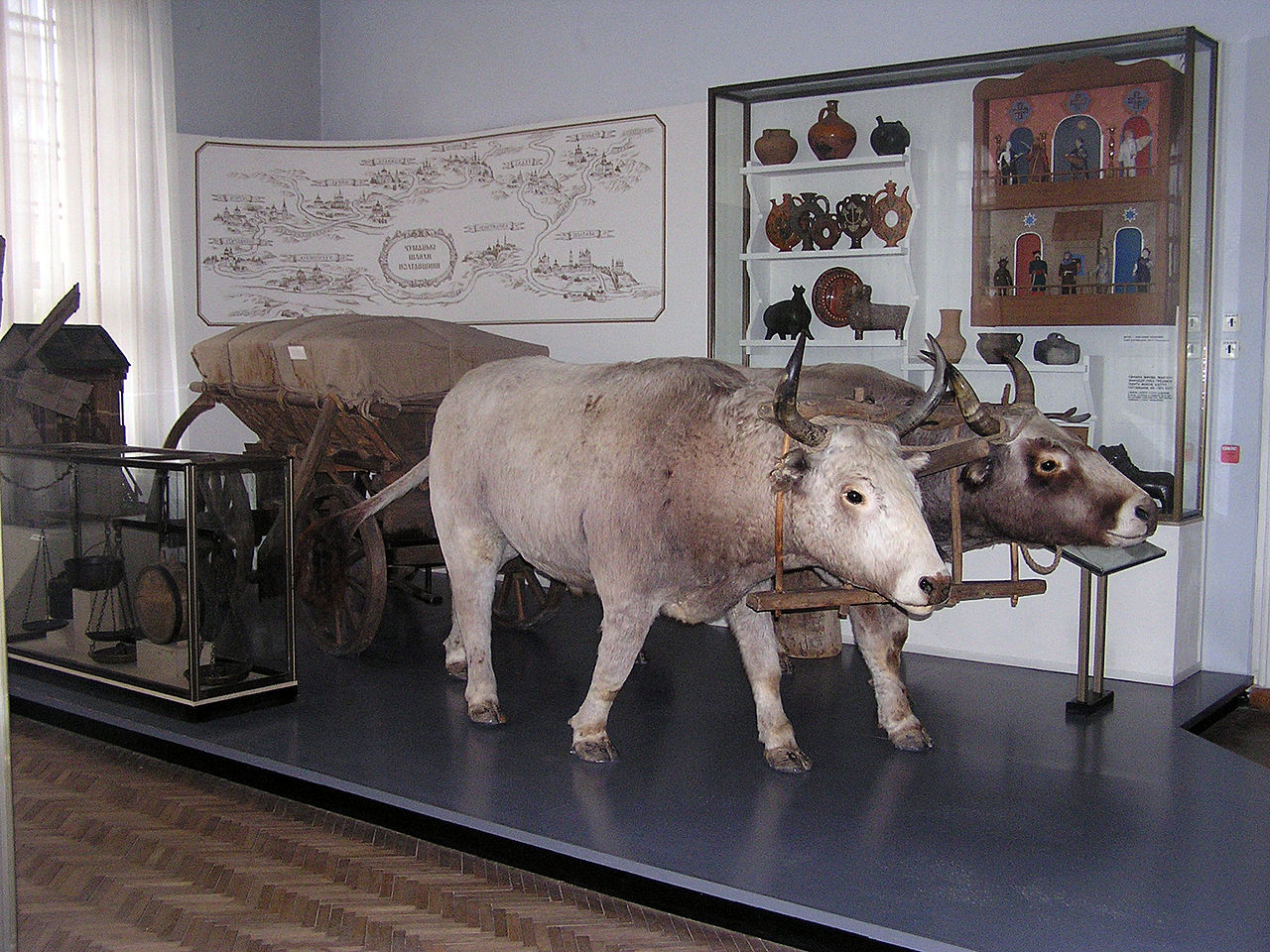
Czumaks - Pontic steppes teamsters of the olden days
Salve,
again, it is Anno Domini 2017, the very brand new and full of promises year - wish you all the best, especially good health and lots of smiles.
I titled this post the 'czumaks' or chumaks (alternatively chyumaks) because these teamsters with their ox-drawn tall wagons were the most ubiquitous sight in the ''ukrainian' ('ukrainne' - the edge lands, borderlands - in the Polish sense of the Pontic or Black Sea northern shores area between the Crimean Khanate and Wolyhnia and Podolia of Poland) steppes during the XVI through XIX centuries, note that in the late XVIII century this area was conquered by the Russian Empire; the conquest and annexation had been causing massive exodus of the Muslim Crimean Tatars to the Ottoman Empire, and the influx of Ukrainian and Russian subjects (including German, Polish etc), while the local Crimean population of Greeks and Armenians grew steadily (mostly destroyed by Stalin after 1944).
Armenian, by nationality but a Russian subject, artist living in Crimea Ivan Aivazovski - painter of the Pontic region of the Russian Empire - painted the czumaks, but Crimea and the Pontic (Black) Sea figure high amongst his many subject.

Polish painter Jozef Brandt also painted the czumaks
Jan N. Lewicki did this engraving showing the czumak
and other depictions from XIX century
including a historic photo
enjoy and Buna Fortuna
again, it is Anno Domini 2017, the very brand new and full of promises year - wish you all the best, especially good health and lots of smiles.
I titled this post the 'czumaks' or chumaks (alternatively chyumaks) because these teamsters with their ox-drawn tall wagons were the most ubiquitous sight in the ''ukrainian' ('ukrainne' - the edge lands, borderlands - in the Polish sense of the Pontic or Black Sea northern shores area between the Crimean Khanate and Wolyhnia and Podolia of Poland) steppes during the XVI through XIX centuries, note that in the late XVIII century this area was conquered by the Russian Empire; the conquest and annexation had been causing massive exodus of the Muslim Crimean Tatars to the Ottoman Empire, and the influx of Ukrainian and Russian subjects (including German, Polish etc), while the local Crimean population of Greeks and Armenians grew steadily (mostly destroyed by Stalin after 1944).
Armenian, by nationality but a Russian subject, artist living in Crimea Ivan Aivazovski - painter of the Pontic region of the Russian Empire - painted the czumaks, but Crimea and the Pontic (Black) Sea figure high amongst his many subject.

Polish painter Jozef Brandt also painted the czumaks
Jan N. Lewicki did this engraving showing the czumak
and other depictions from XIX century
![]() |
| Lansere |
including a historic photo
enjoy and Buna Fortuna
Tuesday, April 5, 2016
Y. A. Lansere Евге́ний Алекса́ндрович Лансере́
Salve,
Spring has come - thanks God, we need lots of sun - vitamin D and little bit of smile.
today I came across the art of Евге́ний Алекса́ндрович Лансере́ [Yevgeniy Alexandrovich Lansere (or Lanceray)].
Russian sculptor of the Imperial era, with a very interesting lineage, since his own grandfather was a soldier in the Napoleonic army before becoming a Russian subject (sort of like one famous French actor couple years ago). He was then from a French Russian family and was born near St. Petersburg, then the capital of Russia. He studied there, first he had finished the St. Petersburg 2nd Highschool and then he studied and finished the law faculty at the university there.
Then comes the amazing - perhaps a sign of time eg our Polish painter Juliusz Kossak also finished law faculty before turning to professional art, our young lawyer became a full-time artist.
He never received any formal art education, but was self-taught, however, generously using advice from various artists residing at the imperial capital. we should remember that the imperial city was full of international and national artists and teachers and thinkers, was full of amazing art collections and thus artworks abounded. Yevgeniy went several times to Paris, France. His aim was to study bronze casting, while art studying at the French capital must have come naturally and with ease.
He had loved horses since childhood and working in clay and bronze, with pencil and paints he thus become one of the greatest sculptors of horses ... and riders.
What he did differently was that he studied and observed his subjects form life, observation must have been the key to his understating of horse form, anatomy, movement and ultimately beauty.
He did plenty of historical pieces - eg Kievan Rus' prince Sviatoslav, , and contemporary ones too - Ukrainian chumaks . We should remember that the Russian Empire was growing fast during his life always expanding east and south-east )of course but for sale of Alaska to the Americans in 1867), hence many nations of Eurasian entered Russian service, by force or voluntarily. Lansere observed Bashkirs, Caucasian mountaineers, imperial Cossaks, Kirgiz nomads and many others, and in his style of taking a closer look at his subjects, he travelled into the newly conquered lands in Central Asia and in Caucassus.
He also went to Africa, visiting the Maghreb where war horse had been bread since Antiquity and Lansere had a chance to observe the famous horse-riding peoples in Algeria etc.
Yevgeniy got involved in bronze casting, and cooperated with many Russian bronze manufacturers, like Chopin Foundries etc, selling rights and/or giving permissions to multiple casting of his pieces. Thus in not too long time his castings became very popular and widespread with the Russian empire. Perhaps this is also why many of his works survived the destruction art objects caused by the Revolution, Civil War and later cultural purges and the visit of the Western Soviet Empire by the good people from Germany, nazi Germany to be precise - 1941-44. Nowadays many museums in Russian and the former Soviet republics have amongst their collections Lansere's works.
Outside Russia, Ukraine, Belarus etc Lansere's art can be seen in France - eg monument in a French city of Menton.
well, enough of my short 'write up' on this great artist's work. I have seen a book or two on his works - here or here.
Some pieces from the Wiki Commons collection - many can be seen here.
enjoy
Spring has come - thanks God, we need lots of sun - vitamin D and little bit of smile.
today I came across the art of Евге́ний Алекса́ндрович Лансере́ [Yevgeniy Alexandrovich Lansere (or Lanceray)].
Russian sculptor of the Imperial era, with a very interesting lineage, since his own grandfather was a soldier in the Napoleonic army before becoming a Russian subject (sort of like one famous French actor couple years ago). He was then from a French Russian family and was born near St. Petersburg, then the capital of Russia. He studied there, first he had finished the St. Petersburg 2nd Highschool and then he studied and finished the law faculty at the university there.
Then comes the amazing - perhaps a sign of time eg our Polish painter Juliusz Kossak also finished law faculty before turning to professional art, our young lawyer became a full-time artist.
He never received any formal art education, but was self-taught, however, generously using advice from various artists residing at the imperial capital. we should remember that the imperial city was full of international and national artists and teachers and thinkers, was full of amazing art collections and thus artworks abounded. Yevgeniy went several times to Paris, France. His aim was to study bronze casting, while art studying at the French capital must have come naturally and with ease.
He had loved horses since childhood and working in clay and bronze, with pencil and paints he thus become one of the greatest sculptors of horses ... and riders.
What he did differently was that he studied and observed his subjects form life, observation must have been the key to his understating of horse form, anatomy, movement and ultimately beauty.
He did plenty of historical pieces - eg Kievan Rus' prince Sviatoslav, , and contemporary ones too - Ukrainian chumaks . We should remember that the Russian Empire was growing fast during his life always expanding east and south-east )of course but for sale of Alaska to the Americans in 1867), hence many nations of Eurasian entered Russian service, by force or voluntarily. Lansere observed Bashkirs, Caucasian mountaineers, imperial Cossaks, Kirgiz nomads and many others, and in his style of taking a closer look at his subjects, he travelled into the newly conquered lands in Central Asia and in Caucassus.
He also went to Africa, visiting the Maghreb where war horse had been bread since Antiquity and Lansere had a chance to observe the famous horse-riding peoples in Algeria etc.
Yevgeniy got involved in bronze casting, and cooperated with many Russian bronze manufacturers, like Chopin Foundries etc, selling rights and/or giving permissions to multiple casting of his pieces. Thus in not too long time his castings became very popular and widespread with the Russian empire. Perhaps this is also why many of his works survived the destruction art objects caused by the Revolution, Civil War and later cultural purges and the visit of the Western Soviet Empire by the good people from Germany, nazi Germany to be precise - 1941-44. Nowadays many museums in Russian and the former Soviet republics have amongst their collections Lansere's works.
Outside Russia, Ukraine, Belarus etc Lansere's art can be seen in France - eg monument in a French city of Menton.
well, enough of my short 'write up' on this great artist's work. I have seen a book or two on his works - here or here.
Some pieces from the Wiki Commons collection - many can be seen here.
enjoy
Labels:
Eugene Lanceray,
links,
sculpture,
XIX art,
Y.A. Lansere Lanceray
Subscribe to:
Posts (Atom)