Showing posts with label Anglo-Saxon horses. Show all posts

Saturday, January 29, 2022

Terrible martial beauty and Harffy's novels

 Salvete Omnes,


a short post - 

firstly, I am on the last, the 8th, volume of the Anglo-Saxon saga woven by Matthew Harffy - listened  to all but one of them via audiobook libraries. 
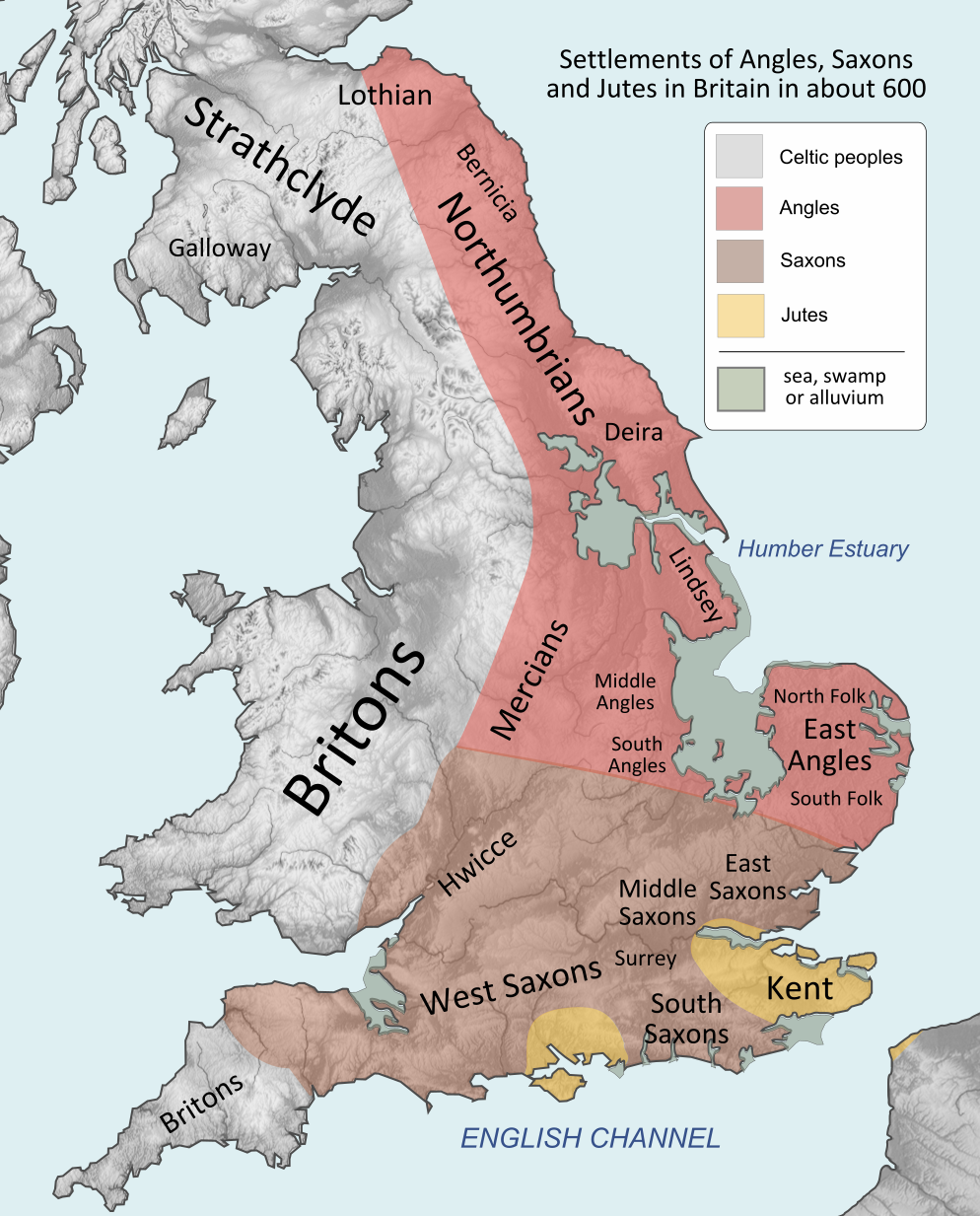


The stories of the heroic young Kentish upstart named Beobrand , who is an AngloSaxon pagan and will become the hero - a hero in a traditional sense of a travails, suffering and superhuman obstacles to surmount in order become one - take place in Northumbria, the kingdom of Bernicia, Mercia, Diera, Pictland, Frankish coast, with warriors, kings and thralls from the Welsh statelets, and many monks and priest from Ireland  etc some 200 years before the adventures conjured by Bernand Cornwell in his stories already mentioned on my blog a while back. 


The stories are engaging  and captivating; they start circa 633AD and continue through the 651AD. The reader gets to meet king and Saint Oswald of Northumbria, and famous last pagan Anglo-Saxon king of Mercia, Penda of Mercia.  


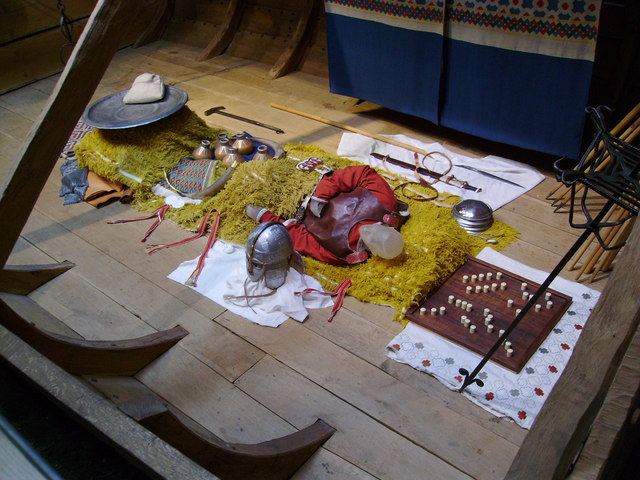
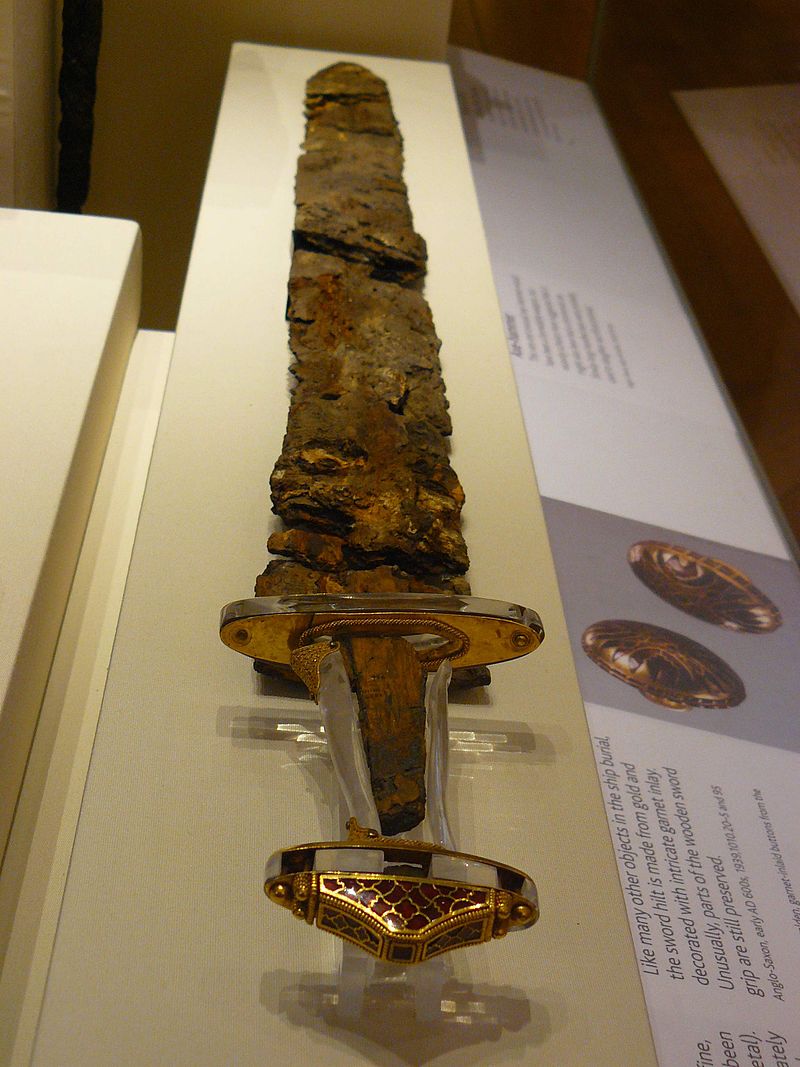
Secondly, when I am thinking about early Anglo-Saxon kingdoms of the British Isles  then Satton-Hoo comes to mind immediately , so let me attach some of the finidngs to illustrate the post about Beobrands' saga (although from time to time other persons are also heard from within, especially one brave horseman from Wales and one beautiful and strong young queen).


The martial finds from these mounds are amazing - beautiful and terrible at the same time - and closely related with the Vendel period of Scandinavia. Curator's corner, British Museum, presentation here.

Children oriented video on how the Anglo-Saxon warrior lived - here


the helmet 


shields


swords


 reenactment


there are  other Anglo-Saxon helmets unearthed in the British Isles - 

this Staffordshire helmet being the most spectacular


and the later , 8th century helmet -


Lastly,  long time ago British military books publisher , the famous Osprey Miltiary Publishing, published a book titled Arthur and the Anglo-Saxon Wars - I say it is a high time to do a complete overhaul of this book and a new edition, based on the findings, interpretation, research and reenactment is needed, with a new set of beautiful plates showing the early medieval warriors of the British Isles.

Valete

Sunday, May 16, 2021

Bernard Cornwell -War Lord Uhtred

 Salvete Omnes,

this is not a review, just about a fiction book and the series I finished reading last week.


ad rem,

for years I had enjoyed the Last Kingdom saga woven the British master storyteller Bernard Cornwell, and this time master raconteur delivered his final[?] word in the saga of a Northumbiran warlord named Uhtred of Bebbanburg.
This 13th novel in the sagas is a good old fashion hero story. 


Its epic story is woven around the events of 930s leading to one of the most eventful battles in British history, the battle of Brananburh, AD 937 also known as the Great Battle.  The story of this  battle is also told, and it is told with a skill and mastery typical to master Bernard
According to many historians this was this battle where the sweat, skill, blood and sacrifice of the  England's  warriors truly forged the united kingdom and allowed for dominance of England within the British Isles.
Saxon king Aethelstan, who was  the grandson of Alfred the Great,  defeated the army  commanded by king Anlaf Guthfrithsson, which was comprised of the Viking Norse (from Orkney Islands and Ireland), Scots under king Constantine II of Alba, and other minor kingdoms' adversaries.


In the context of the novels we finally get Uhtred, the main hero,  in his manly warrior twilight, for in this 13th installment he is old and aching, but still very cunning, savvy, skillful with his weapons and martial experience with his two trusted weapons, his sword named  Serpent Breath and a seax named Wasp  Sting - eg before the Great Battle we get this delightful accounting of old warlord Uhtred getting armed for this battle .
Within the meandering towards the epic battle story we get much detailed  but nor overbearing vision of the period daily life, including  foodstuffs, camping, horseback riding, war stallions and their names and also stories of the Viking saga lore and Christianity.  Finally last but not least we get some fine sword duels, strength   and horse riding feats, cavarly charges, and the final epic shield wall etc - :) as in this video from the Wolin Slavic and Viking Festival AD 2015.


Bernard Cornwell has based  his storytelling on traditional sources (eg the poem) and  some of the most recent scholarship - eg this YT lecture my be of interest to you, as it is a magnificent feat of scholarship and analysis.


Thus my wholehearted congrats to master Cornwell for delivering us this final epic tale.


Nota bene I have had not opportunity to draw or paint Saxon warriors and thier horses yet, who knows, perhaps one day. But there is this article about the horses in Anglo-Saxon England and Saxon cavalry, including  using the Maxims or Old Poems .

Valete

ps

Note I am not going to say much about the Netflix series supposedly based on the novels, I did try watching the first season and did not suffer past 2nd  or 3rd episode.  I did watch the entire Netflix Witcher series, horrible as it was, hoping for the episodes to improve. They did not, sadly.
  On the other hand I enjoyed the film version of the comissario [inspector]  Salvo Montalbano series (based on the fabulous novels by Andrea Camilleri and translated into English by with love, passion and skill  by master translator Stephen Sartarelli), and these can be leisurely watched on Netflix.