Showing posts with label Scythian horse. Show all posts

Sunday, May 21, 2023

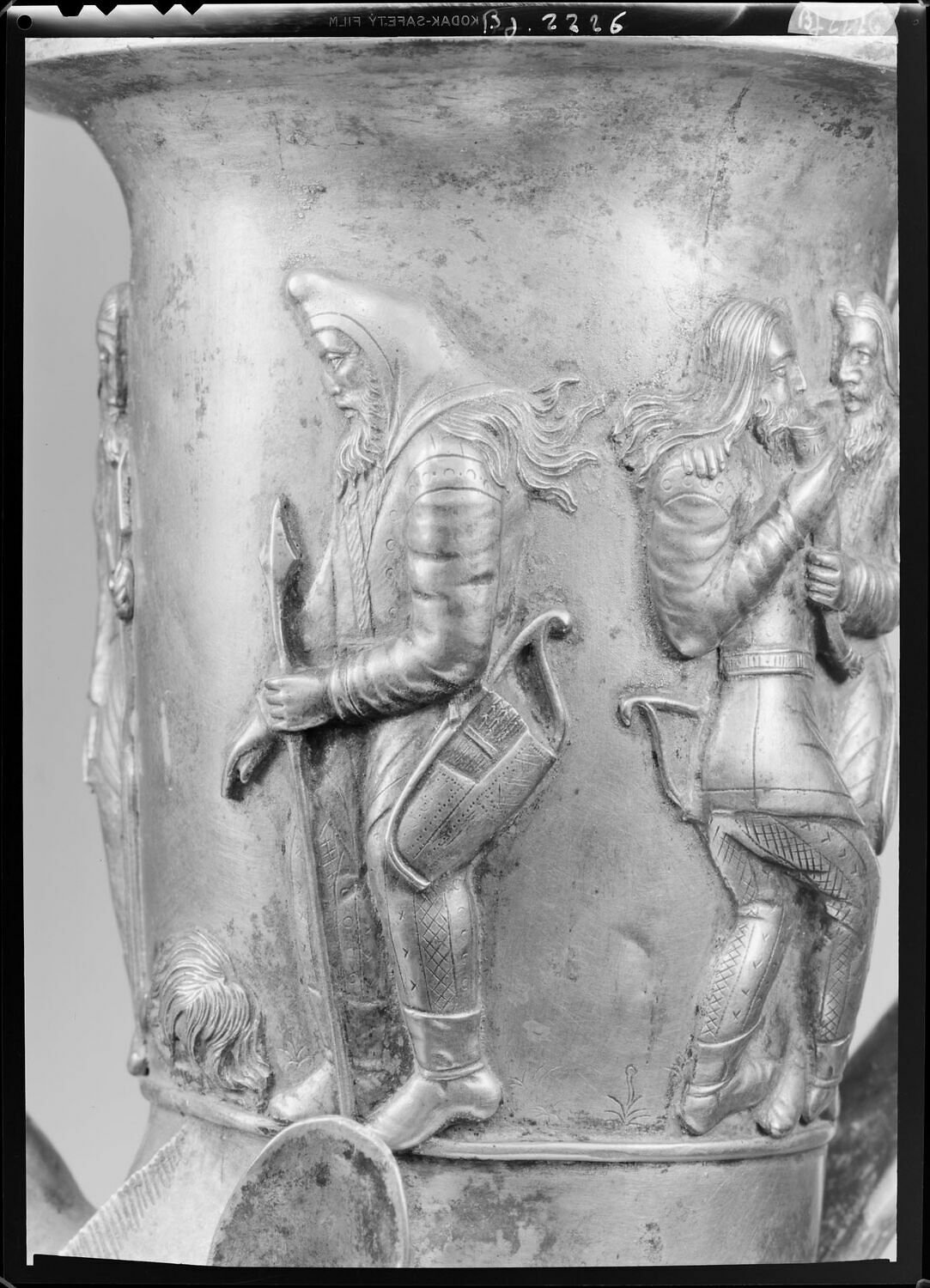
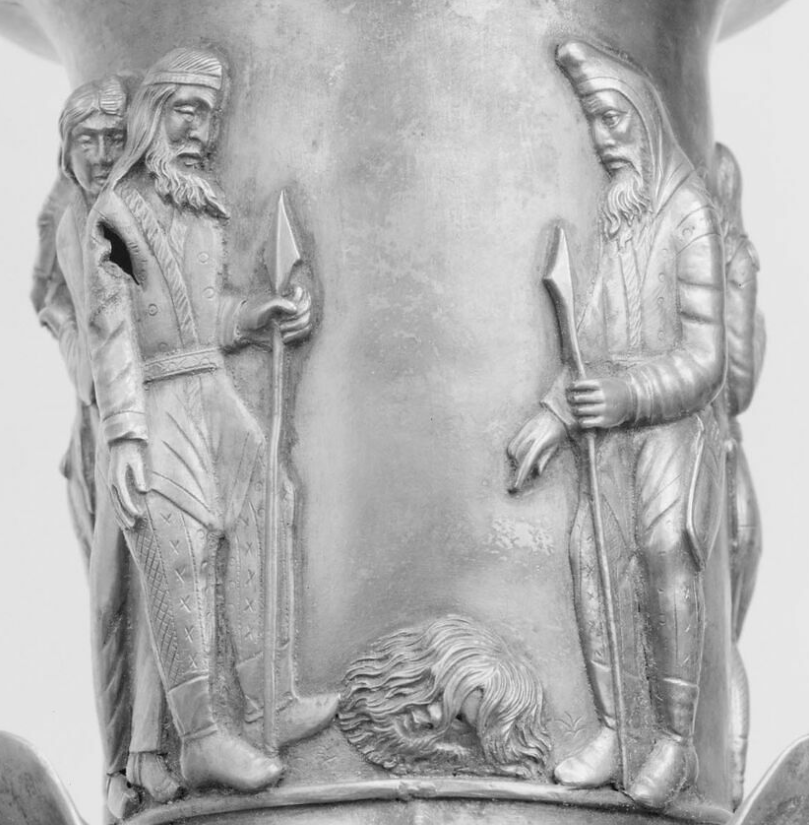
Scythian Rhyton from the Louvre Museum

 Salvete Omnes,

a short entry today:
the Louvre Museum graciously made available on their website a collection  of photographs of one highly unusual silver rhyton
Allegedly this artwork comes from the Pontic steppe - Crimea and/or Kherson area etc - and was acquired by the museum in 1960s.
The vessel, shaped like a head of a wild boar, is decorated with some highly unusual art showing the Pontic Scythians and their horse in full tack. 
This work has never been seen by me and upon doing some research  I came upon some scholars who question its alleged origin  - the IV century BC. My friend and scholar dr Patryk Skupiniewicz, when asked, also was highly skeptical about this rhyton's origin. 
But the figures are quite splendid and beautiful, so let us enjoy this art for what it is prima facie  


the images are posted under the  Louvre  copyright as per their terms and conditions - 4.1.1 & 4.1.2.

Valete

Thursday, November 30, 2017

Ancient Indoeuropean and Saka Central Asian horses and domestication - article on paleogenomics*

Salvete Omnes,
I came across this article - Ancient genomic changes associated with domestication of the horse, - published in Science April 2017. Zainolla Samashev, one of the authors, made it available for download and study at academia.  - many thanks
the reseachers exmamined horses from:
 a mare - Sintashta Culture, Chelabinsk Russia - Indoeuropean horse chariots from early Bronze Age (some human DNA discussion here)
 two stallions -  Arzhan I, Tuva, Russia  (Iron Age Scythia)
 13 stallions - Berel kurgan II, Kazakhstan ( Iron Age Scythia)

The article talks about the most ancient of domesticated horses, about the Iron Age Saka/Scythians and their horse husbandry, their breeding methods that did not disrupt natural herd structures (tabun and stallion harems) that resulted in diversity of genetic material in their horse sherds,. Nota bene the researchers found evidence for  horse milking ,  coat colors preference and robust forelimbs ( metacarpal bones - re anatomy and horse conformation - check M. Horace Hayes -Points of Horse and dr Deb Bennett site).

Also, do check this free-access article on this study from the New York Times that does explain the Science article in layman's terms.
note that the Berel kurgan horses (article on Berel horse sacrifice)  were subject  to an older genetic study,  in 2005 - a summary of article available here. Nota bene Yakutia horses alias Yakut Horse (Long Riders Guild Academic Foundation has also an article on the horse) - this unusual horse has a fine article devoted to its genetic origin and makeup - Tracking the origins of Yakutian horses[...]. - can be read here.

*paleogenomics