Showing posts with label Cecora 1620. Show all posts

Tuesday, February 8, 2022

Winged Hussar from De Re Miltiari

 Salvete Omnes,

happy to announce that the Polish publisher Infort Edition has published the new volume of their De Re Militari magazine - 172 page of military history.
It can be had from their Wanax store page.

And on the front cover my winged hussar companion with of the Cecora-Chocim 1620-21 A.D. period.

The back cover has the winged hussar retinue with camp servants, horses, wagons , and oxen. 

Nowy numer De Re Miltiari - nr 6 (2022-1)  


 Valete

Thursday, October 7, 2021

Cecora 1620-2021

 Salvete Omnes,

[in Polish]


w zeszłym, jakże  mocno plagami tego świata doświadczonym roku, nota bene oficjalnym ‘Roku Stanisława  Żółkiewskiego’,  mieliśmy okrągłą, bo 400 rocznicę, tego tragicznego et porównywalnego z Batohem 1652, wydarzenia w naszej historii militarnej zwanego wyprawą Cecorską.  


Ta  rocznica, jakże jest smutna i heroiczna zarazem, bo  dotyczy  jednej z największych klęsk w historii armii staropolskiej w walkach z agresją osmańsko-tatarską ale i przykładów  heroizmu et poświecenia - mianowicie chodzi o starcie wojsk koronnych (królewskich i prywatnych magnackich  oraz wolontariuszy) pod wodza hetmana wielkiego koronnego  Stanisława Żółkiewskiego z wojskami osmańskimi i wasalami Padyszacha Osmana II - tj. Tatarami krymskimi, Nogajami(Tatarami stepowymi z Budziaku i Dobrudży) i posiłkującymi  wojska bejlerbeja Wołochami.
Generalnie mówiąc, całość tej operacji jest znana jako bitwa pod Cecorą, choć składała się ona z marszu armii koronnej spod Mohylowa (Podolskiego) nad Dniestrem na stolice Mołdawii Jassy,  zatrzymania się w dawnym obozie warownym kanclerza  Zamoyskiego nad Prutem, 2-dniowych walk (w tym jeden w bitwie walnej przed wałami warownego obozem), negocjacji w oblężonym/blokowanym obozie,  oraz (29 IX-6X) nocnego marszu w szyku taborowym obronnym z obozu cecorskiego nad Prutem ku granicy królestwa jaka była rzeka Dniestr i ku ufortyfikowanym Mohylowie. 


Ale rocznica także dotyczy faktu śmierci hetmana wielkiego i jego podkomendnych w kontekscie  przykładu niezwykłego męstwa, wysoce etycznej i bohaterskiej postawy hetmana wielkiego prowadzącego ruchoma fortece taboru przez wrogi kraj (160km marszu w walce) w obliczu napierającego przeciwnika, przy niesubordynacji podkomendnych i ciągle dezintegrującej  się wewnętrznie armii koronnej, i finalnie wobec beznadziejnego położenia własnego i wiernych podkomendnych w czasie tragicznych i heroicznych zarazem wydarzeń ostatniej nocy (z 6 na 7 października) odwrotu.

Choć można rzec, ze przewiny hetmana były i są wielkie, to jego własna przelana krew i poświecenie życia podczas wypełniania obowiązków dowódczych  do końca na polach nad Dniestrem zmywają niejako hańbę klęski i zaniedbań na polu walki i dowodzenia armia powierzona mu przez Rzeczpospolita  i JKM Zygmunta III. 

Sama walna bitwa miała miejsce 19 września 1620 roku, gdzie jak wiemy ze źródeł i z analizy dokonanej min przez prof. Ryszarda Majewskiego (Cecora - rok 1620. Warszawa: MON, 1970.)   hetman wielki koronny Żółkiewski miał plan stoczenia bitwy przed obronnym obozem polskim, na równinie w zakolu rzeki Prut sprzyjającej atakowi przełamującemu polskiej jazdy kopijniczej (czyli husarii).
Hetman Żółkiewski planował pobić osmańskiego Iskander Pasze atakując 5 pulkami w oparciu o dwa bojowe taborki lewego i prawego skrzydła.
Jak wiele dobrych planów w historii militarnej, egzekucja tego planu zawiodła, i  w wyniku otworzenia się luki w szyku prawego skrzydła wydaje się, ze  klęsce a przynajmniej niepowodzeniu w walnej rozprawie uległy chorągwie husarskie pułków hetmana polnego Koniecpolskiego i Strusia, i chyba pułku Żółkiewskiego co doprowadziło do rejterady prawego skrzydła i centrum.

 Dziennik wyprawy wołoskiej podaje: 

''A iże z tylu tedy im nie przyszło i do złożenia kopii w obronie, ale porzuciwszy drzewka ku okopowi poczęli uchodzić. Potym nieprzyjaciel nastąpił na pulki hetmańskie, które in medio stały, tak dobrze, ze tył podali i Hetmana obydwie chorągwie stracone.'' [s. 102]

Klęsce uległy także chorągwie Lisowskie, a z powodu braku skutecznego kontruderzenia oblężeni żołnierze piechoty i czeladź tego taborku prawego skrzydła pozostawieni samymi sobie zostali zabici  lub wzięci w jasyr, kiedy armia turecko-tatarska w końcu wzięła szturmem ruchoma redutę (Hetmani nie byli w stanie zorganizować sprawnej odsieczy z powodu dezorganizacji armii).
Taborek i pulki  lewego skrzydła armii hetmańskiej dowodzonego przez księcia Koreckiego zdołały powrócić do obozu, formalnie spełniając swoja role na ten dzień.
Według prof. Majewskiego winę za klęskę ponosi sam hetman wielki.[Cecora, strona 191].


Reasumując to  prof. Majewski przyjmuje, ze armia polska zmniejszyła się o przynajmniej 2600-3000 żołnierzy i  pewna ilość czeladzi (bo Mołdawianie hospodara Grazzianiego zrejterowali do wroga).
Co prawda nie bierze Pan profesor w swoich obliczeniach dokładniejszych strat w czeladzi, o których chyba nic pewnego nie wiemy po za tym, ze stanowili cześć sił walczących i utraconych w taborze prawego skrzydła (tutaj uwaga - oprócz circa 1000 czeladzi zagarniętej przez tatarskie zagony pierwszego dnia pojawienia się ord pod walami obozu cecorskiego armii koronnej).

W nocy z 20 na 21 IX , w czasie wybuchłego tumultu, gdzie rabowała czeladź i cześć soldateski dobytek towarzyszy chorągwianych, w warownym obozie nad Prutem , cześć wojska zdezerterowała i tym samym armia hetmańska straciła kolejne circa 2000 żołnierzy, przynajmniej, i nieznana z liczby ilość czeladzi (za prof Majewskim, st 198), którzy to uszli z obozu w kierunku granic koronnych – tutaj wielkim winowajcą okazał się słynny Chmielecki a  także Jan Odrzywolski.  Za dezerterami rzucili się w pogoń Tatarzy oraz obserwujące po chrustach chłopstwo mołdawskie zajadłe na Polaków za rabunki i plądrowanie kraju.

 5000 żołnierzy i pewna liczba czeladzi pozostałych w okopanym obronnym obozie stanęło za hetmanem, który przyrzekł na Ewangelię nie uchodzić z obozu, chyba ze wszystkimi żołnierzami obronnym taborem.

Hetman zdecydował się jeszcze na rokowania, które trwały już od 23 IX , ale ostatecznie upadły i zostały zerwane 28 IX.
Hetman I jego otoczenie, pewnie będąc chyba pod wrażeniem, ze morale uszczuplonej mocno armii odbudowało się, przy konieczności prowadzenia walki i przy malejących zapasach, hetman wielki zdecydowali ruszyć  obronnym taborem ku granicy Rzeczpospolitej.
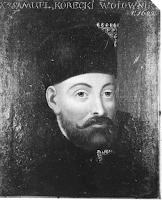
Tabor uszykował weteran wojen mołdawskich książę Samuel Korecki, przegrany spod Sasowego Rogu 1616 i uciekinier z niewoli sułtańskiej. Także okolu 2 godziny przed zmierzchem 29 IX  armia polska ruszyła z warownego obozu w zakolu rzeki Prut pod Cecora.


Porządek miał być następujący (‘Opisanie Wejścia do Wołoch’, s 496 - ustalony przez księcia Koreckiego):
straż przednia,

tabun koni wierzchowych na czele obronnego tabor  

tabor uszykowany w 6 rzędów wozów, w każdym rzędzie 100 wozów ciągnionych przez konie.

Na wozach stanowiących czoło taboru rozmieszczono 5 dział i pewna ilość hakownic, obok jako ruchoma obrona maszerowało 200 polskich hajduków i 100 niemieckich piechurów pod Farensbachem.

Po obu stronach wojennego taboru szły spieszone chorągwie husarskie i kozackie z bronią krotka(pistolety) i długa (karabiny-bandolety etc) nabita gotowa do strzału.

Tyl taboru alias ariergarda broniło 5 działek i pewna ilość hakownic, 500 piechoty polskiej i 50 niemieckiej oraz spieszeni lisowczycy. 

Ranni i chorzy byli na wozach wewnątrz taboru. 

Pościg tatarski i później turecki jak, i pierwszy poważny atak sil wrogich nastąpił dopiero następnego dnia, i kontynuowany był przez następne 2 dni. 2 X nadeszła piechota turecka Iskandera Paszy i nastąpił połączony atak turecko-tatarski na armie polska. Atak się załamał  jednak przy mężnym a sprawnym działaniu Polaków, a żołnierze piechoty niemieckiej zdobyli nawet utracone wcześniej 2 działka polowe.
Idący głównie nica w skrajnie niekorzystnych warunkach tabor polski przebył tedy 24km a następnego dnia 30 km, i 4 X doszła armia hetmańska do rzeki Reut.
Tutaj miała miejsce kolejna bitwa z atakującymi oddziałami turecko-tatarskimi, którą polscy obrońcy odparli, a następnie 5 X przeszedł tabor kolejne 30km (idąc nocą do południa).
W nocy z 5 na 6 X armia przeszła tylko 12-15km, i wyczerpany tabor zatrzymał się jedynie 12-15km (a możne 10km) od Dniestru i granicy państwa, i Mohylowa, kolo wsi Serwirini (dzisiaj Sauka).
Turecko-tatarska armia dokonała, jak się później okazało, ostatniej próby rozerwania i ataku na polski tabor, i odparta przez obrońców ograniczyła się pozostawania w pobliżu. Jedynie jak wilk wokół stada bizonów krążył przy polskim taborze wódz nogajski Kantemir murza na czele swoich wojowników z Bodzaku i Dobrudży.
Wydawało się, ze nic już nie powstrzyma szczęśliwego powrotu wojsk koronnych w granice Królestwa Korony Polskiej.

Według źródeł w czasie postoju grupa najbardziej poszkodowanych rabunkami z czasu tumultu 20-21 IX oficerów i żołnierzy-towarzyszy chorągiewnych zażądała od hetmana przeprowadzenia rewizji wśród czeladzi i innych 'swawolnych' [żołnierzy] w celu odzyskania swego dobra i ukarania swawolników a rabusiów. Hetman wielki odmówił temu żądaniu, ale przyrzekł surowo ukarać winnych już po przejściu Dniestru.
6 X wieczorem  tabor w szyku bojowym ruszył  ku granicy polskiej, i już po zmierzchu wybuchł tumult wśród czeladzi i swawolników, którzy rzucili się podobnie  jak we wrześniu do rabowania wozów, wyprzęgania koni  i brania  koni  z tabunu jezdnych koni idących w czele taboru i na tych schwytanych i zrabowanych  koniach zaczęła się zbiorowa ucieczka już całej zdezorganizowanej armii  ku przeprawom na rzece granicznej Dniestr. W czasie nocnego zamieszania cały obronny polski tabor przestał istnieć, a hetman wielki i hetman polny Koniecpolski  pozostali na czele palącego się już i nieobronnego taboru z około 300 ludźmi.


Wtedy to sędziwy hetman, siedzący na koniu, zsiadł z wierzchowca, przebił go szabla dając znak, ze nie opuści swoich podkomendnych.
Po przejściu około 1,5 km ta ostatnia zwarta grupa wojska polskiego pozostałego z armii koronnej zwana ‘hetmańska’ została rozproszona przez atakujących ja  Tatarów, i w konsekwencji tego rozproszenia grupy hetmańskiej hetman wielki pozostał z niewielka grupa rajtarów, hetmanem polnym Stanisławem Koniecpolskim i rotmistrzem Donhoffem, husarzem Abrahamem Złotopolskim, swoim sługą Kurzawskim i Silnickim. Dalsza walka okryta jest całunem mroku historii i nie wiemy jak zginał sam hetman wielki koronny. Oprócz tylko tego, ze po tym jak Złotopolski z Koniecpolskim wsadzili silą hetmana na konia podstawionego hetman wielki odgalopował z grupa około 300 jeźdźców polskich, którzy wyłonili się w mrokach nocy – I te mroki październikowej nocy pochłonęły Stanisława Żółkiewskiego na zawsze.
Chyba musiał być mocno świecący księżyc w czasie tego polskiego odwrotu znad Prutu ku polskiej granicy na Dniestrze.

Nazajutrz wrogi patrol odnalazł i rozpoznał ciało hetmana z ranami na ciele, z odcięta prawa ręka i głęboka raną skroni głowy, świadczącymi o gwałtownej a heroicznej walce wręcz na biała broń, około 2 km od granico. Iskander Pasza kazał odciąć głowę hetmanowi a owa głowę wysłał padyszachowi do Konstantynopola. 

Ciało odnaleźli wysłannicy żony hetmana wielkiego, Reginy Żółkiewskiej, a i później sama głowa została 'wykupiona z tureckiej 'niewoli' i pohańbienia.  Doczesne szczątki Stanisława Żółkiewskiego pochowała zona  w kolegiacie świętego Wawrzyńca w Żółkwi, gdzie wciąż się znajdują. 

Pacem Aeternam

...


valete

Wednesday, October 6, 2021

Stanislaw Zolkiewski 6-7 October 1620

Salvete Omnes.


Reminiscing a bit today -

401 years ago, in the vicinity of the Dniester River the last act of the military tragedy was  unfolding.
Our Polish-Lithuanian army had been  in full withdrawal from the war laager at Cecora on the River Prut.
After the unsuccessful  Cecora battle, during the night of 20-21st of September 1620AD, our Polish war camp underwent a violent and long bout of disharmony, desertion, open rebellion and  especially  atrocious thievery and robber committed by the camp servants and some unruly elements among the troops, especially accused were the Lisowczyk kozaks.  In light of the threat posed by enemy standing menacingly across the field from the Polish ramparts, the commanders and officers brought the camp to some semblance of order and obedience.  The crimes were not mentioned and left unpunished,  the loss of several thousands who deserted cross Moldavia to the Polish border was hurtful but they pulled the troops in some sort of cohesive army again. When the negotiations with Iskander Pasha failed the plan to withdraw to the Polish border was announced and preparations carried speedily.

The tactical withdrawal started on the 29th of September 1620, two hours after darkness when grand hetman Zolkiewski, field hetman Koniecpolski  and  about 5,000 officers, soldiers and an unknown number of armed servants started their  march away from the safety of the Cecora war laager rampart  and moved  this moving fortress toward the Polish border,  in a wagenburg (wagon fort) formation: 

- vanguard, then the entire cavalry horse herd,  6 files of 100 wagons each pulled by horses and chained, finally a rearguard with small field-guns and infantry. Winged hussars, pancerni kozak, Lisowski kozak soldiers marched on foot along  and on both sides of this fighting moving fortress, their pistols and carbines ready and charged. Wounded and sick were carried inside the wagon train, in the wagons etc.

During this fighting retreat Polish army  wagenburg  fought several large engagements with pursuing Ottoman and Tatar forces, attempting to break and destroy the withdrawing army. 

Namely, first they fought  for 3 days a very tight  rearguard action Sept 30-Oct1-2, 16620, then  beat off another assault on October 4, and the final assault during the night of October 5-6, 16620. Polish army fought well against all these  assaults and successfully repulsed all of them.

Finally,  the tired army marching  its wageburg formation and maintaining military order had  reached the vicinity of the border (some 10 km to the river and then across the river there was Polish border stronghold of Mohylow, today Mohyliv-Podolskyi), near Sawki (the present day village of Sauka) and was resting, while in its immediate vicinity there were columns of  Tatar units circling around, mostly Kantemir murza command.  They marched circa 165km in six night marches, under lots of pressure, with exhausted troops under the almost constant assault of their merciless foe.
It was there, in the camp during the evening of October 6, 1620, when some of the aggrieved officers and companions demanded that our grand hetman Zolkiewski punish those guilty of the robbery and thievery during the rebellion and general desertion and panic  back on the 20-21 st September.
Upon hearing the demand for punishment and return of the stolen property, the camp servants and soldier rabble rebelled and started breaking up the wagon formations,  unhitching the horses and riding away towards the safety of the river. The panic and rebellion spread from the rabble to the troops thus far disciplined, and entire banners dissolved and  unraveled. Within a short while the army ceased to exist. One of the first to run was the famous rider and commander prince Samuel Korecki - who eventually betrayed by the Moldavians, and was captured by the Tatars, delivered to the Ottomans and died in a Turkish prison in 1622.
Grand Hetman Zolkiewski, with his second in command field hetman Koniecpolski,  at first refused to abandon the wagon fort but lacking the necessary soldiers to fend off another Tatar attack and with the light coming from  the burning wagons he  saw the helplessness of the situation and  thus started marching towards the Dniester river,  leading  some most faithful and disciplined troops, the last remainder of the once proud and powerful Commonwealth army. After about 1,5km to 3km of night marching from the burning and looted wagenburg this last  Polish command was attacked by a large body of  Tatars, who dispersed the exhausted troops, killing and slave taking during this terrible night. 
Grand hetman was left with a small group of  cavalrymen, mostly German reiters of Donhoff company along with some faithful like field hetman Koniecpolski, wounded captain Donhoff, winged hussar Abraham Zlotopolski(he survived and made it across the river) , servant Kurzynski, and Silnicki. 

He refused to mount a horse brought by a servant, killing it with  his sword and saying -
-'I am not going to mount [a horse], it would be sweet dying along with you. Let God finish His judgement over me'

So they walked another several hundred of paces, and finally Koniecpolski and Zlotopolski forced our  tired old hetman into a saddle of another horse brought for this purpose.  Some disorganized Polish  cavalry band appeared from the darkness and grand hetman rode away or perhaps his horse carried him away with them, never to be seen alive again.
His body, with signs of struggle, deep wound on his head and without his right arm, was found and recognized by the Kantemir Tatars about 5km from the river on the following day. They left the body where they found it and Zolkiewski's wife, Regina Zolkiewska,  who had sent a special group to find his body, later on  she had a monument built on the spot ( but it no longer exists, destroyed in 1890s). 

Iskander Pasha ordered the severed head to be taken as a trophy to the very Ottoman sultan's court. The head was displayed in Constantinople.

Only about 3,000 soldiers, quarter army, private and Lisowski kozaks (many of them from the September 21st deserters group under Odrzywolski and Chmielecki) , got away to the safety, along with unnamed number of camp servants. The remainder was dead or in captivity (like the wounded and sick in the abandoned wagon fort) to be ransomed or perish there, including field hetman Stanislaw Koniecpolski, Jan Koniecpolski, Mikolaj Strus, Samuel Korecki, janusz Tyszkiewicz, Jan Zolkiewski, Lukasz Zolkiewski, Mikolaj Potocki, Zaporozhian Cossak Samuel Koszko and still very young Bohdan Chmielnicki  and many many other officers, soldiers and camp servants. Some were sent to the galleys, to row to their death the Ottoman boats, others died in captivity being slaves to their Ottoman masters.

Stanislaw Zolkiewski died a heroic and epic death, fighting for his king and country.

Pacem aeternam

Valete

Monday, September 27, 2021

Cecora 1620 - Royal army of Commonwealth or Respublica

 Salvete Omnes,


before there was Chocim 1621 there had been the Cecora campaign, Polish invasion of Moldavia  that ended in a major disaster for the Commonwealth army and most of its participants - including the heroic death of the commander in chief Stanislaw Zolkiewski and his reiter bodyguard.


The Royal army the marched across the Dniester River into the Moldavian territory;
the army had circa 7,000 horses and portions, divided into a  'pulk ' (temporary divisions) large operational units[1]:

Commander in chief - Crown grand hetman Stanislaw Zolkiewski 

 (all units identified by the commanders' names)

1 pulk - commanded by the grand hetman de jure, but it was actually commanded by a winged hussar banner captain Makowiecki

- cavalry in total 1,220 lances and horses:

Winged hussar banners:

1. grand hetman banner led by Malynski - 270 lances

2. starost of Chelm Danillowicz - 150  lances 

3. starost of Halicz Makowiecki - 150 lances

Pancerni kozak cavalry:

1.starost of Winnica Aleksander Ballaban banner- 150 horses

2. Dworycki/Dworzycki banner - 150 horses

3.  voivode of Ruthenia Jan Danillowicz banner -300 horses 

4. Wolmar Farensbach banner - 50 horses

 Infantry  450 portions

1. Royal court Polish infantry company -300 portions

2. Farensbach's company - 50 portions

3. voivode of Ruthenia Jan Danillowicz's German infantry company  - 100 portions

total 1,670 lances, horses and portions


2nd pulk - Crown field hetman Stanislaw Koniecpolski

 Cavalry in total - 1,100 lances and horses

Winged hussars banners:

1. field hetman own banner - 200 lances

2. Marcin Kazanowski - 150 lances

3. voivode of Braclaw Potocki - 150 lances

4. Strzyzowski - 150 lances

Reiiters or German pistoliers

1. Herman Denhoff's banner - 200 horses

Pancerni kozak cavalry

1. Odrzywolski (actually commanded by Ujazdowski) - 150 horse

2. Lewikowski - 100 horse

Infantry 430 portions

1. field hetman's own company commanded by Damiecki - 230 portions

2. Rybinski Polish levied infantry-  200 portions

total pulk number of lances, horses and portions - 1,530 


3rd pulk -starost of Halicz Mikolaj Strus (famous 'defensoe' of the Kremlin in Moscow in 1611-12)

all Cavalry unit

Winged hussar banners

1.son of voivode of Podolia Sieniawski - 100 lances

2 Malinski - 150 lances

Pancerni kozak cavalry

1. Mikolaj Strus own banner - 100 horses

2. starost of Chmielnik - 100 horses

3. Kowalski - 100 horses

Private volunteers and their retainer - 1500 horses

total pulk number of lances and horses - 2,050 


4th pulk - prince Samuel Korecki

Total cavalry numbers - 600 lances and horses

Winged hussars banners:

1. prince Korecki's own banner -150 lances

2. castellan of Kamieniec Podolski - 100 lances

3. Wrzeszcz - 150 lances

Pancerni Kozak banners:

1.prince Samuel Korecki's own - 100 horses

Light cavalry -

Lithuanian? Tatars - 100 horse archers

Infantry companies - total 300 portions

1.Wiadrowski - 200 portions

2.Ujazdowski - 100 

Total pulk numbers - 900 lances, horses and portions


5th pulk - starost of Kamieniec Podolski Walenty Kalinowski

  total number of lances and horses - 500

Winged hussar banners:

1. starost of Kamieniec Podolski  own - 150 lances

2. Firlej -  150 lances

Pancerny Kozak - 

1.  Kalinski - 100 horses

2. Wachowski - 100 horses

 Infantry

1. Starost of Kamieniec Podolski own Polish infantry - 100 portions

2. Starost of Kamieniec Podolski own Ruthenian infantry - 100 portions

total pulk number of lances and horse and portions - 700


Finally, Teofil Szmberg was nominated  as the commander of all artillery (16 small field peices and some heavy muskets mounted on wagons  ), while Stanislaw Trzebuchowski became  the general commander  of infantry.

Master of camp/wagon laager was Jan Odrzywolski.


about 3,200 men of this army were the so called 'state soldiers' and under the direct command of the grand hetman, while about 3,600 belonged to the private banners and companies owned and paid for by magnates and lords, esepcially Kalinowski and prince Korecki and their 'vassals' and partisans.
additionally, other private and mercenary units came streaming in to join the marching  royal army between the 1 of Spetmeber and 12th of Septmeber, like the 800 soldiers under Stefan Chmielecki, who was a partisan of prince Korecki.   Janusz Tyszkiewicz joined the army with 400 Cossacks and 200 infantry.

Then,  there were the 12 banners of Lisowski kozaks or  Lisowczyks - various sources Hurmuzaki and Miaskowski etc state different numbers, perhaps between1,300 to 1,700 most seasoned horsemen - -  under Walenty Rogawskiwith very few retainers if any, but for their commander and officers retinues. They came late on the 11th of September, with a 100 horse banner of Slowinski,, and with another 150 horses banner of prince Zbaraski?.

In total, before the hostilities on the 17th of September the Royal army might have been circa 10,000 lances, horses and portions, and in addition  perhaps 8-10,000 camp servants (the infantry was very small in number while cavalry companions relied on their service), that provided for horse fodder, food and herding horses.

 On the 2nd and 3rd of September this army, already divided by politics and personal dislikes, crossed te Dniester River, without awaiting the troops coming to join them from the interior of Commonwealth.

On the 7th of September hospodar or prince Graziani join the royal army with as little as 600 Moldavians and mercenary Serbians (Graziani had promised 15,000 troops, but as we can see he  failed miserably). Additional 400 Wallachians  horsemen led by two captains broke away from the Ottoman command and joined the royal army.

On the 12th of September the entire army reached the old fortified campground near Cecora on the Prut River and on that date perhaps as many as 11,000 thousand lances, horses and portions camped at Cecora war laager. Instead of marching on to contain and  besiege   the Iskander-Pasha small Ottoman army at Tehinia/Bender, our grand hetman chose to await the enemy at the fortified war laager.


[1] army and war camp organization near the so called 'Gruszka' wilds (12 km east of Mohylev)  Sept 1, 1620AD re , Majewski, Cecora, p. 142-45

Valete

Sunday, September 26, 2021

Cecora 1620 - Iskander-Pasha, Tatars and Ottoman army

 Salvete Omnes,

re: Cecora-Chocim battles theme  as the anniversaries are here- 


let us turn our attention to the Ottoman forces that 401 year ago took to the field against the Polish-Lithuanian Crown army that marched into Moldavian territory in September 1620AD. 

Faced with the Commonwealth invasion led by grand hetman Stanislaw Zolkiewski  the Ottoman Empire command   in the region had various types of troops available to them, namely, the imperial troops paid by the state, nobles levy (toprakly) and finally the vassals,allied and tributary troop. The most important allied soldiers were units brought by the Crimean Tatars and steppe Tatars (Nogai, Budjak etc).

The experienced northern  Ottoman commander  beylerbey of Silistria   Iskander (Alexander) Pasha who according to the Turkish sources could have been Hungarian, tall and brave (like Rustam of the ancient fables) shaved his beard in a Bulgarian fashion leaving a big mustache - was to command this rather motley of forces to face the invasion.


Iskander-Pasha was rather quite experienced in warfare against our Polish-Lithuanian armies on this front.

as far as I can gather he might have  been  one of the lower Ottoman and Tatar commanders led by Ibrahim Pasha, Wali of Silistria, that defeated large Polish-Lithuanian army (large component consisted of  winged hussar banners) at Sasowy Rog on July, 19 1612AD; 

Iskander Pasha  is certainly known as the  victorious commander over another Polish-Lithuanian army (that had large contingent of winged hussars) again at Sasowy Rog in Moldavia on August 2, 1616. His command contained Ottoman, Tatar, Moldavian, Wallachian and Transylvanian troops.

In the summer of 1617 he commanded a large (perhaps 40,000 strong) army, but apart form raiding some villages, including burning of Raszkow on the Polish side of Dniester, there was no large action against the Polish side recorded. But by standing on the border, i.e,  Dniester river, and threatening the Polish-Commonwealth with a savage invasion,  this warlike demonstration resulted in a peace treaty of Busza (September 23, 1617), where Polish-Lithuanian Commonwealth agreed to stop interfering into the Moldavian, Wallachian and Transylvanian(Bethlen Gabor ) affairs, stop the Zaporozhian Cossack invasion into the Ottoman lands, and  return Chocim castle, on the Moldavian side of the Dniester Rive, to the Moldavian principality.  The Ottomans were to stop the Tatars from riding into the Commonwealth.  Both sides immediately and consequently always  failed on the prohibition of riding each other by their proxies.

The 1620 found him rather short of large number of Ottoman troops when compared with 1617 and without any support from Bethen Gabor and other vassals, but  the Tatars were present and ready, and he was aided by various Ottoman regional commanders with their very limited troops - 

We know that  had some jannissaries and  sipahi cavalry units, and Ottoman artillery. Probably he had a body guard of chosen troops, including the deliler (deli singular) or guard cavalrymen, and all his Ottoman commanders had such bodyguard troops. Chronicler Naim claimed that Iskander Pasha had only 1000 of his own troops.
Five other sanjaks provide some troops, commanded during the battle by these commanders:  Jusuf Pasha  beylerbey of Rumelia, Circassian  Hussein Pasha, Nikopol Mutasarrif Chyzyr pasha, Vidin Mutasarrif Sarymsak-Terjaki Muhammed Pasha (after the ''Collectanea or the compliation of Ottoman' primary sources translated into Polish by Sekowski, and published in 1824 in Warsaw, Congress Poland)

Crimean Tatar horde units  were led by Galga Soltan Devlet Giray, aided by Neberd Giray and varied in number, more about the numbers below.

Uymak(horde) of  the Nogai Tatars was commanded by their zealous ghazi warrior and enemy of the Christian foe - Kantemir Murza and his brave sons- Urak Mirza, Selman-shah and Ynayet-Shah and Weli-shah.
Finally there were also Wallachian tributary troops

Period Ottoman Turkish sources claimed that iskander Pasha had less than 10,000 soldiers under his command.

Polish contemporary sources saw various numbers - 10-15,000 Tatars and about 2-300 Ottoman Turks plus Wallachian tributaries.
We should also think that there were camp servants - all professional cavalry and troops had servants, all noble cavalry had armed servants and non combatant retinues, and also led thousandth of animals, spare horses, train and pack animals, and animals for food. Also Ottomans often counted all living beings as the part of the army, but it appears that here they just counted the combatants.


Polish historian Majewski in his book 'Cecora,' p 180,  set forth the following numbers for the combined forces commanded by Iskander Pasha:

2000 Ottoman soldiers (imperial?)

2-3000 Nogai Tatars

6-8000 Crimean Tatars. led by 


eg Leszek Podhorodecki saw the Iskander Pasha army as:
4-6,000 Ottoma Turks and Wallachians

5,000 Nogai under Kantemir Murza

6-8,000 Crimean Tatars

...

Valete